Visitor Insights
Visiting La Sagrada Família
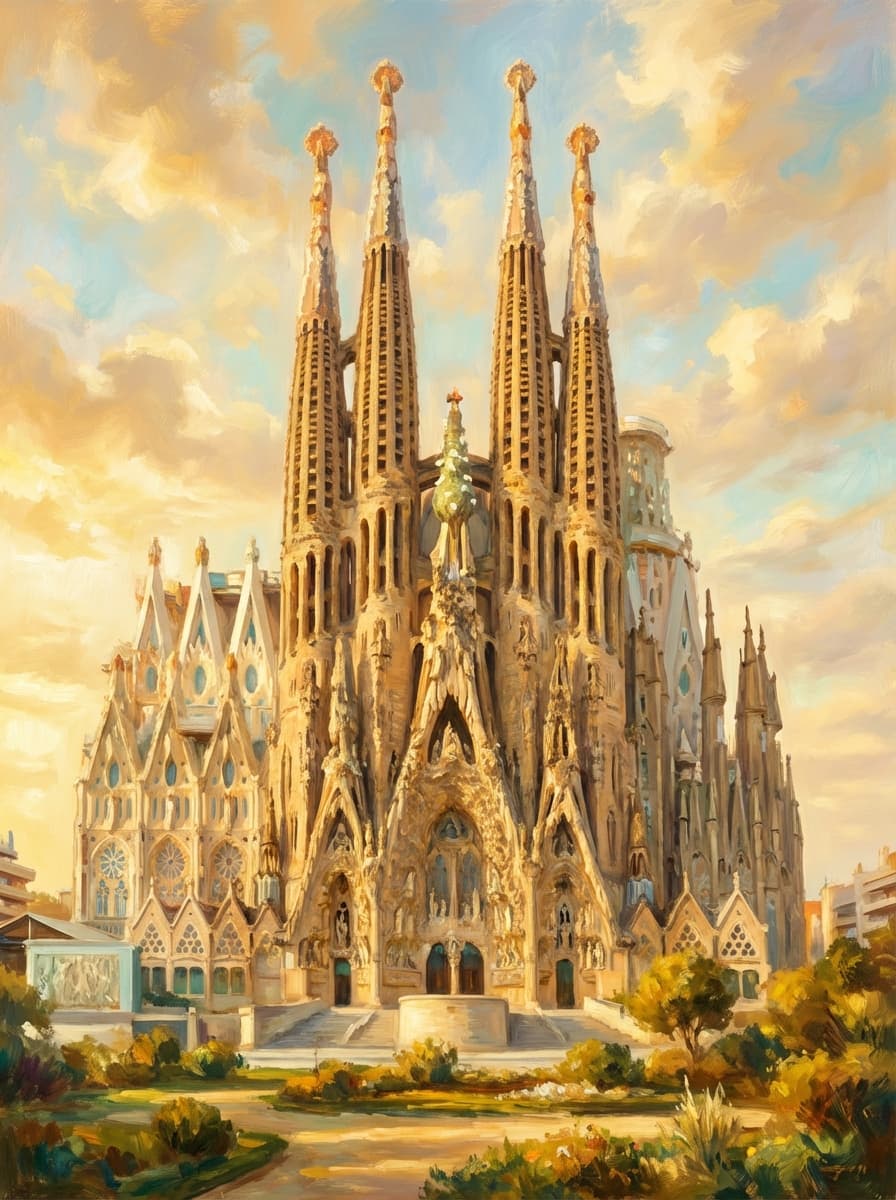
The Sagrada Família is unlike any other religious building on Earth. From the street, it rises above Barcelona's orderly grid of Eixample blocks like a massive, organic apparition — its towers encrusted with ceramic fruits and lettering, its facades alive with hundreds of carved figures depicting the life of Christ. Upon entering, visitors universally describe a sensation of stepping into a vast forest clearing. Gaudí's tree-like columns soar to branching canopies overhead, and the hyperboloid ceiling patterns create kaleidoscopic geometry. The stained glass windows by Joan Vila-Grau transform the interior throughout the day: in the morning, cool blues and greens from the east (Nativity) side bathe the nave; by afternoon, warm oranges, reds, and golds pour in from the west (Passion) side. The tower access (available as an add-on) provides a vertiginous climb inside the spiral staircases of the bell towers, with intimate views of the facade sculptures and panoramic views of Barcelona extending to the Mediterranean.
Highlights
- Experience the 'stone forest' interior with tree-like columns and hyperboloid vaults.
- Witness the stunning light show from Joan Vila-Grau's stained glass windows.
- Examine the contrasting Nativity (joyful) and Passion (austere) facades.
Things to Know
- Book tickets 2–4 weeks in advance — time slots sell out quickly.
- Dress modestly: shoulders and knees must be covered.
- Be prepared for airport-style security checks at the entrance.
Location
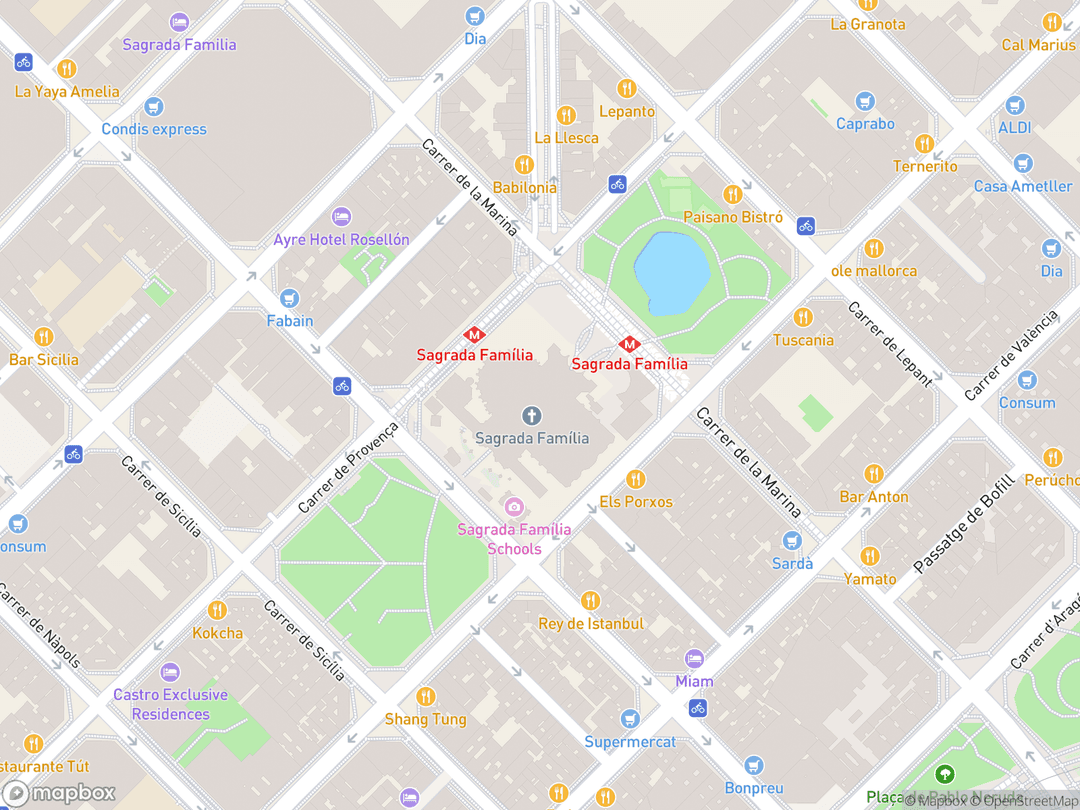
Carrer de Mallorca 401, 08013 Barcelona, Spain
Hours: Summer (Apr–Sep): 9:00 AM – 8:00 PM; Winter (Nov–Feb): 9:00 AM – 6:00 PM; Shoulder (Mar/Oct): 9:00 AM – 7:00 PM
Getting There: Metro L2 or L5 to Sagrada Família station (direct access). Bus lines 19, 33, 34, 43, 44, 50, 51, B20, B24.
Get DirectionsTips for Your Visit
Time Your Visit for Light
Visit in the morning for cool blue light (East/Nativity side) or late afternoon for warm golden light (West/Passion side).
Book in Advance
Tickets sell out weeks ahead. Buy online from the official website to avoid third-party markups.
Don't Miss the Museum
Located in the basement, the museum contains Gaudí's original models, including the famous hanging chain model used to design the structure.
About
According to the official Sagrada Família Foundation, the Basílica de la Sagrada Família (Basilica of the Holy Family) is an extraordinary Roman Catholic minor basilica in Barcelona, Spain, and the magnum opus of Catalan architect Antoni Gaudí. Begun in 1882 and structurally completed 144 years later in 2026, it is one of the most ambitious and longest-running architectural projects in human history. With its organic, nature-inspired forms, soaring hyperboloid towers, and intricate sculptural facades, the Sagrada Família has become Barcelona's most iconic landmark and Spain's most-visited monument.
The project began as a conventional neo-Gothic church under architect Francisco de Paula del Villar, funded by donations from the faithful as an act of expiation. When Gaudí assumed the role of chief architect in 1883 at just 31 years old, he transformed the design beyond recognition — envisioning a structure that would synthesize the lessons of Gothic architecture with the mathematical forms he observed in nature. He devoted the final 43 years of his life to the project, living on-site in his final years, and famously remarked that "the patron of this project is not in a hurry" when asked about the projected completion date.
The basilica was consecrated for religious worship by Pope Benedict XVI on November 7, 2010, and designated as a minor basilica. Its crypt and Nativity Facade were inscribed as part of the UNESCO World Heritage "Works of Antoni Gaudí" in 2005. On February 20, 2026 — the centennial year of Gaudí's death — the Tower of Jesus Christ was completed, and the Sagrada Família rose to approximately 172 meters (564 feet), making it the tallest church in the world. Decorative elements and finishing touches continue into the 2030s.
Gallery
Symbolic Elements
The temple's exterior features intricate carvings, each rich with spiritual meaning:
Tree Columns
Interior columns that branch like trees, creating a 'forest' canopy that invites prayer and contemplation of nature as God's work.
Nativity Cypress
A stone cypress tree crowning the Nativity Facade, symbolizing eternal life, adorned with white doves representing faithful souls.
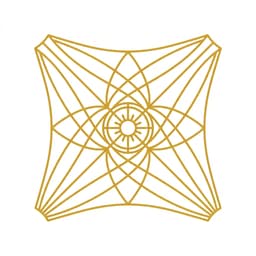
Hyperboloid Vaults
Geometric ceiling vaults that filter light like a forest canopy, based on ruled surfaces Gaudí observed in nature.
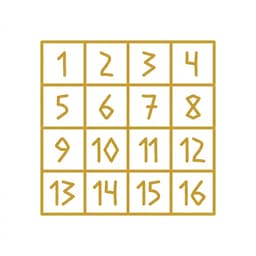
Magic Square
A 4x4 grid on the Passion Facade where all sums equal 33 (Christ's age), representing the mathematical order of the divine.
Interesting Facts
With the completion of the Tower of Jesus Christ in February 2026, the Sagrada Família became the tallest church in the world (~172m), surpassing Ulm Minster.
Gaudí designed the tallest tower to be one meter shorter than Montjuïc hill, believing that human creation should not surpass God's.
The Passion Facade features a 'magic square' where every row, column, and diagonal adds up to 33 — the age of Christ at his crucifixion.
The interior columns are designed as trees: they change shape from base to top (polygon to circle) and branch out to support the ceiling.
The basilica is an 'expiatory temple,' meaning it is funded 100% by private donations and ticket sales, receiving no government or church money.
During the Spanish Civil War, revolutionaries broke into the workshop and destroyed Gaudí's original models and plans, requiring decades of reconstruction.
Common Questions
Is the Sagrada Família finished?
The main structure was completed in February 2026 with the installation of the Tower of Jesus Christ spire, making it the tallest church in the world. Decorative elements, sculptures, and finishing work continue into the 2030s.
Why has it taken so long?
The project relies entirely on private donations and ticket sales (no government funding). Additionally, Gaudí's complex organic designs were difficult to construct before modern computer modeling, and the Spanish Civil War destroyed many original plans.
Can I attend Mass there?
Yes. International Masses are held on Sunday mornings at 9:00 AM (free entry, limited capacity). Other services are held in the crypt.
Is Antoni Gaudí buried there?
Yes, Gaudí is buried in the chapel of Our Lady of Mount Carmel in the crypt of the basilica.
Related Stories
Explore the rich history, traditions, and people connected to this sacred site.
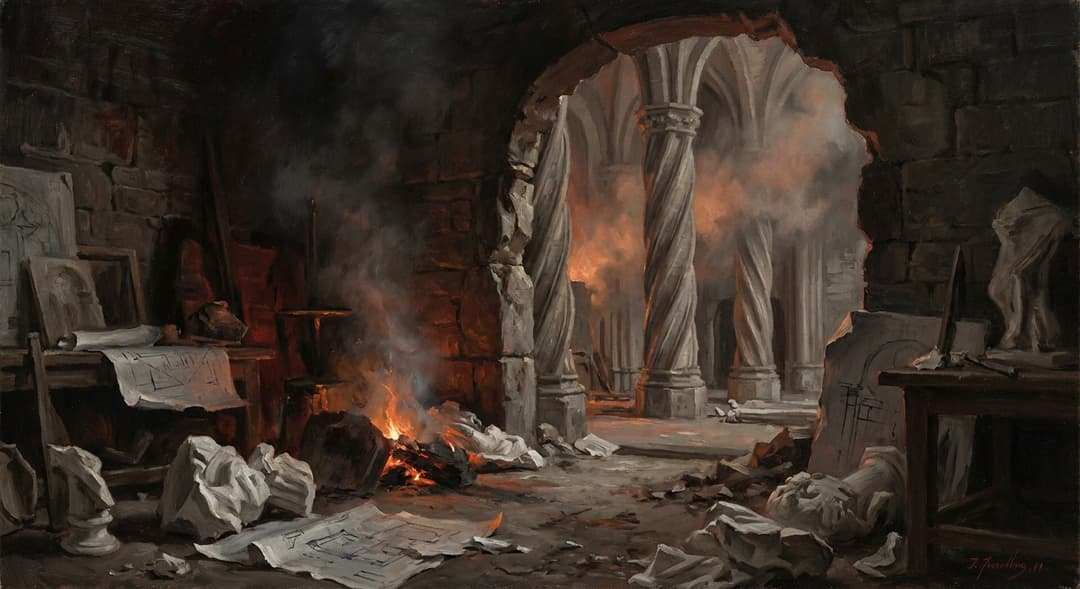 Historic Event
 The Spanish Civil War and the Sagrada Família
Anarchists set fire to Gaudí's workshop, destroying his original plans and models — but architects spent decades piecing the vision back together.
Explore Story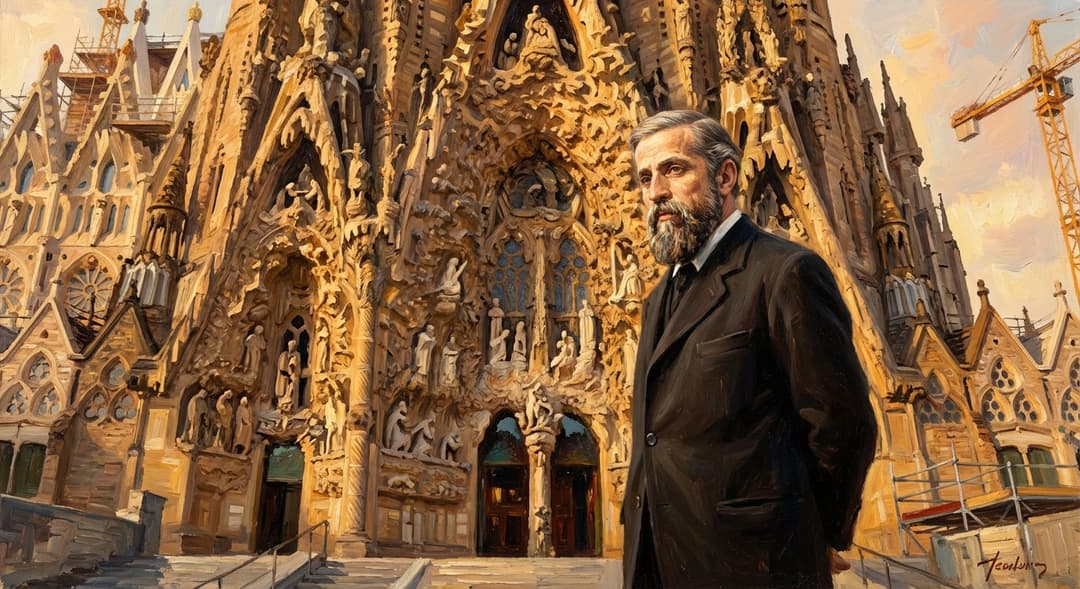 Notable Figure
 Antoni Gaudí: God's Architect
The visionary architect who devoted 43 years of his life to the Sagrada Família and is now being considered for sainthood.
Explore StoryFeatured Stories
Gaudí's Divine Patience
1883–1926
When Antoni Gaudí took over the project at age 31, he knew he would not live to see it finished. He famously remarked, 'My client is not in a hurry,' referring to God. He spent the last 12 years of his life refusing all other work, living in the workshop on-site, and devoting himself entirely to the temple.
His foresight led him to build the Nativity Facade first — the most optimistic and complex part — knowing that if he started with the austere Passion Facade, people might reject the project. He also created detailed 1:10 and 1:25 scale plaster models rather than just drawings, which allowed his successors to continue the work even after his original plans were destroyed in the Civil War.
Source: sagradafamilia.org
The 2026 Centennial Achievement
2010–2026
For decades, the completion of the Sagrada Família seemed like a distant dream. But advancements in computer-aided design (CAD) and CNC stone-cutting technology in the 21st century accelerated construction exponentially. Stones that once took weeks to carve by hand could now be cut in hours.
This technological leap allowed the current architectural team to achieve their historic goal: on February 20, 2026, the spire of the Tower of Jesus Christ was installed, completing the main structure in the centennial year of Gaudí's death. The achievement marked the fulfillment of a vision that spanned three centuries, making the Sagrada Família the tallest church in the world.
Source: catalannews.com
Timeline
Cornerstone Laid
Bishop Josep Urquinaona lays the cornerstone of the expiatory temple according to Francisco de Paula del Villar's neo-Gothic design.
component.timeline.groundbreakingGaudí Appointed Architect
Antoni Gaudí takes over as chief architect at age 31 and begins completely redesigning the project.
component.timeline.historicalCrypt Completed
The crypt, begun by Villar, is completed by Gaudí.
component.timeline.constructionDeath of Antoni Gaudí
Gaudí dies after being struck by a tram. Only the Nativity Facade bell tower and crypt are complete. He is buried in the crypt.
component.timeline.historicalSpanish Civil War Destruction
Anarchists set fire to Gaudí's workshop, destroying most of his original plaster models and drawings.
component.timeline.historicalPassion Facade Begun
Construction begins on the Passion Facade based on Gaudí's drawings.
component.timeline.constructionPassion Towers Completed
The four bell towers of the Passion Facade are finished.
component.timeline.constructionUNESCO World Heritage Site
The Nativity Facade and Crypt are inscribed as a UNESCO World Heritage Site (Works of Antoni Gaudí).
component.timeline.historicalConsecration by Pope Benedict XVI
The nave is enclosed and the church is consecrated as a minor basilica, opening for daily worship.
DedicationTower of the Virgin Mary Completed
The tower is inaugurated with the lighting of the 12-pointed star at its summit.
component.timeline.constructionTower of Jesus Christ Completed
The spire of the Tower of Jesus Christ was installed, completing the main structure and making the Sagrada Família the tallest church in the world at approximately 172 meters. The achievement marks the centennial year of Antoni Gaudí's death.
MilestoneHistory by Decade
1880s — The Foundation
The cornerstone was laid on March 19, 1882, under architect Francisco de Paula del Villar. Gaudí took over in 1883, completing the crypt and beginning his radical redesign.
1890s–1920s — Gaudí's Era
Gaudí developed his organic structural style, completing the apse and working on the Nativity Facade. He died in 1926, leaving only one tower finished.
1930s–1940s — War and Recovery
The Spanish Civil War (1936–39) halted construction and resulted in the destruction of Gaudí's workshop and models. Work resumed slowly in the 1940s using reconstructed plaster fragments.
1950s–1970s — The Passion Facade
Foundations for the Passion Facade were laid in 1954. Its four towers were completed by 1976, followed by the controversial angular sculptures by Josep Maria Subirachs.
1980s–2000s — The Nave
New technologies accelerated work. The central nave was vaulted and enclosed by 2000. In 2005, the Nativity Facade and Crypt were named a UNESCO World Heritage Site.
2010s–2026 — Consecration and Completion
Pope Benedict XVI consecrated the basilica in 2010. The central towers for the Evangelists and Virgin Mary (crowned with a star) were completed in the early 2020s. On February 20, 2026, the Tower of Jesus Christ was completed, making the Sagrada Família the tallest church in the world at approximately 172 meters.
Architecture & Facilities
Catalan Modernisme and Art Nouveau, transformed by Antoni Gaudí into a wholly original organic expressionism. Gaudí's design synthesizes Gothic structural principles with ruled geometric surfaces — hyperboloids, paraboloids, helicoids, and catenary curves — drawn from intensive study of natural forms. Interior columns branch at the top like trees, creating a 'stone forest' canopy, while inverted catenary arches eliminate the need for flying buttresses. The basilica features three monumental sculptural facades (Nativity, Passion, and Glory) and 18 planned towers — 12 for the Apostles, 4 for the Evangelists, and towers for the Virgin Mary and Jesus Christ, the latter rising to approximately 172 meters to become the tallest church in the world upon completion.
Building Materials
Exterior
Montjuïc stone, granite, and porphyry
Interior Columns
Basalt (strongest), granite, and porphyry
Towers
Stone with Venetian glass mosaic (trencadís) pinnacles
Interior Features
Nave
Forest-like structure with branching columns
Apse
Seven chapels dedicated to the joys and sorrows of St. Joseph
Crypt
Neo-Gothic style, housing Gaudí's tomb
Temple Grounds
Occupies a full city block in the Eixample district, with two parks (Plaça de Gaudí and Plaça de la Sagrada Família) across the streets offering iconic views.
Religious Significance
The Sagrada Família is a 'Bible in Stone,' designed to teach the Gospel through architecture. Every tower, facade, and column has a specific Christian meaning.
An expiatory temple for prayer and atonement, funded by the people for the people.
Sacred Ordinances
Daily Mass
Held in the crypt and sometimes the main nave.
International Mass
Weekly Sunday mass for pilgrims from all nations.
The Three Facades
The Nativity Facade (East) represents the joy of Life; the Passion Facade (West) represents Suffering and Death; and the Glory Facade (South, incomplete) represents Glory and Resurrection.
Sources & Research
Every fact on Temples.org is backed by verified Sources & Research. Each piece of information is rated by source tier and confidence level.
View All Sources (10)
| Field | Source | Tier | Retrieved |
|---|---|---|---|
| Sagrada Família Official Website | Junta Constructora del Temple de la Sagrada Família (opens in a new tab) | A | Wed Feb 11 2026 00:00:00 GMT+0000 (Coordinated Universal Time) |
| UNESCO — Works of Antoni Gaudí | UNESCO World Heritage Centre (opens in a new tab) | B | Wed Feb 11 2026 00:00:00 GMT+0000 (Coordinated Universal Time) |
| Encyclopaedia Britannica — Sagrada Familia | Encyclopaedia Britannica (opens in a new tab) | B | Wed Feb 11 2026 00:00:00 GMT+0000 (Coordinated Universal Time) |
| Archdiocese of Barcelona | Archdiocese of Barcelona (opens in a new tab) | A | Wed Feb 11 2026 00:00:00 GMT+0000 (Coordinated Universal Time) |
| Parametric Architecture — Gaudí's Techniques | Parametric Architecture (opens in a new tab) | B | Wed Feb 11 2026 00:00:00 GMT+0000 (Coordinated Universal Time) |
| Catholic News Agency | EWTN News Inc. (opens in a new tab) | B | Wed Feb 11 2026 00:00:00 GMT+0000 (Coordinated Universal Time) |
| Catalan News | Agència Catalana de Notícies (opens in a new tab) | B | Wed Feb 11 2026 00:00:00 GMT+0000 (Coordinated Universal Time) |
| barcelona-tickets.com | barcelona-tickets.com (opens in a new tab) | C | Wed Feb 11 2026 00:00:00 GMT+0000 (Coordinated Universal Time) |
| barcelonahacks.com | barcelonahacks.com (opens in a new tab) | C | Wed Feb 11 2026 00:00:00 GMT+0000 (Coordinated Universal Time) |
| spain-tourist-information.com | spain-tourist-information.com (opens in a new tab) | C | Wed Feb 11 2026 00:00:00 GMT+0000 (Coordinated Universal Time) |