Visitor Insights
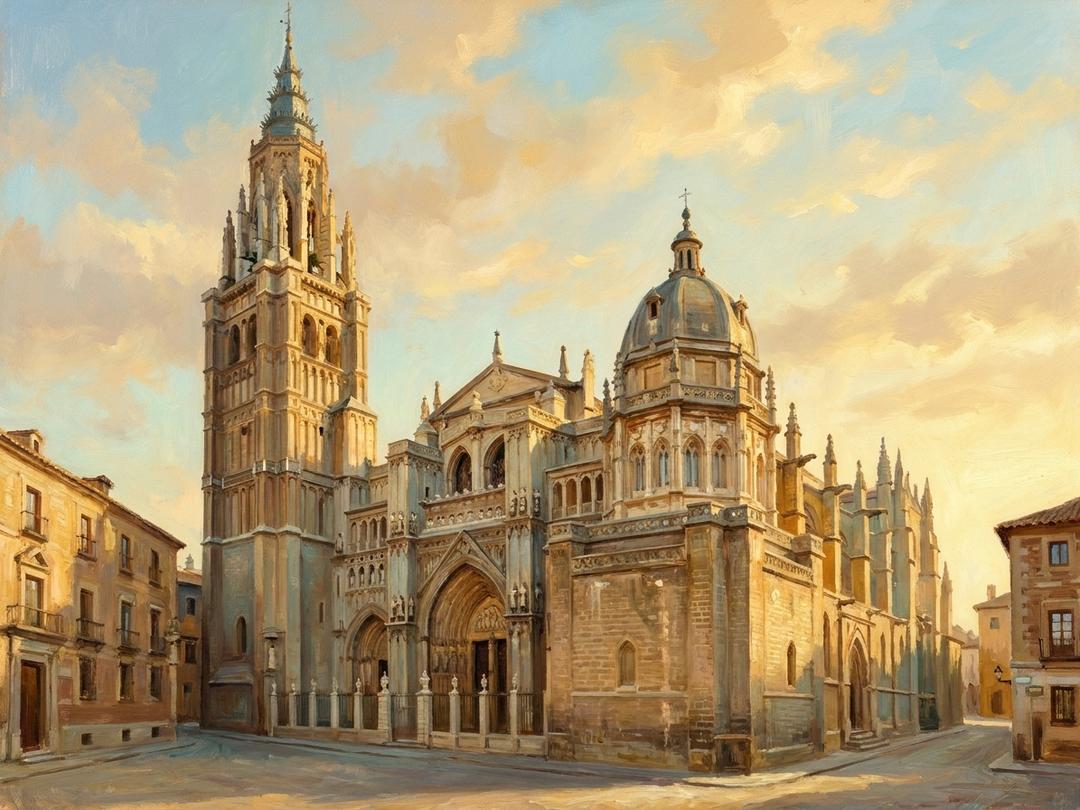
Visiting Toledo Cathedral
Visitors encounter an awe-inspiring sanctuary filled with masterworks of sacred art, intricate woodcarvings, and luminous vaults. Cultural visits allow access to the museum, choir, and chapels, while active daily services preserve the holy quietude of the space.
Highlights
- El Transparente Baroque altarpiece illuminated by a vaulted skylight
- The monumental choir stalls detailing Renaissance artistry and historical events
- Masterpieces by El Greco and Goya in the cathedral Sacristy
- The ancient Mozarabic Chapel maintaining a unique ninth-century liturgical tradition
Things to Know
- Shoulders and knees must remain covered during all visits
- Flash photography and tripods are strictly prohibited inside
- Liturgical morning hours are reserved solely for personal prayer and mass
- Vehicular traffic is barred in the historic quarter; use perimeter parking
Location
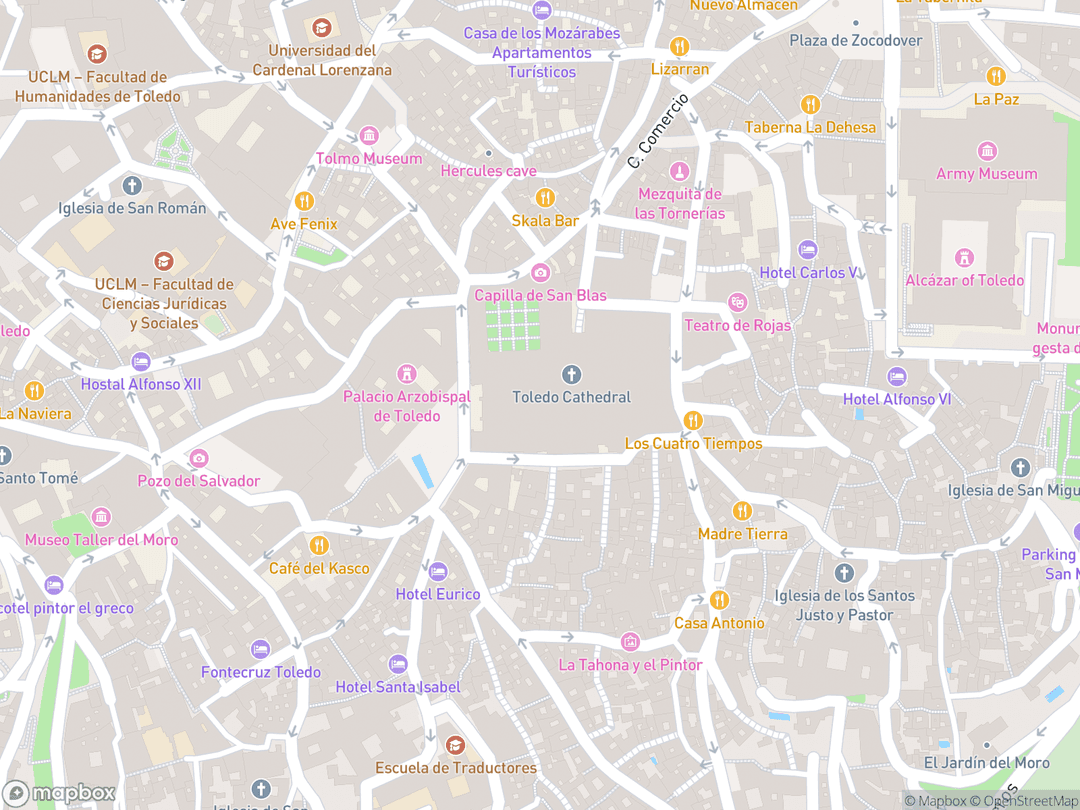
Calle Cardenal Cisneros, 1, 45002 Toledo, Castile-La Mancha, Spain
Hours: Monday through Saturday 10:00 to 18:30; Sunday 14:00 to 18:30
Getting There: High-speed AVANT train from Madrid to Toledo Station, followed by bus line 5 or city escalators.
Get DirectionsTips for Your Visit
Optimal Light
Visit the ambulatory in mid-afternoon to see sunlight strike El Transparente directly.
Daily Mozarabic Mass
Arrive before 09:00 at the Mozarabic Chapel to experience the ancient Hispanic liturgical chant.
About
Within the broad Abrahamic tradition, consecrated sanctuaries stand as sacred bridges between heaven and earth. Toledo Cathedral embodies this holy calling as the ancient seat of the Primate of All the Spains. Known historically as Dives Toletana, the monumental cathedral harmonizes profound sacred geometry with divine revelation.
Begun in 1226 on the site of early Christian and Visigothic sanctuaries, the five-aisled Gothic structure took centuries to complete. Master builders balanced Castilian engineering with French Rayonnant models, crafting a space where theological light permeates massive stone arches. The cathedral remains an active heart of prayer and Roman Catholic worship.
Beyond its grand scale, the cathedral preserves unique liturgical and artistic traditions. It houses the ancient Mozarabic Rite alongside masterpieces by El Greco and Narciso Tomé. Every arch, chapel, and relic reflects a living devotion that has guided millions of pilgrims across centuries.
Gallery
Symbolic Elements
The temple's exterior features intricate carvings, each rich with spiritual meaning:
The Transparente Light Oculus
Pierced high vaulting channels natural sunbeams to signify divine grace illuminating the Eucharist.

The Custodia of Enrique de Arfe
An architectural tower of silver and gold representing the New Jerusalem descending from heaven.

Stone of the Descension
A jasper slab marking the traditional site where Mary's feet touched the earth during an apparition.
Mudejar Triforium Arches
Interlocking horseshoe arches celebrating regional artistic heritage within Christian architecture.

Suspended Red Galeros
Crimson cardinal hats suspended above crypts to symbolize human mortality and spiritual legacy.
The Five Sacred Naves
Stepped parallel aisles reflecting the five holy wounds of Christ and the journey of faith.

The Mystic Rose Windows
Intricate circular stone tracery and stained glass symbolizing Marian purity and cosmic order.

Triple Crown of the North Tower
Three blackened iron thorn rings symbolizing Christ's passion and primatial spiritual governance.
Interesting Facts
The massive Campana Gorda cracked on its initial stroke in 1753 and remains permanently silent (Tier A).
Centuries-old cardinal hats hang from vault ropes until the cords naturally decompose into dust (Tier B).
The Arfe monstrance contains the very first consignment of gold brought from the Americas (Tier A).
Toledo is the only cathedral worldwide celebrating continuous daily mass in the ancient Mozarabic Rite (Tier A).
Pilgrims revere an encased red jasper stone where tradition holds the Virgin Mary appeared in 666 (Tier B).
The lower choir stalls provide a photographic record in wood of the 1492 Siege of Granada (Tier B).
To construct El Transparente, Narciso Tomé pierced a skylight through the ancient stone ceiling (Tier B).
The Puerta Llana was designed completely flat to roll the 370-kilogram silver monstrance into the street (Tier A).
The chapterhouse exhibits portraits of every single Archbishop of Toledo across nearly two millennia (Tier A).
Common Questions
Why is Toledo Cathedral called Dives Toletana?
The title reflects centuries of unparalleled artistic wealth, sacred relics, and exquisite craftsmanship.
Why does the cathedral have only one bell tower?
Foundational settling forced builders to replace the planned southern spire with an octagonal dome.
What is unique about the Mozarabic Rite celebrated here?
It preserves an ancient Visigothic Catholic liturgy that has been sung continuously for nine centuries.
Can visitors see paintings by El Greco inside?
The cathedral sacristy features several major original works by El Greco, including The Disrobing of Christ.
Featured Stories
The Bold Triumph of El Transparente
1732
When Narciso Tomé proposed cutting through the venerable Gothic vaulting to illuminate the high tabernacle, clergy feared the ancient stone roof would collapse. Tomé engineered hidden reinforcement arches, piercing a brilliant skylight that flooded the Baroque sculpture with dramatic morning sun. The resulting spectacle transformed cold stone into a luminous vision of heavenly adoration.
Source: Catedral Primada de Toledo Archives
Preserving the Ancient Mozarabic Rite
1500
As the Roman Rite supplanted regional liturgies across Europe, Cardinal Francisco Jiménez de Cisneros recognized the immense spiritual value of Spain's indigenous Hispano-Visigothic worship. He gathered rare ancient chant manuscripts, endowed a dedicated chapel in the cathedral's southern base, and established a permanent college of priests. Thanks to his foresight, the centuries-old chants continue to echo across the cathedral every morning.
Source: Archdiocese of Toledo Historical Annals
The Silent Giant of the North Tower
1753
Cast by founder Alejandro Gargallo, the colossal bell known as La Campana Gorda required massive ropes and teams of oxen to ascend the ninety-meter tower. When struck for the first time, its deafening resonance cracked the bronze casting across more than a meter, stunning the gathered town below. Secured with iron bolts, the silent bell remains in the bell chamber as a celebrated symbol of vaulting human ambition.
Source: Cabildo Metropolitano de Toledo
Timeline
Visigothic Basilica Consecration
King Reccared consecrates the original cathedral following his conversion to Catholicism.
MilestoneMarian Apparition
Archbishop Saint Ildefonsus experiences a recorded vision of the Virgin Mary upon the altar.
EventReconsecration as Cathedral
Archbishop Bernard of Sédirac solemnly reconsecrates the sanctuary to Saint Mary.
MilestonePrimatial Elevation
Pope Urban II declares Toledo the Primatial Church of all Hispania.
MilestoneGothic Foundation Stone
King Ferdinand III and Archbishop Rodrigo Jiménez de Rada initiate Gothic construction.
component.timeline.groundbreakingCompletion of the Ambulatory
Master Petrus Petri concludes the radial chapels and unique triforium prior to his death.
MilestoneTenorio Cloister Construction
Archbishop Pedro Tenorio begins building the monumental two-tiered Gothic cloister.
MilestoneClosure of High Nave Vaults
Master Juan Guas finishes the western nave vaults under the Catholic Monarchs.
MilestoneMozarabic Chapel Endowed
Cardinal Cisneros permanently safeguards the historic Hispanic liturgy within the cathedral.
MilestoneCompletion of Arfe Monstrance
Enrique de Arfe completes the monumental gilded silver monstrance for Corpus Christi.
MilestoneEl Greco Delivers Masterpiece
El Greco installs The Disrobing of Christ within the cathedral Sacristy.
MilestoneDedication of El Transparente
Narciso Tomé unveils the illusionistic Baroque altarpiece illuminated by pierced vaulting.
DedicationUNESCO World Heritage Inscription
The historic precinct centering on the Primatial Cathedral is inscribed by UNESCO.
MilestoneHistory by Decade
580s–710s — The Visigothic Foundation
Following the Third Council of Toledo in 587, King Reccared consecrated the city's main church as the spiritual heart of Catholic Hispania. Archbishop Saint Ildefonsus shaped local theology here, authoring key defenses of Marian doctrine. This early sanctuary firmly established Toledo as the center of Iberian ecclesiastical authority.
1080s–1220s — Reconquest and Primatial Status
After King Alfonso VI retook the city in 1085, the ancient basilica site was reconsecrated under French Cluniac leadership. Pope Urban II soon elevated the see to the Primatial Church of all Hispania. Archbishop Rodrigo Jiménez de Rada later campaigned for a vast new temple worthy of this supreme status.
1220s–1290s — The Gothic Chevet and Double Ambulatory
Groundbreaking took place in 1226 under King Ferdinand III and Master Martín, who laid the expansive chevet foundations. Master Petrus Petri succeeded him, devising an innovative alternating vault system to span the complex double ambulatory. By Petri's death in 1291, the sanctuary and unique Mudéjar triforium were firmly established.
1380s–1460s — Tower, Cloisters, and Portals
Archbishop Pedro Tenorio commissioned the cathedral's great two-tiered cloister and the frescoed Chapel of San Blas in 1389. During the fifteenth century, Alvar Martínez raised the grand bell tower, and Hanequin de Bruselas added the decorative Puerta de los Leones. The cathedral exterior emerged as an intricate showcase of Flamboyant Gothic craftsmanship.
1470s–1520s — Vault Closure and Renaissance Splendor
Master Juan Guas closed the high central nave vaults in 1493 under the patronage of the Catholic Monarchs. Cardinal Cisneros introduced opulent Renaissance additions, commissioning the immense high altarpiece and the Mozarabic Chapel. Enrique de Arfe fashioned the cathedral's monumental silver monstrance using the first gold brought from America.
1570s–1730s — Golden Age Art and Baroque Illumination
El Greco arrived in Toledo in 1577, painting his masterpiece The Disrobing of Christ directly for the cathedral sacristy. In 1729, Narciso Tomé began constructing El Transparente, cutting through the ambulatory ceiling to bathe the rear tabernacle in theatrical sunlight. The work marked the pinnacle of Spanish Churrigueresque architectural drama.
1900s–Present — Heritage Preservation and Centenary
Declared a National Monument in 1909, the cathedral safeguarded its sacred treasures during the turbulent Spanish Civil War. UNESCO inscribed the historic precinct in 1986, leading to major stone cleaning and fresco conservation projects. Today, the cathedral prepares for its landmark Eighth Centenary of continuous spiritual service.
Architecture & Facilities
Toledo Cathedral represents the absolute apex of thirteenth-century High Spanish Gothic design, subtly blending French Rayonnant balance with indigenous Castilian spatial breadth and Mudéjar interlocking arches. Departing from sheer verticality, its five stepped aisles form a broad pyramidal profile anchored by eighty-eight massive stone piers.
Building Materials
Olihuelas White Limestone
Fine-grained local limestone that hardens when exposed to air, providing the cathedral with its pale silver appearance.
Almonacid Granite
Dense dark granite forming the deep load-bearing foundations that anchor the sanctuary against shifting bedrock.
Gilded Larch and Pine
Polychromed Alpine and Castilian woods intricately sculpted to create the massive five-tiered sanctuary retablo.
Carrara and Jasper Marble
Polished Italian Carrara marble and local red jasper forming the dramatic Baroque framework of El Transparente.
Interior Features
Capilla Mayor
The grand high altar sanctuary housing the soaring Late Gothic gilded altarpiece depicting Christ's Passion.
Cathedral Coro
A monumental central choir enclosure featuring carved walnut stalls documenting the 1492 Siege of Granada.
Double Ambulatory
A vaulted semicircular walkway employing alternating triangular and rectangular compartments around the sanctuary.
Cathedral Sacristy
A vaulted art gallery holding Luca Giordano ceiling frescoes and El Greco's celebrated masterpiece El Expolio.
Temple Grounds
The cathedral anchors the historic Plaza del Ayuntamiento, bordered by pedestrian flagstone plazas, the Archbishop's Palace, and ancient winding medieval alleys.
Additional Facilities
An extensive cathedral museum complex, historic library, chapterhouse, and cloister exhibition halls open to cultural visitors.
Religious Significance
Toledo Cathedral stands as the primary episcopal seat of the Roman Catholic Church in Spain, serving as the physical throne for the Primate of All the Spains. rooted in biblical tradition, the cathedral acts as an architectural sermon celebrating divine presence and sacred continuity.
To serve as the metropolitan mother church of the Archdiocese of Toledo, celebrating the holy sacraments and preserving historic Christian worship.
Sacred Ordinances
Holy Sacrifice of the Mass
Daily celebration of the Eucharist offered in both the standard Roman Rite and the ancient Mozarabic Rite.
Solemn Eucharistic Adoration
Adoration of the Blessed Sacrament, highlighted during the historic annual Corpus Christi procession.
Sacrament of Reconciliation
Regular confession services offered daily within historical side chapels for local faithful and visiting pilgrims.
Episcopal Ordination
The conferral of holy orders upon priests and bishops at the spiritual center of the primatial archdiocese.
The Apostolic Tradition of the Primacy
Since the early Visigothic councils, the Archbishop of Toledo has held primacy over the Spanish episcopate, guiding national church life through pivotal eras.
The Mozarabic Liturgical Heritage
Safeguarded by Cardinal Cisneros, the ancient Hispanic rite offers a living window into early Christian hymnody and pre-Roman liturgical practices.
Similar Temples
Sources & Research
Every fact on Temples.org is backed by verified Sources & Research. Each piece of information is rated by source tier and confidence level.
View All Sources (7)
| Field | Source | Tier | Retrieved |
|---|---|---|---|
| About & Historical Background | Cabildo Primado de Toledo (opens in a new tab) | A | 2026-03-31 |
| Historical Timeline | Arzobispado de Toledo (opens in a new tab) | A | 2026-03-31 |
| Religious Significance | Web Gallery of Art (opens in a new tab) | B | 2026-03-31 |
| Interesting Facts | World Monuments Fund (opens in a new tab) | B | 2026-03-31 |
| Symbolic Elements | OpenEdition Journals (opens in a new tab) | B | 2026-03-31 |
| Featured Stories | HelloTickets Cultural Guides (opens in a new tab) | D | 2026-03-31 |
| Visitor Information | Minube Travel Guide (opens in a new tab) | D | 2026-03-31 |