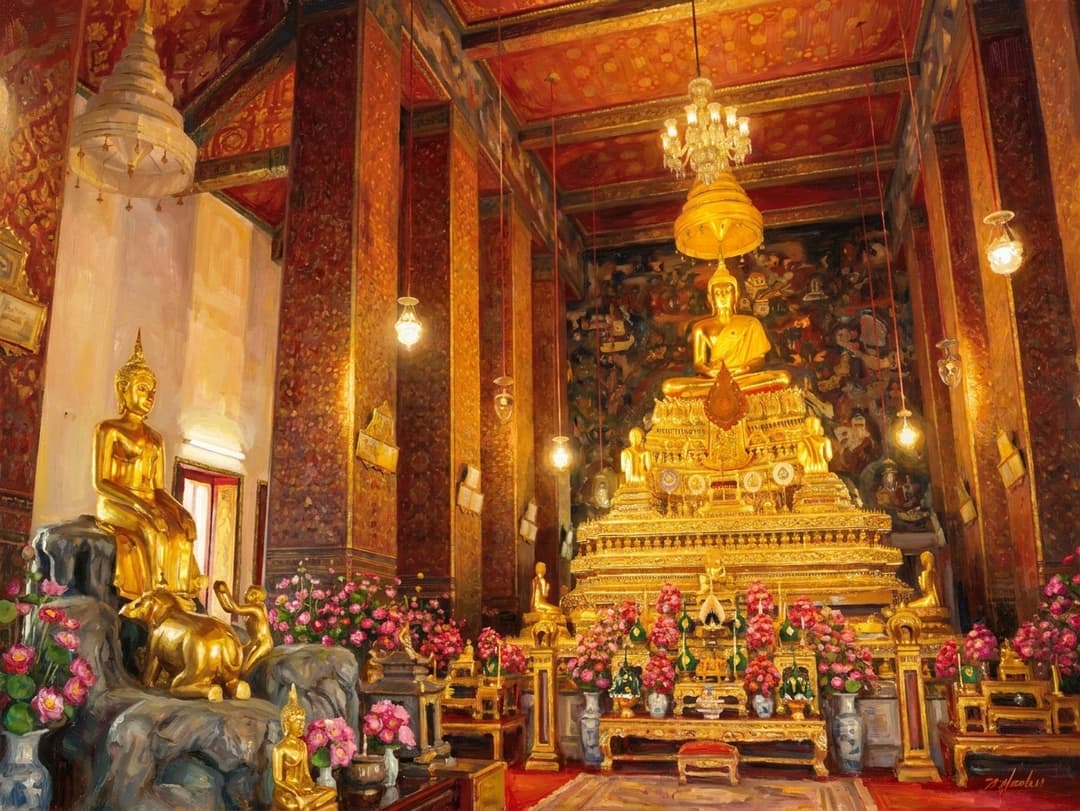
Visitor Insights
Visiting Wat Pho (Temple of the Reclining Buddha)
Visitors can explore Thailand's premier royal temple, marvel at the 46-meter Reclining Buddha, and experience authentic traditional Thai massage on sacred monastic grounds.
Highlights
- Viewing the 46-meter long Reclining Buddha and its mother-of-pearl feet soles
- Exploring the four monumental 42-meter porcelain-clad Phra Maha Chedi
- Receiving traditional massage at the birthplace of Nuad Thai
- Walking the double cloisters housing 394 gilded bronze Buddha statues
Things to Know
- Shoulders, upper arms, and knees must be fully covered at all times
- Shoes must be removed before entering any sacred assembly hall
- Women must not physically touch monks or pass items directly to them
Location
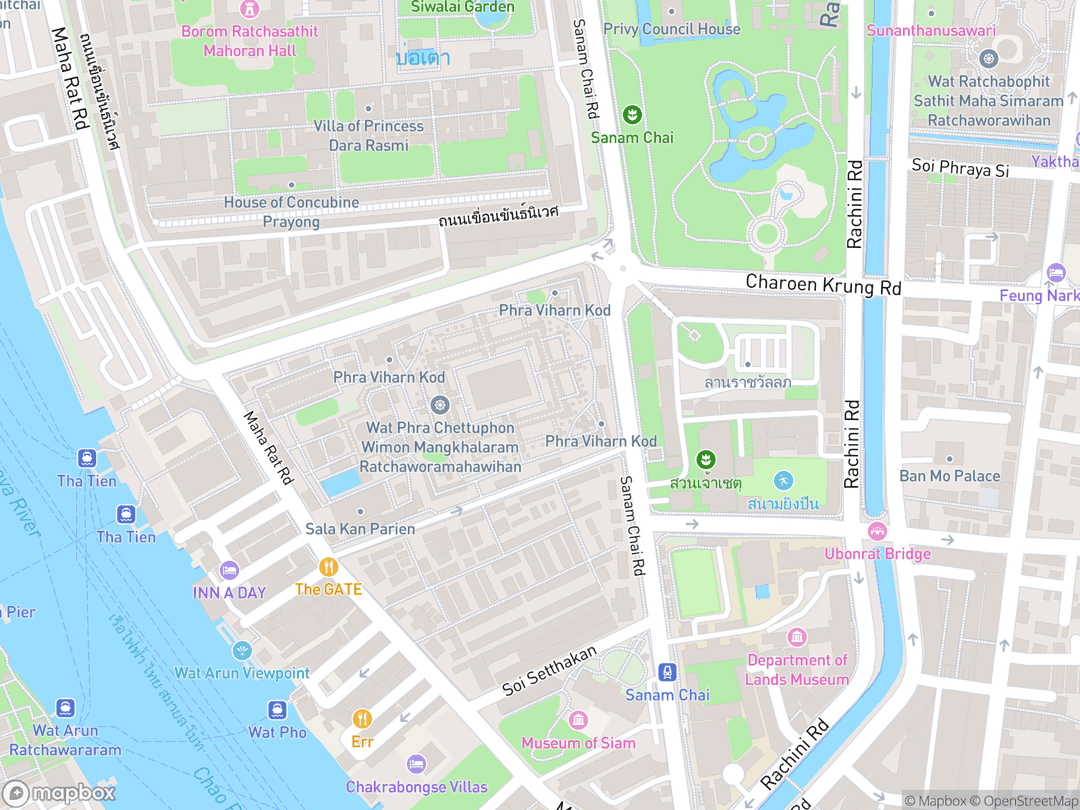
2 Sanam Chai Road, Phra Borom Maha Ratchawang Sub-district, Phra Nakhon District, Bangkok 10200, Thailand
Hours: Temple grounds open daily 08:00 AM – 06:30 PM; Massage Center open 08:00 AM – 06:00 PM.
Getting There: Short walk from MRT Sanam Chai Station (Exit 1) or Tha Tien Pier (N8).
Get DirectionsTips for Your Visit
Beat the Crowds
Arrive at 08:00 AM to view the Reclining Buddha in tranquility before tour groups arrive.
Appropriate Footwear
Wear slip-on shoes as you will remove footwear frequently when entering the viharns.
Mindful Merit Making
Obtain a cup of 108 bronze coins inside the hall to drop into the traditional alms bowls.
Authentic Thai Massage
Book your massage appointment at the east side pavilion early upon arrival to secure a slot.
About
Wat Pho, officially named Wat Phra Chetuphon Wimon Mangkhalaram Rajwaramahawihan, stands as one of the oldest, largest, and most revered royal temple complexes in Bangkok. Rooted in the Theravada tradition of the broader Dharmic theological family, the monastery serves as a physical manifestation of the Dhamma, guiding seekers away from suffering (dukkha) and toward spiritual liberation (nirvana). Located on Rattanakosin Island immediately south of the Grand Palace, Wat Pho spans twenty acres and houses over one thousand Buddha images, representing the single largest collection of sacred iconographic art in Thailand.
Originally founded during the Ayutthaya period as Wat Photaram, the sanctuary was elevated to paramount national importance in 1788 when King Rama I initiated a twelve-year restoration to serve as his primary royal monastery. Under King Rama III in the 1830s, the complex underwent a major transformation into Siam's first open-access center for higher learning. Scholars and royal physicians embedded 1,440 marble epigraphic slabs across the cloisters, covering medicine, literature, geography, and Buddhist philosophy, earning the epigraphic archive inscription on the UNESCO Memory of the World Register.
Today, Wat Pho remains an active First-Class Royal Temple of the Primary Rank and the recognized birthplace of traditional Thai massage (Nuad Thai). The complex seamlessly balances monastic contemplative life, spiritual pilgrimage, traditional medical education, and architectural splendor. Enshrining the royal ashes of King Rama I beneath its principal deity image, Wat Pho continues to embody the enduring synthesis of royal patronage, public education, and sacred devotion within Thai Buddhism.
Gallery
Symbolic Elements
The temple's exterior features intricate carvings, each rich with spiritual meaning:
Reclining Buddha (Phra Buddhasaiyas)
Represents Sakyamuni Buddha entering Parinirvana, signifying complete release from the cycle of rebirth.

108 Auspicious Foot Sole Inlays
Mother-of-pearl symbols depicting cosmic and celestial realms surrounding the Wheel of Law.
Phra Maha Chedi Four Stupas
Four 42-meter porcelain stupas color-coded to honor the first four Chakri Dynasty monarchs.
108 Bronze Merit Bowls
Alms bowls arranged along the Viharn corridor where pilgrims drop coins to practice active generosity.
Phra Buddha Deva Patimakorn
The principal seated meditation Buddha image enshrining the royal ashes of King Rama I.
Chinese Guardian Statues (Yaksha)
Granite statues imported as merchant ship ballast protecting temple gateways from harmful forces.
Hermit Stretching Statues (Ruesi Dat Ton)
Miniature statues displaying ancient yoga postures linking physical health with spiritual clarity.
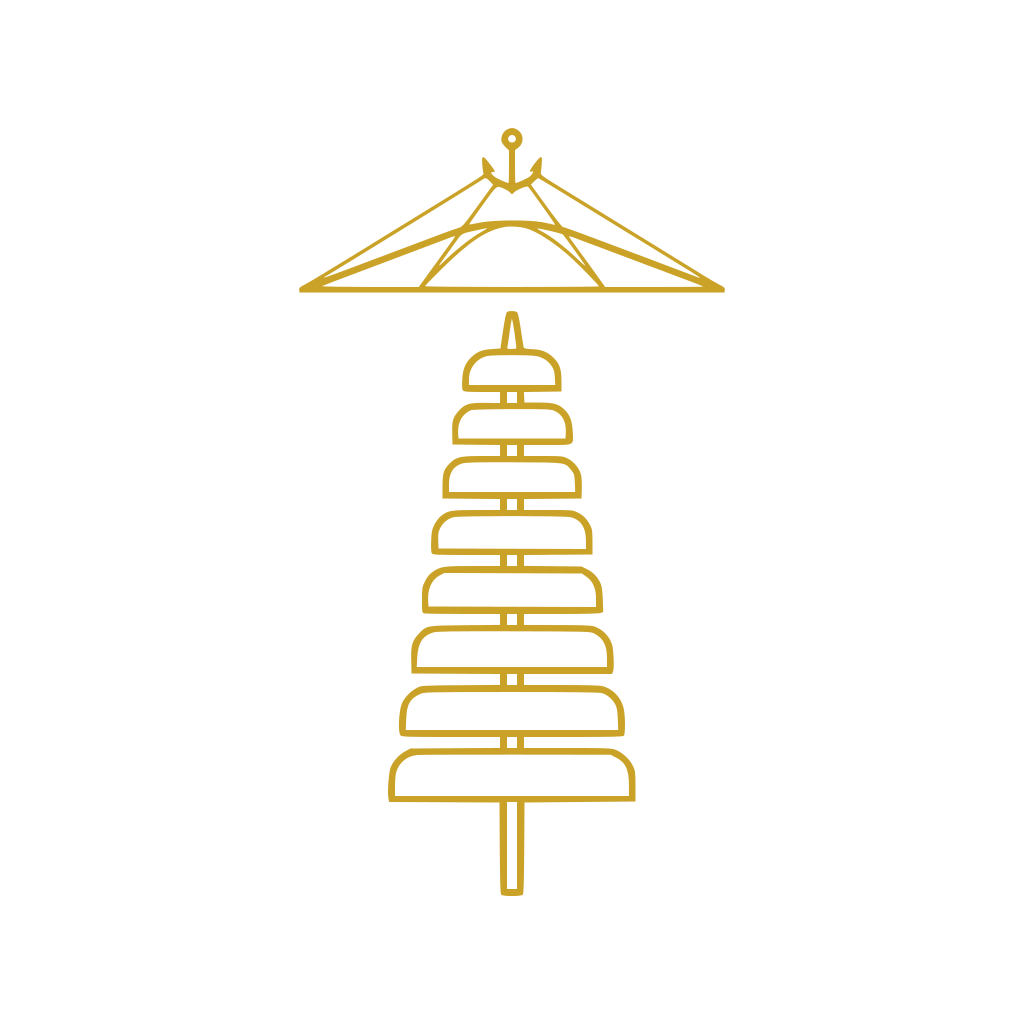
Nine-Tiered Royal Umbrella
A white canopy suspended over the main Buddha image symbolizing monarchical protection of the Sangha.
Interesting Facts
Wat Pho is recognized as Thailand's first open public university established by King Rama III (Tier A).
The feet of the Reclining Buddha measure 5 meters in length and feature 108 mother-of-pearl auspicious signs (Tier A).
Wat Pho holds the national record for the highest number of stupas within a single temple complex with 91 chedis (Tier A).
In 2019, UNESCO inscribed Nuad Thai traditional massage, centered at Wat Pho, as Intangible Cultural Heritage (Tier B).
The royal ashes of King Rama I are enshrined beneath the pedestal of the principal Buddha statue in the Phra Ubosot (Tier A).
The stone guardian statues at the temple gates originally served as ballast on 19th-century Chinese merchant junks (Tier B).
Wat Pho's 1,440 stone epigraphic slabs were inscribed into UNESCO's Memory of the World Register in 2011 (Tier B).
The complex houses over 1,000 Buddha images, representing the largest iconographic collection in Thailand (Tier A).
The four monumental 42-meter chedis are color-coded in green, white, yellow, and dark blue to honor the first four Chakri kings (Tier A).
Subterranean museum chambers reopened in 2026 exhibit over 1,400 long-sealed royal artifacts and porcelain (Tier A).
Common Questions
What is the official name of Wat Pho?
The official full title is Wat Phra Chetuphon Wimon Mangkhalaram Rajwaramahawihan.
Why is Wat Pho famous for traditional massage?
Wat Pho is the historic center of Nuad Thai where medical epigraphy was standardized and taught.
What is the dress code for visiting Wat Pho?
Shoulders, upper arms, and knees must be fully covered, and shoes must be removed inside halls.
How large is the Reclining Buddha statue?
The statue measures 46 meters in length and 15 meters in height.
Featured Stories
The Royal Retrieval of Northern Statues
1790s
Following the destruction of Ayutthaya, King Rama I dispatched royal expeditions across northern Thailand to recover abandoned sacred statues. Artisans gathered over 1,200 damaged bronze figures from ruined northern monasteries and brought them to Bangkok by barge. Meticulously restored, 394 of these historic statues were enthroned in Wat Pho's cloisters to preserve Siam's sacred spiritual heritage.
Source: Royal Chronicle of the First Reign
Engraving Siam's Stone University
1830s
Determined to make knowledge accessible to all citizens, King Rama III commissioned scholars and physicians to aggregate Siam's collective wisdom. Craftsmen painstakingly engraved 1,440 marble tablets with medical treatments, poetic treatises, and Buddhist scriptures. Mounted across the temple walls, this open-air archive created Thailand's first public university and saved traditional Thai medicine.
Source: UNESCO Memory of the World Register Documentation
Ballast Statues across the Ocean
1840s
During the flourishing 19th-century trade between Siam and Qing Dynasty China, merchant junks exported Thai rice and imported silk and porcelain. To stabilize empty vessels returning across stormy seas, sailors loaded heavy granite statues carved as Chinese warriors, European sailors, and mythical creatures. Upon arrival in Bangkok, King Rama III repurposed these ballast sculptures as permanent guardians for Wat Pho's gateways.
Source: Wat Pho Historical Epigraphy Records
Timeline
Ayutthaya Period Siege
The original monastery Wat Photaram was fortified during European colonial conflicts.
EventRoyal Re-establishment
King Rama I ordered the complete reconstruction of Wat Photaram as his royal monastery.
component.timeline.groundbreakingTemple Consecration
Grand restoration concluded and the temple was renamed Wat Phra Chetuphon Wimon Mangkhalaram.
DedicationReclining Buddha Commission
King Rama III initiated construction of the giant Phra Buddhasaiyas and its housing hall.
RenovationOpen University Completion
King Rama III completed installing 1,440 epigraphic inscriptions transforming the temple into a public university.
MilestoneFourth Major Chedi Built
King Rama IV bestowed the modern royal title and erected the dark blue porcelain chedi.
RenovationMassage School Formalization
The Wat Pho Thai Traditional Medical and Massage School was officially incorporated.
MilestoneUNESCO Inscription
The 1,440 stone epigraphic archives were officially inscribed in the UNESCO Memory of the World Register.
MilestoneIntangible Cultural Heritage
UNESCO added Nuad Thai traditional massage, originated at Wat Pho, to the Intangible Cultural Heritage list.
MilestoneMuseum Chambers Reopened
Wat Pho reopened sealed subterranean galleries exhibiting over 1,400 royal artifacts.
EventHistory by Decade
1600s–1780s — Ayutthaya Era Foundation
Originating in the late Ayutthaya Kingdom as a modest monastery named Wat Photaram, the site honored the sacred Bodhi tree of Bodh Gaya. During the reign of King Phetracha, the grounds were briefly fortified before being dismantled after the 1688 Siege of Bangkok. Following the fall of Ayutthaya in 1767, the ruined complex awaited a major royal restoration.
1780s–100s — Chakri Restoration & Consecration
In 1788, King Rama I established Bangkok as the national capital and ordered a grand twelve-year reconstruction of Wat Photaram adjacent to the Grand Palace. Over 1,200 ruined bronze Buddha statues were salvaged from devastated northern cities, with 394 restored and installed in double cloisters. Consecrated in 1801, the site became King Rama I's primary royal shrine.
1830s–1840s — Expansion & Public University Era
King Rama III launched a transformative sixteen-year expansion in 1832, commissioning the 46-meter Reclining Buddha and expanding the grounds to twenty acres. Envisioning Siam's first center for public education, he directed scholars to engrave 1,440 marble tablets covering medicine, philosophy, and poetry. This vast stone encyclopedia created Thailand's first open public university.
1850s–1860s — Royal Renaming & Architectural Perfection
King Rama IV bestowed the temple's modern official name, Wat Phra Chetuphon Wimon Mangkhalaram Rajwaramahawihan. He added the fourth monumental 42-meter stupa, clad in dark blue porcelain, to honor Queen Suriyothai and complete the royal tetrad. These additions established the structural harmony that defines the sacred compound today.
1950s–2010s — Institutional Medicine & UNESCO Inscription
In 1955, the monastery formalized the Wat Pho Thai Traditional Medical and Massage School to standardize ancient medical epigraphy for modern practice. Global recognition culminated on May 27, 2011, when UNESCO inscribed the 1,440 stone epigraphic slabs onto the Memory of the World Register. In 2019, UNESCO further recognized Nuad Thai massage as Intangible Cultural Heritage.
2020s — Modern Preservation & Museum Restoration
Wat Pho continues to flourish as both an active monastic center and an international pilgrimage site. In early 2026, the monastery unsealed subterranean museum vaults beneath the Somdet Wor Pho Tor Library. These newly opened galleries display over 1,400 royal artifacts, Benjarong ceramics, and coronation alms bowls to visitors worldwide.
Architecture & Facilities
Early Rattanakosin Period Thai monastic architecture blending classical Ayutthaya revival proportions with multi-tiered glazed roof structures, Chinese porcelain tile mosaics, and load-bearing white masonry terraces.
Building Materials
Masonry Core
Load-bearing brickwork and lime mortar structures set on raised marble platforms.
Porcelain Tilework
Multi-colored Chinese porcelain fragments decorating the stupas and roof gables.
Gilded Bronze
Cast bronze statue cores coated in gold leaf and black lacquer finishes.
Mother-of-Pearl Inlays
Iridescent sea shell inlays embedded into black lacquer for doors and foot soles.
Interior Features
Phra Ubosot
Main ordination hall enshrining the principal Ayutthaya bronze Buddha atop a three-tiered pedestal.
Viharn Phranorn
Cruciform sanctuary built specifically to shelter the colossal 46-meter Reclining Buddha.
Phra Rabiang Cloisters
Double-walled gallery housing 394 gilded bronze Buddha statues salvaged from northern provinces.
Phra Mondop Library
Sacred scripture hall housing sacred Tripitaka palm-leaf manuscripts within mother-of-pearl cabinets.
Temple Grounds
An 80,000-square-meter complex split into the northern sacred Phutthawat compound and southern residential Sankhawat compound, featuring 91 chedis, rock gardens, and Chinese ballast stone sculptures.
Additional Facilities
Houses the historic Wat Pho Thai Traditional Medical and Massage School and subterranean museum galleries beneath the library.
Religious Significance
Within Theravada Buddhism and the broader Dharmic tradition, physical structures do not serve as direct worship objects but act as Uddesika Cetiya—sacred reminders pointing practitioners toward the Dhamma and liberation from Samsara.
To serve as a living center for monastic study, public moral instruction, traditional healing, and merit making (Punna) through devotion and generosity.
Sacred Ordinances
Buddha Vandana
Devotional bowing and chanting before sacred statues to cultivate humility and mindfulness.
Dana (Generosity)
Offering alms coins into 108 bronze merit bowls to cultivate detachment from material wealth.
Nuad Thai Practice
Traditional therapeutic massage integrated as a meditative discipline supporting physical well-being for spiritual progress.
The 108 Auspicious Signs
The mother-of-pearl foot soles depict 108 cosmic, celestial, and royal symbols surrounding the Wheel of Law, signifying that the Buddha's realization transcends all physical and divine realms.
Royal Enshrining of Ashes
Enshrining the royal ashes of King Rama I beneath the principal Buddha image establishes the sacral relationship between political governance, royal protection, and the Buddha Dhamma.
Similar Temples
Sources & Research
Every fact on Temples.org is backed by verified Sources & Research. Each piece of information is rated by source tier and confidence level.
View All Sources (7)
| Field | Source | Tier | Retrieved |
|---|---|---|---|
| About & Historical Background | Wat Pho Royal Monastery Committee (opens in a new tab) | A | 2026-02-18 |
| Architecture & Master Plan | Encyclopaedia Britannica (opens in a new tab) | B | 2026-02-18 |
| Symbolic Elements & Religious Significance | Wat Pho Official Administration (opens in a new tab) | A | 2026-02-18 |
| Timeline & Modern Era | UNESCO Intangible Cultural Heritage (opens in a new tab) | B | 2026-02-18 |
| Visitor Insights & Practical Guidance | Wat Pho Visitor Center (opens in a new tab) | A | 2026-02-18 |
| Architecture & Master Plan | Ministry of Tourism and Sports of Thailand (opens in a new tab) | B | 2026-02-18 |
| Featured Stories & Epigraphy | Wat Pho Thai Traditional Medical and Massage School (opens in a new tab) | A | 2026-02-18 |