Visitor Insights
Visiting Wat Phra Kaew
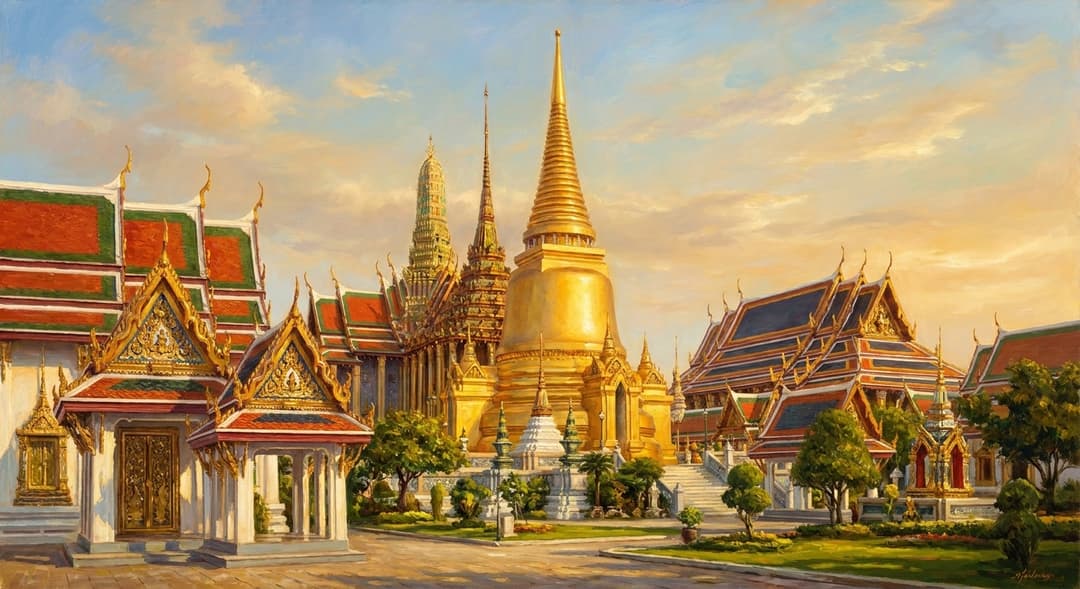
Wat Phra Kaew is Thailand's most revered Buddhist site, located inside the Grand Palace complex in central Bangkok. Visitors should plan for morning arrivals to avoid intense afternoon heat and large tour crowds. Modest attire covering shoulders and knees is strictly enforced at all entry checkpoints.
Highlights
- Venerating the sacred Emerald Buddha seated on its multi-tiered golden throne
- Walking the 2-kilometer cloister gallery showcasing 178 Ramakien mural panels
- Admiring the golden bell-shaped Phra Siratana Chedi on the upper terrace
- Viewing the 12 towering Yaksha demon guardians protecting the temple gates
Things to Know
- Strict dress code: shoulders, knees, and ankles must be fully covered
- Photography is strictly forbidden inside the main Phra Ubosot ordination hall
- Shoes must be removed before entering any sacred chapel or building
Location
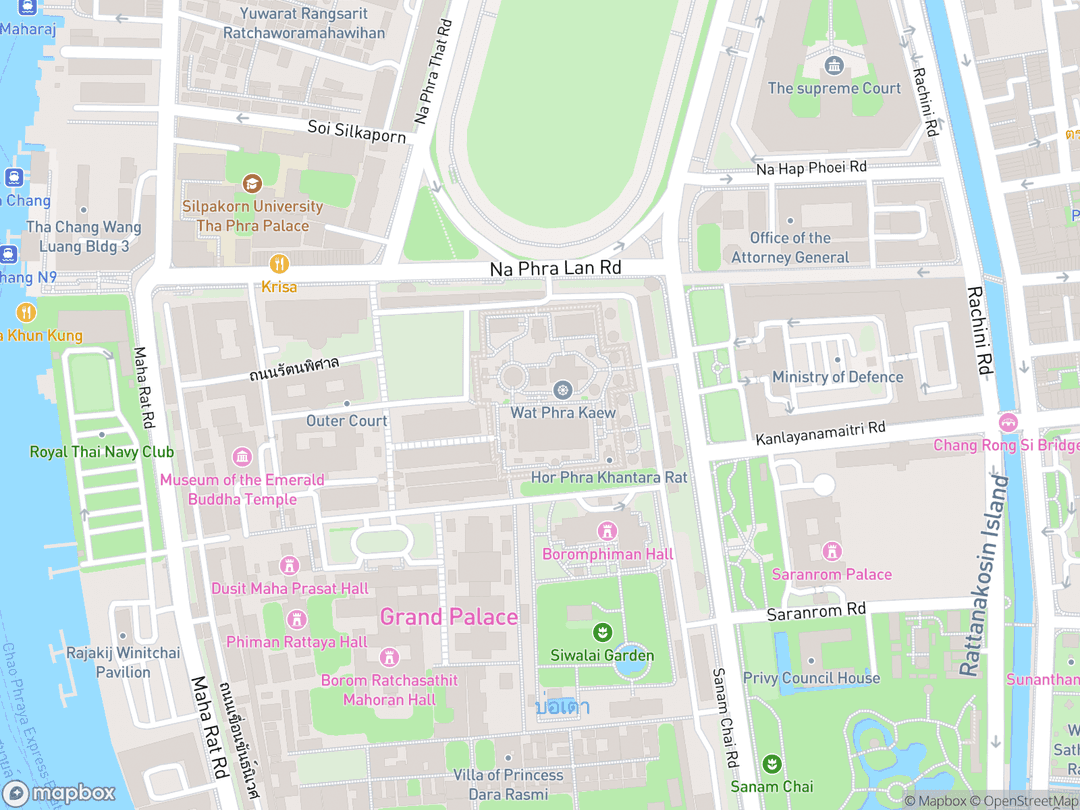
Na Phra Lan Road, Phra Borom Maha Ratchawang, Phra Nakhon, Bangkok 10200, Thailand
Hours: Daily from 8:30 AM to 3:30 PM
Getting There: Take the MRT Blue Line to Sanam Chai Station (Exit 1) and walk 10 minutes north, or take the Chao Phraya Express Boat to Tha Chang Pier (N9).
Get DirectionsTips for Your Visit
Arrive at Opening
Enter right at 8:30 AM to experience the quiet morning light on the golden Chedi before tour groups arrive.
Dress Appropriately
Wear long trousers or long skirts and sleeved shirts; sarongs are no longer rented at the gate.
Respect Sacred Boundaries
Remove shoes cleanly at designated racks and never point your feet toward the Emerald Buddha image.
About
Wat Phra Kaew, formally known as Wat Phra Si Rattana Satsadaram, serves as the sacred royal chapel within the Grand Palace compound in Bangkok. Established in 1783 by King Rama I, the temple anchors the spiritual heart of the Chakri Dynasty and the nation. Unlike standard Theravada monasteries, it functions exclusively as a royal chapel without resident monks.
Within the Dharmic traditions of Theravada Buddhism, the temple represents the pinnacle of Thai religious architecture and statecraft. The complex houses the Emerald Buddha, a sacred jadeite image venerated as the spiritual palladium of Thailand. Kings perform essential rites here, demonstrating the monarch's role as a righteous Dhammaraja ruling under Buddhist principles.
Gallery
Symbolic Elements
The temple's exterior features intricate carvings, each rich with spiritual meaning:
Phra Kaew Morakot
The dark green jadeite statue seated in meditation posture serves as Thailand's spiritual palladium.
Seasonal Royal Robes
Three set garments of gold and gems symbolize the King's duty to maintain cosmic order across seasons.
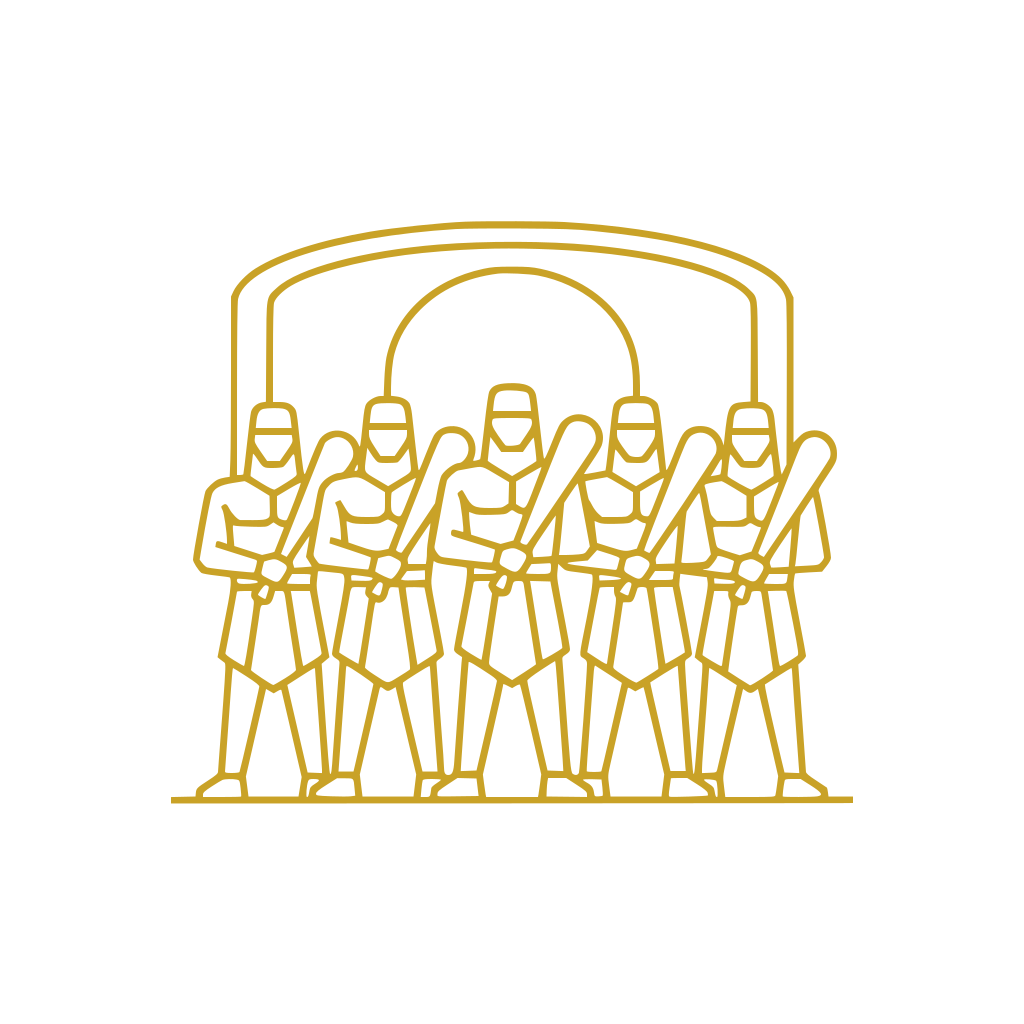
Yaksha Guardians
Five-meter-tall colorful demon giants hold massive clubs to protect the sacred enclosure from evil forces.
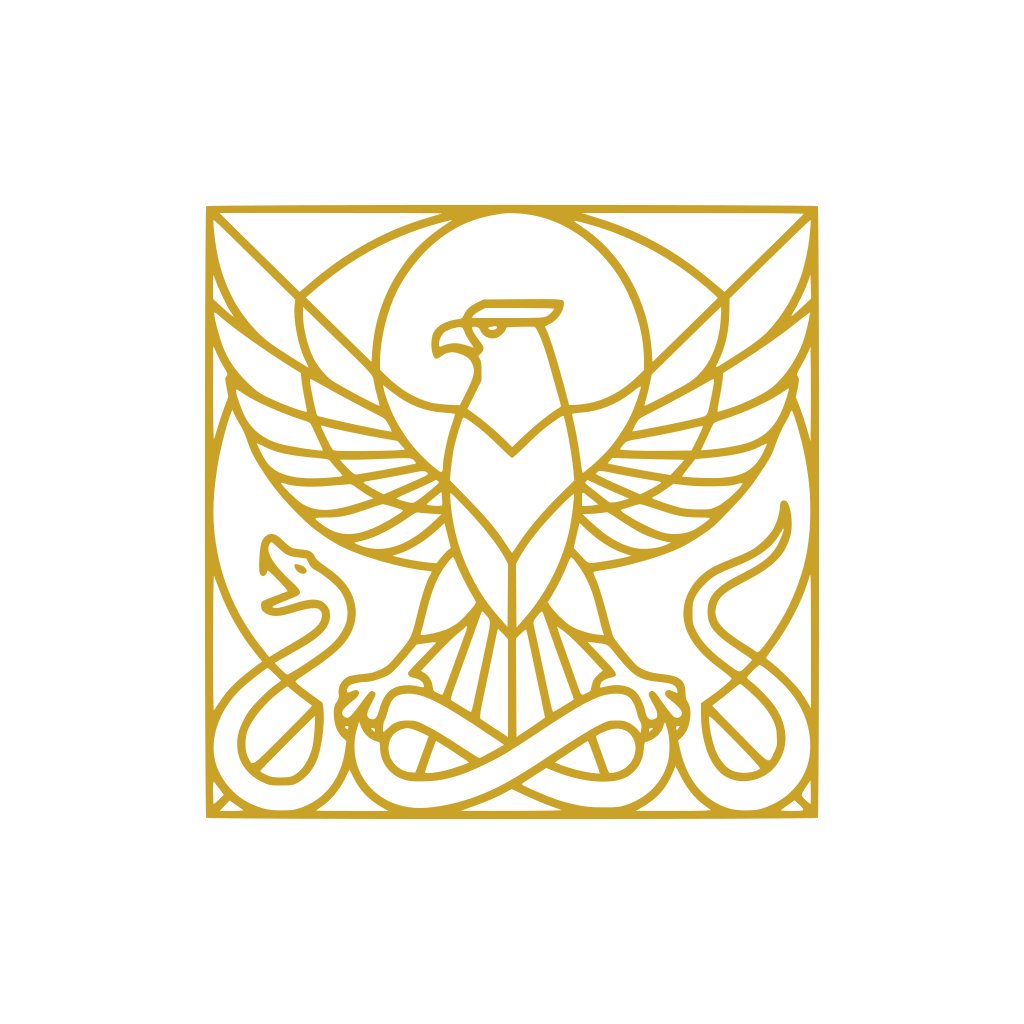
Garuda and Naga
Gilded figures of Vishnu's divine eagle clutching serpents represent royal righteousness over chaos.
Kinnari and Apsaras
Mythological half-human celestial beings line the upper terrace to transform it into an earthly paradise.

Double Sema Stones
Carved flame-shaped stone markers set in marble pavilions signify consecrated royal ritual space.
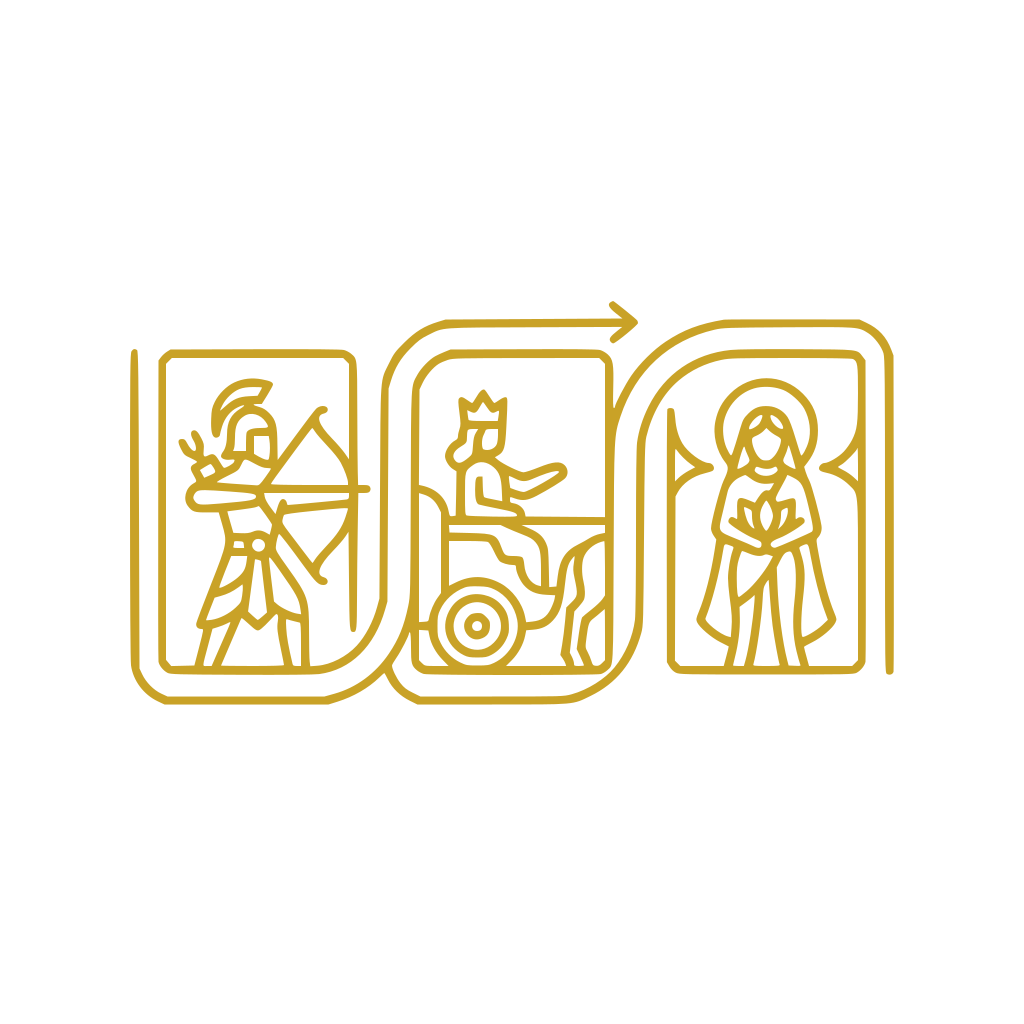
Ramakien Murals
A series of 178 continuous painted wall panels depict the eternal triumph of virtue over disorder.
Phra Siratana Chedi
A golden bell-shaped stupa modeled after Ayutthaya architecture enshrines relics of Gautama Buddha.
Interesting Facts
Wat Phra Kaew has no resident monks because it was established purely as a royal state chapel (Tier A).
The Emerald Buddha is carved from green jadeite rather than mineral emerald (Tier A).
Only the King or Crown Prince is permitted to touch the sacred image during robe changes (Tier A).
The gallery murals span over two kilometers, making them among the world's longest wall paintings (Tier B).
The Emerald Buddha was discovered in 1434 after lightning struck a pagoda in Chiang Rai (Tier B).
A total of 112 gold-gilded bronze Garudas encircle the outer base of the central chapel (Tier A).
King Rama IV built a detailed scale model of Angkor Wat within the court grounds (Tier A).
The floor of the scripture library is covered entirely in woven silver mats (Tier B).
Restoration artisans secretly painted humorous local scenes into corners of the ancient murals (Tier B).
Common Questions
Why are there no monks living at Wat Phra Kaew?
Wat Phra Kaew was designed specifically as a royal chapel inside palace grounds, lacking monastic residential quarters.
Is the Emerald Buddha actually made of emerald?
No, the image is carved from a single solid block of translucent green jadeite.
Can visitors take photos inside the main ordination hall?
No, photography is strictly prohibited inside the Phra Ubosot to maintain reverence.
Who changes the robes of the Emerald Buddha?
Only the reigning King of Thailand or the Crown Prince may touch and change the image's robes.
When is the Royal Pantheon open to the public?
Prasat Phra Debidorn opens to the public only once a year on Chakri Memorial Day, April 6.
Featured Stories
Discovery Under Cracked Stucco
1434
In 1434, lightning struck a stupa at Wat Pa Yia in Chiang Rai, cracking open an ancient plaster Buddha statue. Monks noticed a brilliant green glint beneath the shattered stucco, revealing the exquisite jadeite image now known as the Emerald Buddha. This legendary discovery marked the beginning of its centuries-long journey across Southeast Asian kingdoms before arriving in Bangkok.
Source: Royal Thai Chronicles
The Tri-Annual Seasonal Robe Change
1784
King Rama I established the royal ritual of changing the Emerald Buddha's attire three times a year to mark the Summer, Rainy, and Winter seasons. During this solemn ceremony, the King personally wipes away dust and changes the golden garments to pray for national stability and agricultural prosperity. This sacred tradition remains an unbroken royal duty maintained by the Chakri monarchs to this day.
Source: Bureau of the Royal Household
Restoring the Ramakien Gallery Murals
1982
For the 1982 Bangkok Bicentennial, King Rama IX commissioned Thailand's master artists to execute a massive restoration of all 178 Ramakien mural panels. Artisans spent months repainting intricate gold leaf details and vibrant mythological battles along the two-kilometer cloister wall. Their dedicated craftsmanship preserved one of the greatest masterpieces of Thai classical painting for future generations.
Source: Fine Arts Department of Thailand
Timeline
Bangkok Established
King Rama I establishes the Rattanakosin Kingdom and selects the site for the royal capital.
MilestoneConstruction Begins
Work commences on the Grand Palace and its adjacent royal chapel compound.
component.timeline.groundbreakingEmerald Buddha Transferred
The sacred image is ceremoniously moved across the Chao Phraya River to its new home.
EventRoyal Dedication
The complete royal chapel complex is formally dedicated by King Rama I.
DedicationFifty-Year Restoration
King Rama III initiates major restorations and repainting of the Ramakien murals for Bangkok's jubilee.
RenovationUpper Terrace Expansion
King Rama IV begins building the golden Phra Siratana Chedi to house sacred relics.
RenovationBangkok Centennial Works
King Rama V completes Prasat Phra Debidorn to house statues of preceding monarchs.
RenovationSesquicentennial Restoration
King Rama VII oversees comprehensive preservation for the 150th anniversary of the capital.
RenovationBicentennial Renewal
King Rama IX leads a nationwide restoration campaign restoring all 178 Ramakien mural panels.
RenovationRoyal Coronation Rites
King Rama X completes sacred purification rituals at Wat Phra Kaew during his coronation.
EventHistory by Decade
1780s — Foundation of Bangkok and Royal Chapel
Following the fall of Ayutthaya and the establishment of the Rattanakosin Kingdom, King Rama I selected the east bank of the Chao Phraya River for his royal residence. Construction began in 1783 on both the Grand Palace and Wat Phra Kaew. On March 22, 1784, the Emerald Buddha was triumphantly enshrined inside the new Phra Ubosot.
1830s — Jubilee Restorations Under Rama III
To celebrate the 50th anniversary of Bangkok in 1832, King Rama III directed comprehensive repairs throughout the chapel grounds. Master painters carried out the first major restoration of the Ramakien cloister murals, and structural timber frames were reinforced against moisture damage.
1850s — Monumetanl Expansion Under King Mongkut
King Rama IV (King Mongkut) transformed the upper terrace into a grand monument court. He commissioned the golden Phra Siratana Chedi stupa to store sacred relics and initiated construction of the Royal Pantheon. He also commissioned a detailed scale model of Angkor Wat to educate palace visitors.
1880s — Centennial Renewal Under Rama V
For the 1882 Bangkok Centennial, King Rama V oversaw massive structural overhauls. Prasat Phra Debidorn was completed and designated to house life-sized statues of past Chakri kings, establishing a centralized venue for ancestral royal veneration.
1930s — Sesquicentennial Preservation
Preparations for Bangkok's 150th anniversary in 1932 under King Rama VII brought modern structural stabilization techniques to the aging brick and timber buildings. The interior silver carpets and mother-of-pearl doors underwent specialized conservation.
1980s — Bicentennial Restorations to Present
King Rama IX led a nationwide restoration effort in 1982, deploying top artisans from the Fine Arts Department to restore every mural panel and regild the outer Garudas. Conservation continues under King Rama X using advanced environmental monitoring.
Architecture & Facilities
Wat Phra Kaew exemplifies early Rattanakosin royal religious architecture, adapting late Ayutthaya artistic forms into a magnificent palace chapel ensemble characterized by multi-tiered roofs, gilded wooden pediments, and brilliant glass mosaic ornamentation.
Building Materials
Exterior Masonry
Brick masonry structure coated in crisp white lime stucco and inlaid with reflective glass mosaics.
Roofing Tiles
Glazed terracotta roof tiles in vibrant orange, green, and blue hues framed by carved teakwood.
Gilded Finishes
Pure gold leaf applied over carved wood, bronze castings, and stucco reliefs throughout the complex.
Ornamental Doors
Heavy teak doors inlaid with intricate mother-of-pearl patterns illustrating sacred figures.
Interior Features
Phra Ubosot Main Hall
High-ceilinged sanctuary housing the Emerald Buddha atop an eleven-meter multi-tiered golden wooden throne.
Phra Mondop Library
Square scripture library featuring silver woven floor mats and mother-of-pearl cabinets holding palm-leaf Tripitaka texts.
Prasat Phra Debidorn
Cross-shaped royal pavilion adorned with ceramic tiles housing life-sized bronze statues of Chakri monarchs.
Cloister Galleries
Covered perimeter walkways adorned with 178 continuous painted mural panels recounting the Ramakien epic.
Temple Grounds
The non-residential royal compound features polished marble terraces, golden celestial guardian statues, miniature spired Sema pavilions, and a stone scale model of Angkor Wat.
Additional Facilities
Visitor facilities include a royal regalia museum, ticket office, security dress-checking station, and paved courtyard pathways leading to the main Grand Palace grounds.
Religious Significance
In Thai Theravada Buddhism, Wat Phra Kaew stands as the paramount spiritual center of the nation. It bridges timeless Buddhist soteriology with royal statecraft, serving as the sanctuary where the King enacts his duty as Dhammaraja—a righteous ruler governing according to the Supreme Law (Dharma).
To serve as the supreme royal chapel for state oaths, monarchical coronation rites, and housing the spiritual palladium of Thailand.
Sacred Ordinances
Tri-Annual Robe Changing
A sacred royal rite where the reigning monarch personally changes the Emerald Buddha's robes for Summer, Rainy, and Winter seasons.
Royal Oath of Allegiance
Solemn state ceremonies where military officers and government ministers pledge loyalty to King and nation before the Emerald Buddha.
Coronation Purification Rites
Ritual purification ceremonies where incoming monarchs invoke the blessings of the Triple Gem and national guardians.
The Emerald Buddha as National Palladium
The Emerald Buddha is venerated not merely as an object of contemplation, but as the divine protector of Thailand. Historical tradition holds that peace, rainfall, and prosperity accompany whichever city reverently houses the sacred image.
Theravada Monarchy and the Dhammaraja Ideal
By personally conducting rituals at Wat Phra Kaew, the monarch demonstrates humility before the Buddha's teachings. This tradition reinforces the concept that temporal power must always be guided by spiritual righteousness and moral integrity.
Similar Temples
Sources & Research
Every fact on Temples.org is backed by verified Sources & Research. Each piece of information is rated by source tier and confidence level.
View All Sources (8)
| Field | Source | Tier | Retrieved |
|---|---|---|---|
| About & Historical Background | Bureau of the Royal Household (opens in a new tab) | A | 2026-02-18 |
| Architecture & Facilities | Fine Arts Department of Thailand (opens in a new tab) | A | 2026-02-18 |
| Religious Significance & Royal Rituals | Ministry of Culture Thailand (opens in a new tab) | A | 2026-02-18 |
| Timeline & Restoration Eras | Smarthistory (opens in a new tab) | B | 2026-02-18 |
| Entity Data & Disambiguation | Wikidata (opens in a new tab) | B | 2026-02-18 |
| Featured Stories & Cultural Rites | Khaosod English (opens in a new tab) | C | 2026-02-18 |
| Visitor Insights & Guidelines | Renown Travel (opens in a new tab) | D | 2026-02-18 |
| Visitor Transportation & Logistics | DTH Travel (opens in a new tab) | D | 2026-02-18 |