Visitor Insights
Visiting Westminster Abbey (Collegiate Church of St Peter)
Westminster Abbey welcomes visitors for both active Christian worship and historical sightseeing. Worship services including Holy Communion and Choral Evensong are open to the public daily without an entry ticket.
Highlights
- Cosmati Pavement before the High Altar
- St. Edward the Confessor's Shrine and Royal Chapels
- Henry VII Perpendicular Gothic Lady Chapel with fan vaulting
- Poets' Corner and the Tomb of the Unknown Warrior
Things to Know
- Closed for tourist sightseeing on Sundays, open for worship only
- Photography is restricted inside the church during active worship
- Airport-style security screening at entry
Location
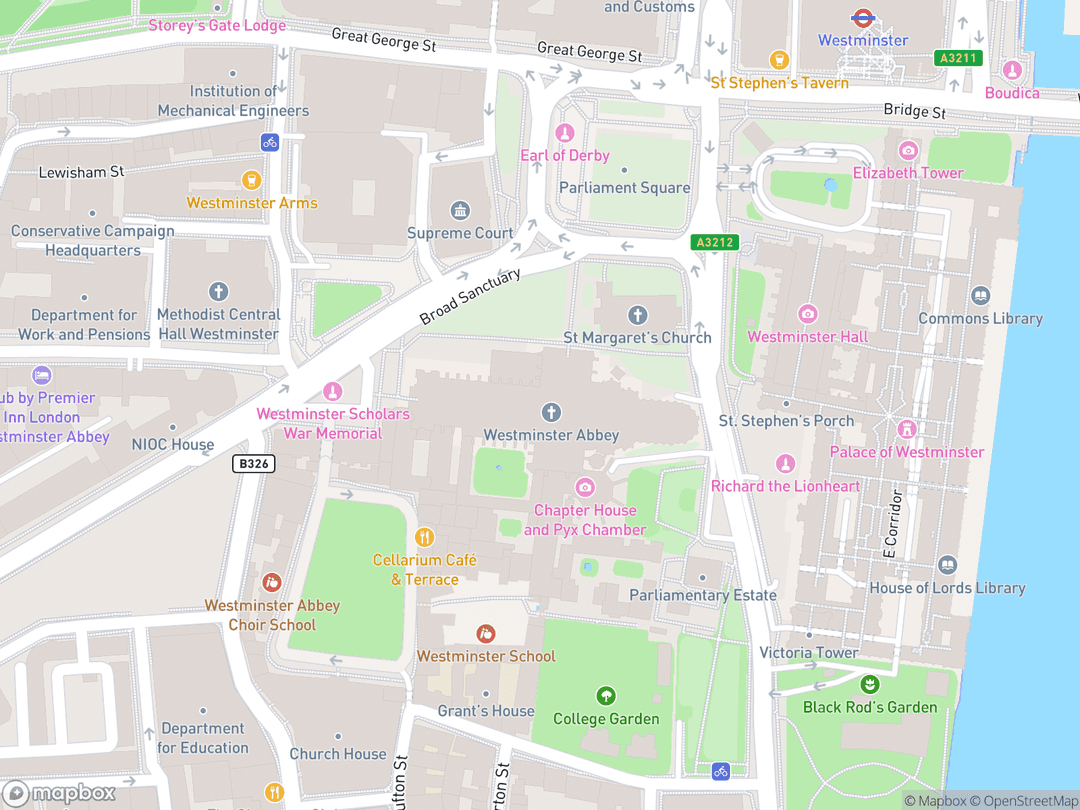
20 Dean's Yard, City of Westminster, London SW1P 3PA, United Kingdom
Hours: Mon-Sat: 9:30 AM - 3:30 PM (Sightseeing); Daily: Services at various times
Getting There: Located near Westminster Underground station (Jubilee, District, Circle Lines) or St James's Park station.
Get DirectionsTips for Your Visit
Attend Choral Evensong
Attending weekday late afternoon Evensong offers a magnificent spiritual experience and sacred choral music without cost.
Arrive Early for Sightseeing
Book timed entry tickets in advance and arrive at opening time (9:30 AM) to experience the nave with fewer crowds.
About
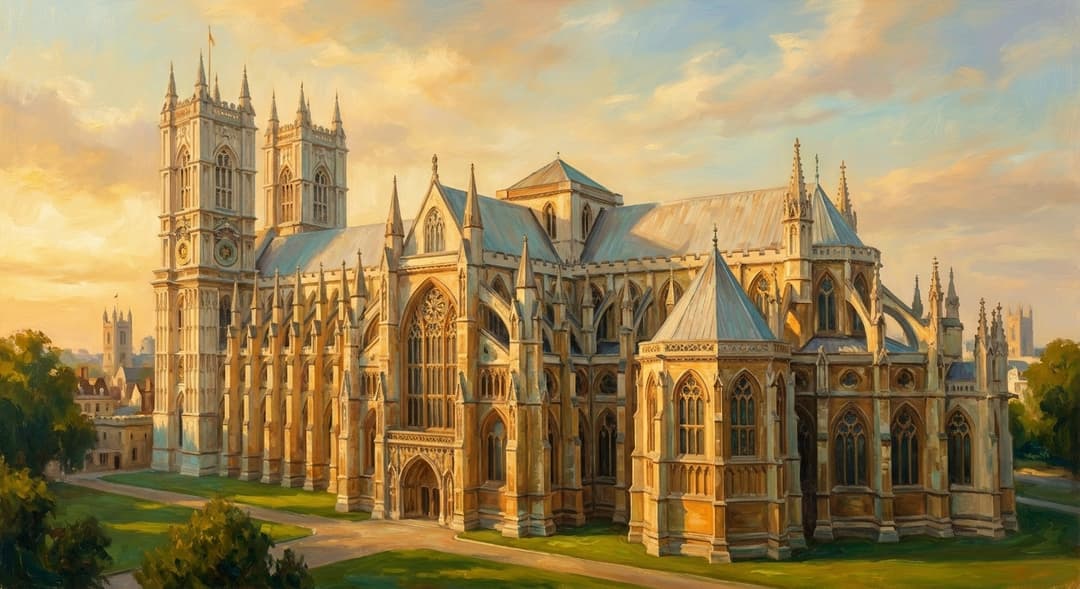
Westminster Abbey, formally known as the Collegiate Church of Saint Peter at Westminster, is one of the United Kingdom's most sacred and historically significant places of Christian worship. Situated in the heart of London beside the Palace of Westminster, the abbey operates as a Royal Peculiar directly under the jurisdiction of the British Sovereign.
Founded initially as a Benedictine monastery in the 10th century, the abbey was transformed into a monumental Gothic masterwork during the 13th century under King Henry III. Since the coronation of William the Conqueror in 1066, Westminster Abbey has served as the coronation site for forty British monarchs and the venue for sixteen royal weddings.
Beyond its royal patronage, the abbey is a royal mausoleum and national sanctuary of memory, holding over 3,300 burials and memorials for historical figures including saints, monarchs, poets, and scientists. It remains an active house of daily prayer, choral evensong, and Christian sacraments.
Gallery
Symbolic Elements
The temple's exterior features intricate carvings, each rich with spiritual meaning:

Cruciform Ground Plan
The Latin cross floor layout symbolizes the physical body of Jesus Christ, orienting worshippers eastward toward the altar.
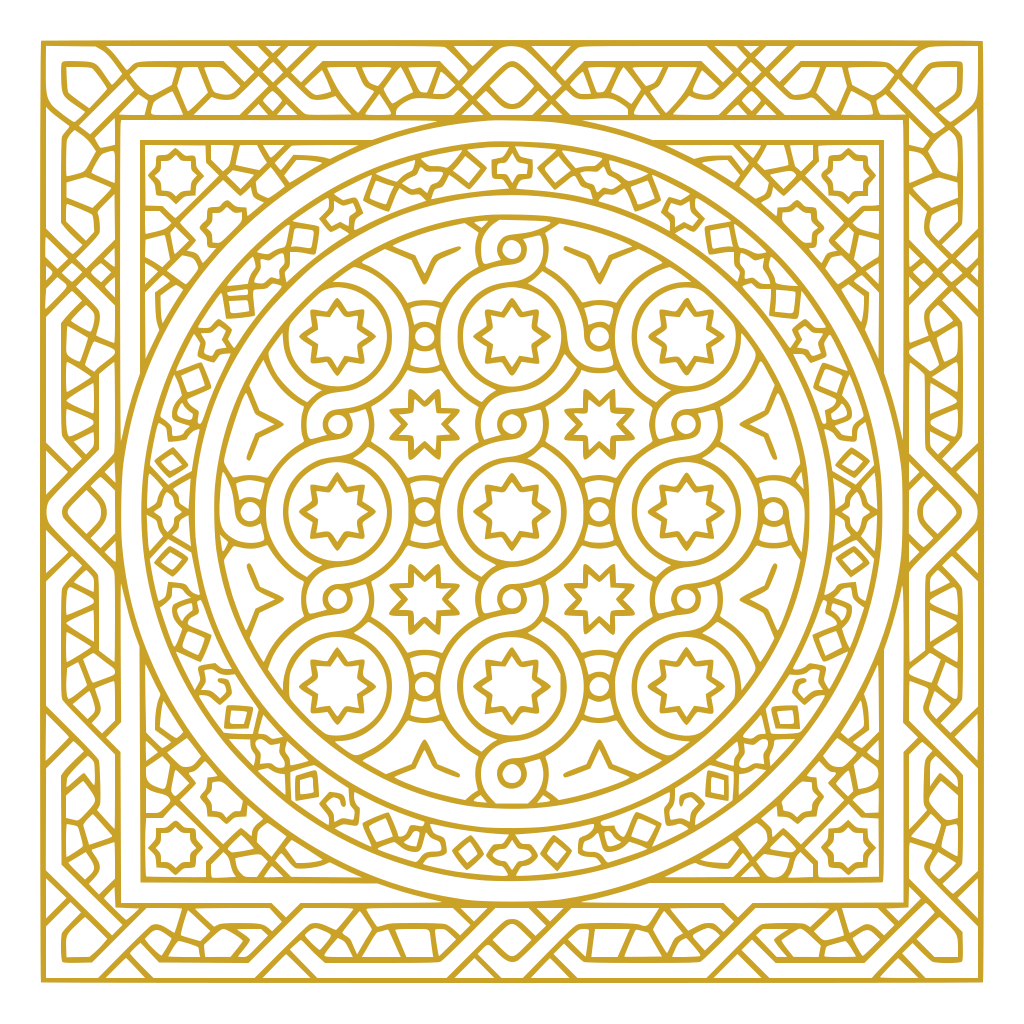
Cosmati Pavement
An intricate 1268 Italian mosaic floor depicting the divine geometry, cosmological order, and lifespan of the created universe.

St. Edward's Shrine
Situated behind the High Altar, this medieval tomb serves as the spiritual heart and holy foundation of the abbey.
Coronation Chair
The historic oak throne used since 1308 for sacred royal anointing and crowning rituals.

Pendant Fan Vaulting
The intricate stone web hanging overhead in the Tudor Lady Chapel symbolizes the perfection of the heavenly realm.

Tomb of the Unknown Warrior
A black Belgian marble slab honoring all fallen WWI soldiers, symbolizing human equality before God.

Octagonal Chapter House
A vaulted central-shaft assembly room symbolizing spiritual community and medieval parliamentary order.

Twin West Towers
Designed in the 18th century, these soaring spires symbolize divine aspiration reaching toward heaven.

Flying Buttresses
External stone arches supporting high vaults, symbolizing external divine strength upholding the church.
Interesting Facts
Every British monarch since 1066 has been crowned at Westminster Abbey, with only two exceptions who were never crowned. (Tier A)
The 13th-century Cosmati mosaic pavement contains a riddling Latin inscription predicting the duration of the world as 19,683 years. (Tier A)
The Pyx Chamber features an oak door felled between 1032 and 1064 AD, making it Britain's oldest surviving Anglo-Saxon door. (Tier B)
It is strictly forbidden to step on the Tomb of the Unknown Warrior slab in the central nave floor. (Tier A)
Poets' Corner began with Geoffrey Chaucer's burial in 1400, placed there because he was a tenant clerk rather than a writer. (Tier B)
The wooden Coronation Chair commissioned by Edward I in 1296 held the Scottish Stone of Scone beneath its seat for seven centuries. (Tier A)
As a Royal Peculiar, the Abbey reports directly to the reigning British Monarch rather than the Bishop of London. (Tier A)
Royal brides traditionally leave their wedding bouquets upon the Tomb of the Unknown Warrior after their ceremony. (Tier B)
Common Questions
Is Westminster Abbey a cathedral?
No, Westminster Abbey is a Royal Peculiar and Collegiate Church governed by a Dean and Chapter, not a cathedral with a bishop's seat.
Can anyone attend church services at Westminster Abbey?
Yes, all daily Christian worship services including Holy Communion and Evensong are open to the public free of charge.
Who is buried inside Westminster Abbey?
Over 3,300 people are buried or memorialized here, including 18 British monarchs, Sir Isaac Newton, Charles Darwin, and Stephen Hawking.
Why is it called an Abbey if there are no monks?
The title reflects its history as a Benedictine abbey monastery dissolved under Henry VIII in 1539.
Featured Stories
The Coronation of 1066
December 25, 1066
On Christmas Day 1066, William the Conqueror was crowned King of England inside the newly completed Romanesque abbey church. The dramatic ceremony combined Anglo-Saxon and Norman traditions, establishing the abbey as the mandatory consecration venue for English monarchs across the next millennium.
Source: Westminster Abbey Official Archives
The Unknown Warrior's Sacred Burial
November 11, 1920
Following the devastation of World War I, an unidentified British soldier brought from the battlefields of France was interred in the nave in French soil. Covered by Belgian marble, the tomb stood as a universal memorial to sacrifice and remains the only floor slab forbidden to be trodden upon.
Source: Westminster Abbey Official Archives
Surviving the London Blitz
May 10, 1941
During a catastrophic air raid on London, German incendiary bombs struck the roof of Westminster Abbey, igniting the lantern timber framework. Courageous staff and firewatchers fought the blaze hundreds of feet above the stone vault, saving the centuries-old sanctuary from total destruction.
Source: Historic England Records
Timeline
Benedictine Monastery Founded
St. Dunstan establishes a small Benedictine monastic community on Thorney Island.
Romanesque Church Consecrated
King Edward the Confessor consecrates his monumental Romanesque church dedicated to St. Peter.
Coronation of William the Conqueror
William the Conqueror is crowned king, establishing the abbey as England's permanent coronation venue.
Canonization of Edward the Confessor
Pope Alexander III canonizes King Edward, making the abbey a major pilgrimage center.
Gothic Church Consecration
King Henry III translates St. Edward's shrine into the rebuilt French Gothic choir and transepts.
Nave Rebuilding Begins
Master mason Henry Yevele resumes rebuilding the long nave in Gothic harmony.
Henry VII Chapel Foundation
Construction begins on the magnificent Perpendicular Gothic Lady Chapel.
Charter as Royal Peculiar
Queen Elizabeth I reconstitutes the abbey as a Royal Peculiar and Collegiate Church.
West Towers Completed
Architect Nicholas Hawksmoor and John James complete the twin Gothic Revival west towers.
Tomb of the Unknown Warrior
The body of an unidentified WWI soldier is interred in the center of the nave.
Blitz Bomb Survival
An incendiary bomb pierces the lantern roof but is extinguished before destroying the timber framing.
Coronation of King Charles III
King Charles III and Queen Camilla are anointed and crowned in the abbey sanctuary.
History by Decade
10th–11th Century — Benedictine Foundations and Edward the Confessor
St. Dunstan established a Benedictine monastic community on Thorney Island around 960 AD. King Edward the Confessor transformed this monastery into a monumental stone Romanesque church dedicated to St. Peter, consecrated in December 1065 days before his death. Following the Norman Conquest, William the Conqueror selected the church for his coronation in 1066.
13th Century — Henry III and the French Gothic Rebuild
King Henry III ordered the dismantling of Edward's Romanesque choir in 1245, financing a magnificent French Gothic rebuild designed by master masons Henry of Reyns and John of Gloucester. On October 13, 1269, the shrine of the newly canonized St. Edward was consecrated behind the High Altar amid soaring vaulted transepts.
14th–15th Century — Completing the Nave and Late Medieval Splendor
Under Abbot Nicholas Litlyngton and master mason Henry Yevele, construction resumed on the nave in 1375. Yevele deliberately matched the 13th-century Gothic architecture, creating architectural unity down the long interior. During this era, Geoffrey Chaucer was buried in the South Transept, founding Poets' Corner.
16th Century — The Tudor Lady Chapel and Royal Peculiar Charter
King Henry VII added a Perpendicular Gothic Lady Chapel featuring extraordinary pendant fan vaulting between 1503 and 1519. Following the Dissolution of the Monasteries in 1539, Queen Elizabeth I granted a charter in 1560 reconstituting the abbey as a Royal Peculiar, securing its governance directly under the British Sovereign.
18th–19th Century — West Towers and Victorian Restoration
Architects Nicholas Hawksmoor and John James designed and completed the twin West Towers in 1745, blending Baroque symmetry with Gothic Revival forms. In the late 19th century, Surveyor of the Fabric Sir George Gilbert Scott restored the Chapter House vault and re-imagined the northern transept facade.
20th–21st Century — Wartime Resilience, Ceremonies, and Jubilees
The abbey survived incendiary bomb hits during the 1941 London Blitz. It hosted major state occasions including Queen Elizabeth II's coronation in 1953, royal weddings, and the 2023 coronation of King Charles III, alongside opening the Queen's Diamond Jubilee Galleries in 2018.
Architecture & Facilities
Westminster Abbey represents a harmonious synthesis of French and Early English Gothic architecture, joined by late medieval Perpendicular Gothic and 18th-century Gothic Revival elements. Inspired by French cathedrals such as Reims and Sainte-Chapelle, the church features England's highest Gothic vault (101 feet), supported by flying buttresses, radiating eastern chapels, and soaring vertical lancets framed by polished Purbeck marble shafts.
Building Materials
Reigate Stone
Soft Surrey stone used for intricate medieval interior wall carvings and vaulting bands.
Caen Stone
Fine Norman limestone imported for detailed relief work and exterior moldings.
Portland Stone
Durable Dorset limestone utilized for 18th-century west tower construction and exterior repairs.
Purbeck Marble
Dark fossiliferous Dorset limestone polished to accent interior columns and floor slabs.
Interior Features
Coronation Sanctuary & High Altar
The sacred crossing containing the 1268 Cosmati Pavement where British monarchs are anointed.
Henry VII Lady Chapel
A Perpendicular Gothic masterwork famous for intricate pendant fan vaulting and royal tombs.
Poets' Corner
The South Transept containing tombs and monuments for major literary figures.
Nave & Tomb of the Unknown Warrior
A soaring central aisle housing the memorial slab for fallen soldiers in French soil.
Temple Grounds
The abbey precinct encompasses Dean's Yard, quiet medieval cloisters, the College Garden, and historic abbey buildings, offering an oasis of calm within central London.
Additional Facilities
The Queen's Diamond Jubilee Galleries in the medieval triforium, visitor center, shop, and Cellarium Cafe.
Religious Significance
Westminster Abbey serves as a house of God where earthly power meets divine judgment. Within Anglican theology, it provides a sanctuary where Christian sacraments are celebrated and national life is dedicated before God.
To serve as a house of daily Christian worship, royal consecration, and national spiritual memory.
Sacred Ordinances
Holy Communion (Eucharist)
Daily Christian sacrament of bread and wine celebrated in the High Altar and chapels.
Choral Evensong
Daily evening prayer service featuring liturgical psalmody and sacred choral compositions.
Royal Anointing & Coronation
The sacred rite where the Sovereign is anointed with holy oil and consecrated under God.
Christian Burial & Commemoration
Liturgical rites committing departed leaders, poets, and citizens into God's mercy.
Royal Peculiar Vocation
Operating directly under the monarch, the abbey provides independent spiritual sanctuary for state occasions without diocesan jurisdiction.
Sanctuary of Memory
Burials of saints, monarchs, scientists, and the Unknown Warrior affirm that all human achievement and sacrifice stand equal under divine eternity.
Similar Temples
Sources & Research
Every fact on Temples.org is backed by verified Sources & Research. Each piece of information is rated by source tier and confidence level.
View All Sources (8)
| Field | Source | Tier | Retrieved |
|---|---|---|---|
| About & Historical Background | Westminster Abbey Chapter (opens in a new tab) | A | 2026-02-22 |
| About & Historical Background | Historic England (opens in a new tab) | A | 2026-02-22 |
| Architecture & Structural Details | UNESCO World Heritage Centre (opens in a new tab) | B | 2026-02-22 |
| Architecture & Structural Details | Encyclopaedia Britannica (opens in a new tab) | B | 2026-02-22 |
| Religious Significance & Ceremonies | Westminster Abbey Chapter (opens in a new tab) | A | 2026-02-22 |
| Religious Significance & Ceremonies | Royal Collection Trust (opens in a new tab) | A | 2026-02-22 |
| Timeline & Featured Stories | Westminster Abbey Chapter (opens in a new tab) | A | 2026-02-22 |
| Visitor Insights & Access | Westminster Abbey Chapter (opens in a new tab) | A | 2026-02-22 |