Visitor Insights
Visiting Holy Trinity Brompton
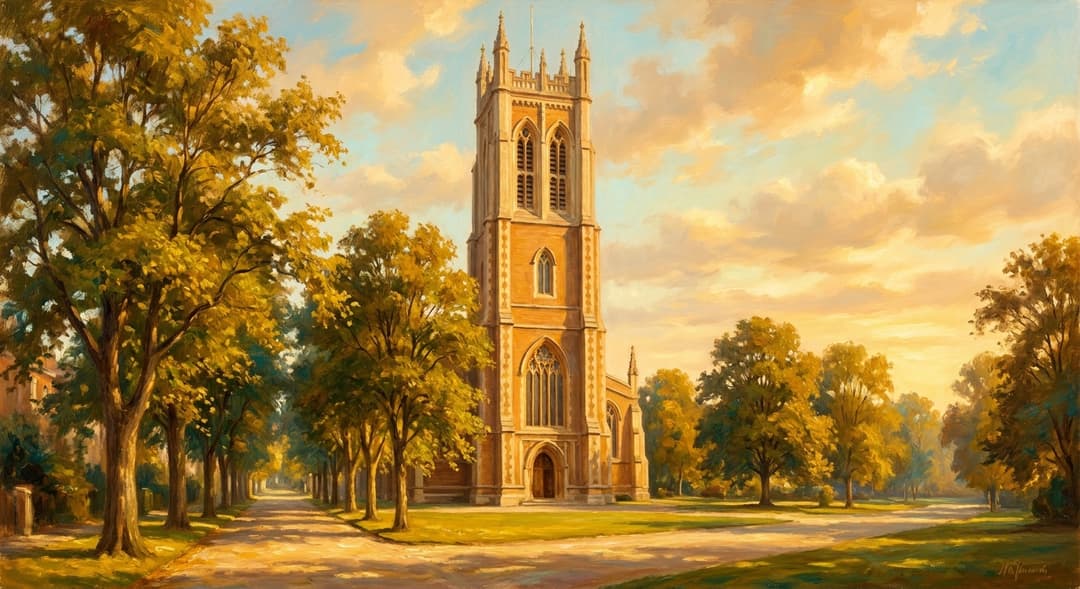
Holy Trinity Brompton offers visitors an inspiring combination of 19th-century Victorian Gothic architecture and dynamic community life. Tucked away down a quiet tree-lined avenue in South Kensington, the church provides a peaceful haven in central London.
Highlights
- Gilded 1885 Venetian glass mosaic reredos depicting Christ Enthroned in Glory
- Secluded 100-yard tree-lined avenue approach from Brompton Road
- Historic 1829 three-stage west entrance tower and open timber roof trusses
- Subterranean crypt facilities and Christian bookshop
Things to Know
- Sunday evening services are popular and attract large crowds
- Weekday mornings from 9:00 AM to 11:30 AM offer the quietest time for architectural viewing
Location
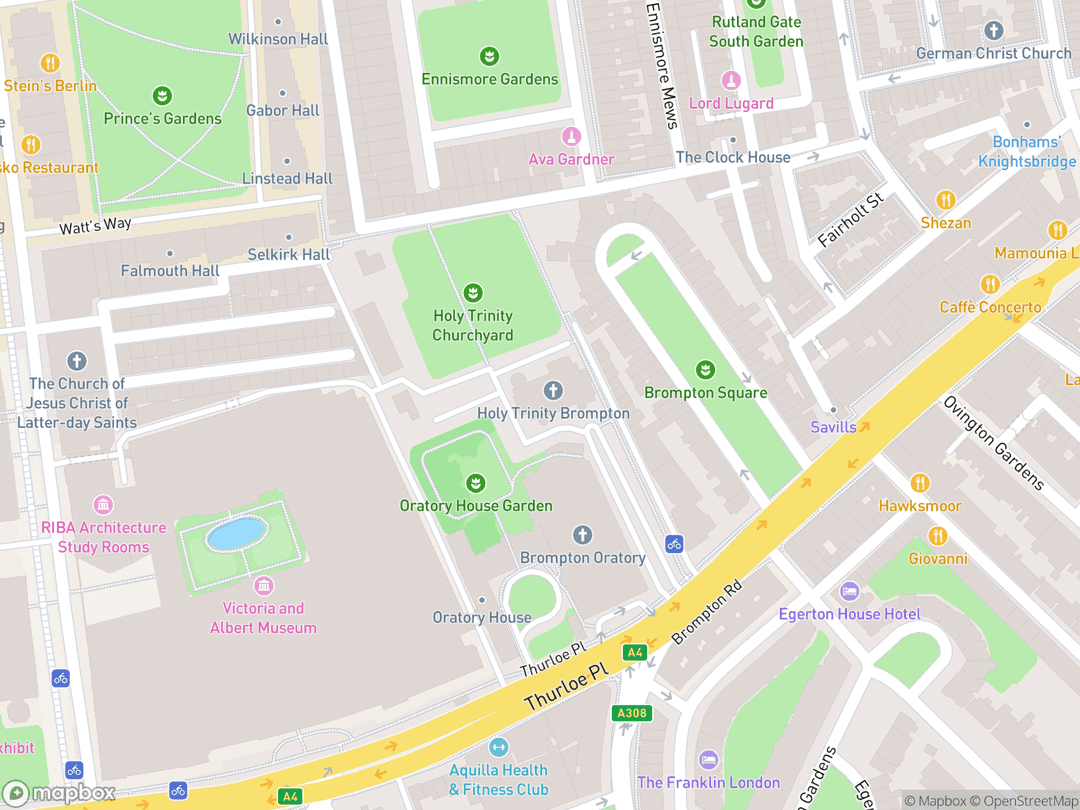
Brompton Road, South Kensington, London SW7 1JA, United Kingdom
Hours: Monday through Friday 8:30 AM – 5:00 PM; Sunday services throughout the day
Getting There: A short walk from South Kensington or Knightsbridge tube stations, with bus lines 14, 74, 414, and C1 stopping outside.
Get DirectionsTips for Your Visit
Best Quiet Visiting Hours
Visit on weekday mornings to explore the nave and mosaic reredos without weekend service crowds.
Nearby Cultural Landmarks
Combine your visit with the neighboring Victoria and Albert Museum and Brompton Oratory on Museum Lane.
About
Holy Trinity Brompton (HTB) is an influential Anglican parish church located in the South Kensington district of London. Originally constructed between 1826 and 1829 as a Commissioners' church funded by Parliament, HTB has evolved into a global epicenter for modern Christian renewal and evangelism.
Tucked behind Brompton Road at the end of a long, tree-lined approach, the Grade II listed building blends 19th-century Georgian and Victorian architecture with an innovative interior design adapted for contemporary worship.
HTB is internationally renowned as the birthplace of the Alpha Course, a Christian introduction program that has reached millions worldwide. The church also serves as the flagship of the HTB Network, an active movement that has revitalized over 100 urban parishes across the United Kingdom.
Interesting Facts
HTB is situated at the end of a 100-yard tree-lined avenue because its frontage land was sold in 1852 for the Brompton Oratory. (Tier A)
The global Alpha Course was created at HTB in 1977 and has reached over 29 million participants across 100 countries. (Tier A)
HTB served as the primary European epicentre for the 1994 charismatic revival known as the Toronto Blessing. (Tier B)
Original architect Thomas Leverton Donaldson later co-founded the Royal Institute of British Architects in 1834. (Tier A)
The HTB Network has planted or revitalized over 100 urban churches across the United Kingdom. (Tier A)
Engineers excavated directly beneath the historic 1829 nave foundations in the 1980s to build a modern crypt facility. (Tier B)
HTB was among the first Grade II listed central London churches permitted to replace fixed wooden pews with flexible seating. (Tier B)
The church co-founded St Mellitus College, which grew into one of Britain's largest Anglican ordination training centers. (Tier A)
The popular digital devotional app Bible in One Year was developed at HTB and serves over two million daily readers. (Tier A)
Construction was 70% funded by a £7,407 parliamentary grant under the Church Building Act of 1818. (Tier A)
Common Questions
Where is Holy Trinity Brompton located?
HTB is located on Brompton Road in South Kensington, London, down a tree-lined driveway adjacent to the Brompton Oratory.
What is the Alpha Course and where did it start?
Alpha is a global introduction to Christian faith created at HTB in 1977 that has reached over 29 million people worldwide.
When was Holy Trinity Brompton built?
Construction took place between 1826 and 1829, and the building was consecrated on June 6, 1829.
Is Holy Trinity Brompton open to visitors?
Yes, visitors can attend Sunday services or visit the nave, bookshop, and crypt during weekday office hours.
Featured Stories
The Birthplace of the Global Alpha Course
1977
In 1977, HTB curate Charles Marnham introduced a six-week basic Christianity course for new believers. Transformed in 1990 by curate Nicky Gumbel into a warm, welcoming environment for non-churchgoers, Alpha expanded globally. Today, over 29 million participants across 100 countries have explored faith through this HTB initiative.
Source: Holy Trinity Brompton Archives
Engineering Beneath the Historic Nave
1985
Faced with explosive growth in congregation size and Alpha attendance during the 1980s, HTB undertook a major engineering feat. Structural engineers excavated directly beneath the 1829 nave foundations to construct a full subterranean complex. This crypt now houses production suites, seminar rooms, and a bookshop without altering the Grade II listed structure above.
Source: Church Building Gazette
Revitalizing Urban Parishes Across Britain
2005
To address declining church attendance in inner-city centers, HTB pioneered an innovative church planting strategy. By sending teams of clergy, resources, and hundreds of congregants, HTB revitalized near-empty historical churches starting with St Paul's Shadwell in 2005. The resulting HTB Network now encompasses over 100 thriving churches across the United Kingdom.
Source: Diocese of London Historical Records
Timeline
Construction Begins
Architect Thomas Leverton Donaldson begins construction funded by the Church Building Commission.
component.timeline.groundbreakingConsecration
Bishop Charles James Blomfield consecrates Holy Trinity Brompton as a new parish church.
DedicationIndependent Parish Constituted
HTB is formally established as an independent ecclesiastical parish serving Brompton.
MilestoneStructural Alterations
Architect John Blore replaces the original southern entrance with an expansive tracery window.
RenovationLand Sale for Brompton Oratory
Frontage land along Brompton Road is sold, creating HTB's distinctive long avenue approach.
EventGothic Interior Remodeling
Sir Arthur Blomfield begins a major overhaul of the nave and chancel with polychromatic brickwork.
RenovationMosaic Reredos Installed
John R. Clayton installs a gilded Venetian glass mosaic of Christ Enthroned behind the altar.
component.timeline.artGrade II Listing
The British government grants Grade II listed status to protect the architectural landmark.
MilestoneLaunch of the Alpha Course
Curate Charles Marnham introduces a six-week introduction to Christian fundamentals.
MilestoneCrypt Excavation & Reordering
The crypt is excavated beneath the nave and fixed pews are replaced with open seating.
RenovationCharismatic Revival Meetings
HTB becomes the European epicentre of charismatic renewal during the Toronto Blessing movement.
EventRev. Archie Coates Appointed
Rev. Archie Coates succeeds Rev. Nicky Gumbel as Vicar of Holy Trinity Brompton.
MilestoneHistory by Decade
1820s — Parish Founding and Commission Construction
Holy Trinity Brompton was established to serve the rapidly expanding residential population of western London. Funded under the Church Building Act of 1818 with a substantial grant from Parliament, architect Thomas Leverton Donaldson designed the Georgian Lancet Gothic edifice, which was consecrated on June 6, 1829.
1840s–1850s — Architectural Modifications and Avenue Creation
Local architect John Blore altered the southern facade in the mid-1840s. In 1852, HTB sold a portion of its frontal land to facilitate the construction of the neighboring Brompton Oratory, creating HTB's signature tree-lined avenue approach.
1870s–1880s — High Victorian Gothic Remodeling
Under Sir Arthur Blomfield, HTB underwent an extensive interior transformation featuring polychromatic brickwork, open roof trusses, and new woodwork. In 1885, artist John R. Clayton installed the gilded Venetian glass mosaic reredos behind the main altar.
1940s–1970s — Heritage Designation and Alpha Origins
The church building received Grade II listing in 1949 in recognition of its architectural importance. In 1977, HTB curate Charles Marnham introduced the first Alpha Course, laying the foundation for a international movement.
1980s–1990s — Subterranean Expansion and Charismatic Renewal
Under John Collins and Sandy Millar, HTB excavated its crypt to add seminar facilities and removed fixed pews for reconfigurable seating. In 1994, the church became the European hub for charismatic renewal during the Toronto Blessing movement.
2000s–Present — Global Movement and HTB Network
Under Nicky Gumbel and successor Archie Coates, Alpha expanded to over 29 million participants globally. HTB also pioneered urban church planting, creating a network of over 100 revitalized congregations across Great Britain.
Architecture & Facilities
Holy Trinity Brompton features an evolving architectural fusion combining a late Georgian Lancet Gothic exterior built between 1826 and 1829 with a vibrant polychromatic Victorian Romanesque-Gothic interior redesign completed in the early 1880s by Sir Arthur Blomfield.
Building Materials
Exterior Wall Construction
London stock brick faced with Suffolk brickwork and Bath stone dressings.
Sanctuary Reredos
Gilded Venetian glass tesserae mosaic set within carved marble framing.
Roof Framing
Open timber-truss roof supported by stone corbels carved with historical busts.
Clerestory Windows
Tall pointed lancet windows filled with Early English tracery.
Interior Features
Main Sanctuary Auditorium
A flexible pew-free nave accommodating 1,000 worshippers for dynamic services.
Chancel and Altar Sanctuary
A raised choir area dominated by an 1885 mosaic depicting Christ Enthroned.
Upper Galleries
Three timber-framed upper galleries surrounding the nave to maximize vertical seating.
Subterranean Crypt
An excavated underground complex containing seminar rooms, offices, and a bookshop.
Temple Grounds
The church occupies a unique campus-like footprint hidden behind Brompton Road, approached down a picturesque 100-yard tree-lined avenue framed by manicured gardens and historic churchyard pathways.
Additional Facilities
Features an extensive underground crypt complex with seminar rooms, media production suites, administrative offices, and a Christian bookshop.
Religious Significance
As the mother church of the global HTB Network, Holy Trinity Brompton holds immense significance within contemporary Christian evangelism and Charismatic Anglicanism, bridging historic orthodoxy with active global mission.
To serve as a vibrant worship center, church planting engine, and global hub for introducing people to the Christian faith.
Sacred Ordinances
The Holy Communion (Eucharist)
Regular sacramental bread and wine service remembering Christ's sacrifice and uniting the congregation.
Christian Baptism
Sacrament of spiritual rebirth using the historic 1863 stone font near the nave entrance.
The Alpha Course
An introductory curriculum exploring the basics of Christian faith through fellowship and open discussion.
Charismatic Renewal and Ministry
HTB emphasizes the present action of the Holy Spirit, encouraging spiritual gifts, prayer ministry, and congregational worship.
Global Church Planting Movement
Through the HTB Network, the church has revitalized over 100 declining urban parishes across the United Kingdom.
Similar Temples
Sources & Research
Every fact on Temples.org is backed by verified Sources & Research. Each piece of information is rated by source tier and confidence level.
View All Sources (8)
| Field | Source | Tier | Retrieved |
|---|---|---|---|
| About & Historical Background | Historic England (opens in a new tab) | A | 2026-02-22 |
| About & Historical Background | Holy Trinity Brompton (opens in a new tab) | A | 2026-02-22 |
| Timeline & Leadership | The Church of England (opens in a new tab) | A | 2026-02-22 |
| Alpha Course & Global Impact | Alpha International (opens in a new tab) | A | 2026-02-22 |
| Architecture & Interior Design | Royal Institute of British Architects (opens in a new tab) | B | 2026-02-22 |
| Religious Significance & Education | St Mellitus College (opens in a new tab) | B | 2026-02-22 |
| History & Church Planting | Church Times (opens in a new tab) | B | 2026-02-22 |
| Visitor Insights & Access | GENUKI UK Genealogy and History (opens in a new tab) | C | 2026-02-22 |