Visitor Insights
Visiting Gilbert Arizona Temple
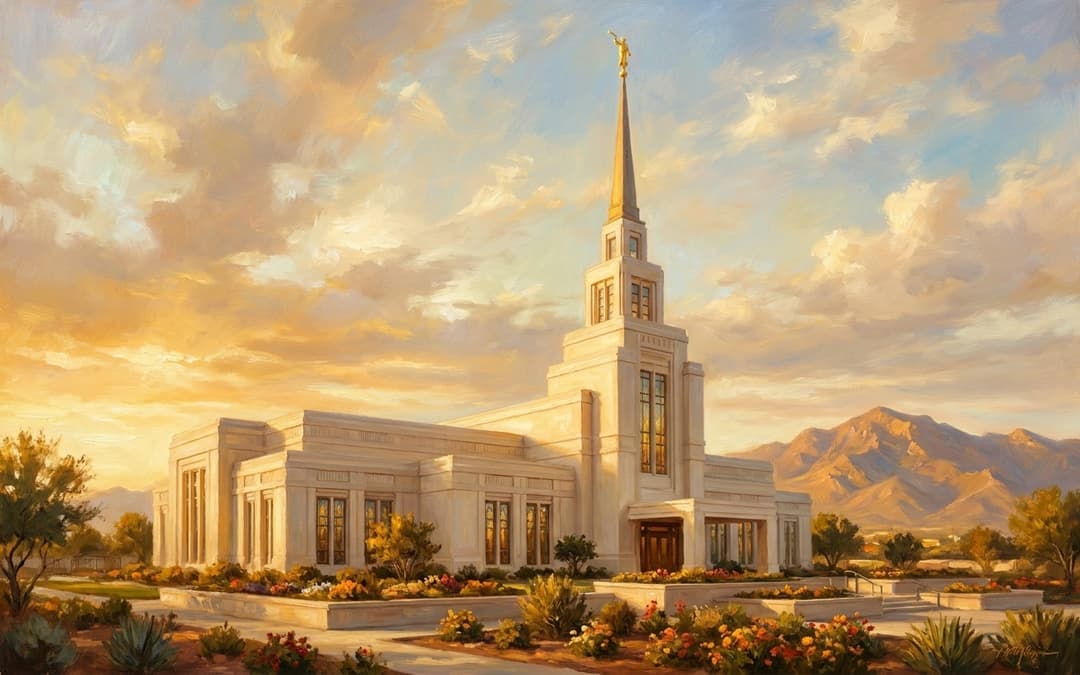
The Gilbert Arizona Temple grounds are a tranquil public space, offering beautifully landscaped gardens and fountains for contemplation. While the temple interior is reserved for members, visitors can enjoy the serene exterior, especially when illuminated at night.
Highlights
- Explore the meticulously landscaped grounds with diverse plant life and water features.
- Enjoy the peaceful atmosphere, perfect for quiet reflection.
- Witness the temple's stunning illumination during evening hours.
Things to Know
- The temple interior is not accessible to the general public after dedication.
- There is no dedicated visitors' center or on-site distribution center.
Location
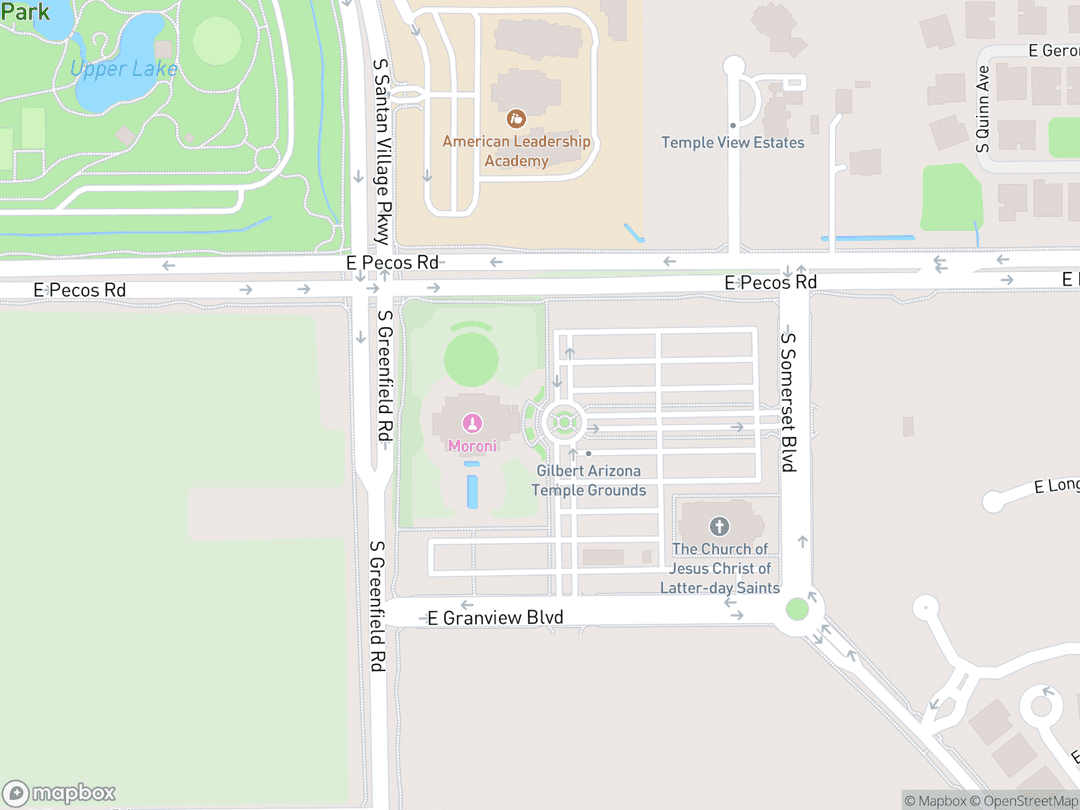
3301 South Greenfield Road, Gilbert, Arizona 85297, United States
Hours: Typically open Tuesday through Saturday for ordinance work; specific hours are available on the official Church website.
Getting There: Located at 3301 South Greenfield Road in Gilbert, Arizona, at the corner of East Pecos Road. Real-time directions are available via navigation apps.
Get DirectionsTips for Your Visit
Evening Visit Recommended
The temple grounds are particularly beautiful and peaceful in the evenings when the temple is illuminated.
Respect Sacred Space
Please maintain a reverent demeanor while visiting the temple grounds, as it is a sacred site for Latter-day Saints.
About
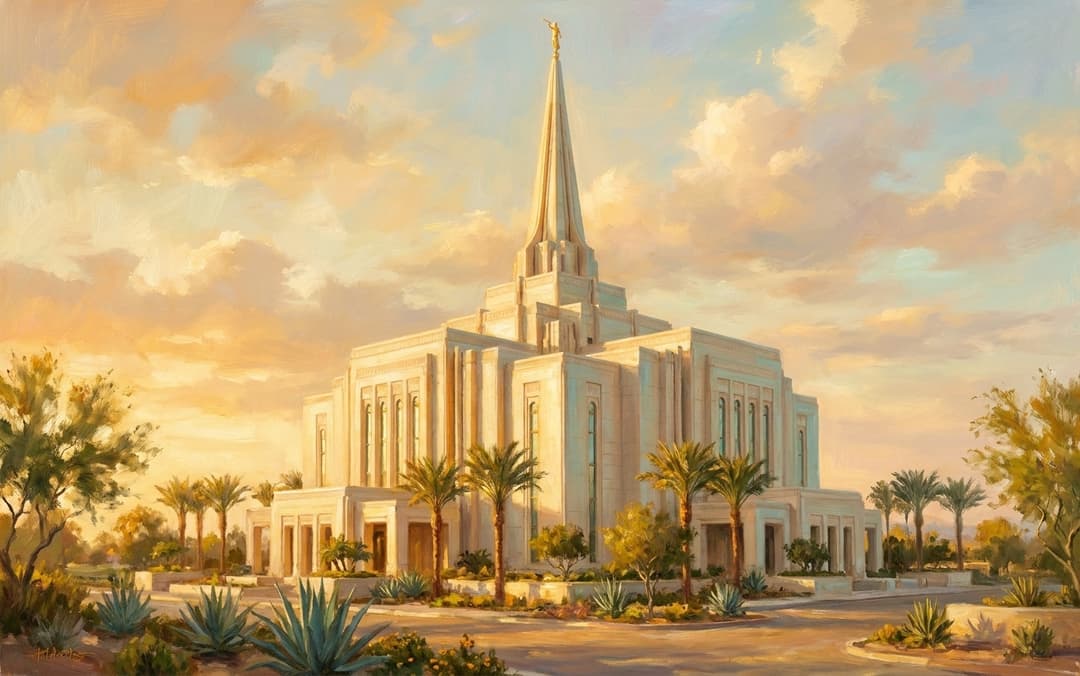
The Gilbert Arizona Temple stands as a significant edifice for The Church of Jesus Christ of Latter-day Saints, dedicated as a "sanctuary of serenity" for its members. Located in Gilbert, Arizona, it serves as a spiritual refuge for members of The Church of Jesus Christ of Latter-day Saints. Its distinctive neoclassical design and desert-inspired interior reflect both its sacred purpose and its regional setting.
Dedicated in 2014, the temple provides essential sacred ordinances for Latter-day Saints in the rapidly growing southeast Phoenix metropolitan area. Its construction marked a significant milestone, becoming the fourth temple in Arizona and one of the largest built by the Church at that time. The temple's grounds are meticulously landscaped, offering a peaceful oasis for public enjoyment.
Gallery
Symbolic Elements
The temple's exterior features intricate carvings, each rich with spiritual meaning:

Angel Moroni Statue
A prominent gold-leafed statue atop the central spire, symbolizing the restoration of the gospel and the Second Coming of Jesus Christ.

Agave Plant Motif
A recurring design element throughout the temple, representing life, rebirth, growth, abundance, and the eternal nature of marriage and family.

Water Features
Designed to resemble hay fields at harvest, these features on the grounds symbolize knowledge flowing forth from the temple, watering the earth.

Holiness to the Lord Inscription
An inscription above the entry proclaiming 'Holiness to the Lord — House of the Lord,' signifying its sacred purpose as a dedicated house of God.

Neoclassical Spire
The temple's central spire, a defining architectural feature, represents aspiration towards heaven and the sacred nature of the edifice.

Desert-Inspired Color Palette
The interior's blues, greens, and earth tones, inspired by the native agave, create a harmonious connection to the Arizona desert environment.

Interlinked Agave Leaves
The intertwined agave leaves motif can symbolize the eternal nature of marriage and family, a core doctrine of Latter-day Saint faith.

White Quartz Exterior
The light cream-colored precast concrete infused with white quartz gives the temple a bright, elegant appearance, symbolizing purity and light.
Interesting Facts
The Gilbert Arizona Temple was the 142nd operating temple of The Church of Jesus Christ of Latter-day Saints worldwide and the fourth in Arizona (Tier A).
At 85,326 square feet, it was the largest temple constructed by the Church in 17 years at the time of its completion (Tier C).
Its announcement in April 2008 was one of the first temple announcements made by President Thomas S. Monson after becoming Church president (Tier A).
The temple's 195-foot spire, topped with the Angel Moroni statue, made it the tallest building in Gilbert at the time of its dedication (Tier C).
Over 407,000 guests toured the temple during its month-long public open house in early 2014 (Tier A).
The exterior precast concrete is infused with white quartz, contributing to its bright, striking appearance (Tier C).
The interior design extensively features the agave plant motif, symbolizing life, rebirth, and the eternal nature of families (Tier A).
The water features on the temple grounds were designed to mimic the appearance of hay fields at harvest, a unique nod to local agricultural history (Tier C).
The temple was built to accommodate the rapidly growing Latter-day Saint population in the southeast Phoenix metropolitan area (Tier C).
The dedicatory prayer described the temple as a 'sanctuary of serenity, a refuge from the storms of life and the noise of the world' (Tier A).
Common Questions
What is the purpose of the Gilbert Arizona Temple?
The temple provides sacred ordinances and covenants for members of The Church of Jesus Christ of Latter-day Saints, including baptisms, endowments, and sealings.
Can non-members enter the Gilbert Arizona Temple?
After its dedication, the temple interior is reserved for members with a current temple recommend, but the grounds are open to the public.
What is the significance of the Angel Moroni statue?
The Angel Moroni statue symbolizes the restoration of the gospel and the Second Coming of Jesus Christ, a key belief in Latter-day Saint theology.
Are there any visitor services available at the temple?
There is no dedicated visitors' center, arrival center, patron housing, or on-site distribution center at this temple.
What architectural style defines the Gilbert Arizona Temple?
The temple features a neoclassical center spire design, characterized by its elegant lines and bright exterior.
Featured Stories
A Sanctuary Announced
April 26, 2008
The announcement of the Gilbert Arizona Temple by President Thomas S. Monson brought immense joy and anticipation to Latter-day Saints in Arizona. This marked one of the first temples announced under his presidency, signifying a new era of temple building and accessibility for members in the rapidly growing region.
Source: The Church News
Community Celebration of Construction
November 13, 2010
Thousands gathered for the groundbreaking ceremony, presided over by Elder Claudio R. M. Costa, marking the official commencement of construction. This event was a vibrant community celebration, reflecting the deep spiritual significance the temple would hold for local members and the broader community.
Source: ChurchofJesusChristTemples.org
A Public Welcome
January 18 – February 15, 2014
Before its dedication, the Gilbert Arizona Temple opened its doors to over 407,000 visitors during a month-long public open house. This period allowed people of all faiths to experience the temple's sacred beauty and learn about its purpose, fostering understanding and goodwill within the community.
Source: The Church of Jesus Christ of Latter-day Saints
Timeline
Temple Announced
President Thomas S. Monson announced plans for the Gilbert Arizona Temple, one of the first temples announced during his presidency.
component.timeline.announcementZoning Approval Granted
The Gilbert Town Council unanimously approved zoning changes, allowing for the temple's construction and height.
MilestoneGroundbreaking Ceremony Held
Elder Claudio R. M. Costa presided over the groundbreaking, attended by thousands, signifying the start of construction.
component.timeline.groundbreakingAngel Moroni Placed
The gold-leafed Angel Moroni statue was placed atop the central spire, a significant construction milestone.
MilestonePublic Open House Begins
A public open house commenced, allowing over 407,000 visitors to tour the temple's interior before its dedication.
EventPublic Open House Concludes
The month-long public open house concluded, having welcomed a vast number of visitors to the sacred edifice.
EventYouth Cultural Celebration
Approximately 12,000 youth participated in a cultural celebration titled 'Live True to the Faith' on the eve of the dedication.
EventTemple Dedicated
President Thomas S. Monson formally dedicated the Gilbert Arizona Temple, with President Henry B. Eyring offering the dedicatory prayer.
DedicationTemporary Closure Due to Pandemic
The temple, like all others worldwide, temporarily closed due to the COVID-19 pandemic.
EventScheduled for Maintenance
The temple is scheduled for periodic closures for routine maintenance and upkeep.
RenovationHistory by Decade
2000s — A New Temple for Arizona
The vision for the Gilbert Arizona Temple began to materialize in the late 2000s, addressing the growing Latter-day Saint population in the region. On April 26, 2008, President Thomas S. Monson announced plans for the temple, sparking excitement among local members. The Gilbert Town Council's unanimous approval of zoning changes in September 2009 paved the way for its construction.
2010s — Construction and Dedication
The decade began with the groundbreaking ceremony on November 13, 2010, marking the official start of construction. A significant milestone occurred on May 15, 2012, with the placement of the Angel Moroni statue atop the spire. The temple then welcomed over 407,000 visitors during a public open house from January 18 to February 15, 2014, before its formal dedication by President Thomas S. Monson on March 2, 2014.
2020s — Continued Service and Maintenance
Since its dedication, the Gilbert Arizona Temple has served as a vital spiritual center for Latter-day Saints in the area. In 2020, like all temples worldwide, it temporarily closed due to the COVID-19 pandemic, demonstrating the Church's commitment to public health. The temple continues its sacred operations, with periodic closures scheduled for essential maintenance to ensure its longevity and functionality.
Architecture & Facilities
The Gilbert Arizona Temple features a distinctive neoclassical center spire design, characterized by its elegant lines, symmetrical composition, and a prominent central spire. This style, adapted for a modern sacred edifice, incorporates fine rustications and detailed stonework, creating a bright and dignified appearance that harmonizes with the Arizona landscape.
Building Materials
Exterior
Crafted from light cream-colored precast concrete infused with white quartz, giving it a bright and elegant appearance.
Interior Walls
Adorned with various woods, including eucalyptus and white oak, alongside painted hardwoods for a refined finish.
Interior Stone
Features honey gold light limestone and Tiberias gold limestone, adding warmth and natural beauty to the sacred spaces.
Stained Glass
Designed by Holdman Studios, the stained-glass windows extensively feature the native agave plant motif in vibrant blues, greens, and earth tones.
Interior Features
Color Scheme
Adorned with a color scheme of blues, greens, and earth tones, inspired by the native agave plant, creating a serene and natural ambiance.
Agave Motif
Extensively used throughout, appearing in stained-glass, carved stonework, sculpted carpets, etched woodwork, and integrated into fixtures.
Baptistry
Houses a sacred font where vicarious baptisms for the dead are performed, symbolizing renewal and spiritual cleansing.
Instruction Rooms
Three dedicated rooms where members receive sacred teachings and participate in the endowment ordinance.
Sealing Rooms
Seven sealing rooms provide sacred spaces for eternal marriage and family covenants, a central doctrine of the faith.
Celestial Room
A space of profound beauty and quiet contemplation, representing a return to God's presence and eternal peace.
Temple Grounds
The 15.38-acre temple grounds are meticulously landscaped with fountains, shaded plazas, trellises, arbors, and pergolas, creating a peaceful oasis in the desert environment. The landscaping includes 10 kinds of trees, 5 palm varieties, and 24 species of shrubs, groundcovers, and vines, with water features designed to resemble hay fields at harvest time.
Additional Facilities
The temple site does not include a dedicated visitors' center, arrival center, patron housing, or on-site distribution center, focusing solely on the sacred temple edifice and its surrounding gardens.
Religious Significance
As a temple of The Church of Jesus Christ of Latter-day Saints, the Gilbert Arizona Temple is considered a sacred 'House of the Lord,' distinct from regular chapels. It is a place where members make solemn covenants with God, receive divine instruction, and participate in saving ordinances essential to their faith in Jesus Christ.
The core spiritual purpose of the temple is to provide a dedicated space for members to draw closer to God, receive spiritual strength, and perform sacred ordinances that facilitate eternal family relationships and the salvation of both the living and the dead.
Sacred Ordinances
Baptism for the Dead
Members perform vicarious baptisms on behalf of their deceased ancestors, offering them the opportunity to accept this saving ordinance in the spirit world.
Endowment
Participants receive sacred instruction, make covenants with God, and are endowed with spiritual power and knowledge to guide them through life and prepare them for eternal life.
Sealing
Families are 'sealed' together for time and all eternity, meaning that marriage and family relationships can continue beyond mortal life, a central doctrine of Latter-day Saint faith.
Eternal Families
A foundational belief in Latter-day Saint theology is that families can be eternal. The temple is the only place where these eternal family bonds, or 'sealings,' can be performed, uniting spouses and children forever.
Covenants and Blessings
Through sacred covenants made in the temple, members commit to follow Jesus Christ and receive promised blessings, including guidance, protection, and the opportunity for exaltation in the presence of God.
A Refuge from the World
The temple provides a sanctuary of peace and spiritual solace, offering a respite from the stresses and distractions of the world, allowing members to focus on their relationship with God.
Similar Temples
Sources & Research
Every fact on Temples.org is backed by verified Sources & Research. Each piece of information is rated by source tier and confidence level.
View All Sources (9)
| Field | Source | Tier | Retrieved |
|---|---|---|---|
| About & Historical Background | The Church of Jesus Christ of Latter-day Saints (opens in a new tab) | A | 2024-07-30 |
| About & Historical Background | The Church News (opens in a new tab) | B | 2024-07-30 |
| Architectural Description & Symbolic Elements | Grokipedia (opens in a new tab) | B | 2024-07-30 |
| Historical Timeline & Architectural Details | ChurchofJesusChristTemples.org (opens in a new tab) | C | 2024-07-30 |
| Architectural Description & Symbolic Elements | Fhe On The Road (opens in a new tab) | C | 2024-07-30 |
| Architectural Description & Symbolic Elements | Photogent (opens in a new tab) | C | 2024-07-30 |
| Interesting Facts & Dedication | Latter-day Saint Magazine (opens in a new tab) | C | 2024-07-30 |
| Visitor Information & Open House | Broughmade (opens in a new tab) | C | 2024-07-30 |
| Site Area & Exterior Materials | Wikidata (opens in a new tab) | B | 2024-07-30 |