Visitor Insights
Visiting Birmingham Alabama Temple
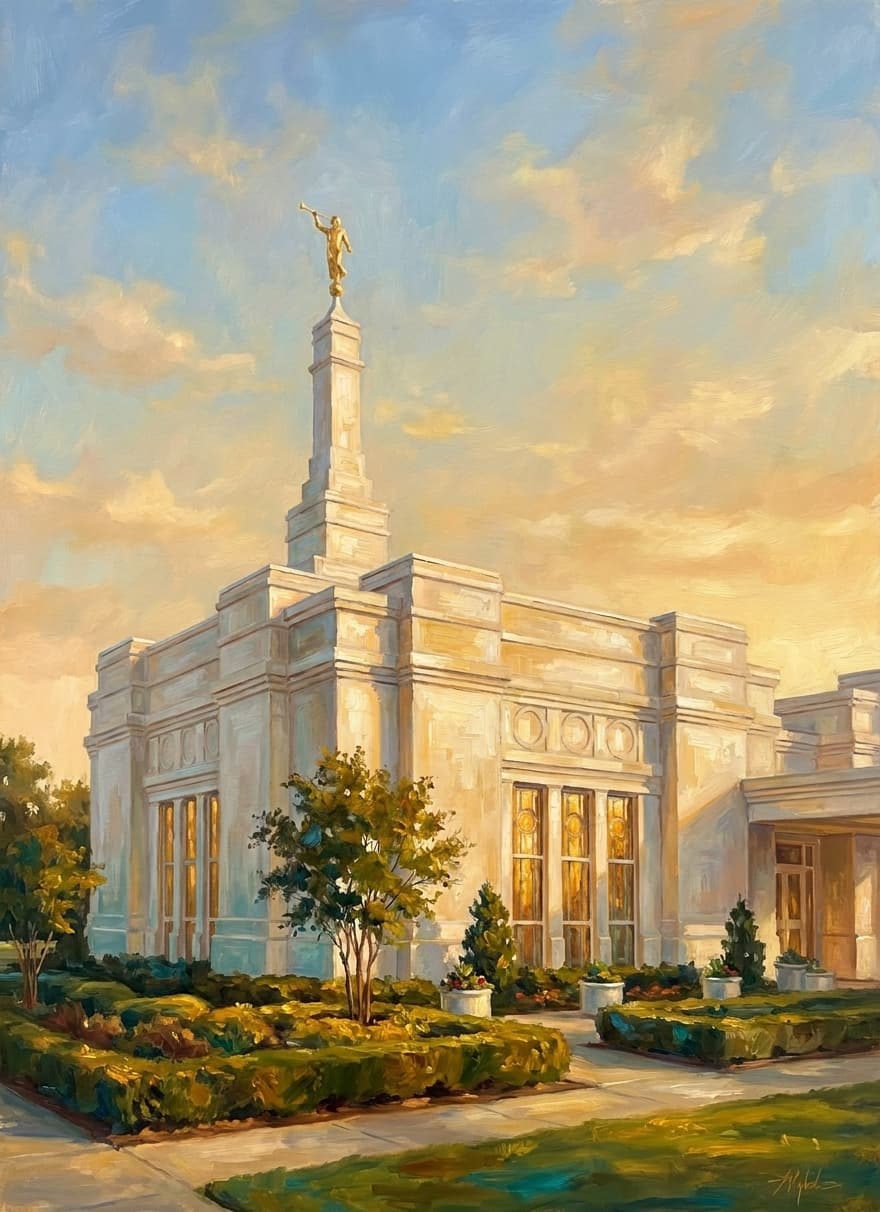
The Birmingham Alabama Temple offers a serene, contemplative escape from the bustle of modern life. Visitors are greeted by a peaceful hillside setting surrounded by native Alabama foliage, providing an ideal environment for quiet reflection and prayer. While the interior is reserved for Latter-day Saint patrons, the beautifully manicured grounds are open to all who seek a moment of spiritual peace. The site is particularly striking at sunset when the Vermont marble exterior catches the warm evening light.
Highlights
- Immaculately landscaped 5.6-acre grounds with native trees and seasonal flowers
- Peaceful hillside setting offering a natural, sheltered atmosphere
- Beautiful Vermont marble exterior that glows softly in the sunlight
- Annual Christmas Nativity display that welcomes visitors of all faiths
Things to Know
- Interior access is reserved for members with active temple recommends
- Reverent dress and behavior are appreciated when walking the grounds
- Operating hours for patrons vary and sessions must be scheduled in advance
Location
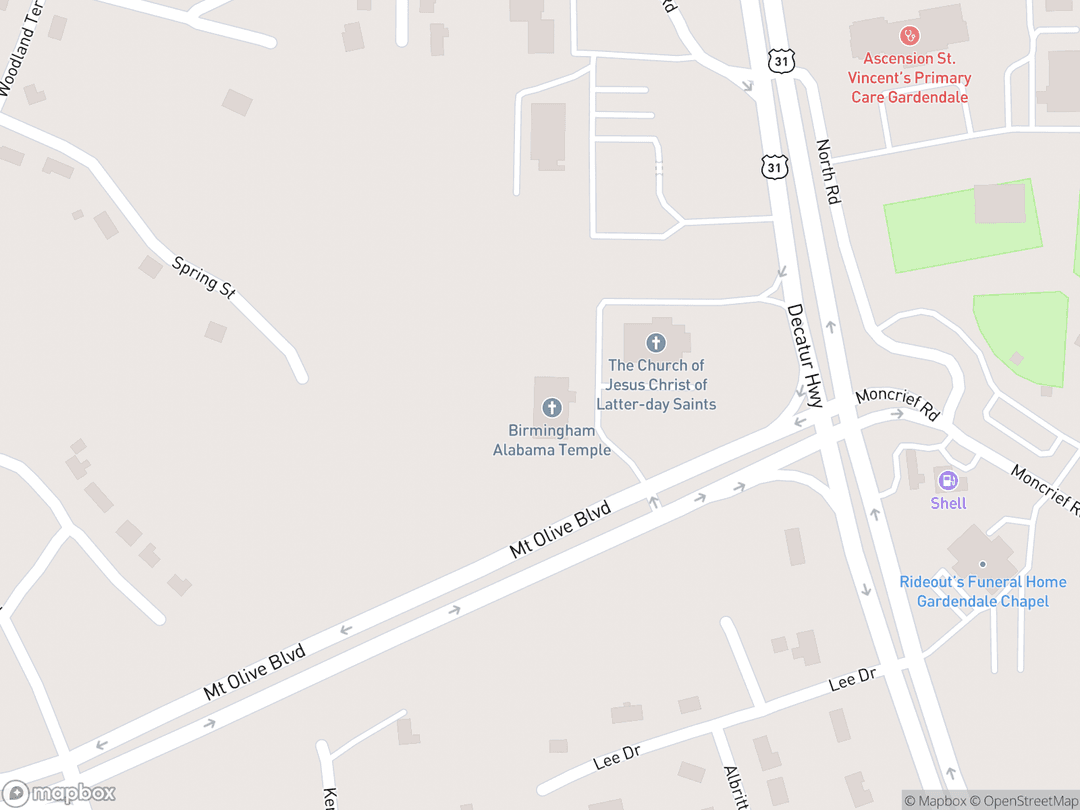
1927 Mount Olive Blvd, Gardendale, Alabama 35071
Hours: Grounds open daily from sunrise to sunset. Temple patron hours vary by appointment.
Getting There: Located at 1927 Mount Olive Blvd in Gardendale, Alabama. Easily accessible off Interstate 65 at Exit 272 (Mount Olive Road), just a short drive north of downtown Birmingham. Ample free parking is shared with the adjacent meetinghouse.
Get DirectionsTips for Your Visit
Visit During Sunset
The Vermont marble exterior catches the warm evening light beautifully, making sunset an exceptionally peaceful time for photos and reflection.
Explore the Hillside Path
Take a quiet stroll along the paved pathways that wind near the rising hillside behind the temple for a unique perspective of the architecture.
Enjoy the Christmas Lights
If visiting in December, be sure to stop by in the evening to view the beautifully illuminated Nativity display on the front lawn.
About
The Birmingham Alabama Temple stands as a sacred monument of faith on a quiet, tree-covered hillside in the suburb of Gardendale, just north of Birmingham, Alabama. Dedicated in 2000, it was the first temple constructed by The Church of Jesus Christ of Latter-day Saints in the state of Alabama. It serves as a vital spiritual center for thousands of Latter-day Saints living across Alabama and the Florida Panhandle, bringing the blessings of temple worship directly to the heart of the American South.
Belonging to the Christian theological grouping within the broader Abrahamic traditions, the temple is not a traditional chapel for weekly congregational worship, but a literal "House of the Lord." It is a sanctuary set apart from the world for sacred covenants, spiritual progression, and eternal ordinances. This distinction is central to Latter-day Saint theology, where the temple serves as a bridge between the mortal and eternal realms.
The history of the Birmingham Alabama Temple reflects the rapid expansion of Latter-day Saint sacred architecture at the turn of the millennium. It was constructed as part of President Gordon B. Hinckley's historic initiative to build smaller, localized temples worldwide. This effort aimed to make temple blessings accessible to members who previously had to travel long distances to reach the nearest temple, which for Alabama members meant traveling to Atlanta, Georgia, or Dallas, Texas.
Today, the temple stands as a beacon of peace and holiness, welcoming patrons who seek to draw closer to God and escape the distractions of the modern world. Its presence in the Gardendale community has fostered deep interfaith understanding and goodwill, serving as a physical representation of the shared Christian values of devotion, family, and service to God.
Gallery
Symbolic Elements
The temple's exterior features intricate carvings, each rich with spiritual meaning:

Angel Moroni
The gold-leafed statue of the angel Moroni atop the single spire represents the restoration of the gospel. It serves as a beacon of faith, drawing upon biblical prophecies of angelic messengers in the latter days.

Sets of Three Windows
The exterior art glass windows are arranged in vertical sets of three. This design element symbolizes the Godhead as well as the three degrees of glory, reinforcing the eternal progression of the soul.

Baptismal Font and Twelve Oxen
The temple's baptismal font rests on the backs of twelve sculpted oxen, patterned after the 'molten sea' in Solomon's Temple. These oxen represent the twelve tribes of Israel, symbolizing the gathering of God's covenant people.

Opposing Mirrors
In the sealing rooms, mirrors are placed on opposite walls directly facing one another. This creates an infinite reflection that symbolizes eternity, reminding couples that their covenants are intended to endure forever.

Vermont Marble Cladding
The pure white Imperial Danby marble cladding symbolizes holiness, purity, and the separation of the sacred temple space from the secular world. It echoes biblical descriptions of the white robes worn by the righteous.

Single Attached Spire
The single, elegant spire points toward heaven, drawing the eyes of onlookers upward. It serves as a visual reminder of humanity's connection to the divine and the upward reach of spiritual aspiration.

The Temple Altar
Located at the center of the sealing and ordinance rooms, the altar is a sacred space where covenants are made. It represents sacrifice, devotion, and the binding of families for eternity.

Symmetrical Classic Modern Facade
The clean, symmetrical lines of the temple's facade reflect order, balance, and the eternal nature of God's laws. This architectural harmony is designed to evoke a sense of peace and divine organization.
Interesting Facts
It was the first temple of The Church of Jesus Christ of Latter-day Saints constructed in the state of Alabama.
The exterior is clad in Imperial Danby White Marble quarried in Vermont, near the birthplace of Joseph Smith.
Dedicated as the 98th operating temple, it was part of a historic effort to reach 100 operating temples by the end of 2000.
Despite a torrential downpour during the groundbreaking, over 2,300 members attended, creating a memorable 'sea of umbrellas' on the hillside.
In 2008, the City of Gardendale presented the temple with a beautification award for its immaculately landscaped grounds.
The dedication weekend coincided with Elder David B. Haight's 94th birthday and his 70th wedding anniversary.
The temple is nestled in a hollow carved out of a steep hillside, with the rising lawn behind it creating a natural amphitheater effect.
The land was originally purchased in the early 1990s for a standard meetinghouse before being selected for the temple site.
Every December, the grounds host a beautifully illuminated Nativity display that attracts visitors from various Christian denominations.
For 25 years, it was Alabama's only temple until the announcement of the Huntsville Alabama Temple on January 21, 2025.
Common Questions
Who can enter the Birmingham Alabama Temple?
While the beautifully landscaped grounds are open to the general public of all faiths, the interior of the temple is reserved for members of the Church who hold an active temple recommend, which certifies they are living the standards of the faith.
How does a temple differ from a regular Latter-day Saint meetinghouse?
Meetinghouses (chapels) are used for weekly Sunday worship services, youth activities, and community events, and are open to everyone. Temples are sacred spaces dedicated to higher ordinances, such as eternal marriages and proxy baptisms, and are closed on Sundays.
What is the significance of the Vermont marble used on the exterior?
The temple is clad in Imperial Danby White Marble quarried in Vermont. This stone was sourced from a quarry near Sharon, Vermont, which is the birthplace of Joseph Smith, the founder of the Church, creating a profound historical and symbolic connection.
Are there special events held at the temple for the public?
Yes, during the Christmas season, the temple grounds host a beautifully illuminated Nativity display. Visitors of all faiths are welcome to walk the pathways, view the lights, and enjoy the peaceful holiday atmosphere.
Is there a visitors' center or patron housing on site?
No, the Birmingham Alabama Temple does not have a public visitors' center or patron housing. However, it shares its 5.6-acre site with a local meetinghouse, which allows for shared parking and community accessibility.
Featured Stories
A Rainy Groundbreaking and a Sea of Umbrellas
October 9, 1999
On a muddy hillside in Gardendale, local Latter-day Saints gathered for the highly anticipated groundbreaking ceremony of the Birmingham Alabama Temple. Despite a steady, heavy downpour that threatened to wash out the event, approximately 2,300 members stood patiently under a vibrant sea of colorful umbrellas. Elder Stephen A. West of the Seventy presided over the service, offering a prayer of dedication for the site. The rain did little to dampen the spirits of those in attendance, who wept tears of joy at the realization that a temple would finally stand in their home state. This memorable event became a legendary symbol of the devotion and resilience of the Alabama Saints.
Source: Church News Archives
A Double Celebration for Elder David B. Haight
September 3, 2000
The dedication of the Birmingham Alabama Temple was not only a historic milestone for the Church in the South, but also a deeply personal celebration for Elder David B. Haight of the Quorum of the Twelve Apostles. Elder Haight, who accompanied President Gordon B. Hinckley for the dedication, celebrated his 94th birthday on September 2, 2000, the day before the temple was dedicated. Furthermore, the day after the dedication, September 4, marked his and his wife Ruby's 70th wedding anniversary. The local members warmly celebrated these milestones alongside the temple's opening, creating an atmosphere of profound love, gratitude, and family unity. Elder Haight's presence served as a living testament to the lifelong commitment to temple covenants.
Source: Church News Archives
Vermont Marble and the Birthplace of Joseph Smith
2000
During the construction of the temple, architects made a deliberate and highly symbolic choice for the building's exterior cladding. They selected Imperial Danby White Marble, a premium stone quarried deep within the green mountains of Vermont. Remarkably, this marble was sourced from a quarry located just a short distance from Sharon, Vermont—the birthplace of the Prophet Joseph Smith. This connection was deeply meaningful to local members, as it physically linked the first temple in Alabama to the very origins of the Restoration. The pure white stone not only provides a dazzling aesthetic that glows in the southern sun, but also stands as a silent, enduring monument to the Prophet who first restored the keys of temple worship.
Source: Temple Construction Records
Timeline
Land Acquisition
The Church purchases a 5.6-acre parcel of land in Gardendale, originally intending to construct a standard local meetinghouse.
MilestoneTemple Announcement
President Gordon B. Hinckley announces plans to construct a temple in Birmingham, Alabama, as part of his landmark smaller temples initiative.
MilestoneSite Selection
Church leadership officially selects the previously acquired Gardendale property as the site for the new temple.
MilestoneGroundbreaking Ceremony
Elder Stephen A. West of the Seventy presides over the groundbreaking ceremony, attended by approximately 2,300 members standing under umbrellas in a heavy rainstorm.
component.timeline.groundbreakingConstruction Completion
Workers complete the exterior cladding of Vermont marble and install the gold-leafed angel Moroni statue atop the spire.
MilestonePublic Open House Begins
The temple opens its doors to the general public, allowing visitors of all faiths to tour the sacred interior rooms.
EventOpen House Concludes
The week-long public open house concludes with a total of 21,134 visitors touring the temple.
EventElder Haight's 94th Birthday
Elder David B. Haight of the Quorum of the Twelve Apostles celebrates his 94th birthday in Birmingham on the eve of the dedication.
EventTemple Dedication
President Gordon B. Hinckley dedicates the Birmingham Alabama Temple in four sessions, making it the 98th operating temple of the Church.
DedicationElder Haight's 70th Anniversary
Elder David B. Haight and his wife, Ruby, celebrate their historic 70th wedding anniversary the day after the temple dedication.
EventBeautification Award
The City of Gardendale presents the temple with a beautification award, recognizing its exceptional landscaping and positive aesthetic impact.
EventDecade of Service
The temple marks over ten years of continuous service, facilitating thousands of sacred ordinances for members across Alabama and the Florida Panhandle.
MilestonePandemic Closure
The temple temporarily closes all operations due to safety precautions surrounding the global COVID-19 pandemic.
EventPhased Reopening
The temple resumes operations in phased stages, gradually returning to full capacity with enhanced health and safety protocols.
EventSecond Alabama Temple Announced
The Church announces plans to construct the Huntsville Alabama Temple, marking the rapid growth of the Church in the state.
MilestoneHistory by Decade
1990s — Announcement and Groundbreaking
The decade of the 1990s was a period of remarkable growth and transition for the Church in Alabama. In 1990, the Church purchased a 5.6-acre parcel of land in Gardendale, a northern suburb of Birmingham, with the initial intention of building a standard local meetinghouse. However, plans shifted dramatically on September 11, 1998, when President Gordon B. Hinckley announced that a temple would be constructed in Birmingham. This announcement was part of a revolutionary initiative to build smaller, localized temples, bringing sacred ordinances directly to members who previously had to travel hundreds of miles to Atlanta or Dallas. The groundbreaking ceremony took place on October 9, 1999, under the direction of Elder Stephen A. West. Despite a torrential rainstorm that turned the hillside into a muddy field, over 2,300 members gathered with umbrellas to witness the historic event. The determination of the local Saints on that rainy day set the tone for the construction phase, which progressed rapidly over the following year.
2000s — Dedication and Community Integration
The new millennium brought the completion of the temple. In August 2000, a week-long public open house was held, drawing over 21,134 visitors from across the region. This open house was a vital opportunity to foster goodwill and clear up misconceptions among the broader Christian community in Alabama. On September 3, 2000, President Gordon B. Hinckley dedicated the temple in four sessions, officially designating it as the 98th operating temple of the Church. Throughout the 2000s, the temple became an integral part of the Gardendale community. The immaculately kept grounds and stunning architecture earned the temple a prestigious beautification award from the City of Gardendale in 2008. Local members volunteered countless hours to maintain the gardens, ensuring that the site remained a peaceful sanctuary for both patrons and neighbors.
2010s–Present — Continued Growth and a Second Temple
As the temple entered its second decade of service, it continued to serve as a vital spiritual hub for stakes across Alabama and the Florida Panhandle. Thousands of members visited the temple annually to participate in sacred ordinances, strengthening their faith and family ties. The temple's operations faced a brief disruption in March 2020 when the global COVID-19 pandemic forced a temporary closure, but it successfully transitioned back to full operations through phased reopening stages. The enduring legacy of the Birmingham Alabama Temple was highlighted on January 21, 2025, when the Church announced plans to construct a second temple in the state, located in Huntsville. This announcement underscored the incredible growth of the Latter-day Saint population in Alabama, which had blossomed to over 40,000 members, all built upon the spiritual foundation laid by the Birmingham Temple a quarter-century earlier.
Architecture & Facilities
The Birmingham Alabama Temple features a Classic Modern architectural design, characterized by clean, symmetrical lines, a single attached spire, and a simplified neoclassical aesthetic. This style was popularized during the late 1990s and early 2000s under President Gordon B. Hinckley's initiative to build smaller, highly accessible temples that harmonize with local communities while preserving a sacred, dignified presence.
Building Materials
Exterior Cladding
Clad in premium Imperial Danby White Marble quarried in Vermont, near the birthplace of Joseph Smith, providing a brilliant white finish.
Structural Frame
Built upon a reinforced concrete foundation with a heavy structural steel frame designed to withstand severe weather.
Spire and Statue
The spire is clad in matching Vermont marble and capped with a gold-leafed fiberglass statue of the angel Moroni.
Art Glass Windows
Features custom-designed art glass windows arranged in vertical sets of three, filtering soft natural light into the sacred interior.
Interior Features
Celestial Room
The spiritual heart of the temple, decorated in soft cream and gold tones with elegant crystal chandeliers and comfortable seating to represent heavenly peace.
Baptistry
Features a large baptismal font resting on the backs of twelve sculpted oxen, symbolizing the twelve tribes of Israel and the gathering of covenant Israel.
Instruction Rooms
Two rooms configured for a two-stage progressive presentation of the endowment, where patrons move from one room to the next to symbolize spiritual progression.
Sealing Rooms
Two rooms featuring sacred altars and opposing mirrors on the walls, creating an infinite reflection that symbolizes the eternal nature of family covenants.
Temple Grounds
The temple sits on a beautifully landscaped 5.6-acre site, nestled in a hollow carved out of a steep, tree-covered hillside just east of Interstate 65. The grounds feature lush green lawns, mature native trees, manicured shrubs, and vibrant seasonal flower beds. The rising hillside behind the temple provides a natural, sheltered green backdrop, enhancing the sanctuary's quiet, peaceful atmosphere.
Additional Facilities
The temple shares its 5.6-acre property with an adjacent Latter-day Saint meetinghouse (chapel). This co-location allows for shared parking and infrastructure, making the sacred site a central hub for both regular Sunday worship and sacred temple ordinances for the local Latter-day Saint community.
Religious Significance
To understand the religious significance of the Birmingham Alabama Temple, it is helpful to look at the common ground shared by all Christians. Throughout the Abrahamic traditions, sacred spaces have always been set apart for humanity to encounter the divine—from the tabernacle of Moses in the wilderness to the grand temple of Solomon in Jerusalem. Christians of all denominations share a deep reverence for the sacredness of covenants, the essential nature of baptism as an outward expression of faith, and the sanctity of marriage as a divinely instituted union.
The temple serves as a literal 'House of the Lord,' a sacred sanctuary set apart from the world where members make eternal covenants with God and perform saving ordinances for both the living and the dead.
Sacred Ordinances
Baptism for the Dead
A proxy ordinance where living members are baptized on behalf of deceased ancestors who did not have the opportunity to receive the ordinance in life, reflecting the universal reach of Christ's grace.
The Endowment
A sacred covenant where patrons receive spiritual instruction, make promises of obedience and devotion to God, and are endowed with priesthood power.
Eternal Marriage (Sealing)
An ordinance that unites husbands, wives, and children for eternity, transcending the boundaries of death through priesthood authority.
The Bridge of Faith
While traditional Christian chapels host weekly congregational services, Latter-day Saint temples are reserved for specific, sacred ordinances that bridge the mortal and eternal realms. These practices do not replace the core Christian message of salvation through Jesus Christ; rather, they are rooted in the restoration of ancient priesthood keys and the eternal progression of the human family under God's plan.
A Sanctuary of Peace
In a fast-paced and secular world, the temple stands as a physical and spiritual refuge. Patrons enter the temple to escape the noise of daily life, seek divine guidance, and feel the comforting presence of the Holy Spirit, reinforcing their commitment to follow Jesus Christ.
Similar Temples
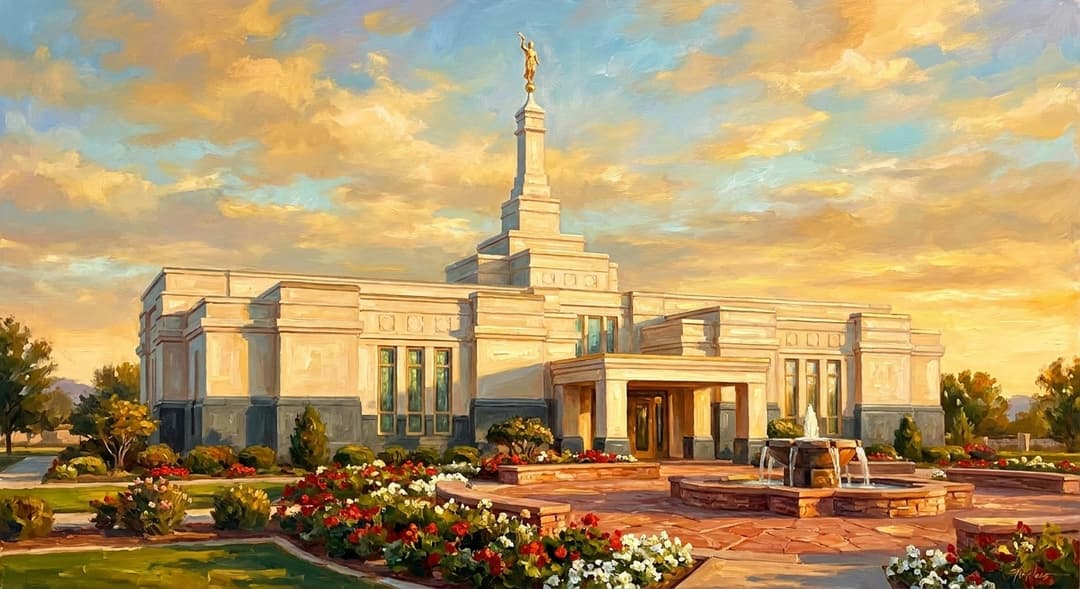
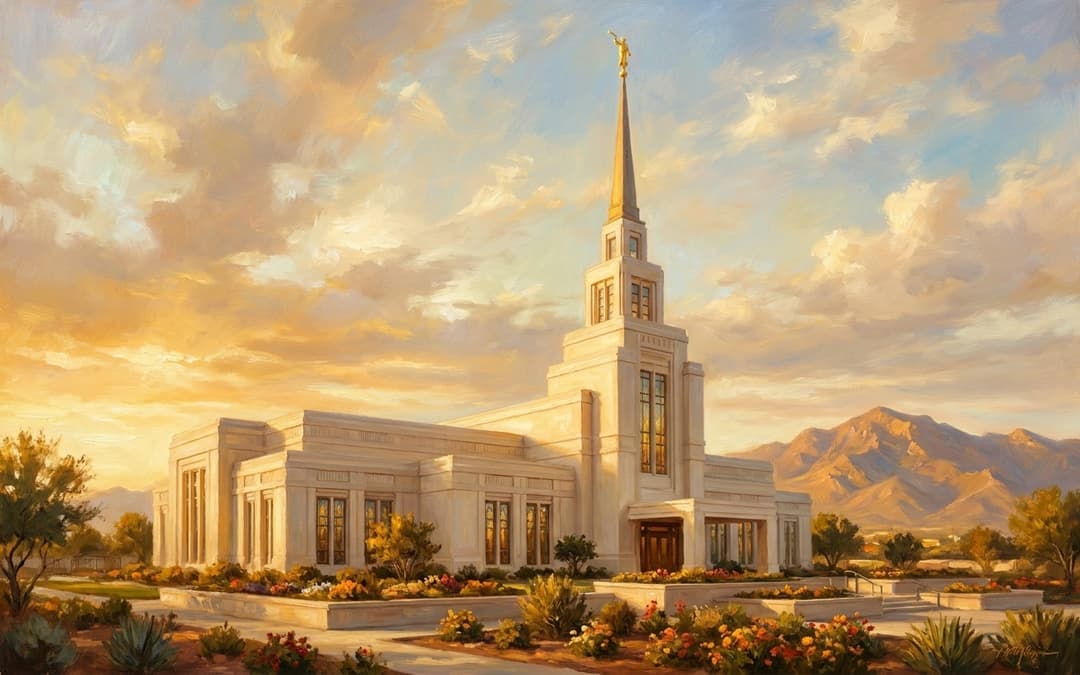
Sources & Research
Every fact on Temples.org is backed by verified Sources & Research. Each piece of information is rated by source tier and confidence level.
View All Sources (5)
| Field | Source | Tier | Retrieved |
|---|---|---|---|
| About & Historical Background | The Church of Jesus Christ of Latter-day Saints (opens in a new tab) | A | 2026-02-18 |
| Symbolic Elements | The Church of Jesus Christ of Latter-day Saints (opens in a new tab) | A | 2026-02-18 |
| Timeline & History | ChurchofJesusChristTemples.org (opens in a new tab) | C | 2026-02-18 |
| Architecture & Design | Photogent Temple Photography (opens in a new tab) | C | 2026-02-18 |
| Visitor Insights | Franklin Tennessee Stake (opens in a new tab) | C | 2026-02-18 |