Visitor Insights
Visiting Saint Nicholas Orthodox Cathedral
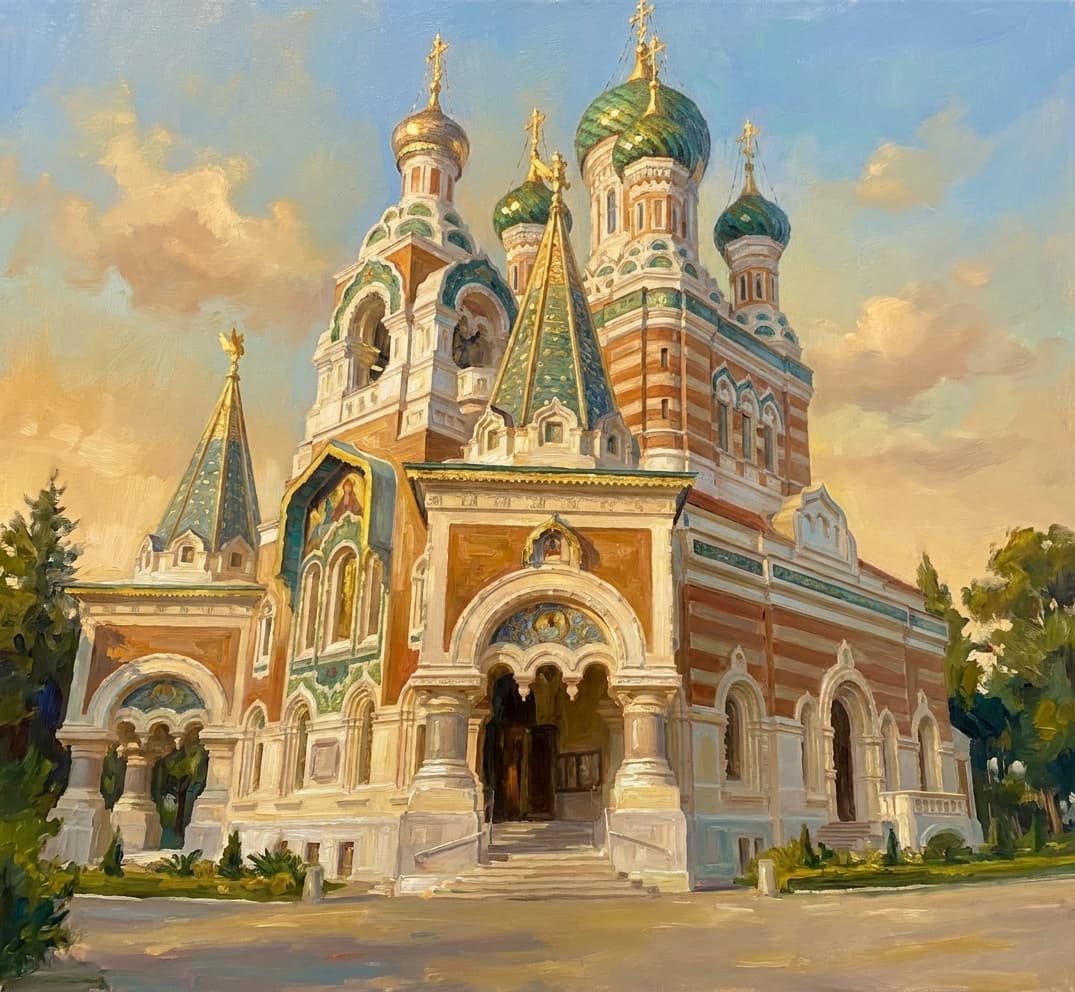
Visitors to Saint Nicholas encounter an authentic immersion into ancient Byzantine liturgical arts and medieval Slavic architecture. The sanctuary stands open for services and scheduled visits along the diplomatic corridor of Embassy Row.
Highlights
- Luminous wet frescoes covering every ceiling and wall surface
- Intricate stone animal relief carvings replicating 12th-century Vladimir prototypes
- Freestanding millennial masonry bell tower on the cathedral grounds
- Carved three-tier wooden iconostasis separating the nave and sanctuary
Things to Know
- Modest clothing covering shoulders and knees is customary for all visitors
- Congregants stand through most of the divine services with limited perimeter seating
- The holy sanctuary behind the iconostasis remains restricted to serving clergy
- Photography during sacred services requires prior pastoral permission
Location
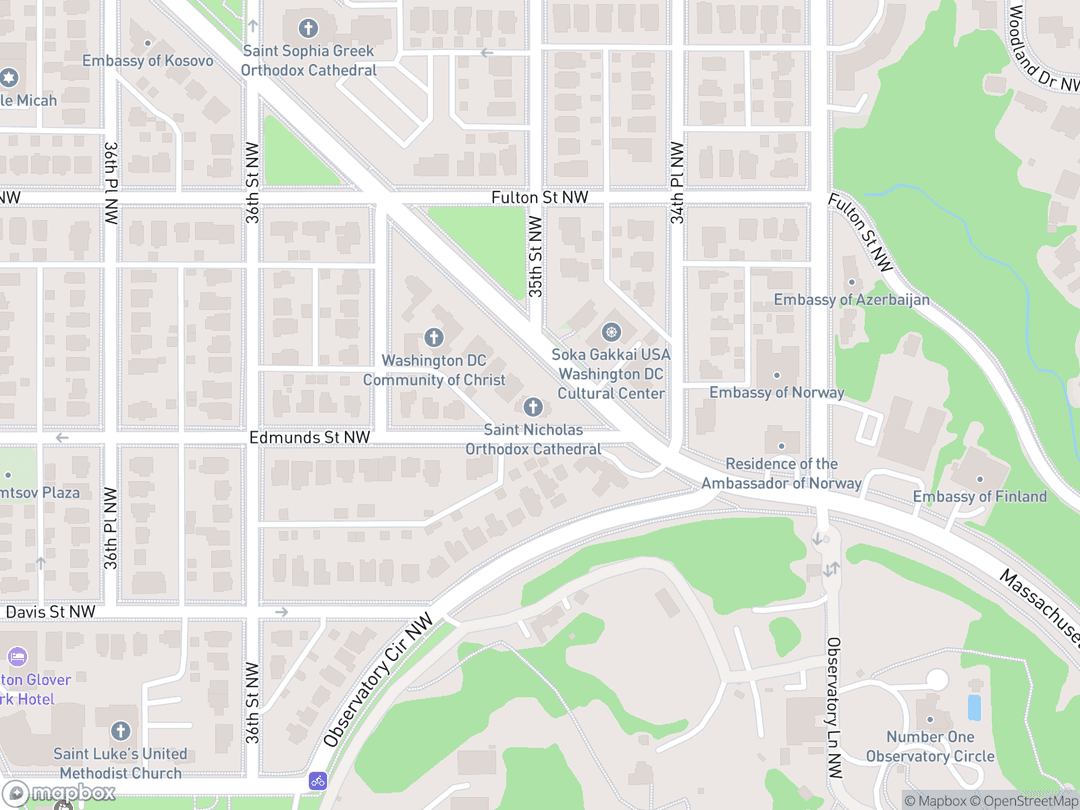
3500 Massachusetts Avenue NW, Washington, DC 20007, United States
Hours: Services Saturday 5:00 PM; Sunday 9:00 AM (English) and 10:45 AM (Slavonic); tours by appointment
Getting There: Located near Massachusetts Avenue NW and Edmunds Street; accessible via Metrobus lines N2, N4, and N6
Get DirectionsTips for Your Visit
Service Selection
Attend the 9:00 AM Sunday liturgy for English chanting or the 10:45 AM service for traditional Church Slavonic choral polyphony.
Fresco Viewing
Arrive on weekday afternoons by appointment or stay directly after Sunday coffee hour for unobstructed views of the nave icons.
About
Saint Nicholas Orthodox Cathedral serves as the primatial see of the Orthodox Church in America and its national war memorial shrine. Established by Russian émigrés fleeing revolution, the parish grew from intimate home gatherings into a monumental spiritual presence in the nation's capital.
Conceived in 1949 and completed across four decades, the cathedral faithfully revives 12th-century Vladimir-Suzdal masonry traditions. The structure honors victims of warfare and political oppression while anchoring an autocephalous jurisdiction on American soil.
Inside, the sanctuary forms an all-encompassing canvas of traditional wet-fresco iconography completed by Moscow artists following the Cold War. Today, the cathedral welcomes international diplomats, converts, and multi-generational families for dual-language worship along Massachusetts Avenue.
Gallery
Symbolic Elements
The temple's exterior features intricate carvings, each rich with spiritual meaning:

Central Golden Kupola
The flame-shaped gilded onion dome represents the fiery light of the Holy Spirit reaching toward heaven.

Three-Bar Orthodox Cross
The slanted lower bar symbolizes the eternal choices of the two thieves crucified alongside Jesus Christ.

Carved Animal Arcading
Exterior reliefs of lions, birds, and vines portray creation pacified and renewed under Christ's kingship.

Carved Wooden Iconostasis
The tiered icon screen forms a sacred portal uniting the earthly congregation with the heavenly sanctuary.

Dome Christ Pantocrator
The overhead fresco shows the Almighty Ruler watching over creation with righteous judgment and mercy.

The Platytera Apse Mural
The Virgin Mary is painted with outstretched arms to signify her womb as more spacious than the heavens.

Alaskan Mission Fresco
This monumental nave painting honors Saint Herman and the monastic pioneers who introduced Orthodoxy to America.

Millennium Zvonnitsa
The freestanding open belfry honors a millennium of Slavic faith while calling believers to liturgical prayer.
Interesting Facts
Fundraising for the cathedral was organized by Manhattan Project security officer Colonel Boris Pash. (Tier A)
General Jacob Devers delivered the main dedication address when the war shrine opened in May 1963. (Tier A)
The choir sang both the American national anthem and Bortniansky's hymn 'Kol Slaven' at its dedication. (Tier A)
The exterior mimics the UNESCO-listed Cathedral of Saint Demetrius in Vladimir from 1197. (Tier B)
Russian painters flew to Washington after the Cold War to coat the walls in true wet frescoes. (Tier B)
The freestanding bell tower commemorates the 988 Christianization of Kievan Rus. (Tier A)
Bishop Basil Rodzianko broadcast clandestine radio sermons behind the Iron Curtain from here. (Tier A)
The cathedral sits on Embassy Row just one block from the Vice President's official residence. (Tier B)
Interior murals prominently depict early American missionary saints alongside ancient apostles. (Tier A)
Common Questions
Which liturgical services take place at Saint Nicholas Cathedral?
The parish celebrates Saturday Vigil at 5:00 PM followed by dual Sunday Divine Liturgies in English at 9:00 AM and Church Slavonic at 10:45 AM.
Why is the cathedral called a National War Memorial Shrine?
The Great Synod authorized the cathedral in 1949 as a memorial sanctuary honoring fallen veterans, war victims, and those martyred under political oppression.
Can non-Orthodox guests visit the cathedral?
Reverent visitors of all faith traditions are welcome to attend liturgical services or arrange weekday appointments to view the historic frescoes.
What historical landmark inspired the cathedral's exterior design?
Architect Anatoly Abramov-Neratoff modeled the structure on the 12th-century white-stone Cathedral of Saint Demetrius in Vladimir, Russia.
Featured Stories
The Manhattan Project Officer's Crusade
1949
Colonel Boris Pash, a celebrated American counterintelligence officer, spearheaded the national fundraising drive to erect the cathedral. As the son of Metropolitan Theophilus, Pash mobilized civic leaders and military veterans across the nation to build a lasting memorial to fallen warriors and victims of totalitarianism.
Source: Parish Historical Archives
A Decade Underground
1954
Before the grand limestone superstructure crowned Massachusetts Avenue, the congregation spent nearly a decade worshiping in a reinforced concrete basement. Families gathered in the humble crypt to chant liturgical hymns while nationwide parishes slowly gathered funds to construct the soaring upper sanctuary.
Source: Orthodox Church in America Archives
Secret Radio Broadcasts to Russia
1980
Consecrated as bishop at Saint Nicholas in 1980, Basil Rodzianko used recording studios in the capital to preach the Gospel across the globe. His radio homilies penetrated the Soviet jamming curtain via BBC and Voice of America, giving comfort to millions of underground believers.
Source: Diocesan Memorial Biography
Timeline
Parish Incorporation
Russian émigrés formally incorporate the parish under Reverend John Dorosh in a rented chapel on Riggs Place NW.
MilestoneChurch Street Relocation
The growing immigrant flock acquires and converts a residential townhouse on Church Street NW into a functioning sanctuary.
MilestoneNational Shrine Authorization
The Great Synod of Bishops authorizes the community to construct a monumental national war memorial shrine.
MilestoneMassachusetts Avenue Site Acquired
Parish leadership secures a prime corner property adjacent to the U.S. Naval Observatory on Embassy Row.
MilestoneCrypt Substructure Enclosed
Workmen complete the reinforced concrete crypt level, providing a worship space while superstructure funds are collected.
MilestoneSuperstructure Consecration
Metropolitan Leonty consecrates the completed upper cathedral walls and central golden dome.
DedicationWar Memorial Dedication
General Jacob Devers addresses the assembly as the cathedral is formally dedicated to victims of global war.
DedicationAutocephaly of the OCA
The Moscow Patriarchate grants autocephaly, establishing an independent Orthodox Church in America.
MilestoneElevation to Primatial See
Saint Nicholas becomes the formal hierarchical seat of the Metropolitan of All America and Canada.
MilestoneMillennial Belfry Erected
A traditional masonry bell tower is dedicated to honor one thousand years of Slavic Christianity.
MilestoneFresco Program Consecration
Moscow master painters finish covering the barrel vaults and nave in classical wet frescoes.
RenovationCarved Iconostasis Installed
Craftsmen install the tiered wooden icon screen enclosing the altar sanctuary.
RenovationHistory by Decade
1920s–1930s — Refugee Hearth and Humble Beginnings
Following the collapse of Imperial Russia, diplomats, officers, and families gathered in Washington living rooms for sacred worship. The congregation incorporated in 1930 and eventually established a permanent chapel inside a converted Church Street rowhouse.
1940s–1950s — Vision for a National Memorial
In 1949 the church was designated the National War Memorial Shrine, sparking ambitious plans for a permanent capital cathedral. Parishioners bought a prime tract along Massachusetts Avenue in 1951, worshiping in the crypt basement starting in 1954.
1960s–1970s — Consecration and Autocephaly
The upper sanctuary was consecrated in November 1962, followed by its formal war memorial dedication before Allied military dignitaries. In 1970 the jurisdiction gained full autocephaly, leading to the cathedral's designation as the primatial see in 1980.
1980s–Present — Belfry, Frescoes, and Global Outreach
The parish erected a traditional belfry in 1988 before flying Moscow master artists to Washington to fresco the interior walls. Today, the cathedral conducts dual-language ministries and hosts major national synodical gatherings on Embassy Row.
Architecture & Facilities
The cathedral exemplifies the 12th-century Vladimir-Suzdal revival style of medieval Russian masonry. Its four-pillar cubic plan, central drum, curved zakomary rooflines, and delicate stone relief friezes recreate the Romanesque-Slavic synthesis found in medieval Vladimir.
Building Materials
Exterior Masonry
Textured white limestone and stucco coat the load-bearing masonry walls.
Central Cupola
Gilded copper plating covers the traditional wooden and steel onion dome armature.
Relief Carvings
Hand-chiseled limestone blocks replicate medieval zoomorphic stone reliefs from Vladimir.
Interior Frescoes
Natural mineral pigments in wet lime plaster and egg tempera coat the interior walls.
Interior Features
Narthex (Pritvor)
The candlelit entrance vestibule prepares worshipers to transition from the outer world.
Nave (Naos)
Four square piers support the pendentive drum surrounded by multi-tiered narrative fresco panels.
Sanctuary (Altar)
The east-facing Holy of Holies houses the consecrated holy table behind the icon screen.
Crypt Chapel
The original lower sanctuary houses early memorial plaques and community parish gatherings.
Temple Grounds
A landscaped urban sanctuary on Massachusetts Avenue featuring brick pathways, native trees, and a freestanding belfry.
Additional Facilities
The complex includes lower fellowship halls, administrative offices, and a parish bookstore.
Religious Significance
In Eastern Orthodox theology, the church sanctuary is understood as a consecrated microcosm of the redeemed universe. Rather than serving as a simple lecture hall, the cathedral manifests the Heavenly Jerusalem on earth through sacred architectural geometry, aromatic incense, unceasing psalmody, and liturgical iconography.
To offer the unbloody sacrifice of the Holy Eucharist, proclaim Christ's resurrection, and maintain perpetual memorial prayer for departed souls.
Sacred Ordinances
The Divine Liturgy
The central eucharistic sacrifice uniting the faithful with the risen Christ through holy communion.
Memorial Service (Panikhida)
Solemn liturgical petitions for the eternal rest and memory of fallen warriors and loved ones.
All-Night Vigil
Evening chanting of Vespers and Matins preparing the flock spiritually for the Sunday resurrection feast.
Holy Baptism and Chrismation
Triple immersion in holy water followed by anointing with holy chrism to welcome converts into the Church.
The Theology of Iconography
Icons are regarded not as ornamental decorations but as theology proclaimed in color and sacred line. Saint John of Damascus affirmed that since God took tangible human flesh in Jesus Christ, the divine realm can be depicted and venerated reverently through holy imagery.
A National War Memorial Shrine
The cathedral fulfills a unique pastoral duty as a sanctuary of remembrance. Perpetual memorial prayers ascend within its walls for military veterans, victims of tyranny, and martyrs who sacrificed their lives for justice and human freedom.
Sources & Research
Every fact on Temples.org is backed by verified Sources & Research. Each piece of information is rated by source tier and confidence level.
View All Sources (5)
| Field | Source | Tier | Retrieved |
|---|---|---|---|
| About & Historical Background | Saint Nicholas Orthodox Cathedral (opens in a new tab) | A | 2026-03-31 |
| Primatial See & Parish Directory | Orthodox Church in America (opens in a new tab) | A | 2026-03-31 |
| Iconography and Fresco Documentation | OrthodoxWiki (opens in a new tab) | B | 2026-03-31 |
| Architectural Plans & Master Guild Profiles | Legacy Icons Research Library (opens in a new tab) | B | 2026-03-31 |
| District of Columbia Architectural Survey | Washington Photo Safari (opens in a new tab) | C | 2026-03-31 |