Visitor Insights
Visiting Holy Trinity Greek Orthodox Cathedral
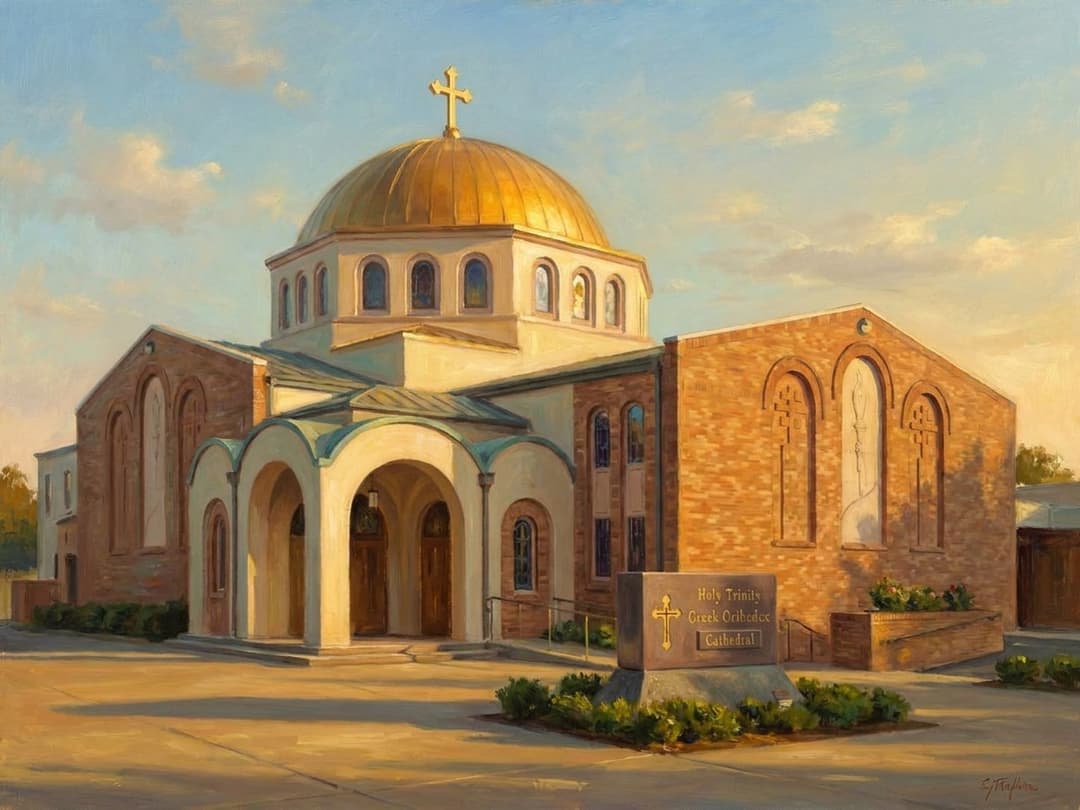
Visitors to the cathedral experience radiant Byzantine iconography, hand-poured beeswax candles, and rich unamplified choral acoustics. The sanctuary welcomes guests for Sunday Divine Liturgy as well as guided tours during the annual cultural festival.
Highlights
- Gilded central dome featuring a commanding icon of Christ Pantokrator
- Handmade mosaic iconostasis panels created by Baron Nicholas B. Meyendorff
- Educational exhibits at the Hellenic-American Cultural Center & Museum
- Traditional beeswax candle offering stands in the quiet narthex
Things to Know
- Modest attire covering shoulders and knees is customary for church services
- Photography is restricted during active sacramental and liturgical rites
- Museum visits should be coordinated with weekday operating hours
Location
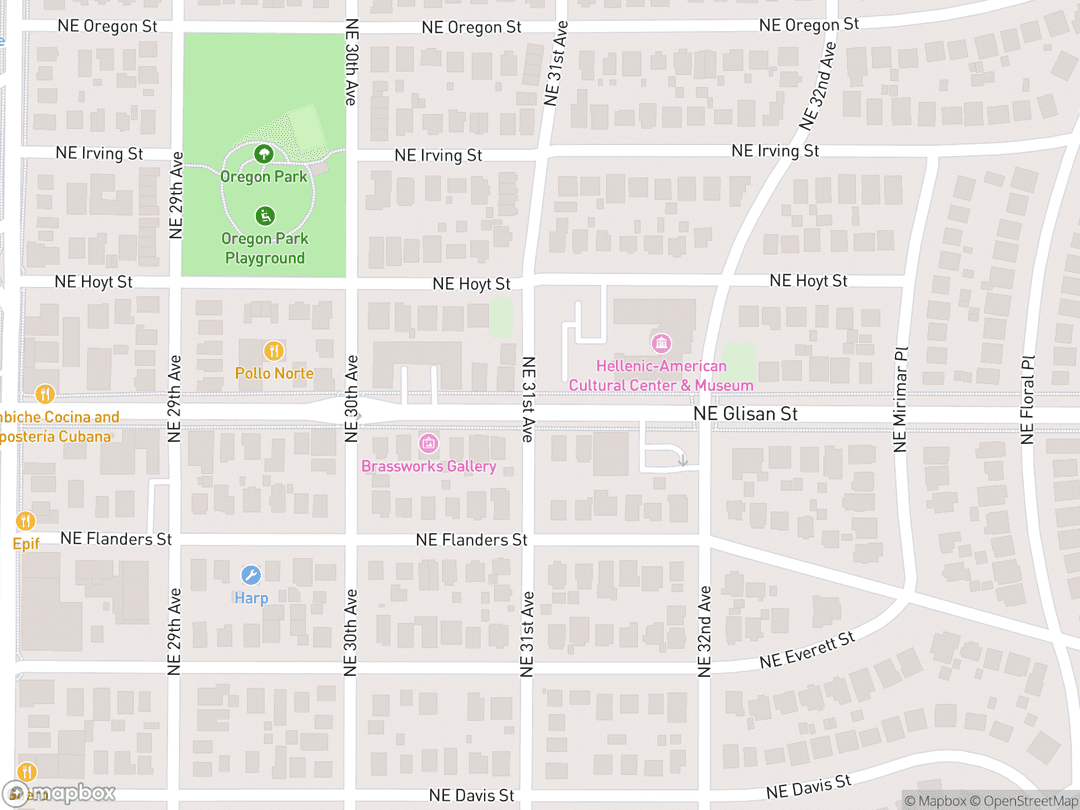
3131 NE Glisan Street, Portland, Oregon 97232, United States
Hours: Tuesday through Friday 11:00 AM - 3:00 PM (Museum); Sunday Liturgy 10:00 AM
Getting There: TriMet Bus Line 19 stops directly outside on NE Glisan Street, with easy access from Interstate 84.
Get DirectionsTips for Your Visit
Arrive for Liturgy
Experience the living sensory tradition of liturgical incense, choral singing, and candlelight during Sunday morning worship.
Visit During the Festival
Tour the cathedral nave and enjoy regional Greek food and folk dancing during the first weekend of October.
Explore the Cultural Museum
View pioneer immigrant artifacts and historic regional memorabilia at the on-site HACCM facility.
About
Holy Trinity Greek Orthodox Cathedral stands as the spiritual mother church of Eastern Orthodoxy in Oregon and the broader Pacific Northwest. Founded in 1907 by Hellenic immigrants working in regional lumber mills, rail lines, and river docks, the parish established the first Greek Orthodox community in the territory.
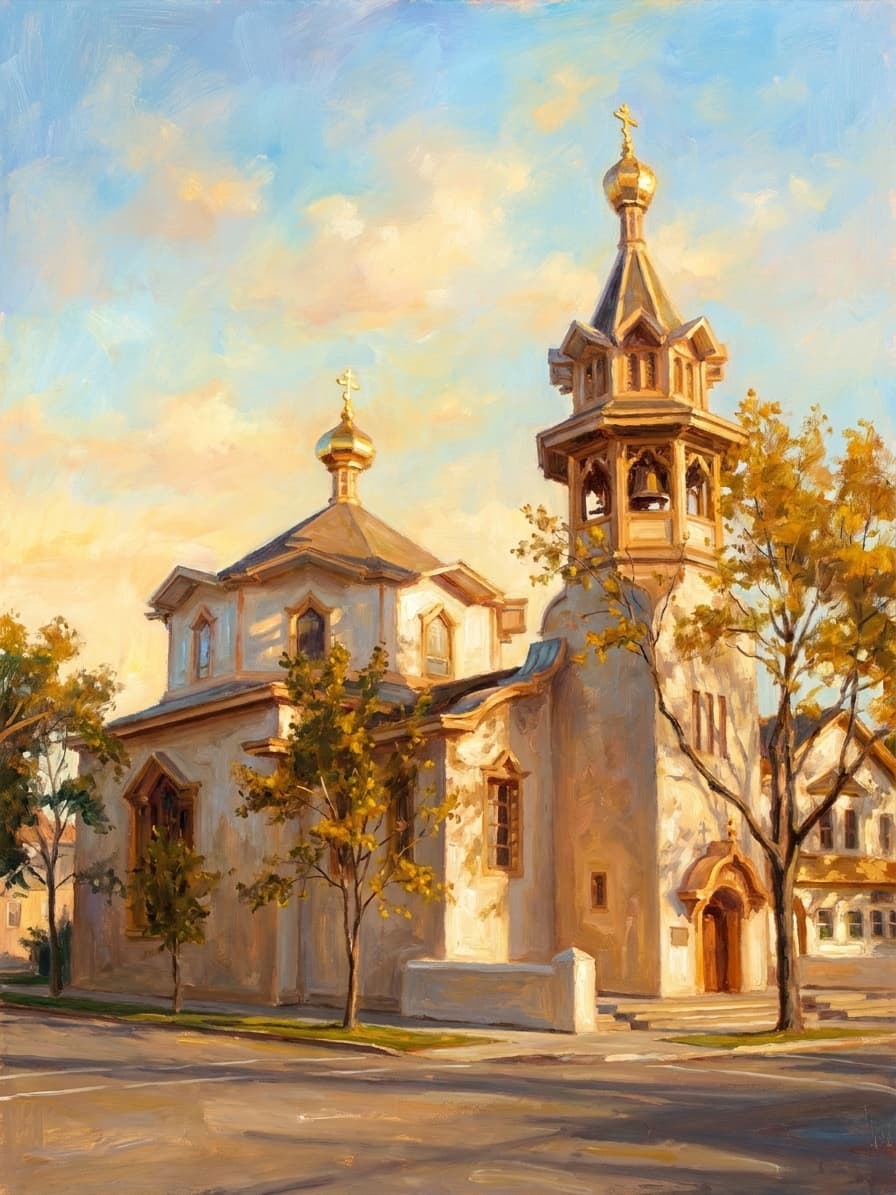
The current sanctuary on NE Glisan Street was designed in 1951 by noted ecclesiastical architect Francis Benedict Jacobberger. Consecrated in 1956, the Mid-Century Neo-Byzantine complex embodies sacred spatial geometry, centering on an illuminated dome crowned by a traditional cross.
In 2007, the centennial assembly saw the parish elevated to the Cathedral of the Pacific Northwest by the Greek Orthodox Archdiocese of America. Today, the cathedral campus hosts a vibrant liturgical life alongside the acclaimed Hellenic-American Cultural Center & Museum and the historic Portland Greek Festival.
Gallery
Symbolic Elements
The temple's exterior features intricate carvings, each rich with spiritual meaning:

Christ Pantokrator Dome
The frescoed central dome portrays Christ as ruler of the cosmos, looking down in mercy upon the assembly.
The Platytera Apse
The altar apse icon depicts the Virgin Mary bridging heaven and earth as the mother of the incarnate Christ.
The Iconostasis
The carved icon screen unites heaven and earth, reminding worshippers that departed saints pray beside them.
The Royal Doors
Adorned with the Annunciation and Evangelists, these doors symbolize Christ's entry into the sanctuary.
Eastern Orientation
The sanctuary faces east toward the rising sun as an enduring reminder of Christ's resurrection and second coming.
Beeswax Tapers
Slender candles lit in the narthex represent the pure soul offering light and prayers to God.
Byzantine Cross
The golden cross crowning the central dome proclaims the redemptive sacrifice and eternal reign of Christ.
Incense Censers
Sweet frankincense rising from liturgical censers represents the prayers of the saints ascending to heaven.
Interesting Facts
Holy Trinity was the first Greek Orthodox parish established anywhere in the Pacific Northwest region. (Tier A)
The cathedral was designed by Francis B. Jacobberger, son of renowned Portland architect Joseph Jacobberger. (Tier B)
The famed Portland Greek Festival began in 1952 as a humble pastry bazaar to pay off the building mortgage. (Tier A)
The annual festival is an officially recognized Oregon Heritage Tradition designated by the state commission. (Tier B)
Parishioners organized wartime relief initiatives that sent over $3.5 million to war-ravaged Greece in the 1940s. (Tier B)
Icon panels in the iconostasis were created in 1968 by Austrian-based master Baron Nicholas B. Meyendorff. (Tier B)
The cathedral campus hosts the Pacific Northwest's premier museum dedicated to Hellenic-American heritage. (Tier A)
For over two decades Holy Trinity was the sole Greek Orthodox house of worship in the state of Oregon. (Tier B)
Common Questions
Are non-Orthodox visitors allowed to attend church services?
Yes, respectful visitors of all faiths are warmly welcomed to observe all public liturgical services.
When does the annual Portland Greek Festival take place?
The festival takes place every autumn during the first full weekend of October.
Is parking available on site?
Dedicated parish parking lots and residential street parking are available adjacent to the cathedral campus.
Can visitors tour the interior of the cathedral outside of Sunday services?
Tours can be arranged during museum operating hours or during the annual Greek Festival.
Featured Stories
The Mortgage-Burning Bazaar
1952
Faced with substantial construction debt following the completion of their NE Glisan Street church in 1952, the women of the parish Philoptochos Society staged a three-day culinary bazaar selling traditional Greek pastries. The overwhelming public response transformed a humble fundraising dinner into the enduring Portland Greek Festival. Within four years, the entire mortgage was liquidated, clearing the way for the cathedral's canonical consecration.
Source: Holy Trinity Historical Archives
Relief for a Homeland in Ruins
1945
During the devastating Axis occupation of Greece in World War II, Holy Trinity's small immigrant community mobilized sweeping regional relief efforts across Oregon and Washington. Parishioners organized food drives, medical supply shipments, and bond rallies that contributed over $3.5 million to international humanitarian aid. Their tireless dedication forged lifelong ties between Portland and communities across the Aegean.
Source: The Oregon Encyclopedia
Elevation to the Pacific Northwest Cathedral
October 21, 2007
One century after Greek rail workers gathered to establish the first parish in the Pacific Northwest, hundreds of faithful packed the nave for a historic centennial celebration. Metropolitan Gerasimos of San Francisco formally elevated Holy Trinity to the official Cathedral of the Pacific Northwest. The designation honored one hundred years of pioneering spiritual life and cultural leadership across Oregon.
Source: Greek Orthodox Archdiocese of America
Timeline
Parish Incorporation
Greek immigrants formally organize the first Orthodox community in the Pacific Northwest.
MilestoneOriginal Church Dedicated
The community completes its first stone sanctuary at SE 17th Avenue and Taggart Street.
DedicationWar Relief Mobilization
Parishioners successfully raise over $3.5 million for humanitarian relief in post-war Greece.
EventGroundbreaking on NE Glisan
Parish leaders break ground on the modern Neo-Byzantine cathedral site designed by Francis B. Jacobberger.
component.timeline.groundbreakingSanctuary Completion and First Bazaar
The building opens for liturgical services and stages its first charity food bazaar to pay building debt.
MilestoneCanonical Consecration
The sanctuary is formally consecrated after the retirement of its construction mortgage.
DedicationMosaic Iconography Commission
Viennese iconographer Baron Nicholas B. Meyendorff creates mosaic panels for the icon screen.
EventFather Elias Stephanopoulos Ministry
Father Elias assumes pastoral leadership, pioneering expansive regional outreach and ministries.
MilestoneStephanopoulos Center Dedicated
The parish opens an expanded educational and fellowship facility honoring their late pastor.
EventCultural Center Dedication
Archbishop Demetrios formally dedicates the Hellenic-American Cultural Center & Museum.
DedicationCathedral Elevation
Metropolitan Gerasimos elevates Holy Trinity to the Cathedral of the Pacific Northwest during its centennial.
MilestoneHistory by Decade
1900s — Immigrant Foundations
Greek laborers working on railroads, lumber mills, and docks founded the Holy Trinity parish in 1907. That same year, the community broke ground on its first church building at SE 17th Avenue and Taggart Street. The parish established the very first Greek Orthodox congregation in the entire Pacific Northwest.
1910s — The First Stone Church
The original stone church was completed in 1910, serving as the cultural anchor for Portland's growing Hellenic population. Community leaders established language schools and mutual aid societies to support families navigating the urban frontier. The parish served as a spiritual haven for immigrants across Oregon and southwest Washington.
1920s–1930s — Community Maturation
The parish expanded its philanthropic reach with the formation of the Philoptochos Society during the interwar decades. Through the hardship of the Great Depression, Holy Trinity provided direct economic and spiritual support to families across Multnomah County. Community bonds deepened through dedicated church choir and youth fellowship organizations.
1940s — Wartime Philanthropy
During World War II, parishioners organized immense humanitarian relief programs that raised more than $3.5 million for occupied Greece. Returning veterans and postwar population growth soon caused the congregation to outgrow its original Taggart Street building. Leadership initiated formal plans to construct a monumental new cathedral on NE Glisan Street.
1950s — The Glisan Street Sanctuary
The parish engaged prominent architect Francis B. Jacobberger to design a classic Neo-Byzantine complex on NE Glisan Street. Ground was broken in 1951, construction was finished in 1952, and the inaugural Greek food bazaar was hosted to pay building debts. With all construction loans retired, the cathedral was consecrated on July 29, 1956.
1960s–1970s — Artistry and Public Celebration
In 1968, the community commissioned Viennese iconographer Baron Nicholas B. Meyendorff to craft exquisite mosaic icons for the marble screen. Concurrently, the annual autumn bazaar expanded into the beloved multi-day Portland Greek Festival, attracting thousands of Oregonians. Holy Trinity remained the lone Greek Orthodox parish in Oregon until daughter churches were established in the late 1970s.
1980s–1990s — Ministry of Father Elias
Father Elias Stephanopoulos began decades of beloved pastoral leadership, expanding youth education, choral arts, and civic ecumenical dialogue across Portland. Following his passing in 1994, the parish committed to expanding its facilities to honor his enduring civic legacy. Strategic master planning began for a modern cultural and educational wing.
2000s — Expansion and Cathedral Elevation
The parish dedicated the Father Elias Stephanopoulos Center in 2006, followed by the Hellenic-American Cultural Center & Museum in 2007. On October 21, 2007, the church celebrated its centennial and was elevated to the Cathedral of the Pacific Northwest. The parish entered its second century as the undisputed mother church of regional Orthodoxy.
2010s–2020s — Heritage and Continuity
The Oregon Heritage Commission officially designated the Portland Greek Festival an Oregon Heritage Tradition. Expanded iconographic programs enhanced the cathedral nave with traditional Byzantine frescos and gold-leaf details. Today, Holy Trinity continues vibrant liturgical worship, benevolent charity, and community hospitality.
Architecture & Facilities
Holy Trinity Greek Orthodox Cathedral represents Mid-Century Neo-Byzantine Revival ecclesiastical architecture, blending ancient Byzantine cruciform geometry with American mid-century materials. Designed by architect Francis Benedict Jacobberger, the cathedral centers on an expansive hemispherical dome rather than Western vertical spires, creating an earthly icon of the cosmos where heaven descends to meet the worshipping assembly.
Building Materials
Exterior Stucco and Masonry
Cream-toned exterior stucco finished with fine-faced architectural stone accents along the entry facade.
Dome Drum Framework
Structural steel and masonry framing supporting an octagonal drum pierced by natural daylight windows.
Marble Iconostasis
Carved white marble screen elements establishing the sacred boundary between the nave and altar sanctuary.
Bronze Appointments
Suspended bronze choros chandeliers and liturgical candle stands crafted for sacred interior lighting.
Interior Features
The Narthex
The welcoming entryway where the faithful venerate icons and ignite pure beeswax tapers before worship.
The Central Nave
A wide vaulted gathering space featuring wooden pews and acoustics tailored for traditional Byzantine chant.
The Holy Sanctuary
The elevated altar area housing the Holy Table, prothesis niche, and synthronon within the eastern apse.
The Icon Screen (Iconostasis)
An ornate screen adorned with 1968 mosaic icons crafted by Austrian iconographer Baron Nicholas B. Meyendorff.
Temple Grounds
The urban church campus includes landscaped walkways, the modern Father Elias Stephanopoulos Center, the Hellenic-American Cultural Museum, and festival courtyards.
Additional Facilities
The campus houses the Father Elias Stephanopoulos Center for community gatherings and the Hellenic-American Cultural Center & Museum (HACCM).
Religious Significance
In Eastern Orthodox theology, a cathedral is an icon of the transfigured cosmos and a visual portal where heaven and earth unite in continuous worship.
To serve as the Eucharistic gathering place for the faithful, sanctifying the community through the Holy Mysteries and apostolic tradition.
Sacred Ordinances
The Divine Liturgy
The central Eucharistic worship service where the bread and wine are consecrated as the Body and Blood of Christ.
Holy Baptism and Chrismation
The triple-immersion sacrament of rebirth into the Church followed immediately by the seal of the Holy Spirit.
The Holy Mysteries (Sacraments)
Sacred rites including Confession, Holy Matrimony, and Holy Unction through which divine grace transforms human life.
Orthros (Matins)
The solemn morning liturgical prayer service preceding the Sunday Divine Liturgy.
Cosmic Theology in Sacred Space
Every architectural facet of the cathedral reflects Orthodox dogma. The central dome portrays Christ Pantokrator ruling the universe, while the eastern altar apse features the Virgin Mary Platytera bridging heaven and earth. As frankincense ascends toward the vaulted ceiling, worshippers are drawn into communion with the saints and heavenly hosts.
Similar Temples
Sources & Research
Every fact on Temples.org is backed by verified Sources & Research. Each piece of information is rated by source tier and confidence level.
View All Sources (7)
| Field | Source | Tier | Retrieved |
|---|---|---|---|
| About & Historical Background | Holy Trinity Greek Orthodox Cathedral (opens in a new tab) | A | 2026-03-30 |
| Archdiocesan Registry & Jurisdiction | Greek Orthodox Archdiocese of America (opens in a new tab) | A | 2026-03-30 |
| Parish History & Cultural Legacy | The Oregon Encyclopedia (opens in a new tab) | B | 2026-03-30 |
| Museum & Immigrant Archive Collections | Hellenic-American Cultural Center & Museum (opens in a new tab) | A | 2026-03-30 |
| Parish Records & Architectural Archives | Archives West / Orbis Cascade Alliance (opens in a new tab) | B | 2026-03-30 |
| Hellenic Cultural Fellowship Records | AHEPA Western Regional District (opens in a new tab) | B | 2026-03-30 |
| Cathedral Civic Directory & Visitor Logistics | Travel Portland (opens in a new tab) | D | 2026-03-30 |