Visitor Insights
Visiting Kūkaniloko Birthstones State Monument
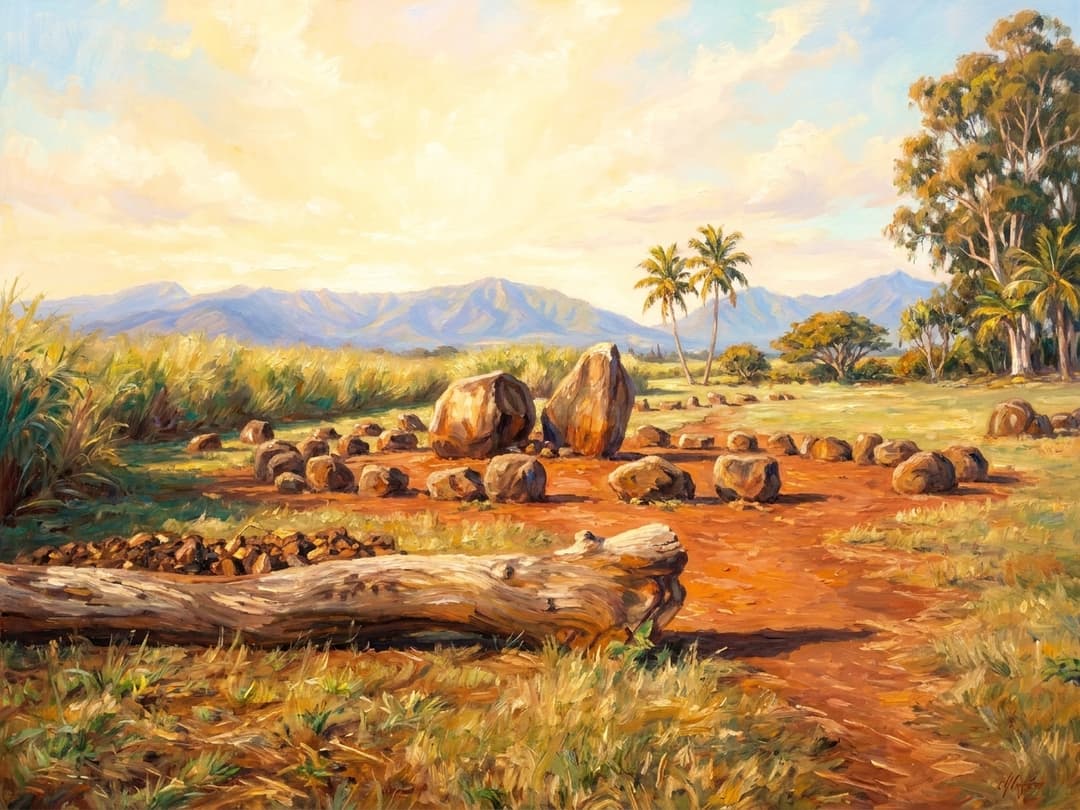
Kūkaniloko Birthstones State Monument offers visitors a profound glimpse into Native Hawaiian spiritual heritage and ancient sacred geometry. Direct physical access into the central stone grove is restricted to protect the fragile megaliths, but the surrounding perimeter offers clear views of the sanctuary.
Highlights
- Views of over 180 ancient volcanic basalt megaliths arranged in sacred alignments.
- Direct natural alignment looking west toward the Waiʻanae Mountain Range.
- Interpretive signage explaining royal birth traditions and celestial observation.
Things to Know
- Access to the inner stone precinct is restricted to official cultural practitioners.
- Visitors must remain outside protective perimeter fencing at all times.
- Do not touch, climb, or leave non-traditional offerings on or near the stones.
Location
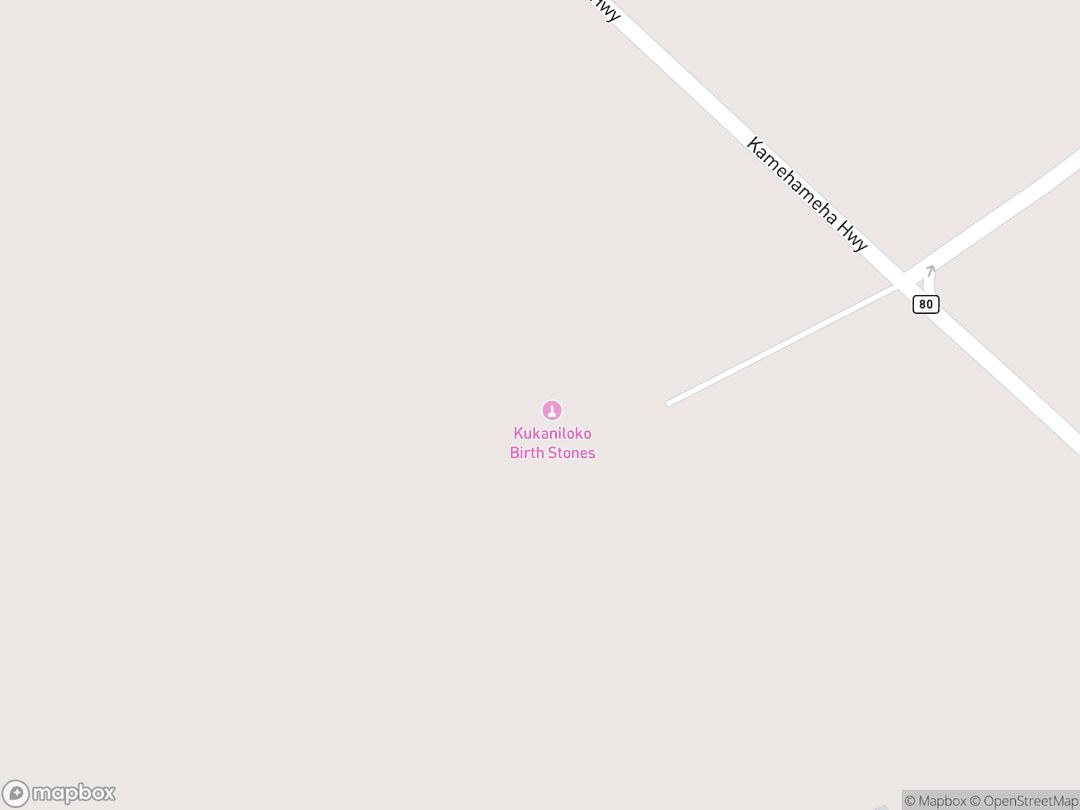
Intersection of Kamehameha Highway and Whitmore Avenue, Wahiawa, HI 96786
Hours: Open daily during daylight hours for perimeter viewing.
Getting There: Located approximately 25 miles north of Honolulu along Kamehameha Highway (Route 80) near Whitmore Avenue in Wahiawā.
Get DirectionsTips for Your Visit
Respect Site Sanctity
Treat Kūkaniloko as an active spiritual sanctuary and refrain from crossing perimeter boundaries.
Observe Mountain Alignments
Look west toward Kolekole Pass to see the profile of the mountain ridge resembling a reclining pregnant woman.
Plan for Open Exposure
The site is located on an open plateau with limited shade, so bring sun protection and water.
About
Kūkaniloko Birthstones State Monument, known natively as Puʻuhonua Kūkaniloko, is one of the most sacred cultural landscapes in the Hawaiian Islands. Established around the 11th to 12th century by Chief Nanamaoko on the central Wahiawā Plateau, the site served as the premier birthing ground for Oʻahu royalty.
Set amidst over 180 water-worn volcanic basalt megaliths embedded in rich red soil, Kūkaniloko represents the spiritual and geographic navel (piko) of Oʻahu. Children born here were granted supreme royal status (hoʻāliʻi), certified by 36 high chiefs who witnessed each birth from surrounding stone rows.
Today, the 5-acre monument and its surrounding 511-acre agricultural buffer are preserved as an active cultural sanctuary. Managed in stewardship by the Hawaiian Civic Club of Wahiawā alongside state agencies, Kūkaniloko remains a powerful monument to Native Hawaiian genealogy, astronomy, and sacred tradition.
Gallery
Symbolic Elements
The temple's exterior features intricate carvings, each rich with spiritual meaning:

Central Birthing Stone
The primary curved basalt boulder where royal mothers sat during labor, representing endurance and maternal mana.

Chiefly Witness Stones
Two parallel rows of 36 basalt boulders where high chiefs sat to witness and validate royal births.

Sacred Bamboo Knife
A freshly split bamboo stalk ('ohe kāniholo) used by priests to sever the umbilical cord in total ritual purity.

Sacred Pahu Drums
The temple drums Hāwea and Ōpuku whose deep booms announced royal births across the central plateau.

Astronomical Alignments
Carved stone facets and grooves used by traditional star navigators to track seasonal solar points.
Waihau Heiau Precinct
The nearby temple grounds of Ho'olonopahu dedicated to sacred post-birth rituals and infant blessings.

Pregnant Woman Horizon
The natural contour of the Wai'anae Range mimicking a reclining pregnant woman toward Kolekole Pass.

Island Piko Marker
The central location representing the spiritual and geographic navel connecting O'ahu's lands and genealogies.
Interesting Facts
The name Kūkaniloko translates to 'anchor the cry from within', referencing maternal endurance during labor (Tier A).
Ancient tradition holds that spiritual energy at Kūkaniloko provided royal mothers relief from pain (Tier B).
Stone alignments at the site track solstices and equinoxes against distant mountain peaks (Tier A).
Kūkaniloko is one of only two dedicated royal birth sites in Hawaiʻi, the other being Holoholokū on Kauaʻi (Tier A).
Birth at Kūkaniloko guaranteed undisputed divine lineage and supreme royal status (Tier A).
Immediately after birth, infants were taken to Hoʻolonopahu temple where umbilical rites were conducted (Tier A).
The western mountain horizon presents the distinct visual outline of a reclining pregnant woman (Tier B).
In 2012, the Office of Hawaiian Affairs acquired 511 surrounding acres to form a permanent buffer (Tier A).
Cultural stewards have planted thousands of native Hawaiian trees to restore the surrounding watershed (Tier A).
King Kamehameha I planned for Queen Keōpūolani to give birth here in 1813, but illness prevented her travel (Tier A).
Common Questions
Can visitors walk inside the stone circle at Kūkaniloko?
No, access into the central stone precinct is restricted to cultural practitioners to preserve site sanctity.
Why was Kūkaniloko chosen for royal births?
The central plateau represented the geographic and spiritual navel (piko) of Oʻahu, conferring divine authority.
How many stones are at Kūkaniloko State Monument?
The complex contains over 180 volcanic basalt stones, including 36 key witness stones.
Is Kūkaniloko an active religious site today?
Yes, it remains an active cultural sanctuary stewarded by Native Hawaiian practitioners.
Featured Stories
Establishment by Chief Nanamaoko
c. 1100
In the 12th century, High Chief Nanamaoko designated Kūkaniloko on the central plateau of Oʻahu as a sacred birthing ground for his son Kapawa. By placing the birthing site at the geographic navel of the island, Nanamaoko established a royal tradition that lasted for over six centuries. This act linked human genealogy directly to the sacred power of the Hawaiian landscape.
Source: Hawaiian Civic Club of Wahiawā Cultural Records
The Echo of Sacred Pahu Drums
c. 1550
Upon the birth of High Chief Kakuhihewa at Kūkaniloko, priests immediately struck the sacred pahu drums Hāwea and Ōpuku at the adjacent Hoʻolonopahu temple. The rhythmic booming reverberated across the central plains of Oʻahu, signaling to all residents that a divine ruler had been born. Kakuhihewa's subsequent reign ushered in an unprecedented golden age of peace and agricultural prosperity.
Source: Native Hawaiian Oral Histories and State Surveys
Kamehameha's Unfulfilled Pilgrimage
1813
Determined to cement the divine legitimacy of his dynasty on Oʻahu, King Kamehameha the Great planned for Sacred Queen Keōpūolani to give birth to their child at Kūkaniloko in 1813. However, severe illness prevented the queen from making the arduous sea voyage from Hawaiʻi Island, and the child—future King Kamehameha III—was born instead at Keauhou. This event marked the final attempt by Hawaiian monarchs to utilize the ancient birthing grounds.
Source: Hawaiʻi State Parks Cultural History Documentation
Timeline
Sacred District Origins
Oral accounts establish the central Līhuʻe plateau as a sacred district for royal gatherings.
MilestoneEstablishment by Chief Nanamaoko
Chief Nanamaoko sets apart Kūkaniloko for the birth of his son Kapawa.
DedicationReign of Chiefess Kūkaniloko
Chiefess Kūkaniloko expands the site's prestige across the Hawaiian archipelago.
EventBirth of Chief Kakuhihewa
High Chief Kakuhihewa is born at the site, initiating a golden era of peace on Oʻahu.
MilestoneKamehameha's Royal Plan
King Kamehameha I seeks to have Sacred Queen Keōpūolani give birth at Kūkaniloko.
EventInitial Preservation Steps
Daughters of Hawaiʻi and local Hawaiian families take steps to safeguard the site from agriculture.
RenovationHawaiian Civic Club Charter
Hawaiian Civic Club of Wahiawā formally charters to steward and protect Kūkaniloko.
MilestoneNational Register Listing
Kūkaniloko is added to the National Register of Historic Places.
MilestoneState Monument Designation
The State of Hawaiʻi designates the 5-acre site as a State Monument.
MilestoneNRHP Boundary Expansion
National Register boundaries are officially expanded to cover additional historic features.
RenovationOHA Buffer Acquisition
Office of Hawaiian Affairs purchases 511 surrounding acres to protect the sanctuary.
MilestoneReforestation Initiative
Site stewards launch major watershed restoration efforts by planting native trees.
RenovationHistory by Decade
400s–1100s — Foundation of the Sacred Piko
The central plateau of Oʻahu was recognized early in Hawaiian history as a sacred meeting ground and geographic center. Chief Nanamaoko formally set apart Kūkaniloko for royal birthing, establishing the island's spiritual navel.
1200s–1500s — Golden Era of Royal Lineage
Under Chiefess Kūkaniloko and later rulers, the site became the premier royal sanctuary of Oʻahu. Children born here received the title of hoʻāliʻi, surrounded by ritual drumbeats from nearby Hoʻolonopahu temple.
1600s–1800s — Martial Education and Transition
The surrounding uplands served as training grounds for young chiefs in leadership, martial arts, and genealogy. Following political unifications and agricultural changes in the 19th century, physical birthing ceremonies ceased.
1920s–1970s — Preservation Battles and Stewardship
As pineapple plantations surrounded the stones, the Daughters of Hawaiʻi and the Hawaiian Civic Club of Wahiawā stepped forward to protect the grounds. In 1973, the sanctuary gained formal recognition on the National Register of Historic Places.
1990s–Present — State Monument and Watershed Restoration
Designated a State Monument in 1992, Kūkaniloko received further protection when the Office of Hawaiian Affairs acquired 511 surrounding buffer acres in 2012. Active native tree planting continues to restore the sacred landscape.
Architecture & Facilities
Kūkaniloko is an open-air natural sanctuary (puʻuhonua) and megalithic landscape arrangement constructed from water-worn volcanic basalt boulders embedded in red soil, oriented around cosmic and terrestrial alignments.
Building Materials
Volcanic Basalt Megaliths
Over 180 dense, weather-worn basalt boulders sourced locally and arranged across the red soil plateau.
Volcanic Oxisol Soil
Rich red iron-heavy soil of the Wahiawā Plateau supporting the stone foundations and surrounding flora.
Sacred Native Timbers
Native hardwoods including koa and wiliwili planted around the precinct perimeter to form protective groves.
Natural Cupule Stones
Basalt stones featuring smoothed concave indentations utilized for ritual postures and astronomical observations.
Interior Features
Central Birthing Precinct
The core area featuring the primary curved birthing stone where royal mothers were supported during childbirth.
Chiefly Witness Rows
Two parallel rows of 18 basalt seating stones designated for high chiefs certifying royal genealogy.
Astronomical Observation Array
Key stone groupings with carved facets aligned to track equinoxes and solstices against mountain peaks.
Perimeter Buffer Sanctuary
The surrounding land belt providing spatial isolation and erosion protection for the megalith core.
Temple Grounds
A 5-acre central historic monument surrounded by a 511-acre agricultural and watershed buffer planted with thousands of native Hawaiian trees.
Additional Facilities
Perimeter visitor viewing area with interpretive signage managed by state parks and local stewardship organizations.
Religious Significance
In Native Hawaiian spiritual tradition, Kūkaniloko is venerated as the piko—the physical and spiritual navel—of Oʻahu. The site represents the convergence of divine royal authority, ancestral genealogy, and cosmic order.
To serve as a sacred birthing sanctuary (puʻuhonua) where the birth of divine chiefs (hoʻāliʻi) was certified amidst sacred stone alignments and temple drumbeats.
Sacred Ordinances
Royal Childbirth Rite
A sacred birth process where the mother was supported on the central stone while demonstrating silent endurance to confirm divine power.
Chiefly Verification (ʻIke Maka)
A formal tribunal where 36 high chiefs sat in witness rows to validate the newborn child's unblemished royal lineage.
Umbilical Severing Protocol
A ritual at Hoʻolonopahu temple where priests severed the umbilical cord using a pure bamboo knife before 48 kapu chiefs.
Astronomical Tracking (Kilo Lōkahi)
Seasonal observations by star navigators using stone alignments to calculate sacred calendar dates and agricultural cycles.
The Piko of Oʻahu
As the geographic center of the island, Kūkaniloko connected the spiritual power of the sky, the land, and Hawaiian royal lines.
Landscape as Sacred Architecture
The natural alignment between the stones and the pregnant silhouette of the Waiʻanae Range visually reinforced the divine nature of human birth.
Sources & Research
Every fact on Temples.org is backed by verified Sources & Research. Each piece of information is rated by source tier and confidence level.
View All Sources (6)
| Field | Source | Tier | Retrieved |
|---|---|---|---|
| Timeline & Preservation History | National Park Service National Register of Historic Places (opens in a new tab) | A | 2026-02-15 |
| Architecture & Sacred Landscape | Hawaiʻi State Historic Preservation Division (opens in a new tab) | A | 2026-02-15 |
| Visitor Insights & Conservation | Historic Hawaiʻi Foundation (opens in a new tab) | B | 2026-02-15 |
| Religious Significance & Rites | University of Hawaiʻi at Mānoa Kamakakūokalani Center for Hawaiian Studies (opens in a new tab) | B | 2026-02-15 |
| Symbolic Elements & Cultural Artifacts | Bernice Pauahi Bishop Museum Department of Anthropology (opens in a new tab) | B | 2026-02-15 |
| Timeline & Stewardship Initiatives | Hawaiʻi State Parks Division (opens in a new tab) | A | 2026-02-15 |