Visitor Insights
Visiting Ulupō Heiau State Historic Site
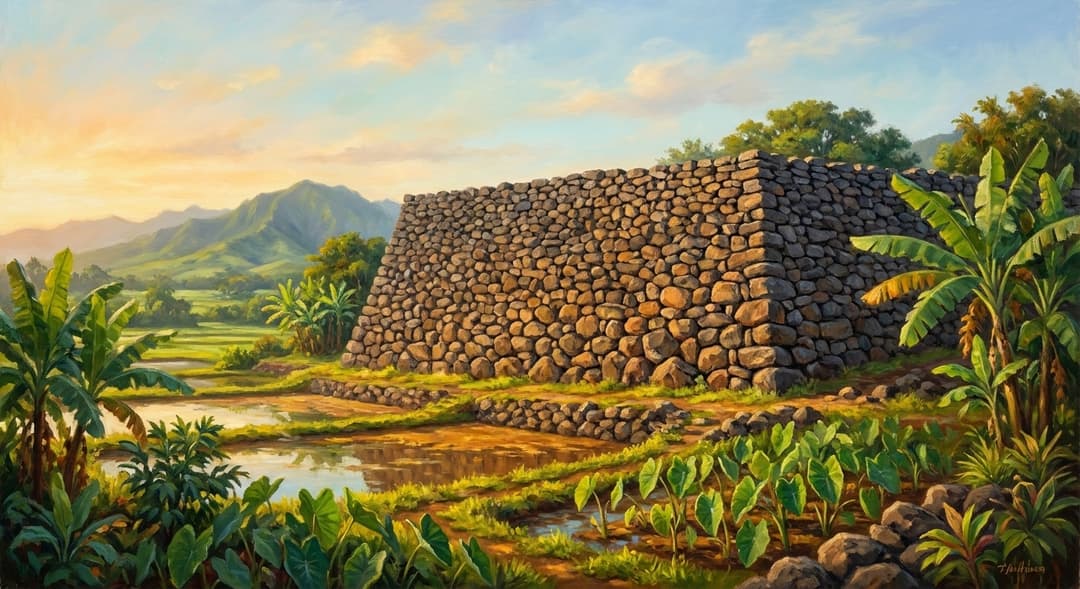
Ulupō Heiau offers a profound window into traditional Hawaiian spiritual ecology and agricultural engineering. Visitors can view the massive dry-laid basalt platform, active natural springs, and restored taro fields set against the backdrop of Kawainui Marsh.
Highlights
- Massive 30-foot dry-stone basalt platform constructed without mortar
- Active natural freshwater springs emerging from beneath the stone foundation
- Restored traditional loʻi kalo (taro fields) cultivated by community stewards
- Panoramic views across the 830-acre Kawainui Marsh wetland ecosystem
Things to Know
- Treat the site with deep reverence as an active place of worship
- Climbing, sitting on, or moving any stones on the platform is strictly prohibited
- Parking is limited at the end of Manu Oʻo Street in a residential neighborhood
Location
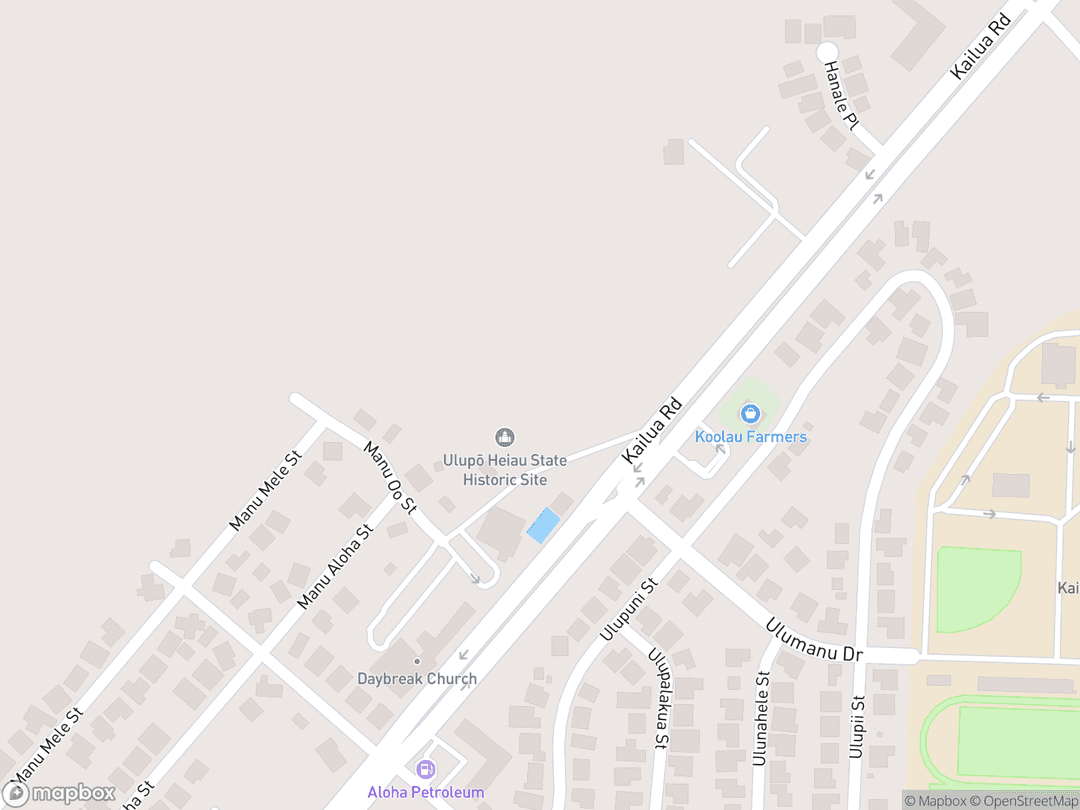
Manu Oʻo Street, Kailua, HI 96734
Hours: Open daily from 7:00 AM to 6:00 PM
Getting There: Located at the end of Manu Oʻo Street, behind the Windward YMCA off Kailua Road in Kailua, Oʻahu.
Get DirectionsTips for Your Visit
Cultural Respect
Keep voices low, stay on established walking paths, and never disturb structural stones or ceremonial offerings.
Best Time to Visit
Visit in the early morning for cooler temperatures, serene atmosphere, and clear lighting over Kawainui Marsh.
About
Ulupō Heiau is one of Oʻahu's largest and most sacred open-platform stone temples, situated at the edge of the expansive Kawainui Marsh in Kailua. Constructed from tens of thousands of basalt fieldstones, the site originally served as an agricultural temple (heiau mapele) consecrated to the deities Lono and Kāne.
Rising 30 feet above the surrounding wetlands, the massive stone terrace channels natural freshwater springs into historical loʻi kalo (taro patches). Today, Ulupō Heiau remains an active indigenous sacred site (wahi pana) restored and maintained by community cultural stewards.
Gallery
Symbolic Elements
The temple's exterior features intricate carvings, each rich with spiritual meaning:

Stacked Basalt Platform (Pā Pōhaku)
Massive dry-laid basalt fieldstones symbolize human devotion, collective labor, and connection to the earth.

Freshwater Springs (Wai)
Natural springs emerging at the base represent the life-giving presence of the deity Kāne.

Taro Terraces (Loʻi Kalo)
Agricultural fields honor Hāloa, the elder brother of mankind in Hawaiian cosmology, linking spiritual devotion to physical nourishment.

Menehune Builders Mythos
The legend of single-night construction honors ancient ancestral builders whose names were lost to antiquity.

Lono Agricultural Alignment
The orientation toward clouds and rain invokes Lono, the god of rain, peace, and bountiful harvests.

Kawainui Marsh Outlook
Facing the expansive wetland connects the temple to the surrounding watershed and historical fishpond.

Human Transported Facings ('Auloa)
Smooth facing stones carried from distant valleys embody the unified physical effort of the entire ahupuaʻa.
Interesting Facts
Hawaiian tradition credits the initial construction of Ulupō Heiau to the Menehune, who built the massive platform in a single night. (Tier B)
Geochemical studies indicate some exterior facing stones were hand-carried from over ten miles away at Kualoa. (Tier B)
Freshwater springs bubble directly from beneath the stone platform, linking the temple to the water god Kāne. (Tier A)
The temple platform measures 140 by 180 feet, making it one of the largest ancient stone structures on Oʻahu. (Tier B)
Prominent Oʻahu paramount chiefs including Kākuhihewa and Kualiʻi maintained royal residences beside the heiau. (Tier B)
Originally an agricultural heiau, it was later adapted for political and martial rituals during 18th-century warfare. (Tier B)
Community volunteers actively cultivate traditional taro in restored fields at the foot of the heiau. (Tier A)
The Hawaiian word for wealth, 'waiwai', originates directly from 'wai', the sacred fresh water flowing past the site. (Tier B)
Common Questions
What is Ulupō Heiau?
It is an ancient Hawaiian open-platform stone temple dedicated to agriculture, fresh water, and fertility.
Are visitors allowed on the stone platform?
No, walking, climbing, or sitting on the stone platform is strictly prohibited to preserve the sacred structure.
Is there an admission fee to visit Ulupō Heiau?
No, entry to the Ulupō Heiau State Historic Site is free to the public.
Why are freshwater springs important at this site?
Springs represent the deity Kāne and historically provided life-giving water for downstream taro cultivation.
Featured Stories
The Night Builders of Kailua
c. A.D. 750
Hawaiian oral traditions attribute the sudden construction of Ulupō's massive platform to the Menehune, a legendary race of skilled craftspeople. Passed from hand to hand in human chains stretching across Oʻahu, thousands of basalt stones were assembled overnight, establishing a sacred space before the dawn.
Source: Hawaiian Oral Traditions & State Historic Site Documentation
Kualiʻi and the Unification of Oʻahu
c. 1680
High Chief Kualiʻi, born in nearby Kalapawai, expanded Ulupō Heiau into a grand state temple during his reign over Oʻahu. Under his patronage, stones were brought from Kualoa and the Waiʻanae Range, solidifying Kailua as a political and spiritual capital of the island.
Source: Bishop Museum Archaeological Records
Reclaiming the Loʻi Kalo
1995
After decades of overgrown vegetation, Native Hawaiian community stewards gathered at the foot of Ulupō Heiau to clear invasive trees and clear ancient water channels. Their efforts re-established active loʻi kalo, transforming the historic site back into a living center of traditional agriculture and cultural education.
Source: Hawaiʻi Division of State Parks
Timeline
Initial Temple Construction
Polynesian settlers establish an agricultural temple platform dedicated to Lono and Kāne beside Kawainui lagoon.
component.timeline.groundbreakingCourt of Chief Kākuhihewa
High Chief Kākuhihewa establishes his royal court at Kailua, making Ulupō a core ceremonial center.
MilestoneExpansion Under Chief Kualiʻi
Oʻahu ruler Kualiʻi expands the stone platform incorporating basalt rocks transported across the island.
RenovationKahekili II Occupation
Maui High Chief Kahekili II occupies Kailua and utilizes Ulupō Heiau for state rituals.
EventAbolition of Kapu System
King Kamehameha II officially abolishes the Kapu system, deactivating formal state temple functions.
EventMcAllister Archaeological Survey
Archaeologist J. Gilbert McAllister documents the site's dimensions and masonry for the Bishop Museum.
MilestoneTerritorial Park Designation
The Territory of Hawaiʻi acquires the land to protect the monument from urban encroachment.
MilestoneNational Register Listing
Ulupō Heiau is officially listed on the U.S. National Register of Historic Places.
MilestoneCommunity Loʻi Restoration
Native Hawaiian civic groups initiate community restoration of the traditional taro patches below the heiau.
RenovationHistory by Decade
700s–1100s
Early Polynesian settlers on Windward Oʻahu establish an agricultural temple atop a natural spring overlooking Kawainui lagoon. The site is dedicated to Lono and Kāne to ensure water flow and crop fertility.
1200s–1500s
As agricultural systems expand, High Chief Kākuhihewa establishes his royal court in Kailua. Ulupō Heiau becomes the principal ceremonial complex for managing the rich agricultural yield of the region.
1600s–1700s
High Chief Kualiʻi enlarges the stone platform using basalt rocks transported from distant island districts. During later 18th-century warfare, invading chiefs adapt the heiau for statecraft and military rituals.
1800s
Following the 1819 abolition of the Kapu system, formal temple activities cease and wooden structures decompose. The surrounding land transitions to agricultural leases worked by Hawaiian, Chinese, and Japanese farmers.
1900s–1980s
Archaeologist J. Gilbert McAllister surveys Ulupō in 1933. The Territory of Hawaiʻi acquires the land in 1954 to prevent suburban development, leading to its 1972 placement on the National Register of Historic Places.
1990s–Present
Community cultural organizations partner with State Parks to restore the surrounding loʻi kalo. Today, Ulupō serves as an active sacred site, outdoor classroom, and focal point for community land stewardship (mālama ʻāina).
Architecture & Facilities
Ulupō Heiau is an open dry-stone platform temple (heiau poʻokanaka) built using traditional Hawaiian masonry techniques without mortar. Designed as an elevated unroofed stage built into the hillside above spring-fed wetlands, its massive stone terraces integrate seamlessly with the natural hydrological landscape.
Building Materials
Volcanic Basalt Fieldstones (Pōhaku)
Unmortared local basalt rocks formed the structural core and interior platform terraces.
Transported Facing Cobbles
Smooth exterior stones hand-transported via long human chains from distant valleys like Kualoa.
Interior Rubble Fill (ʻAlā)
Smaller basalt river stones used as dense interlocking fill inside the massive retaining walls.
Natural Spring Channels
Basalt water pathways engineered at the base to direct freshwater flow into farming fields.
Interior Features
Upper Stone Platform Terrace
A large flat open stone surface measuring 140 by 180 feet used for ancient ceremonial rites.
Spring-Fed Basin Base
The lower western edge where freshwater emerges directly from beneath the stone foundation.
Outer Retaining Wall Face
A 30-foot battered stone wall engineered to resist seismic shifts and soil movement.
Sacred Ceremonial Precinct
The elevated central platform area historically housing wooden altars and carved kiʻi.
Temple Grounds
Surrounded by active loʻi kalo (taro patches), native flora, freshwater spring channels, and bordering the 830-acre Kawainui Marsh wetland sanctuary.
Additional Facilities
Public park entrance area with informational signage and access pathways along the perimeter of the taro fields.
Religious Significance
In indigenous Hawaiian spirituality (Ao Hawaiʻi), sacred sites (wahi pana) are living conduits of spiritual power (mana). Ulupō Heiau was consecrated to bridge human agricultural effort with the divine forces governing water, weather, and life.
To consecrate fresh water springs, ensure agricultural fertility, and express community gratitude to the divine forces of nature.
Sacred Ordinances
Chants and Protocols (Oli & Hoʻokupu)
Traditional chants and sacred protocol offerings performed to honor ancestral spirits and ask permission before entering.
Agricultural Consecration
Ceremonial rituals dedicated to Lono to invoke rain, crop abundance, and peaceful governance across the ahupuaʻa.
Land Stewardship Protocol (Mālama ʻĀina)
Active physical care and cultivation of the land viewed as a sacred spiritual duty linking humans to ancestors.
Honoring Lono and Kāne
Ulupō's dual association with Lono (god of rain and fertility) and Kāne (god of fresh water) emphasizes the divine balance necessary for life. The bubbling springs directly underneath the platform stand as a perpetual manifestation of Kāne's life-giving energy.
Similar Temples



Sources & Research
Every fact on Temples.org is backed by verified Sources & Research. Each piece of information is rated by source tier and confidence level.
View All Sources (7)
| Field | Source | Tier | Retrieved |
|---|---|---|---|
| About & Historical Background | Hawaiʻi Department of Land and Natural Resources - Division of State Parks (opens in a new tab) | A | 2026-02-17 |
| Architecture & Structural Details | National Park Service - National Register of Historic Places (opens in a new tab) | B | 2026-02-17 |
| Timeline & Featured Stories | Bernice Pauahi Bishop Museum Department of Anthropology (opens in a new tab) | B | 2026-02-17 |
| Religious Significance & Agriculture | Ulukau: The Hawaiian Electronic Library (opens in a new tab) | B | 2026-02-17 |
| Community Stewardship & Loʻi Kalo | Kākoʻo ʻŌiwi Cultural Organization (opens in a new tab) | B | 2026-02-17 |
| Environmental Context & Kawainui Marsh | Hawaiʻi Division of Forestry and Wildlife (opens in a new tab) | A | 2026-02-17 |
| Site History & Royal Lineages | Hawaiian Historical Society (opens in a new tab) | B | 2026-02-17 |