Visitor Insights
Visiting Canyon de Chelly & Spider Rock
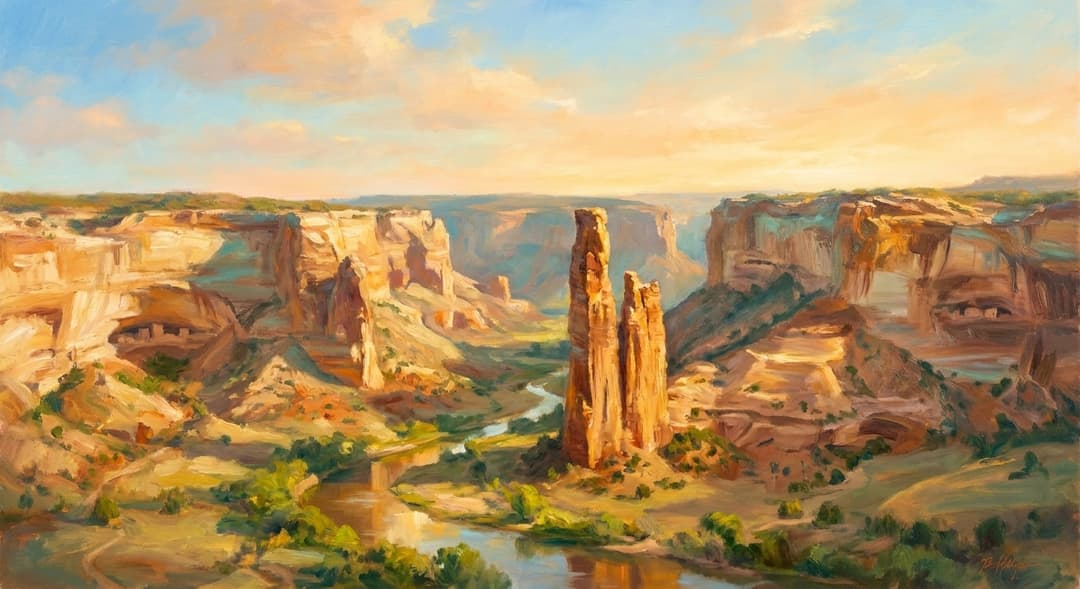
Canyon de Chelly offers dramatic rim drives overlooking sheer 1,000-foot sandstone cliffs, ancient cliff dwellings, and sacred monoliths. Entering the canyon floor requires a licensed Navajo guide to protect resident privacy and sacred cultural sites.
Highlights
- Spider Rock Overlook providing views of the 750-foot monolith
- White House Ruin and upper alcove Ancestral Puebloan masonry
- Mummy Cave and its 1280s Mesa Verde-style stone tower
- Historic rock art panels depicting ancient handprints and Spanish cavalry
Things to Know
- Canyon floor access strictly requires an authorized Navajo guide or ranger
- Climbing Spider Rock or any cliff face is forbidden by tribal law
- Respect private Diné homes, orchards, and livestock along the canyon bottom
- Diné time observes Daylight Saving Time, unlike the rest of Arizona
Location
Canyon de Chelly National Monument, Chinle, AZ 86503
Hours: Rim drives and overlooks open year-round 24 hours. Welcome Center open daily 8:00 AM – 5:00 PM.
Getting There: Located near Chinle, Arizona. Accessible via Highway 191 to Route 7 (South Rim Drive) or Highway 64 (North Rim Drive).
Get DirectionsTips for Your Visit
Respect Sacred Boundaries
Always hire an official Navajo guide for canyon floor access and never photograph local residents or homes without explicit permission.
Time Zone Awareness
The Navajo Nation observes Daylight Saving Time from March to November, making it one hour ahead of surrounding Arizona.
About
Canyon de Chelly and Spider Rock form a living sacred landscape carved into the Defiance Plateau of northeastern Arizona. Known to the Diné as Tseyi’ ('Inside the Rock Canyon'), the site holds a continuous record of human sanctuary spanning over 5,000 years, from Archaic hunter-gatherers and Ancestral Puebloans to the modern Navajo Nation.
At the heart of the canyon stands Spider Rock, a towering 750-foot sandstone spire revered as the home of Spider Woman (Na'ashjé'ii Asdzáá). In Diné cosmology, Spider Woman provided the sacred teachings of weaving and moral balance (Hózhó), making the natural formations integral to indigenous spiritual identity.
Uniquely co-managed by the Navajo Nation and the National Park Service, Canyon de Chelly remains tribal trust land where resident Diné families continue ancient agrarian and pastoral traditions among ancestral cliff ruins.
Gallery
Symbolic Elements
The temple's exterior features intricate carvings, each rich with spiritual meaning:

Spider Rock
A 750-foot red sandstone spire revered as the sacred dwelling of Spider Woman.

The Cosmic Loom
Cosmological framework where loom bars represent Sky and Earth, woven with sunbeams and rock crystals.

White House Ruin Plaster
Light gypsum plaster applied in 1060 CE that gives Kinii’ni gai its distinctive historic appearance.

East-Facing Hogan
Traditional log-and-earth home aligned to eastern morning light for daily spiritual blessings.

De Chelly Red Sandstone
Permian fossilized sand dune deposits forming sheer 1,000-foot walls carved by wind and water.
Sacred Petroglyphs
Rock art archives including handprints, Hopi clan markers, and historical Diné cavalry panels.
Speaking Rock
A smaller monolith adjacent to Spider Rock that communicates canyon events to Spider Woman.

Subterranean Kivas
Circular underground ceremonial chambers constructed by Ancestral Puebloans for spiritual rites.
Interesting Facts
Canyon de Chelly contains zero federally owned land, as all 83,840 acres belong to the Navajo Tribal Trust. (Tier A)
Human presence in the canyon spans over 5,000 years, making it one of North America's longest continuously occupied sites. (Tier A)
Approximately 40 Diné families continue to live, farm corn, and raise sheep inside the canyon today. (Tier A)
Spider Rock stands exactly 750 feet tall based on official National Park Service geodetic surveys. (Tier A)
Climbing Spider Rock or any canyon cliff is strictly illegal under Navajo Nation law out of religious respect. (Tier A)
The name 'de Chelly' stems from a Spanish mispronunciation of the Navajo word Tseyi', meaning 'Inside the Rock'. (Tier B)
Gypsum plaster applied to White House Ruin in the 11th century remains intact after nearly 1,000 years. (Tier B)
A historical pictographs panel near Massacre Cave depicts 1805 Spanish cavalry wearing cloaks and holding lances. (Tier B)
Descendants of 17th-century heirloom peach trees planted by Hopi and Navajo farmers still grow on the canyon floor. (Tier B)
Common Questions
Is Canyon de Chelly owned by the National Park Service?
No, the land is 100% Navajo Tribal Trust land co-managed with the National Park Service for visitor services.
Can I walk into the canyon without a guide?
All canyon floor travel requires an authorized Navajo guide, with the exception of White House Ruins Trail when open.
Why is Spider Rock sacred in Diné culture?
Spider Rock is revered as the spiritual home of Spider Woman, who taught the Navajo people the sacred art of weaving.
Can visitors climb Spider Rock?
Climbing any rock wall or spire in Canyon de Chelly is strictly prohibited by tribal law out of sacred respect.
Featured Stories
Spider Woman and the Gift of Weaving
Ancestral Era
According to Diné oral tradition, Spider Woman dwelt atop Spider Rock and taught the Navajo people the divine art of weaving. Her husband constructed the first loom using sky, earth, sunbeams, and lightning, establishing a sacred tradition that connects artistic beauty with moral order (Hózhó).
Source: Diné Oral Tradition & National Park Service Historical Records
The Exile and Long Walk Home
1864
When federal troops entered Canyon de Chelly in 1864 and destroyed orchards to force surrender, thousands of Diné were marched 300 miles to exile at Fort Sumner. Following the 1868 treaty, survivors returned to their sacred canyon, replanting peach trees and restoring their spiritual heartland.
Source: Navajo Nation Historical Archives
The Plaster Walls of White House
1060
Built inside a high sandstone alcove, White House Ruin features light gypsum plaster that has remained intact for nearly 1,000 years. The dual-level village housed nearly 100 residents and stands as an architectural testament to ancient engineering and sanctuary.
Source: National Park Service Archaeological Survey
Timeline
Archaic Period Campsites
Nomadic hunter-gatherers use canyon alcoves for shelter and leave early rock art.
MilestoneBasketmaker Settlement
Ancestral Puebloans establish permanent pit-house villages and cultivate maize.
EventWhite House Ruin Construction
Masons build multi-story cliff dwellings and circular subterranean kivas at White House.
MilestoneMummy Cave Tower Complex
Mesa Verde migrants construct a three-story masonry tower between alcoves.
MilestoneAncestral Puebloan Migration
Severe drought forces residents to migrate toward Hopi, Zuni, and Rio Grande communities.
EventDiné Settlement in Tseyi’
Navajo families settle permanently, cultivating farms and establishing sacred spiritual roots.
MilestoneMassacre Cave Conflict
Spanish forces invade Canyon del Muerto, resulting in tragic loss of Diné lives.
EventForced Removal Campaign
U.S. Army troops enforce the Long Walk exile to Fort Sumner.
EventTreaty of Bosque Redondo
Diné return to their sacred canyon home to rebuild hogans and orchards.
MilestoneNational Monument Proclamation
President Hoover establishes the monument under Navajo Tribal Trust ownership.
MilestoneHistory by Decade
2500 BCE–200 BCE — Archaic Sanctuary
Nomadic groups frequented the canyon alcoves during seasonal migrations, hunting game and gathering plant materials. Their temporary hearths and early petroglyphs marked the beginning of 5,000 years of unbroken human reverence.
200 BCE–1000 CE — Basketmaker to Pueblo Transition
Early Ancestral Puebloans settled permanently on the canyon floor, farming maize and squash along stream terraces. They constructed pit-houses and later transitioned to above-ground stone masonry complexes.
1060–1300 — Golden Age of Cliff Architecture
The canyon population peaked as masons constructed multi-story alcove villages like White House and Mummy Cave. Prolonged drought around 1300 forced migration toward the Hopi mesas and Rio Grande valleys.
1700s–1860s — Diné Homeland and Conflict
Navajo families established Tseyi’ as a cultural core, constructing hogans and cultivating peach orchards. Colonial invasions by Spanish and U.S. military forces culminated in the traumatic 1864 forced removal.
1868–1931 — Return and Restoration
Following the Treaty of Bosque Redondo, Diné families returned to restore farms and spiritual rites. In 1931, President Hoover designated the area a National Monument with no loss of tribal land ownership.
1930s–Present — Living Tribal Co-Management
Today, the canyon floor remains active tribal land where resident families farm and tend orchards. The Navajo Nation and Park Service cooperatively preserve the living culture and ancient ruins.
Architecture & Facilities
The architectural landscape combines natural Permian De Chelly Sandstone canyon formations with Ancestral Puebloan dry-laid stone masonry alcove dwellings and organic Diné hexagonal wood-and-earth hogans. Natural erosion carved massive sheer alcoves that act as protective overhangs for ancient multi-story masonry villages.
Building Materials
De Chelly Sandstone
Permian fossilized sand dune deposits providing natural canyon walls and building stone.
Gypsum and Caliche Plaster
White mineral coatings used to seal and decorate alcove masonry walls.
Cedar and Pine Timbers
Hand-selected timbers forming roof beams for kivas and traditional hogans.
Earthen Clay Mortar
Mud mortar mixed with straw for chinking stone walls and sealing domed hogan roofs.
Interior Features
Subterranean Circular Kivas
Underground ceremonial chambers featuring stone benches, hearths, and sipapu floor features.
Upper Alcove Living Quarters
Multi-room stone masonry apartments built into natural rock ledges 35 feet above canyon floor.
Hogan Sacred Sanctuaries
Hexagonal earthen-floored timber homes designed for family dwelling and sacred chants.
Antelope House Plaza
A central stone-paved communal gathering square constructed within a high cliff alcove.
Temple Grounds
The canyon floor encompasses fertile alluvial stream banks, corn fields, peach orchards, and natural sandstone amphitheaters.
Additional Facilities
The Welcome Center near Chinle offers cultural exhibits, guide registration, and orientation information.
Religious Significance
In Diné worldview, the natural landscape is a living temple created by the Holy People (Diyin Dine'é). Canyon de Chelly and Spider Rock serve as core geographic and cosmological sanctuaries.
To preserve spiritual balance (Hózhó), honor ancestral heritage, and maintain sacred teachings given by Spider Woman.
Sacred Ordinances
Blessingway Ceremony (Hózhóójí)
Spiritual rites performed in hogans to invoke protection, harmony, and well-being.
Weaving Ceremonial Offering
Traditional weavers offer prayers to honor Spider Woman before starting new loom projects.
Ancestral Pilgrimage
Sacred visits to ancestral alcoves and petroglyphs to maintain connection with past generations.
Spider Woman and the Teaching of Hózhó
Spider Woman's lessons extend beyond textile craft to encompass living in balance with nature, family, and spiritual laws.
Similar Temples
Sources & Research
Every fact on Temples.org is backed by verified Sources & Research. Each piece of information is rated by source tier and confidence level.
View All Sources (7)
| Field | Source | Tier | Retrieved |
|---|---|---|---|
| About & Historical Background | National Park Service (opens in a new tab) | A | 2026-02-23 |
| Architectural & Historical Survey | Library of Congress Historic American Buildings Survey (opens in a new tab) | B | 2026-02-23 |
| Sacred Landscape & Diné Traditions | Bureau of Indian Affairs - Navajo Region (opens in a new tab) | A | 2026-02-23 |
| Indigenous Culture & Spider Woman Cosmology | Smithsonian National Museum of the American Indian (opens in a new tab) | B | 2026-02-23 |
| Archaeological Stratigraphy & Excavations | American Museum of Natural History (opens in a new tab) | B | 2026-02-23 |
| Southwestern Native American History | University of Arizona Press (opens in a new tab) | B | 2026-02-23 |
| Canyon Geography & Cultural Preservation | Arizona Highways (opens in a new tab) | C | 2026-02-23 |