Visitor Insights
Visiting Montezuma Castle & Montezuma Well
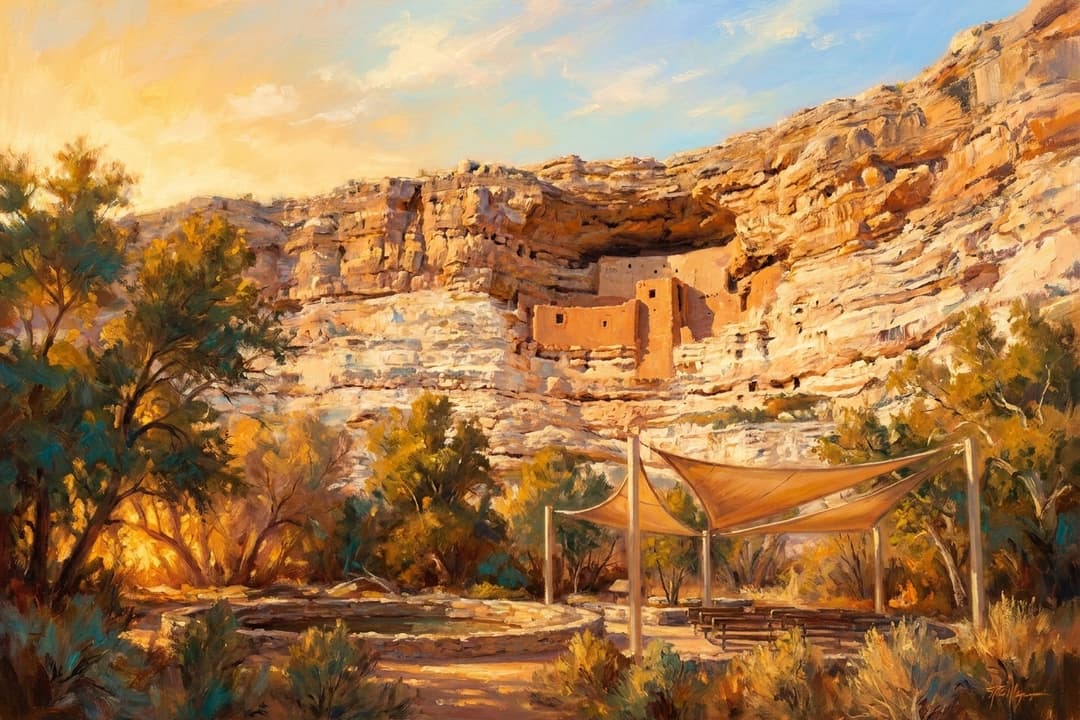
Montezuma Castle and Montezuma Well offer visitors a view of prehistoric Southwestern architecture and sacred hydrology. Located 11 miles apart in the Verde Valley, both sites feature accessible trails, historic interpretive displays, and preserved cliff dwellings.
Highlights
- Five-story, 20-room cliff dwelling preserved inside a high limestone alcove
- Montezuma Well sinkhole discharging 1.5 million gallons of 74°F spring water daily
- Prehistoric self-petrifying irrigation canals engineered by the Southern Sinagua
- Shaded paved walking trails beneath ancient Arizona sycamore trees along Beaver Creek
Things to Know
- Interior entry into Montezuma Castle has been prohibited since 1951 to prevent erosion
- Descending into Montezuma Well outlet cave requires navigating 112 stone steps
- Montezuma Well water contains natural arsenic and high CO2 levels
Location
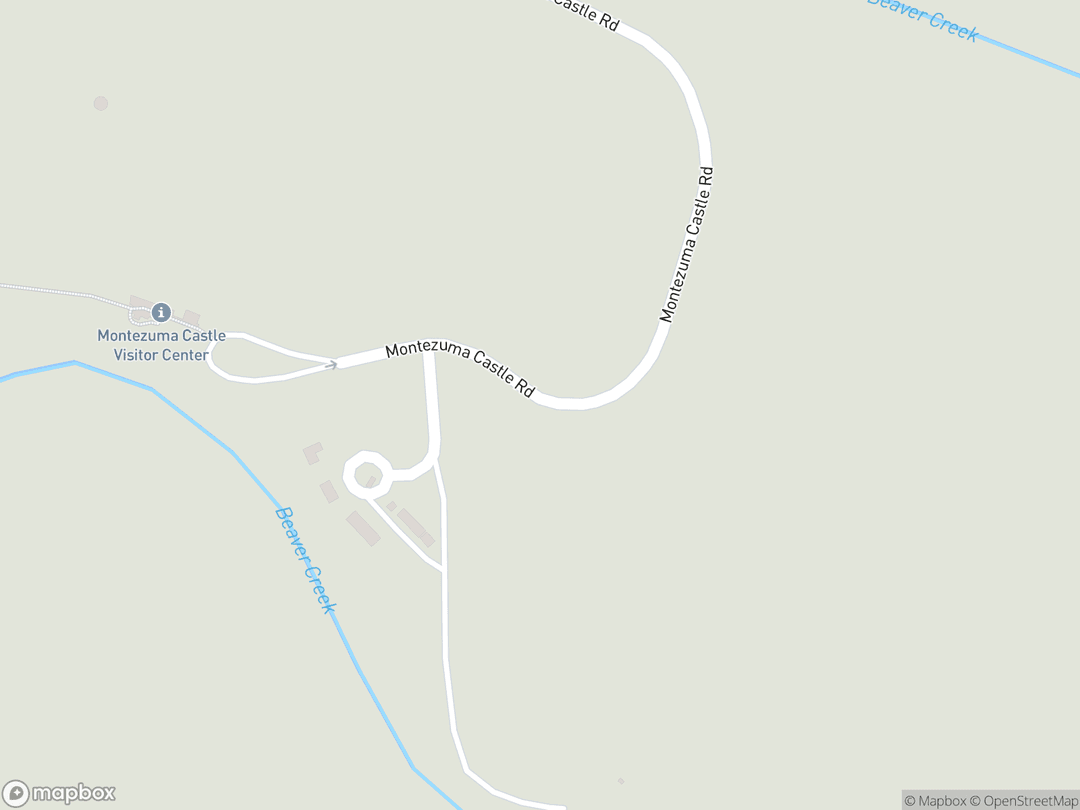
2800 Montezuma Castle Road, Camp Verde, AZ 86322
Hours: Open daily year-round from 8:00 AM to 5:00 PM. Closed Thanksgiving, Christmas Day, and New Year's Day.
Getting There: Montezuma Castle is off I-17 at Exit 289 in Camp Verde. Montezuma Well is reached via I-17 Exit 293 near Rimrock, Arizona.
Get DirectionsTips for Your Visit
Start Early at the Castle
Visit Montezuma Castle early in the morning for optimal photographic lighting on the south-facing limestone cliff.
Combine Both Sites
Plan 1-2 hours for Montezuma Castle and an additional 1-2 hours to explore Montezuma Well 11 miles northeast.
About
Montezuma Castle and Montezuma Well represent one of the most significant ancestral Indigenous sanctuaries in the American Southwest. Built into limestone cliffs and centered around a sacred geothermal spring in central Arizona's Verde Valley, the sites were constructed between 700 and 1425 AD by the Hohokam and Southern Sinagua cultures.
For modern affiliated tribes—including the Hopi, Yavapai-Apache, Zuni, and Western Apache peoples—Montezuma Well (Ahakaskyaywa) is venerated as a sacred place of origin where life stepped into the present world. The nearby five-story cliff dwelling stands as a physical testament to ancestral migration journeys (Kukveni).
Proclaimed Arizona's first National Monument by President Theodore Roosevelt in 1906, the complex preserves passive thermal engineering, self-petrifying water canals, and profound spiritual traditions embedded within the natural landscape.
Gallery
Symbolic Elements
The temple's exterior features intricate carvings, each rich with spiritual meaning:

Limestone Alcove
The natural natural rock cavity provides passive thermal shelter and structural protection.

Sycamore Vigas
Sturdy primary timber beams harvested from local Arizona sycamore trees.

T-Shaped Doorways
Distinctive doorways providing defensive advantage and climate control.

Place of Emergence Spring
Sacred geothermal water source where ancestral beings crossed into the present world.

Petrified Lime Canals
Self-sealing water channels created by ancient irrigation and mineral deposition.

Solstice Solar Markers
Architectural openings engineered to track solar alignments for ceremonial planting cycles.
Kukveni Ancestral Footprints
Physical architectural markers left behind as historical evidence of sacred clan migrations.
Water Serpent Petroglyph
Rock art depiction honoring the spiritual guardian deity associated with sacred springs.
Interesting Facts
The site has zero connection to Aztec Emperor Montezuma II, having been constructed centuries prior by the Sinagua. (Tier A)
Montezuma Well continuously pumps over 1.5 million gallons of 74°F spring water daily in a desert environment. (Tier A)
Rainfall feeding Montezuma Well fell over 10,000 years ago, taking millennia to filter through limestone aquifers. (Tier B)
Extremely high carbon dioxide levels prevent fish from breathing inside Montezuma Well's waters. (Tier B)
Montezuma Well shelters five endemic species found nowhere else on planet Earth. (Tier A)
Spring water saturated with dissolved lime naturally petrified mud irrigation canals into hard stone channels. (Tier A)
Tourists climbed wooden ladders into Montezuma Castle until public interior entry was banned in 1951. (Tier A)
Montezuma Castle was proclaimed Arizona's very first National Monument by President Roosevelt in 1906. (Tier A)
Common Questions
Did Aztec Emperor Montezuma II build Montezuma Castle?
No, 19th-century settlers misnamed the site under a false assumption; it was built centuries earlier by the Southern Sinagua.
Can visitors walk inside the cliff dwelling rooms?
Public interior access was permanently closed in 1951 to prevent structural damage and preserve delicate masonry.
Are fish living inside Montezuma Well?
No fish live in Montezuma Well due to high carbon dioxide levels, though five unique endemic species thrive there.
Which Native American tribes are affiliated with the site?
Affiliated tribes include the Hopi Tribe, Yavapai-Apache Nation, Pueblo of Zuni, and Western Apache Tribes.
Featured Stories
The Sacred Emergence at Ahakaskyaywa
Ancient Era
According to Yavapai oral tradition, Montezuma Well (Ahakaskyaywa) is the sacred origin site where all living beings entered the present world following a great primordial deluge. Ancestors climbed out from the subterranean world along a giant maize stalk into the daylight above. Today, the well remains a deeply revered spiritual sanctuary for tribal descendants.
Source: Yavapai-Apache Nation Oral Tradition
Preserving the Alcove Pueblo
December 8, 1906
Recognizing the unprecedented preservation of the cliff dwelling, President Theodore Roosevelt proclaimed Montezuma Castle as Arizona's first National Monument under the Antiquities Act in 1906. Early preservationists worked tirelessly to stabilize the outer masonry, halting looting and collapse. In 1951, public access inside the dwelling was closed to protect the centuries-old mud plaster floors for future generations.
Source: National Park Service Historical Records
The Engineering of Petrified Canals
c. 1000 AD
Ancestral Sinagua farmers engineered an extraordinary gravity-fed irrigation system utilizing the continuous outflow of Montezuma Well. Because the spring water carries high concentrations of dissolved calcium carbonate, mineral deposits naturally coated the canal walls over centuries. This natural process transformed fragile mud ditches into stone pipelines that remain intact today.
Source: National Park Service Archaeological Survey
Timeline
Hohokam & Sinagua Settlement
Agriculturalists settle along Beaver Creek, building early pithouses and digging gravity-fed irrigation canals.
MilestoneSunset Crater Eruption
Volcanic ash disperses across the region, enhancing soil moisture and sparking agricultural expansion.
EventCliff Dwelling Construction Begins
Southern Sinagua builders begin constructing stone masonry rooms in the high limestone alcove.
MilestonePopulation & Architectural Peak
Montezuma Castle expands into a 5-story pueblo alongside the 45-room Castle A structure below.
MilestoneSinagua Migration Departure
The Sinagua depart the Verde Valley to resume sacred migrations toward Hopi and Zuni mesas.
EventSpanish Reconnaissance
Explorer Antonio de Espejo encounters Yavapai communities utilizing the local land and water systems.
EventEarly Wall Stabilization
The Arizona Antiquarian Association executes emergency repairs to halt cliff dwelling wall collapses.
RenovationNational Monument Proclamation
President Theodore Roosevelt establishes Montezuma Castle as Arizona's first National Monument.
DedicationCastle A Excavations
Federal work crews excavate fallen debris from Castle A, revealing hundreds of preserved artifacts.
EventMontezuma Well Incorporation
Congress authorizes purchasing Montezuma Well, adding the sacred sinkhole to the monument.
MilestonePublic Interior Access Closed
Public ladder climbing inside Montezuma Castle is permanently ended to protect delicate plaster walls.
EventUnderwater Archaeological Survey
Divers explore Montezuma Well, recovering ancient clay vessel offerings from the spring depths.
EventHistory by Decade
700s–1000s — Early Settlement
Agricultural communities of the Hohokam and Southern Sinagua establish permanent farming villages along Beaver Creek. They build pithouses and pioneer gravity-fed irrigation canals fed by Montezuma Well.
1100s–1200s — Cliff Masonry Era
Following regional volcanic activity at Sunset Crater, Sinagua builders construct stone masonry dwellings inside limestone alcoves, erecting the early core of Montezuma Castle.
1300s — Architectural Peak
Population reaches its peak as Montezuma Castle expands into a 20-room, 5-story pueblo alongside the adjacent 45-room Castle A structure along the cliff base.
1400s–1800s — Migration & Preservation
The Sinagua depart the Verde Valley to continue spiritual migration journeys to Hopi and Zuni pueblos. Local Yavapai and Apache communities steward the sacred land.
1900s — Monument Protection
President Roosevelt designates Montezuma Castle Arizona's first National Monument in 1906. Federal acquisitions add Montezuma Well in 1947, and public ladder entry is closed in 1951.
2000s — Tribal Consultation
The National Park Service establishes formal consultation partnerships with affiliated tribes, incorporating Indigenous traditional ecological knowledge into park management.
Architecture & Facilities
Southwestern Indigenous Southern Sinagua alcove pueblo architecture, featuring multi-story stone masonry built inside natural limestone cavities.
Building Materials
Limestone Block Masonry
Quarried limestone blocks bedded in formulated clay and silt mortar.
Timber Vigas
Main support beams harvested from local Arizona sycamore and ponderosa pine.
Roof Latillas and Mud Plaster
Secondary wooden poles overlaid with reed thatch and compacted clay flooring.
Petrified Lime Canal Lining
Natural calcium carbonate deposits forming hard, cement-like water channels.
Interior Features
Lower Living Chambers
Base level residential rooms used for daily food preparation and hearth fires.
Upper Sleeping Quarters
Secluded upper rooms designed for family sleeping quarters and thermal insulation.
Granary Storage Vaults
Dry interior cliff pockets utilized for long-term storage of corn and squash.
Balcony Work Plazas
Elevated exterior ledges providing communal workspace overlooking Beaver Creek.
Temple Grounds
The surrounding monument encompasses 840 acres across two units, featuring riparian sycamore groves along Beaver Creek and the Montezuma Well sinkhole oasis.
Additional Facilities
Visitor centers at Montezuma Castle and Montezuma Well feature museum exhibits, ancestral artifacts, bookstore facilities, and accessible paved trail loops.
Religious Significance
Montezuma Castle and Montezuma Well are sacred places of origin, ancestral memory, and spiritual pilgrimage for Southwestern tribes.
To serve as a living sanctuary connecting modern Indigenous peoples to their ancestral emergence and migration journeys.
Sacred Ordinances
Emergence Remembrance
Ceremonial honoring of Montezuma Well as the sacred point where ancestors stepped into the present world.
Kukveni Migration Traditions
Veneration of physical cliff dwellings as spiritual footprints left during ancestral migrations.
Solstice Solar Observance
Tracking seasonal solar alignments across cliff openings to govern ceremonial and agricultural calendars.
Yavapai Emergence Narrative
Yavapai tradition holds that living beings emerged into this world through the waters of Montezuma Well climbing a giant maize stalk.
Hopi Migration Legacy
Hopi clans trace their migration pathways through the Verde Valley, recognizing the dwellings as sacred historical markers.
Sources & Research
Every fact on Temples.org is backed by verified Sources & Research. Each piece of information is rated by source tier and confidence level.
View All Sources (5)
| Field | Source | Tier | Retrieved |
|---|---|---|---|
| About & Historical Background | National Park Service (opens in a new tab) | A | 2026-02-15 |
| Archaeological Surveys | Northern Arizona University (opens in a new tab) | B | 2026-02-15 |
| Historical Timeline & Proclamations | A&E Television Networks (opens in a new tab) | B | 2026-02-15 |
| Montezuma Well Hydrology & Ecology | Atlas Obscura (opens in a new tab) | C | 2026-02-15 |
| Visitor Insights & Access | Sedona Tourism Bureau (opens in a new tab) | C | 2026-02-15 |