Visitor Insights
Visiting Wupatki Pueblo
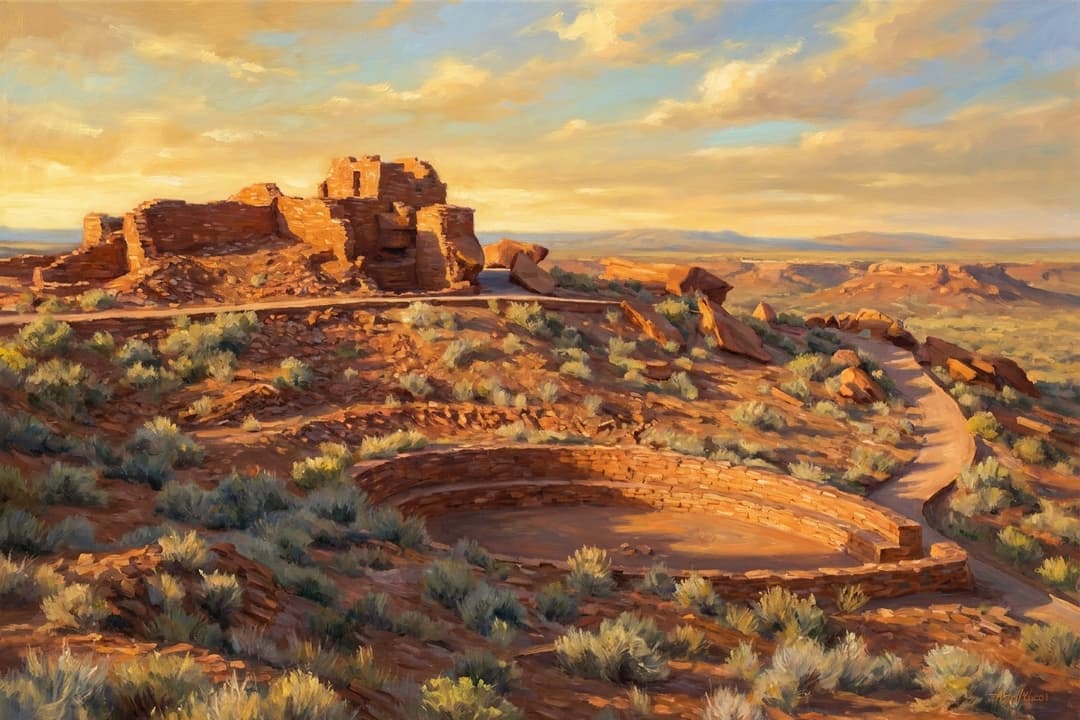
Visitors to Wupatki Pueblo can explore a remarkably preserved 104-room ancestral sanctuary surrounded by sweeping views of the Painted Desert. A self-guided trail allows close inspection of authentic sandstone masonry, the natural blowhole, the circular gathering plaza, and the unique stone ballcourt.
Highlights
- Self-guided 0.5-mile loop trail passing through three-story sandstone pueblo rooms
- Experiencing the natural pneumatic airflow from the geological blowhole vent
- Viewing the northernmost masonry ballcourt in ancient North America
- Panoramic vistas across the Moenkopi red sandstone formations and Painted Desert
Things to Know
- High desert climate brings rapid weather changes and summer heat above 100°F
- Structural walls are fragile sacred heritage; touching or climbing on masonry is strictly prohibited
- Wupatki Visitor Center provides interpretive displays and trail information daily
Location
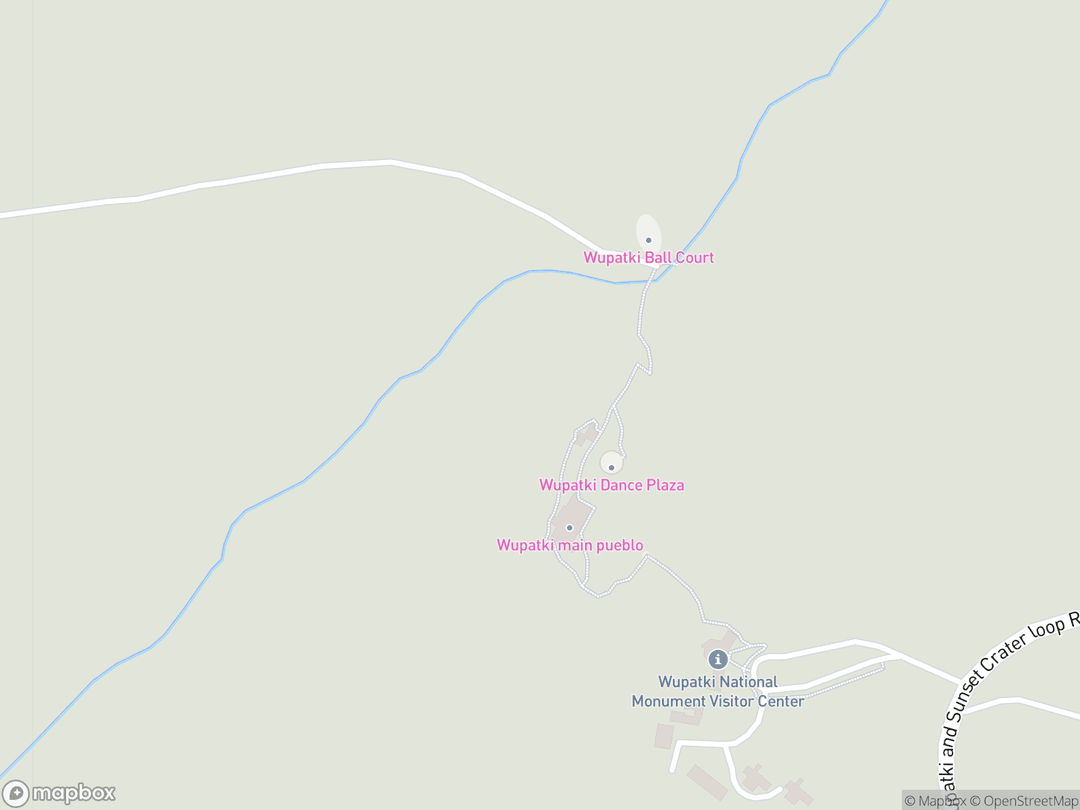
Wupatki National Monument, 25137 N. Sunset Crater-Wupatki Loop Road, Flagstaff, AZ 86004
Hours: Grounds and trail open daily sunrise to sunset; Visitor Center open 9:00 AM to 5:00 PM daily
Getting There: Located 30 miles north of Flagstaff via US-89 North and the 35-mile Sunset Crater-Wupatki Loop Road
Get DirectionsTips for Your Visit
Plan for Temperature Extremes
Bring ample drinking water and sun protection, as shade along the open masonry trail is extremely limited.
Respect Sacred Boundaries
Remain on designated paved pathways at all times to preserve the fragile red stone structures and honor descendant traditions.
Observe the Blowhole
Stand quietly near the natural bedrock opening to feel the living breath of air shifting based on atmospheric pressure.
About
Wupatki Pueblo, meaning 'Tall House' in Hopi, is an ancient multi-story red sandstone sanctuary situated in the desert basin north of the San Francisco Peaks. Constructed primarily during the twelfth century following the eruption of Sunset Crater, the complex grew into a thriving agricultural and ceremonial hub that supported thousands of residents from converging Sinagua, Kayenta Anasazi, and Cohonina traditions.
Built directly atop a massive Moenkopi sandstone outcrop, Wupatki features a three-story masonry dwelling with 104 documented rooms, a circular community arena, and the northernmost stone-walled ballcourt in North America. The site seamlessly integrates natural geological phenomena, including a natural blowhole connected to subterranean limestone caverns that expels compressed air, embodying the living breath of the earth.
Descendant Hopi, Zuni, Diné, and San Juan Southern Paiute communities hold Wupatki as a vital ancestral sanctuary (tutskwa). Rather than an abandoned ruin, the pueblo represents sacred footprints left by migratory clans fulfilling spiritual covenants, where ancestral guardians continue to reside within the standing red stone walls.
Gallery
Symbolic Elements
The temple's exterior features intricate carvings, each rich with spiritual meaning:

Earthcrack Blowhole
A natural bedrock crack that expels or draws air, representing the living breath of Yaaponsa.
Moenkopi Sandstone Ledge
Bedrock foundation that physically anchors the multi-story pueblo into the permanent bones of the earth.

T-Shaped Doorway
Specialized entryways associated with wind passages, celestial alignments, and Katsina clan identity.

Masonry Ballcourt
Oval stone arena symbolizing regional unity, inter-group trade, and ceremonial gathering.

Circular Community Plaza
Open masonry arena used for civic assemblies, seasonal rituals, and public clan dances.

Ponderosa Pine Vigas
Massive roof beams transported miles from sacred mountain forests to support residential chambers.

Volcanic Cinder Layers
Dark basaltic ash surrounding the site, symbolizing agricultural rebirth following natural disruption.
Interesting Facts
Volcanic ash from the Sunset Crater eruption acted as moisture-retaining mulch, creating an agricultural boom. (Tier A)
Wupatki contains the northernmost masonry-walled ballcourt ever discovered in North America. (Tier A)
The natural blowhole can draw in or expel air at speeds up to 30 miles per hour based on barometric pressure. (Tier A)
Architectural surveys confirm Wupatki contains exactly 104 documented rooms across three stacked tiers. (Tier A)
Heavy roof beams were hand-carried over 15 miles from forests in the San Francisco Peaks. (Tier B)
Excavations revealed trade goods including tropical scarlet macaw feathers and Pacific marine shells. (Tier A)
Ancestral farmers placed corn ears into active lava flows near Sunset Crater as sacred offerings. (Tier B)
Wupatki is the only site where Sinagua, Cohonina, and Kayenta Anasazi masonry styles coexist. (Tier A)
Common Questions
What does the name Wupatki mean?
Wupatki is a Hopi word meaning 'Tall House,' referring to the three-story red sandstone pueblo.
Is Wupatki Pueblo an abandoned site?
No, descendant Puebloan tribes view Wupatki as a living sacred site where ancestral spirits reside.
How was the natural blowhole formed and how does it work?
The blowhole is a natural bedrock crack connected to underground caverns that draws in or blows out air based on atmospheric pressure.
Why is the stone ballcourt significant?
It is the northernmost stone-lined ballcourt in North America, highlighting far-reaching trade ties with southern cultures.
Featured Stories
The Breath of Yaaponsa
Ancient Era
Near the base of the pueblo, a narrow opening in the limestone leads deep into subterranean caverns. Ancestral builders recognized this blowhole as the living breath of Yaaponsa, the wind spirit, connecting the physical community with subterranean spiritual realms.
Source: Hopi Oral Tradition & NPS Interpretive Archives
The Volcanic Agrarian Boom
c. 1085–1150 CE
When Sunset Crater erupted, local families initially fled the volcanic fallout in fear. However, they soon discovered that the fine layer of black ash retained vital soil moisture, sparking a migration that turned Wupatki into a booming agricultural sanctuary.
Source: Museum of Northern Arizona Research
The Northernmost Ballcourt
c. 1150 CE
Constructing a stone-lined ballcourt required thousands of hand-cut masonry blocks and massive earth moving. This unique arena hosted regional games and trade gatherings, bringing together diverse Southwestern cultures under shared ceremonial traditions.
Source: National Park Service Cultural Studies
Timeline
Eruption of Sunset Crater
A volcanic fissure eruption blankets the basin in moisture-retaining ash, transforming desert soils for agriculture.
EventRegional Population Convergence
Sinagua, Kayenta, and Cohonina farmers migrate into the fertile basin, initiating regional trade networks.
MilestoneConstruction of Tall House
Master masons erect the multi-tiered 104-room pueblo, circular plaza, and masonry ballcourt directly on sandstone.
MilestonePeak Ceremonial Hub
Wupatki flourishes as the chief trade and ritual crossroads within a 50-mile radius, housing hundreds of families.
EventPlanned Covenant Migration
Persistent drought prompts residents to systematically decommission the pueblo and migrate eastward along ancestral routes.
EventAnglo-American Survey
U.S. Army Lieutenant Lorenzo Sitgreaves conducts the first formal government survey of the standing stone ruins.
EventNational Monument Proclamation
President Calvin Coolidge designates Wupatki National Monument to preserve the architectural sanctuary.
DedicationScientific Stabilization
The Museum of Northern Arizona and Civil Works Administration perform meticulous masonry stabilization on standing walls.
RenovationNational Register Listing
Wupatki Pueblo is formally listed on the National Register of Historic Places.
MilestoneHistory by Decade
1080s–1100s
The eruption of Sunset Crater Volcano in approximately 1085 CE transformed the arid Wupatki Basin into an agricultural haven. The fine layer of basaltic ash acted as a natural volcanic mulch, locking in ground moisture and drawing hundreds of agrarian families into the region.
1100s–1180s
During the twelfth century, stonemasons constructed Wupatki Pueblo directly around a natural red sandstone ledge. The community expanded into a complex 104-room regional sanctuary featuring extensive timber roofing and specialized ceremonial architecture.
1180s–1270s
At its peak around 1182 CE, Wupatki served as a vibrant trade nexus where goods from Mesoamerica and the Pacific Coast converged. By 1225 CE, localized drought and environmental shifts led clans to conduct planned migrations, leaving the site as a sacred footprint (tutskwa).
1920s–1930s
Recognizing its cultural and architectural importance, President Calvin Coolidge established Wupatki National Monument on December 9, 1924. During the 1930s, archaeological teams stabilized the fragile sandstone walls without altering their original design.
1960s–Present
Listed on the National Register of Historic Places in 1966, Wupatki remains an active spiritual sanctuary. Descendant Hopi, Zuni, Diné, and Paiute clans maintain formal stewardship roles, conducting pilgrimages and honoring ancestral covenants.
Architecture & Facilities
Pre-Columbian Ancestral Puebloan multi-story masonry architecture synthesizing Kayenta Anasazi sandstone block construction, Sinagua wall building techniques, and Hohokam ceremonial structural influences adapted to high-desert geology.
Building Materials
Moenkopi Sandstone
Hand-shaped deep red sandstone blocks quarried locally and bonded with clay mortar.
Kaibab Limestone
Grey limestone cobbles used in structural foundations and lower wall courses.
Volcanic Basalt
Dark basaltic fieldstones integrated into heavy exterior base walls.
Pine and Fir Vigas
Heavy timber roof beams carried from the high-altitude forests of the San Francisco Peaks.
Interior Features
Residential Chambers
Stacked masonry rooms used for family living, cooking hearths, and sleeping areas.
Storage Rooms
Cool interior chambers designed for long-term storage of dried maize, beans, and seeds.
Ceremonial Kiva Spaces
Subterranean and semi-subterranean rooms used for private clan rituals and spiritual teachings.
T-Doorway Passages
Interior connecting portals shaped in T-profiles to manage ventilation and symbolic movement.
Temple Grounds
Situated on a natural sandstone ridge overlooking the Painted Desert, featuring an outdoor circular plaza, a stone ballcourt, and a natural limestone blowhole vent.
Additional Facilities
Self-guided paved loop trail, interpretive museum, visitor center, and educational displays maintained by the National Park Service.
Religious Significance
To descendant Puebloan and Indigenous communities, Wupatki is an active spiritual sanctuary rather than a static historic ruin. The physical architecture embodies ancestral covenants, serving as a living link between clans and their spiritual guardians.
To serve as a sacred footprint (tutskwa) marking clan migration paths and preserving spiritual harmony with the land.
Sacred Ordinances
Migration Pilgrimages (*Tutskwa*)
Sacred ancestral visits conducted by clan members to honor historical covenants and remember lineage journeys.
Wind Spirit Reverence
Observances conducted near the natural blowhole vent to acknowledge the living breath of the Earth Mother.
Seasonal Solar Alignments
Solar tracking through structural apertures to guide agricultural cycles and ceremonial observances.
Clan Migration Covenants
Ancestral Puebloan clans fulfilled sacred covenants by building, inhabiting, and eventually decommissioning Wupatki as part of their ordained spiritual journey toward their permanent homes.
Living Spiritual Guardians
Traditional Hopi and Zuni teachings affirm that the spiritual presences of the ancestral builders (Hisatsinom) continue to dwell within and protect the red stone walls.
Sources & Research
Every fact on Temples.org is backed by verified Sources & Research. Each piece of information is rated by source tier and confidence level.
View All Sources (8)
| Field | Source | Tier | Retrieved |
|---|---|---|---|
| About & Historical Background | National Park Service (opens in a new tab) | A | 2026-02-23 |
| About & Historical Background | Arizona Historical Society (opens in a new tab) | B | 2026-02-23 |
| Architecture & Structural Features | National Park Service (opens in a new tab) | A | 2026-02-23 |
| Architecture & Structural Features | Museum of Northern Arizona (opens in a new tab) | B | 2026-02-23 |
| Symbolic Elements & Sacred Geography | Hopi Tribe Cultural Preservation Office (opens in a new tab) | A | 2026-02-23 |
| Symbolic Elements & Sacred Geography | Pueblo of Zuni (opens in a new tab) | A | 2026-02-23 |
| Timeline & Cultural Evolution | University of Arizona Press (opens in a new tab) | B | 2026-02-23 |
| Visitor Insights & Access | National Park Service (opens in a new tab) | A | 2026-02-23 |