Visitor Insights
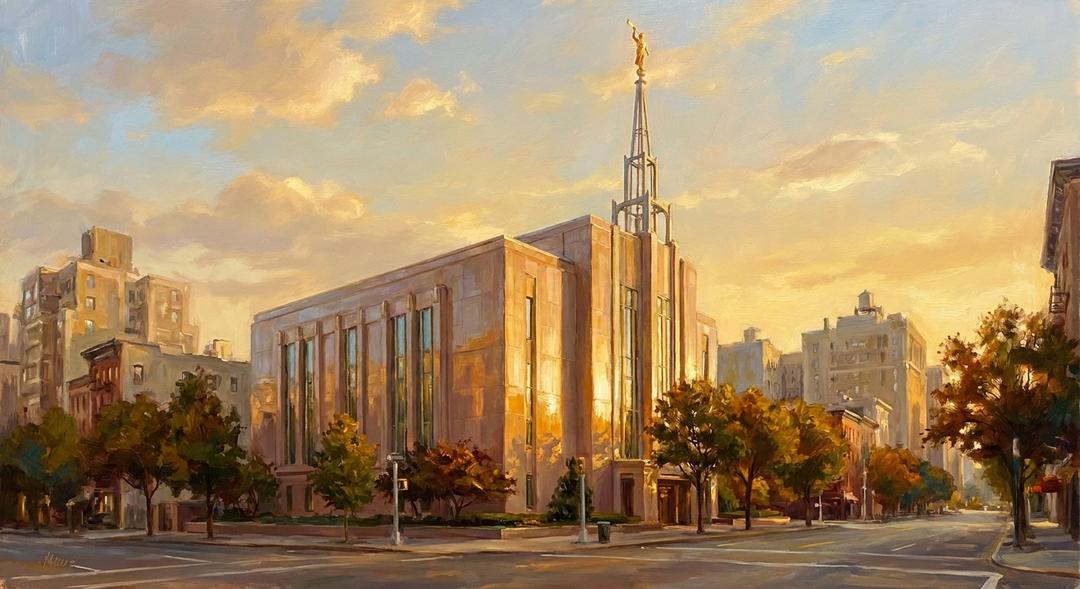
Visiting Manhattan New York Temple
The Manhattan New York Temple is temporarily closed while undergoing an extensive multi-year structural and interior renovation. When operating, the site offers public access to a ground-level distribution bookstore, with the consecrated upper floors reserved for endowed members.
Highlights
- Urban street-wall architecture situated across from Lincoln Center
- Gilded Angel Moroni statue crowning the Upper West Side skyline
- Ground-floor public welcome desk and official distribution center
- Complete acoustic decoupling from subway lines and street noise
Things to Know
- Facility is currently closed for major interior and mechanical overhauls
- On-street parking is extremely restricted in the Lincoln Square neighborhood
- Consecrated upper floors require a valid temple recommend for entry
Location
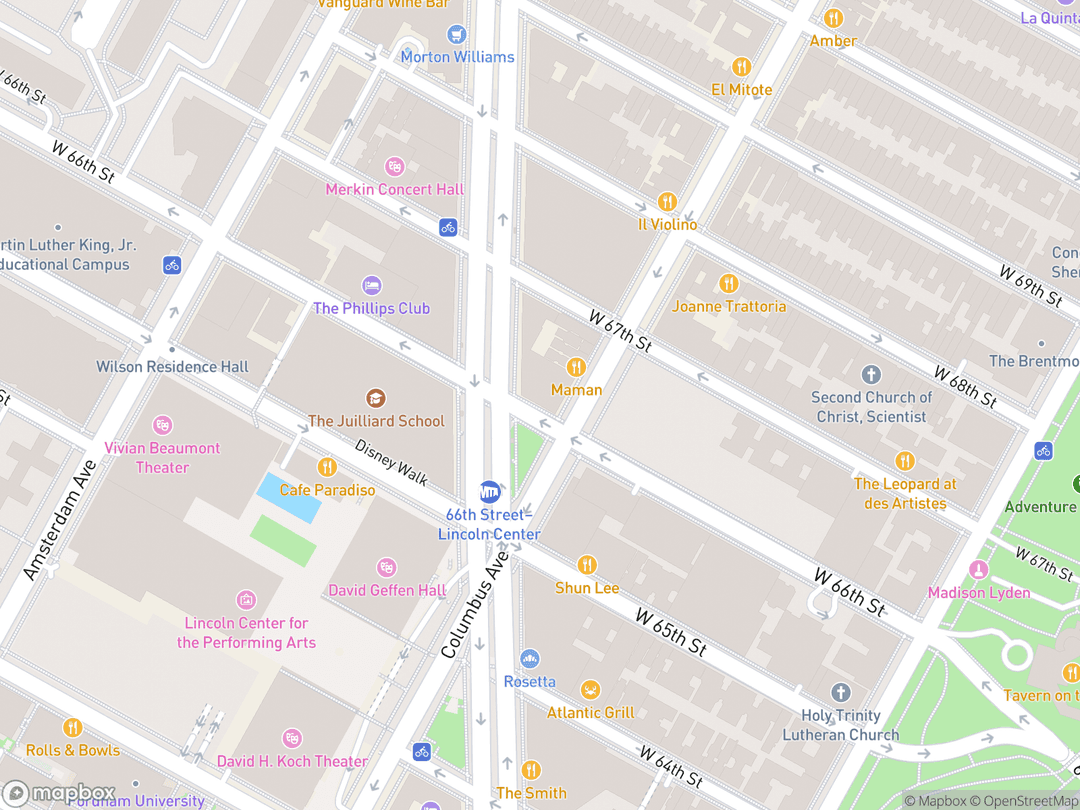
125 Columbus Avenue, New York, NY 10023, United States
Hours: Temporarily closed for renovation
Getting There: Subway 1 train stops at 66th Street–Lincoln Center, less than one block from the entrance.
Get DirectionsTips for Your Visit
View at Twilight
The exterior facade and gilded rooftop statue glow vividly during evening golden hour against Lincoln Center.
Public Ground Floor
When open, visitors of all faiths can browse the ground-level store and access family history resources.
Use Transit
Take the 1 subway train or M66 bus rather than attempting to park a personal vehicle.
About
The Manhattan New York Temple stands as an extraordinary departure from traditional Latter-day Saint sacred architecture. Located in Lincoln Square directly across from Lincoln Center, this vertical sanctuary occupies several floors of a repurposed six-story civic structure, establishing a tranquil Christian haven amidst one of the world's densest urban corridors.
In continuity with ancient Biblical tabernacles and historic Christian sanctuaries, the temple creates an intentional perimeter between the secular bustle and consecrated ground. While local Latter-day Saint meetinghouses host Sunday worship open to all visitors, this holy house is reserved for sacred priesthood ceremonies that bind families across generations through Jesus Christ.
To overcome the immense vibrational energy of neighboring transit lines, engineers executed a pioneering acoustic isolation strategy. The interior sacred spaces function as detached floating enclosures, providing absolute reverent stillness where patrons enter into deep spiritual communion with God.
Gallery
Symbolic Elements
The temple's exterior features intricate carvings, each rich with spiritual meaning:

Angel Moroni Statue
Standing atop the framework spire, the gilded herald represents Revelation's prophecy of the restored gospel.

Twelve Oxen Font
Modeled after Solomon's brazen sea, twelve sculpted oxen uphold the baptismal waters facing four cardinal directions.

Floating Acoustic Box
The detached internal room engineering signifies complete separation between worldly noise and divine stillness.

Vertical Street-Wall Granite
Polished and flamed natural granite panels establish enduring permanence amidst modern civic commercialism.

Austrian Crystal Chandelier
The faceted cut-crystal fixture in the Celestial Room reflects radiant light representing heavenly glory.

Mirrored Sealing Altars
Parallel mirrors flanking the marriage altar reflect endless repeating images that symbolize familial eternity.

Dogwood and Olive Blossom Motifs
Carved millwork and art glass feature subtle floral motifs symbolizing peace, renewal, and resurrection.
Interesting Facts
It is one of the few Latter-day Saint temples integrated directly into an urban multi-use building rather than standing as an isolated pavilion (Tier A).
Engineers floated the sacred rooms on elastomeric rubber pads and steel springs to eliminate vibrations from the subway running underneath (Tier A).
Sound tests during interior remodeling blared sirens outside the temple doors while interior acoustic meters registered total silence (Tier B).
The building houses a regular Sunday chapel on the third level alongside the consecrated temple on higher floors (Tier A).
President Gordon B. Hinckley dedicated the temple in June 2004 as an enduring sanctuary of peace following the September 11 attacks (Tier A).
Mounting the gilded Angel Moroni statue required early morning street closures and a high-rise mobile crane (Tier B).
More than 53,000 visitors toured the interior during the 2004 open house, including Broadway actors and United Nations diplomats (Tier A).
The architectural solution served as a master design reference for subsequent urban high-rise temples across the globe (Tier B).
Common Questions
Why is the Manhattan Temple located inside a multi-story building?
Dense Manhattan zoning led Church leaders to adaptively remodel the upper floors of an existing church stake center.
Is the Manhattan Temple open to the public?
The building is currently closed for major renovation, though its ground floor normally welcomes all visitors.
How does the temple block street and subway noise?
Sacred interior rooms rest on independent floating slabs cushioned by industrial spring and elastomeric isolators.
When will the Manhattan New York Temple reopen?
Operations are anticipated to resume following an extensive multi-year upgrade and public open house.
Featured Stories
Sanctuary of Peace in a Rebuilding City
June 13, 2004
Dedicated less than three years after the trauma of September 11, the Manhattan Temple arrived as an oasis of divine solace for New York Saints. President Gordon B. Hinckley's dedicatory prayer invoked protective blessings upon the metropolitan community, establishing a sacred refuge where patrons could transcend temporal grief through eternal promises.
Source: Church Newsroom Dedicatory Report
Engineering the Decibel Miracle
September 23, 2002
Transforming an urban high-rise situated above the 66th Street subway station into a tranquil sanctuary required daring structural innovations. Engineers designed an intricate 'box-in-a-box' system, seating holy rooms on heavy vibration-damping springs so that thundering trains beneath were rendered totally imperceptible to worshippers inside.
Source: Ensign Magazine Architectural Feature
The Rooftop Moroni Installation
October 9, 2004
Securing permits for a rooftop religious spire amid stringent Upper West Side zoning limits required months of delicate civic dialogue. On an autumn morning before commuter traffic emerged, a massive mobile crane hoisted the gilded statue toward the clouds, providing an iconic spiritual silhouette against the Lincoln Center skyline.
Source: Church News Dedication Archive
Timeline
Property Acquisition
Church leaders acquire the Columbus Avenue property to establish a regional urban presence.
MilestoneStake Center Completed
A six-story modern stone building opens to house regional stakes, chapels, and classrooms.
MilestoneTemple Announced
President Gordon B. Hinckley announces that upper floors will become Manhattan's first temple.
MilestoneInterior Remodeling Commences
Contractors begin gutting the interior framework while maintaining ground-floor operations.
component.timeline.groundbreakingPublic Open House
Over 53,000 visitors tour the newly completed urban sanctuary across four weeks.
EventDedication
President Gordon B. Hinckley dedicates the temple across four solemn broadcast sessions.
DedicationMoroni Statue Mounted
A crane lifts the slender framework spire and Angel Moroni atop the six-story roofline.
MilestoneCivic Prominence
The Columbus Avenue facade becomes a prominent gathering point during national public dialogues.
EventPandemic Operations
Sacred ordinances pause temporarily in accordance with regional public health directives.
EventOverhaul Announced
The First Presidency announces a complete structural modernization and facility closure.
MilestoneRenovation Closure
The temple suspends operations for an estimated three-year comprehensive reconstruction.
RenovationHistory by Decade
1970s — Construction of the Columbus Avenue Stake Center
In 1974, Church leaders acquired real estate directly across from Lincoln Center to establish a consolidated stake center for diverse urban congregations. Completed in 1975, the six-story structure housed twin chapels, educational classrooms, and administrative offices serving members throughout the five boroughs.
1980s — Multicultural Community Growth
During the 1980s, the facility functioned as a bustling center of interfaith goodwill and community enrichment in Manhattan. Congregations representing multiple cultural and linguistic backgrounds gathered weekly, making the building an essential hub for metropolitan family life.
1990s — The Temple Proximity Imperative
As regional membership grew rapidly throughout northern New Jersey, Westchester, and Long Island, members faced long journeys to Washington, D.C. or Boston for temple worship. This distance highlighted the need for an accessible urban sanctuary within metropolitan transit reach.
2000s — The Urban Conversion and Dedication
President Gordon B. Hinckley surprised members in 2002 by announcing the adaptive conversion of the Columbus Avenue building's upper stories. Dedication in June 2004 transformed the property into a functioning holy house, crowned by a newly approved rooftop spire.
2010s — Civic Prominence in Lincoln Square
Throughout the 2010s, the Manhattan Temple served as a welcoming beacon across from New York's cultural institutions. Its proximity to world-class performing arts centers fostered unique connections with visiting and resident Latter-day Saint creative artists.
2020s — Seismic Modernization and Overhaul
In March 2024, the temple closed its doors to begin a comprehensive structural, acoustic, and aesthetic modernization project. Congregations meeting in the shared chapel relocated temporarily as specialized builders undertook extensive upgrades to preserve the building for future generations.
Architecture & Facilities
The Manhattan New York Temple exhibits Adaptive Urban Modernism, seamlessly integrating a six-story sacred sanctuary into the dense street-wall architecture of the Upper West Side.
Building Materials
Exterior Granite Panels
Warm-toned polished and flamed granite cladding forms the durable street facade along Columbus Avenue.
Elastomeric Acoustic Isolators
Industrial spring and rubber pads isolate interior room foundations from subterranean subway vibrations.
Viscoelastic Gypsum Assemblies
Dense multi-layer perimeter acoustic walls completely silence intense metropolitan traffic noises.
Cast Fiberglass Moroni
A lightweight sculpture finished in twenty-four-karat gold leaf crowns the rooftop framework spire.
Interior Features
Celestial Room
A luminous upper-floor sanctuary featuring coffered ceilings, Austrian crystal lighting, and tailored off-white furnishings.
Subterranean Baptistry
A lower-level font resting upon twelve bronze oxen where vicarious baptisms are solemnized.
Ordinance Rooms
Two stationary instruction rooms appointed with cove illumination and custom carpeting for presentation of the endowment.
Sealing Rooms
Two marriage rooms equipped with carved wooden altars and infinite reflection mirrors for eternal sealings.
Temple Grounds
The urban property occupies a tight street-wall lot directly along the sidewalk of Columbus Avenue, featuring polished stone entryways rather than suburban landscaping.
Additional Facilities
The six-story building retains a ground-level Church distribution center, welcome foyer, and regional Sunday meetinghouse facilities.
Religious Significance
Rooted in the Abrahamic continuum of sacred space, the Manhattan Temple functions as a consecrated dwelling where heaven and earth intersect.
The temple exists to administer sacred covenants and eternal ordinances of Jesus Christ, uniting families across generations in absolute holiness.
Sacred Ordinances
Baptism for Ancestors
Vicarious immersion performed in emulation of early Christian practices to offer Christ's grace to deceased ancestors.
The Endowment
Sacred instruction accompanied by covenants to walk in righteousness, purity, and selfless service.
Eternal Marriage Sealing
Marriages solemnized by priesthood authority to endure beyond physical mortality for all eternity.
A Tabernacle in the Metropolis
Much like Moses's wilderness tabernacle stood distinct from the secular camp, the Manhattan Temple establishes a boundary of divine sanctity amidst the roar of metropolitan commerce.
The Covenant Chain
Within this urban sanctuary, generational ordinances bridge mortality and the afterlife, testifying that divine identity and family relationships survive the grave.
Similar Temples
Sources & Research
Every fact on Temples.org is backed by verified Sources & Research. Each piece of information is rated by source tier and confidence level.
View All Sources (6)
| Field | Source | Tier | Retrieved |
|---|---|---|---|
| About & Historical Background | The Church of Jesus Christ of Latter-day Saints (opens in a new tab) | A | 2026-02-16 |
| Historical Records & Property Profile | Church History Department (opens in a new tab) | A | 2026-02-16 |
| Architecture & Acoustic Engineering | LDS Living Magazine (opens in a new tab) | B | 2026-02-16 |
| Lincoln Square Urban Architecture Context | Encyclopaedia Britannica (opens in a new tab) | B | 2026-02-16 |
| Temple Milestones & Construction Statistics | ChurchofJesusChristTemples.org (opens in a new tab) | C | 2026-02-16 |
| Regional Transportation & Neighborhood Guide | New York Sightseeing (opens in a new tab) | D | 2026-02-16 |