Visitor Insights
Visiting Palmyra New York Temple
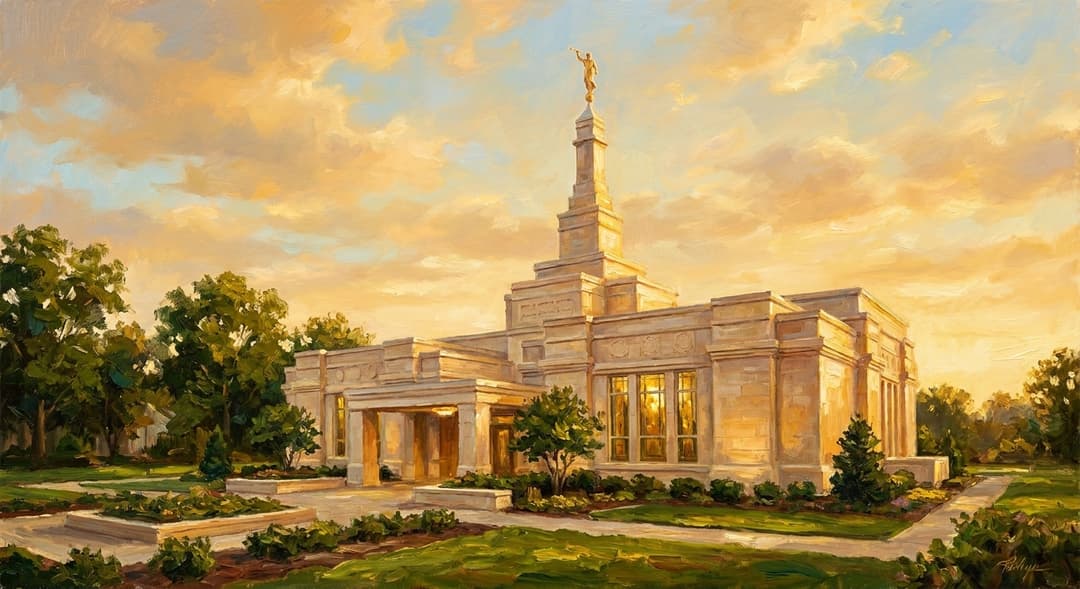
The Palmyra New York Temple grounds are open to the public, offering a serene atmosphere for reflection. While the temple interior is reserved for endowed members, visitors can explore the beautifully maintained gardens and adjacent historic sites.
Highlights
- Enjoy a direct view of the Sacred Grove from the temple grounds.
- Explore the nearby Joseph Smith Family Farm and Hill Cumorah Visitors' Center.
- Experience the peaceful ambiance of this historically significant location.
Things to Know
- The temple interior is not accessible to the general public.
- Check the official Church website for specific closure dates for maintenance.
- Dress respectfully when visiting the temple grounds.
Location
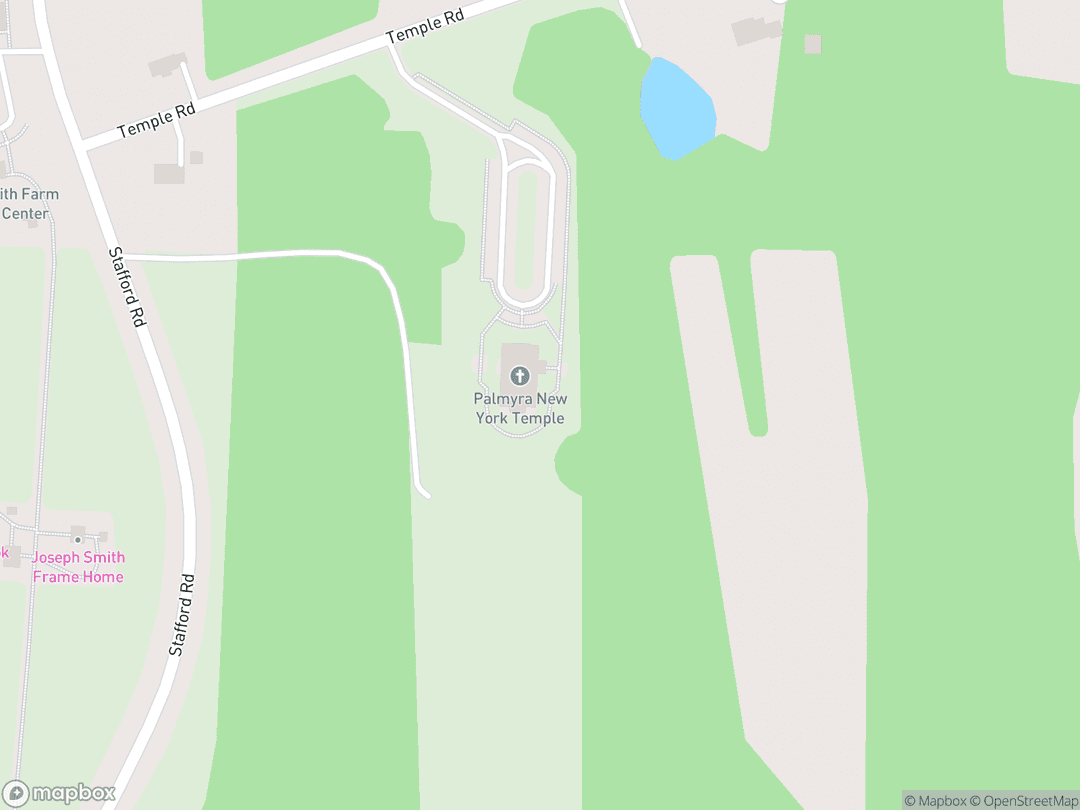
2720 Temple Rd, Palmyra, New York 14522-9573, United States
Hours: Open Tuesday through Saturday; closed Sunday and Monday. Specific hours vary by season.
Getting There: Located at 2720 Temple Rd, Palmyra, New York. Ample parking is available on site. The area is also accessible via local roads.
Get DirectionsTips for Your Visit
Visit Nearby Historic Sites
Plan to visit the Sacred Grove, Joseph Smith Family Farm, and Hill Cumorah Visitors' Center, all within close proximity to the temple.
Respect Sacred Space
Maintain a reverent demeanor while on the temple grounds, as it is considered a sacred place by Latter-day Saints.
About
The Palmyra New York Temple is a dedicated house of worship for members of The Church of Jesus Christ of Latter-day Saints, a Christian faith within the broader Abrahamic traditions. Located on the historic Smith Family Farm, it holds profound significance as the 100th temple announced by the Church. Its unique design integrates the sacred landscape directly into the temple experience.
Dedicated by President Gordon B. Hinckley on April 6, 2000, the temple stands as a beacon of faith in an area central to the Church's origins. It serves Latter-day Saints in central New York and surrounding regions, providing a place for sacred ordinances and covenants.
The temple's architecture, featuring Bethel White granite and a single spire, complements its serene surroundings. Its interior is adorned with intricate cherrywood and stained-glass windows depicting scenes from the Sacred Grove, inviting patrons to reflect on foundational events of the Restoration.
Gallery
Symbolic Elements
The temple's exterior features intricate carvings, each rich with spiritual meaning:

Angel Moroni Statue
Perched atop the spire, the golden Angel Moroni symbolizes the restoration of the gospel of Jesus Christ to the earth.

Sacred Grove Imagery (Stained Glass)
Forty art glass windows depict scenes from the Sacred Grove and early Church history, evoking a sacred atmosphere within.

Sacred Grove View (Lobby Windows)
Clear glass windows in the lobby provide an unobstructed, direct view of the actual Sacred Grove, a unique architectural feature.

'Holiness to the Lord' Inscription
Inscribed on the exterior, this phrase signifies the temple as a dedicated 'House of the Lord' for sacred covenants and ordinances.

Bethel White Granite
The exterior's clean, bright Bethel White granite symbolizes purity and strength, reflecting the sacred nature of the edifice.

Cherrywood Interior
Ornate carved cherrywood railings, wainscoting, and moldings throughout the interior add warmth and elegance to the sacred spaces.

Single Spire
The temple's single spire, reaching heavenward, represents aspiration towards divine connection and spiritual elevation.
Interesting Facts
The Palmyra New York Temple was the 100th temple announced by The Church of Jesus Christ of Latter-day Saints (Tier A).
It holds the distinction of being the first temple built in the state of New York (Tier A).
Its dedication on April 6, 2000, marked exactly 170 years since the formal organization of the Church (Tier A).
The temple is located on the east end of the original 100-acre Smith Family Farm, overlooking the Sacred Grove (Tier A).
President Gordon B. Hinckley called it 'perhaps the most significant' temple due to its proximity to the Sacred Grove (Tier B).
During the groundbreaking, rain and clouds unexpectedly parted as President Hinckley began the cornerstone ceremony (Tier B).
The temple features unique stained-glass windows by Tom Holdman, comprising over 17,000 pieces of glass (Tier B).
It is the only Latter-day Saint temple with clear glass lobby windows offering an unobstructed view of the actual Sacred Grove (Tier A).
Dedicatory services were broadcast via satellite to approximately 1,300 Church facilities, reaching nearly 1.5 million members (Tier B).
Construction, from announcement to dedication, was completed in just under a year and two months (Tier C).
Common Questions
Can the public enter the Palmyra New York Temple?
The temple interior is reserved for members of The Church of Jesus Christ of Latter-day Saints with a current temple recommend.
What is the significance of the temple's location?
It is built on the original Smith Family Farm, overlooking the Sacred Grove, where Joseph Smith experienced the First Vision.
Are there other historic sites nearby?
Yes, visitors can explore the Sacred Grove, Joseph Smith Family Farm, and Hill Cumorah Visitors' Center.
What is the Angel Moroni statue?
It is a prominent symbol representing the restoration of the gospel of Jesus Christ to the earth.
What are the temple's operating hours?
The temple is generally open Tuesday through Saturday, but specific hours and closure dates should be checked on the official Church website.
Featured Stories
A Temple for the Sacred Grove
February 9, 1999
The announcement of the Palmyra New York Temple was met with profound joy, marking the 100th temple and a significant return to the Church's origins. President Gordon B. Hinckley emphasized its unique importance due to its direct proximity to the Sacred Grove, where the First Vision occurred. This decision underscored the Church's commitment to honoring its foundational history.
Source: The Church News, February 13, 1999
A Miraculous Dedication Day
April 6, 2000
The dedication day was marked by a memorable event when, as President Gordon B. Hinckley began the cornerstone ceremony, heavy rain and clouds unexpectedly parted. He described this as a 'miracle,' symbolizing the dispelling of spiritual darkness by the light of the First Vision. This moment deeply resonated with the nearly 1.5 million members participating via satellite broadcast.
Source: The Church News, April 8, 2000
Windows to the Sacred Past
2000
Artist Tom Holdman crafted forty exquisite stained-glass windows for the Palmyra Temple, depicting scenes from the Sacred Grove and early Church history. These intricate art pieces, comprising over 17,000 individual glass pieces, were designed to create an immersive experience, inviting patrons to feel as if they were entering their own sacred grove, connecting them to the foundational First Vision.
Source: Holdman Studios; PhotoGent
Timeline
Temple Announced
The First Presidency announced plans to construct a temple in Palmyra, New York, marking the 100th temple announced by the Church.
component.timeline.announcementGroundbreaking Ceremony
President Gordon B. Hinckley presided over the groundbreaking, commencing construction on the historic site.
component.timeline.groundbreakingPublic Open House Begins
A public open house began, allowing approximately 32,000 visitors to tour the temple's interior.
EventPublic Open House Concludes
The public open house concluded, preparing the temple for its formal dedication.
EventTemple Dedicated
President Gordon B. Hinckley formally dedicated the Palmyra New York Temple on the 170th anniversary of the Church's organization.
DedicationDedication Broadcast
Dedication ceremonies were broadcast via satellite to nearly 1.5 million members across North America.
EventTemporary Closure due to COVID-19
The temple, like all others, temporarily closed in response to the global COVID-19 pandemic.
EventScheduled Maintenance Closure
The temple is scheduled for temporary closure for routine maintenance.
RenovationScheduled Maintenance Closure
Another temporary closure is scheduled for ongoing maintenance.
RenovationHistory by Decade
1990s — Announcement and Groundbreaking
The 1990s marked a pivotal return to the Church's roots in Palmyra with the announcement of a new temple. On February 9, 1999, President Gordon B. Hinckley announced plans for the Palmyra New York Temple, making it the 100th temple announced by the Church. Just a few months later, on May 25, 1999, President Hinckley presided over the groundbreaking ceremony, initiating construction on the historic Smith Family Farm.
2000s — Dedication and Operation
The new millennium began with the dedication of the Palmyra New York Temple. Following a public open house that welcomed approximately 32,000 visitors, President Gordon B. Hinckley formally dedicated the temple on April 6, 2000. This date was profoundly significant, marking the 170th anniversary of the formal organization of The Church of Jesus Christ of Latter-day Saints in Fayette, New York. The dedication ceremonies were broadcast to nearly 1.5 million members across North America.
2020s — Continued Service and Maintenance
In 2020, the Palmyra New York Temple, like all other temples worldwide, temporarily closed in response to the global COVID-19 pandemic, adapting its operations to ensure the safety of its patrons. As it continues its sacred mission, the temple periodically undergoes scheduled maintenance. For instance, closures are planned for September and November 2026 to ensure the ongoing preservation and optimal functioning of this sacred edifice.
Architecture & Facilities
The Palmyra New York Temple features a classic modern architectural style, characterized by clean lines and a single spire, designed to harmonize with its historically significant natural surroundings. Its design reflects a contemporary interpretation of sacred architecture, emphasizing simplicity and reverence while incorporating elements that pay homage to the Church's early history in the region.
Building Materials
Exterior
The temple's exterior is constructed from Bethel White granite, providing a clean, bright, and durable facade that stands out amidst the lush landscape.
Interior Woodwork
Ornate carved cherrywood railings, wainscoting, and moldings adorn the interior, adding warmth and a sense of refined craftsmanship throughout the halls.
Stained Glass
Forty art glass windows, created by Utah artist Tom Holdman, depict scenes from the Sacred Grove and early Church history, enriching the spiritual ambiance.
Carpeting
Hand-sculpted carpeting throughout the interior complements the woodwork and overall design, contributing to a serene and inviting atmosphere.
Interior Features
Celestial Room
A serene and beautifully appointed room designed for prayer, meditation, and a symbolic representation of eternal peace and God's presence.
Baptistry
Features a large font resting on twelve oxen, used for performing proxy baptisms for the dead, a central ordinance in Latter-day Saint theology.
Ordinance Rooms
Two ordinance rooms are designed for a two-stage progressive presentation of sacred instruction, guiding patrons through covenants and teachings.
Sealing Rooms
Two sealing rooms are used for eternal marriage and family sealing ceremonies, symbolizing the continuation of family relationships beyond mortal life.
Temple Grounds
The temple is situated on a beautifully landscaped 5-acre site, featuring manicured lawns, gardens, and pathways that invite quiet contemplation. Its location on the historic Smith Family Farm provides a direct connection to the Sacred Grove, enhancing the spiritual experience for visitors.
Additional Facilities
Adjacent to the temple grounds are several significant historic sites, including the Sacred Grove, the Joseph Smith Family Farm (with a replica log cabin and frame home), the Hill Cumorah Visitors' Center, and the Book of Mormon Historic Publication Site (Grandin Building), all open to the public.
Religious Significance
The Palmyra New York Temple stands as a profound symbol of faith within The Church of Jesus Christ of Latter-day Saints, a Christian denomination rooted in the Abrahamic tradition. It is considered a dedicated 'House of the Lord,' a sacred space set apart from the world for divine purposes and spiritual communion.
The core spiritual purpose of the temple is to provide a place where members can participate in sacred ordinances and make eternal covenants with God. These practices are central to Latter-day Saint belief in humanity's eternal progression and the strengthening of family bonds.
Sacred Ordinances
Baptism for the Dead
Members perform proxy baptisms on behalf of deceased ancestors, offering them the opportunity to accept the gospel in the spirit world.
Endowment
A series of sacred instructions and covenants that provide a deeper understanding of God's plan and empower individuals to live a more Christ-like life.
Sealing
Ordinances that unite families eternally, allowing husbands and wives to be sealed together and children to their parents for time and all eternity.
Connection to the First Vision
The temple's location overlooking the Sacred Grove directly links it to the First Vision, a foundational event where Joseph Smith witnessed God the Father and Jesus Christ. This event initiated the 'restoration of the gospel of Jesus Christ' to the earth, making the temple a tangible reminder of this divine communication.
Covenants and Blessings
Within the temple, members make sacred covenants (solemn promises) with God, receiving blessings and spiritual power. These covenants are seen as essential steps on the path back to God's presence, strengthening personal faith and commitment to Christian principles.
Similar Temples
Sources & Research
Every fact on Temples.org is backed by verified Sources & Research. Each piece of information is rated by source tier and confidence level.
View All Sources (7)
| Field | Source | Tier | Retrieved |
|---|---|---|---|
| About & Historical Background | The Church of Jesus Christ of Latter-day Saints (opens in a new tab) | A | 2024-07-30 |
| Architectural Description & Symbolic Elements | ChurchofJesusChristTemples.org (opens in a new tab) | C | 2024-07-30 |
| Visitor Information & Nearby Sites | The Church of Jesus Christ of Latter-day Saints (opens in a new tab) | A | 2024-07-30 |
| Architectural Materials & Features | Okland Construction (opens in a new tab) | B | 2024-07-30 |
| Interesting Facts & Dedication Details | PhotoGent (opens in a new tab) | B | 2024-07-30 |
| Historical Significance | Ensign Peak Foundation (opens in a new tab) | B | 2024-07-30 |
| Temple Address & Contact | Wayne County Historians (opens in a new tab) | D | 2024-07-30 |