Visitor Insights
Visiting Snowflake Arizona Temple
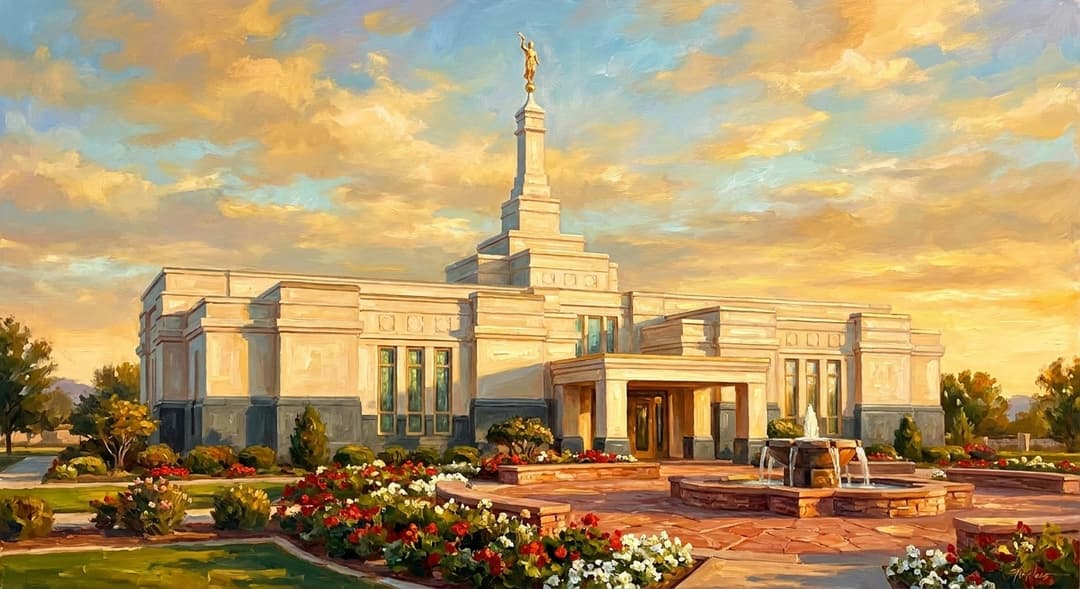
Perched on Temple Hill, the Snowflake Arizona Temple provides a serene atmosphere overlooking pinyon-juniper hills and the town of Snowflake. Visitors of all faiths are welcome to walk the 7.5-acre landscaped grounds, view the native boulder water fountain, and enjoy late afternoon golden light on the polished granite exterior.
Highlights
- Rustic water feature incorporating a 17-ton native boulder excavated directly from the site.
- Two-tone polished granite facade that shifts from grey at the base to white on the upper level.
- Panoramic vistas across the Silver Creek valley and high-desert mesa landscape.
Things to Know
- Interior admittance for sacred ceremonies is reserved for Church members with valid temple recommends.
- High elevation (5,746 ft) brings chilly wind in winter and strong seasonal afternoon breeze.
Location
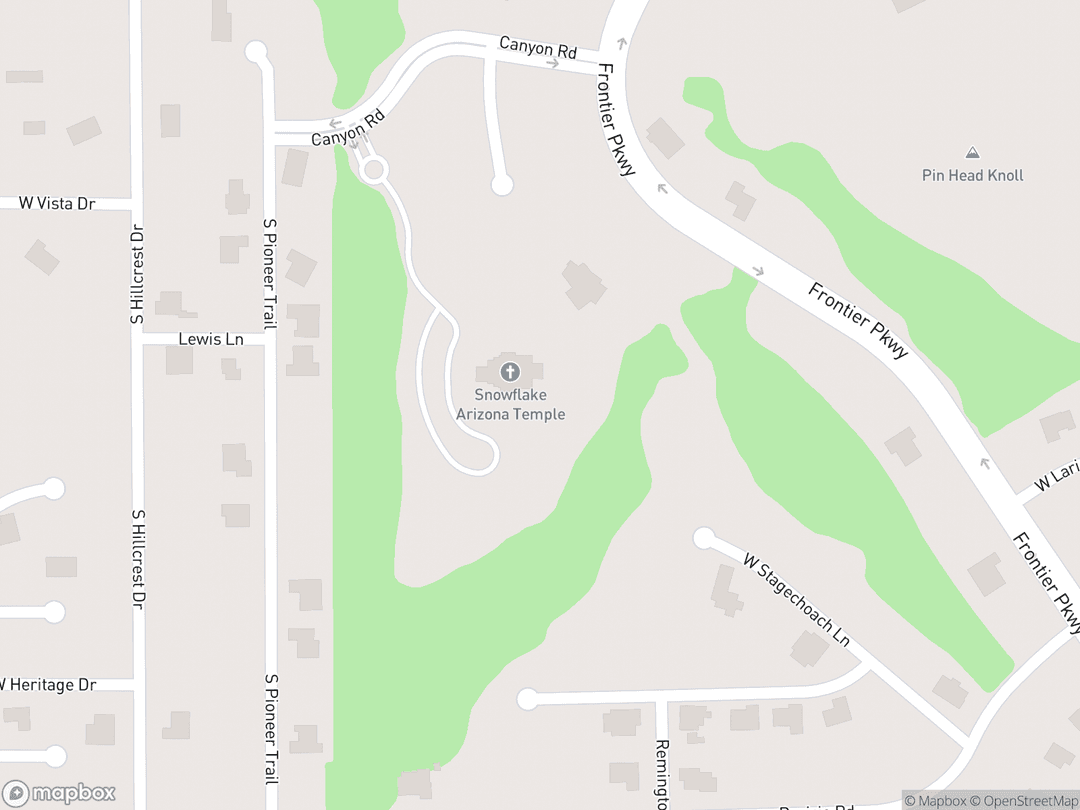
1875 West Canyon Drive, Snowflake, Arizona 85937, United States
Hours: Grounds open daily from sunrise to sunset.
Getting There: Accessible via State Route 77 or State Route 277/260, turning west onto West Canyon Drive in Snowflake.
Get DirectionsTips for Your Visit
Golden Hour Viewing
Visit in the late afternoon to see the Empress White granite spire catch the warm sunset glow.
Native Stone Fountain
Examine the entryway water feature built from 17-ton bedrock boulders extracted during site grading.
About
The Snowflake Arizona Temple stands atop Temple Hill overlooking the Silver Creek valley in east-central Arizona. Dedicated in 2002, it was the second Latter-day Saint temple built in Arizona and the 108th operating temple worldwide. As a sacred house of the Lord within the Christian theological tradition, the temple serves as a sanctuary for higher covenants, connecting ancient biblical tabernacle practices with modern worship centered on Jesus Christ.
The temple fulfills an 1880 prophecy by Apostle Wilford Woodruff, who foresaw a holy edifice resting upon the hills of Snowflake while taking refuge in the high desert. Built under President Gordon B. Hinckley's program to place sacred structures closer to remote Latter-day Saint populations, the building features an embedded lower level designed to withstand high-elevation windstorms.
Serving eleven stakes across northeastern Arizona and western New Mexico, the temple district encompasses diverse communities including Latter-day Saints from the Navajo, Hopi, San Carlos Apache, and Zuni nations. Its architectural motifs intentionally blend Anglo pioneer heritage with Native American geometric art, symbolizing spiritual unity and reconciliation through Christ.
Gallery
Symbolic Elements
The temple's exterior features intricate carvings, each rich with spiritual meaning:

Angel Moroni Statue
The gilded herald atop the spire symbolizes the restoration of the everlasting gospel spoken of in Revelation 14:6.

Two-Tone Granite Facade
The progression from Majestic Grey granite at the base to Empress White at the spire symbolizes spiritual growth toward celestial light.

Native Bedrock Fountain
Flowing living water over excavated 17-ton boulders represents Jesus Christ as the Rock of Salvation and source of living water.

Interwoven Quilt and Tribal Patterns
Carpet and border designs fusing Anglo quilt geometry with Native American blanket motifs signify unity in Christ.

Peach Tree Branch Carvings
Woodwork carved with peach branches commemorates pioneer missionary trade and spiritual growth blooming in the desert.

Celestial Room Dome Ceiling
A raised illuminated dome in the Celestial Room represents the vault of heaven and divine celestial glory.

Repurposed Historic Stained Glass
Art glass salvaged from a historic Boston Catholic church highlights shared Christian reverence for sacred craftsmanship.

Embedded Hillside Excavation
A lower floor built 16 feet into native knoll rock symbolizes spiritual foundation anchored firmly against worldly storms.
Interesting Facts
Wilford Woodruff prophesied a temple on the hills of Snowflake in 1880 while taking refuge in east-central Arizona (Tier A).
The town of Snowflake derives its unique name from combining the surnames of Erastus Snow and William J. Flake (Tier A).
More than 94,000 visitors attended the 2002 open house, over ten times the local population of Snowflake and Taylor combined (Tier A).
The entry water fountain is constructed from excavated site bedrock, including a single monolith weighing 17 tons (Tier A).
In 2017, the Angel Moroni statue was replaced and turned 180 degrees to face west directly over the entrance (Tier A).
Art glass elements in the temple interior incorporate antique stained glass repurposed from a closed Catholic church in Boston (Tier B).
Snowflake was the first standardized smaller template temple to feature a raised domed ceiling in the Celestial Room (Tier B).
Interior furniture carvings include a peach tree branch motif honoring missionary Jacob Hamblin trading for peach pits (Tier B).
Common Questions
Why is the temple built partially underground into the hill?
Engineers excavated 16 feet of rock to seat the lower floor into the knoll and protect the building from high-desert windstorms.
Are non-members permitted on the temple grounds?
Yes, visitors of all religious backgrounds are welcome to explore the grounds, gardens, and native rock fountain.
How does the temple reflect local Native American culture?
Interior carpets, woodwork, and ceiling border stenciling integrate traditional Native basket and blanket geometric motifs.
What is the origin of the town name Snowflake?
The town was named in 1878 to honor pioneer colonizer William J. Flake and Latter-day Saint Apostle Erastus Snow.
Featured Stories
The 1880 Hilltop Prophecy
1880
While seeking refuge in remote east-central Arizona in February 1880, Apostle Wilford Woodruff addressed the youth of the newly established settlement of Snowflake. Standing overlooking the valley, he prophesied that a temple of God would one day stand upon those very hills. More than a century later, his prophetic words were fulfilled when ground was broken on Temple Hill.
Source: Church History Department Records
A Turnout Ten Times the Town
February 2002
During the public open house in February 2002, residents of Snowflake and neighboring Taylor opened their high-desert community to the world. Over 94,000 visitors traveled across mountain highways to tour the sacred building, representing a turnout more than ten times the combined population of both towns. Large delegations attended from surrounding Navajo, Hopi, Apache, and Zuni lands.
Source: Church Newsroom
Re-Orienting the Heavenly Herald
March 2017
In March 2017, maintenance crews installed a replacement Angel Moroni statue atop the temple's central spire. During the installation, workers turned the gilded statue 180 degrees from its original orientation. Originally facing east over the back hill, the new statue now faces west, welcoming arriving patrons directly above the main entrance canopy.
Source: Church News Records
Timeline
Woodruff Prophecy
Apostle Wilford Woodruff prophesies that a temple will be built on the hills of Snowflake.
MilestoneTemple Announced
President Gordon B. Hinckley announces the construction of the Snowflake Arizona Temple.
MilestoneGroundbreaking
Elder Rex D. Pinegar presides over the groundbreaking ceremony on Temple Hill.
component.timeline.groundbreakingPublic Open House
A two-week public open house begins, drawing over 94,000 visitors to the high-desert facility.
EventDedication
President Gordon B. Hinckley dedicates the temple across four solemn sessions.
DedicationStatue Reorientation
Maintenance crews replace and reorient the Angel Moroni statue to face westward over the main entrance.
RenovationHistory by Decade
1880s — Pioneer Foundation & Prophecy
Following the 1878 colonization of Snowflake by William J. Flake and Apostle Erastus Snow, early Latter-day Saint settlers established farming and ranching settlements along Silver Creek. In 1880, Apostle Wilford Woodruff visited the community and uttered his landmark prophecy that a temple would eventually be built on the western hills overlooking the settlement.
2000s — Announcement, Building & Dedication
Announced by President Gordon B. Hinckley in April 2000, construction began on Temple Hill later that fall. Engineers excavated 16 feet into bedrock to shield the lower level from wind, and the temple was dedicated on March 3, 2002, becoming Arizona's second operating temple.
2010s — Ongoing Operation & Statue Reorientation
The temple continued serving 11 stakes across northeastern Arizona and western New Mexico throughout the decade. In March 2017, routine maintenance included replacing and turning the Angel Moroni statue to face west toward the front entrance canopy.
Architecture & Facilities
The Snowflake Arizona Temple exhibits a Classic Modern single-spire architectural style specifically adapted to high-desert mesa geography. Its two-tone polished granite cladding and embedded lower level blend contemporary temple design with regional pioneer ruggedness and southwest artistic traditions.
Building Materials
Empress White Granite
Polished white granite quarried in China used for upper exterior walls and central spire.
Majestic Grey Granite
Polished dark grey granite forming the building's structural base course.
Salvaged Stained Glass
Antique art glass repurposed from a historical Boston Catholic church integrated into interior windows.
Native Excavated Bedrock
Local knoll boulders extracted during grading used to construct the entry water feature.
Interior Features
Celestial Room
Features a raised domed ceiling providing illuminated light and open sacred space.
Instruction Rooms
Two ordinance rooms built with two-stage progressive instruction layouts.
Baptistry
Features a glass-encased baptismal font resting upon twelve sculptured oxen.
Sealing Rooms
Two intimate sealing rooms equipped with custom wood consoles depicting peach tree branches.
Temple Grounds
The 7.5-acre site features manicured lawns, high-elevation flora, walking paths, and a prominent 17-ton native boulder fountain on Temple Hill.
Additional Facilities
An adjacent arrival canopy and lower parking structure facilitate visitor access from West Canyon Drive.
Religious Significance
Within the Christian Latter-day Saint tradition, the temple is recognized as a literal House of the Lord. Rooted in ancient biblical sanctuary practices described in the Old Testament, the Snowflake Arizona Temple stands as a sacred venue where believers make enduring covenants with God through Jesus Christ.
To provide sacred ordinances including eternal marriage sealings, temple endowments, and vicarious baptisms that unite families across generations in Christ.
Sacred Ordinances
Temple Endowment
A sacred instruction and covenant ceremony teaching God's eternal plan of salvation and redemption through Jesus Christ.
Holy Sealing
Priesthood ordinances uniting husbands, wives, and children in eternal family relationships.
Baptism for the Deceased
Vicarious baptisms performed in behalf of departed ancestors following biblical precedent.
Common Ground with Biblical Sanctuaries
Latter-day Saints distinguish temples from regular Sunday meetinghouses, viewing temples as sacred sanctuaries analogous to Solomon's Temple where holy covenants bind believers to God.
Multicultural Unity in Christ
Serving members across pioneer towns and Native American sovereign nations, the temple synthesizes cultural artistic motifs, symbolizing spiritual oneness in the family of God.
Similar Temples
Sources & Research
Every fact on Temples.org is backed by verified Sources & Research. Each piece of information is rated by source tier and confidence level.
View All Sources (8)
| Field | Source | Tier | Retrieved |
|---|---|---|---|
| About & Historical Background | Okland Construction (opens in a new tab) | A | 2026-02-15 |
| About & Historical Background | The Church of Jesus Christ of Latter-day Saints Newsroom (opens in a new tab) | A | 2026-02-15 |
| Timeline & Featured Stories | Church News (opens in a new tab) | B | 2026-02-15 |
| Architecture & Interior | The Church of Jesus Christ of Latter-day Saints (opens in a new tab) | A | 2026-02-15 |
| About & Historical Background | ChurchofJesusChristTemples.org (opens in a new tab) | C | 2026-02-15 |
| Architecture & Interior | Book of Temples (opens in a new tab) | C | 2026-02-15 |
| Timeline & Featured Stories | FHE on the Road (opens in a new tab) | B | 2026-02-15 |
| Theological Context & Symbolism | Church of Jesus Christ Temples Directory (opens in a new tab) | A | 2026-02-15 |