Visitor Insights
Visiting Casper Wyoming Temple
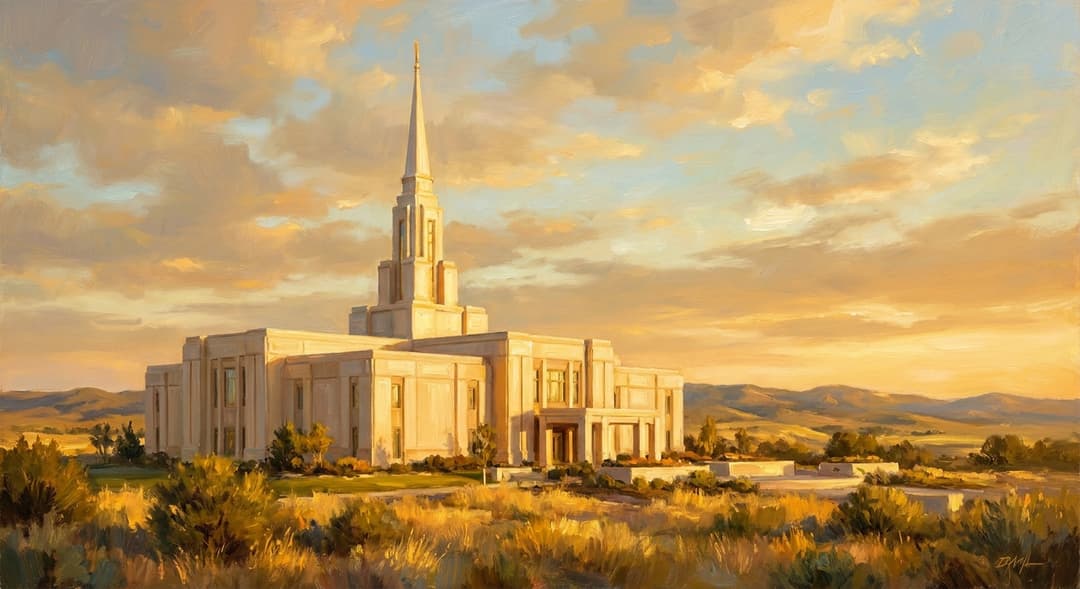
The Casper Wyoming Temple offers a serene and deeply spiritual experience on the rolling hills of southwest Casper. Visitors can stroll along beautifully landscaped pathways lined with native high-plains flora, rugged boulders, and hardy evergreens. The site provides a quiet atmosphere for reflection, with stunning views of the surrounding Wyoming landscape, especially during the late afternoon golden hour. While the interior is reserved for patrons with recommends, the public grounds are welcoming to all seeking peace.
Highlights
- Stunning views of the rolling Casper hills from the elevated temple grounds
- Beautifully integrated native landscaping featuring local boulders and high-plains grasses
- Striking modern modular architecture with a single soaring central spire
Things to Know
- Interior access is reserved for members of The Church of Jesus Christ of Latter-day Saints holding a valid temple recommend
- The high plains weather can be windy and cold, so dress warmly when touring the grounds
- Photography is permitted on the outdoor grounds but strictly prohibited inside the temple
Location
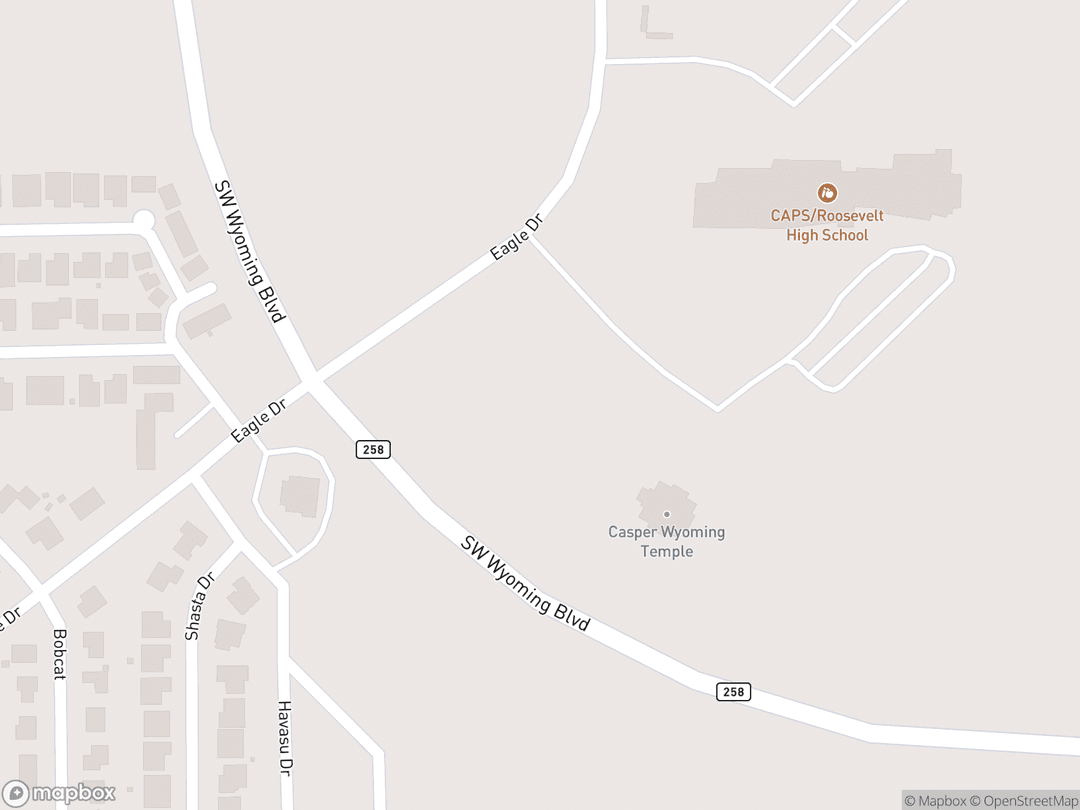
3011 Independence Court, Casper, Wyoming 82604, United States
Hours: The temple grounds are open daily from sunrise to sunset. Interior operating hours vary for patrons.
Getting There: Located at 3011 Independence Court, near the intersection of Wyoming Boulevard Southwest (Highway 258) and Eagle Drive. From Interstate 25, exit onto Wyoming Boulevard and head southwest directly to the temple site.
Get DirectionsTips for Your Visit
Golden Hour Photography
Visit the grounds in the late afternoon to capture the warm sunlight reflecting off the glass-fiber-reinforced concrete facade.
Explore the Trails
Combine your visit with a trip to the nearby historic Oregon and Mormon Pioneer trails to appreciate the area's rich heritage.
About
The Casper Wyoming Temple stands as a modern testament to an ancient, sacred tradition of sanctuary building. Within the broader Abrahamic and Christian heritage, the concept of a physical space dedicated entirely to the worship of God has existed since biblical times, tracing back to the Tabernacle in the wilderness and the Temple of Solomon in Jerusalem. Latter-day Saints share this deep reverence for holy spaces, designating temples as a literal "House of the Lord" where heaven and earth meet in quiet communion.
Unlike standard chapels, which are open to the general public for weekly Sabbath worship and community gatherings, temples are reserved for sacred, quiet ordinances. Within these holy walls, Latter-day Saints participate in covenants such as eternal marriages and proxy baptisms, which bind families together forever under God's covenant. The Casper Wyoming Temple serves as a spiritual refuge, offering peace, instruction, and eternal perspective to all who enter.
Dedicated in late 2024 as the 201st operating temple of the Church, this beautiful structure serves approximately 15,000 members in central Wyoming. Its design harmonizes with the rugged beauty of the high plains, utilizing innovative materials and water-wise landscaping. It stands as a monument to the enduring faith of the region's Latter-day Saints, whose presence in the area dates back to the historic pioneer trails that once crossed the nearby Sweetwater River.
Interesting Facts
The Casper Wyoming Temple is the 201st operating temple of the Church worldwide.
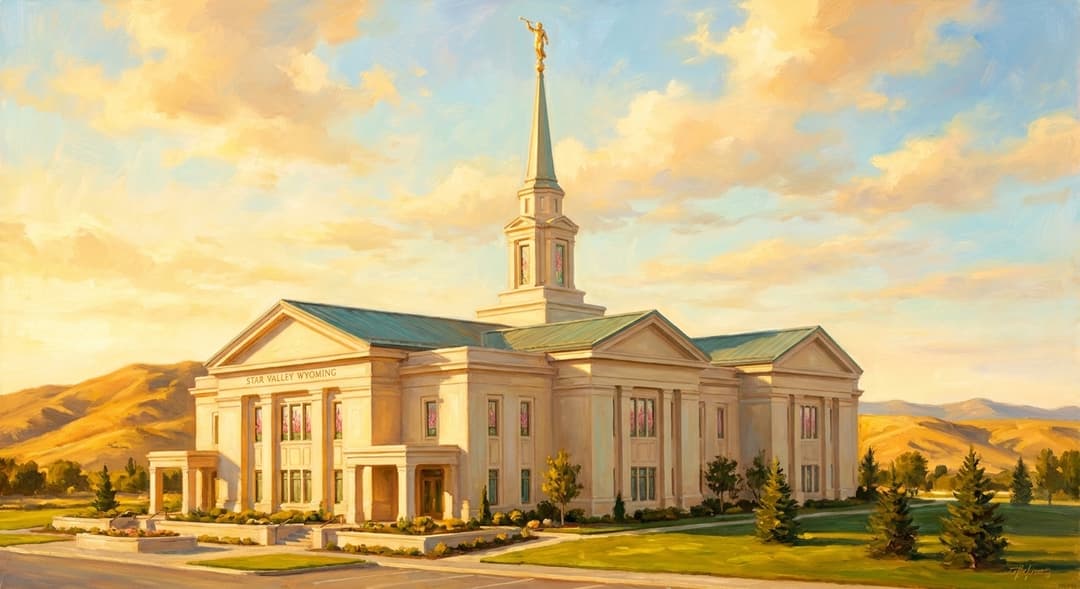
It is the second temple dedicated in the state of Wyoming, following the Star Valley Wyoming Temple in 2016.
The building is a modular pioneer, utilizing steel-framed units fabricated off-site and assembled on-site to accelerate construction.
It was the first temple in the Church to utilize a full glass-fiber-reinforced concrete (GFRC) facade system.
At the dedication, Elder Quentin L. Cook shared that his great-grandfather crossed the nearby Sweetwater River in 1856.
No tickets or reservations were required for the public open house, which welcomed approximately 27,000 visitors.
The landscaping is water-wise, utilizing native high-plains flora and an advanced hillside irrigation system.
Local businesses, including Don's Mobile Carpet of Casper, participated in the interior installation process.
The temple stands near the historic Oregon, California, and Mormon Pioneer trails traversed by early Saints.
The first formal Latter-day Saint congregation in Casper was organized in 1920 with only a handful of members meeting in homes.
Common Questions
Can anyone visit the Casper Wyoming Temple?
Yes, the beautifully landscaped temple grounds are open to the general public of all faiths. However, the interior of the temple is a sacred space reserved for members of the Church who hold a valid temple recommend.
What makes the construction of this temple unique?
The Casper Wyoming Temple is a pioneer in modern construction, utilizing a steel-framed modular method where units were fabricated off-site and assembled on-site. It was also the first Latter-day Saint temple to feature a full glass-fiber-reinforced concrete (GFRC) facade.
Are tickets required to tour the temple grounds?
No, the grounds are completely free and open to the public without any tickets or reservations. During the public open house in 2024, tickets were also not required, allowing 27,000 people to tour the interior.
How does the landscaping reflect the local environment?
The landscaping, designed by Western Meadows, uses native high-plains flora, large natural boulders, and hardy evergreens. It is engineered for water conservation, utilizing an advanced hillside irrigation system to thrive in Wyoming's harsh climate.
What is the significance of the state flower in the temple's design?
The Indian paintbrush, Wyoming's state flower, is stylized and integrated into the stained-glass windows, carpets, and decorative woodwork. This symbolizes local heritage and the beauty of divine creation.
Featured Stories
A Pioneer Connection at Dedication
November 24, 2024
During the sacred dedicatory services of the Casper Wyoming Temple, Elder Quentin L. Cook of the Quorum of the Twelve Apostles shared a deeply personal connection to the local landscape. He recounted how his own great-grandfather was among the early Latter-day Saint pioneers who crossed the Sweetwater River nearby in 1856 during their arduous westward trek. This historical link highlighted the profound sacrifices of the early pioneers who paved the way for future generations. For the local Saints, the temple stands as a fulfillment of those early pioneers' faith and endurance. The dedication marked a full-circle moment, anchoring modern worship in the rich heritage of pioneer grit.
Source: The Church of Jesus Christ of Latter-day Saints
The Modular Construction Triumph
2021–2024
The construction of the Casper Wyoming Temple represented a major technological milestone for the Church's temple building department. To combat the harsh and unpredictable Wyoming winters, engineers utilized an innovative steel-framed modular construction method. The building's structural units were fabricated in a controlled off-site facility before being transported to Casper and assembled on-site. This method significantly accelerated the construction timeline and protected the interior finishes from the elements. The successful assembly of the modular units proved that sacred, high-quality architecture could be built efficiently even in challenging climates.
Source: Design-Build Institute of America
A Century of Growth in Casper
1920–2024
The dedication of the Casper Wyoming Temple in 2024 was the culmination of over a century of faithful devotion by local members. In 1920, the very first formal congregation of the Church in Casper was organized as a small branch, with only a handful of members meeting in private living rooms. Over the decades, the community grew steadily, weathering economic shifts and harsh high-plains winters. By the time the temple was dedicated, the region's Latter-day Saint population had blossomed to over 15,000 members. The presence of a permanent House of the Lord in Casper stands as a monument to the quiet, enduring faith of these generations of Saints.
Source: The Church of Jesus Christ of Latter-day Saints
Timeline
Pioneer River Crossing
Pioneers, including the great-grandfather of Elder Quentin L. Cook, cross the nearby Sweetwater River during their westward migration.
EventFirst Casper Congregation
The first formal congregation (branch) of the Church in Casper is organized with a handful of members meeting in private homes.
EventTemple Announcement
President Russell M. Nelson announces the construction of the Casper Wyoming Temple during General Conference.
MilestoneSite Location Announced
The Church announces the official location for the temple on a 9.52-acre parcel in southwest Casper.
EventExterior Rendering Released
The official exterior rendering of the Casper Wyoming Temple is released to the public.
EventGroundbreaking Ceremony
Elder S. Gifford Nielsen presides over the groundbreaking ceremony, officially initiating construction.
component.timeline.groundbreakingExcavation Begins
Excavation and site preparation begin on the 9.52-acre hillside property.
EventModular Fabrication
The steel-framed modular units are fabricated off-site to accelerate the construction timeline.
EventOn-Site Assembly
Modular structural components are delivered to the Casper site and assembled on the foundation.
EventFacade Installation
The innovative glass-fiber-reinforced concrete (GFRC) panel system is installed on the exterior facade.
EventInterior Framing Completed
Interior framing and utility installations are completed as winter weather sets in.
EventMedia Day
A media day is held, and the Church releases the first interior photographs of the completed temple.
EventPublic Open House Begins
The public open house commences, welcoming tens of thousands of visitors to tour the interior.
EventOpen House Concludes
The public open house concludes after hosting approximately 27,000 visitors over two weeks.
EventTemple Dedication
Elder Quentin L. Cook dedicates the Casper Wyoming Temple in a single sacred session.
DedicationHistory by Decade
1920s–1950s — Early Casper Saints
The presence of The Church of Jesus Christ of Latter-day Saints in central Wyoming began with humble roots. In 1920, the first formal congregation (a branch) was organized in Casper, consisting of just a few families who met in private homes. These early members kept their faith alive despite being geographically isolated from the main body of the Church. Over the next few decades, the congregation grew slowly but steadily, eventually establishing a permanent meetinghouse to serve the expanding community of Saints in the region.
2020s — Announcement and Construction
A historic milestone was reached on April 4, 2021, when President Russell M. Nelson announced the Casper Wyoming Temple during General Conference. Ground was broken on October 9, 2021, on a scenic 9.52-acre hillside site in southwest Casper. The construction process was notable for its use of cutting-edge modular engineering and a durable glass-fiber-reinforced concrete (GFRC) facade, designed to withstand Wyoming's intense winter winds and freezing temperatures.
2024 — Open House and Dedication
In late August 2024, the completed temple was opened to the public for a highly successful open house. Approximately 27,000 visitors toured the sacred interior, experiencing the local motifs and peaceful atmosphere firsthand. On November 24, 2024, Elder Quentin L. Cook dedicated the temple as the 201st operating temple of the Church, marking a new era of spiritual strength for the 15,000 Latter-day Saints in the temple district.
Architecture & Facilities
The Casper Wyoming Temple features a modern modular design with a single attached central tower. The building's architectural style blends clean, contemporary lines with classical verticality, allowing it to stand out as a beacon of faith while harmonizing with the sweeping, rolling hills of southwest Casper.
Building Materials
Exterior Cladding
A full glass-fiber-reinforced concrete (GFRC) panel system providing excellent durability against Wyoming's harsh winters while allowing for precise, elegant detailing.
Superstructure
A robust, steel-framed modular structure forms the core of the building, supporting the heavy GFRC panels and the central spire.
Interior Stone
The primary flooring and wall accents utilize high-quality porcelain tile in a warm 'Timeless Marfil' color, creating a bright and welcoming atmosphere.
Accent Stone
The baptismal font and surrounding baptistry area feature rich, natural 'Coast Green' granite, symbolizing life and renewal.
Interior Features
Instruction Room
Designed for quiet contemplation and learning, this room features custom green carpet tile fabricated by Milliken, reflecting the natural tones of the high plains.
Celestial Room
Representing the peace and purity of heaven, the Celestial Room is adorned with exquisite cream-colored wool area rugs, elegant chandeliers, and soft, gold-accented furnishings.
Sealing Room
A sacred space where marriages are performed for eternity, featuring a central altar and matching cream wool rugs.
Baptistry
The baptistry features a font resting on the backs of twelve sculpted oxen, beautifully accented by the Coast Green granite.
Temple Grounds
The 9.52-acre grounds, landscaped by Western Meadows of Payson, Utah, are carefully designed to reflect the rugged, rocky prairie of central Wyoming. The design incorporates large natural boulders and stones alongside native grasses to create texture and movement. Hardy evergreens and multi-trunk trees are strategically planted to provide year-round visual interest and withstand the harsh local climate. Water conservation and ecological harmony were primary driving forces in the design of the grounds.
Additional Facilities
The site includes a matching ancillary utility building that houses mechanical equipment and maintenance facilities, a large paved parking lot for patrons, and an advanced hillside irrigation system designed to sustain the native vegetation on the slope behind the temple.
Religious Significance
The Casper Wyoming Temple stands as a modern testament to an ancient, sacred tradition of sanctuary building. Within the broader Abrahamic and Christian heritage, the concept of a physical space dedicated entirely to the worship of God has existed since biblical times, tracing back to the Tabernacle in the wilderness and the Temple of Solomon in Jerusalem.
The temple is designated as a literal 'House of the Lord,' serving as a sacred space where Latter-day Saints make covenants with God and perform saving ordinances for both the living and the deceased.
Sacred Ordinances
The Endowment
A sacred ceremony where participants receive instruction about God's plan of salvation and make covenants to follow Jesus Christ.
Eternal Marriage (Sealing)
An ordinance that unites husbands, wives, and families for eternity, transcending the boundary of death.
Baptism for the Dead
A proxy ordinance where living members are baptized on behalf of their ancestors who did not have the opportunity in life.
The Covenant Path
For Latter-day Saints, the temple represents the pinnacle of their spiritual journey, where they enter into sacred covenants that bind them to God and to their families forever.
A House of Prayer and Peace
The temple provides a quiet refuge from the noise of the world, allowing patrons to seek divine guidance, find peace, and feel closer to the Savior.
Similar Temples
Sources & Research
Every fact on Temples.org is backed by verified Sources & Research. Each piece of information is rated by source tier and confidence level.
View All Sources (5)
| Field | Source | Tier | Retrieved |
|---|---|---|---|
| About & Historical Background | The Church of Jesus Christ of Latter-day Saints (opens in a new tab) | A | 2026-02-19 |
| Architecture & Facilities | Design-Build Institute of America (opens in a new tab) | B | 2026-02-19 |
| Timeline & Featured Stories | Church News (opens in a new tab) | B | 2026-02-19 |
| Visitor Insights | ChurchofJesusChristTemples.org (opens in a new tab) | C | 2026-02-19 |
| Interesting Facts | Cowboy State Daily (opens in a new tab) | C | 2026-02-19 |