A Single Esplanade of Global Significance
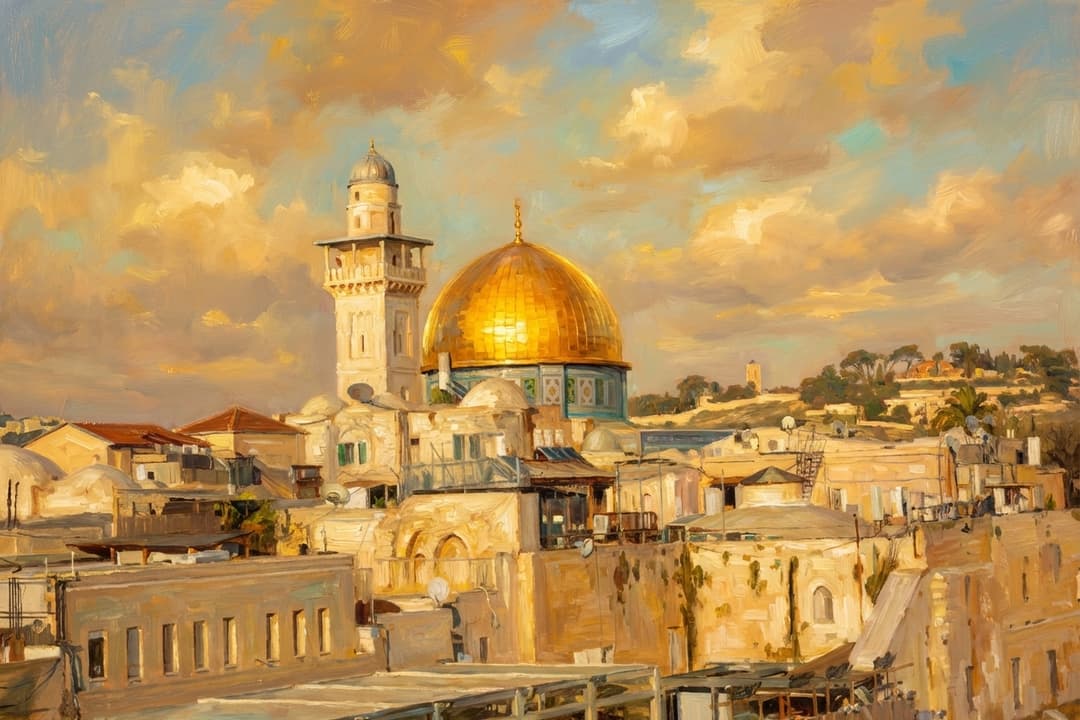
Located in the southeastern corner of the Old City of Jerusalem, the Temple Mount (known in Hebrew as Har HaBayit and in Arabic as al-Haram al-Sharif) is one of the most intensely contested and deeply revered sacred sites on Earth. For thousands of years, this 37-acre raised plaza of limestone and ancient masonry has served as a spiritual lightning rod, anchoring the historical narratives, theological visions, and deepest devotion of Judaism, Christianity, and Islam.
To understand the history of this single plateau is to examine the intersections and divergences of the three major monotheistic religions. Here, ruins, shrines, and active sanctuaries stand layered upon one another, witnessing to empires that rose and fell, each leaving their mark in stone and faith.
Judaism and the Biblical Temples
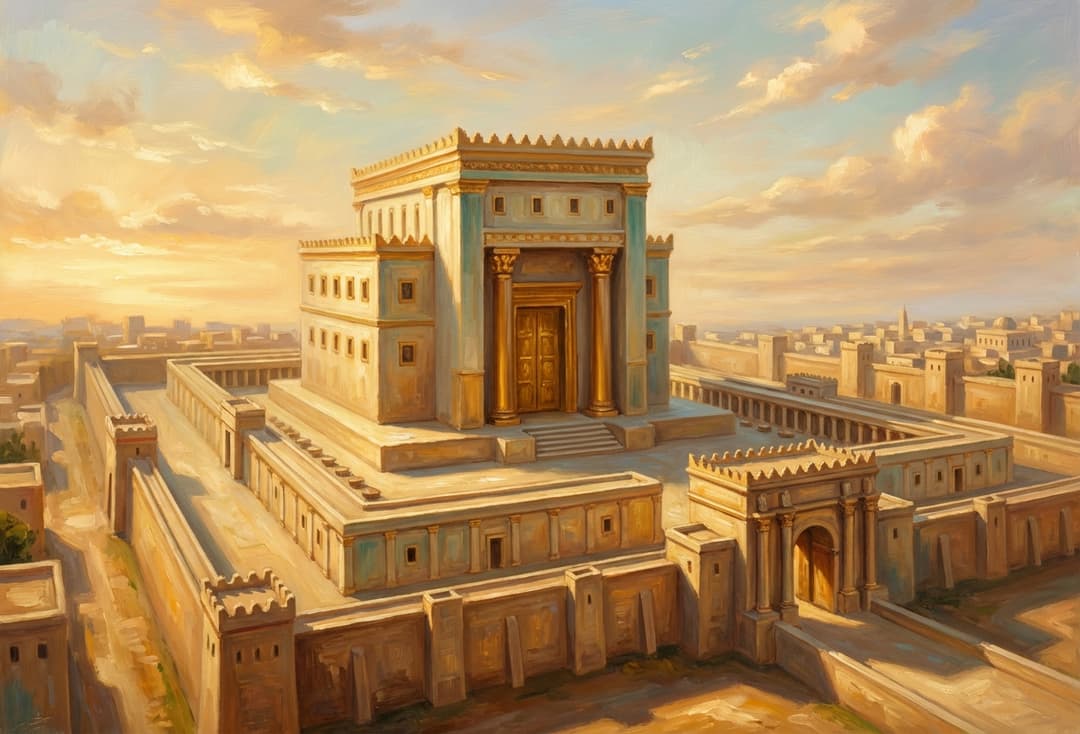
In Jewish tradition, the Temple Mount is the holiest site on Earth. It is identified as Mount Moriah, the place where Abraham bound Isaac in obedience to God's command, and where Jacob beheld the ladder reaching into heaven. Most crucially, it was the location of the two ancient Temples of Jerusalem that stood as the central sanctuaries of Israelite worship.
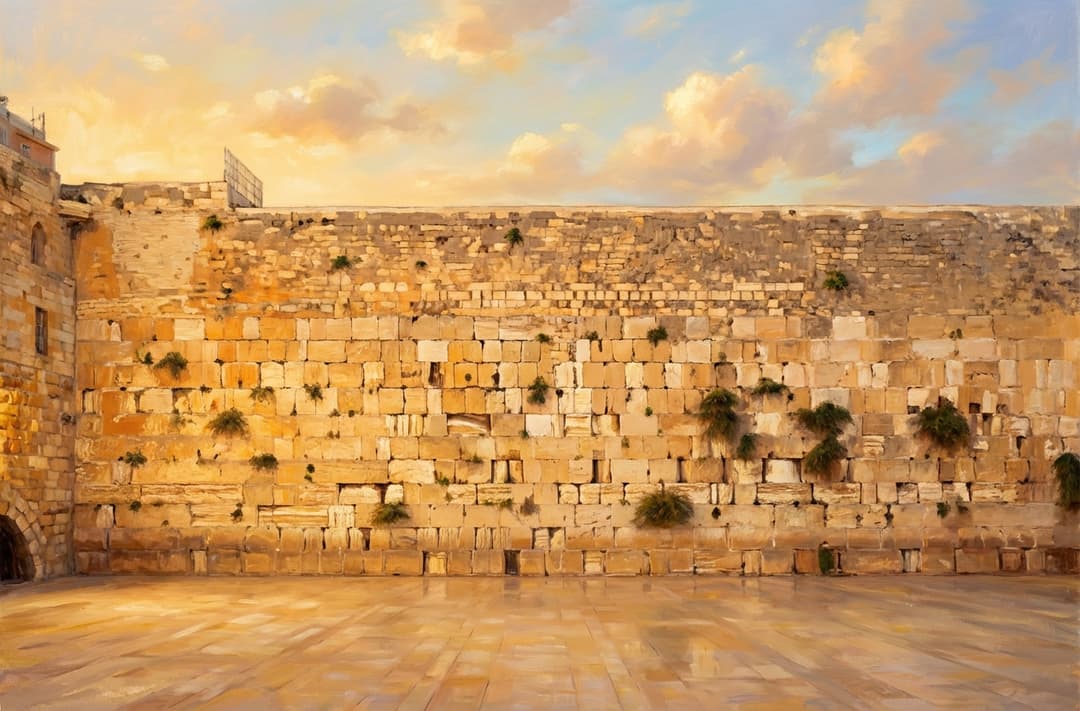
King Solomon commissioned the First Temple here in the 10th century BCE to house the Ark of the Covenant, establishing a permanent center for Yahweh worship. After its destruction by the Babylonians in 586 BCE, the Second Temple was erected on the same spot, later grandly expanded by King Herod the Great. Following the Second Temple's destruction by the Roman Empire in 70 CE, the Western Wall — a surviving retaining wall of Herod's massive expansion — became the primary focal point of Jewish prayer and mourning, standing as a physical link to the ancient sanctuary.
Christianity and the Ministry of Jesus
For Christians, the Temple Mount is inextricably linked to the life and ministry of Jesus Christ. As recorded in the New Testament, Jesus was presented in the Temple as a child, taught in its courts, disputed with the scribes, and drove out the money changers in a dramatic demonstration of zeal for His Father's house.
Jesus also famously prophesied the destruction of the Temple's magnificent structures, declaring that "not one stone here will be left on another." Following the destruction of 70 CE, early Christians viewed the ruined mount as a fulfillment of prophecy. In later centuries, the Christian Byzantine Empire focused its devotional architecture on other areas of the city, such as the Church of the Holy Sepulchre, leaving the Mount largely in ruins until the Islamic era.
Islam and the Noble Sanctuary
To Muslims, the esplanade is known as al-Haram al-Sharif (The Noble Sanctuary), the third holiest site in Islam. It is the destination of the Prophet Muhammad's miraculous Night Journey (Isra and Mi'raj) from Mecca to the "farthest mosque" (al-Aqsa), from where he ascended into heaven to receive the divine command for daily prayers.
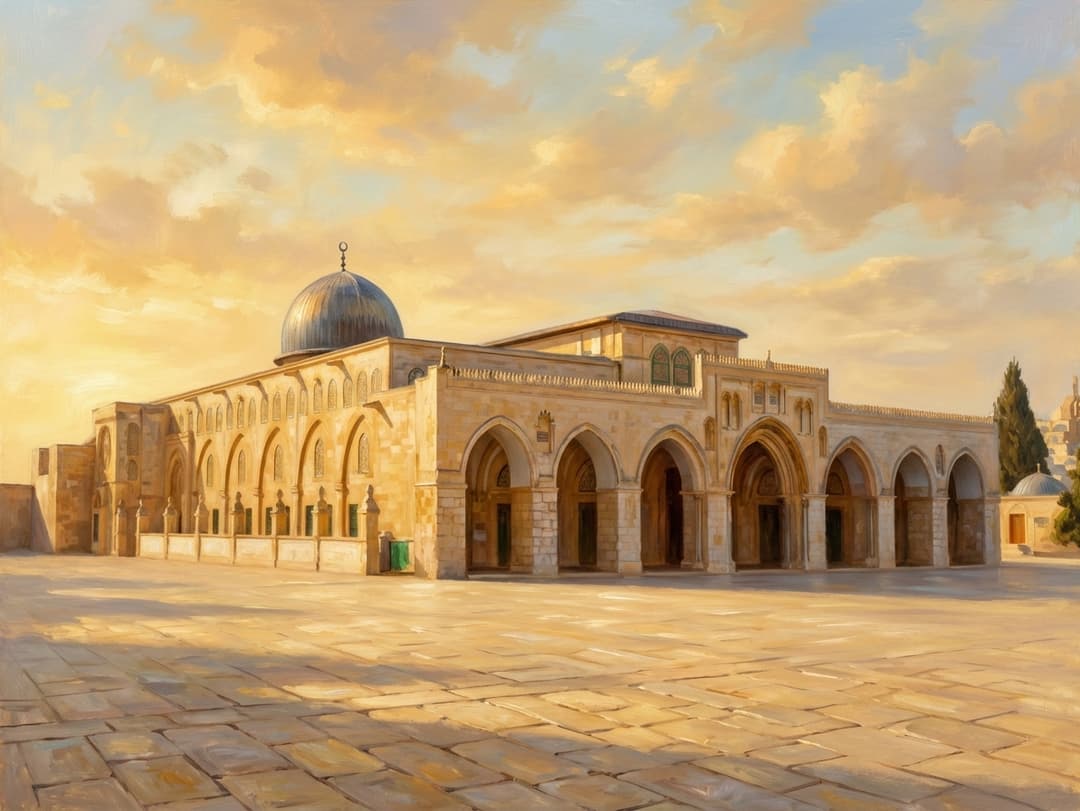
Following the Muslim conquest of Jerusalem in 637 CE, Caliph Umar and subsequent Umayyad rulers restored the site. Between 685 and 691 CE, Caliph Abd al-Malik constructed the Dome of the Rock, a breathtaking octagonal shrine built over the Foundation Stone, commemorating Muhammad's ascension. Shortly after, the grand Al-Aqsa Mosque was built on the southern end of the plaza. These architectural masterpieces established the Noble Sanctuary as a triumph of early Islamic engineering and devotion.
A Shared Heritage and an Enduring Focus
Today, the Temple Mount stands as a living museum of faith and historical complexity. Under a status quo arrangement established in the 19th century and maintained to the present day, the Islamic Waqf administers the site, while security remains under Israeli authority.
Despite political tensions and security challenges, the site remains an active place of pilgrimage and worship. Jews continue to pray at the base of the Western Wall, Muslims gather by the tens of thousands in the Al-Aqsa Mosque for Friday prayers, and pilgrims of all backgrounds walk the historic plaza, reflecting on the shared heritage of the monotheistic faiths. The Temple Mount continues to represent both the shared roots and the distinct paths of the world's great faith traditions.
Related Temples
Sources & Research
Every fact on Temples.org is backed by verified Sources & Research. Each piece of information is rated by source tier and confidence level.
View All Sources (4)
| Field | Source | Tier | Retrieved |
|---|---|---|---|
| History of the Temple Mount / Al-Haram al-Sharif | Encyclopaedia Britannica (opens in a new tab) | B | 2026-05-28 |
| Archaeology and History of Jerusalem's Sacred Esplanade | UNESCO World Heritage Centre (opens in a new tab) | B | 2026-05-28 |
| The Dome of the Rock and Early Islamic Architecture | The Metropolitan Museum of Art (opens in a new tab) | B | 2026-05-28 |
| Biblical Archaeology of Solomon's Temple | Biblical Archaeology Society (opens in a new tab) | B | 2026-05-28 |