Visitor Insights
Visiting Brasília Brazil Temple
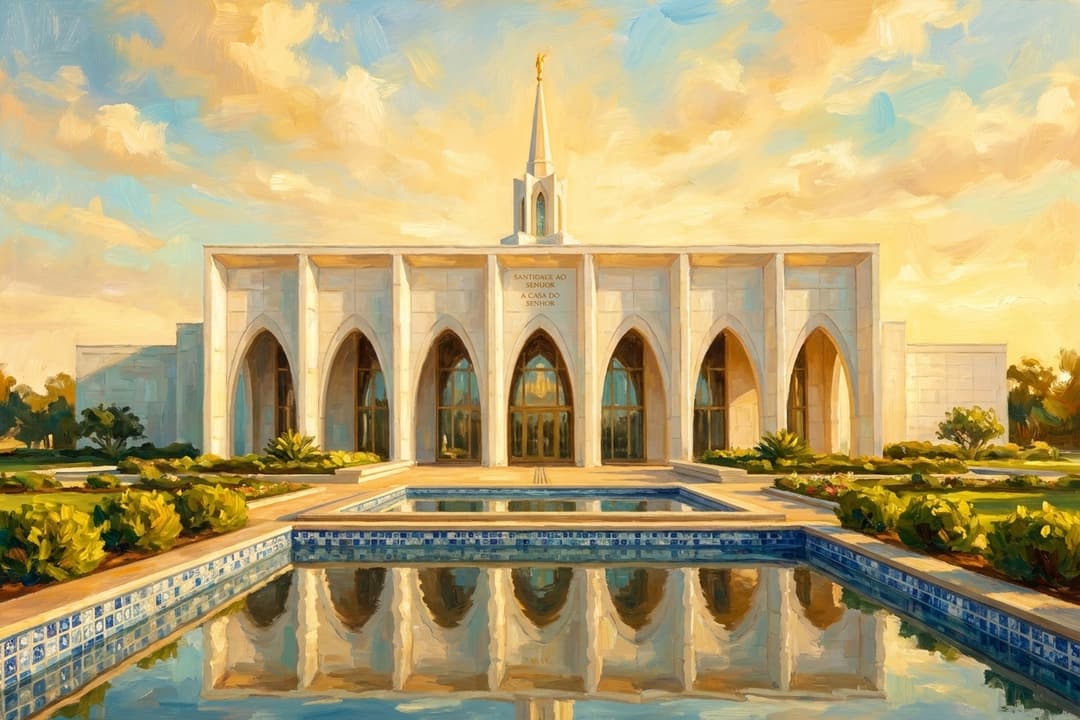
The Brasília Brazil Temple offers a serene and deeply spiritual experience for all who visit its beautifully landscaped grounds. Located in the northern sector of Brazil's federal capital, the temple stands as a peaceful oasis amid the bustling modernist city. Visitors can stroll along the quiet pathways, admire the reflecting pools, and take in the stunning architecture that harmonizes with the surrounding civic masterpieces. The grounds are open to the public, providing a space for quiet contemplation and appreciation of the sacred atmosphere.
Highlights
- Stunning reflecting pools lined with blue and white ceramic tiles.
- Drought-tolerant landscaping featuring native species from the Cerrado biome.
- Dramatic exterior lighting that illuminates the pointed arches at night.
Things to Know
- Interior access is reserved for members of the Church with a valid temple recommend.
- The grounds are open to the public during daylight hours.
- Modest attire is recommended when visiting the temple grounds.
Location
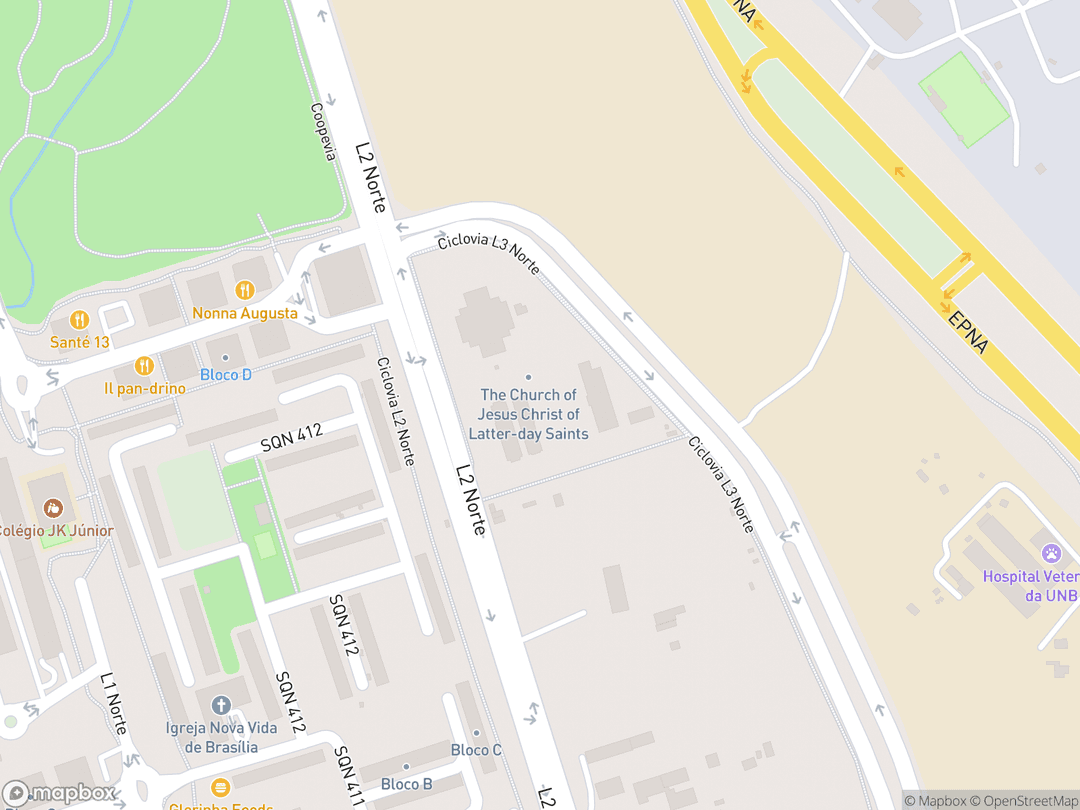
SGAN 612 – Módulo “C” – Asa Norte, Brasília – DF, 70830-550, Brazil
Hours: The temple grounds are open daily from sunrise to sunset. Patron housing and temple services operate Tuesday through Saturday.
Getting There: Located in the Asa Norte sector (SGAN 612), the temple is easily accessible by car or taxi from the central Plano Piloto. Ample on-site parking is available for visitors.
Get DirectionsTips for Your Visit
Visit at Golden Hour
Arrive just before sunset to watch the warm evening light reflect off the white Brazilian marble facade, followed by the dramatic illumination of the exterior arches.
Explore the Cerrado Gardens
Take time to walk the pathways and observe the unique native plants and palms selected specifically to thrive in Brasília's distinct dry season.
About
The Brasília Brazil Temple stands as a monument of modern faith in the heart of Brazil’s futuristic federal capital. As the tenth operating temple of The Church of Jesus Christ of Latter-day Saints in the country, it serves as a spiritual sanctuary for tens of thousands of members living throughout Brazil's vast interior. The temple's striking design harmonizes beautifully with the mid-20th-century modernism that defines Brasília’s urban landscape, paying subtle homage to Oscar Niemeyer, the legendary architect behind many of the capital's civic masterpieces.
In the broader context of Christian history and the Abrahamic tradition, the temple represents a continuation of the ancient practice of establishing sacred spaces set apart from the secular world. Much like the historic cathedrals and sanctuaries built by Christians over the centuries to honor God, this temple is constructed with the finest materials and craftsmanship to create an environment of holiness and peace. It serves as a physical manifestation of the community's devotion to Jesus Christ and their desire to draw closer to the divine through sacred covenants.
Unlike standard Latter-day Saint chapels, which are open to the public for weekly Sunday worship and community gatherings, the temple is reserved for sacred, quiet ordinances. Inside its walls, faithful members participate in ceremonies that bind families together for eternity and teach the eternal plan of salvation. The temple stands as a beacon of hope and a place of spiritual refuge, inviting all who enter its grounds to feel the love of God and reflect on their eternal journey.
Gallery
Symbolic Elements
The temple's exterior features intricate carvings, each rich with spiritual meaning:

Pointed Arches
The pointed arches that define both the exterior facade and the interior doorways symbolize the upward reach of humanity toward the divine. By echoing the curves of sails and the civic architecture of the capital, they represent a bridge between the earthly city of Brasília and the heavenly kingdom of God.

Ombre Blue Stained Glass
The hand-colored stained glass windows feature a striking ombre pattern that transitions from a deep, rich dark blue at the bottom to a brilliant light blue, cream, and white at the top. This color progression represents spiritual enlightenment and the journey of the soul rising from the darkness of the world into the pure, celestial light of God's presence.

Reflecting Pools
The blue and white tiled reflecting pools symbolize spiritual washing, purity, and self-reflection. The still waters reflect the temple's white marble facade, reminding patrons of the eternal, unchanging nature of the covenants they make inside the house of the Lord.

Universal White Clothing
Inside the temple, all patrons change out of their everyday attire into simple, white clothing. This universal use of white clothing represents absolute equality before God, stripping away earthly titles, political power, and social status to focus on one's eternal, divine identity as a child of God.

White Brazilian Marble
The exterior cladding of sparkling white Brazilian marble represents purity, light, and holiness. It reflects the intense tropical sun, giving the building a brilliant, luminous quality that stands out as a beacon of spiritual light in the federal capital.

Native Cerrado Landscaping
The use of native, drought-tolerant plants from the Cerrado biome symbolizes stewardship over the earth and harmony with the local environment. It represents the ability to thrive and bloom even in the dry, challenging seasons of life, relying on deep spiritual roots.

Central Spire
The single, slender central spire pointing toward heaven symbolizes the focus of all temple worship: drawing closer to God. It serves as a vertical axis connecting earth and heaven, guiding the thoughts of onlookers toward the divine.
Interesting Facts
The dedication of the Brasília Brazil Temple on September 17, 2023, was part of a historic 'triple dedication' day, marking the first time in Church history three temples were dedicated on a single day.
The temple's striking modernist design is a direct architectural tribute to Oscar Niemeyer, the visionary architect who designed Brasília's famous civic and government buildings.
The temple showcases Brazil's natural wealth, utilizing native Paraná white marble and Bahia blue stone for its interior floors, and sparkling white Brazilian marble for its exterior cladding.
The pointed arches of the temple facade were specifically designed to replicate the elegant, sweeping arches of the nearby Itamaraty Palace, seamlessly blending the sacred structure into the federal capital's aesthetic.
The hand-colored ombre blue windows were entirely designed and manufactured in Brazil by the skilled artisans of the Atelier Artístico Sarasá in São Bernardo do Campo.
To respect the local environment, the landscaping uses drought-tolerant native plants and over 200 trees specifically selected to withstand Brasília's intense dry season.
During the August 2023 open house, the temple hosted hundreds of journalists and high-profile government leaders, including Brazilian Vice President Geraldo Alckmin.
At the dedication, Elder Neil L. Andersen and all other speakers delivered their remarks entirely in Portuguese without the aid of live translation.
While the Brasília Brazil Temple is the tenth operating temple in the nation of Brazil, it is the very first to be constructed in the country's Federal District.
Prior to the temple's completion, Latter-day Saints living in Brazil's vast interior had to travel hundreds of miles to the coast—often taking long, expensive bus rides—to participate in temple worship.
Common Questions
Who can enter the Brasília Brazil Temple?
While the surrounding gardens and reflecting pools are open to the general public, the interior of the temple is reserved for members of the Church who hold a valid temple recommend, signifying they are living in accordance with the laws of the gospel.
What is the architectural significance of the temple's design?
The temple's design is a direct tribute to the mid-20th-century modernism that defines Brasília. It features clean lines, expansive cantilevers, and dramatic pointed arches that pay homage to Oscar Niemeyer, the legendary architect of the capital's civic masterpieces.
Why are there reflecting pools outside the temple?
The blue and white tiled reflecting pools symbolize spiritual washing, purity, and self-reflection. They mirror the temple's white marble facade, creating a sense of visual expansion and tranquility for approaching patrons.
What is the significance of the white clothing worn inside?
Inside the temple, all patrons change into simple, white clothing. This universal practice represents absolute equality before God, stripping away earthly titles, political power, and social status to focus on one's eternal, divine identity.
How does the temple's landscaping respect the local environment?
The gardens are uniquely landscaped with drought-tolerant native species from the Brazilian Cerrado (savannah) biome. This design allows the landscaping to thrive during Brasília's intense dry season while conserving water.
Featured Stories
A Historic Triple Dedication
September 17, 2023
The dedication of the Brasília Brazil Temple on September 17, 2023, marked a historic milestone for The Church of Jesus Christ of Latter-day Saints. For the first time in the history of the Church, three temples were dedicated on the exact same day: the Brasília Brazil Temple, the Bentonville Arkansas Temple, and the Moses Lake Washington Temple.
Elder Neil L. Andersen of the Quorum of the Twelve Apostles presided over the dedication in Brasília, delivering his remarks entirely in Portuguese. The event was a powerful demonstration of the global growth of the Church, uniting members across continents in a shared day of celebration and spiritual devotion.
For the local saints in Brasília, the dedication was the culmination of years of anticipation and preparation. The sacred sessions brought a deep sense of peace and gratitude, establishing the temple as a permanent house of the Lord in the heart of Brazil.
Source: Church News
A Tribute to Modernist Vision
August 2023
During the public open house in August 2023, the temple hosted numerous high-profile government leaders, including Brazilian Vice President Geraldo Alckmin. The visitors were struck by how seamlessly the temple's design integrated into the unique architectural landscape of Brasília, which was planned in the mid-20th century by visionary architects like Oscar Niemeyer.
The temple's pointed arches and reflecting pools pay direct homage to the nearby Itamaraty Palace, the headquarters of Brazil's Ministry of Foreign Affairs. This intentional design choice was praised by civic leaders as a beautiful contribution to the capital's architectural heritage.
The open house provided a unique opportunity to build bridges of understanding between the Church and the broader Brazilian community. Visitors walked away with a deep appreciation for the temple's beauty, its symbolic architecture, and the sacred purposes for which it was built.
Source: LDS Living
A Sanctuary for the Interior
September 2023
Prior to the completion of the Brasília Temple, Latter-day Saints living in Brazil's vast interior faced immense challenges to participate in temple worship. Many members had to travel hundreds of miles to the coast, embarking on long, expensive bus rides to São Paulo or Rio de Janeiro that often took days.
The dedication of the temple in the federal capital established a central spiritual hub for over 50,000 members living in the region. It brought the blessings of the temple within reach of families who had previously only dreamed of visiting the house of the Lord regularly.
The temple stands as a testament to the faith and sacrifice of these pioneering members. It serves as a beacon of hope, ensuring that the sacred ordinances of the gospel are accessible to all, regardless of their geographic isolation.
Source: The Church of Jesus Christ of Latter-day Saints
Timeline
Temple Announced
President Thomas S. Monson announces the intent to construct a temple in Brasília during the Sunday morning session of the 187th Annual General Conference.
MilestoneOfficial Site Inspection
Engineers and project managers from Church headquarters conduct an official site inspection of the northern sector of the capital to finalize land acquisition.
EventOfficial Rendering Released
The Church releases the official exterior rendering of the Brasília Brazil Temple, showcasing a design that mirrors the city's unique modernist architectural language.
MilestoneGroundbreaking Ceremony
A small, invitation-only groundbreaking ceremony is held due to global health guidelines. Elder Adilson de Paula Parrella presides and dedicates the site.
component.timeline.groundbreakingExcavation Begins
Heavy machinery arrives on site to begin grading and excavation work for the temple's foundation and underground utilities.
EventFoundation Poured
Construction crews complete the pouring of the reinforced concrete foundation, establishing the structural base for the single-story temple.
EventStructural Framing Completed
The concrete and steel structural framing of the temple is completed, outlining the distinctive arched facade and central spire.
EventMarble Cladding Installation
Artisans begin installing the sparkling white Brazilian marble cladding on the exterior walls, giving the building its luminous quality.
EventSpire Installation Completed
The slender central spire is successfully installed atop the temple, completing the building's vertical modernist profile.
EventLandscaping and Reflecting Pools
Landscaping crews finish planting native Cerrado species and filling the blue and white tiled reflecting pools framing the entrance.
EventMedia and VIP Tours Begin
Private tours are conducted for media, government officials, and community leaders, including Brazil's Vice President Geraldo Alckmin.
EventPublic Open House Commences
The temple opens its doors to the general public, welcoming tens of thousands of visitors to tour the sacred interior rooms.
EventPublic Open House Concludes
The public open house concludes after hosting over 100,000 visitors from across Brazil and neighboring countries.
EventYouth Devotional Held
A special devotional is held for local Latter-day Saint youth, featuring inspiring messages from visiting Church leaders.
EventTemple Dedicated
Elder Neil L. Andersen of the Quorum of the Twelve Apostles dedicates the Brasília Brazil Temple in two sacred sessions.
DedicationHistory by Decade
2010s — Announcement and Planning
A temple in the federal capital is a dream come true for the saints of the interior, bringing the house of the Lord closer to those who have sacrificed so much.
The announcement of the Brasília Brazil Temple on April 2, 2017, by President Thomas S. Monson was met with immense joy by Latter-day Saints throughout central Brazil. At the time, it was designated as the tenth temple in the country, reflecting the rapid growth of the Church in South America's largest nation. Following the announcement, engineers and project managers from Church headquarters in Salt Lake City conducted official site inspections in June 2017 to finalize land acquisition in the northern sector of the capital. The planning phase focused on designing a structure that would respect the strict architectural guidelines of Brasília, a UNESCO World Heritage site known for its modernist urban planning.
2020s — Construction and Dedication
The 2020s marked the physical realization of the temple. The official rendering was released in February 2020, showcasing a design that mirrored the city's unique modernist language. A small, invitation-only groundbreaking ceremony was held on September 26, 2020, presided over by Elder Adilson de Paula Parrella. Construction progressed steadily over the next three years, utilizing high-quality local materials such as white Brazilian marble and native Paraná marble. In August 2023, a public open house welcomed over 100,000 visitors, including prominent government officials. The temple was formally dedicated on September 17, 2023, by Elder Neil L. Andersen, establishing it as an operating sanctuary and a permanent beacon of faith in the Federal District.
Architecture & Facilities
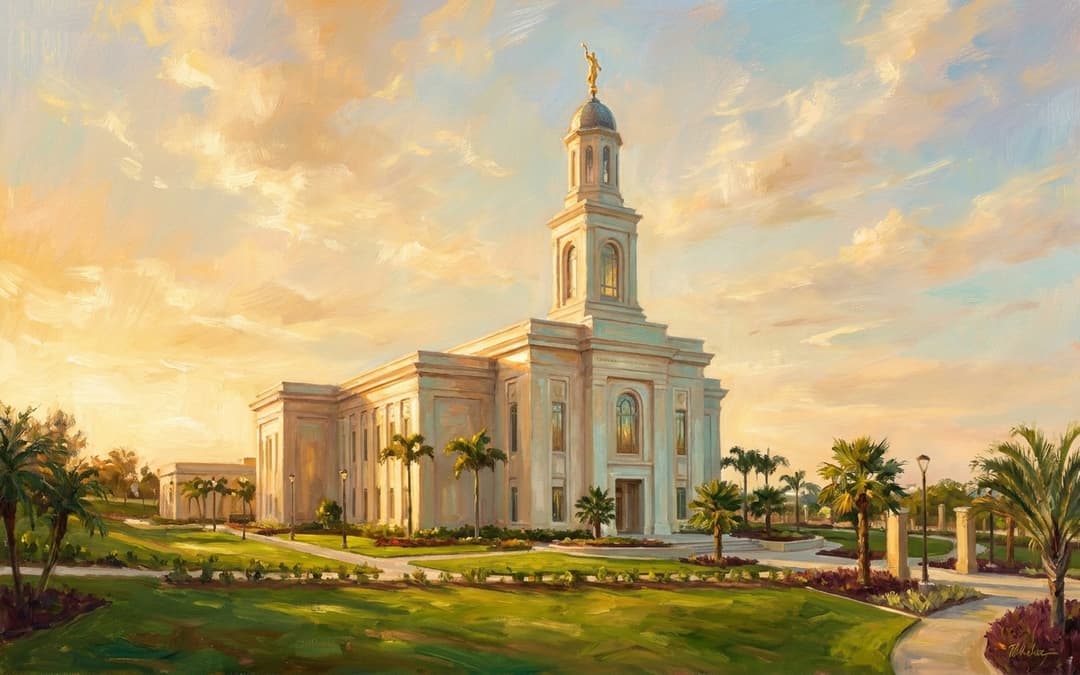
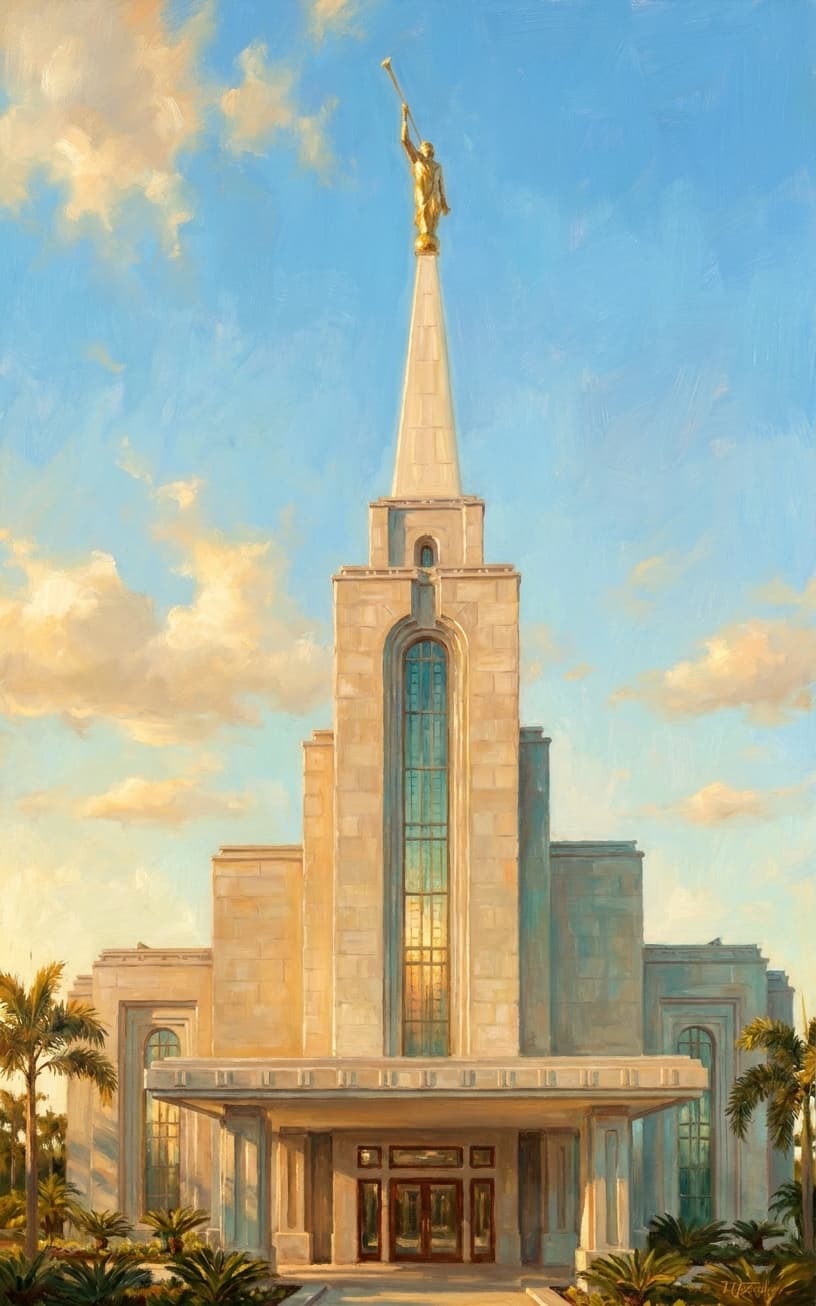
The Brasília Brazil Temple represents a unique adaptation of mid-20th-century modernism, designed to harmonize with the futuristic civic architecture of Brazil's federal capital. The building features clean lines, expansive cantilevers, and a symmetrical single-story concrete structure topped by a single, slender central spire. Its most defining feature is a series of dramatic pointed arches that contour the facade, paying subtle homage to the legendary architect Oscar Niemeyer and mirroring the architectural language of the nearby Itamaraty Palace.
Building Materials
Exterior Cladding
The concrete frame is sheathed in sparkling white Brazilian marble, which reflects the intense tropical sun and gives the building a brilliant, luminous quality.
Interior Flooring
A sophisticated combination of native Paraná white marble, high-durability porcelain tile, and Bahia blue stone accents and borders.
Carpets
Custom-made Brazilian carpets in the ordinance rooms, featuring a customized color palette of soft creams, blues, and golds.
Stained Glass
Hand-colored ombre blue windows designed and fabricated in Brazil by the Atelier Artístico Sarasá, transitioning from deep blue to brilliant white.
Interior Features
Celestial Room
A quiet, beautifully appointed room representing heaven, featuring elegant crystal chandeliers, soft cream carpets, and gold leaf finishes on the plaster walls.
Sealing Rooms
Rooms where marriages are performed for eternity, featuring native stone surfaces, custom carpets, and large mirrors reflecting eternal covenants.
Baptistry
A sacred space featuring a baptismal font resting on the backs of twelve sculpted oxen, symbolizing the twelve tribes of Israel, used for proxy baptisms.
Instruction Rooms
Rooms where patrons receive symbolic instruction regarding the plan of salvation and make covenants to follow Jesus Christ.
Temple Grounds
The temple grounds are uniquely landscaped with drought-tolerant native species from the Brazilian Cerrado (savannah) biome, designed to thrive in Brasília's distinct dry season. The gardens feature thousands of shrubs, native palms, and over 200 trees, creating a peaceful oasis.
Additional Facilities
The temple site includes patron housing facilities to accommodate members traveling long distances from Brazil's vast interior, as well as utility and administrative offices.
Religious Significance
For centuries, Christians of various traditions have constructed grand cathedrals, historic sanctuaries, and beautiful houses of worship to honor God and create physical spaces set apart from the secular world. These sacred structures serve as places of communal gathering, where believers join in song, hear sermons, and participate in sacred rites.
In a similar spirit of deep devotion, Latter-day Saints construct temples. However, there is a distinct difference in purpose between a standard Latter-day Saint meetinghouse (or chapel) and a temple. While chapels are open to the general public for weekly Sunday worship services, temples are closed on Sundays and are reserved for sacred, quiet ordinances that bind families together for eternity.
Sacred Ordinances
The Endowment
A series of instructions and covenants focused on Jesus Christ, where members promise to live righteously and keep God's commandments.
Eternal Marriage (Sealing)
A sacred ceremony where marriages are performed not just 'until death do us part,' but for time and all eternity, binding families together forever.
Baptism for the Dead
A proxy ordinance where members are baptized on behalf of ancestors who passed away without the opportunity to receive this Christian rite.
The House of the Lord
Latter-day Saints view the temple literally as the 'House of the Lord.' Inside, faithful members participate in sacred ceremonies that teach the eternal plan of salvation and provide a refuge from the noise and distractions of the world.
A Bridge to the Divine
The temple serves as a physical and spiritual bridge, connecting the earthly experience with the heavenly realm. Through the covenants made within its walls, members seek to align their lives more closely with the teachings of Jesus Christ.
Similar Temples
Sources & Research
Every fact on Temples.org is backed by verified Sources & Research. Each piece of information is rated by source tier and confidence level.
View All Sources (6)
| Field | Source | Tier | Retrieved |
|---|---|---|---|
| About & Historical Background | The Church of Jesus Christ of Latter-day Saints (opens in a new tab) | A | 2026-02-18 |
| Timeline & Dedication | Church News (opens in a new tab) | B | 2026-02-18 |
| Architecture & Materials | LDS Living (opens in a new tab) | B | 2026-02-18 |
| Quick Facts & Construction | Temples of The Church of Jesus Christ of Latter-day Saints (opens in a new tab) | C | 2026-02-18 |
| Featured Stories & Open House | LDS Daily (opens in a new tab) | C | 2026-02-18 |
| Symbolic Elements | W.K. Wilson Construction (opens in a new tab) | C | 2026-02-18 |