Visitor Insights
Visiting Campinas Brazil Temple
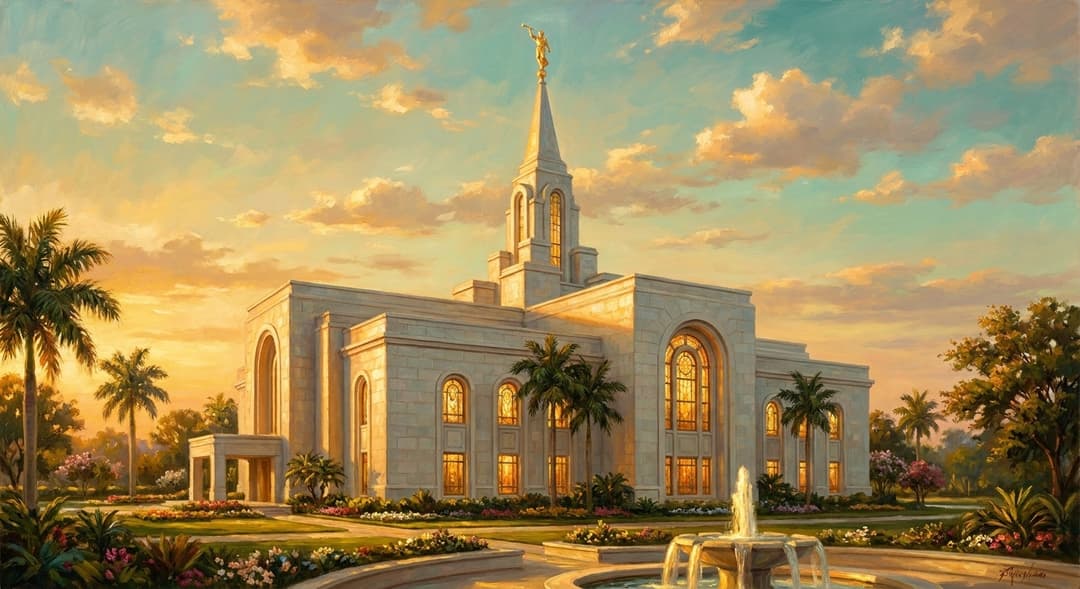
The Campinas Brazil Temple offers a serene and deeply spiritual experience for all who visit its beautifully manicured grounds. Situated on a prominent hillside, the temple grounds feature lush native Brazilian flora, towering palm trees, and peaceful water features that invite quiet contemplation. While the interior of the temple is reserved for members of the Church holding a current temple recommend, the public is warmly invited to explore the exterior walkways and enjoy the tranquil atmosphere. The site is particularly breathtaking at sunset and twilight, when the temple's brilliant granite exterior is illuminated, casting a warm glow over the surrounding landscape.
Highlights
- Stunning panoramic views of the Campinas region from the elevated hillside location.
- Beautifully landscaped gardens featuring vibrant native Brazilian flowers and manicured lawns.
- Tranquil water features and paved walkways perfect for peaceful meditation and reflection.
- The striking exterior clad in light gray Asa Branca granite, which glows brilliantly under the sun and night lighting.
Things to Know
- Interior access is restricted to members of the Church with active temple recommends.
- The grounds are generally open to the public during daylight hours, Tuesday through Saturday.
- There is no public visitors' center on-site, but an arrival center and patron housing are located within the complex.
- Modest attire is recommended when walking the temple grounds to maintain the sacred atmosphere.
Location
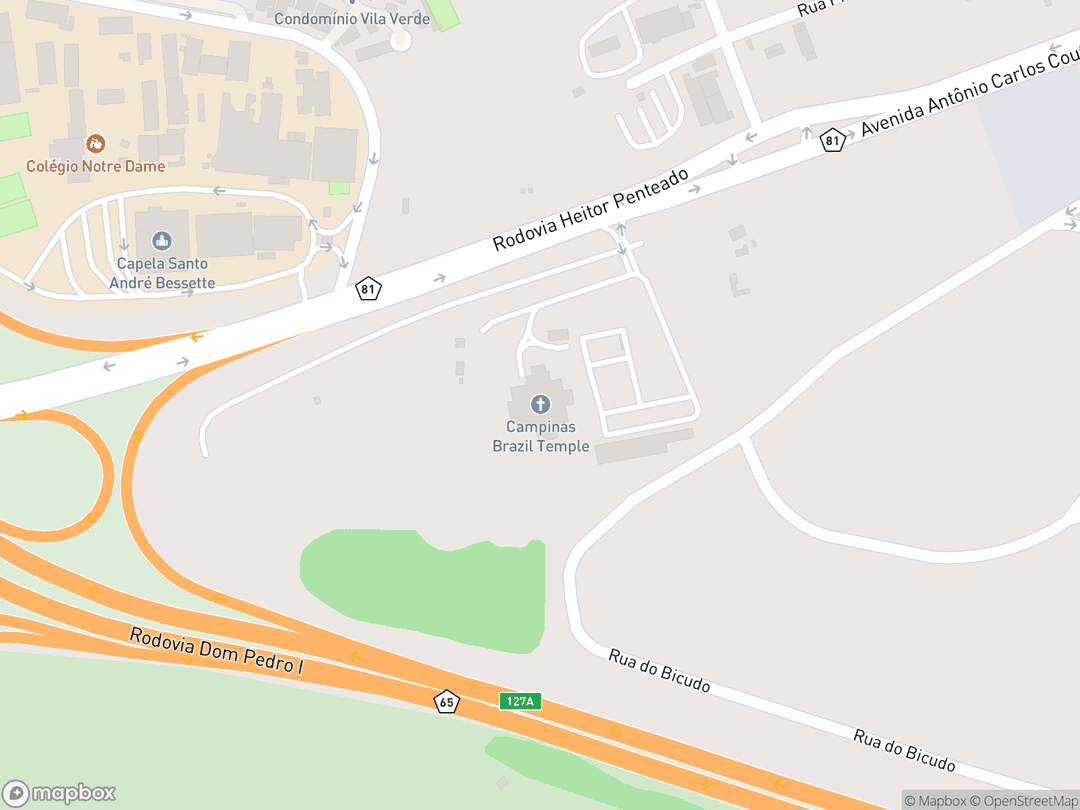
Rua James Esdras Faust, 400 - Notre Dame, 13092-820 Campinas–SP, Brazil
Hours: Grounds open Tuesday–Saturday from 9:00 AM to sunset. Closed Sundays and Mondays.
Getting There: Located at Rua James Esdras Faust, 400, in the Notre Dame neighborhood of Campinas. Easily accessible by car or charter bus via the Rodovia Dom Pedro I. Local bus routes connect the Campinas city center to the Notre Dame and Sousas districts.
Get DirectionsTips for Your Visit
Visit at Twilight
Arrive just before sunset to witness the transition as the natural light fades and the temple's exterior floodlights illuminate the Asa Branca granite, creating a spectacular glowing beacon.
Explore the Native Flora
Take time to walk the entire perimeter path to appreciate the carefully curated native Brazilian plants, palm trees, and seasonal flowers that are meticulously maintained year-round.
Respectful Photography
Photography is permitted and encouraged on the outdoor grounds. Ensure your photography remains respectful of the sacred nature of the site and does not disrupt other visitors.
About
The Campinas Brazil Temple stands as a magnificent monument of faith on a prominent hillside in the Notre Dame neighborhood of Campinas, São Paulo. Announced in 1997 by President Gordon B. Hinckley, this sacred edifice was constructed during a historic era of temple expansion aimed at bringing these holy houses closer to Latter-day Saints worldwide. As the fourth temple built in Brazil, it serves as a vital spiritual center for hundreds of thousands of members in the region, offering a sanctuary of peace and eternal perspective amidst the bustling energy of one of Brazil's major metropolitan areas.
Rooted in the Restorationist Christian tradition, the temple is the House of the Lord, a sacred space set apart from the world for high sacraments and covenants. Unlike local meetinghouses where weekly congregational worship occurs, the temple is dedicated to sacred ordinances that bind families together for eternity and bridge the gap between heaven and earth. Its presence in Campinas is the realization of decades of devotion, tracing back to early missionaries who envisioned a temple in this region long before the Church had established a large presence in South America.
The temple's striking modern design, clad in brilliant Brazilian granite, makes it a highly visible landmark. Situated near major regional highways, its illuminated spire and gold-leafed statue of the angel Moroni serve as a literal and figurative beacon for travelers. The beautifully landscaped 6.18-acre grounds, filled with native flora and tranquil water features, are open to the public, offering a peaceful environment where visitors of all faiths can seek quiet reflection and escape the clamor of daily life.
Gallery
Symbolic Elements
The temple's exterior features intricate carvings, each rich with spiritual meaning:

The Covenant Bridge
The temple shares a common foundation with broader Christian and biblical traditions as a holy sanctuary set apart to commune with God. However, in Latter-day Saint theology, it serves as a unique bridge where sacred ordinances bind families together eternally and offer saving covenants vicariously to ancestors.
The Angel Moroni
The gold-leafed statue of the angel Moroni atop the spire symbolizes the restoration of the gospel of Jesus Christ in the latter days. Depicted holding a trumpet to his lips, Moroni represents the spreading of the gospel to every nation, kindred, tongue, and people, fulfilling biblical prophecy.

The Single Spire
The upward-reaching central spire serves as a vertical axis pointing toward heaven, symbolizing the human soul's aspiration to reach God. It represents the connection between the earthly temple and the celestial realm, drawing the eyes of onlookers upward.

Exterior Arches
The prominent, tall arches on the exterior represent gateways or portals. Symbolically, passing under these arches represents leaving the temporal, secular world behind and entering a sacred space of eternal perspective and spiritual peace.

The Baptismal Font on Twelve Oxen
In the temple's baptistery, the large baptismal font rests upon the backs of twelve sculpted oxen, positioned in a circle facing outward. This design directly mirrors the 'molten sea' of Solomon's Temple, with the twelve oxen symbolizing the twelve tribes of Israel and the strength of God's covenant people.

Asa Branca Granite Cladding
The exterior is clad in light gray Asa Branca (White Wing) granite, sourced from the northeastern state of Ceará. This highly polished stone reflects the intense Brazilian sunlight, giving the temple a brilliant white appearance that symbolizes purity, light, and holiness.

Native Palm Trees and Flora
The surrounding grounds are planted with native Brazilian palm trees and vibrant flora, symbolizing the beauty of God's creation. The lush landscaping represents the Garden of Eden and the spiritual growth that comes from living in harmony with divine covenants.
Interesting Facts
Wayne M. Beck, an early missionary in Brazil, donated the first $20 toward a future temple in Campinas in 1946—51 years before the temple was officially announced.
At the groundbreaking, President James E. Faust shared that an eight-year-old boy donated $100 he had worked hard to earn, while another individual donated one million dollars that same day, noting both would be equally blessed.
The street on which the temple stands was officially renamed *Rua James Esdras Faust* by the city of Campinas in 2008 to honor the late Church leader.
Construction was delayed in 2001 by local political unrest and the tragic assassination of Campinas Mayor Antônio da Costa Santos, an architect who had publicly admired the temple's craftsmanship.
Mayor Santos's successor, Izalene Tiene, was so moved by the peaceful atmosphere during the 2002 open house that she requested special permission to visit the grounds periodically for personal reflection.
The groundbreaking ceremony was described by leaders as feeling 'Pentecostal' due to the intense devotion of thousands of Saints who arrived on over 50 charter buses.
The beautiful interior murals depicting sacred themes were painted by artist Al Brickey while he was serving a specialized, full-time art mission for the Church.
The light gray *Asa Branca* granite cladding the exterior was transported more than 1,500 miles from quarries in the northeastern state of Ceará to the construction site.
Because the temple sits on a prominent rise next to major highways, local members refer to it as a 'beacon in the dark night' due to its highly visible exterior lighting.
The 2018 high-specification refurbishment of the auxiliary buildings and baptistery was executed by Teixeira Duarte, a major Portuguese multinational construction firm.
Common Questions
Who is allowed to enter the Campinas Brazil Temple?
The exterior temple grounds are open to the general public, and visitors of all faiths are welcome to walk the pathways and enjoy the peaceful atmosphere. However, the interior of the temple is reserved for members of the Church of Jesus Christ of Latter-day Saints who hold a current temple recommend, which certifies they are living the standards of the faith.
Why is the street named after James E. Faust?
In 2008, the municipality of Campinas officially renamed the street where the temple stands to Rua James Esdras Faust. This was done to honor President James E. Faust, a beloved leader in the Church's First Presidency who served a full-time mission in Brazil in the late 1930s and early 1940s, and who later returned to preside over the temple's groundbreaking in 1998.
What is the significance of the granite used on the exterior?
The temple is clad in light gray Asa Branca (White Wing) granite, which was quarried in the northeastern Brazilian state of Ceará and transported over 1,500 miles to the construction site. This highly polished stone is exceptionally durable and reflects the intense Brazilian sunlight, giving the temple a brilliant, glowing white appearance that symbolizes purity and holiness.
Are there overnight accommodations for visitors at the temple?
Yes, the Campinas Brazil Temple complex includes patron housing (lodging) designed to accommodate members who travel long distances to worship at the temple. These facilities, along with the baptistery and cafeteria, underwent a major high-specification refurbishment in 2018 by the construction firm Teixeira Duarte S.A. to ensure comfort and utility for traveling patrons.
How does the Campinas Temple relate to traditional Christian churches?
While both Latter-day Saint temples and traditional Christian churches are dedicated to the worship of Jesus Christ, they serve different purposes. Traditional chapels are used for weekly Sunday worship services, community gatherings, and sermons. Temples, however, are sacred sanctuaries reserved for high sacraments, or 'ordinances,' such as eternal marriages (sealings) and vicarious baptisms for deceased ancestors, reflecting a unique Restorationist theology within the broader Christian tradition.
Featured Stories
The Fifty-Year Vision of Wayne M. Beck
1946
In 1946, more than half a century before the Campinas Brazil Temple was officially announced, a young missionary named Wayne M. Beck was serving in Brazil. Moved by a profound spiritual impression of the future growth of the Church in South America, he donated the first $20 toward a future temple in Campinas. At the time, the Church had only a tiny presence in the country, and the idea of a temple in Campinas seemed nearly impossible to many. Beck's small but historic offering became a legendary symbol of pioneer faith, demonstrating that the temple was built not just of granite and wood, but of decades of quiet sacrifice and vision.
Source: Church History Department Records
The Widow's Mite at the Groundbreaking
May 1, 1998
During the groundbreaking ceremony in 1998, President James E. Faust shared a touching story that highlighted the deep devotion of the local Brazilian Saints. He revealed that on the day of the groundbreaking, an eight-year-old boy had donated $100 that he had worked hard to earn, while another anonymous individual had donated one million dollars. President Faust emphasized that in the eyes of God, both offerings were of equal value and would bring equal blessings to the givers. This powerful lesson on the 'widow's mite' principle resonated deeply with the thousands of Saints in attendance, many of whom had sacrificed immensely to travel to the ceremony.
Source: Groundbreaking Address by President James E. Faust
A Mayor's Sanctuary of Peace
April 2002
The construction of the temple was marked by local political challenges, including the tragic assassination of Campinas Mayor Antônio da Costa Santos in 2001, who had been a professional architect and a great admirer of the temple's craftsmanship. Following his passing, his successor, Mayor Izalene Tiene, attended the public open house in April 2002. She was so deeply moved by the profound feeling of peace and sanctity inside the Celestial Room that she made a unique request to Church leaders. She asked for special permission to visit the temple grounds periodically, seeking a quiet sanctuary where she could find personal peace and strength to guide the city during a turbulent political era.
Source: Open House Historical Records
Timeline
James E. Faust's Mission
Future Church leader James E. Faust begins his full-time mission in Brazil, developing a deep love for the Brazilian people that would culminate in his return decades later to break ground for the temple.
EventThe First Temple Donation
Wayne M. Beck, an early missionary serving in Brazil, donates the first $20 toward a future temple in Campinas, demonstrating profound faith 51 years before its official announcement.
EventTemple Announcement
President Gordon B. Hinckley announces the construction of the Campinas Brazil Temple during General Conference, as part of an initiative to build smaller, more accessible temples.
MilestoneGroundbreaking Ceremony
President James E. Faust, serving as Second Counselor in the First Presidency, presides over the groundbreaking ceremony on the prominent hillside site.
component.timeline.groundbreakingConstruction Delays
Construction is delayed due to local political unrest and the tragic assassination of Campinas Mayor Antônio da Costa Santos, an architect who had previously praised the temple's craftsmanship.
EventPublic Open House Begins
A 21-day public open house begins, drawing approximately 75,000 visitors who tour the sacred interior rooms and learn about the temple's purpose.
EventMayoral Visit
New Campinas Mayor Izalene Tiene tours the temple during the open house and is so moved by the peaceful atmosphere that she requests permission to visit the grounds periodically for quiet reflection.
EventTemple Dedication
President Gordon B. Hinckley dedicates the Campinas Brazil Temple in four sessions, making it the 111th operating temple worldwide and the fourth in Brazil.
DedicationOpening for Ordinances
The temple officially opens its doors for regular sacred ordinance work, serving Latter-day Saints from the state of São Paulo and surrounding areas.
MilestoneStreet Renamed for President Faust
The municipality of Campinas officially renames the street where the temple stands to Rua James Esdras Faust, honoring the late Church leader who passed away in 2007.
EventDecade of Service
The temple community celebrates its tenth anniversary of operation, marking a decade of spiritual strength, family history work, and community service.
EventRefurbishment Project Commences
A major, high-specification refurbishment project begins, led by the prominent construction firm Teixeira Duarte S.A., to upgrade the temple complex.
RenovationRefurbishment Completed
The extensive renovation is completed, successfully upgrading the patron lodging, baptistery, cafeteria, and auxiliary systems to better support traveling patrons.
Renovation20th Anniversary
The Campinas Brazil Temple marks 20 years of operation, standing as an enduring symbol of faith and devotion for generations of Brazilian Latter-day Saints.
EventRegional Youth Gathering
Hundreds of local youth gather on the temple grounds for a special devotional and service project, celebrating the rich heritage of the temple in their lives.
EventHistory by Decade
1930s–1950s — Early Seeds of Faith
The spiritual foundation of the Campinas Brazil Temple was laid decades before its construction. In 1939, a young James E. Faust arrived in Brazil to serve a full-time mission, developing a lifelong love for the Brazilian people and their culture. During this early era, the Church's presence in Brazil was small and scattered, but the faith of the early converts was immense. In 1946, missionary Wayne M. Beck made the first symbolic donation of $20 toward a future temple in Campinas, establishing a legacy of faith and anticipation that would inspire generations of local Latter-day Saints.
1990s — Announcement and Groundbreaking
On April 3, 1997, President Gordon B. Hinckley announced the construction of the Campinas Brazil Temple, bringing immense joy to the Saints of São Paulo. This announcement was part of a historic effort to make temples more accessible by building smaller, highly efficient structures. On May 1, 1998, President James E. Faust returned to the country of his mission to preside over the groundbreaking ceremony. Thousands of members arrived on over 50 charter buses, creating an atmosphere that leaders described as 'Pentecostal' in its devotion and spiritual intensity.
2000s — Construction, Challenges, and Dedication
The construction process faced unexpected challenges, including local political unrest and the tragic assassination of Campinas Mayor Antônio da Costa Santos in 2001. Despite these difficulties, construction pressed forward with meticulous craftsmanship. In April 2002, a 21-day public open house drew approximately 75,000 visitors, including the new mayor, Izalene Tiene, who praised the temple's peaceful atmosphere. On May 17, 2002, President Gordon B. Hinckley dedicated the temple in four sacred sessions, marking it as the 111th operating temple worldwide.
2010s — Refurbishment and Continued Legacy
As the temple entered its second decade of service, the surrounding facilities required modernization to support the growing number of traveling patrons. In 2018, the temple complex underwent a major, high-specification refurbishment executed by the renowned Portuguese multinational construction firm Teixeira Duarte S.A. This project upgraded the patron lodging, baptistery, cafeteria, and auxiliary systems, ensuring that the temple could continue to serve as a comfortable and modern spiritual sanctuary for patrons traveling from across the state of São Paulo and beyond.
Architecture & Facilities
The Campinas Brazil Temple features a classic modern, single-spire design that represents a transitional period in Latter-day Saint architecture. It beautifully combines the clean, geometric lines of mid-century modernism with traditional vertical elements, creating a structure that feels both contemporary and timeless. The building's rectangular mass is softened by tall, elegant arches that frame the windows and the main entrance, creating a sense of welcoming grace and vertical aspiration.
Building Materials
Exterior Cladding
Clad in highly polished light gray Asa Branca (White Wing) granite, sourced from the northeastern state of Ceará, which reflects the intense Brazilian sun to create a brilliant white appearance.
Spire and Statue
The single central spire is constructed of reinforced concrete clad in matching granite, capped with a gold-leafed statue of the angel Moroni holding a trumpet.
Stained Glass
Features custom-designed stained-glass windows with intricate geometric patterns that filter natural light into the interior, creating a serene and colorful atmosphere.
Interior Woodwork
The interior features high-quality, rich hardwood finishes and custom moldings crafted by local artisans, adding warmth and elegance to the sacred spaces.
Interior Features
Celestial Room
A quiet, beautifully appointed room symbolizing heaven, featuring elegant chandeliers, custom-woven carpets, and comfortable seating for silent prayer and meditation.
Instruction Rooms
Four dedicated rooms configured for a two-stage progressive presentation of the endowment, featuring beautiful murals painted by art missionary Al Brickey.
Sealing Rooms
Three sacred rooms where marriages are performed for eternity, featuring large mirrors facing each other to symbolize the infinite nature of family covenants.
Baptistery
Located on the lower level, featuring a large baptismal font resting on the backs of twelve sculpted oxen, direct mirroring the 'molten sea' of Solomon's Temple.
Temple Grounds
The temple sits on a beautifully landscaped 6.18-acre hillside site. The grounds are planted with native Brazilian flora, manicured lawns, vibrant flower beds, and palm trees. Water features and paved walkways surround the temple, creating a peaceful, contemplative environment. Because of its elevated position next to major regional highways, the temple serves as a highly visible landmark for miles around.
Additional Facilities
The temple complex features a modern arrival center, patron housing (lodging) for traveling patrons, an on-site distribution center store, and a cafeteria, all of which were fully refurbished in 2018.
Religious Significance
The Campinas Brazil Temple is rooted in the Restorationist Christian tradition, serving as a sacred sanctuary dedicated to the worship of Jesus Christ. It represents a modern continuation of the ancient Abrahamic and Judeo-Christian tradition of building holy houses set apart from the world to commune with God, echoing the Tabernacle of Moses and the Temple of Solomon.
The core spiritual purpose of the temple is to provide a sacred space where members of the Church can make eternal covenants with God and participate in saving ordinances that bind families together for eternity.
Sacred Ordinances
The Endowment
A sacred ceremony where participants receive instruction regarding the plan of salvation, make covenants to live Christ-like lives, and receive a promise of spiritual power.
Eternal Marriage (Sealing)
An ordinance where couples are married not just 'until death do us part,' but for time and all eternity, establishing families that can endure beyond the grave.
Baptism for the Dead
A vicarious ordinance where living members are baptized on behalf of deceased ancestors who did not have the opportunity to receive the ordinance in life, reflecting the Christian belief in a merciful God.
The House of the Lord
In Latter-day Saint theology, the temple is the House of the Lord. It is a place of revelation, peace, and learning, where the noise of the world is shut out, allowing patrons to focus entirely on their relationship with Jesus Christ and their eternal progression.
A Beacon of Hope
For the Saints of Brazil, the temple stands as a physical and spiritual beacon of hope. It represents the fulfillment of prophecy and the growth of the restored gospel in South America, serving as a constant reminder of the eternal nature of the soul and the reality of God's love.
Similar Temples
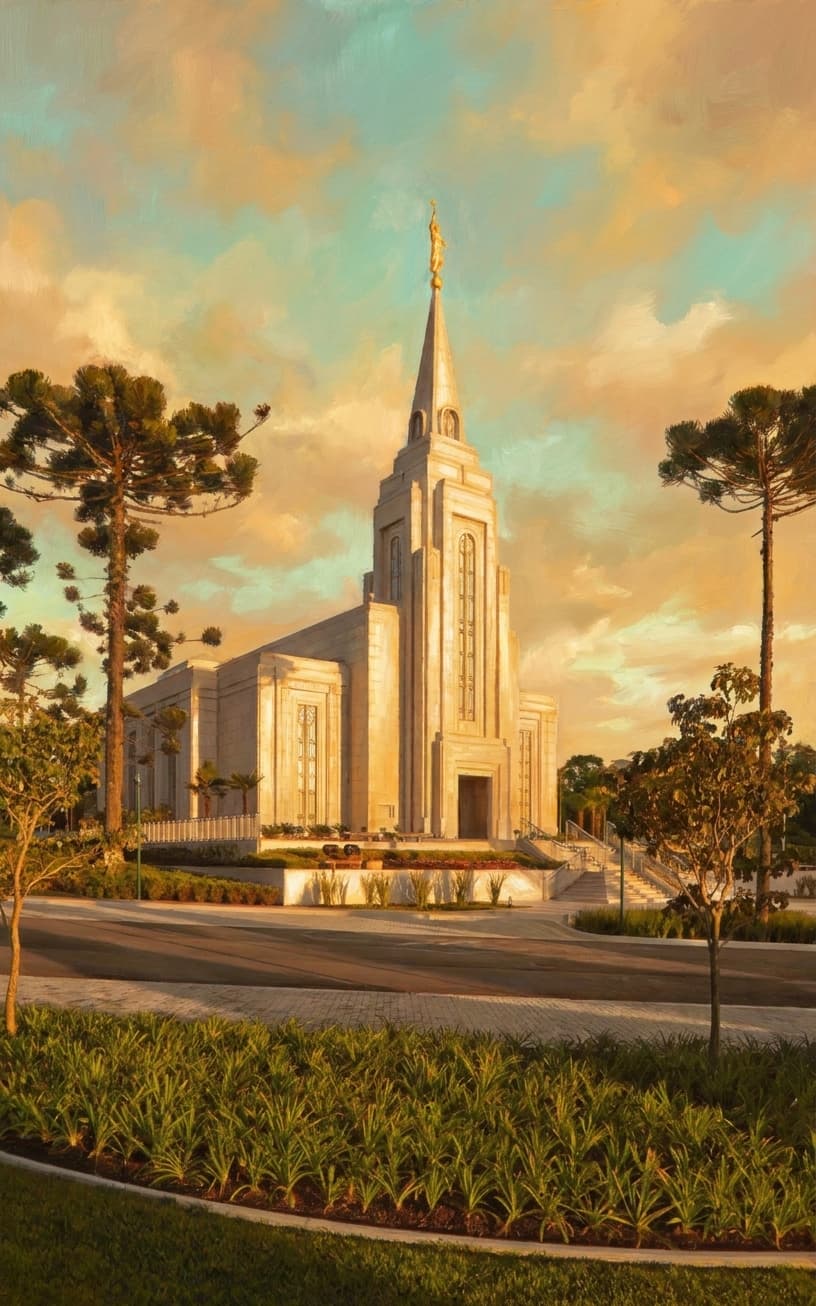
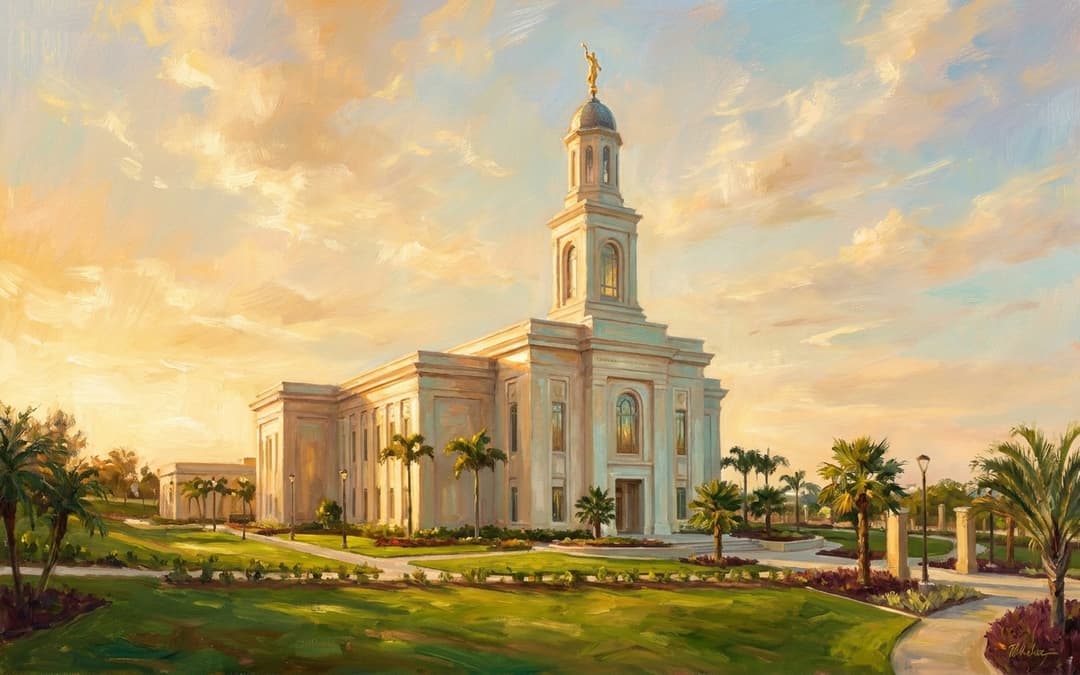
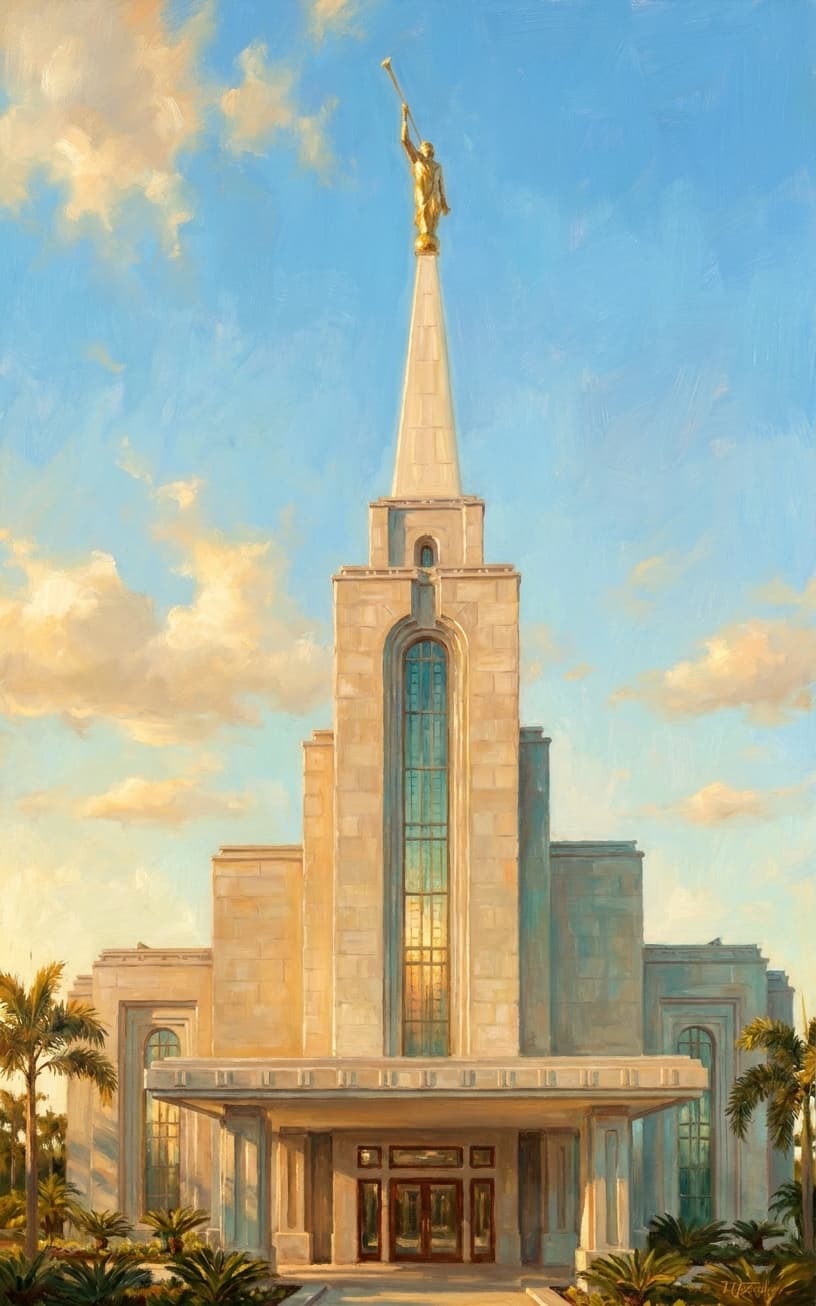
Sources & Research
Every fact on Temples.org is backed by verified Sources & Research. Each piece of information is rated by source tier and confidence level.
View All Sources (6)
| Field | Source | Tier | Retrieved |
|---|---|---|---|
| About & Historical Background | The Church of Jesus Christ of Latter-day Saints Newsroom (opens in a new tab) | A | 2026-03-30 |
| Timeline & Construction History | The Church of Jesus Christ of Latter-day Saints (opens in a new tab) | A | 2026-03-30 |
| Architecture & Materials | ChurchofJesusChristTemples.org (opens in a new tab) | C | 2026-03-30 |
| Visitor Insights & Location | ChurchofJesusChristTemples.org (opens in a new tab) | C | 2026-03-30 |
| Refurbishment & Structural Upgrades | Teixeira Duarte S.A. (opens in a new tab) | B | 2026-03-30 |
| Historical Timeline & Early Missionaries | Church History Department (opens in a new tab) | A | 2026-03-30 |