Visitor Insights
Visiting Regina Saskatchewan Temple
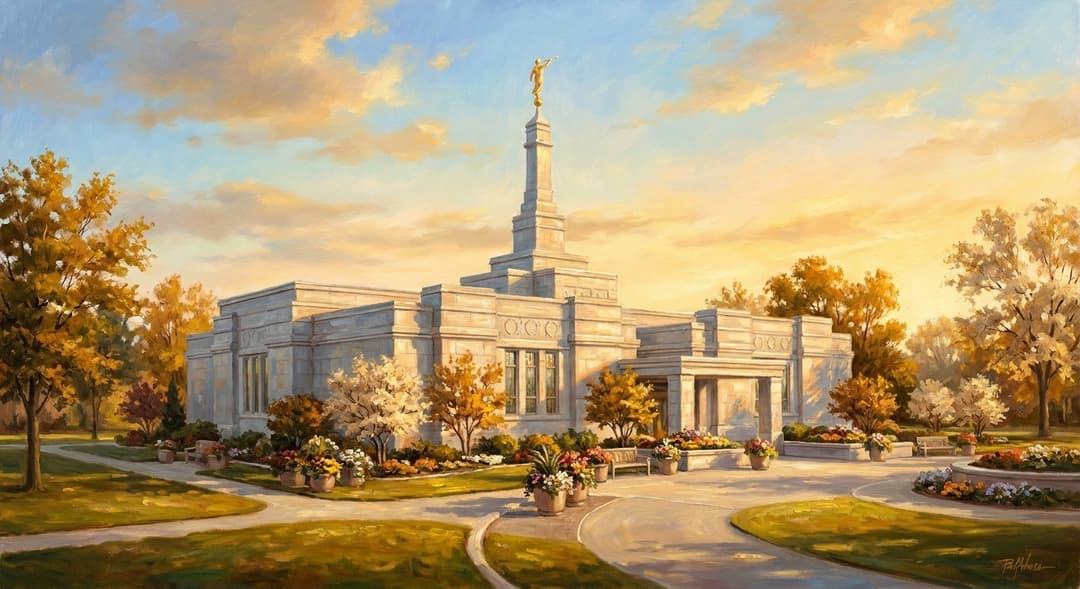
Situated in East Regina near Wascana Creek, the temple grounds provide a tranquil setting surrounded by prairie flora. While interior entry is reserved for Church members holding a current temple recommend, visitors of all backgrounds are welcome to explore the landscaped exterior gardens.
Highlights
- Striking light gray granite facade gleaming under prairie sunlight
- Immaculate seasonal flowerbeds and peaceful paved walking paths
- Views of the 71-foot spire crowned by the gold-leafed Angel Moroni
Things to Know
- Interior access requires an active LDS temple recommend
- Winter temperatures often drop below -30°C, so warm winter attire is required
- No public visitors' center or clothing rental on site
Location
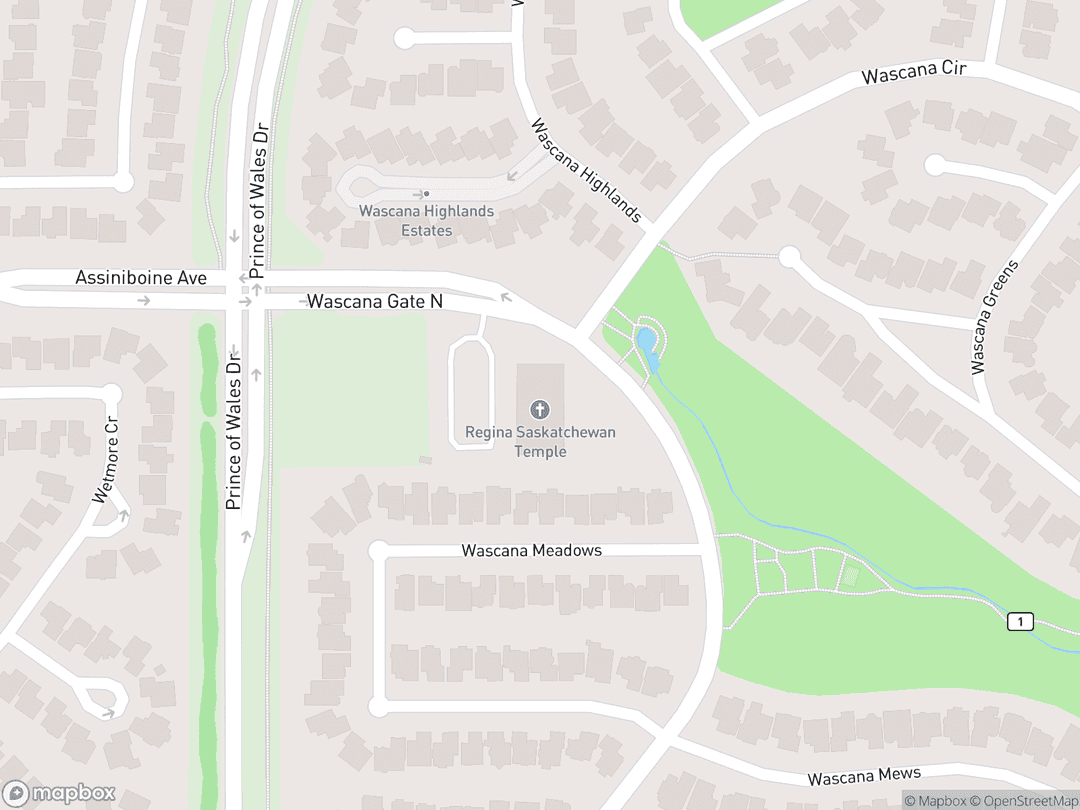
111 Wascana Gate North, Regina, Saskatchewan S4V 2J6, Canada
Hours: Exterior grounds open daily from sunrise to sunset; ordinance schedules vary Tuesday through Saturday.
Getting There: Accessible via Victoria Avenue or Ring Road in East Regina, turning south into the Wascana Gate development.
Get DirectionsTips for Your Visit
Best Time for Photography
Late afternoon light casts a warm glow over the light gray granite exterior and the spire.
Seasonal Dress Advice
Dress in heavy winter layers when visiting between November and March due to intense prairie chill.
Respect Sacred Grounds
Maintain a quiet atmosphere while strolling along the garden pathways near the entrance.
About
The Regina Saskatchewan Temple stands as a sacred sanctuary on the vast Canadian prairies, dedicated on November 14, 1999, as the 65th operating temple of The Church of Jesus Christ of Latter-day Saints and the first built in the province of Saskatchewan. Designed to serve faithful Latter-day Saints across hundreds of kilometers of open plains, this temple eliminated the need for long 12-to-16-hour journeys to Cardston, Alberta, bringing holy ordinances directly to local congregations.
Rooted in the ancient Abrahamic tradition of setting apart dedicated places to meet God, the temple reflects the Christian belief in divine covenants, eternal family bonds, and redemption through Jesus Christ. Within its sacred halls, Latter-day Saints participate in ordinances that connect earth and heaven, affirming their commitment to living Christ's teachings in their daily lives.
Built as part of President Gordon B. Hinckley's historic small-temple initiative, the 10,700-square-foot structure combines architectural elegance with extreme durability engineered for severe sub-zero prairie winters. Clad in light gray granite, the temple features a central 71-foot spire crowned by a gold-leafed Angel Moroni statue, serving as a beacon of peace and spiritual strength for the surrounding community.
Gallery
Symbolic Elements
The temple's exterior features intricate carvings, each rich with spiritual meaning:

Angel Moroni Statue
The gold-leafed figure holding a trumpet symbolizes the modern restoration of Christ's everlasting gospel.

Light Gray Granite Facade
Durable stone panels symbolize spiritual permanence and God as an unwavering Rock of Salvation.

Twelve Oxen Baptismal Font
Twelve carved oxen supporting the font represent the twelve tribes of Israel united in sacred covenant.

Celestial Room
Soft lighting and elegant furnishings represent the heavenly peace of God's eternal presence.

Central Sealing Room Altars
Sacred altars represent the priesthood authority delegated by Christ to bind families eternally.

Prairie Wheat Glass Motifs
Understated line patterns in glass and woodwork honor Saskatchewan's legacy as Canada's breadbasket.

Single Central Spire
The upward-reaching spire directs the minds and hearts of worshippers toward heaven.
Interesting Facts
It was the first temple built in the province of Saskatchewan and fourth in all of Canada. (Tier A)
November 14, 1999, became the first time in Church history that two temples were dedicated on the exact same day. (Tier A)
An airplane mechanical delay in Halifax caused the double dedication to happen unexpectedly on the same Sunday. (Tier A)
Construction took exactly 365 days from groundbreaking on November 14, 1998, to dedication on November 14, 1999. (Tier A)
Latter-day Saint missionary work in the province includes deep Indigenous roots dating back to 1948 baptisms. (Tier A)
The granite structure was engineered specifically to endure prairie temperatures dropping below -40°C. (Tier B)
Art glass and interior wood details incorporate subtle prairie wheat motifs honoring local heritage. (Tier B)
Before its construction, local members endured 12-to-16-hour drives across borders to attend temple services. (Tier B)
Common Questions
Can visitors enter the Regina Saskatchewan Temple?
Visitors of all faiths may tour the peaceful outdoor grounds, but interior entry is reserved for Church members holding a temple recommend.
Why is the dedication date of this temple historic?
It was dedicated on November 14, 1999, the exact same day as the Halifax Nova Scotia Temple, marking the first double dedication in Church history.
What architectural style is used for this temple?
It follows the Classic Modern single-spire standardized design created for compact temples in the late 1990s.
What materials were used for the exterior?
The exterior is clad in light gray granite panels engineered to withstand harsh Canadian prairie winters.
Featured Stories
The Unplanned Double Dedication
November 14, 1999
When President Gordon B. Hinckley's aircraft suffered unexpected mechanical issues in eastern Canada, the Halifax Nova Scotia Temple dedication was delayed by 24 hours. Consequently, Elder Boyd K. Packer dedicated the Regina temple on the exact same Sunday, creating the first double dedication in Church history.
Source: Church News Archives
Faith Among First Nations Pioneers
1948
Gospel roots in Saskatchewan run deep into Indigenous heritage, beginning when members of the Spencer family were baptized on the Carry the Kettle First Nation reserve in 1948. Their pioneering faith laid a foundation for generations of Native Latter-day Saints who now worship in Regina.
Source: Church History Department
365 Days from Groundbreak to Dedication
November 14, 1998
Driven by President Hinckley's vision for small, accessible temples, builders completed the Regina temple in exactly one calendar year. Groundbroken on November 14, 1998, the structure opened its doors for dedication on November 14, 1999, establishing a record of efficiency.
Source: Canada Area Historical Records
Timeline
Indigenous Baptisms in Saskatchewan
Members of the Spencer family on the Carry the Kettle First Nation reserve are baptized, anchoring early local faith.
MilestoneTemple Announcement
President Gordon B. Hinckley announces plans to build a temple in Regina during a cross-Canada tour.
MilestoneGroundbreaking Ceremony
Elder Hugh W. Pinnock presides over the groundbreaking and site dedication exactly one year before dedication.
component.timeline.groundbreakingPublic Open House Begins
The public open house opens, allowing thousands of community members to tour the sacred interior.
EventOpen House Concludes
Public tours conclude after welcoming civic leaders and neighbors of various religious traditions.
EventTemple Dedication
Elder Boyd K. Packer formally dedicates the temple in four sessions on a historic double-dedication day.
DedicationNew Millennium Service
The temple enters the new millennium operating continuously for stakes across Saskatchewan.
MilestoneDecade of Prairie Ministry
Local members celebrate over ten years of sacred temple work in the province.
Milestone20th Anniversary Recognition
Patrons mark two decades of spiritual shelter and continuous worship at Wascana Gate.
MilestoneQuarter-Century Milestone
The Regina Saskatchewan Temple reaches 25 years of continuous gospel service.
MilestoneHistory by Decade
1940s–1970s — Prairie Beginnings and Indigenous Faith
Missionary efforts in Saskatchewan expanded rapidly after 1948 when First Nations families embraced the gospel on local reserves. Over the following decades, congregations grew steadily across Regina and Saskatoon, though members had to travel over 1000 kilometers south to Alberta for temple worship.
1980s–1990s — Long Journeys and Temple Announcement
For years, Canadian prairie Saints organized grueling bus caravans to the Cardston Alberta Temple to receive sacred ordinances. Relief came on August 3, 1998, when President Gordon B. Hinckley announced a temple for Regina as part of his groundbreaking small-temple program.
1990s — Swift Construction and Sacred Dedication
Constructed in exactly 365 days, the temple was built with high-efficiency granite and thermal insulation for extreme weather. On November 14, 1999, Elder Boyd K. Packer dedicated the sanctuary on an unprecedented day of dual temple dedications in Canada.
2000s–Present — Modern Sanctuary for the Plains
Over the past quarter-century, the Regina Saskatchewan Temple has served as a spiritual lighthouse for members scattered across Western Canada. It remains a enduring testament to local devotion, family unity, and covenant faith.
Architecture & Facilities
Designed in the Classic Modern single-spire architectural format championed by President Gordon B. Hinckley in the late 1990s, the structure features symmetrical geometric lines, heavy granite cladding, and refined prairie-inspired art motifs adapted to Western Canadian aesthetics.
Building Materials
Exterior Cladding
Light gray granite panels engineered for climate insulation and resilience against prairie freezes.
Glazing & Insulation
High-performance insulated double-pane glass designed to prevent extreme wind draft infiltration.
Interior Millwork
Custom stained hardwoods featured in doors, altars, and ordinance room frames.
Custom Floor Coverings
Woven wool carpets incorporating subtle wheat and floral geometry native to Saskatchewan.
Interior Features
Baptistry
Features a central baptismal font resting upon twelve sculptured oxen beneath warm lighting.
Ordinance Rooms
Two instruction rooms configured in a progressive two-stage layout for sacred teaching.
Sealing Rooms
Two intimate rooms centered around upholstered altars for eternal marriage ceremonies.
Celestial Room
A peaceful room filled with off-white fabrics and crystal light fixtures depicting heavenly rest.
Temple Grounds
The 3.2-acre site includes structured flower gardens, walking paths, deciduous trees, and perimeter lighting situated near Wascana Creek.
Additional Facilities
Includes administrative offices, changing rooms, and climate-controlled entry vestibules tailored to winter visitors.
Religious Significance
In harmony with Abrahamic scripture and historic Christian understanding, Latter-day Saints regard the temple as a literal House of the Lord. Unlike local chapels used for Sunday instruction and community fellowship, the temple is a sacred sanctuary reserved for eternal covenants and divine communion.
To provide a holy space where individuals and families make eternal covenants with God through sacred priesthood ordinances.
Sacred Ordinances
Baptism for the Dead
Vicarious baptisms performed by immersion on behalf of deceased ancestors, affirming God's universal salvation.
The Endowment
A sacred ceremony where patrons receive spiritual instruction and make personal covenants of righteousness.
Eternal Sealing
Sacramental rites that unite husbands, wives, and children in eternal family relationships.
Christian Roots and Covenant Theology
The temple embodies the Latter-day Saint belief in Jesus Christ as the Redeemer. Ordinances performed within its walls reflect biblical promises of eternal life, divine grace, and the restoration of sacred priesthood authority to bind on earth and in heaven.
Similar Temples
Sources & Research
Every fact on Temples.org is backed by verified Sources & Research. Each piece of information is rated by source tier and confidence level.
View All Sources (8)
| Field | Source | Tier | Retrieved |
|---|---|---|---|
| About & Historical Background | The Church of Jesus Christ of Latter-day Saints (opens in a new tab) | A | 2026-02-18 |
| About & Historical Background | Church Newsroom (opens in a new tab) | A | 2026-02-18 |
| Timeline & Featured Stories | Church News (opens in a new tab) | B | 2026-02-18 |
| Timeline & Featured Stories | Temples of The Church of Jesus Christ of Latter-day Saints (opens in a new tab) | C | 2026-02-18 |
| Architecture & Design | The Church of Jesus Christ of Latter-day Saints (opens in a new tab) | A | 2026-02-18 |
| Visitor Insights & Access | The Church of Jesus Christ of Latter-day Saints (opens in a new tab) | A | 2026-02-18 |
| Symbolism & Ordinance Work | The Church of Jesus Christ of Latter-day Saints (opens in a new tab) | A | 2026-02-18 |
| History & Indigenous Heritage | Church History Department (opens in a new tab) | A | 2026-02-18 |