Visitor Insights
Visiting Sainte-Chapelle
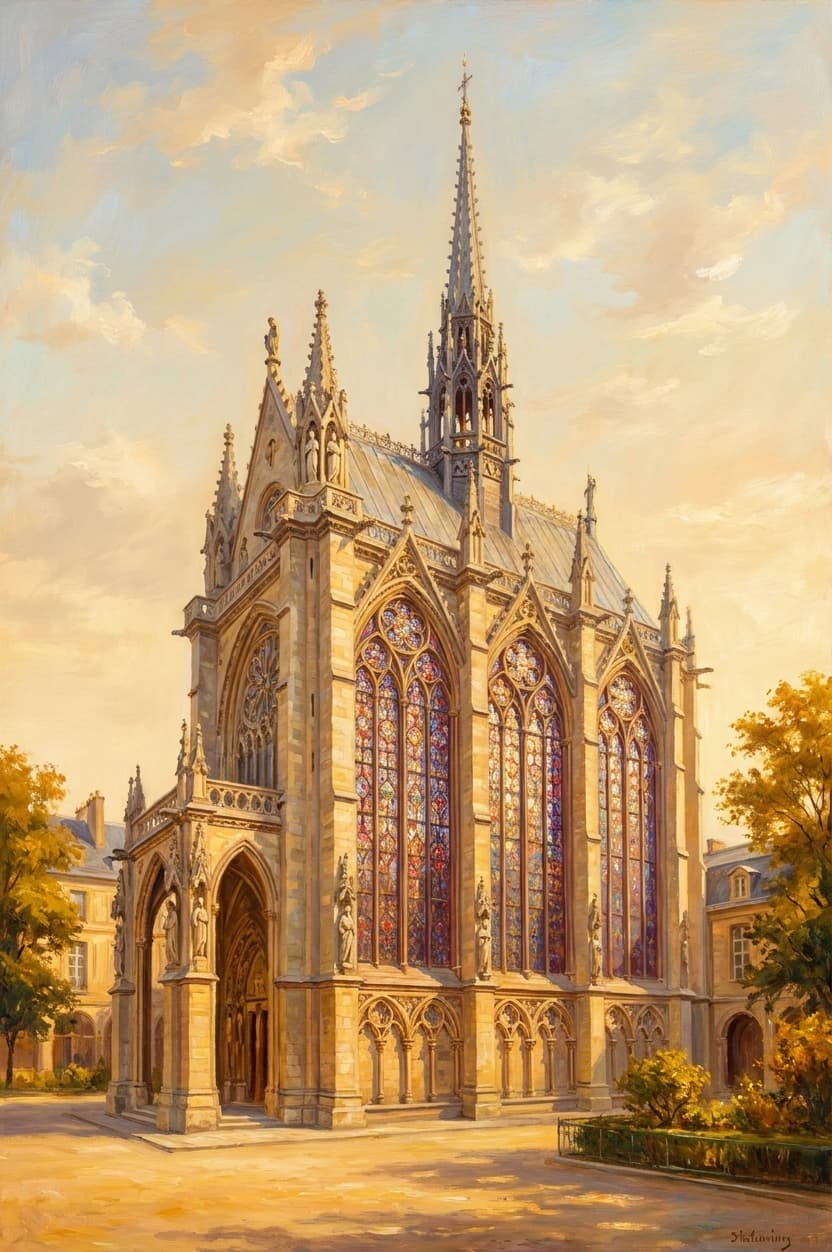
Visiting Sainte-Chapelle offers a breathtaking immersive experience in medieval light and color. Direct sunlight illuminates the upper chapel's fifteen glass bays, creating an atmospheric sanctuary of brilliant blue, red, and gold hues.
Highlights
- The 15-meter-high stained-glass window bays in the Upper Chapel.
- The Flamboyant Gothic Western Rose Window depicting the Apocalypse.
- The vaulted ceiling of the Lower Chapel with painted gold fleurs-de-lis.
Things to Know
- Security screening is mandatory as the chapel sits within the active Palais de Justice complex.
- Advance timed-entry reservation is strongly recommended to guarantee entry.
Location
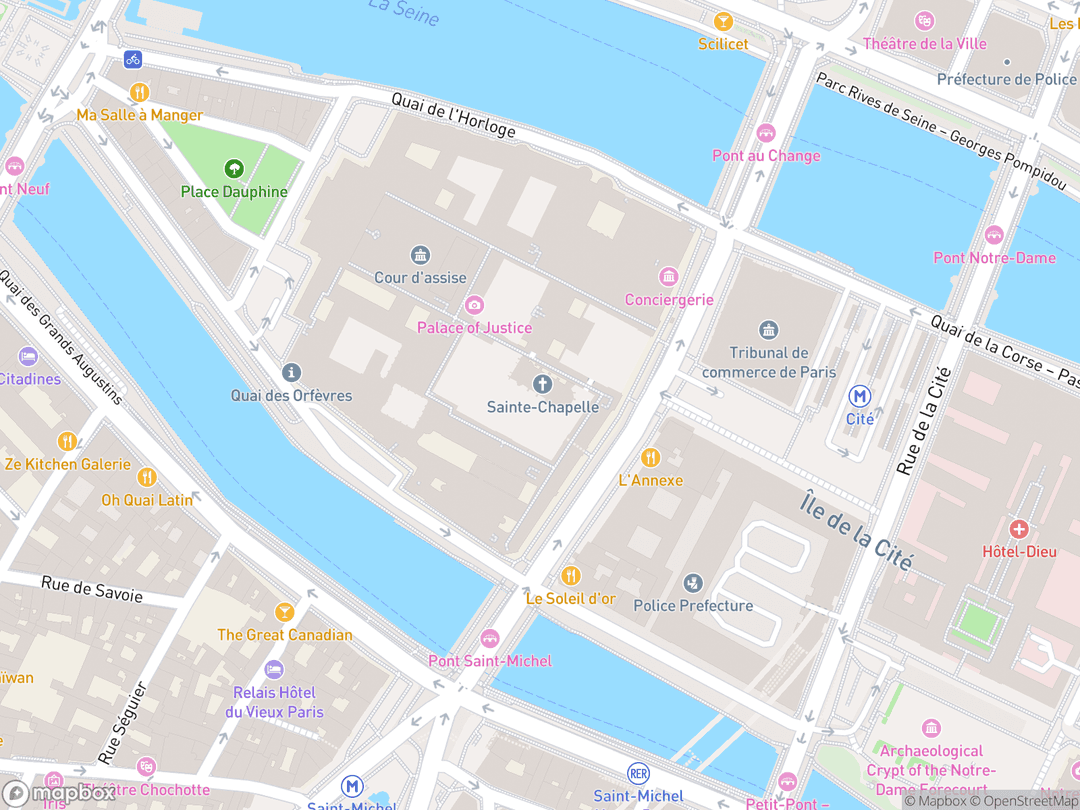
10 Boulevard du Palais, 75001 Paris, France
Hours: Open daily from 9:00 AM to 5:00 PM (winter) and 9:00 AM to 7:00 PM (summer).
Getting There: Located on Île de la Cité; accessible via Metro Line 4 (Cité station) or RER lines B/C (Saint-Michel Notre-Dame).
Get DirectionsTips for Your Visit
Optimal Viewing Times
Visit during clear mornings or mid-afternoon hours when direct sunlight strikes the south-facing glass bays.
Combination Tickets
Purchase a joint entrance ticket with the adjacent Conciergerie to explore both medieval royal monuments.
About
Commissioned by King Louis IX of France (Saint Louis) in the 1240s, Sainte-Chapelle is widely celebrated as the supreme masterpiece of Rayonnant Gothic architecture. Situated within the medieval Palais de la Cité on the Île de la Cité in Paris, the chapel was conceived not merely as a royal place of prayer, but as a monumental reliquary built to house the Crown of Thorns and other priceless Passion relics acquired from the Latin Emperor of Constantinople. Consecrated on April 26, 1248, its upper sanctuary features fifteen soaring stained-glass window bays that dissolve the stone walls into a vibrant tapestry of divine light.
Within the broader Abrahamic and Christian traditions, sacred architecture serves as a tangible bridge between earth and heaven, orienting the human soul toward divine truth and scriptural history. Sainte-Chapelle exemplifies High Medieval Catholic theology by encapsulating the doctrine of sacral monarchy, where Paris was envisioned as a New Jerusalem and the Capetian royal house as custodians of sacred covenants. The upper chapel's glass panels depict over 1,100 biblical scenes, tracing salvation history from Creation through the redemption accomplished on the Cross and the ultimate victory of Christ in the Apocalypse.
Although secularized during the French Revolution and stripped of its original reliquaries, Sainte-Chapelle survived repurposing as a legal archive before undergoing a meticulous nineteenth-century restoration led by Eugène Viollet-le-Duc and Jean-Baptiste Lassus. Today, managed as a national monument by the Centre des Monuments Nationaux, this historic sanctuary stands as a testament to medieval engineering, artistic brilliance, and enduring Christian sacred art.
Gallery
Symbolic Elements
The temple's exterior features intricate carvings, each rich with spiritual meaning:

Crown of Thorns
The primary Passion relic purchased by Saint Louis, symbolizing Christ's ultimate sacrifice and divine sovereignty.

Gold Fleurs-de-lis on Azure
The golden heraldic lily of the Capetian dynasty representing royal legitimacy, purity, and devotion to the Holy Trinity.

Gold Castles of Castile
The heraldic emblem of Queen Blanche of Castile representing maternal strength and royal regency protection.
The Twelve Apostles
Twelve sculpted stone statues attached to supporting piers, depicting the Apostles as structural and spiritual pillars of the Church.

Flamboyant Western Rose Window
An 86-panel flame-like glass wheel depicting the Book of Revelation and the final cosmic triumph of Christ.
Stained-Glass Biblical Cycle
A comprehensive visual narrative across fifteen window bays tracing biblical history from Genesis to Christ's Resurrection.

Grande Châsse Reliquary Canopy
An elevated gilded wooden baldachin in the eastern apse designed to house the precious reliquary chest.
Interesting Facts
The Crown of Thorns relic cost 135,000 livres tournois, which was over three times the entire construction cost of Sainte-Chapelle itself. (Tier A)
Construction was completed in under seven years, an unprecedented speed for major Gothic monuments in the Middle Ages. (Tier A)
Hidden net-like forged iron chainage was embedded inside stone mortar joints centuries before reinforced concrete was invented. (Tier B)
All 1,113 stained-glass panels were removed piece-by-piece and hidden in rural châteaux to survive World War II air raids intact. (Tier B)
In the early nineteenth century before restoration, the secularized upper chapel was used to store legal court archive cabinets. (Tier B)
The dual-level layout reflected medieval social hierarchy, separating palace staff in the lower chapel from royal family members above. (Tier B)
The western rose window was replaced in the late fifteenth century in the intricate Flamboyant Gothic style depicting the Apocalypse. (Tier A)
The mid-nineteenth-century restoration of Sainte-Chapelle established foundational principles for architectural preservation across Europe. (Tier B)
Common Questions
Why was Sainte-Chapelle built?
Sainte-Chapelle was built by King Louis IX to house the Crown of Thorns and other sacred relics of Christ's Passion.
Is Sainte-Chapelle still an active Catholic church?
No, Sainte-Chapelle is a secularized national monument managed by the Centre des Monuments Nationaux, though sacred music concerts are held inside.
Where is the Crown of Thorns today?
The Crown of Thorns was transferred to Notre-Dame Cathedral in the nineteenth century and returned there in December 2024 following the 2019 fire.
Why are there two chapels inside the building?
The lower chapel served palace servants and staff, while the upper chapel was reserved exclusively for the King, the royal family, and holy relics.
Featured Stories
The Sacred Acquisition
1239
In August 1239, King Louis IX acquired the Crown of Thorns from Emperor Baldwin II of Constantinople for the immense sum of 135,000 livres tournois. Demonstrating profound humility, the French monarch stripped off his royal vestments and walked barefoot through the streets of Paris while carrying the relic into the city.
Source: Centre des Monuments Nationaux
A Marvel of Medieval Speed
1242
While most Gothic cathedrals required decades or centuries to complete, Sainte-Chapelle was constructed in under seven years between 1242 and 1248. Master builders utilized innovative horizontal iron chainage to reinforce thin masonry piers, allowing glass to replace stone at an unprecedented pace.
Source: Encyclopædia Britannica
The Wartime Rescue of the Glass
1939
At the onset of World War II in 1939, French conservationists painstakingly removed all 1,113 stained-glass panels piece-by-piece to protect them from potential air raids. The priceless glass was cataloged and safely stored in rural French châteaux until the conclusion of hostilities.
Source: Travel France Online
Timeline
Acquisition of the Crown of Thorns
King Louis IX receives the Crown of Thorns in Paris after purchasing it from Emperor Baldwin II of Constantinople.
MilestoneGroundbreaking and Construction Begins
Construction begins on the dual-tiered chapel within the courtyard of the Palais de la Cité.
component.timeline.groundbreakingConsecration of Sainte-Chapelle
The chapel is consecrated by Papal Legate Cardinal Eudes de Châteauroux, dedicating the upper level to the Passion relics.
DedicationCanonization of Saint Louis
Pope Boniface VIII canonizes King Louis IX, transforming Sainte-Chapelle into a major royal shrine.
EventFlamboyant Rose Window Installed
King Charles VIII replaces the original western rose window with an 86-panel Flamboyant Gothic rose window.
RenovationSurvives Great Palace Fire
A major fire damages the surrounding royal palace structures and upper spire, requiring roof repairs.
EventRevolutionary Secularization
The French Revolution closes the chapel, removes its relics, and repurposes the space as a legal archive.
EventComprehensive Restoration Begins
The French government initiates a major historic restoration led by Félix Duban, Jean-Baptiste Lassus, and Viollet-le-Duc.
RenovationCompletion of the Neo-Gothic Spire
Architect Jean-Baptiste Lassus completes the current 33-meter timber and lead spire.
MilestoneWartime Evacuation of Stained Glass
Technicians dismantle all stained-glass panels for safe storage in rural French châteaux during World War II.
EventCompletion of Master Glass Restoration
A multi-year restoration cleans all fifteen window bays and installs exterior protective thermo-formed glass.
RenovationHistory by Decade
1230s–1240s — Acquisition and Rapid Construction
Following the acquisition of the Crown of Thorns in 1239, King Louis IX ordered the construction of a royal chapel within his palace grounds. Completed in under seven years, the dual-tiered chapel was consecrated on April 26, 1248, establishing Paris as a major pilgrimage center of medieval Christendom.
1290s–1490s — Royal Canonization and Flamboyant Upgrades
Following the canonization of Louis IX as Saint Louis in 1297, Sainte-Chapelle became a celebrated royal shrine. In the late fifteenth century, King Charles VIII commissioned a grand Flamboyant Gothic western rose window depicting apocalyptic visions from the Book of Revelation.
1630s–1790s — Fires, Decline, and Revolutionary Secularization
Major fires in 1630 and 1776 damaged surrounding palace buildings and earlier wooden spires. During the French Revolution, the chapel was secularized, stripped of its precious reliquaries, and repurposed as a legal document storehouse with filing cabinets built against the glass panels.
1830s–1850s — Nineteenth-Century Resurrection
In 1836, the French government launched a landmark historic restoration under architects Jean-Baptiste Lassus and Eugène Viollet-le-Duc. Lassus designed the current 33-meter neo-Gothic cedar and lead spire, successfully restoring the chapel's structural integrity and vibrant interior polychromy.
1910s–2020s — Wartime Protection and Modern Conservation
The chapel's stained glass was protected during both World Wars by complete removal and rural evacuation. Between 2008 and 2015, a comprehensive restoration cleaned all fifteen glass bays and installed protective thermo-formed exterior shielding, securing the monument for future generations.
Architecture & Facilities
Sainte-Chapelle is the definitive masterpiece of Rayonnant Gothic architecture, defined by the radical dissolution of solid wall masonry in favor of soaring traceried window frames. The building utilizes thin stone piers reinforced by an internal framework of wrought-iron chainage, creating a luminous spatial environment where color and light dominate the sacred interior.
Building Materials
Paris Basin Limestone
Local fine-grained ashlar limestone utilized for thin structural piers, exterior buttresses, and intricate decorative moldings.
Pot-Metal Stained Glass
Thick medieval cobalt, ruby, and golden glass joined with lead cames to form 1,113 narrative biblical panels.
Wrought-Iron Chainage
Forged horizontal iron structural bars embedded directly within mortar joints to absorb lateral roof tension.
Cedar and Lead Spire
A 33-meter neo-Gothic timber spire clad in sheet lead, featuring sculpted figures of angels and the Archangel Michael.
Interior Features
Upper Chapel (Chapelle Haute)
The main royal sanctuary featuring 20.5-meter vaults painted blue with gold leaf stars and 15 soaring stained-glass bays.
Lower Chapel (Chapelle Basse)
A crypt-like sanctuary with low vaulted ceilings, polychrome heraldic columns, and a 13th-century statue of Notre-Dame.
Grande Châsse Reliquary Platform
An elevated carved wooden baldachin in the apse that originally housed the silver-and-gold chest holding Passion relics.
Flamboyant Western Rose
A fifteenth-century 86-panel traceried rose window depicting scenes from the Revelation of Saint John.
Temple Grounds
Situated within the enclosed courtyard of the Palais de Justice on the Île de la Cité, the chapel features a compact urban footprint surrounded by historic judicial structures.
Additional Facilities
Visitor reception facilities, security entry pavilion, and cultural exhibition space managed by the Centre des Monuments Nationaux.
Religious Significance
Within Catholic theology and the wider Christian tradition, sacred space functions as an earthly representation of the Heavenly Jerusalem. Sainte-Chapelle was constructed to house the most venerated relics of the Passion, embodying the connection between Christ's incarnation and cosmic redemption.
Built as a monumental royal reliquary to house the Crown of Thorns and express the theological concept of sacred Christian monarchy.
Sacred Ordinances
Veneration of Holy Relics
The devotional practice of honoring physical artifacts associated with Christ's Passion as tangible channels of grace.
Royal Liturgical Mass
Sacramental Eucharistic services celebrated for the French royal household and royal court within the upper sanctuary.
Pilgrimage Devotion
Pious journeys undertaken by medieval believers to pray before the relics of the Passion in search of spiritual healing.
The Visual Bible in Light
The fifteen stained-glass bays present a systematic visual narrative of scripture, allowing medieval worshippers to contemplate divine salvation history from Creation through the Apocalypse.
Paris as the New Jerusalem
By acquiring the Crown of Thorns, King Louis IX symbolically positioned Paris as the spiritual center of Western Christendom and the Capetian monarchy as defenders of the Christian faith.
Similar Temples


Sources & Research
Every fact on Temples.org is backed by verified Sources & Research. Each piece of information is rated by source tier and confidence level.
View All Sources (8)
| Field | Source | Tier | Retrieved |
|---|---|---|---|
| About & Historical Background | Centre des Monuments Nationaux (opens in a new tab) | A | 2026-02-15 |
| About & Historical Background | Encyclopædia Britannica (opens in a new tab) | B | 2026-02-15 |
| Architecture & Design | Art in Context (opens in a new tab) | B | 2026-02-15 |
| Timeline & Historical Eras | Travel France Online (opens in a new tab) | B | 2026-02-15 |
| Visitor Information & Preservation | Paris Discovery Guide (opens in a new tab) | D | 2026-02-15 |
| Architecture & Design | University of Michigan Digital Library (opens in a new tab) | B | 2026-02-15 |
| About & Historical Background | Academia.edu Research Papers (opens in a new tab) | B | 2026-02-15 |
| Timeline & Historical Eras | Dokumen History Repository (opens in a new tab) | B | 2026-02-15 |