Visitor Insights
Visiting Frauenkirche Dresden
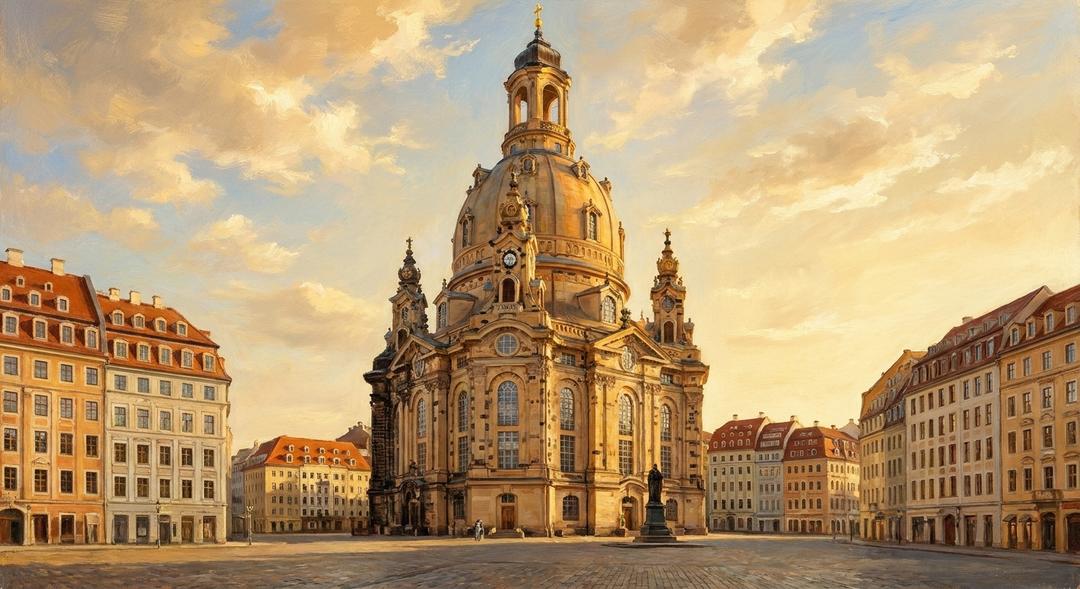
The Frauenkirche welcomes visitors daily for silent contemplation, liturgical services, and guided tours of its soaring Baroque sanctuary. Guests can attend midday prayers featuring the Daniel Kern pipe organ or ascend through the double-shell cupola to the exterior viewing platform.
Highlights
- Ascend the spiraling dome ramp to the open-air panoramic platform 67 meters above the Neumarkt.
- Reflect before the reconstructed Baroque high altar, carefully assembled from nearly 2,000 shattered fragments.
- Visit the quiet Unterkirche crypt to experience the foundational vaults and modern liturgical chapels.
- Hear the daily midday organ devotion showcasing the four-manual Daniel Kern symphonic pipe organ.
Things to Know
- Admission to the sanctuary for prayer and viewing is free, but dome ascent requires an entry ticket.
- Visiting hours pause regularly for church services, wedding blessings, rehearsals, and civic events.
- The upper stone ascent includes steep steps and is not fully wheelchair accessible.
- Modest attire is expected, and photography is strictly forbidden during liturgical devotions.
Location
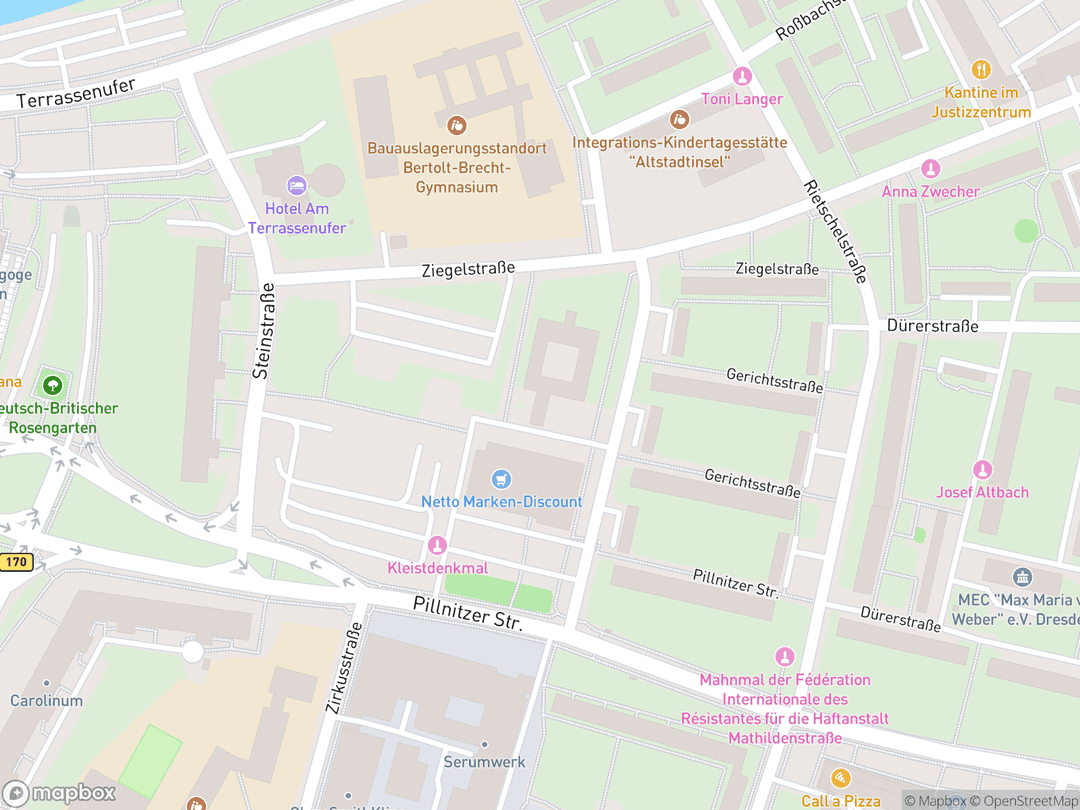
Neumarkt, 01067 Dresden, Saxony, Germany
Hours: Monday to Friday 10:00 AM – 12:00 PM and 1:00 PM – 6:00 PM; Sunday afternoons 1:00 PM – 3:00 PM
Getting There: Take tram lines 1, 2, 4, 8, 9, 11, or 12 to Altmarkt or Pirnaischer Platz, followed by a short pedestrian walk to Neumarkt.
Get DirectionsTips for Your Visit
Attend Midday Devotions
Arrive before 12:00 PM on weekdays to experience Scripture reading accompanied by organ meditation.
Examine the Facade Stones
Look for the dark, soot-charred original stones seamlessly integrated alongside pale modern sandstone blocks.
Time the Dome Ascent
Climb the dome in late afternoon for golden hour views over the Elbe River valley and Saxon Switzerland.
Explore the Lower Crypt
Descend into the Unterkirche to view the original tomb vault of master architect George Bähr.
About
The Frauenkirche Dresden stands on the historic Neumarkt as one of Europe's most monumental Protestant sacred structures. Within the Abrahamic and Christian traditions, consecrated sanctuaries mirror the New Jerusalem as places where heaven and earth meet in scripture, prayer, and sacred song. Conceived by master architect George Bähr and completed in 1743, the church reoriented sacred architecture around Protestant liturgical principles, placing the pulpit, altar, font, and pipe organ at the visual and acoustic epicenter of the congregation.
Crowned by its celebrated stone bell dome, the sandstone landmark stood for two centuries as the civic and spiritual heart of Saxony. During the Allied bombing raids of February 1945, intense firestorms compromised the interior support pillars, causing the 12,200-ton dome to collapse into a mountain of rubble. For nearly fifty years under East German rule, the soot-blackened ruin served as an anti-war memorial and the spiritual focal point for the peaceful civil rights movement that preceded German reunification.
Following the 1990 'Call from Dresden,' an unprecedented international campaign achieved the complete archaeological reconstruction of the sanctuary using original blueprints and thousands of salvaged stones. Re-consecrated on October 30, 2005, the Frauenkirche serves today as a vibrant Lutheran parish church, welcoming pilgrims from across the globe in a shared commitment to international peace and spiritual renewal.
Gallery
Symbolic Elements
The temple's exterior features intricate carvings, each rich with spiritual meaning:

The Orb and Cross
A gilded cross atop an orb crowning the lantern, handcrafted in Britain as a symbol of wartime reconciliation.

The Damaged Original Cross
The charred, twisted original iron cross recovered from the rubble, standing inside as a testament to suffering and endurance.

Gethsemane Altar Relief
A Baroque sculpted tableau depicting Christ praying in Gethsemane, reassembled from nearly 2,000 shattered fragments.
Four Evangelists Frescoes
Pastel cupola murals depicting Matthew, Mark, Luke, and John as the foundational witnesses of the Gospel.

Christian Virtues Murals
Allegorical cupola paintings portraying Faith, Hope, Love, and Mercy as essential guides for civic and spiritual life.

Eye of Providence
A golden radiant triangle displaying the divine eye, affirming God's eternal sovereignty and grace over human history.

Dove of the Holy Spirit
A gilded carved dove suspended beneath the pulpit canopy representing divine inspiration during the preaching of scripture.

Coventry Cross of Nails
A cross fashioned from medieval nails recovered from ruined Coventry Cathedral, linking Dresden to worldwide reconciliation.
Interesting Facts
During the 1760 Prussian siege, King Frederick the Great's heavy artillery fired over 100 cannonballs into the dome without puncturing the solid sandstone masonry. (Tier A)
Approximately 300 citizens safely sheltered inside the fortified crypt during the catastrophic 1945 air raids before the surface inferno caused the dome to fall. (Tier A)
The building collapsed on February 15, 1945, because surrounding firestorms heated interior sandstone pillars past 1,000°C, causing structural failure under the dome's weight. (Tier A)
East German socialist planners initially intended to bulldoze the rubble mound into a municipal parking lot before heritage advocates declared it an anti-war memorial. (Tier B)
Nobel laureate Günter Blobel donated nearly his entire 1999 Nobel prize award of approximately one million dollars to finance the reconstruction of the Frauenkirche. (Tier A)
The eight-meter gilded dome cross was handcrafted by British silversmith Alan Smith, whose father flew Allied bombing missions over Germany in World War II. (Tier A)
Archaeologists cataloged 8,425 salvageable stone blocks from the rubble pile using aerospace 3D imaging software to place them back in their exact 18th-century positions. (Tier A)
Johann Sebastian Bach performed a celebrated two-hour unscripted organ recital in the sanctuary on December 1, 1736, to inaugurate the Gottfried Silbermann organ. (Tier A)
Natural iron oxidation in the newly quarried Elbe sandstone will cause the pale modern blocks to darken gradually over the next two centuries. (Tier B)
Common Questions
Why do some stones on the facade appear black?
The blackened stones are historic blocks recovered from the rubble that were reinserted at their exact historical coordinates.
Is the Frauenkirche a Roman Catholic or Protestant church?
The Frauenkirche is an Evangelical Lutheran church, serving within the Protestant branch of Christianity.
Can visitors climb to the top of the dome?
Yes, visitors can purchase a ticket to climb the dome ramp and stairs to an observation platform 67 meters above ground.
Who built the original pipe organ in the church?
Master builder Gottfried Silbermann constructed the original 1736 organ on which Johann Sebastian Bach performed.
How much did the modern reconstruction cost?
The reconstruction cost roughly 180 million euros, financed predominantly by private donations from across the globe.
Featured Stories
Bach's Inaugural Recital
December 1, 1736
Just months after the sanctuary opened, Johann Sebastian Bach sat at Gottfried Silbermann's newly installed three-manual organ for a celebrated two-hour unscripted recital. Dresden court nobility and common burghers packed the galleries to hear Bach showcase the instrument's rich harmonic palette. The triumphant performance established the Frauenkirche as one of the preeminent musical centers of German Protestantism.
Source: Stiftung Frauenkirche Historical Archives
Shelter in the Catacombs
February 13, 1945
When catastrophic firestorms swept Dresden, 300 frightened citizens sought sanctuary within the thick stone crypts beneath the church floor. While surface temperatures outside climbed past 1,000°C, the underground vaults held firm against smoke and intense heat. Guided by wardens, every single sheltered occupant escaped through subterranean passages before the weakened dome collapsed above.
Source: Dresden City Historical Commission
The Cross of Reconciliation
June 22, 2004
A crowd of 60,000 onlookers watched in hushed silence as a massive crane hoisted an eight-meter gilded copper orb and cross atop the restored dome lantern. The cross had been forged by British silversmith Alan Smith, whose own father participated in the Allied bombing missions over the city. Its placement marked a poignant moment of international reconciliation between former wartime adversaries.
Source: The Dresden Trust
Timeline
Foundation Stone Laid
The ceremonial foundation stone for George Bähr's Baroque masterwork is set on Dresden's Neumarkt.
component.timeline.groundbreakingInterior Consecration
The sanctuary opens for Evangelical Lutheran worship while masons continue assembling the stone dome overhead.
DedicationBach's Organ Recital
Johann Sebastian Bach performs a legendary two-hour recital on the newly completed Silbermann organ.
MilestoneDome Lantern Completed
Craftsmen set the final sandstone crown atop the Stone Bell dome, completing structural construction.
MilestonePrussian Artillery Bombardment
Prussian cannonballs bounce harmlessly off the solid stone cupola during the Seven Years' War.
EventCatastrophic Collapse
Weakened by surrounding firestorms exceeding 1,000°C, the interior piers buckle and bring down the dome.
EventOfficial Memorial Site
The rubble heap is formally designated a protected memorial against war by municipal authorities.
MilestoneCandlelight Peace Gathering
Christian dissidents gather with candles at the ruins, inaugurating East Germany's peaceful civil rights movement.
EventCall from Dresden
Citizens lead a worldwide public appeal seeking financial and moral support to rebuild the sanctuary.
MilestoneReconstruction Foundation Stone
Masons lay the first new stone on the original anniversary of the church lantern completion.
component.timeline.groundbreakingDome Cross Hoisted
The gilded orb and cross donated by the British people is raised atop the rebuilt cupola.
MilestoneSolemn Re-Consecration
The restored sanctuary is formally re-consecrated on the eve of Reformation Day.
DedicationHistory by Decade
1020s–1530s — Medieval Catholic Origins and Reformation
A modest Romanesque stone chapel dedicated to the Virgin Mary served river travelers near Dresden from the early eleventh century. In 1388, burghers replaced the early chapel with an expansive Gothic hall church that became the civic burial parish. When Saxony embraced the Lutheran Reformation in 1539, the sanctuary retained its historic Marian name while converting into an Evangelical Protestant house of worship.
1720s–1740s — George Bähr's Baroque Masterpiece
Recognizing structural decay in the medieval church, city leaders commissioned municipal carpenter and architect George Bähr to design a grand municipal rotunda. Bähr introduced an octagonal Greek-cross layout surmounted by an ambitious, self-supporting sandstone cupola. Although Bähr died in 1738 before completion, his successors finished the Stone Bell dome lantern in 1743.
1750s–1850s — Artillery Siege and Civic Upheaval
During the Seven Years' War in 1760, Prussian artillery shelled Dresden heavily, yet the dense sandstone cupola deflected over one hundred cannonballs without sustaining structural fractures. In May 1849, revolutionary fighters including composer Richard Wagner erected street barricades around the Neumarkt, using the church as an urban citadel and strategic lookout. The building survived both conflicts as a sturdy civic bulwark.
1930s–1945 — The Firestorm and Catastrophic Collapse
Extensive restoration work in 1938 stabilized settlement fissures beneath the central dome supports. On the night of February 13, 1945, Allied aerial bombing ignited massive urban firestorms that superheated the interior sandstone piers to over 1,000°C. Weakened by thermal exhaustion, the eight central pillars buckled on the morning of February 15, causing the entire 12,200-ton dome to crash into rubble.
1945–1989 — Ruin, Memory, and the Candlelight Movement
For nearly half a century, the soot-blackened ruin remained an open wound on the Neumarkt, maintained under East German socialist rule as an anti-war memorial. On February 13, 1982, Christian peace activists gathered silently with candles beside the rubble mound on the bombing anniversary. This courageous demonstration energized the nonviolent 'Swords into Plowshares' civil rights campaign that ultimately helped topple the Berlin Wall.
1990s–2005 — Archaeological Rebirth and Reconciliation
Following German reunification, Dresden citizens issued the worldwide 'Call from Dresden' to finance the historical reconstruction of the landmark. Engineers used advanced three-dimensional imaging to catalog and reset 3,812 original facade stones back into the rising masonry walls. On October 30, 2005, thousands gathered as the reconstructed Frauenkirche was formally re-consecrated for divine Christian worship.
Architecture & Facilities
The Frauenkirche represents the supreme masterpiece of Dresden Baroque architecture, synthesized brilliantly with functional Protestant liturgical design. Architect George Bähr rejected traditional long basilican layouts in favor of a centralized octagonal rotunda wrapped by an outer square, bringing the congregation into direct visual and auditory intimacy with Word and Sacrament. The exterior is dominated by soaring diagonal stair towers and rhythmic arched portals, harmonizing monumental municipal civic pride with deeply devotional Lutheran spatial theology.
Building Materials
Elbe Valley Sandstone
Dense, iron-bearing sedimentary stone quarried from Saxon Switzerland cliffs along the Elbe River.
Reclaimed Historic Ashlar
Over 3,800 fire-blackened original blocks retrieved from the rubble and reset at their original coordinates.
Polychrome Stucco and Gilding
Delicate pastel green, rose, and gold plaster finishes adorning the tiered amphitheater gallery balustrades.
Structural Timber
Heavy aged oak and pine roof trusses supporting secondary gallery floors and interior cupola walkways.
Interior Features
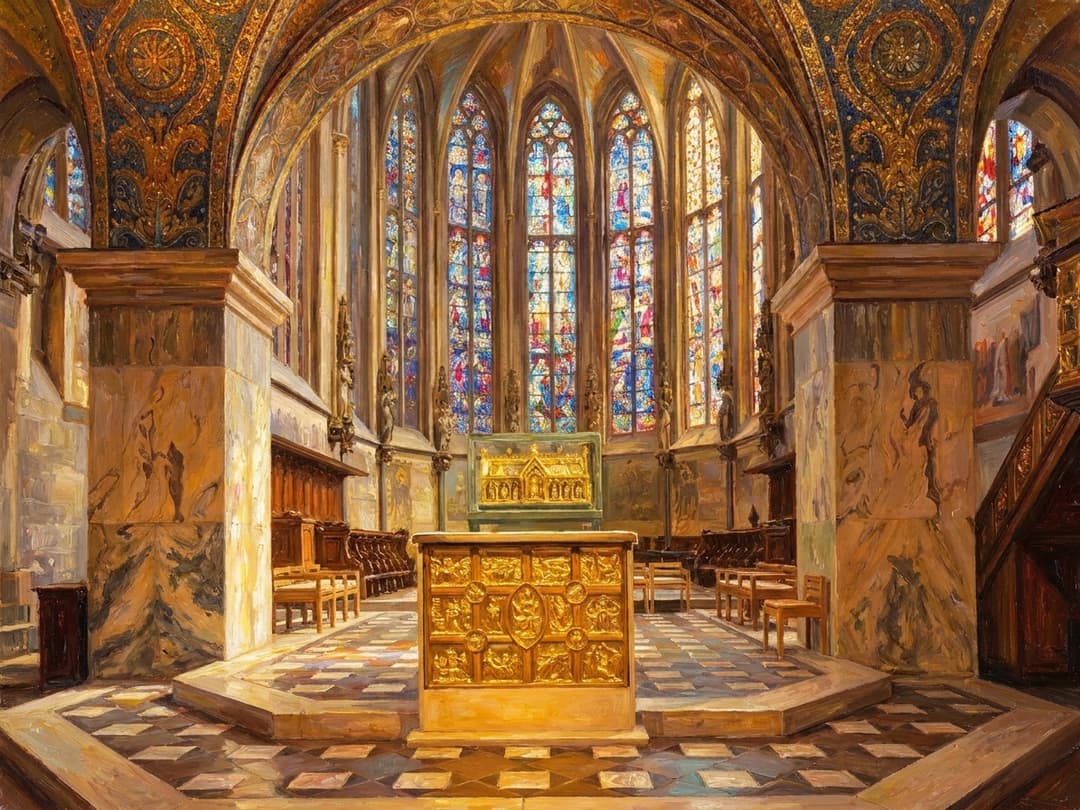
Baroque High Altar
A dramatic sculpted tableau depicting Christ's agony in Gethsemane, reassembled from nearly 2,000 original fragments.
Curved Amphitheater Galleries
Four concentric tiers of pastel-painted wooden galleries encircling the sanctuary like an intimate civic theater.
Daniel Kern Pipe Organ
A versatile modern symphonic instrument featuring 4,873 pipes housed in a reconstructed gilded Baroque case.
Unterkirche Crypt
A cross-vaulted subterranean sanctuary containing quiet prayer chapels and the historic tomb of George Bähr.
Temple Grounds
The Frauenkirche anchors the open cobblestone expanse of the Neumarkt, surrounded by reconstructed historic burgher townhouses, pedestrian plazas, and monument benches.
Additional Facilities
The church maintains an underground visitor welcome desk, liturgical sacristies, educational exhibition corridors, and a separate ground-level ticket pavilion for the dome ascent.
Religious Significance
As part of the monotheistic Abrahamic heritage, the Frauenkirche embodies the ancient biblical conviction that consecrated sanctuaries serve as earthly dwelling places for communion with the Divine. Within Evangelical Lutheranism, George Bähr's central rotunda architecturally manifests Martin Luther's core doctrine regarding the universal priesthood of all believers.
The sanctuary serves as an active house of prayer, liturgical proclamation of the Gospel, celebration of the Christian Sacraments, and an international embassy for Christian reconciliation and peace.
Sacred Ordinances
Proclamation of the Word
The preaching of Holy Scripture from the elevated central pulpit situated directly above the communion table.
Sacrament of Holy Baptism
The Christian rite of initiation and regeneration performed at the central stone baptismal font.
Sacrament of Holy Communion
The distribution of the Lord's Supper at the high altar as the physical pledge of divine grace and redemption.
Theology of the Cross and Scars of War
In Lutheran theology, God reveals supreme grace through suffering and the cross. The reconstructed Frauenkirche intentionally incorporates scarred, soot-darkened original stones alongside pristine newly carved blocks. Rather than sanitizing history, the building's variegated facade witnesses to divine resurrection emerging directly from catastrophic brokenness.
Similar Temples
Sources & Research
Every fact on Temples.org is backed by verified Sources & Research. Each piece of information is rated by source tier and confidence level.
View All Sources (7)
| Field | Source | Tier | Retrieved |
|---|---|---|---|
| About & Historical Background | Stiftung Frauenkirche Dresden (opens in a new tab) | A | 2026-03-31 |
| Religious Significance & Liturgy | Evangelisch-Lutherische Landeskirche Sachsens (opens in a new tab) | A | 2026-03-31 |
| Featured Stories & British Reconciliation | The Dresden Trust (opens in a new tab) | A | 2026-03-31 |
| Archaeological Reconstruction Records | IPRO Dresden Engineering (opens in a new tab) | B | 2026-03-31 |
| Dome Restoration & Masonry Statics | Jäger Ingenieure (opens in a new tab) | B | 2026-03-31 |
| Kern Organ Construction & Voicing | Manufacture d'Orgues Daniel Kern (opens in a new tab) | B | 2026-03-31 |
| Visitor Insights & Municipal Guidelines | Landeshauptstadt Dresden Tourismus (opens in a new tab) | D | 2026-03-31 |