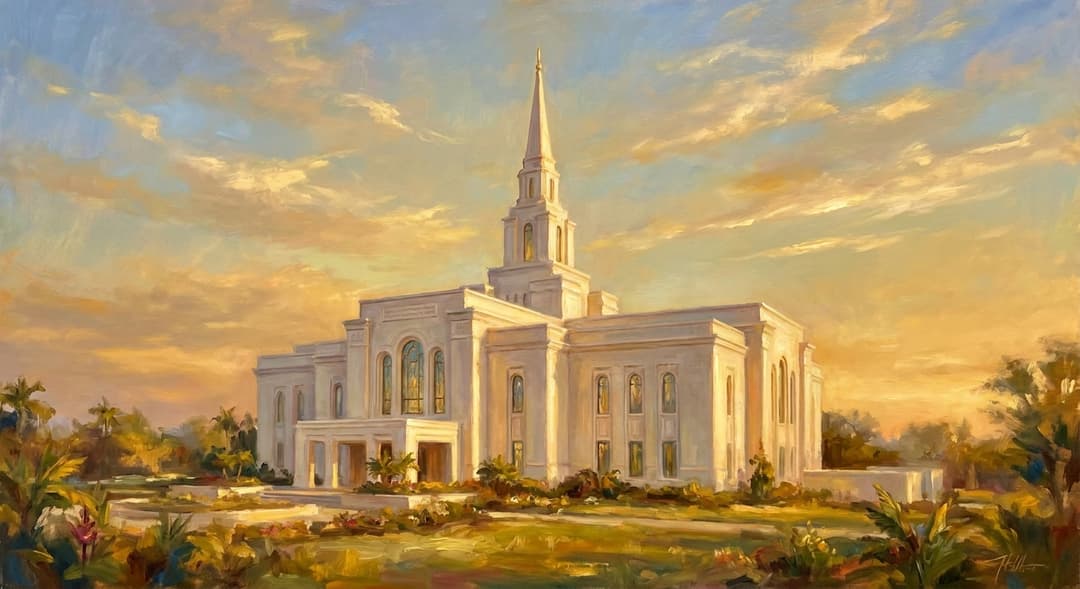
Visitor Insights
Visiting San Pedro Sula Honduras Temple
Visitors to the San Pedro Sula Honduras Temple will experience tranquil landscaped grounds filled with indigenous plants and an outdoor fountain. While access to the temple interior is reserved for endowed Church members, guests of all backgrounds are welcome to stroll the peaceful pathways.
Highlights
- Spacious tropical garden grounds with native Honduran trees and flowering flora
- Central courtyard reflection fountain facing the main entrance
- Fine exterior architectural stonework crafted from Portuguese Moleanos limestone
Things to Know
- Interior admittance requires a valid Temple Recommend following dedication
- On-site parking is available for visitors and patrons
Location
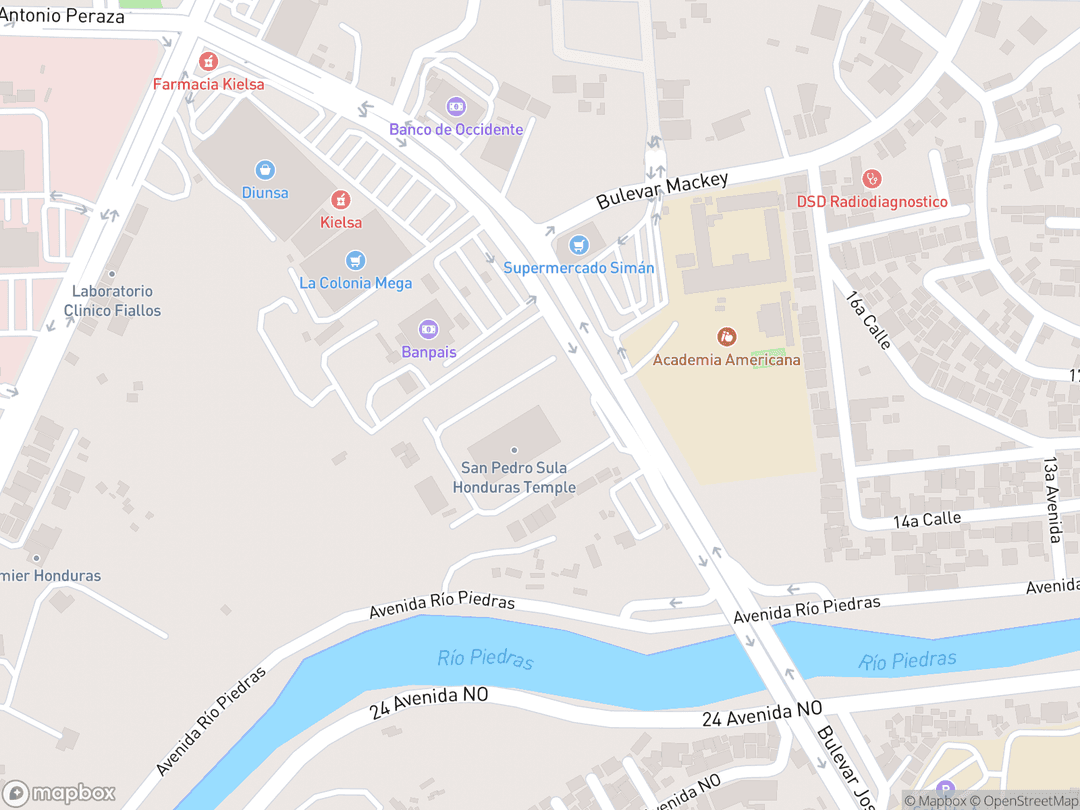
Blvd. José Antonio Peraza, frente a Academia Americana, San Pedro Sula, Cortés, Honduras
Hours: Grounds open daily from dawn to dusk; temple ordinance schedules operate Tuesday through Saturday.
Getting There: Located in northwestern San Pedro Sula along Bulevar José Antonio Peraza, adjacent to Torre Banco del País and near Hospital Mario Catarino Rivas.
Get DirectionsTips for Your Visit
Photography & Etiquette
Photography of the exterior facade and grounds is permitted from pedestrian walkways, but please respect quiet reflection areas.
Distribution Center Access
An official Latter-day Saint Distribution Center is located on the site grounds to serve members purchasing gospel materials.
About
The San Pedro Sula Honduras Temple stands as a sacred sanctuary of faith in the commercial heart of northern Honduras. In harmony with the broader Christian and Abrahamic tradition of consecrated sanctuaries, this house of the Lord serves as a dedicated space for communion with the divine. It connects modern worship with the ancient biblical legacy of Moses's Tabernacle and Solomon's Temple.
Announced in 2019 by President Russell M. Nelson, the temple drastically eases the spiritual journey for thousands of Latter-day Saints in the Sula Valley. Prior to its construction, local members undertook lengthy cross-country travels to Tegucigalpa or international trips to Guatemala City to participate in sacred temple ordinances.
The single-story structure incorporates regional Spanish Colonial Revival motifs alongside indigenous Honduran aesthetics. Constructed with pale Portuguese Moleanos limestone and enriched inside with native Honduran mahogany millwork, the temple embodies both universal holiness and local cultural gratitude.
Interesting Facts
The temple is the 198th operating temple of the Church worldwide and the second in Honduras. (Tier A)
Ground was broken on September 5, 2020—the exact same day as the Orem Utah Temple groundbreaking. (Tier A)
Elder José Bernardo Hernández Orellana, who presided over the groundbreaking, was born in San Pedro Sula. (Tier A)
The exterior stone consists of Moleanos limestone precision-quarried in Portugal. (Tier A)
Over 100,000 guests toured the sacred interior during the public open house in September 2024. (Tier A)
All interior wooden doors and trim are crafted from native Honduran mahogany hardwood. (Tier A)
The 98-foot tower serves as a prominent landmark in northwestern San Pedro Sula. (Tier A)
Art glass windows feature stylized depictions of indigenous Honduran orchids and native flora. (Tier A)
Common Questions
Why is the San Pedro Sula Honduras Temple significant?
It is the second temple built in Honduras, making sacred worship accessible to northern Honduran Saints without mountainous travel.
Can non-members visit the temple grounds?
Yes, the outer gardens and fountain plaza are open to the general public for peaceful reflection.
What materials were used in building the temple?
The exterior features imported Portuguese Moleanos limestone, while the interior uses native Honduran mahogany millwork.
Does the temple site have patron housing?
No, the 9-acre site contains the temple and a Latter-day Saint Distribution Center, but does not offer patron overnight housing.
Featured Stories
A Promise Fulfilled in Northern Honduras
October 13, 2024
For decades, Latter-day Saints in northern Honduras saved funds and organized buses for arduous journeys across mountain roads to Tegucigalpa or Guatemala City. The dedication of the San Pedro Sula temple brought immense joy, fulfilling years of faithful prayers and sacrifice for local congregations.
Source: Church Newsroom
Parallel Groundbreakings Across Continents
September 5, 2020
On September 5, 2020, groundbreaking ceremonies took place simultaneously for two temples over two thousand miles apart: San Pedro Sula in Honduras and Orem in Utah. Despite pandemic restrictions, small gatherings broadcasted the historic milestone online to thousands of rejoicing members.
Source: Church News
A Native Son Presides
September 5, 2020
Elder José Bernardo Hernández Orellana, an Area Seventy who was born and raised in San Pedro Sula, presided over the groundbreaking ceremony. His presence underscored decades of local Church growth, turning a native son into a priesthood leader dedicating the site in his home city.
Source: Church Newsroom
Timeline
First Honduran Branch Organized
The Church establishes its first formal branch in Tegucigalpa, initiating missionary work that quickly reaches San Pedro Sula.
MilestoneTemple Announcement
President Russell M. Nelson announces the San Pedro Sula Honduras Temple during general conference.
MilestoneSite Location Selected
The official site in northwestern San Pedro Sula along Bulevar José Antonio Peraza is publicly released.
MilestoneGroundbreaking Ceremony
Elder José Bernardo Hernández Orellana presides over the groundbreaking ceremony.
component.timeline.groundbreakingOpen House Dates Announced
The First Presidency announces public open house and dedication schedules.
MilestoneMedia Day Hosted
Journalists and community leaders attend guided tours of the completed temple interior.
EventPublic Open House Begins
More than 100,000 visitors tour the temple during a sixteen-day public open house.
EventTemple Dedication
Elder Dale G. Renlund dedicates the temple in two sessions as the 198th operating temple globally.
DedicationHistory by Decade
1950s–1970s — First Seedlings of Faith
Missionaries arrived in Honduras in 1952, organizing the country's first branch in Tegucigalpa in 1953. Faithful members in San Pedro Sula gradually established small home groups that expanded into robust northern stakes over subsequent decades.
1980s–2000s — Rapid Growth and Long Pilgrimages
As membership surged throughout Cortés Department, northern Saints undertook long cross-border pilgrimages to Guatemala City after 1984. The dedication of the Tegucigalpa temple in 2013 eased travel, though mountain trips remained difficult during heavy rains.
2010s — Announcement of the Sula Valley Temple
In April 2019, President Russell M. Nelson announced plans for a temple in San Pedro Sula. The news brought overwhelming relief to local families who longed for a sacred sanctuary closer to their coastal valley homes.
2020s — Construction, Open House, and Dedication
Site construction began during the global pandemic in late 2020. Over 100,000 visitors toured the completed building during its September 2024 open house, culminating in its dedication by Elder Dale G. Renlund on October 13, 2024.
Architecture & Facilities
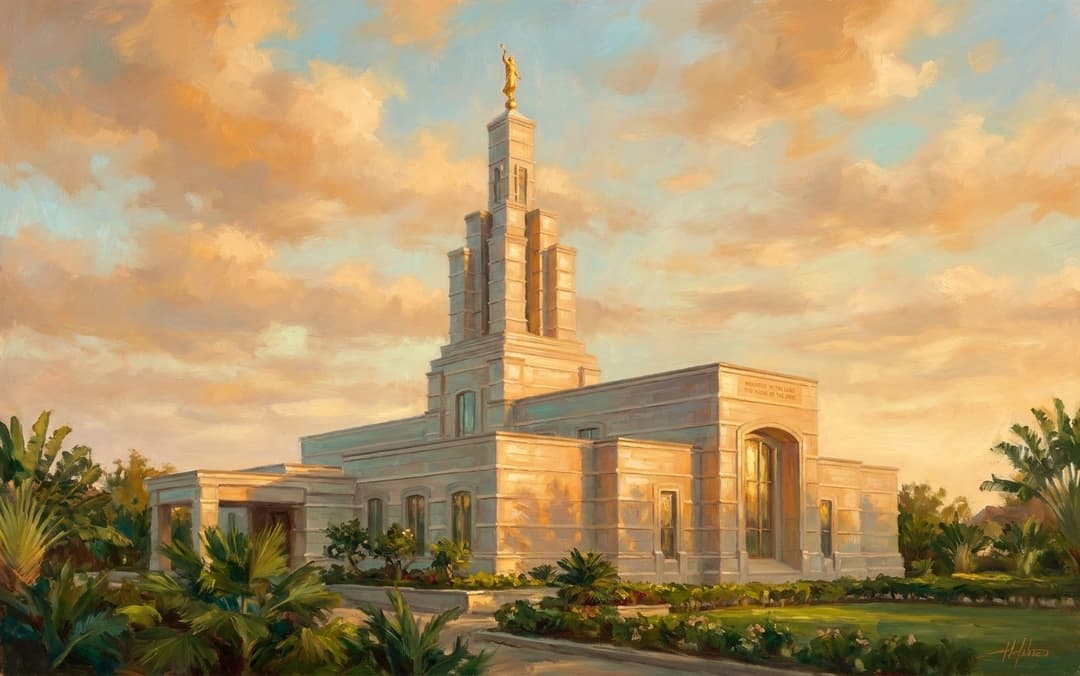
The San Pedro Sula Honduras Temple features a single-story design that expertly blends Spanish Colonial Revival influences with contemporary Latter-day Saint sacred architectural forms. Its pale exterior walls and central upward-thrusting spire harmonally reflect both regional Central American architecture and universal Christian sanctuary symbolism.
Building Materials
Exterior Cladding
Moleanos limestone quarried in Portugal and precision-cut to withstand tropical moisture.
Interior Woodwork
Custom doors and trim crafted from rich native Honduran mahogany hardwood.
Art Glass
Stained glass panels tinted in turquoise and forest green featuring stylized orchid patterns.
Flooring
Imported marble tiling and custom woven wool carpets in ocean hues.
Interior Features
Baptistry
Features a font resting on twelve sculpted oxen, framed by soft blue glass artwork.
Endowment Rooms
Four instruction rooms equipped for symbolic learning and sacred covenant making.
Sealing Rooms
Three intimate rooms featuring altars where families are united for eternity.
Celestial Room
A serene room with crystal chandeliers representing heavenly peace and eternal glory.
Temple Grounds
A nine-acre landscaped estate adorned with tropical flowering trees, native flora, stone pedestrian paths, and a central courtyard water fountain.
Additional Facilities
An on-site Latter-day Saint Distribution Center providing scriptures and gospel literature for patrons.
Religious Significance
In harmony with traditional Christian theology, Latter-day Saints reverence the temple as a sacred house of God (Domus Dei). Drawing directly from biblical archetypes like Solomon's Temple, it stands as a holy sanctuary set apart from worldly concerns.
To provide a dedicated holy space where believers enter into sacred covenants with God and receive essential priesthood ordinances.
Sacred Ordinances
Baptism for the Deceased
Proxy baptisms offering Christ's saving grace to ancestors who passed without receiving the ordinance.
The Endowment
Instruction regarding God's divine plan of salvation, creation, and covenants of personal holiness.
Eternal Marriage & Sealing
Priesthood solemnizations uniting husbands, wives, and families for eternity.
Priesthood Confirmations
Bestowal of the gift of the Holy Ghost by authority passed down through divine restoration.
A Beacon of Divine Hope
The temple serves as a physical witness of the Resurrection of Jesus Christ and God's eternal love for His children across all nations.
Similar Temples
Sources & Research
Every fact on Temples.org is backed by verified Sources & Research. Each piece of information is rated by source tier and confidence level.
View All Sources (4)
| Field | Source | Tier | Retrieved |
|---|---|---|---|
| Groundbreaking & Site Information | The Church of Jesus Christ of Latter-day Saints (opens in a new tab) | A | 2026-02-18 |
| Statistical Data & Construction Aggregation | ChurchofJesusChristTemples.org (opens in a new tab) | C | 2026-02-18 |
| Public Open House Coverage | LDS Living (opens in a new tab) | B | 2026-02-18 |
| Honduran Missionary & History Records | Church History Department (opens in a new tab) | A | 2026-02-18 |