Visitor Insights
Visiting Tegucigalpa Honduras Temple
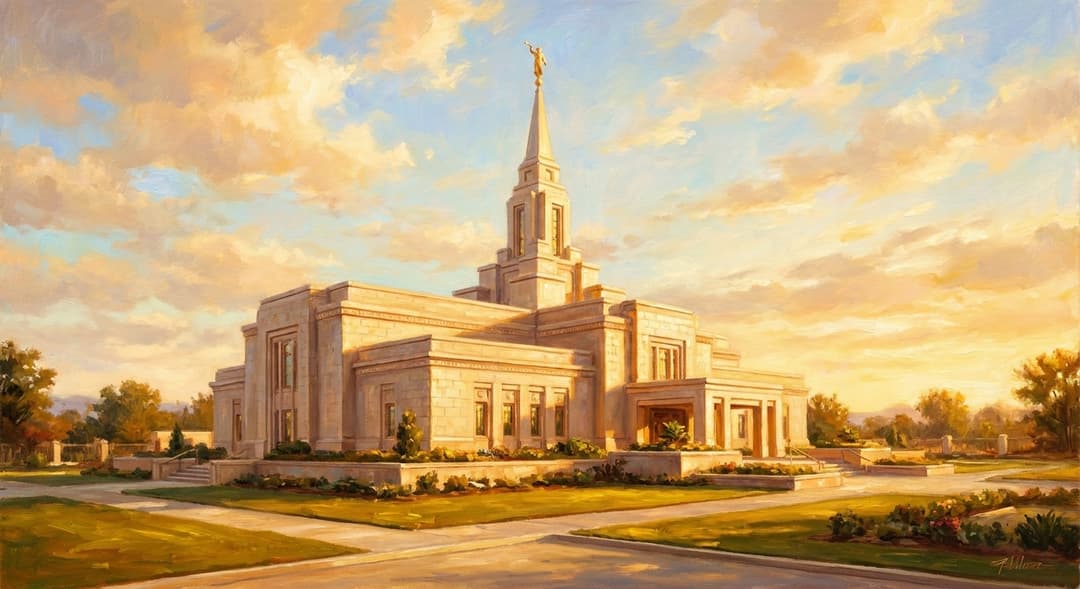
Situated in the elevated highlands of Comayagüela, the Tegucigalpa Honduras Temple features peaceful terraced gardens, native Honduran flora, and views of surrounding mountain peaks. Visitors of all faiths are welcome to walk the exterior grounds and enjoy the architectural beauty.
Highlights
- Beautifully landscaped grounds featuring royal palms and native Honduran flowerbeds
- Intricate stone basket-weave patterns inspired by regional Mesoamerican heritage
- A three-story patron housing complex providing accommodations for long-distance visitors
Things to Know
- Interior entrance requires a valid Temple Recommend for Latter-day Saint members
- Located in the Roble Oeste residential neighborhood near Toncontín International Airport
Location
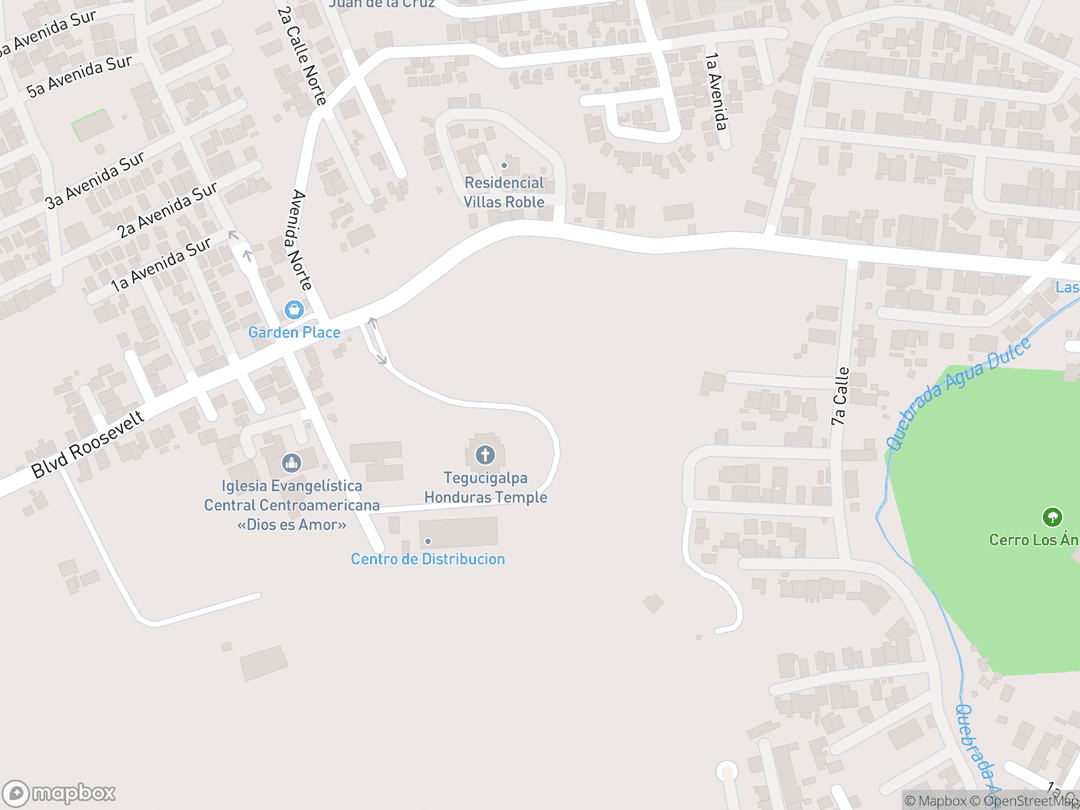
Residencial Roble Oeste, Boulevard Roble Oeste, 3ra Calle Sur, Comayagüela, M.D.C., Francisco Morazán, Honduras
Hours: Grounds open daily during daylight hours. Sacred temple services run Tuesday through Saturday.
Getting There: Located off Boulevard Roble Oeste in Comayagüela, accessible by taxi or private vehicle from central Tegucigalpa.
Get DirectionsTips for Your Visit
Exterior Craftsmanship
Examine the exterior granite cladding to appreciate the carved relief patterns modeled on traditional Honduran weaving.
Visitor Complex
An adjacent arrival center and distribution store offer assistance and educational materials for arriving guests.
About
In common with the broader Christian family and ancient Abrahamic traditions, Latter-day Saints venerate temples as sacred sanctuaries dedicated to communion between God and humanity. Rooted in the biblical tradition of sacred enclosures like the Tabernacle of Moses and Solomon's Temple, the Tegucigalpa Honduras Temple stands as a literal 'House of the Lord' set apart from secular life.
Unlike local Latter-day Saint meetinghouses used for weekly congregational Christian worship and community fellowship, temples are reserved for sacred ordinances. Within its walls, faithful members participate in eternal marriage sealings, proxy baptisms on behalf of deceased ancestors, and the endowment instruction, reflecting the deep Christian conviction that divine covenants and family bonds endure beyond physical death.
Announced in 2006, the building reached completion after a notable demonstration of civic diplomacy, when the Church voluntarily relocated the construction site to respect local community sensitivities. Dedicated in March 2013 by President Dieter F. Uchtdorf, it serves as the 141st operating temple worldwide and the first in Honduras.
Gallery
Symbolic Elements
The temple's exterior features intricate carvings, each rich with spiritual meaning:
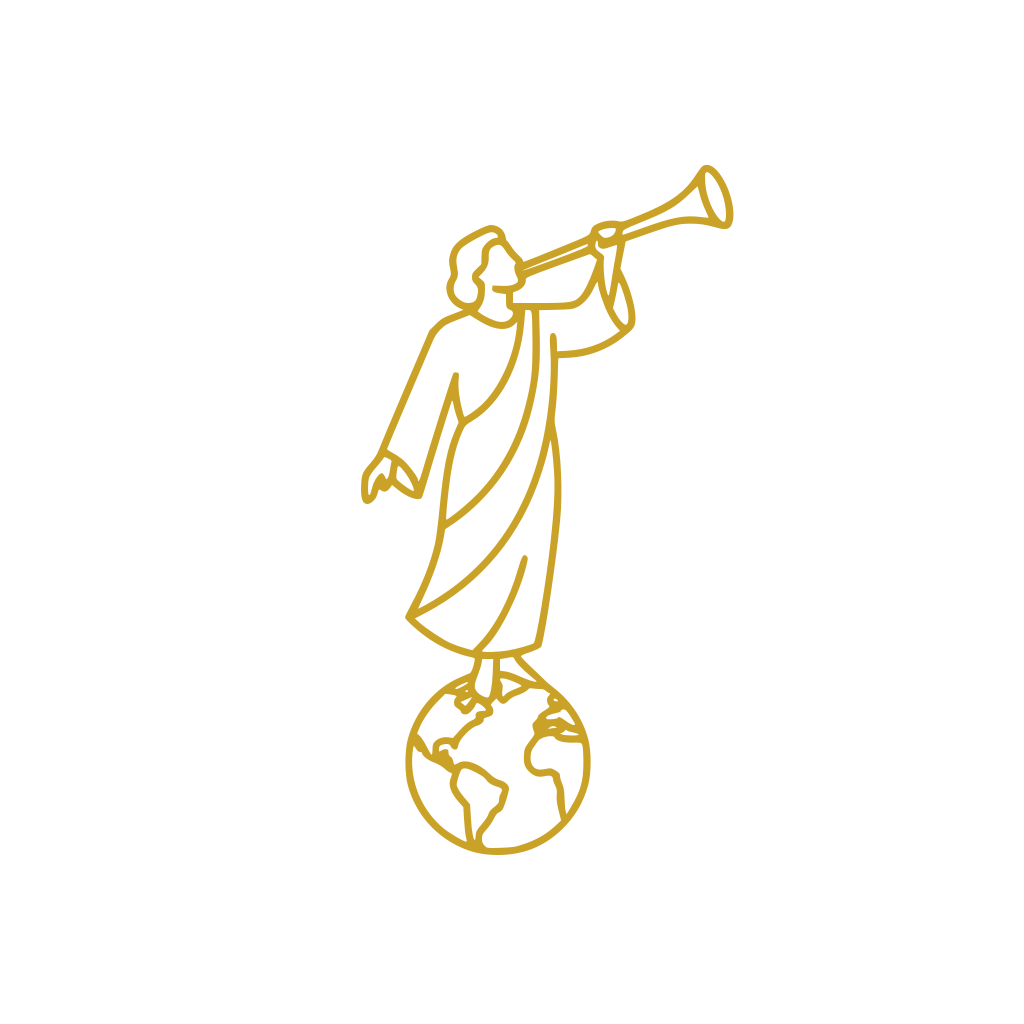
Angel Moroni Statue
The gold-leafed figure holding a heraldic horn symbolizes the restoration of the ancient gospel to the earth.

Basket-Weave Lattice
Intricate stonework and wooden carvings evoke regional Mesoamerican weaving and the interweaving of eternal generations.
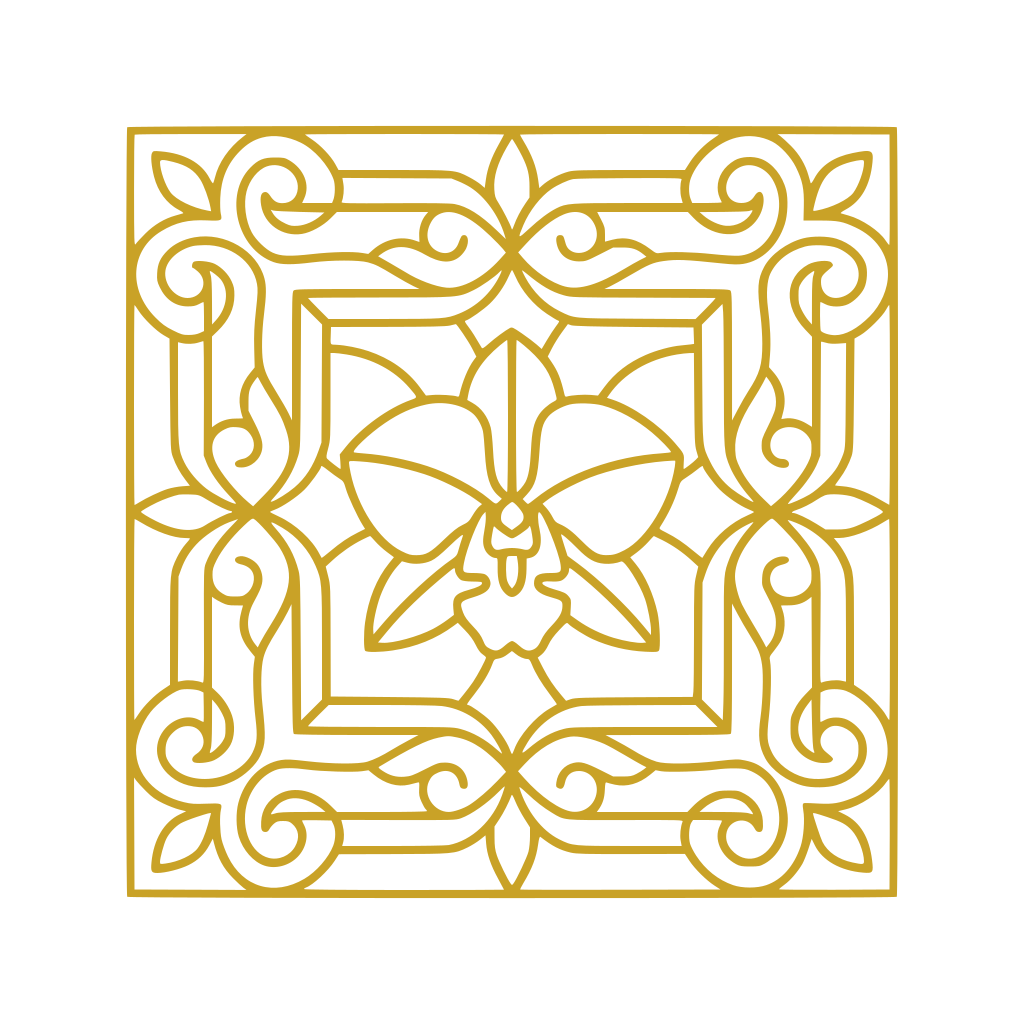
National Orchid Motif
Decorative glass and carpet patterns feature Honduras's national flower, reflecting divine beauty within creation.
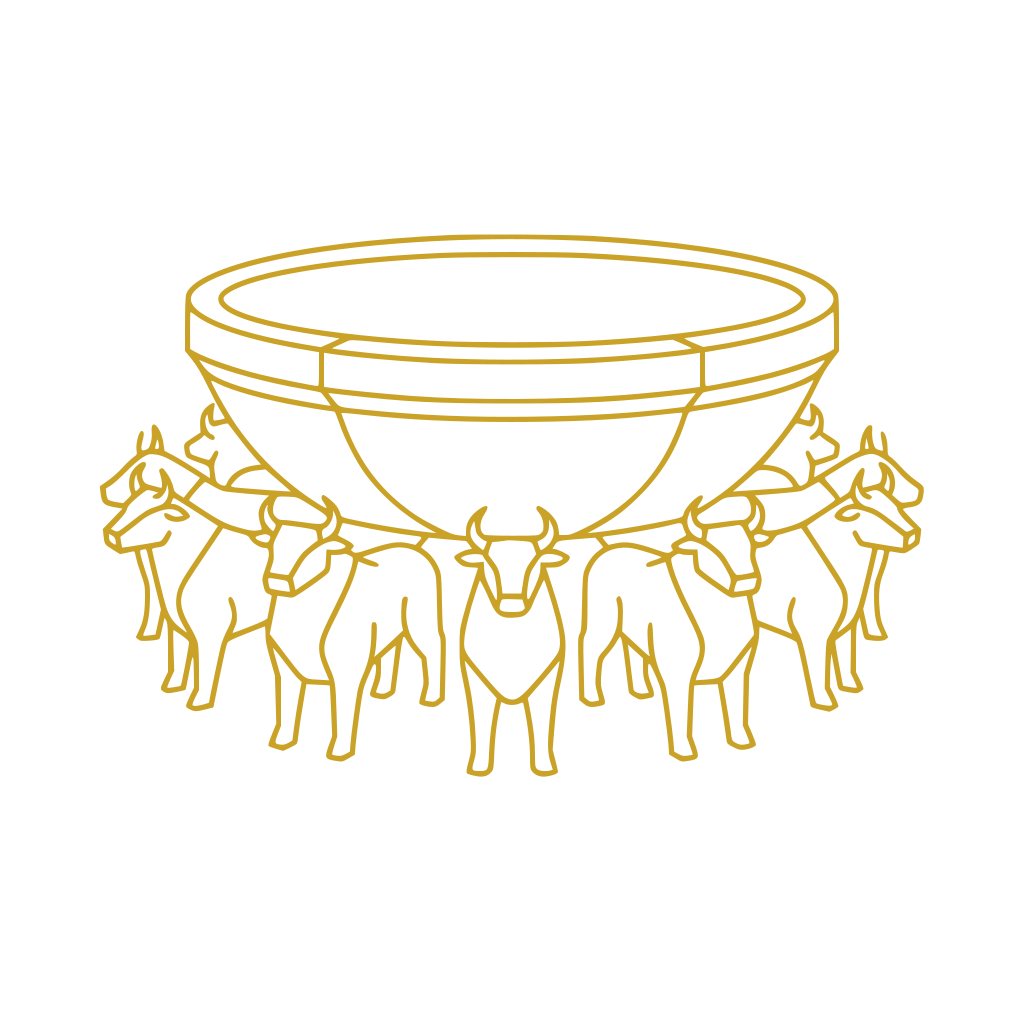
Twelve Oxen Base
Twelve sculpted oxen beneath the baptismal font represent the Twelve Tribes of Israel carrying gospel covenant promises.

Stepped Terraced Façade
Tiered exterior granite blocks pay artistic homage to regional Copán Mayan temple architecture.

Progressive Floorplan
Physical movement through instruction rooms upward to the Celestial Room symbolizes spiritual progression toward God.

Celestial Chandelier
A soaring crystal chandelier in the Celestial Room symbolizes divine light and celestial beauty.
Interesting Facts
The temple required two separate formal groundbreaking ceremonies due to a voluntary site relocation. (Tier A)
The Church chose a new building site out of respect when local leaders raised concerns about proximity to a historical shrine. (Tier A)
Over 210,000 people attended the 2013 open house, representing nearly a quarter of the capital city's population. (Tier A)
Honduran President Porfirio Lobo Sosa and ten cabinet ministers personally attended the official VIP open house. (Tier A)
Located at 3,498 feet above sea level, the temple enjoys temperate highland mountain climate. (Tier B)
Before completion, members traveled 12 hours over international borders to attend the Guatemala City Temple. (Tier A)
The construction combines Chinese Mountain Gray Granite, Spanish marble, and native Honduran hardwoods. (Tier B)
The temple sits in Comayagüela, which together with Tegucigalpa forms the Central District Capital of Honduras. (Tier B)
Common Questions
Who can enter the Tegucigalpa Honduras Temple?
While the landscaped gardens are open to everyone, interior entry requires a valid Temple Recommend issued to faithful Church members.
Why was the temple relocated during construction?
The Church voluntarily moved the site to Roble Oeste to respect local community concerns regarding a nearby national shrine.
What facilities are available for visiting patrons?
The complex includes a three-story patron housing facility, dining cafeteria, arrival center, and an official distribution store.
What architectural style is reflected in the temple?
It blends classic modern temple architecture with pre-Columbian Mesoamerican step-terraced motifs and local geometric carvings.
Featured Stories
Civic Harmony and Site Relocation
2009
When initial construction near the national university met with public concern regarding proximity to the historic Basilica of Suyapa, Church leaders made the rare decision to voluntarily relocate the project. Choosing a new site in Roble Oeste demonstrated profound civic diplomacy and earned goodwill across Honduran society.
Source: Church News Archives
A Monumental Public Open House
February 2013
The public open house generated unprecedented interest throughout Honduras, welcoming more than 210,000 visitors over three weeks. Among the dignitaries were President Porfirio Lobo Sosa and ten cabinet ministers, who commended the structure as a spiritual beacon for the nation.
Source: Official Church Newsroom
A Light of Hope Youth Spectacle
March 16, 2013
On the eve of the temple dedication, 4,100 Honduran youth gathered at the Hector Chochi Sosa Stadium in Tegucigalpa to perform 'A Light of Hope.' The grand cultural celebration highlighted native folklore, traditional music, and joyful choreography before visiting Church apostles.
Source: LDS Church News
Timeline
Apostolic Visit
Elder Spencer W. Kimball visits Tegucigalpa to lay early spiritual foundations for the Church in Honduras.
MilestoneFirst Missionaries Arrive
Formal missionary efforts begin in Tegucigalpa and San Pedro Sula.
EventTemple Announced
President Gordon B. Hinckley announces the first temple for Honduras.
MilestoneInitial Groundbreaking
Elder Spencer V. Jones presides over groundbreaking at the original site near UNAH.
component.timeline.groundbreakingSite Relocation Announced
The Church voluntarily relocates the temple site out of civic diplomacy and respect for neighbors.
EventSecond Groundbreaking
Elder Don R. Clarke presides over a new groundbreaking at the Roble Oeste parcel.
component.timeline.groundbreakingDedication Dates Announced
The First Presidency schedules the public open house and dedication for early 2013.
EventPublic Open House Begins
More than 210,000 visitors tour the completed temple over three weeks.
EventYouth Cultural Celebration
Over 4,100 Honduran youth perform in 'A Light of Hope' at Hector Chochi Sosa Stadium.
EventTemple Dedicated
President Dieter F. Uchtdorf formally dedicates the temple in three general sessions.
DedicationHistory by Decade
1950s — Foundations of the Faith
Church roots in Honduras were established in 1952 when Elder Spencer W. Kimball visited Tegucigalpa to meet with early prospective converts. Formal missionary work began the following year, establishing early branches in the capital and San Pedro Sula.
1970s–1990s — Regional Growth and Pilgrimage
As membership expanded across Honduras, faithful members made arduous 12-hour overland pilgrimages to Guatemala City following the dedication of its temple in 1984. These trips required significant sacrifice and crossing international borders to perform sacred covenants.
2000s — Announcement and Civic Diplomacy
Announced in 2006, construction initially stalled when local leaders expressed concerns regarding a site near the historic Basilica of Suyapa. Demonstrating civic diplomacy, the Church voluntarily selected a new 13.6-acre site in Roble Oeste, breaking ground in 2009.
2010s — Open House and Dedication
Construction concluded in 2012, leading to a public open house that drew over 210,000 guests, including top government leaders. President Dieter F. Uchtdorf dedicated the sanctuary on March 17, 2013, establishing the first temple in Honduras.
Architecture & Facilities
The Tegucigalpa Honduras Temple features a contemporary interpretation of pre-Columbian Mesoamerican architecture blended with modern classical proportions, incorporating terraced geometric lines reminiscent of ancient Mayan structures native to Honduras.
Building Materials
Exterior Granite
Clad in precision block panels of Chinese Mountain Gray Granite that create a luminescent finish under the sun.
Interior Hardwoods
Heavy dark-stained interior millwork and doors decorated with hand-carved geometric lattice details.
Flooring Materials
Corridors feature imported Spanish marble paired with custom hand-tufted wool carpets.
Art Glass Panels
Stained-glass windows incorporating gold, bronze, green, and deep amber tones with native floral emblems.
Interior Features
Baptistry
Features a cast-bronze baptismal font resting upon the backs of twelve life-sized oxen.
Instruction Rooms
Two progressive endowment rooms decorated with hand-painted murals depicting native Honduran mountain landscapes.
Sealing Rooms
Two sacred marriage sealing rooms with carved wooden altars upholstered in off-white velvet.
Celestial Room
A tranquil central sanctuary finished in soft white and gold accents, lit by a crystal chandelier.
Temple Grounds
Situated on an elevated 13.6-acre property in Comayagüela, featuring native Honduran flora, royal palms, terraced lawns, and paved garden walkways.
Additional Facilities
Includes a three-story, 33,000-square-foot patron housing complex, an arrival center, and an on-site distribution center store.
Religious Significance
Within Latter-day Saint theology, temples are consecrated as holy sanctuaries where earth and heaven connect. Situated in the Christian tradition of covenant-making, the Tegucigalpa Honduras Temple serves as a focal point for spiritual devotion and community unity in Central America.
To provide a dedicated sanctuary where members receive sacred rites, make eternal covenants, and unite families across generations.
Sacred Ordinances
Baptism for the Ancestors
Proxy baptisms performed in behalf of deceased ancestors, affirming that God's salvation extends to all humanity.
The Endowment
A sacred instruction mapping humanity's spiritual creation, mortal purpose, and divine destiny through Jesus Christ.
Eternal Marriage Sealings
Solemn marriage ceremonies binding husband, wife, and children together for time and all eternity.
A Sacred House of the Lord
Unlike meetinghouses open for weekly public Christian services, the temple stands as a set-apart house of holiness, requiring personal worthiness and commitment for entry into its sacred rooms.
Similar Temples
Sources & Research
Every fact on Temples.org is backed by verified Sources & Research. Each piece of information is rated by source tier and confidence level.
View All Sources (6)
| Field | Source | Tier | Retrieved |
|---|---|---|---|
| Dedication Overview | The Church of Jesus Christ of Latter-day Saints (opens in a new tab) | A | 2026-01-30 |
| Official Temple Details | The Church of Jesus Christ of Latter-day Saints (opens in a new tab) | A | 2026-01-30 |
| Temple Data & Chronology | ChurchofJesusChristTemples.org (opens in a new tab) | C | 2026-01-30 |
| Architectural Project Profile | VCBO Architecture (opens in a new tab) | B | 2026-01-30 |
| Structural Engineering Design | Reaveley Engineers (opens in a new tab) | B | 2026-01-30 |
| Church History Records | Church History Department (opens in a new tab) | A | 2026-01-30 |