Visitor Insights
Visiting Mount Timpanogos Utah Temple
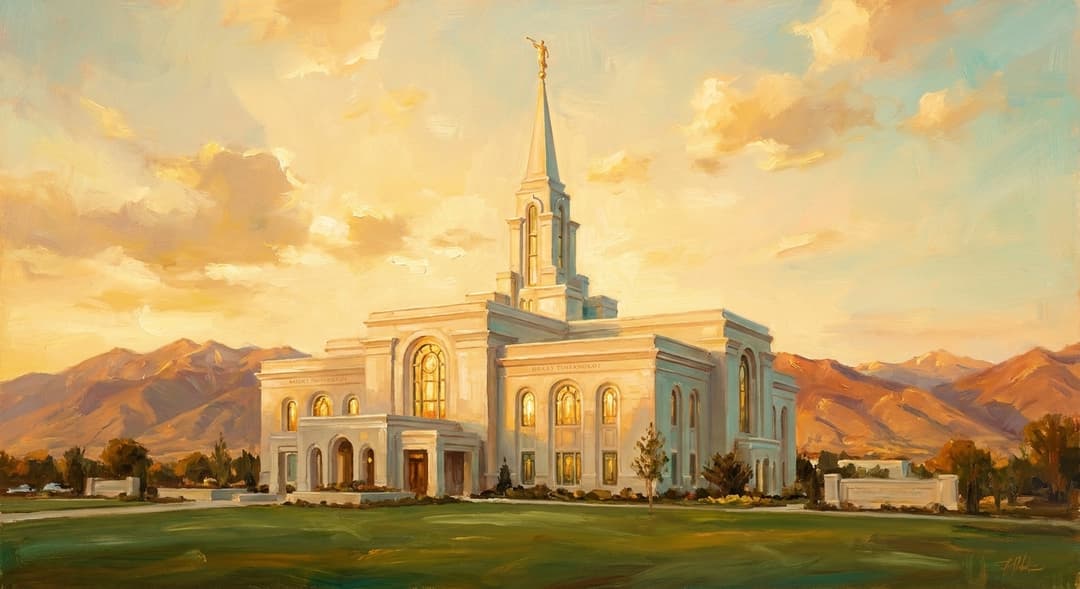
The Mount Timpanogos Utah Temple grounds offer serene reflection areas, manicured flowerbeds, and sweeping vistas of the adjacent mountain peak. While the interior is reserved for active Church members with valid recommends, the outdoor plazas and gardens are open daily to all visitors.
Highlights
- Vibrant seasonal flower displays featuring thousands of tulips, daffodils, and roses
- Dramatic photo angles of Mount Timpanogos behind the soaring central spire
- Peaceful outdoor reflection plazas and walking paths open to the public
Things to Know
- No public visitors' center is located on site
- Interior access requires a valid Latter-day Saint temple recommend
- Peak patron traffic occurs on Friday evenings and Saturday mornings
Location
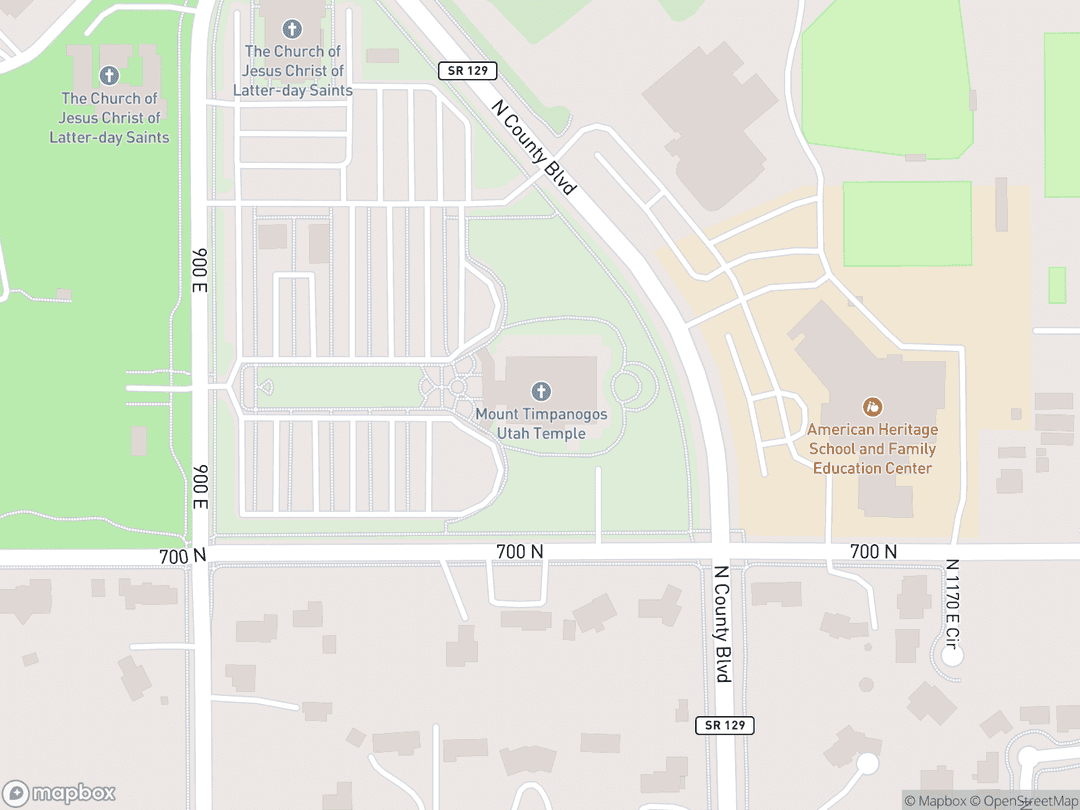
742 North 900 East, American Fork, Utah 84003-9124, United States
Hours: Grounds open daily from sunrise to sunset.
Getting There: Accessible via I-15 Exit 278 or 284 in American Fork. Proceed east toward the mountains, then turn south onto 900 East.
Get DirectionsTips for Your Visit
Best Sunset Views
Visit during late afternoon to catch the western sun illuminating the Sierra White Granite and dichroic art glass windows.
Spring Garden Bloom
Plan a visit in May or June to experience the extensive grounds filled with blooming tulips and perennials.
About
Rooted in the ancient biblical tradition of sacred spaces—from the tabernacle of Moses to Solomon's Temple—the Mount Timpanogos Utah Temple stands as a literal House of the Lord. Latter-day Saints view this sanctuary not as a standard Sunday chapel, but as a dedicated place for sacred covenants connecting humanity with God.
Dedicated in 1996, the temple serves as an architectural anchor in northern Utah County. Built on a former welfare farm beneath the towering Wasatch Range, the structure blends modern classicism with rich symbolic craftsmanship to facilitate sacred ordinances, eternal marriages, and personal reflection.
Gallery
Symbolic Elements
The temple's exterior features intricate carvings, each rich with spiritual meaning:

Jacob's Ladder Window Motif
Sweeping upward arched glass patterns visually evoke the biblical staircase connecting heaven and earth.

Earth Stones Relief Panels
Seven square granite relief panels near the foundation depict concentric circles representing the footstool of God.

Moon Stones Relief Panels
Sixteen carved panels display varied lunar phases, representing progressive spiritual light.

Sun Stones Relief Panels
Sixteen radiant circular stone motifs near the spire base represent celestial glory and direct light.

Star Stones Relief Panels
Twenty-four four-pointed star carvings high on the spire symbolize distant light and truth.

Dual Holiness to the Lord Inscriptions
Gilded inscriptions appear on both the east facade panel and the west entry glass surrounding the threshold.

Angel Moroni Statue
A 13-foot gold-leafed aluminum statue tops the spire, holding a herald trumpet to signal the gospel restoration.
Interesting Facts
The temple grounds were previously used as a Church welfare farm growing sugar beets and alfalfa. (Tier A)
The floor plan is an architectural twin to the Bountiful Utah Temple, differing primarily in entrance orientation. (Tier B)
An estimated 20,000 spectators gathered on surrounding lawns to watch the Angel Moroni statue lifted atop the spire. (Tier B)
Nearly 680,000 visitors attended the 46-day public open house in 1996. (Tier A)
More than 800 youth choirs performed on the grounds during the open house period. (Tier A)
President Gordon B. Hinckley dedicated the temple across 27 individual sessions over seven days. (Tier A)
The dedication was broadcast via satellite to local meetinghouses to accommodate overflow crowds. (Tier A)
Custom prisms inside the art glass windows project vibrant rainbow colors onto interior marble floors. (Tier B)
The cornerstone time capsule includes scripture standard works, books, leadership photos, and interior carpet swatches. (Tier A)
Common Questions
Can non-members visit the Mount Timpanogos Utah Temple?
Visitors of all faiths are welcome to walk the exterior gardens and reflection plazas, though interior entry is reserved for Church members.
Why is the temple named Mount Timpanogos?
It is named after nearby Mount Timpanogos, an 11,750-foot peak that forms a dramatic natural backdrop behind the temple.
How does this temple differ from regular Latter-day Saint meetinghouses?
Meetinghouses are open to the public for Sunday services, whereas temples are dedicated sacred spaces for eternal covenants and ordinances.
Is there a visitors' center on the temple grounds?
No, this temple does not have an on-site visitors' center, though visitors may freely explore the manicured grounds.
Featured Stories
The Farm of Faithfulness
October 3, 1992
Before ground was broken for the temple, the 16.7-acre parcel served as a Church welfare farm where local volunteers harvested sugar beets and alfalfa. Members who had spent decades cultivating crops on the autumn soil wept tears of joy when the land was designated for a holy temple. The transition from physical nourishment to spiritual sanctuary remains a beloved chapter of local heritage.
Source: Church Newsroom
An Unforgettable Spire Raising
July 17, 1995
On a warm summer morning, an estimated 20,000 community members gathered on surrounding lawns to watch the Angel Moroni statue lifted to the apex of the spire. As workers secured the gold-leafed figure 190 feet above the ground, the crowd spontaneously burst into applause and sang the classic Latter-day Saint hymn 'The Spirit of God.' The emotional event brought local residents together in reverence.
Source: Deseret News Archives
Record Open House and Week-Long Dedication
October 13, 1996
Over six weeks in 1996, nearly 680,000 visitors toured the interior, supported by hundreds of youth choirs performing on the plaza. To accommodate the immense population of faithful members, President Gordon B. Hinckley presided over 27 separate dedicatory sessions across seven consecutive days. The historical broadcast extended to surrounding meetinghouses, uniting the entire valley in gratitude.
Source: Latter-day Saint History Department
Timeline
Temple Announcement
President Gordon B. Hinckley announces plans to construct a second Utah County temple.
MilestoneGroundbreaking Ceremony
President Gordon B. Hinckley presides over the groundbreaking on a former welfare farm.
component.timeline.groundbreakingAngel Moroni Statue Raised
A 13-foot gold-leafed statue is raised atop the 190-foot spire before 20,000 spectators.
MilestonePublic Open House Begins
A six-week public open house begins, eventually drawing nearly 680,000 visitors.
EventDedicatory Sessions Begin
President Gordon B. Hinckley opens a week-long series of 27 dedicatory sessions.
DedicationDedication Concluded
Final dedicatory session concludes after serving members across Utah County.
DedicationMechanical Overhaul Completed
Okland Construction completes extensive HVAC and system upgrades throughout the structure.
Renovation20th Anniversary Milestone
Local stakes celebrate two decades of service and sacred ordinances.
MilestoneOperational Adjustment
Temporary operational pause enacted in response to public health guidelines.
Event25th Anniversary Service
Commemorates a quarter-century of spiritual service beneath Mount Timpanogos.
MilestoneHistory by Decade
1990s — Announcement, Open House, and Dedication
Announced in October 1992 by Counselor Gordon B. Hinckley, the temple was commissioned to relieve heavy patronage at the nearby Provo Utah Temple. Construction progressed steadily following groundbreaking in October 1993, culminating in a record six-week public open house in 1996. Dedicated across 27 sessions in October 1996, it immediately became the central spiritual anchor for northern Utah County.
2000s — Rapid Regional Growth
During its first decade, residential development expanded rapidly in surrounding American Fork, Highland, Alpine, and Cedar Hills. The temple adapted to high patron volume by refining ordinance scheduling while preserving pristine garden grounds. Architectural studies highlighted the dichroic glass window motifs and celestial stone symbolism.
2010s — Operational Overhauls and Upgrades
In 2014, Okland Construction completed a comprehensive mechanical overhaul to update heating, cooling, and electrical systems. Interior furnishings and carpets were refreshed to maintain aesthetic excellence while conserving energy. In October 2016, the temple marked two decades of continuous service with youth celebrations.
2020s — Continued Spiritual Service
Following temporary operational adjustments in 2020, the temple resumed full ordinance schedules to serve local stakes. It stands today as an iconic landscape marker beneath the dramatic face of Mount Timpanogos.
Architecture & Facilities
The Mount Timpanogos Utah Temple features a Classic Modern architectural design characterized by symmetrical massing, vertical lines, and a monumental attached central spire. Adapted from the floor plan of the Bountiful Utah Temple, the design blends classic proportions with regional Utah granite and modern art glass techniques.
Building Materials
Exterior Sierra White Granite
Quarried in California, the granite surface contains natural quartz and mica that shift tone under changing sunlight.
Art Glass Windows
Custom glass panes incorporate embedded prisms and dichroic filters that project spectrums of light across interior halls.
Interior Marble
High-traffic foyers feature imported white and gray marble tiles polished to a luminous sheen.
Structural Spire Panelism
Steel framing is wrapped in high-grade fiberglass panels textured to match the exterior granite.
Interior Features
Celestial Room
An elevated room featuring plush off-white seating, hand-carved carpets, and a multi-tiered crystal chandelier.
Ordinance Rooms
Four stationary instruction rooms feature soft mauve and gold tones framed by high-gloss white lacquered moldings.
Sealing Rooms
Eight marriage rooms contain alter centers surrounded by mirror arrays reflecting infinite light.
Baptistry
A subterranean baptismal font rests upon twelve cast bronze oxen representing the twelve tribes of Israel.
Temple Grounds
The 16.7-acre grounds feature manicured lawns, extensive flower gardens, mature trees, and wide reflection plazas framed by Mount Timpanogos.
Additional Facilities
An adjacent stake meetinghouse shares the property, while patron parking surrounds the landscaped grounds.
Religious Significance
Following the ancient Judeo-Christian tradition of consecrated sanctuaries, Latter-day Saints regard the Mount Timpanogos Utah Temple as a holy refuge where God's presence is invoked and eternal covenants are solemnized.
To provide a sacred space where faithful believers participate in eternal ordinances, bind families across generations, and learn of the divine plan of salvation.
Sacred Ordinances
Baptism for the Deceased
Vicarious baptisms performed in behalf of ancestors, extending Christ's grace beyond mortality.
Temple Endowment
A sacred presentation of scriptural instruction detailing the Creation, Fall, and divine destiny of humanity.
Eternal Marriage Sealing
Sacred rites solemnized at temple altars that bind husband, wife, and children for time and all eternity.
Sacred Space in Christian Thought
Latter-day Saint temples parallel ancient biblical sanctuaries where physical architecture creates a dedicated portal for divine worship and divine instruction.
Family Solidarity Across Generations
Through sacred sealing ordinances, the temple binds ancestral branches into an unbroken family chain within the covenant of Christ.
Similar Temples
Sources & Research
Every fact on Temples.org is backed by verified Sources & Research. Each piece of information is rated by source tier and confidence level.
View All Sources (7)
| Field | Source | Tier | Retrieved |
|---|---|---|---|
| About & Historical Background | The Church of Jesus Christ of Latter-day Saints (opens in a new tab) | A | 2026-02-18 |
| About & Historical Background | Church Newsroom (opens in a new tab) | A | 2026-02-18 |
| Timeline & Dedication | Church History Department (opens in a new tab) | A | 2026-02-18 |
| Architecture & Facts | ChurchofJesusChristTemples.org (opens in a new tab) | C | 2026-02-18 |
| Timeline & Open House | The Salt Lake Tribune (opens in a new tab) | B | 2026-02-18 |
| Architecture & Renovations | Okland Construction (opens in a new tab) | C | 2026-02-18 |
| Religious Significance | The Church of Jesus Christ of Latter-day Saints (opens in a new tab) | A | 2026-02-18 |