Visitor Insights
Visiting Brigham City Utah Temple
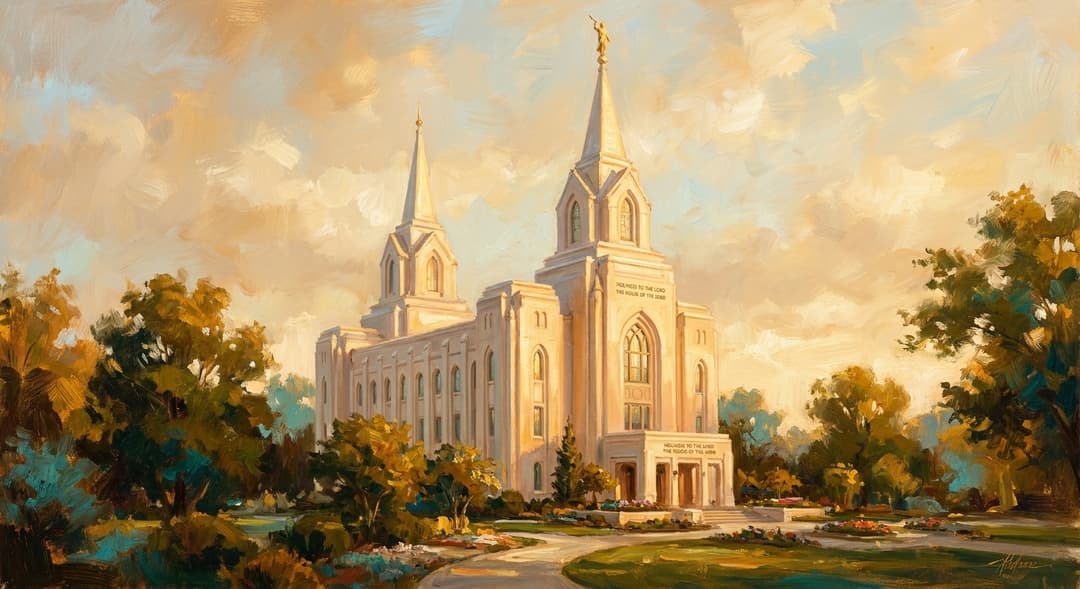
The Brigham City Utah Temple offers a deeply serene and welcoming experience for all visitors, situated in the heart of the city's historic downtown. The beautifully manicured grounds are open to the public, providing a peaceful environment where guests can stroll among fruit-bearing peach trees and enjoy the soothing sounds of the central water feature. Directly across the street stands the historic Box Elder Tabernacle, allowing visitors to easily pair their temple grounds visit with a tour of one of Utah's finest pioneer-era structures. The site is particularly breathtaking during the spring bloom and the golden hours of late afternoon, when the light perfectly illuminates the temple's white precast exterior.
Highlights
- Stunning views of the Wellsville Mountains framing the temple's dual spires.
- A beautiful circular water feature at the main entrance, perfect for quiet reflection.
- Twenty-six fruit-bearing peach trees integrated into the landscaping, honoring local heritage.
- Direct proximity to the historic Box Elder Tabernacle across Main Street.
Things to Know
- Only members of the Church with a valid temple recommend may enter the temple interior.
- Modest attire is recommended when walking the sacred temple grounds.
- Parking is highly accessible via the integrated two-tiered surface and underground structure.
Location
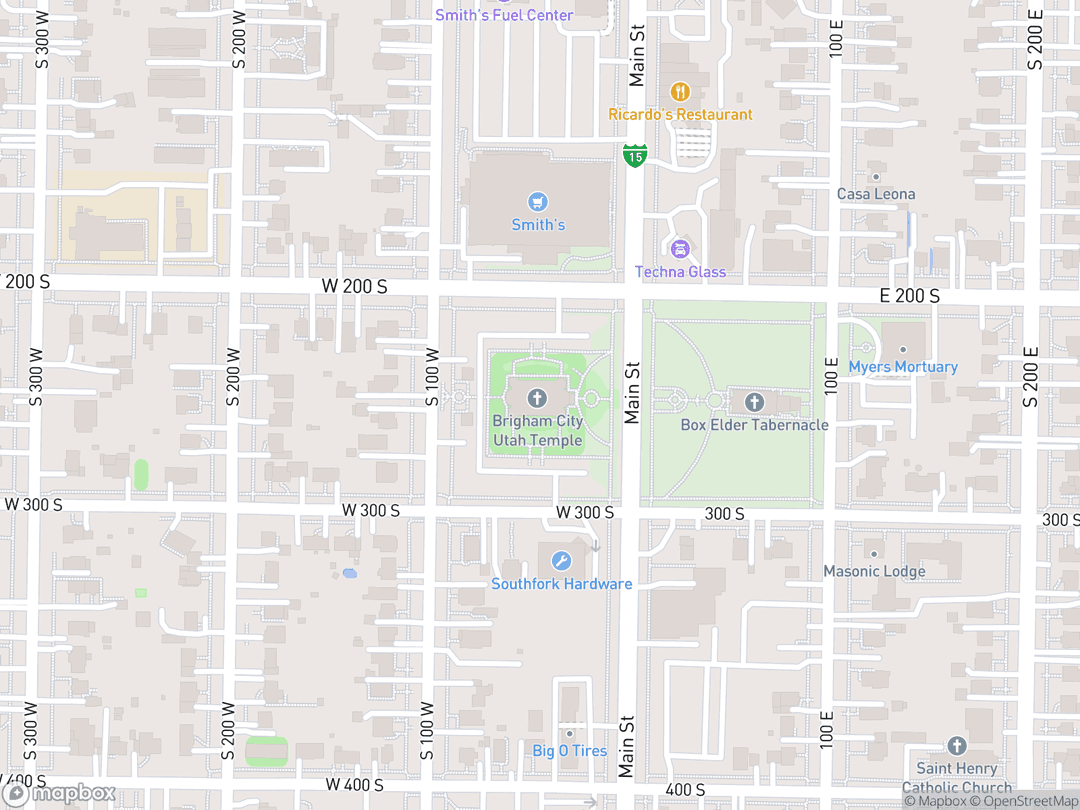
250 South Main Street, Brigham City, Utah 84302-2560, United States
Hours: Temple grounds are open daily from sunrise to 10:00 PM. Interior hours vary for patrons.
Getting There: Located at 250 South Main Street in downtown Brigham City. Easily accessible from Interstate 15 via Exit 362, heading east on US-81/Main Street for approximately two miles.
Get DirectionsTips for Your Visit
Visit During Peach Days
If visiting in early September, align your trip with Brigham City's historic Peach Days festival to experience vibrant local culture alongside the temple's agricultural motifs.
Explore the Tabernacle
Cross Main Street to take a free guided tour of the historic Box Elder Tabernacle, available from June through September, to appreciate the architectural dialogue between the two buildings.
Catch the Golden Hour
The light sandblasted finish of the exterior precast concrete panels reflects a warm, golden glow just before sunset, making it the ideal time for photography.
About
According to The Church of Jesus Christ of Latter-day Saints, the Brigham City Utah Temple stands as a magnificent spiritual beacon in the heart of northern Utah, beautifully bridging the community's rich pioneer heritage with modern Latter-day Saint worship. Located on the historic "Central Square"—a downtown block that once housed the city's Central Elementary School—the temple is positioned directly across Main Street from the historic 19th-century Box Elder Tabernacle. This deliberate placement creates a stunning architectural dialogue, anchoring the civic and spiritual core of Brigham City with two monumental structures that celebrate both the past and the present.
As a sacred sanctuary within the Latter-day Saint Restorationist tradition, the temple represents a continuation of the ancient Judeo-Christian covenant path. It serves as a physical testament to the faith of the early pioneers who settled the Box Elder region under the direction of Lorenzo Snow in the 1850s. The temple's design, materials, and landscaping are deeply reflective of this local history, incorporating agricultural motifs and classic architectural styles that honor the community's enduring legacy of cooperative industry and devotion.
Inside the temple, patrons participate in sacred ordinances that are central to Latter-day Saint theology, including eternal marriages and proxy baptisms for ancestors. The building's interior is meticulously crafted to foster an atmosphere of peace, contemplation, and divine connection. From its hand-carved woodwork to its custom art glass windows depicting local peach blossoms, every detail of the Brigham City Utah Temple is designed to elevate the mind and spirit, offering a quiet refuge from the world and a reminder of the eternal nature of the human soul.
Gallery
Symbolic Elements
The temple's exterior features intricate carvings, each rich with spiritual meaning:

Peach Blossom Motif
The stylized five-petal peach blossom is the central motif of the temple, celebrating the region's agricultural history and the spiritual 'Harvest of Faith'. It is cast into exterior medallions, etched into art glass, and gilded on ceilings.

Double Spires
The dual central spires on the east and west represent the Aaronic and Melchizedek Priesthoods. This design choice mirrors the historic layout of early Utah pioneer temples like Logan and Vernal.
Angel Moroni Statue
A gold-leafed fiberglass statue of the Angel Moroni stands atop the eastern spire, symbolizing the restoration of the gospel of Jesus Christ. The statue points east toward the historic Box Elder Tabernacle.

Twelve Unique Oxen
The twelve bronze oxen supporting the baptismal font represent the Twelve Tribes of Israel. Uniquely, each of the twelve oxen was individually modeled as a distinct sculpture, symbolizing individual identity within the covenant body.

Notched Parapets
The decorative notched carvings along the roofline and towers subtly reference the battlements and crenellations of the Manti and Logan temples. They symbolize spiritual protection and defense against worldly influences.
Limestone-Like Precast Panels
The exterior cladding of light sandblasted precast concrete panels mimics natural limestone. This material symbolizes the enduring strength of the pioneer foundations and the timeless nature of temple covenants.

Gold-Leafed Peach Branches
Adorning the ceiling of the Celestial Room, the gold-leafed peach branches represent the refinement and consecration of earthly labors. They symbolize the ultimate spiritual harvest in the presence of God.
Interesting Facts
The temple was dedicated by President Boyd K. Packer, who was born in Brigham City 88 years prior to the dedication.
Over 404,350 people toured the temple during its month-long open house, roughly ten times the local Latter-day Saint population of the temple district.
The temple block, historically known as Central Square, was previously home to Brigham City's Central Elementary School before the building was razed.
The temple won the prestigious Precast/Prestressed Concrete Institute (PCI) Design Award for Best Religious Structure in 2014.
While most Latter-day Saint temples use repeating sets of identical oxen for the font, this temple features twelve entirely unique, individually modeled bronze oxen.
The 3.5-foot peach blossom medallions on the exterior panels were created using a hybrid of CNC router technology and hand sculpting for the molds.
To balance the streetscape, six historic sycamore trees were removed to match the tabernacle block across the street, while 160 new trees were planted.
To fit the temple and gardens on a tight 3.14-acre block, designers incorporated a two-tiered parking structure with 130 underground stalls.
The building's massing and revived Neo-Gothic details are a direct tribute to 19th-century pioneer-built temples like Logan and Manti.
The custom art glass windows feature stylized peach blossoms, designed by FFKR Architects and fabricated with technical assistance in Orem, Utah.
Common Questions
Can the public go inside the Brigham City Utah Temple?
While the interior of the temple is reserved for members of the Church holding a valid temple recommend for sacred ordinances, the public is warmly invited to walk the beautiful exterior grounds, take photographs, and enjoy the peaceful atmosphere.
What is the significance of the peach blossoms featured on the temple?
The stylized five-petal peach blossom is the central design motif of the temple. It honors Brigham City's rich agricultural history—specifically its famous peach orchards and annual Peach Days festival—and symbolizes the spiritual 'Harvest of Faith' of the local community.
How does the temple's architecture relate to the historic tabernacle across the street?
The temple is designed in a Revived Neo-Gothic style specifically to harmonize with the historic 19th-century Box Elder Tabernacle directly across Main Street. Its verticality, dual spires, and decorative details echo the pioneer-era craftsmanship of the tabernacle.
Who dedicated the Brigham City Utah Temple?
The temple was dedicated on September 23, 2012, by President Boyd K. Packer, President of the Quorum of the Twelve Apostles. This was a deeply personal event, as President Packer was a native of Brigham City, born there 88 years prior to the dedication.
Are there unique features inside the Brigham City Temple's baptistry?
Yes, the baptistry features a baptismal font resting on twelve cast bronze oxen representing the Twelve Tribes of Israel. Unlike most temples which use repeating sets of identical oxen, each of the twelve oxen in this temple was individually modeled as a unique, distinct sculpture.
Featured Stories
A Native Son's Dedication
September 23, 2012
The dedication of the Brigham City Utah Temple on September 23, 2012, was a deeply emotional and historic homecoming for President Boyd K. Packer. Born in Brigham City in 1924, President Packer had spent his youth in the shadow of the Box Elder Tabernacle and had long dreamed of a temple in his hometown. At 88 years old, serving as the President of the Quorum of the Twelve Apostles, he stood at the pulpit to dedicate the sacred structure.
His dedicatory prayer was filled with gratitude for the pioneer ancestors who settled the valley and a blessing of peace upon the community he loved so dearly. For the local saints, having a native son dedicate their temple added a profound layer of personal and spiritual connection to the event, uniting generations of faith in a single, sacred moment.
Source: Church News Dedication Report
The Harvest of Faith
September 22, 2012
On the eve of the temple's dedication, over 5,000 local youth gathered at the Box Elder High School football stadium to perform in a massive cultural celebration themed 'Harvest of Faith'. The performance paid tribute to the agricultural roots of Box Elder County, weaving together stories of early pioneer struggles, the establishment of the cooperative movement, and the famous local peach harvests.
Despite weeks of intense rehearsals and unpredictable autumn weather, the youth delivered a flawless, high-energy performance filled with dance, music, and testimony. The celebration served as a symbolic passing of the torch, demonstrating that the faith of the pioneer founders was alive and thriving in the rising generation. President Packer and other church leaders looked on with visible emotion, celebrating the spiritual harvest of the region.
Source: Youth Cultural Celebration Records
Crafting the Twelve Oxen
2010–2012
When FFKR Architects designed the temple's baptistry, they sought to create a space that felt deeply artistic and unique. While most Latter-day Saint temples utilize a mold that repeats the same three oxen four times to support the baptismal font, the designers of the Brigham City Temple commissioned a sculptor to model twelve entirely unique bronze oxen.
Each ox was crafted with distinct physical characteristics, horn shapes, and postures, reflecting the diverse strengths of the Twelve Tribes of Israel. The foundry meticulously cast each piece in bronze, ensuring that the subtle details of the hand-sculpted clay were preserved. This extraordinary attention to detail stands as a testament to the temple's commitment to high-quality, individualized craftsmanship, echoing the dedicated efforts of 19th-century pioneer artisans.
Source: FFKR Architectural Design Archives
Timeline
William Davis Settlement
A group of Latter-day Saint pioneers led by William Davis founds a settlement by Box Elder Creek, establishing agricultural roots.
MilestoneLorenzo Snow's Arrival
Apostle Lorenzo Snow arrives at the settlement to lead community development, urban planning, and cooperative economic systems.
EventRenaming of the Settlement
The settlement is officially renamed Brigham City in honor of Church President Brigham Young.
MilestoneBox Elder Tabernacle Completion
The historic Box Elder Tabernacle is completed directly across the street, serving as the spiritual and architectural anchor of the city center.
MilestoneFirst Peach Days Festival
The city holds its inaugural 'Peach Days' festival, celebrating the local fruit harvest and cementing Box Elder County's reputation.
EventOfficial Announcement
President Thomas S. Monson announces the construction of the Brigham City Utah Temple during General Conference.
MilestoneGroundbreaking Ceremony
Elder Boyd K. Packer, President of the Quorum of the Twelve Apostles and a native of Brigham City, presides over the groundbreaking.
component.timeline.groundbreakingWest Spire Installation
Construction reaches a major milestone with the successful installation of the west spire structure.
EventAngel Moroni Installation
The gold-leafed Angel Moroni statue is hoisted to the top of the east spire before an estimated crowd of 5,000 local onlookers.
EventPublic Open House Begins
The temple opens its doors to the public for a month-long open house, welcoming visitors from all backgrounds.
EventPublic Open House Concludes
The open house concludes after drawing approximately 404,350 visitors to tour the sacred interior.
EventYouth Cultural Celebration
Local youth participate in a massive cultural celebration themed 'Harvest of Faith' at the Box Elder High School football stadium.
EventTemple Dedication
President Boyd K. Packer dedicates the temple in three sessions, which are broadcast to stakes throughout Utah.
DedicationPCI Design Award
The temple wins the Precast/Prestressed Concrete Institute (PCI) Design Award for Best Religious Structure.
MilestoneTenth Anniversary
The temple marks a decade of service to the Latter-day Saints of northern Utah and southern Idaho.
MilestoneHistory by Decade
1850s — Pioneer Settlement and Cooperative Industry
In 1851, a group of Latter-day Saint pioneers led by William Davis established a settlement near Box Elder Creek, laying the agricultural and spiritual foundations of the community. Two years later, Apostle Lorenzo Snow arrived to lead the settlement, introducing urban planning and a highly successful cooperative economic system that made the city largely self-sufficient. In 1856, the growing settlement was officially renamed Brigham City in honor of Church President Brigham Young, cementing its identity as a key hub of Latter-day Saint colonization in northern Utah.
1890s — The Tabernacle and Civic Identity
The spiritual and architectural landscape of Brigham City was forever transformed in 1890 with the completion of the Box Elder Tabernacle. Built directly across the street from the future temple site, this magnificent Neo-Gothic brick structure became the civic and religious anchor of the community. The tabernacle's construction showcased the incredible dedication of local craftsmen, who used local clay and timber to build a monument that would stand for centuries, establishing a precedent of architectural excellence in the city center.
1900s–1990s — The Legacy of Central Square
Throughout the 20th century, the block directly across from the tabernacle, known as 'Central Square,' served as a vital hub of community life. It was home to Brigham City's Central Elementary School, where generations of local children received their education. Following the school's eventual demolition, the vacant land became a subject of civic discussion, initially slated for commercial development. However, the land was ultimately acquired by the Church, preserving its legacy of community service and setting the stage for its transition from a place of secular learning to one of sacred spiritual instruction.
2000s — Announcement and Preparation
On October 3, 2009, President Thomas S. Monson thrilled the residents of northern Utah by announcing the construction of the Brigham City Utah Temple during the opening session of General Conference. The announcement was met with tears of joy throughout Box Elder County, as local members realized they would no longer need to travel to Logan or Ogden to worship in a temple. Architectural planning began immediately, with FFKR Architects tasked with designing a building that would seamlessly integrate with the historic downtown and pay tribute to the neighboring tabernacle.
2010s — Construction, Open House, and Dedication
The decade began with the temple's groundbreaking on July 31, 2010, presided over by native son Elder Boyd K. Packer. Construction progressed rapidly, reaching milestones with the installation of the west spire and the gold-leafed Angel Moroni statue in the summer of 2011. Following its completion, a highly successful public open house in late summer 2012 drew over 404,000 visitors. The temple was formally dedicated on September 23, 2012, in three sessions, establishing it as an active house of worship and a crowning jewel of Brigham City's historic Main Street.
Architecture & Facilities
The Brigham City Utah Temple is designed in a Revived Neo-Gothic style, specifically engineered to echo the massing, verticality, and character of the historic 19th-century pioneer-era temples in Utah, such as the Logan and Salt Lake temples. This design choice creates a unified architectural dialogue with the historic Neo-Gothic Box Elder Tabernacle directly across the street, utilizing vertical lines, dual spires, and decorative parapets to draw the eye upward and evoke a sense of sacred ascension.
Building Materials
Exterior Cladding
Clad in 44,463 square feet of limestone-based architectural precast concrete panels fabricated by Clark Pacific in West Sacramento, California, featuring a light sandblasted finish.
Interior Stone Flooring
High-quality marble imported from Turkey, meticulously laid with detailed inlays that evoke the classic craftsmanship of mid-19th-century pioneer temples.
Woodwork and Trim
Hand-carved rock maple wood trim used throughout the interior, rough-carved by machine and finished by hand to achieve spectacular detail and warmth.
Art Glass Windows
Custom art glass windows designed by FFKR Architects and fabricated by Glass Images in Orem, Utah, featuring stylized peach blossoms in soft, natural hues.
Interior Features
The Baptistry
Located on the lower level, featuring a sacred font resting on twelve unique, individually modeled cast bronze oxen representing the Twelve Tribes of Israel.
Ordinance Rooms
Two instruction rooms utilizing a two-stage progressive endowment format, beautifully decorated with hand-painted stenciling and elegant furnishings.
The Celestial Room
A magnificent upper-level room representing the highest degree of heaven, featuring hand-painted wall stenciling, gold-leafed peach branches on the ceiling, and crystal chandeliers.
The Bride's Room
A beautifully appointed, private space designed for brides preparing for marriage, featuring elegant custom woodwork and comfortable, classic furnishings.
Temple Grounds
The 3.14-acre site is beautifully landscaped to blend with the historic 'green tunnel' of Main Street's sycamore trees. It features a large circular water feature at the main entrance and is planted with approximately 160 trees, including 26 fruit-bearing peach trees that pay direct homage to Brigham City's agricultural heritage.
Additional Facilities
To accommodate the temple on a tight 3.14-acre downtown block while preserving green space, designers integrated a two-tiered parking structure containing 123 surface stalls and 130 underground stalls.
Religious Significance
Temples as sacred spaces dedicated to God have a rich history in the Judeo-Christian and Abrahamic traditions, dating back to the biblical Tabernacle of Moses and the Temple of Solomon. These ancient structures were regarded as places where heaven met earth, and where believers could draw closer to the Divine through covenants, prayer, and sacrifice.
In Latter-day Saint theology, this ancient tradition of sacred temple worship is restored. While standard meetinghouses (chapels) are used for weekly Sabbath worship and community gatherings, temples are designated as 'Houses of the Lord,' reserved for sacred, quiet ordinances.
Sacred Ordinances
The Endowment
A sacred ceremony where participants receive instruction regarding the plan of salvation and make covenants to keep God's commandments.
Eternal Marriage (Sealings)
Ordinances that bind husbands, wives, and families together eternally, reflecting the Latter-day Saint doctrine that love and family relationships continue beyond the grave.
Proxy Baptisms
Baptisms performed by living proxies on behalf of deceased ancestors, ensuring that all of God's children have the opportunity to accept the gospel.
The Covenant Path
The ordinances performed within the Brigham City Utah Temple are essential milestones along the covenant path, guiding believers back to the presence of God. Each covenant made is a sacred promise of devotion, service, and obedience to divine laws.
A House of Peace
Beyond the formal ordinances, the temple serves as a sanctuary of peace and contemplation. Patrons visit to seek divine guidance, escape the noise of the world, and feel the comforting presence of the Holy Spirit.
Similar Temples
Sources & Research
Every fact on Temples.org is backed by verified Sources & Research. Each piece of information is rated by source tier and confidence level.
View All Sources (7)
| Field | Source | Tier | Retrieved |
|---|---|---|---|
| About & Historical Background | The Church of Jesus Christ of Latter-day Saints (opens in a new tab) | A | 2026-02-18 |
| Timeline & Dedication | Church News (opens in a new tab) | B | 2026-02-18 |
| Architecture & Design | FFKR Architects (opens in a new tab) | B | 2026-02-18 |
| Historical Overview | ChurchofJesusChristTemples.org (opens in a new tab) | C | 2026-02-18 |
| Visitor Insights & Grounds | Photogent Temple Photography (opens in a new tab) | C | 2026-02-18 |
| Civic History & Location | State of Utah Official Portal (opens in a new tab) | B | 2026-02-18 |
| Symbolic Elements | Encircle Photos (opens in a new tab) | D | 2026-02-18 |