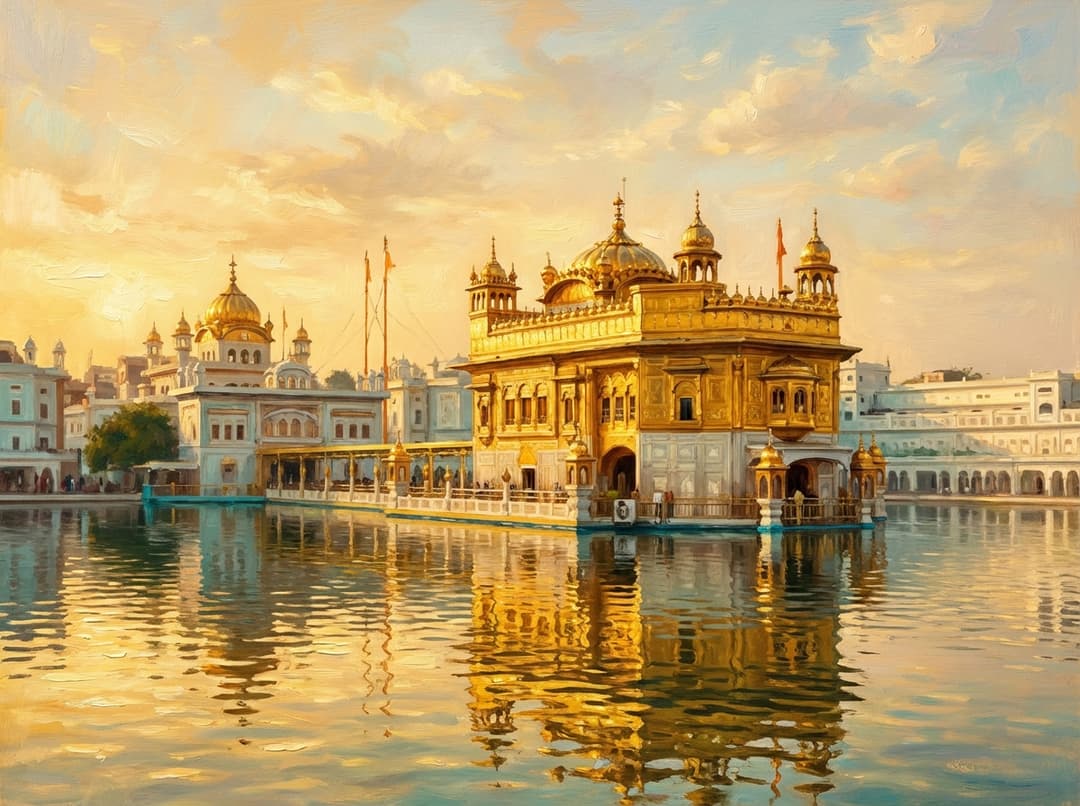
Visitor Insights
Visiting Golden Temple (Harmandir Sahib)
Visiting the Golden Temple is a deeply spiritual and immersive experience. The serene atmosphere, the continuous chanting of hymns, and the stunning golden architecture create a sense of peace and reverence. Visitors are expected to cover their heads as a sign of respect and can participate in the Langar, the community kitchen that serves free meals to all, regardless of background.
Highlights
- Witness the daily Palki Sahib ceremony, where the Guru Granth Sahib is carried in a palanquin.
- Partake in the Langar, a communal meal that embodies the Sikh principle of selfless service.
- Explore the Akal Takht, the seat of Sikh religious authority.
Things to Know
- Dress modestly and cover your head with a scarf or turban.
- Remove your shoes before entering the temple complex.
- Be prepared for large crowds, especially during festivals and holidays.
Location
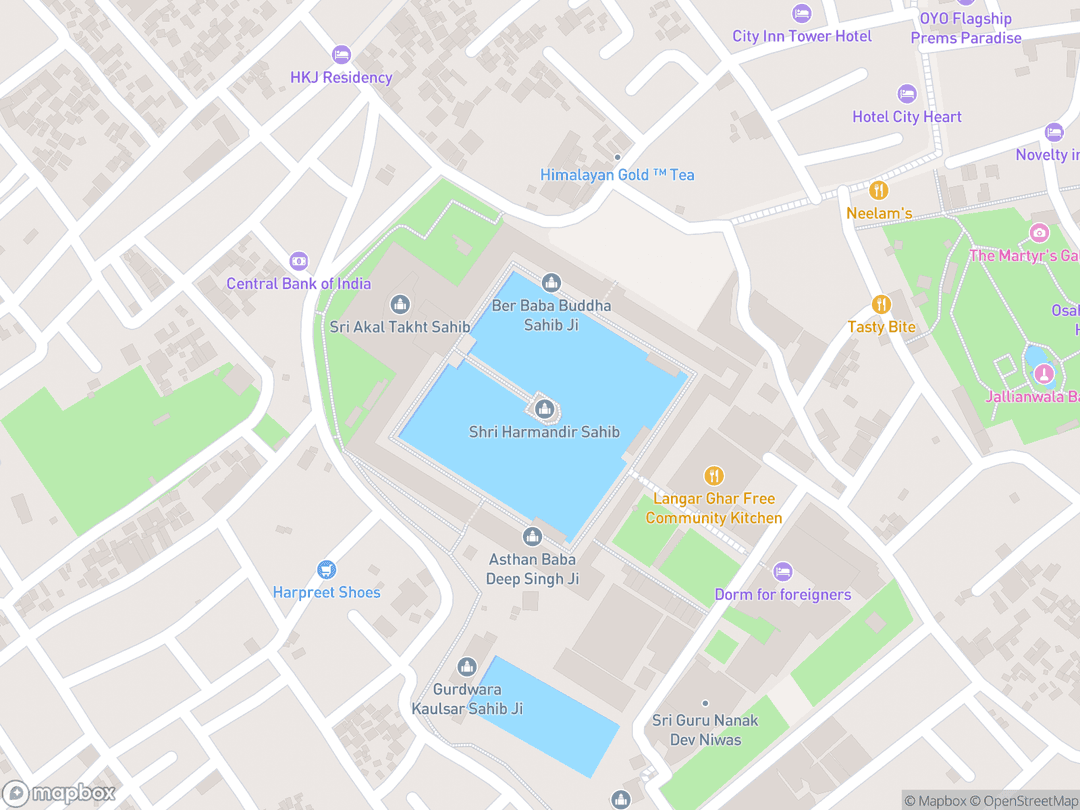
Golden Temple Rd, Atta Mandi, Amritsar, Punjab 143001, India
Hours: Open 24 hours daily
Getting There: Easily accessible by taxi, auto-rickshaw, or bus from Amritsar city center.
Get DirectionsAbout
The Golden Temple, also known as Harmandir Sahib, is the most sacred shrine for Sikhs worldwide. Located in Amritsar, Punjab, India, it stands as a symbol of religious tolerance, equality, and spiritual solace. The temple complex includes the Akal Takht, the primary center of Sikh religious authority, and is surrounded by the Amrit Sarovar, a sacred pool believed to have healing properties.
The temple's architecture is a blend of Hindu and Islamic styles, reflecting the Sikh emphasis on inclusivity and harmony. The gold plating on the temple's exterior, donated by Maharaja Ranjit Singh in the early 19th century, gives it a distinctive and radiant appearance. The daily rituals, including the continuous recitation of the Guru Granth Sahib (the Sikh holy scripture) and the Langar (community kitchen), exemplify the Sikh principles of selfless service and communal sharing.
Visitors from all faiths are welcome to the Golden Temple, and it remains a vibrant center of Sikh culture and spirituality. The serene atmosphere, coupled with the devotional practices, offers a profound experience for pilgrims and tourists alike. The temple's enduring legacy is a testament to the Sikh commitment to peace, justice, and the well-being of all humanity.
Gallery
Symbolic Elements
The temple's exterior features intricate carvings, each rich with spiritual meaning:

Golden Dome
The gilded dome, covered in gold leaf, symbolizes spiritual enlightenment and the divine light. Its reflection in the Amrit Sarovar creates a mesmerizing visual effect, representing the union of the earthly and the divine.

Amrit Sarovar
The sacred pool surrounding the temple is believed to have healing properties and represents purity and immortality. Devotees bathe in its waters to cleanse their souls and seek spiritual rejuvenation.

Nishan Sahib
The Sikh flag, Nishan Sahib, stands tall near the entrance, symbolizing the Sikh faith's sovereignty and presence. It is a saffron-colored flag with the Sikh emblem, the Khanda, representing spiritual and temporal authority.

Guru Granth Sahib
The central scripture of Sikhism, the Guru Granth Sahib, is housed within the temple and is revered as the living Guru. Its verses are continuously recited, providing spiritual guidance and solace to devotees.

Marble Inlay
The intricate marble inlay work adorning the temple walls showcases floral and geometric patterns, reflecting the artistic and cultural heritage of the region. These designs symbolize beauty, harmony, and the interconnectedness of all things.

Langar Hall
The Langar Hall represents the Sikh principle of selfless service and communal sharing. It is where free meals are served to all visitors, regardless of their background, promoting equality and unity.

Akal Takht
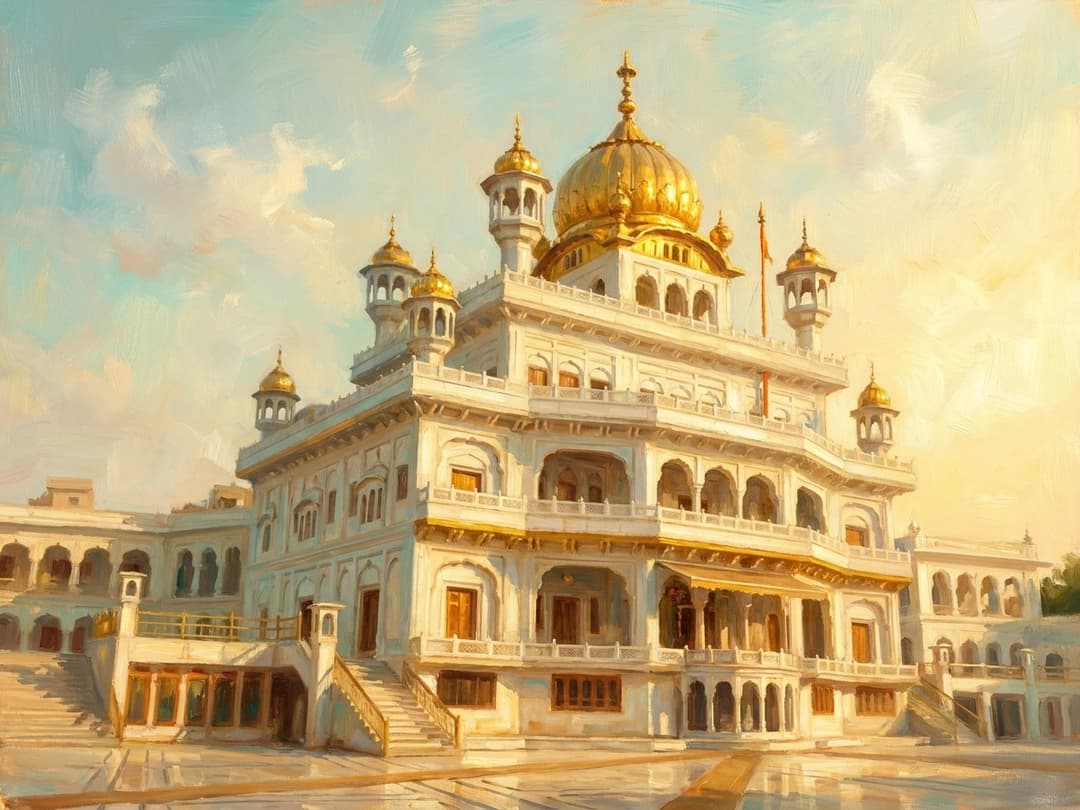
The Akal Takht, located within the temple complex, is the seat of Sikh religious authority. It symbolizes the temporal and spiritual power of the Sikh community and serves as a center for justice and guidance.

Parikrama
The Parikrama is the pathway around the Amrit Sarovar that devotees use to circumambulate the temple. This act of walking around the holy shrine is a sign of respect and devotion.
Interesting Facts
The Golden Temple's foundation was laid by a Muslim Sufi saint, Mian Mir, symbolizing religious harmony.
The temple is surrounded by the Amrit Sarovar, a sacred pool believed to have healing properties.
The Langar serves free meals to over 100,000 people every day, regardless of their background.
The Guru Granth Sahib is continuously recited inside the temple, 24 hours a day.
The temple's architecture is a blend of Hindu and Islamic styles, reflecting Sikh inclusivity.
Maharaja Ranjit Singh donated the gold that covers the exterior of the temple.
The Akal Takht is the seat of the highest Sikh clergy and plays a crucial role in Sikh affairs.
The Golden Temple has faced numerous attacks throughout its history, but it has always been rebuilt.
Volunteers from all walks of life contribute to the daily operations of the temple.
The temple complex includes a museum that showcases Sikh history and artifacts.
Common Questions
What is the significance of the Golden Temple?
The Golden Temple is the holiest shrine in Sikhism, serving as a central place of worship and a symbol of religious tolerance, equality, and spiritual solace. It houses the Guru Granth Sahib, the Sikh holy scripture, and is a testament to Sikh values and principles.
What are the rules for visiting the Golden Temple?
Visitors are required to dress modestly, cover their heads with a scarf or turban, and remove their shoes before entering the temple complex. It is also important to maintain a respectful demeanor and follow the instructions of temple authorities.
What is Langar, and how can I participate?
Langar is the community kitchen that serves free meals to all visitors, regardless of their background. It embodies the Sikh principle of selfless service and communal sharing. Visitors can participate by volunteering to help with food preparation, serving, or cleaning.
What is the Akal Takht, and why is it important?
The Akal Takht is the primary center of Sikh religious authority, located within the Golden Temple complex. It serves as the seat of the highest Sikh clergy and plays a crucial role in guiding the Sikh community on religious and social matters.
How can I reach the Golden Temple from Amritsar?
The Golden Temple is easily accessible by taxi, auto-rickshaw, or bus from Amritsar city center. It is a prominent landmark, and most transportation services are familiar with its location.
Is photography allowed inside the Golden Temple?
Photography is generally allowed in the outer areas of the Golden Temple complex. However, it is restricted in the inner sanctum and during religious ceremonies to maintain the sanctity of the space.
Related Stories
Explore the rich history, traditions, and people connected to this sacred site.
Featured Stories
The Foundation Stone: A Symbol of Interfaith Harmony
1577
In 1577, when Guru Ram Das sought to establish the Golden Temple, he invited Mian Mir, a revered Muslim Sufi saint, to lay the foundation stone. This act symbolized the Sikh faith's commitment to interfaith harmony and inclusivity. Mian Mir's participation highlighted the Sikh belief in the unity of all religions and the importance of mutual respect.
The selection of a Muslim saint to lay the foundation stone was a deliberate message of tolerance and acceptance. It demonstrated that the Golden Temple was not just a place for Sikhs but a sanctuary open to people of all faiths. This tradition of inclusivity continues to be a defining characteristic of the Golden Temple, welcoming visitors from diverse backgrounds.
Source: Shiromani Gurdwara Parbandhak Committee (SGPC)
Maharaja Ranjit Singh's Golden Gift: A Legacy of Devotion
Early 19th Century
In the early 19th century, Maharaja Ranjit Singh, the ruler of the Sikh Empire, made a significant contribution to the Golden Temple by donating gold to cover its exterior. This act of devotion transformed the temple into the radiant structure known today. The gold plating not only enhanced the temple's aesthetic appeal but also symbolized the spiritual wealth and prosperity of the Sikh community.
Maharaja Ranjit Singh's gift was a testament to his deep reverence for the Sikh faith and his commitment to supporting its institutions. The golden exterior of the temple became a symbol of Sikh resilience and grandeur, attracting pilgrims and visitors from far and wide. His legacy continues to inspire Sikhs to uphold their values and contribute to the well-being of society.
Source: GoldenTempleAmritsar.org
Operation Blue Star: A Test of Resilience
1984
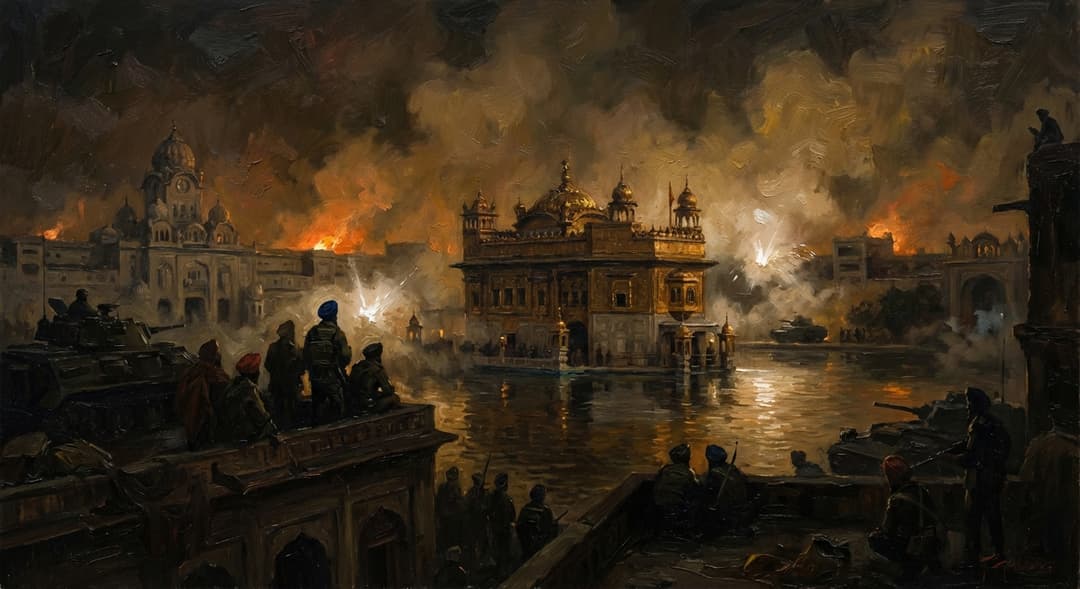
In 1984, the Golden Temple faced a severe challenge during Operation Blue Star, a military operation carried out by the Indian Army. The operation resulted in significant damage to the Akal Takht and other parts of the temple complex. This event deeply impacted the Sikh community and tested their resilience and faith.
Despite the devastation, the Sikh community demonstrated remarkable determination in rebuilding and restoring the Golden Temple. The reconstruction efforts symbolized their unwavering commitment to preserving their heritage and upholding their religious values. The rebuilt Akal Takht stands as a testament to the Sikh spirit of resilience and their ability to overcome adversity.
Source: World History Encyclopedia
Timeline
Foundation Laid
The foundation of the Harmandir Sahib was laid by Mian Mir, a Muslim Sufi saint, symbolizing religious inclusivity.
MilestoneGuru Granth Sahib Installed
The Adi Granth, the first version of the Sikh scripture, was installed in the Harmandir Sahib by Guru Arjan Dev.
MilestoneTemple Damaged
The Harmandir Sahib was damaged by Afghan forces led by Ahmed Shah Abdali.
RenovationReconstruction Begins
Reconstruction of the Harmandir Sahib was initiated by Sikh leaders after the damage inflicted by Afghan forces.
RenovationGold Plating Donated
Maharaja Ranjit Singh donated gold to cover the exterior of the temple, giving it its distinctive golden appearance.
RenovationOperation Blue Star
The Indian Army conducted Operation Blue Star, leading to significant damage to the Akal Takht and parts of the temple complex.
EventReconstruction After Operation Blue Star
Extensive reconstruction and restoration work was undertaken to repair the damage caused by Operation Blue Star.
RenovationOngoing Preservation
Continuous efforts are made to preserve and maintain the Golden Temple's historical and spiritual significance.
EventConstruction Begins
Guru Arjan Dev initiated the construction of the temple, envisioning it as a central place of worship for Sikhs.
MilestoneConstruction Completed
The main structure of the Harmandir Sahib was completed, marking a significant milestone in Sikh history.
MilestoneTemple Defenses
During the 18th century, the temple faced numerous attacks, leading to the construction of defensive structures around it.
RenovationMarble Work and Inlay
Extensive marble work and floral inlays were added to the temple, enhancing its aesthetic appeal.
RenovationModern Renovations
Various modern renovations and improvements have been made to the temple complex to accommodate the growing number of visitors.
RenovationCOVID-19 Pandemic
The Golden Temple temporarily closed to visitors due to the COVID-19 pandemic, with strict safety measures implemented upon reopening.
EventLand Acquisition
Guru Ram Das acquired the land for the temple, which was previously a site of natural beauty and tranquility.
MilestoneHistory by Decade
1570s — Founding
The site was chosen for its natural beauty and tranquility.
The story of the Golden Temple begins in 1577 when Guru Ram Das, the fourth Sikh Guru, acquired land in Amritsar. This site, chosen for its serene environment, was envisioned as a central place of worship for the growing Sikh community. The construction of the temple marked a significant step in establishing Amritsar as a major Sikh center.
1580s–1600s — Construction and Installation
The temple was open to people of all castes and creeds.
Under the guidance of Guru Arjan Dev, the fifth Sikh Guru, construction of the Harmandir Sahib began in 1588. The Guru invited Mian Mir, a Muslim Sufi saint, to lay the foundation stone, symbolizing the Sikh commitment to interfaith harmony. The temple was completed in 1601, and in 1604, the Adi Granth, the first version of the Sikh scripture, was installed, solidifying the temple's spiritual importance.
1700s — Challenges and Resilience
The temple was rebuilt with even greater splendor.
The 18th century was a tumultuous period for the Golden Temple, marked by numerous attacks and desecrations. In 1762, Afghan forces led by Ahmed Shah Abdali caused significant damage to the temple. Despite these challenges, the Sikh community demonstrated remarkable resilience, initiating reconstruction efforts to restore the temple's glory.
1800s — Golden Era
The gold plating transformed the temple into a radiant symbol.
The early 19th century marked a golden era for the Golden Temple, largely due to the patronage of Maharaja Ranjit Singh. He donated gold to cover the temple's exterior, giving it its distinctive golden appearance. This period also saw significant enhancements to the temple's infrastructure and artistic embellishments.
1900s — Modernization and Preservation
The temple remains a beacon of hope and inspiration.
The 20th century brought modernization and preservation efforts to the Golden Temple. Various renovations and improvements were undertaken to accommodate the growing number of visitors and ensure the temple's long-term preservation. The temple continued to serve as a central place of worship and a symbol of Sikh identity.
1980s — Operation Blue Star and Aftermath
The community's resilience was tested, but their spirit remained unbroken.
In 1984, the Golden Temple faced a severe crisis during Operation Blue Star, a military operation carried out by the Indian Army. The operation resulted in significant damage to the Akal Takht and other parts of the temple complex. The Sikh community responded with a renewed commitment to rebuilding and restoring the temple's sanctity.
2000s–Present — Continued Growth and Global Recognition
The Golden Temple stands as a testament to the enduring spirit of Sikhism.
The Golden Temple continues to thrive as a global symbol of Sikhism, attracting millions of visitors each year. Ongoing preservation efforts ensure the temple's historical and spiritual significance is maintained for future generations. The temple's message of peace, equality, and selfless service resonates with people from all walks of life.
Religious Significance
The Golden Temple, or Harmandir Sahib, holds profound religious significance for Sikhs as their holiest shrine. It embodies the core tenets of Sikhism, including equality, selfless service, and devotion to one God. The temple's spiritual atmosphere and architectural grandeur create a sacred space for prayer, meditation, and reflection.
The primary purpose of the Golden Temple is to serve as a central place of worship for Sikhs, where they can connect with the divine, seek spiritual guidance, and participate in communal activities. It is also a symbol of Sikh identity and a testament to their resilience and commitment to their faith.
Sacred Ordinances
Amrit Sanskar
Amrit Sanskar is the Sikh initiation ceremony, in which individuals commit to the Sikh faith and receive Amrit (holy nectar). This ceremony is often performed at the Golden Temple, marking a significant milestone in a Sikh's spiritual journey.
Kirtan
Kirtan is the devotional singing of hymns from the Guru Granth Sahib. It is a central practice in Sikh worship and is performed continuously at the Golden Temple, creating a spiritually uplifting atmosphere.
Langar
Langar is the communal kitchen that serves free meals to all visitors, regardless of their background. It embodies the Sikh principle of selfless service and promotes equality and unity among all people.
The Guru Granth Sahib
The Guru Granth Sahib, the central scripture of Sikhism, is housed within the Golden Temple and is revered as the living Guru. Its verses provide spiritual guidance and solace to devotees, and its presence makes the temple a sacred space for Sikhs worldwide.
The Amrit Sarovar
The Amrit Sarovar, the sacred pool surrounding the temple, is believed to have healing properties and represents purity and immortality. Devotees bathe in its waters to cleanse their souls and seek spiritual rejuvenation, reinforcing their connection to the divine.
Similar Temples
Sources & Research
Every fact on Temples.org is backed by verified Sources & Research. Each piece of information is rated by source tier and confidence level.
View All Sources (5)
| Field | Source | Tier | Retrieved |
|---|---|---|---|
| About & Historical Background | Encyclopedia Britannica (opens in a new tab) | B | 2024-01-01 |
| Architecture & Construction | GoldenTempleAmritsar.org (opens in a new tab) | A | 2024-01-01 |
| Historical Significance | World History Encyclopedia (opens in a new tab) | B | 2024-01-01 |
| Golden Temple History | Ministry of Culture, Government of India (opens in a new tab) | B | 2024-01-01 |
| Akal Takht | Shiromani Gurdwara Parbandhak Committee (SGPC) (opens in a new tab) | A | 2024-01-01 |