Visitor Insights
Visiting Great Synagogue of Rome
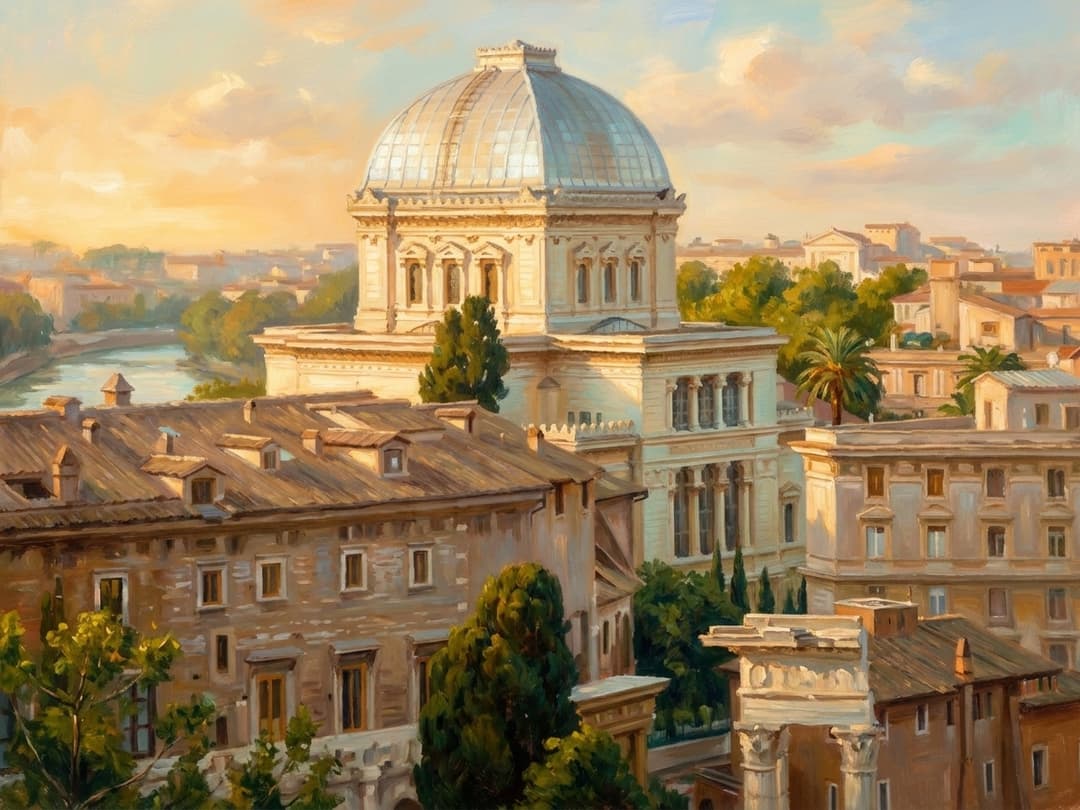
Visiting the Great Synagogue of Rome offers a profound journey through two millennia of Jewish history in the Eternal City. Access to the main sanctuary is provided exclusively through guided tours organized by the Jewish Museum of Rome, accompanied by mandatory security protocols.
Highlights
- Explore the soaring central sanctuary beneath Rome's only square aluminum dome.
- View preserved 16th-century marble Torah Arks from the historic Cinque Scole.
- Visit the lower-level Tempio Spagnolo featuring ancient Sephardic liturgical furnishings.
- Tour the Jewish Museum showcasing ceremonial textiles, silver, and ancient manuscripts.
Things to Know
- Mandatory security screening at the entrance requires valid government photo identification.
- Modest clothing covering shoulders and knees is strictly required for all visitors.
- Male visitors must wear a kippah or hat inside the sanctuary, with head coverings provided at entry.
- Closed to tourists on Saturdays for Shabbat services and on major Jewish holy days.
Location
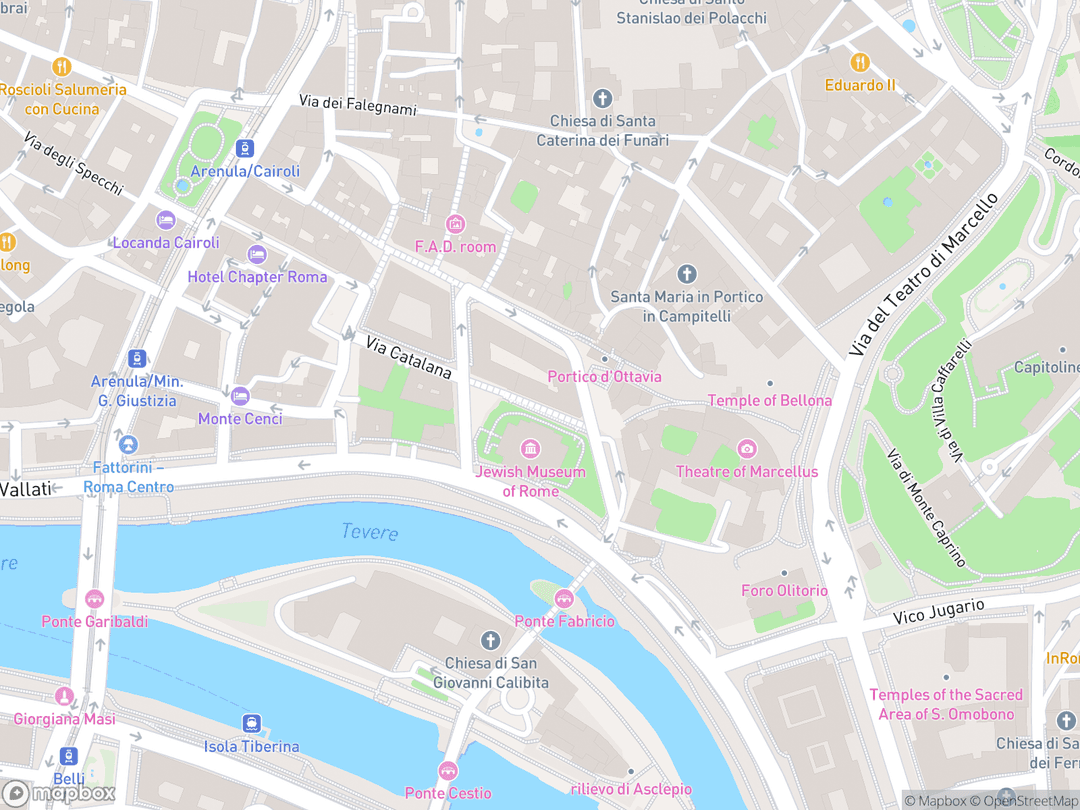
Lungotevere de' Cenci, 00186 Roma RM, Italy
Hours: Sunday–Thursday: 10:00 AM – 6:00 PM; Friday: 10:00 AM – 4:00 PM (Winter) / 5:00 PM (Summer); Closed Saturdays and Jewish Holidays.
Getting There: Take Tram Line 8 to Arenula/Cairoli or Bus 23, 63, or 280 to Pettinari along the Tiber River front.
Get DirectionsTips for Your Visit
Book Museum Tour in Advance
Sanctuary access is included with the Jewish Museum entry ticket, so reserve online to secure your preferred tour time.
Observe Dress Code Standards
Ensure shoulders and knees are covered and bring a suitable hat or kippah to pass through security seamlessly.
Explore the Surrounding Historic Ghetto
Combine your visit with a walking tour of Rione Sant'Angelo to taste authentic Roman-Jewish cuisine like carciofi alla giudia.
About
The Great Synagogue of Rome, known locally as the Tempio Maggiore di Roma, stands along the banks of the Tiber River as the religious heart of one of the world's oldest continuous Jewish communities. Designed by architects Vincenzo Costa and Osvaldo Armanni, the sanctuary was dedicated in 1904 to mark the emancipation of Roman Jews following Italian unification and the dismantling of the walled Ghetto.
As a central house of worship within the Judaic tradition—a foundational pillar of the Abrahamic faiths—the Tempio Maggiore bridges ancient Biblical heritage with modern civic life. The complex houses the main sanctuary for the Italian Rite (Nusach Italki), the lower-level Spanish Synagogue (Tempio Spagnolo), and the Jewish Museum of Rome, serving as an active center of prayer, culture, and interfaith dialogue.
Gallery
Symbolic Elements
The temple's exterior features intricate carvings, each rich with spiritual meaning:

Square Aluminum Dome
A prominent square-based metal dome representing civic visibility and freedom from historical confinement.

Tables of the Law
Stone carved Decalogue tablets atop the pediment affirming the covenantal revelation at Sinai.

Seven-Branched Menorah
Sacred candelabra reliefs reclaiming the ancient symbol carried away on the nearby Arch of Titus.

Celestial Starry Vault
A deep blue painted inner dome studded with gold stars depicting the heavenly firmament.

Palm Leaf Capitals
Carved column capitals with Near Eastern palm motifs symbolizing biblical righteousness and growth.

Cinque Scole Spolia
Historic 16th-century marble altars and plaques rescued from the five original Ghetto synagogues.

Aron haKodesh Aedicule
An ornate marble holy Ark designed as a classic temple portal to house the sacred Torah scrolls.
Interesting Facts
The Tempio Maggiore features the only square dome in Rome's skyline, specifically chosen to stand apart from Catholic basilica cupolas. (Tier A)
Roman Jews represent the oldest continuous Jewish diaspora community in Europe, establishing roots in Rome in 161 BCE. (Tier B)
The monumental sanctuary was built on land cleared after the 1870 abolition of the walled Roman Ghetto. (Tier A)
Furnishings from five 16th-century hidden synagogues were preserved and integrated into the complex. (Tier B)
Pope John Paul II made a historic visit here in 1986, marking the first papal visit to a synagogue in modern history. (Tier A)
The sanctuary houses a 1904 Austrian Rieger pipe organ used for civil ceremonies and choir performances. (Tier B)
In 1948, local Jews celebrated Israeli independence by marching through the nearby Arch of Titus in reverse. (Tier B)
A special Shabbat blessing is recited weekly to honor women who hand-sew ceremonial Torah textiles. (Tier A)
The lower-level Spanish Synagogue contains 16th-century wooden liturgical art saved from Sephardic refugees. (Tier B)
Memorial plaques at the entrance honor victims of the 1943 Nazi deportations and the 1982 terrorist attack. (Tier A)
Common Questions
Why does the Great Synagogue of Rome have a square dome?
The architects designed an aluminum square dome so the building would be instantly recognizable and visually distinct from Rome's round church domes.
Can non-Jewish tourists visit the sanctuary?
Yes, non-Jewish visitors can tour the sanctuary by purchasing a ticket to the Jewish Museum of Rome, which includes a guided security-screened tour.
What rite of services is performed at the Tempio Maggiore?
The main sanctuary conducts services according to the ancient Roman Rite (Nusach Italki), while the lower sanctuary follows the Sephardic rite.
Is the synagogue open on Saturdays for sightseeing?
No, tourist visits and museum tours are closed on Saturdays so the sanctuary can be used exclusively for Shabbat prayer services.
Featured Stories
Building a Visible Sanctuary After Confinement
1901–1904
Following the 1870 abolition of the Roman Ghetto, the newly emancipated Jewish community sought to construct a monumental house of worship that could not be hidden. Rejecting classical Catholic church architecture, architects Costa and Armanni chose an eclectic Orientalizing style crowned by an aluminum square dome. Inaugurated in 1904 in the presence of King Victor Emmanuel III, the structure stood as an uncompromising statement of civic presence and religious equality along the Tiber River.
Source: Jewish Museum of Rome Historical Archives
The Liberation Service of June 1944
June 4, 1944
During World War II, the synagogue building miraculously survived intact despite Nazi raids and the tragic deportation of over 1,000 Roman Jews. Immediately following the Allied liberation of Rome on June 4, 1944, Jewish Allied soldiers joined surviving community members inside the sanctuary for a solemn service of prayer and remembrance. Broadcast internationally, the emotional gathering signaled the survival and renewal of European Jewry amidst the ruins of war.
Source: Comunità Ebraica di Roma Records
Pope John Paul II and the Historic Embrace
April 13, 1986
On April 13, 1986, Pope John Paul II crossed the Tiber River to make the first recorded visit by a Roman Pontiff to a synagogue since early church history. Welcomed by Chief Rabbi Elio Toaff, the Pope embraced the rabbi and referred to the Jewish people as 'our dearly beloved brothers, or one might say, our elder brothers.' This transformative moment reshaped Catholic-Jewish relations globally and cemented the Tempio Maggiore as a beacon of modern interfaith dialogue.
Source: Vatican Press Office Documentation
Timeline
Abolition of the Roman Ghetto
Italian unification troops enter Rome, ending centuries of Papal rule and granting full civic rights to Roman Jews.
MilestoneUrban Reclamation Plan
Municipal authorities demolish the dilapidated Ghetto structures, clearing blocks along the Tiber for a new synagogue.
EventArchitectural Design Selection
Vincenzo Costa and Osvaldo Armanni win the competition to design a monumental civic synagogue.
EventGroundbreaking Ceremony
Construction begins on the Greek cross sanctuary utilizing modern steel and aluminum structural framing.
component.timeline.groundbreakingInauguration and Dedication
King Victor Emmanuel III attends the grand opening of the Tempio Maggiore alongside community leadership.
DedicationEnactment of Racial Laws
Fascist legislation severely restricts civil rights for Italian Jews, casting a shadow over the community.
EventGhetto Raid and Deportations
Nazi forces raid the surrounding neighborhood, deporting over 1,000 Roman Jews to concentration camps.
EventLiberation Thanksgiving Service
Allied troops liberate Rome and join local survivors for an internationally broadcast thanksgiving prayer service.
EventTerrorist Attack Memorialized
A violent attack on congregants leaving service claims one child's life, sparking heightened national security.
EventHistoric Papal Visit
Pope John Paul II visits the Tempio Maggiore, embracing Chief Rabbi Elio Toaff in historic interfaith reconciliation.
MilestoneCentennial Celebration
The Great Synagogue marks 100 years of operation alongside an expanded Jewish Museum exhibition.
MilestoneInterfaith Papal Continuity
Pope Francis visits the Great Synagogue to reaffirm warm interfaith bonds with Chief Rabbi Riccardo Di Segni.
EventHistory by Decade
1870s–1890s — Emancipation and Planning
Following the 1870 fall of the Papal States, Roman Jews gained full citizenship rights. In 1888, municipal authorities demolished the old Ghetto, prompting the community to launch an architectural competition for a grand central synagogue.
1900s–1920s — Construction and Inauguration
Groundbreaking occurred in 1901, and the Tempio Maggiore was dedicated on July 28, 1904. Historic marble furnishings recovered from the five former Ghetto synagogues were incorporated into the lower level sanctuary.
1930s–1940s — Darkness and Rebirth
The Fascist Racial Laws of 1938 stripped local Jews of rights, followed by the horrific Nazi deportation raid of October 1943. After Rome's liberation in June 1944, the sanctuary reopened to host historic thanksgiving services.
1980s–2000s — Tragedy, Healing, and Centenary
A 1982 terrorist attack claimed a child's life, prompting deep national solidarity. In 1986, Pope John Paul II made his milestone visit, and in 2004, the synagogue celebrated its 100th anniversary with an expanded museum.
2010s–2020s — Interreligious Dialogue and Preservation
Popes Benedict XVI and Francis continued the tradition of interfaith visits to the sanctuary. Major stone preservation and structural maintenance projects were completed in 2024 to protect the riverfront monument.
Architecture & Facilities
The Great Synagogue of Rome features an Eclectic architectural style incorporating Assyro-Babylonian decorative motifs, a Greco-Roman cross floor plan, and Art Nouveau interior embellishments, intentionally avoiding Gothic or Baroque forms associated with Christian cathedrals.
Building Materials
Travertine Blockwork
Rusticated travertine stone forms the heavy exterior base along the river embankment.
Aluminum Shell
Lightweight structural aluminum panels sheath the prominent square dome frame.
Polychrome Marbles
Rare imported and salvaged marbles adorn the internal pillars, Aron, and floor mosaics.
Art Nouveau Stained Glass
Custom geometric and floral stained glass panels designed by master craftsman Cesare Picchiarini.
Interior Features
Main Sanctuary Hall
A spacious hall seating 1,500 congregants beneath a vault painted in lapis lazuli and gold.
Aron haKodesh
A marble holy Ark styled as a classical aedicule containing the sacred Torah scrolls.
Ezrat Nashim
Elevated women's galleries supported by decorated columns flanking the main floor on three sides.
Tempio Spagnolo
A lower sanctuary furnished with 16th-century carved wood altars from Sephardic congregations.
Temple Grounds
The riverfront grounds feature security perimeters, memorial courtyard plaques, and access steps to the Jewish Museum of Rome.
Additional Facilities
Houses the Jewish Museum of Rome, community offices, historical archives, and lower-level daily prayer chapels.
Religious Significance
In the Judaic theological context—the original roots of the Abrahamic traditions—the synagogue (Beit Knesset) serves as a sanctuary of prayer, Torah learning, and assembly modeled after the spiritual ideals of the ancient Jerusalem Temple.
Serves as the central house of worship, administrative seat, and spiritual heart for the Jewish Community of Rome.
Sacred Ordinances
Tefillah (Daily Prayer)
Conducts regular morning, afternoon, and evening minyanim following the traditional Italian Rite.
Kriat HaTorah (Torah Reading)
Public reading of the weekly Torah portion from handwritten parchment scrolls during Shabbat and holy days.
Lifecycle Ceremonies
Hosts Bar Mitzvahs, Bat Mitzvahs, weddings, and community memorial services for Roman Jewry.
The Italian Rite (Nusach Italki)
The main sanctuary preserves one of the oldest distinct liturgical rites in the Jewish world, predating both Ashkenazic and Sephardic traditions.
Sephardic Continuity in the Lower Temple
The lower Tempio Spagnolo maintains the Sephardic customs brought by refugees expelled from Spain in 1492 who integrated into Roman life.
Similar Temples
Sources & Research
Every fact on Temples.org is backed by verified Sources & Research. Each piece of information is rated by source tier and confidence level.
View All Sources (8)
| Field | Source | Tier | Retrieved |
|---|---|---|---|
| About & Historical Background | Comunità Ebraica di Roma (opens in a new tab) | A | 2026-02-22 |
| About & Historical Background | Museo Ebraico di Roma (opens in a new tab) | A | 2026-02-22 |
| Architecture & Interior Design | Ministero della Cultura - Italia (opens in a new tab) | B | 2026-02-22 |
| Architecture & Interior Design | Roma Capitale - Dipartimento Cultura (opens in a new tab) | B | 2026-02-22 |
| Timeline & Modern Events | Holy See Press Office (opens in a new tab) | A | 2026-02-22 |
| Timeline & Modern Events | American-Israeli Cooperative Enterprise (opens in a new tab) | B | 2026-02-22 |
| Religious & Civic Significance | Rabbinato Capo di Roma (opens in a new tab) | A | 2026-02-22 |
| Religious & Civic Significance | Enciclopedia Treccani (opens in a new tab) | B | 2026-02-22 |