Visitor Insights
Visiting Pisa Cathedral
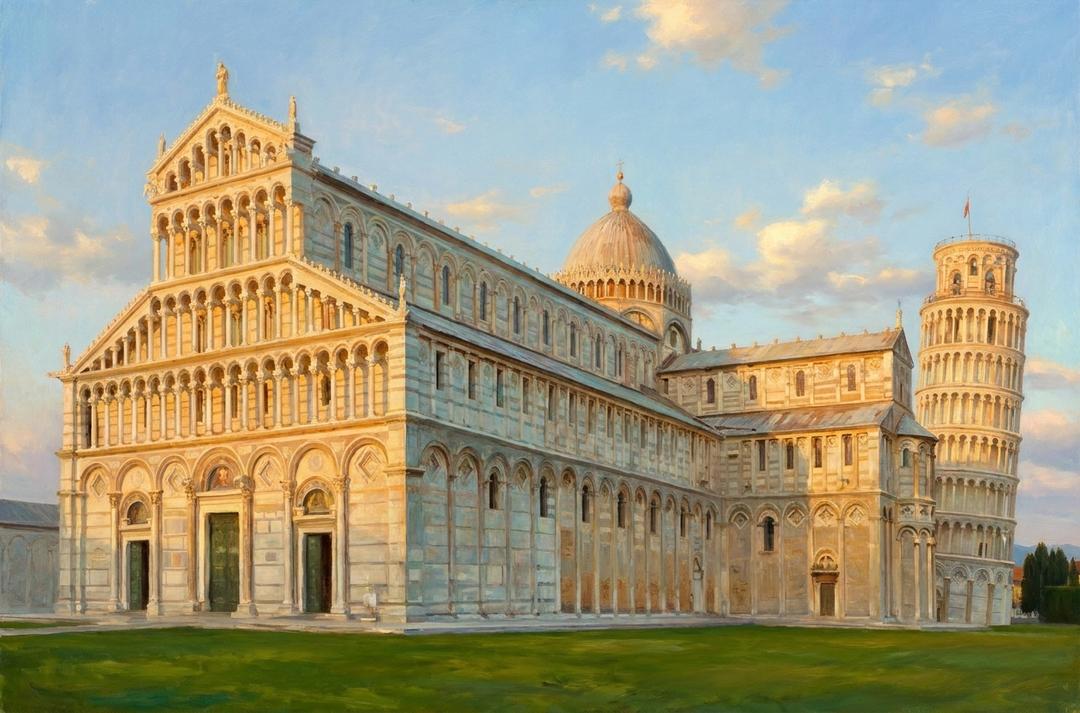
Pisa Cathedral welcomes worshipers and travelers into one of Europe's most celebrated sacred complexes. Visitors experience shimmering Romanesque marble arcades, the celebrated pulpit of Giovanni Pisano, and quiet liturgical chapels. Timed passes are required, and respectful church attire covering shoulders and knees is strictly enforced.
Highlights
- Master Cimabue's majestic apse mosaic of Christ enthroned
- The intricately carved fourteenth-century marble pulpit by Giovanni Pisano
- Master Bonanno's Romanesque bronze narrative panels on the Porta di San Ranieri
- Alternating dark serpentinite and white San Giuliano marble revetment
Things to Know
- Modest ecclesiastical dress is required to enter the active cathedral
- Entry is free but requires booking a timed reservation pass
- A separate, quiet chapel is reserved exclusively for private prayer
- Large luggage packs and tripods are strictly prohibited inside
Location
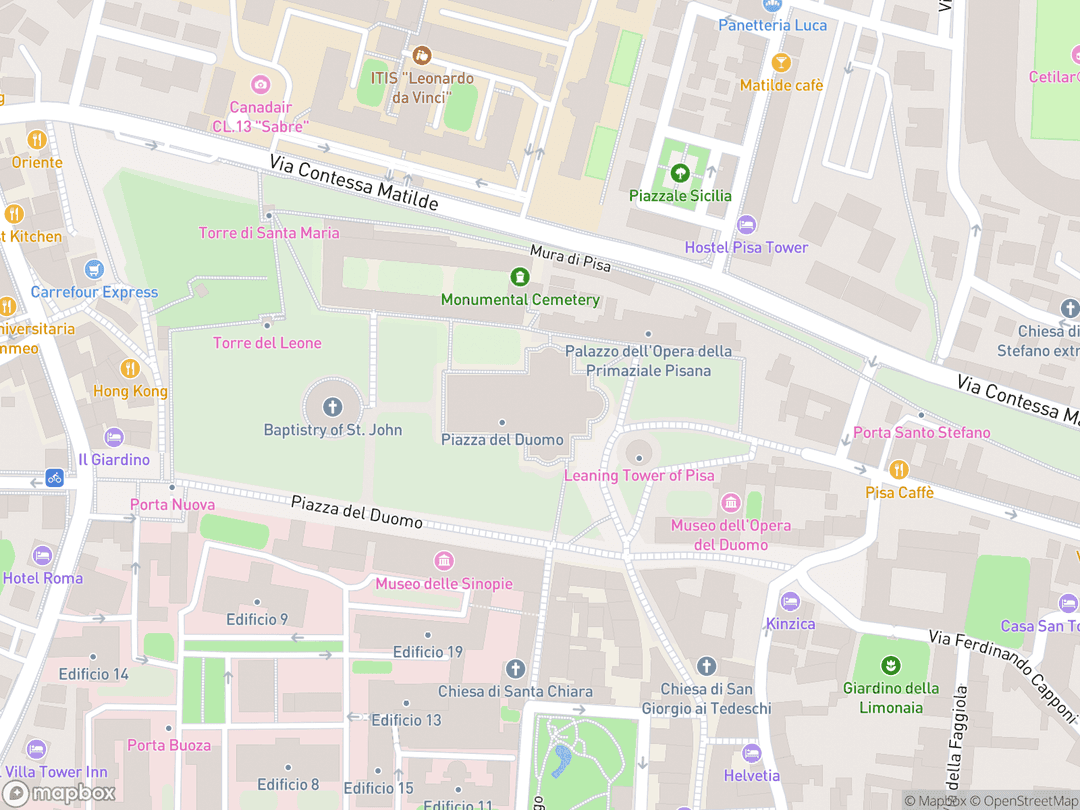
Piazza del Duomo, 56126 Pisa PI, Tuscany, Italy
Hours: Daily 10:00 AM - 7:00 PM (Summer), 10:00 AM - 5:00 PM (Winter)
Getting There: Pisa San Rossore railway station is an 8-minute walk from the western gate of Piazza dei Miracoli.
Get DirectionsTips for Your Visit
Reserve Free Cathedral Passes in Advance
Although general admission to the cathedral is free, visitors must reserve a timed ticket online or at the ticket office.
Witness the Solar Equinox Phenomenon
Visit on March 25 at midday to witness a beam of light illuminate the Annunciation marble egg shelf above the pulpit.
Enter Through Porta di San Ranieri
Pause at the southern transept to study Bonanno Pisano's original 1180 bronze reliefs depicting the Gospels.
About
Pisa Cathedral stands as a monumental meeting point between heavenly majesty and human devotion within the historic Abrahamic tradition. Consecrated in 1118 under the dedication of the Assumption of Mary, the cathedral visualizes the ancient biblical archetype of the sacred sanctuary, where durable stone and radiant light orient believers toward the divine covenant.
As the primatial seat of the Archbishop of Pisa, the basilica embodies Catholic sacramental theology and apostolic continuity. The structure harmonizes Roman civic grandeur, Byzantine domical engineering, and Islamic decorative geometry, commemorating the maritime ascendancy of the medieval Pisan Republic while functioning as an enduring house of Eucharistic worship.
Gallery
Symbolic Elements
The temple's exterior features intricate carvings, each rich with spiritual meaning:
Christ in Majesty Mosaic
Cimabue's apse mosaic portrays Christ as cosmic ruler and supreme judge of all creation.

Giovanni Pisano Pulpit
Carved caryatids and lions symbolize theological virtues supporting the proclaimed Gospel.

Porta di San Ranieri
Bronze relief panels narrate the earthly ministry and resurrection of Christ for pilgrims.

The Pisan Griffin
The captured Islamic bronze beast symbolizes the dual divine and earthly natures of Christ.

Galileo Lamp
The bronze incense burner serves as a perpetual sanctuary flame of the Holy Spirit.
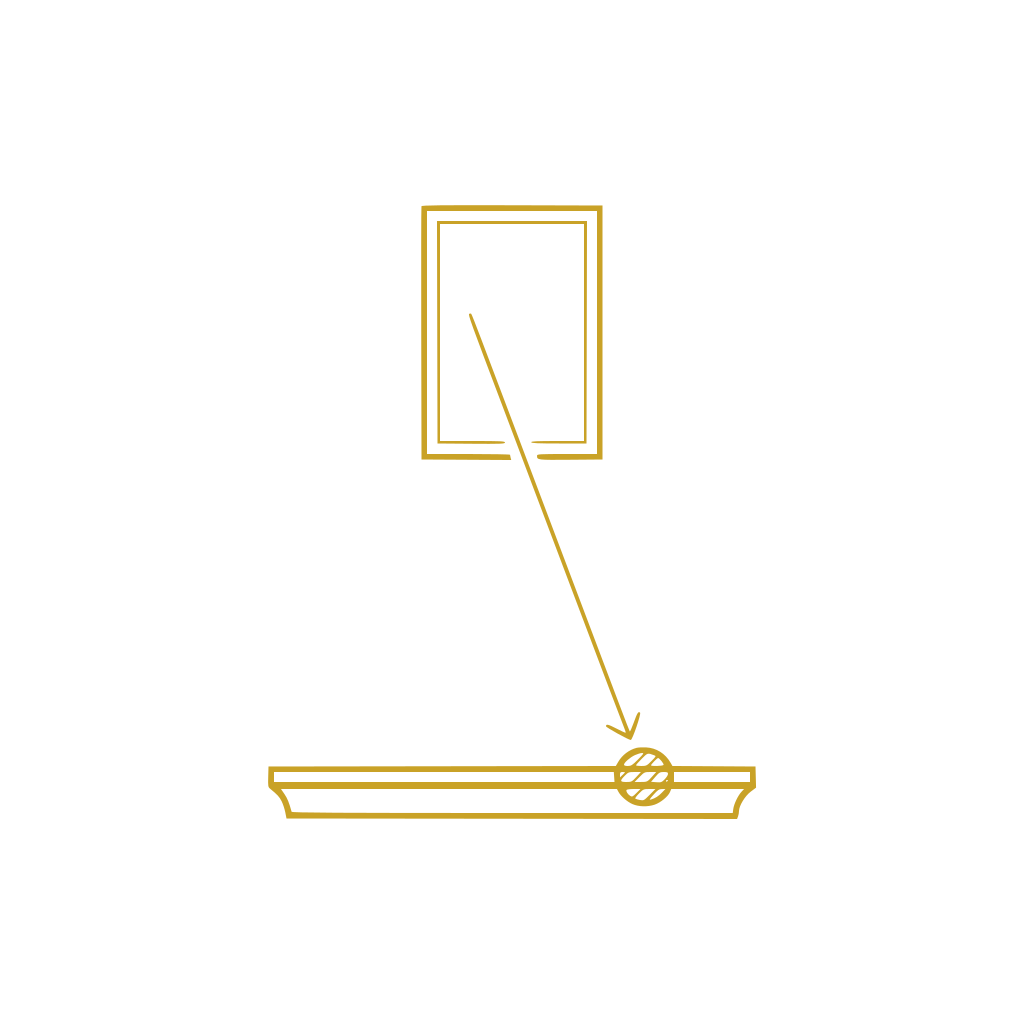
Capodanno Solar Ray
An elevated window directs sunlight onto a marble shelf to mark the Annunciation of Christ.

Polychrome Marble Stripes
Alternating dark and light stones signify divine light overcoming the shadows of mortality.

Granite Spolia Columns
Salvaged Roman columns express the historical succession of the Church over the ancient empire.
Interesting Facts
The cathedral's foundation was financed by wealth captured during the 1063 naval expedition against Saracen Palermo (Tier A).
An annual solar alignment marks the Pisan New Year each March 25 when a single sunbeam strikes an egg-shaped marble shelf (Tier A).
Giovanni Pisano's masterpiece pulpit lay dismantled in storage crates for 331 years following the 1595 roof fire (Tier B).
Restorers safely utilized living Pseudomonas stutzeri bacteria to consume aged glues from delicate painted panels (Tier B).
Like the famous Leaning Tower, the cathedral floor visibly dips and slopes due to underlying marshy alluvial soil (Tier B).
An eleventh-century Islamic bronze griffin captured during Mediterranean voyages perched on the roof apex for 800 years (Tier B).
The famous bronze chandelier in the nave was cast four years after Galileo observed the pendulum properties in 1583 (Tier B).
Historical payroll records confirm the apse figure of St. John the Evangelist was Cimabue's last verified painting (Tier A).
Multiple interior marble foundation stones feature salvaged first-century Roman inscriptions from ancient pagan temples (Tier B).
Soil surrounding the adjacent Camposanto cemetery was physically carried by ship from Mount Calvary in Jerusalem (Tier C).
Common Questions
Is Pisa Cathedral an active church?
Yes, the cathedral is an active Roman Catholic metropolitan seat celebrating daily mass and liturgical rites.
Why is entry to the cathedral free?
Cathedral entry is free as a sacred house of worship, though visitors must acquire a timed admission pass.
Does the cathedral lean like the Leaning Tower?
Yes, the cathedral rests on the same alluvial soil and exhibits noticeable settlement dips across its floor.
Who was the master architect of Pisa Cathedral?
Master architect Buscheto designed the original cathedral in 1064, and Rainaldo expanded the facade in the twelfth century.
Featured Stories
The Bold Siting on the Meadow
1064
Master architect Buscheto broke with medieval tradition by establishing Pisa's new cathedral outside the protective Roman city walls. Placed upon an open green pasture, the cathedral declared that Pisa trusted in its maritime power and divine favor rather than stone fortifications. This open precinct became the famed Campo dei Miracoli, welcoming arriving seafaring merchants with gleaming white marble.
Source: Opera della Primaziale Pisana Historical Archives
Cimabue's Final Brushstrokes
1302
Florentine master Cimabue climbed scaffolding inside the soaring apse to complete the face of Saint John the Evangelist in the great mosaic. Church payroll registers verify this radiant figure was the legendary artist's final documented creation before his passing. The mosaic survived centuries of earthquakes and the catastrophic 1595 fire, preserving proto-Renaissance emotional sensitivity.
Source: Archdiocese of Pisa Historical Register
Resurrecting Pisano's Dismantled Masterpiece
1926
Following the fire of 1595, Giovanni Pisano's magnificent pulpit was disassembled and stored across various back rooms as tastes favored classical symmetry. For more than three centuries, its intricate narrative panels, caryatid statues, and stone lions remained scattered and forgotten. Art historian Peleo Bacci led a meticulous 1926 restoration that reassembled the fragments back into the nave.
Source: Soprintendenza Archeologia, Belle Arti e Paesaggio di Pisa
Timeline
Palermo Naval Campaign
The Pisan fleet captures wealth in Sicily, securing funds to establish a grand new primatial cathedral.
MilestoneGroundbreaking Under Buscheto
Master architect Buscheto begins laying foundations on open meadows outside the Roman walls.
component.timeline.groundbreakingElevation to Metropolitan See
Pope Urban II elevates Pisa to an archdiocese with primatial jurisdiction across the Western Mediterranean.
MilestoneFacade Conception by Rainaldo
Master Rainaldo lengthens the nave by three western bays and designs the tiered colonnaded facade.
MilestoneSolemn Papal Consecration
Pope Gelasius II consecrates the cathedral's high altar and basilica before civic leaders.
DedicationSan Ranieri Bronze Portal
Sculptor Bonanno Pisano casts 24 biblical narrative bronze relief panels for the south portal.
MilestoneCimabue Completes Apse Mosaic
Master Cimabue finishes the mosaic depicting St. John the Evangelist beneath Christ in Majesty.
MilestoneCompletion of Pisano Pulpit
Giovanni Pisano concludes eight years of sculpting the monumental Gothic marble pulpit.
MilestoneThe Great Timber Fire
A catastrophic fire destroys the medieval open-timber truss roof and damages western bronze doors.
EventRenaissance Reconstruction
The Medici Grand Dukes install the gilded coffered ceiling and cast replacement bronze entry portals.
RenovationPulpit Reassembly
Art historians reconstruct and re-erect Giovanni Pisano's long-dispersed marble pulpit in the nave.
RenovationUNESCO World Heritage Listing
Piazza del Duomo and its cathedral ensemble receive collective inscription as a World Heritage Site.
MilestoneHistory by Decade
1060s — Foundations of the Maritime Basilica
No temple matches this house of marble, raised from the spoils of eastern seas to honor the Queen of Heaven.
Following naval victories in Sicily, the Republic of Pisa dedicated vast maritime wealth to erecting an unprecedented primatial cathedral. Architect Buscheto laid out an ambitious Latin-cross basilica on the city's northwest meadows. The foundational layout incorporated salvaged Roman granite monoliths to proclaim civic triumph and Christian devotion.
1100s–1110s — Nave Extension and Papal Consecration
Master builder Rainaldo succeeded Buscheto, extending the nave by three western bays to create a sprawling five-aisled floor plan. Rainaldo designed the signature four-tiered colonnaded west facade that defined Pisan Romanesque architecture. On September 26, 1118, Pope Gelasius II consecrated the high altar before civic magistrates.
1180s — Bronze Narrative Artistry
Master bronze caster Bonanno Pisano completed twenty-four sculpted panels for the south transept portal facing the bell tower. These expressive bronze doors instructed arriving Mediterranean pilgrims in the life and passion of Jesus Christ. During this decade, craftsmen expanded the cathedral's distinctive two-tone marble revetment.
1300s — Gothic Pulpit and Apse Mosaics
Tuscan masters brought world-renowned Gothic emotional intensity to the cathedral interior. Cimabue completed the figure of St. John in the apse mosaic, while Giovanni Pisano carved an octagonal marble pulpit supported by caryatids. These works marked the dawn of Italian Renaissance sculptural expression.
1590s–1600s — The Great Fire and Medici Reconstruction
On October 25, 1595, a devastating timber fire destroyed the medieval painted roof trusses and damaged original doors. The ruling Medici family funded a lavish Renaissance restoration featuring a gilded coffered ceiling. Giambologna's workshop cast new monumental bronze portals for the west facade.
1920s–1980s — Restoration and World Heritage Recognition
In 1926, art historians completed the reassembly of Giovanni Pisano's pulpit, returning the masterpiece to its liturgical home after three centuries. World War II bombardments damaged adjacent monuments, but the cathedral survived structurally intact. In 1987, UNESCO recognized the Piazza del Duomo ensemble as a World Heritage Site.
Architecture & Facilities
Pisa Cathedral is the definitive masterpiece of Pisan Romanesque architecture, blending classical Roman basilican proportion with Byzantine domical vaulting and Islamic decorative geometry. The design is characterized by rhythmic tiers of open marble colonnades, polychrome masonry banding, and a monumental five-aisled interior illuminated by an elevated clerestory.
Building Materials
San Giuliano Marble
White and cream ashlar marble quarried from the nearby Monti Pisani forms the load-bearing exterior.
Carrara Marble
Fine white crystalline marble utilized for the carved facade columns, capitals, and narrative sculptures.
Antique Granite Spolia
Monolithic granite shafts salvaged from ancient Mediterranean Roman sites support the interior nave arcades.
Bronze
Cast bronze utilized for Bonanno Pisano's Romanesque portals and Giambologna's Renaissance doors.
Interior Features
Five-Aisled Nave
Monolithic granite columns divide the expansive nave from four flanking side aisles below a gilded ceiling.
The Crossing and Elliptical Dome
An octagonal internal drum transitions into a rare elliptical dome suspended over the central altar.
Giovanni Pisano Pulpit
An octagonal marble preaching platform adorned with sculpted New Testament narrative reliefs.
The Apse Sanctuary
A semi-circular apse housing Cimabue's monumental mosaic of Christ in Majesty enthroned.
Temple Grounds
The cathedral anchors the spacious green lawn of Piazza dei Miracoli, oriented alongside the Baptistery, Camposanto, and Leaning Tower.
Additional Facilities
The Opera della Primaziale Pisana operates ticketing offices, visitor security centers, and the adjacent Museo dell'Opera del Duomo.
Religious Significance
Within the Abrahamic tradition, sacred sanctuaries represent consecrated spaces where human communities encounter the transcendent divine. Pisa Cathedral fulfills this sacred purpose as the mother church of the Archdiocese of Pisa, uniting historic apostolic heritage with the ongoing celebration of the sacraments.
To serve as the seat of the Archbishop of Pisa and a sacred sanctuary for the daily Eucharistic sacrifice.
Sacred Ordinances
Holy Mass (Eucharist)
The central liturgical celebration wherein Christ is offered and received under the signs of bread and wine.
Sacrament of Penance
Priestly reconciliation offered to Catholic faithful in designated confessional chapels.
Liturgy of the Hours
Communal morning and evening prayer chanted by the metropolitan cathedral chapter.
Marian Dedication and Intercession
Dedicated to the Assumption of the Virgin Mary, the cathedral celebrates Mary as the patroness and queen of heaven. In Catholic theology, Mary's bodily assumption into heaven offers believers a tangible foretaste of the general resurrection promised at the end of time.
The Cathedra and Apostolic Succession
The cathedral derives its theological name from the cathedra, the official seat of the metropolitan archbishop. This seat signifies uninterrupted pastoral governance, authoritative Catholic teaching, and communion with the Pope in Rome.
Similar Temples

Sources & Research
Every fact on Temples.org is backed by verified Sources & Research. Each piece of information is rated by source tier and confidence level.
View All Sources (8)
| Field | Source | Tier | Retrieved |
|---|---|---|---|
| About & Historical Background | Opera della Primaziale Pisana (opens in a new tab) | A | 2026-03-30 |
| Religious Significance & Liturgy | Arcidiocesi di Pisa (opens in a new tab) | A | 2026-03-30 |
| Timeline & Consecration | Conferenza Episcopale Italiana (opens in a new tab) | A | 2026-03-30 |
| Architecture & Siting | Dicastery for Culture and Education, Holy See (opens in a new tab) | A | 2026-03-30 |
| World Heritage Status & Monument Ensemble | UNESCO World Heritage Centre (opens in a new tab) | B | 2026-03-30 |
| Sculptural Masterpieces & Pisano Pulpit | Istituto della Enciclopedia Italiana Treccani (opens in a new tab) | B | 2026-03-30 |
| Visitor Insights & Practical Logistics | Comune di Pisa Ufficio Turismo (opens in a new tab) | B | 2026-03-30 |
| Restoration History & Cultural Context | Toscana Promozione Turistica (opens in a new tab) | C | 2026-03-30 |