Visitor Insights
Visiting Rome Italy Temple
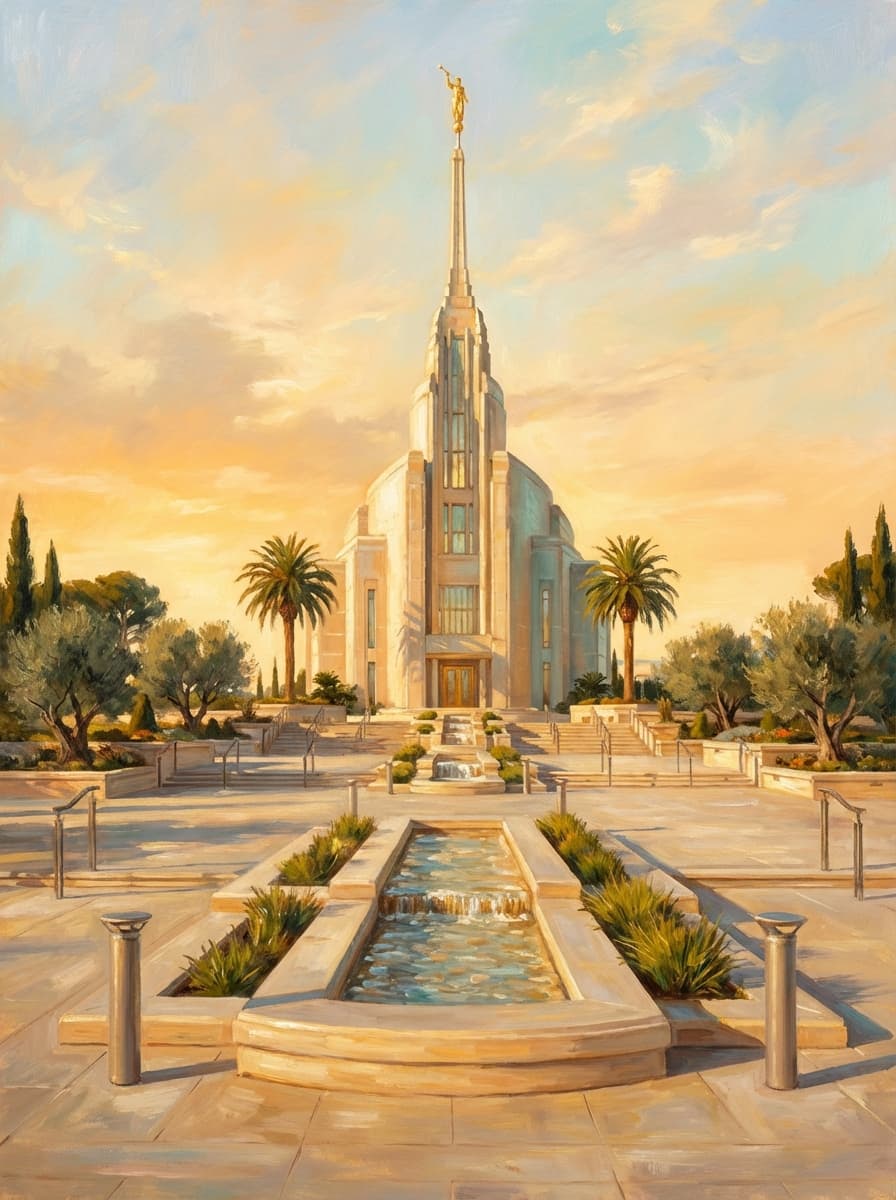
The Rome Italy Temple complex is unique in its design as a public gathering space. While the temple interior is reserved for Church members, the expansive piazza, gardens, and Visitors' Center are open to the public and free of charge. The site is designed to be welcoming, offering a peaceful environment amidst the bustle of Rome.
Highlights
- The Visitors' Center featuring the Christus and Twelve Apostles statues.
- Ancient olive trees in the piazza, some over 400 years old.
- The stained-glass mural containing authentic artifacts from the Holy Land.
- FamilySearch Center for genealogy research.
Things to Know
- Modest dress is appreciated on the temple grounds.
- Photography is encouraged in the piazza and Visitors' Center.
- No photography or video recording inside the temple itself.
Location
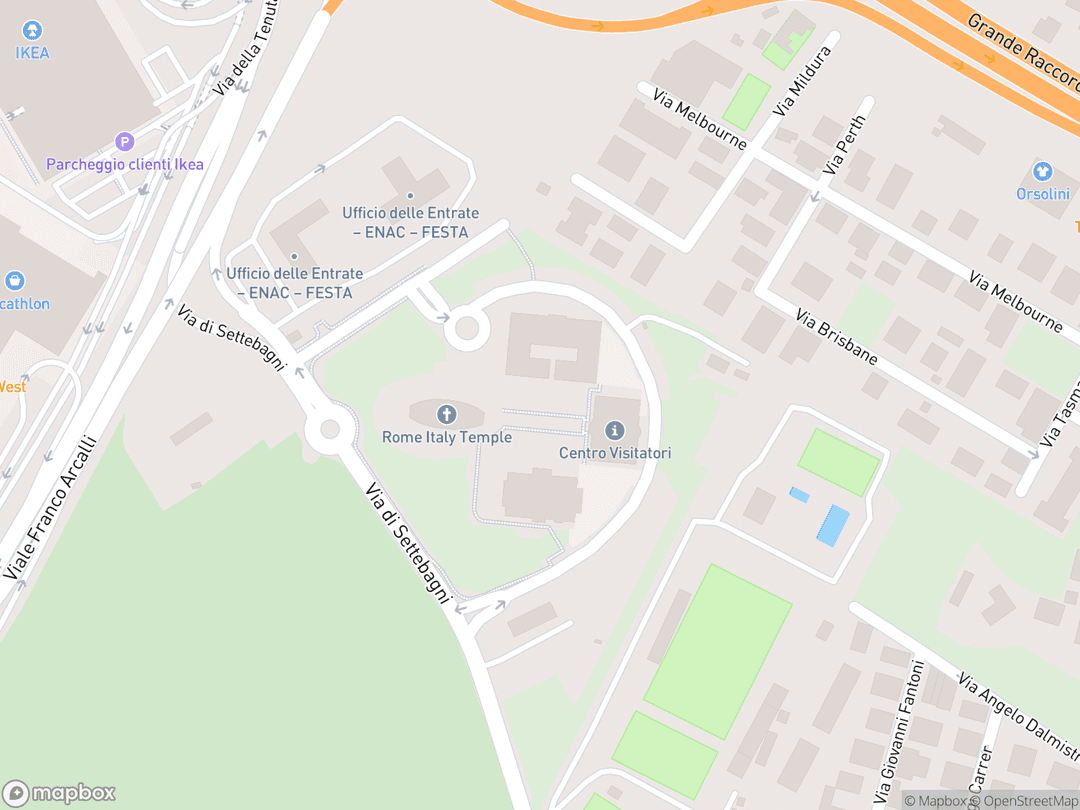
Via di Settebagni, 376, 00139 Roma RM, Italy
Hours: Visitors' Center: Daily, 9:00 AM to 9:00 PM.
Getting There: Located in northeast Rome near the Grande Raccordo Anulare (GRA). Accessible via bus or taxi from central Rome; on-site parking is available.
Get DirectionsAbout
The Rome Italy Temple stands as a monumental ecclesiastical landmark, situated in the northeast of Rome. As the 162nd operating temple of The Church of Jesus Christ of Latter-day Saints, it holds the distinction of being the first temple in Italy and the twelfth in Europe. Its presence is the culmination of decades of diplomatic efforts to secure the Intesa, a legal accord granting the Church full status as a partner of the state, allowing the edifice to function with full religious authority.
Designed to harmonize with Rome's rich artistic heritage, the temple complex departs from standard designs by utilizing a traditional Italian piazza layout. The temple sits at the eastern end of this square, facing a Visitors' Center that houses precise marble replicas of Bertel Thorvaldsen’s Christus and the Twelve Apostles. This configuration encourages community gathering and serves as a powerful declaration of the Church's Christ-centered theology in the heart of historic Christianity.
The architecture is defined by the ellipse—a shape without beginning or end, symbolizing eternity. From the building's footprint to the "floating" grand staircase and the ceiling reliefs, the oval motif connects the concept of the "Eternal City" with the Latter-day Saint doctrine of eternal families. The grounds feature ancient olive trees, some centuries old, and the interior is adorned with materials native to Italy, including Bianco Sardo granite and Perlato Svevo marble, grounding the structure in the very land it serves.
Gallery
Symbolic Elements
The temple's exterior features intricate carvings, each rich with spiritual meaning:

The Ellipse
The dominant geometric theme of the temple is the oval, inspired by Roman Baroque architecture. Because an ellipse has no beginning and no end, it symbolizes eternity and the eternal nature of the ordinances performed within.

Michelangelo’s Star
The twelve-pointed star design on the floor of the temple and piazza reproduces Michelangelo’s pavement in the *Piazza del Campidoglio*. It represents the center of the universe and the connection between heaven and earth.

The Olive Tree
Used in stained glass and landscaping, the olive tree symbolizes peace and the Resurrection (as it sprouts from its roots even when cut). It also references Gethsemane, meaning 'oil press'.

Acanthus Leaves
A traditional Roman architectural motif found throughout the temple's moldings and decorative elements, symbolizing enduring life and immortality in Mediterranean culture.

The Christus
The statue of the risen Christ in the Visitors' Center, bearing the marks of the crucifixion, emphasizes the Church's testimony of the living reality of Jesus Christ.

Bianco Sardo Granite
The exterior cladding is quarried in Italy, symbolizing that the restored gospel has found a native home in the Italian landscape rather than being a foreign import.
Interesting Facts
The 2019 dedication marked the first time in history that the entire First Presidency and Quorum of the Twelve Apostles gathered in one location outside the United States.
Before construction, mandatory archaeological trenches were dug every 10–15 feet. Miraculously, no ruins were found on the temple footprint, though a Roman village was discovered just 100 yards away.
The elliptical staircase in the lobby is a 'floating' engineering feat, connecting only at the top and bottom with no central support pillars.
The stained-glass mural in the Visitors' Center contains actual physical fragments from the time of Christ, including a 'mite' coin, frankincense, and a stone from the Holy Land.
The marble used for the *Christus* and Apostle statues was sourced from the Cave Michelangelo in Carrara, the same quarry used for Michelangelo’s *David*.
When the temple was announced in 2008, the reaction in the Conference Center was an audible gasp followed by a murmur of excitement.
The temple could not be fully realized until the Church signed the *Intesa* with the Italian government in 2012, granting it status as a 'partner of the state'.
Ancient Roman paving stones discovered on the site were preserved and integrated into the temple complex design.
Olive oil harvested from the trees on the temple grounds is pressed and used for ceremonial anointings within the temple.
President Russell M. Nelson met with Pope Francis at the Vatican during the dedication weekend, the first-ever meeting between a Pope and an LDS Church President.
Common Questions
Can tourists enter the Rome Italy Temple?
Tourists cannot enter the temple itself, as it is reserved for religious ordinances performed by Church members. However, the surrounding piazza, gardens, and the Visitors' Center are open to the public and free to explore.
What is inside the Visitors' Center?
The Visitors' Center features marble replicas of Thorvaldsen’s Christus and the Twelve Apostles, a large stained-glass mural depicting the life of Christ with authentic biblical artifacts, and a FamilySearch center for genealogy.
Why was a temple built in Rome?
Rome is historically significant as the site where apostles Peter and Paul preached and were martyred. The temple serves as a spiritual bridge between the ancient Christian church and the restored Church of Jesus Christ.
Did the construction disturb any Roman ruins?
Extensive archaeological trenching was required before construction. Miraculously, no ruins were found on the temple footprint, though an ancient Roman village was discovered just 100 yards outside the property line.
Is the temple near the Vatican?
The temple is located in northeast Rome, near the Grande Raccordo Anulare (GRA), about 10 miles (16 km) from the Vatican.
Related Stories
Explore the rich history, traditions, and people connected to this sacred site.
Featured Stories
The Historic Gathering
March 2019
In an unprecedented moment in Church history, the entire First Presidency and Quorum of the Twelve Apostles traveled to Rome for the temple dedication. It was the first time all fifteen senior leaders had gathered in a single location outside the United States. They assembled in the Visitors' Center for an iconic photograph, flanked by the statues of the ancient apostles.
This gathering underscored the global nature of the modern Church and its claim to apostolic succession. Standing in the city where Peter and Paul were martyred, the living apostles offered a powerful visual testimony of the restoration of ancient authority.
Source: Official Church Newsroom
The Miracle of the Ruins
Pre-Construction
Rome is a city built upon layers of history, making new construction difficult due to strict archaeological preservation laws. Before building could commence, the government required trenches to be dug every 10 to 15 feet across the entire 15-acre site to check for ruins. Church members in Italy fasted and prayed that the land would be clear.
Miraculously, the inspection revealed that the specific footprint of the temple was free of significant ruins. However, just 100 yards outside the property line, an ancient Roman village was discovered. Had the temple been positioned slightly differently, construction might have been delayed for decades or cancelled entirely.
Source: Deseret News / Church History
The Struggle for the Intesa
1990s–2012
For years, the Church operated in Italy as a charitable organization but lacked the full religious recognition known as the Intesa (accord). Without this status, the Church could not perform legally recognized marriages or enjoy tax exemptions, and the construction of a temple faced significant bureaucratic hurdles.
The announcement of the temple in 2008 accelerated diplomatic efforts. Church leaders and legal representatives worked tirelessly with Italian officials. The Intesa was finally signed into law in 2012, formally recognizing the Church as a 'partner of the state' and clearing the final path for the temple's completion.
Source: BYU Religious Studies Center
Timeline
First Missionaries Arrive
Apostle Lorenzo Snow and companions arrive in Genoa, beginning missionary work among the Waldensians in the Piedmont region.
MilestoneMissionary Work Resumes
After decades of inactivity, the Church receives government permission to resume missionary work in Italy.
MilestoneLegal Recognition
The Church receives formal legal status as a charitable organization.
MilestoneSite Purchased
The Church purchases a 15-acre farm site in northeast Rome that would eventually house the temple.
MilestoneTemple Announced
President Thomas S. Monson announces the Rome Italy Temple during General Conference, eliciting audible gasps from the congregation.
component.timeline.announcementIntesa Approved
The Italian Council of Ministers approves the *Intesa* (accord), a crucial step for the temple's operation.
MilestoneGroundbreaking
President Thomas S. Monson presides over the groundbreaking ceremony, attended by Rome's vice mayor.
component.timeline.groundbreakingIntesa Signed into Law
President Giorgio Napolitano signs the *Intesa*, granting the Church full status as a 'partner of the state'.
MilestoneAngel Moroni Installed
The statue of the Angel Moroni is placed atop the eastern spire, marking a construction milestone.
component.timeline.constructionPublic Open House
Over 52,000 visitors tour the temple interior before its dedication.
EventHistoric Leadership Gathering
The entire First Presidency and Quorum of the Twelve Apostles gather in Rome for a historic photograph.
EventDedication
President Russell M. Nelson dedicates the temple in the first of seven sessions.
DedicationPapal Meeting
President Nelson meets with Pope Francis at the Vatican, the first meeting between a Pope and an LDS Church President.
EventPandemic Closure
The temple closes temporarily due to the COVID-19 pandemic.
EventReopening
The temple resumes operations following pandemic restrictions.
EventHistory by Decade
1850s — The Early Missions
The history of the Church in Italy began in June 1850 when Apostle Lorenzo Snow, accompanied by two other missionaries, arrived in Genoa. They focused their efforts on the Waldensians, a Protestant group in the Piedmont region who had faced centuries of persecution. Despite early success and the translation of the Book of Mormon into Italian, political upheaval and the emigration of converts to Utah caused missionary work to effectively cease by the 1860s.
1960s–1990s — Return and Recognition
After a century-long hiatus, the Church returned to Italy. In 1964, a new Italian translation of the Book of Mormon was published, and in 1965, the government granted permission to resume missionary work. The Church grew steadily, organizing stakes and missions. By 1993, the Church received status as a charitable institution, a vital step toward legitimacy, though full religious recognition remained elusive.
2000s–Present — A Temple in Rome
The 21st century brought the fulfillment of long-held dreams for Italian Saints. The purchase of the temple site in 1997 set the stage for the 2008 announcement by President Thomas S. Monson. The subsequent signing of the Intesa in 2012 and the dedication of the temple in 2019 marked the Church's maturation in Italy. Today, the Rome Temple serves as a spiritual center for members across the Mediterranean.
Architecture & Facilities
Modern adaptation of Italian Baroque, designed by VCBO Architects (principal architect Niels Valentiner) to harmonize with Rome's artistic heritage. The recurring elliptical motif — inspired by Borromini's San Carlo alle Quattro Fontane and Michelangelo's Piazza del Campidoglio — symbolizes eternity and appears in the building footprint, baptismal font, floating staircase, and ceiling reliefs. The complex is arranged as a traditional Italian piazza with the temple, Visitors' Center, stake center, and patron housing flanking a central square planted with 400–500-year-old transplanted olive trees. The exterior is clad in Bianco Sardo granite quarried and carved in Italy, with decorative art glass featuring an olive tree motif designed by Holdman Studios.
Building Materials
Exterior
Bianco Sardo granite with warm, earthy tones to match the Roman landscape.
Interior
Perlato Svevo marble, Cenia marble, Mediterranean Beige travertine, and Emperador Light stone.
Interior Features
Grand Staircase
An elliptical 'floating' staircase with bronze railings featuring the oval motif.
Instruction Rooms
Murals depicting the Italian landscape from the sea to the hills.
Temple Grounds
Designed as a Roman piazza with travertine pavers, fountains, and formal gardens containing ancient olive trees.
Additional Facilities
The complex is arranged as a traditional Italian piazza with a Visitors' Center, stake center, and patron housing flanking a central square. The Rome Italy Temple Visitors' Center features two Christus statues and exhibits on Church history and beliefs, and is open to the public free of charge.
Religious Significance
The Rome Italy Temple is situated in the 'Eternal City,' a location of profound historical weight for Christianity.
To provide a place for sacred ordinances that unite families for eternity, bridging the gap between the ancient apostles and the modern Church.
Sacred Ordinances
Vicarious Work
Italian members perform baptisms and sealings on behalf of their deceased ancestors, connecting generations.
A Hinge Point in History
President Russell M. Nelson described the dedication as a 'hinge point' for the Church, signaling a new era of global visibility and growth.
Similar Temples
Sources & Research
Every fact on Temples.org is backed by verified Sources & Research. Each piece of information is rated by source tier and confidence level.
View All Sources (2)
| Field | Source | Tier | Retrieved |
|---|---|---|---|
| Architectural Details | Church of Jesus Christ Temples (opens in a new tab) | C | 2026-02-13 |
| Visitor Center Details | The Church of Jesus Christ of Latter-day Saints (opens in a new tab) | A | 2026-02-13 |