Visitor Insights
Visiting Paris France Temple
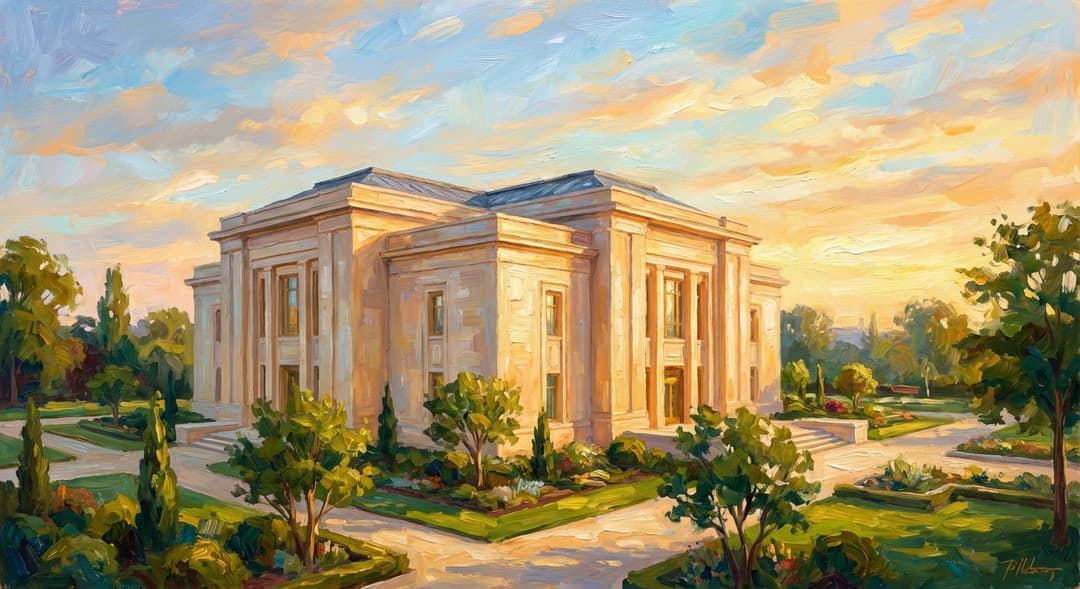
While the interior of the temple is reserved for Church members, the grounds and Visitors' Center are open to the public and offer a peaceful retreat. The complex is designed to be a "seamless and welcome infill" to the neighborhood, featuring formal French gardens that rival the beauty of nearby parks.
Highlights
- Replica of Thorvaldsen’s Christus statue in the gardens
- Formal French-style landscaping with fountains
- Visitors' Center with interactive displays and a temple model
- Proximity to the Palace of Versailles (10-minute walk)
Things to Know
- Photography is permitted in the gardens but not inside buildings.
- Modest dress is appreciated but not required for the grounds.
- Security personnel are present at the entrance.
Location
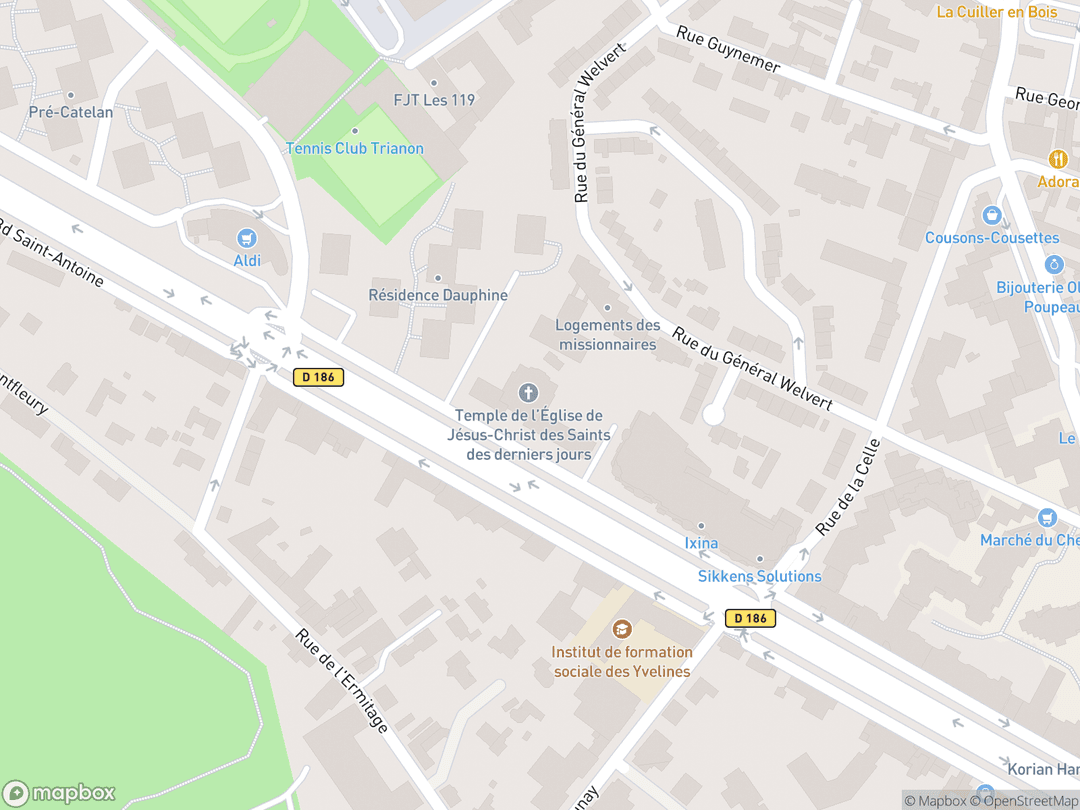
46 Boulevard Saint-Antoine, 78150 Le Chesnay-Rocquencourt, France
Hours: Visitors' Center: Daily, 9:00 a.m. to 9:00 p.m.
Getting There: Located at 46 Boulevard Saint-Antoine. Accessible via bus from Versailles-Rive Droite station. Underground parking is available.
Get DirectionsAbout
The Paris France Temple, dedicated on May 21, 2017, stands as a historic landmark for the faith, representing the first operating temple in mainland France. Located in Le Chesnay, a quiet suburb just minutes from the grandeur of the Palace of Versailles, the edifice is a masterpiece of diplomatic architecture. Unlike the soaring spires typical of most Latter-day Saint temples, the Paris Temple features a restrained, flat-roofed design necessitated by local building codes and a desire to harmonize with the classical French aesthetic of the surrounding Île-de-France region.
The journey to this temple's dedication spanned more than four decades, fulfilling a prophetic promise made by President Spencer W. Kimball in 1976. The complex is more than just a house of worship; it includes extensive French-style gardens open to the public, a visitors' center, and patron housing, all constructed on a site previously occupied by dilapidated utility buildings. The transformation of the property has been described as bringing "light" to the neighborhood, turning a once-blighted lot into a place of serenity and beauty.
Inside, the temple reflects the rich artistic heritage of France, incorporating Art Nouveau motifs, custom stained glass inspired by Monet's gardens, and warm limestone cladding that echoes the materials of nearby châteaus. It serves as a spiritual refuge for thousands of Church members who previously traveled to Frankfurt, The Hague, or Bern to participate in sacred ordinances, standing as a testament to faith, patience, and the sanctity of the family.
Gallery
Symbolic Elements
The temple's exterior features intricate carvings, each rich with spiritual meaning:

The Fleur-de-lis
Stylized representations of the fleur-de-lis, the national symbol of France representing purity and virtue, are woven into the art glass and decorative metalwork throughout the temple.

Monet's Garden Flora
The stained glass windows, created by Tom Holdman Studios, feature floral designs inspired by Claude Monet's gardens at Giverny, specifically highlighting lilies, cornflowers, lilacs, and hollyhocks.

Portuguese Limestone
The exterior is clad in warm-toned Portuguese limestone, selected specifically to match the limestone character of the Le Chesnay and Versailles regions, symbolizing harmony with the local community.
The Christus Statue
A marble reproduction of Bertel Thorvaldsen’s Christus statue stands in the gardens, serving as a diplomatic symbol to testify to the community that the Church is Christian.
Grand Staircase
A central feature of the interior is a grand staircase illuminated by a skylight, designed to evoke a sense of ascending light and spiritual progression.

Art Nouveau Bronze
The interior design incorporates elements of the French Art Nouveau style, visible in the millwork, custom bronze hardware, and lighting fixtures, grounding the temple in French artistic history.
Interesting Facts
The temple sits on the site of a former Électricité de France (EDF) facility, requiring extensive asbestos abatement before construction could begin.
It is the first temple designed without an angel Moroni statue since the Oakland California Temple in 1964, strictly due to municipal height codes.
The Celestial Room features a gold chandelier containing approximately 15,000 Swarovski crystals.
Mayor Philippe Brillault initially opposed the project but became a supporter after Church leaders transparently presented their plans and beliefs.
Due to the small lot size, the facility features a multi-level underground parking garage to maximize surface green space for gardens.
The temple is located approximately 200 meters from the park entrance of the Château de Versailles.
Unusually, no formal, traditional groundbreaking ceremony was held; construction simply commenced after permit approval.
The complex includes a patron housing facility and a residence for the temple president and matron on-site.
Stained glass windows feature designs based on the gardens of artist Claude Monet, including lilies, cornflowers, and hollyhocks.
President Spencer W. Kimball first hinted at a temple in France in 1976, exactly 40 years before its completion.
Common Questions
Why does the Paris Temple not have a spire or Angel Moroni?
The Paris France Temple was designed without a spire or the traditional Angel Moroni statue to comply with strict local height restrictions and to harmonize with the architectural heritage of the nearby Palace of Versailles. The design focuses on blending into the neighborhood rather than standing out vertically.
Can tourists enter the temple?
Entry into the Paris France Temple itself is reserved for members of the Church with a current temple recommend. However, the extensive gardens and the Visitors' Center are open to the general public seven days a week and are free of charge.
What is the statue in the garden?
The statue in the Paris France Temple garden is a marble replica of the Christus by Danish sculptor Bertel Thorvaldsen. It stands in the garden as a testament to the community that the Church is Christian and centered on the life and teachings of Jesus Christ.
Is the temple near the Eiffel Tower?
The Paris France Temple is located in Le Chesnay, a suburb of Paris. It is not near the Eiffel Tower but is very close to the Palace of Versailles (Château de Versailles), located just a 10-minute walk from the palace park entrance.
How long did it take to build?
The Paris France Temple construction began in August 2012 and the temple was dedicated in May 2017, taking approximately five years. However, the process of finding a site and obtaining permissions took over a decade, and the prophetic vision for the temple dates back to 1976.
Related Stories
Explore the rich history, traditions, and people connected to this sacred site.
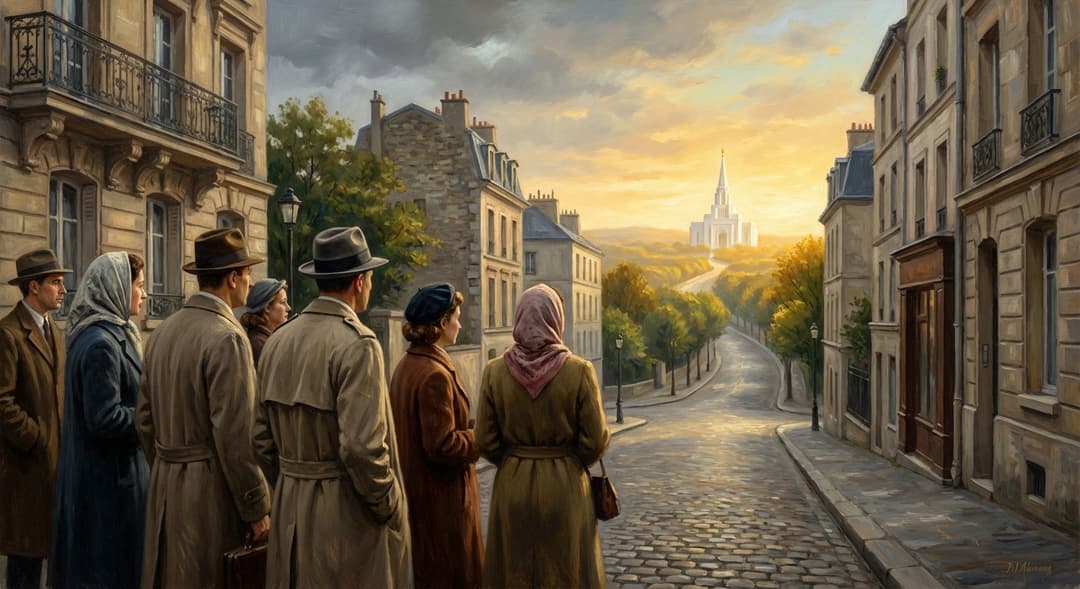
Featured Stories
The Prophecy Fulfilled
1976–2017
In the summer of 1976, President Spencer W. Kimball stood before a congregation in Paris and made a bold declaration. He promised the French Saints that if they remained faithful, the day would come when a temple would be built in their land. For decades, this statement served as a beacon of hope for members who traveled long distances to Germany or Switzerland to worship.
The fulfillment of this prophecy took exactly 40 years, a timeline often associated in scripture with testing and preparation. When the temple was finally dedicated in 2017, it was seen not just as a new building, but as the culmination of generations of faith, prayer, and patience by the French Saints.
Source: Meridian Magazine
A Mayor's Change of Heart
2010–2011
When the Church first identified the site in Le Chesnay, Mayor Philippe Brillault was skeptical. Concerned about the Church's image and the impact on his city, he initially hesitated to support the project. However, Church leaders, including Bishop Gérald Caussé, engaged in a transparent dialogue with city officials, presenting the temple's design and the Church's values.
Over time, Mayor Brillault's stance softened as he saw the Church's commitment to quality and community harmony. He eventually became a vocal supporter, stating that the city could not oppose a plan that conformed so perfectly to city codes, and later referred to himself as a 'friend of the church,' illustrating the power of open communication.
Source: Le Parisien / Church Newsroom
Designing for Versailles
Construction Phase
Building a temple within the shadow of the Palace of Versailles presented a unique architectural challenge. The design team at MHTN Architects had to create a structure that was distinctively a House of the Lord while adhering to strict municipal height restrictions that prohibited a traditional spire.
The solution was a 'Modern Classical' design that utilized the same warm limestone found in the local architecture. By focusing on high-quality materials, formal French gardens, and a restrained profile, the temple was designed to appear as a 'seamless and welcome infill' to the historic neighborhood, proving that sacred space does not always require a spire to reach heaven.
Source: MHTN Architects / Church Newsroom
Timeline
A Prophetic Allusion
President Spencer W. Kimball visits Paris and states that if members are faithful, a temple will be available.
MilestoneThe Promise Renewed
President Gordon B. Hinckley tells 2,400 members in Paris, 'The time has come when you deserve to have a temple among you,' initiating the search for property.
MilestoneCall for Patience
President Hinckley returns to Paris, asking members to remain patient as the search for a suitable site continues.
EventSite Identification
Church officials identify a site in Le Chesnay occupied by dilapidated buildings leased by Électricité de France (EDF).
MilestoneOfficial Intent Announced
The Church releases a press statement confirming the intent to build a temple in Le Chesnay.
component.timeline.announcementConference Announcement
President Thomas S. Monson formally announces the Paris France Temple during General Conference.
component.timeline.announcementBuilding Permit Granted
The city of Le Chesnay grants the building permit after verifying compliance with city codes.
MilestoneConstruction Begins
Work commences on the site without a traditional groundbreaking ceremony.
component.timeline.groundbreakingSite Clearing
Existing EDF buildings are razed following extensive asbestos removal.
component.timeline.constructionApostolic Visit
Elder Neil L. Andersen visits the construction site to meet with architects and emphasize the project's sanctity.
EventPublic Open House
The temple opens its doors to the public for tours, running through May 13.
EventDedication
President Henry B. Eyring dedicates the Paris France Temple as the 156th operating temple.
DedicationPandemic Closure
The temple closes temporarily due to the global COVID-19 pandemic.
EventHistory by Decade
1970s–1980s — The Vision
The dream of a temple in France began in earnest in 1976 when President Spencer W. Kimball visited Paris. His prophetic allusion to a future temple planted a seed of hope. While the Papeete Tahiti Temple was dedicated in 1983, serving French Polynesia, the Saints in mainland France continued to wait and travel abroad for their blessings.
1990s–2000s — The Search
In 1998, President Gordon B. Hinckley reinvigorated the project, telling members, "The time has come when you deserve to have a temple among you." This kicked off a specific search for property in the Paris region. The 2000s were marked by challenges, including failed attempts to acquire sites in Villepreux and Saint-Cloud due to zoning issues and local opposition, testing the patience of the local membership.
2010s — Realization
The breakthrough came in 2010 with the acquisition of the EDF site in Le Chesnay. Following the official announcement in 2011, the project moved swiftly through permitting and construction. The dedication in May 2017 by President Henry B. Eyring marked the end of the 40-year wait and the beginning of a new era for the Church in France.
Architecture & Facilities
The Paris France Temple embodies a 'Modern Classical' aesthetic deeply rooted in the French château tradition, blended with Art Nouveau ornamentation. Designed by MHTN Architects with interior architecture by McNicholas Architects, the temple was conceived as a 'seamless and welcome infill' that complements the grandeur of nearby Versailles. Unlike most Latter-day Saint temples, the Paris Temple features no spire or Angel Moroni statue — a deliberate response to strict municipal height restrictions and a desire to harmonize with the classical French vernacular of the Île-de-France region. The massing, proportions, and materiality were all calibrated to evoke the nobility of a French estate while maintaining the sacred character of a temple.
Building Materials
Portuguese Limestone Cladding
The entire exterior is clad in warm-toned Portuguese limestone, specially sourced to match the limestone character of buildings in the Le Chesnay and Versailles area. The stone gives the temple a timeless, noble appearance that blends with the surrounding architectural heritage.
Slate Roof Elements
The flat roof incorporates traditional French slate elements, complying with the 42-foot height restriction while maintaining the refined profile of a classical estate building.
Art Glass by Holdman Studios
Tom Holdman of Utah-based Holdman Studios created all stained, leaded, and etched glass for the temple. The Paris France Temple contains more art glass than any other temple of the Church, featuring floral designs inspired by Claude Monet's gardens at Giverny — including lilies, cornflowers, lilacs, hollyhocks, and the fleur-de-lis.
Art Nouveau Bronze Hardware
Custom bronze hardware, lighting fixtures, and railings throughout the interior reflect the French Art Nouveau style, grounding the temple in the artistic heritage of Paris. The metalwork features organic, flowing lines characteristic of the movement.
American Cherry Wood Millwork
Interior millwork is crafted from stained American cherry wood with Art Nouveau detailing, providing warmth and richness that complements the limestone exterior and art glass.
Stone Flooring & Custom Carpets
The interior features stone flooring in high-traffic areas and custom-designed carpets incorporating French floral motifs that echo the art glass patterns above.
Interior Features
Celestial Room
The most sacred space in the temple, illuminated by a stunning gold chandelier containing approximately 15,000 Swarovski crystals. The room features warm tones, art glass panels, and refined furnishings that create an atmosphere of profound reverence.
Grand Staircase
A central architectural feature of the interior, the grand staircase is illuminated by a skylight and crowned with a beautiful art glass ceiling. It evokes a sense of ascending light and spiritual progression as patrons move through the temple.
Sealing Rooms
Three sealing rooms where eternal marriage ceremonies are performed, each featuring custom chandeliers, mirrored walls symbolizing eternity, and furnishings reflecting the French Art Nouveau aesthetic.
Ordinance Rooms
Instruction rooms designed by McNicholas Architects with art glass ceilings, decorative painting, and classical columns influenced by French Art Nouveau — a style commonly found in Parisian architecture.
Baptistry
The baptistry features a font resting on twelve sculpted oxen, representing the twelve tribes of Israel. A large stained-glass skylight by Holdman Studios is positioned directly above, flooding the space with colored light.
Floor Area & Layout
The temple comprises 44,175 square feet across multiple levels, designed to maximize the compact 2.26-acre site. The multi-level design includes underground infrastructure and parking, allowing the surface to be dedicated to gardens.
Temple Grounds
The temple grounds are designed following a traditional French garden pattern, rivaling the formal landscaping of nearby parks and estates: - Formal French Gardens: Meticulously maintained gardens featuring symmetrical plantings, manicured hedges, fountains, and pathways — all open to the public year-round. - Christus Statue: A marble replica of Bertel Thorvaldsen's Christus stands in the gardens, serving as a diplomatic symbol to testify to the community that the Church is Christian. - Underground Parking: Due to the small lot size, a multi-level underground parking garage was constructed beneath the gardens, maximizing surface green space and concealing infrastructure. - Native Plant Species: Landscaping incorporates native French plant species, aligned with the temple's sustainability approach including LED lighting and energy-efficient design.
Additional Facilities
The complex includes a dedicated Visitors' Center open to the public daily (9:00 a.m. to 9:00 p.m.), featuring interactive displays, a temple model, and a stained-glass window titled 'Consider the Lilies' by Tom Holdman. Adjacent patron housing provides accommodations for members traveling from across Europe, along with an on-site residence for the temple president and matron.
Religious Significance
For Latter-day Saints, the Paris France Temple is a 'House of the Lord,' a sacred space where the highest ordinances of the faith occur.
The temple allows for the performance of sacred ordinances such as the endowment and the sealing of families for eternity, allowing relationships to perpetuate beyond death.
Sacred Ordinances
Sealing
Ceremonies that bind families together for eternity.
Endowment
Instruction regarding the nature of God and the purpose of life.
A Spiritual Refuge
Bishop Gérald Caussé described the temple as a place where the 'light of the gospel' would be felt throughout the land, contrasting its spiritual permanence with the temporal glory of the nearby Palace of Versailles.
Similar Temples
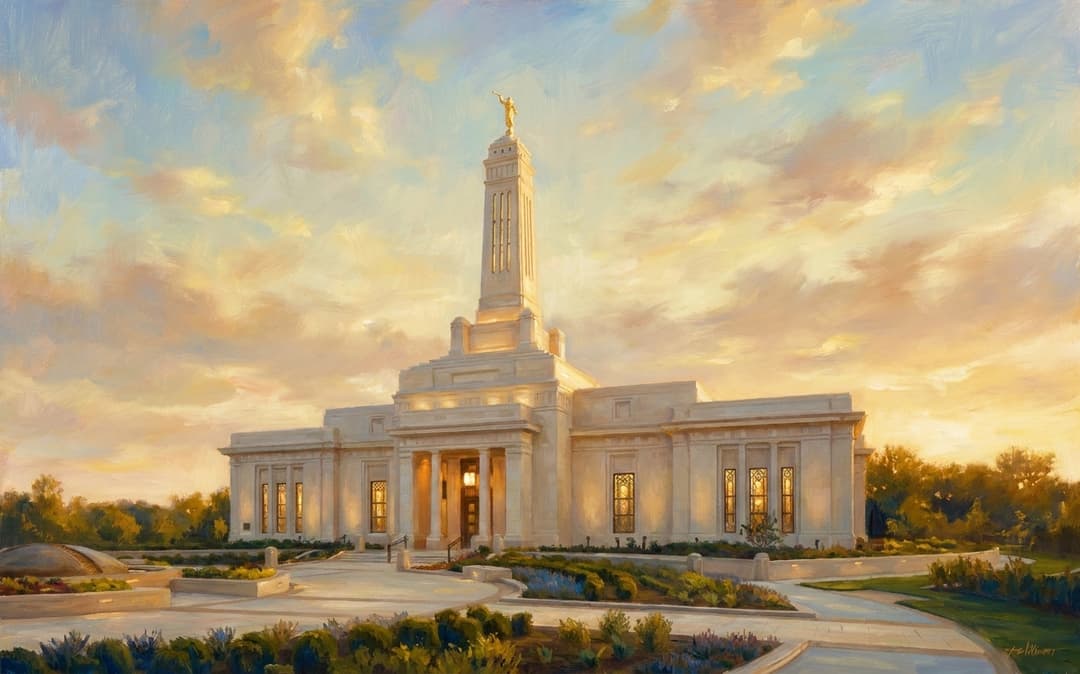
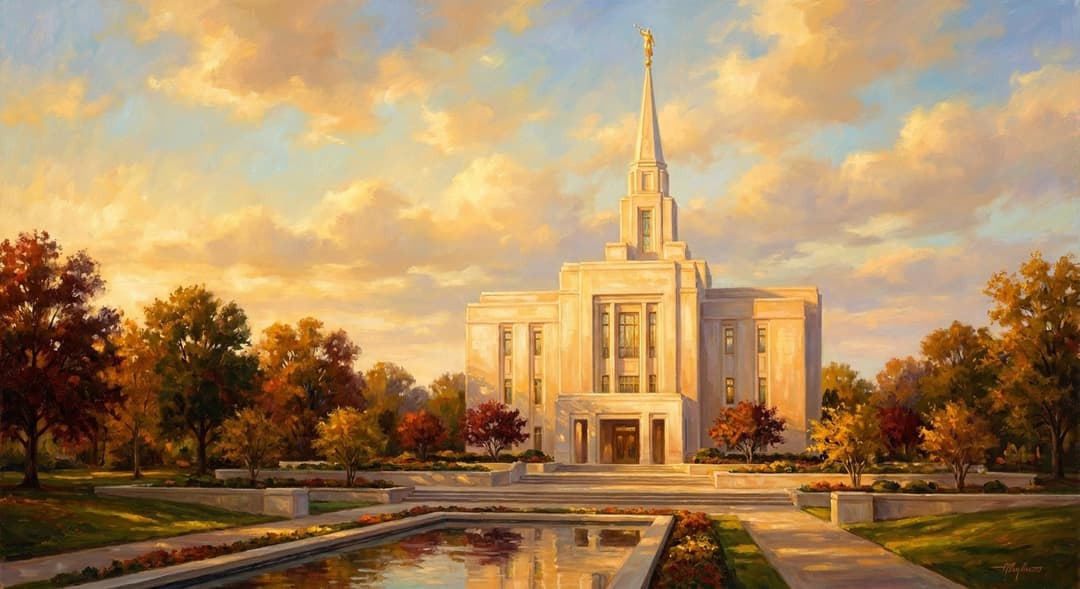
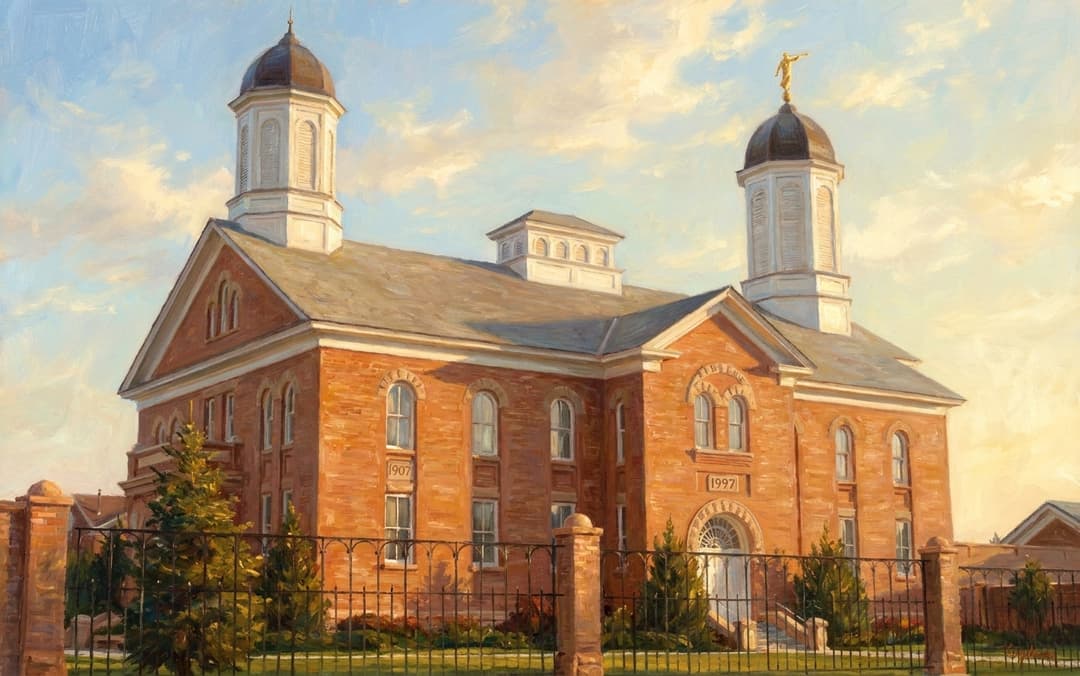
Sources & Research
Every fact on Temples.org is backed by verified Sources & Research. Each piece of information is rated by source tier and confidence level.
View All Sources (9)
| Field | Source | Tier | Retrieved |
|---|---|---|---|
| Dedication Coverage | ChurchofJesusChristTemples.org (opens in a new tab) | C | 2026-02-13 |
| Temple Facts & Timeline | ChurchofJesusChristTemples.org (opens in a new tab) | C | 2026-02-13 |
| Architectural Details | MHTN Architects (opens in a new tab) | B | 2026-02-13 |
| Visitors' Center Info | The Church of Jesus Christ of Latter-day Saints (opens in a new tab) | A | 2026-02-13 |
| Historical Context | Meridian Magazine (opens in a new tab) | C | 2026-02-13 |
| Local News Coverage | Le Parisien (opens in a new tab) | C | 2026-02-13 |
| Angel Moroni Data | TempleFacts.org (opens in a new tab) | B | 2026-02-13 |
| Coordinates Verification | 2Markers (opens in a new tab) | B | 2026-02-13 |
| General Conference Announcement | The Church of Jesus Christ of Latter-day Saints (opens in a new tab) | A | 2026-02-13 |