Visitor Insights
Visiting Atsuta Shrine
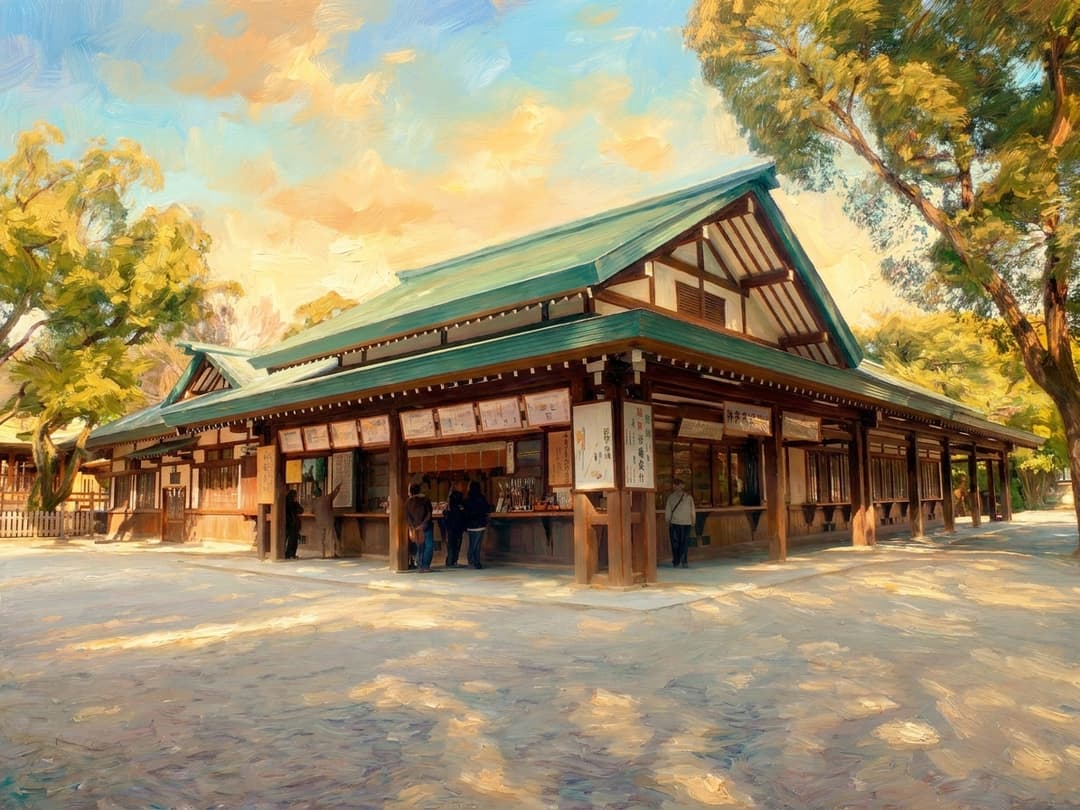
Atsuta Shrine offers visitors a serene and spiritual experience in the heart of Nagoya. The expansive grounds provide a tranquil escape from the bustling city, with ancient trees and gravel paths leading to various sacred sites. Visitors can explore the shrine's rich history and cultural significance, witness traditional Shinto rituals, and appreciate the architectural beauty of the main hall and other structures.
Highlights
- Witness traditional Shinto rituals and ceremonies.
- Explore the serene and expansive shrine grounds.
- Visit the Treasure Hall to view historical relics and artifacts.
Things to Know
- The shrine grounds are extensive, so wear comfortable shoes.
- Be respectful of the sacred environment and follow shrine etiquette.
- Check the schedule for special events and festivals.
Location
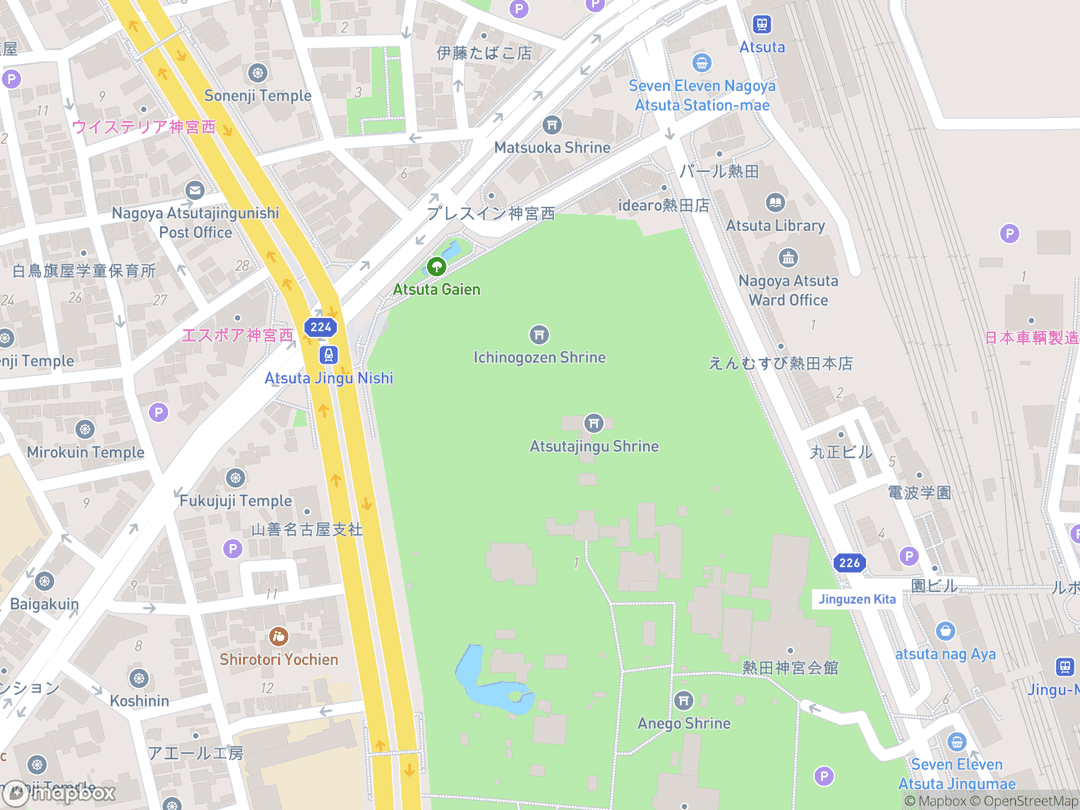
1-1-1 Jingu, Atsuta-ku, Nagoya, Aichi Prefecture 456-8585, Japan
Hours: Shrine grounds are always open. The Treasure Hall (Bunkaden) is open from 9:00 to 16:30 (entry until 16:00).
Getting There: Meitetsu Railway: Take the Meitetsu Nagoya Line from Nagoya Station to Jingumae Station (5 minutes). The shrine is a 3-minute walk from the station. Subway: Atsuta Jingu Nishi Station on the Subway Meijo Line is a 5-minute walk from the shrine. JR: Take the JR Tokaido Line from Nagoya Station to Atsuta Station (6 minutes). The shrine is a 10-minute walk from the station.
Get DirectionsAbout
Atsuta Shrine (Atsuta Jingū) is a Shinto shrine located in Atsuta-ku, Nagoya, Aichi Prefecture, Japan. Revered as one of the most important Shinto shrines, it ranks second only to the Ise Grand Shrine. The shrine is familiarly known as Atsuta-Sama (Venerable Atsuta) or simply as Miya (the Shrine). Atsuta Shrine is deeply rooted in Japanese history and spirituality, attracting approximately 7 million to 9 million visitors annually.
Shinto, often understood as "the way of the gods," is an indigenous faith of Japan deeply intertwined with Japanese culture and identity. It emphasizes reverence for kami, which are spirits or deities inhabiting natural elements, places, and ancestral figures. Shinto traditions are characterized by ritual purity, harmony with nature, and veneration of the Imperial family.
As a Shinto shrine, Atsuta Jingū embodies these principles, serving as a sacred space for communion with kami and celebration of Japanese heritage. Within the broader context of Taoic traditions, Shinto shares an emphasis on living in harmony with the natural world and venerating ancestors, although its specific practices and beliefs are unique to Japan. The shrine's history spans centuries, marked by significant events and architectural transformations that reflect its enduring importance in Japanese culture.
Gallery
Symbolic Elements
The temple's exterior features intricate carvings, each rich with spiritual meaning:

Kusanagi-no-Tsurugi
The Kusanagi-no-Tsurugi, or 'Grass-Cutting Sword,' is one of the Three Sacred Treasures of Japan, symbolizing valor. It is believed to be enshrined at Atsuta Shrine, though it is never displayed to the public. The sword is central to the shrine's significance and its connection to the Imperial family.

Amaterasu-Ōmikami
Amaterasu-Ōmikami, the sun goddess, is a central deity in Shinto and is also enshrined at Atsuta. The shrine is dedicated to the veneration of Atsuta-no-Ōkami, with Amaterasu-Ōmikami being represented by the sacred sword Kusanagi-no-Tsurugi. Her presence underscores the shrine's spiritual importance.

Torii Gate
Torii gates are traditional Japanese gates that mark the entrance to the sacred space of the shrine. They symbolize the transition from the mundane to the sacred, inviting visitors to leave behind worldly concerns and enter a realm of spiritual purity and reverence.

Shimenawa
Shimenawa are ropes made of rice straw, often adorned with *shide* (zigzag paper streamers), used to demarcate sacred areas and objects within the shrine. These ropes symbolize purity and are used to ward off evil spirits, creating a protected and consecrated space.

Camphor Trees
Ancient camphor trees within the shrine grounds are considered sacred and are often encircled by *shimenawa*. These trees are revered as dwelling places of spirits and are symbols of longevity and vitality, adding to the shrine's spiritual atmosphere.

Honden
The Honden, or Main Hall, is the spiritual heart of the shrine complex, rebuilt in the traditional *Shinmei-zukuri* architectural style. It enshrines Atsuta-no-Okami (Amaterasu-Ōmikami) and the sacred sword Kusanagi, serving as the focal point for worship and reverence.

Nobunaga-Bei
The Nobunaga-Bei is a 7.4-meter high roofed mud wall donated by Oda Nobunaga in 1560 as a token of gratitude for his victory at the Battle of Okehazama. It is a significant historical structure within the shrine complex, symbolizing the shrine's connection to powerful figures in Japanese history.

Shinmei-zukuri Style
Shinmei-zukuri is characterized by unpainted wood, gabled roofs with extended eaves, and elevated floors. The style emphasizes harmony with nature and purity of form, reflecting the ancient granary forms and the reverence for natural materials in Shinto architecture.
Interesting Facts
Atsuta Shrine is said to be almost 2000 years old, dating back to 113 AD.
The shrine is dedicated to Atsuta-no-Okami, with the sun goddess Amaterasu-Omikami being represented by the sacred sword Kusanagi-no-Tsurugi.
The sacred sword Kusanagi is one of the Three Sacred Treasures of Japan, symbolizing valor.
The shrine's Bunkaden (Treasure Hall) houses over 6,000 relics, including 174 Important Cultural Properties and a dagger that is a designated National Treasure of Japan.
The Nobunaga-Bei, a mud wall, was donated to the shrine in 1560 by Oda Nobunaga as a token of gratitude for his victory at the Battle of Okehazama.
Atsuta Shrine is ranked second only to the Ise Grand Shrine among Shinto shrines.
The shrine hosts over 70 festivals and ceremonies annually, reflecting its deep connection to popular life and agricultural traditions.
During the aerial raids of World War II, many of Atsuta Shrine's buildings were destroyed by fire, but the main buildings were reconstructed by 1955.
The Kusanagi Museum, opened in 2021, showcases the shrine's collection of over 450 swords, including 20 designated as national treasures and important cultural properties.
The shrine is surrounded by a tranquil forest, providing a peaceful atmosphere despite being located in the city of Nagoya.
The shrine is said to have been deeply revered by Sengoku warlords, including Oda Nobunaga.
The grounds cover approximately 190,000 m² and include as many as 45 shrines in total.
Common Questions
What is Atsuta Shrine known for?
Atsuta Shrine is known as one of the most important Shinto shrines in Japan, second only to the Ise Grand Shrine. It is famous for housing the Kusanagi-no-Tsurugi, one of the Three Sacred Treasures of Japan, and for its rich history and cultural significance.
What is the significance of the Kusanagi-no-Tsurugi?
The Kusanagi-no-Tsurugi, or 'Grass-Cutting Sword,' is one of the Three Sacred Treasures of Japan, symbolizing valor. It is believed to be enshrined at Atsuta Shrine, though it is never displayed to the public. The sword is central to the shrine's significance and its connection to the Imperial family.
What can visitors see and do at Atsuta Shrine?
Visitors can explore the serene shrine grounds, witness traditional Shinto rituals, visit the Treasure Hall (Bunkaden) to view historical relics, and appreciate the architecture of the main hall and other structures. The Kusanagi Museum showcases the shrine's collection of swords.
What is the Shinmei-zukuri architectural style?
Shinmei-zukuri is an architectural style characterized by its simplicity, natural materials, and replication of ancient granary forms. It features unpainted wood, gabled roofs with extended eaves, and elevated floors, emphasizing harmony with nature and purity of form.
How do I get to Atsuta Shrine?
Atsuta Shrine is accessible by Meitetsu Railway (Jingumae Station), Subway (Atsuta Jingu Nishi Station), and JR (Atsuta Station). Each station is within a short walking distance of the shrine.
Is there an admission fee to enter Atsuta Shrine?
There is no admission fee to enter the shrine grounds. However, there is an admission fee for the Kusanagi-kan and a combined ticket option for the Kusanagi-kan and Treasure House.
Featured Stories
The Enshrinement of Kusanagi-no-Tsurugi
c. 113 AD
According to ancient legends, the Kusanagi-no-Tsurugi, a legendary sword and one of Japan's Three Sacred Treasures, found its home at Atsuta Shrine following the death of the heroic Prince Yamato Takeru. His widow, Princess Miyazu, reverently enshrined the sword, marking the genesis of Atsuta Shrine as a sacred site. This act not only honored her late husband but also established the shrine as a guardian of national heritage and spiritual power.
The sword, believed to possess mystical properties, became a symbol of valor and imperial authority. Its enshrinement at Atsuta transformed the location into a focal point for Shinto worship and a testament to the enduring connection between the imperial family and the divine. Over the centuries, the story of the sword has been passed down through generations, solidifying Atsuta Shrine's place in Japanese folklore and religious tradition.
Source: Atsuta Jingu Official Records
Oda Nobunaga's Gratitude: The Nobunaga-Bei Wall
1560
In the tumultuous era of the Sengoku period, Oda Nobunaga, a powerful warlord, sought divine favor before a crucial battle. Following his unexpected victory at the Battle of Okehazama in 1560, Nobunaga, attributing his success to the kami of Atsuta Shrine, expressed his gratitude through a significant donation. This offering took the form of a massive mud wall, known as the Nobunaga-Bei, which still stands as a testament to his deep reverence.
The Nobunaga-Bei, constructed from layered roof tiles and fortified with soil, lime, and oil, served not only as a protective barrier but also as a symbol of Nobunaga's allegiance to the shrine. This act of devotion solidified the shrine's importance in the eyes of influential figures and further enhanced its prestige as a place of spiritual significance. The wall remains a tangible link to a pivotal moment in Japanese history and a reminder of the enduring power of faith.
Source: Historical Archives of Aichi Prefecture
Reconstruction After the War: A Symbol of Resilience
1955
During the devastating aerial raids of World War II, Atsuta Shrine, like many other cultural landmarks in Japan, suffered significant damage. The fires that swept through the shrine complex destroyed numerous buildings, leaving a void in the hearts of the Japanese people. However, the spirit of resilience prevailed, and efforts to rebuild the shrine began soon after the war's end.
By 1955, the main buildings of Atsuta Shrine, including the sacred honden, were meticulously reconstructed, adhering to the traditional Shinmei-zukuri architectural style. This restoration not only revived the physical structure of the shrine but also symbolized the nation's recovery and determination to preserve its cultural heritage. The rebuilt Atsuta Shrine stands as a beacon of hope and a testament to the enduring power of faith in the face of adversity.
Source: Nagoya City Museum Records
Timeline
Shrine Foundation
According to traditional sources, Yamato Takeru died. His widow, Miyazu-hime no Mikoto, enshrined the sword Kusanagi-no-Tsurugi, initiating the shrine's history.
MilestoneEstablishment by Owari Clan
The Owari clan established the Atsuta Shrine, solidifying its place in local history and governance.
MilestoneEstablishment of Betsugu Hakkengu Shrine
The Betsugu (Annex) Hakkengu Shrine was established, expanding the shrine's complex and religious functions.
MilestoneChange in High Priest Lineage
Kazumoto (Owari clan) handed over the position of high priest to Fujiwara no Suenori (Fujiwara clan), marking a shift in the shrine's leadership.
EventAtsuta Shrine in the Northern and Southern Courts Period
Atsuta Shrine became a significant site during the Northern and Southern Courts Period, with Go-Daigo supporting the Southern Court and Atsuta Masayoshi commanding troops on his behalf.
EventDonation by Oda Nobunaga
Oda Nobunaga donated the Nobunaga-Bei wall to the shrine as a token of gratitude for his victory at the Battle of Okehazama, a pivotal moment in Japanese history.
MilestoneRemodeling in Shinmei-zukuri Style
During the Meiji Period, the sanctuary was remodeled using the Shinmei-zukuri architectural style, aligning it with the aesthetics of Ise Grand Shrine.
RenovationFurther Remodeling
The shrine was further remodeled in the Shinmei-zukuri architectural style, emphasizing its resemblance to Ise Shrine.
RenovationBuilding Rearrangement and Improvement
Buildings were rearranged and improved to reflect the shrine's history and cultural significance, enhancing its overall presentation.
RenovationDestruction by Fire
Many of the shrine's buildings were destroyed by fire during aerial raids of the Pacific War, a devastating loss for the cultural heritage site.
EventReconstruction of Main Buildings
Main buildings, such as the *honden*, were reconstructed, restoring the shrine's primary structures after the wartime destruction.
RenovationOpening of the Kusanagi Museum
The Kusanagi Museum opened to showcase the shrine's collection of swords, providing a dedicated space for preserving and displaying these important artifacts.
EventNew Year's Visit
Millions of visitors come to Atsuta Shrine to celebrate the New Year and pray for good fortune.
EventAtsuta Festival
The Atsuta Festival is held annually to celebrate the shrine's history and cultural significance.
component.timeline.festivalAutumn Festival
The Autumn Festival is held annually to celebrate the harvest season and give thanks for the blessings of nature.
component.timeline.festivalReligious Significance
Atsuta Shrine is a revered Shinto shrine that embodies the spiritual essence of Japan, deeply intertwined with its history and culture. As a sacred space, it serves as a conduit for communion with kami and a celebration of Japanese heritage, reflecting the principles of ritual purity, harmony with nature, and veneration of ancestors.
The core spiritual purpose of Atsuta Shrine is to enshrine and venerate Atsuta-no-Ōkami, with the sun goddess Amaterasu-Ōmikami being represented by the sacred sword Kusanagi-no-Tsurugi. The shrine provides a space for individuals to connect with the divine, seek blessings, and honor the traditions of Shinto.
Sacred Ordinances
Purification (Misogi)
Purification rituals, known as misogi, are performed to cleanse the body and spirit before approaching the kami. These rituals involve washing hands and mouth at the purification fountain (temizu) to remove impurities and prepare oneself for sacred interaction.
Prayer (Norito)
Prayer, or norito, is an essential practice at Atsuta Shrine, involving the recitation of ancient Shinto prayers to communicate with the kami. These prayers express gratitude, seek blessings, and reaffirm the connection between humans and the divine.
Offerings (Heihaku)
Offerings, known as heihaku, are presented to the kami as a sign of respect and devotion. These offerings can include food, sake, and other symbolic items, demonstrating the worshipper's commitment to maintaining harmony with the spiritual realm.
Theological Context within Taoic Traditions
Within the broader context of Taoic traditions, Shinto shares an emphasis on living in harmony with the natural world and venerating ancestors. While Shinto's specific practices and beliefs are unique to Japan, its alignment with Taoic principles underscores its focus on balance, reverence for nature, and the interconnectedness of all things. Atsuta Shrine, as a Shinto site, embodies these values, offering a space for spiritual reflection and connection with the kami.
Similar Temples
Sources & Research
Every fact on Temples.org is backed by verified Sources & Research. Each piece of information is rated by source tier and confidence level.
View All Sources (4)
| Field | Source | Tier | Retrieved |
|---|---|---|---|
| About & Historical Background | Atsuta Jingu (opens in a new tab) | A | 2024-01-02 |
| About & Historical Background | Japan-Guide (opens in a new tab) | A | 2024-01-02 |
| Architecture & Symbolic Elements | Aichi Prefecture (opens in a new tab) | A | 2024-01-02 |
| Shrine History | JEEPE (opens in a new tab) | C | 2024-01-02 |