Visitor Insights
Visiting Puebla Mexico Temple
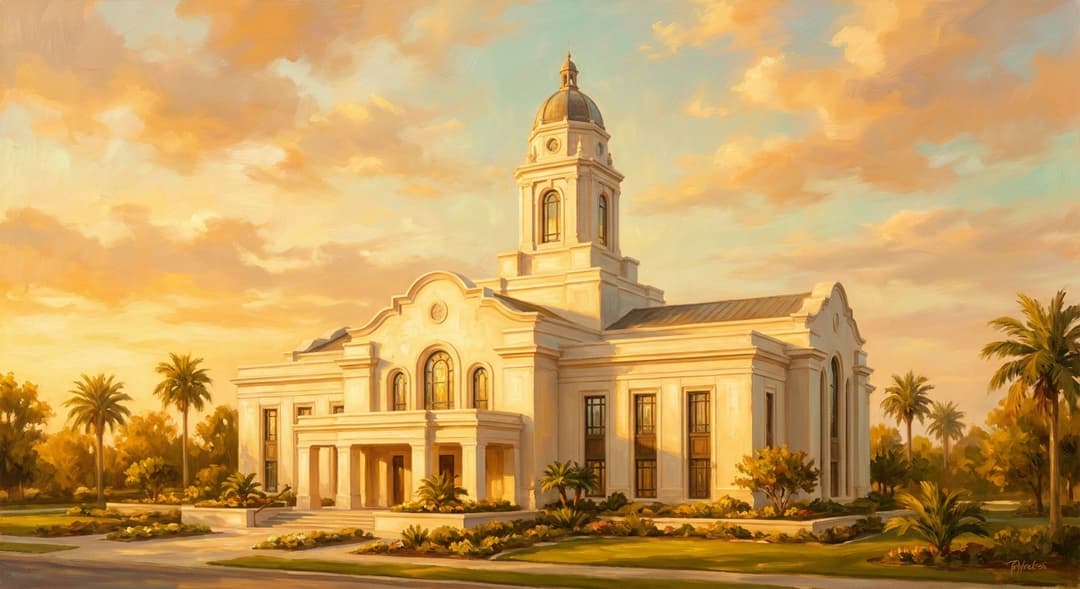
The Puebla Mexico Temple stands along Avenida 15 de Mayo in northwestern Puebla, welcoming patrons to serene reflection. The beautifully landscaped gardens and reflective stone fountain provide a peaceful sanctuary amidst the vibrant urban setting.
Highlights
- Talavera-inspired art glass windows with cobalt blue and golden accents
- Panoramic views of Popocatépetl and Iztaccíhuatl volcanoes
- Tiered stone fountain and manicured garden walkways
Things to Know
- Interior access requires a valid temple recommend
- On-site LDS Distribution Center available for patrons
- Grounds and public plaza are accessible during daytime hours
Location
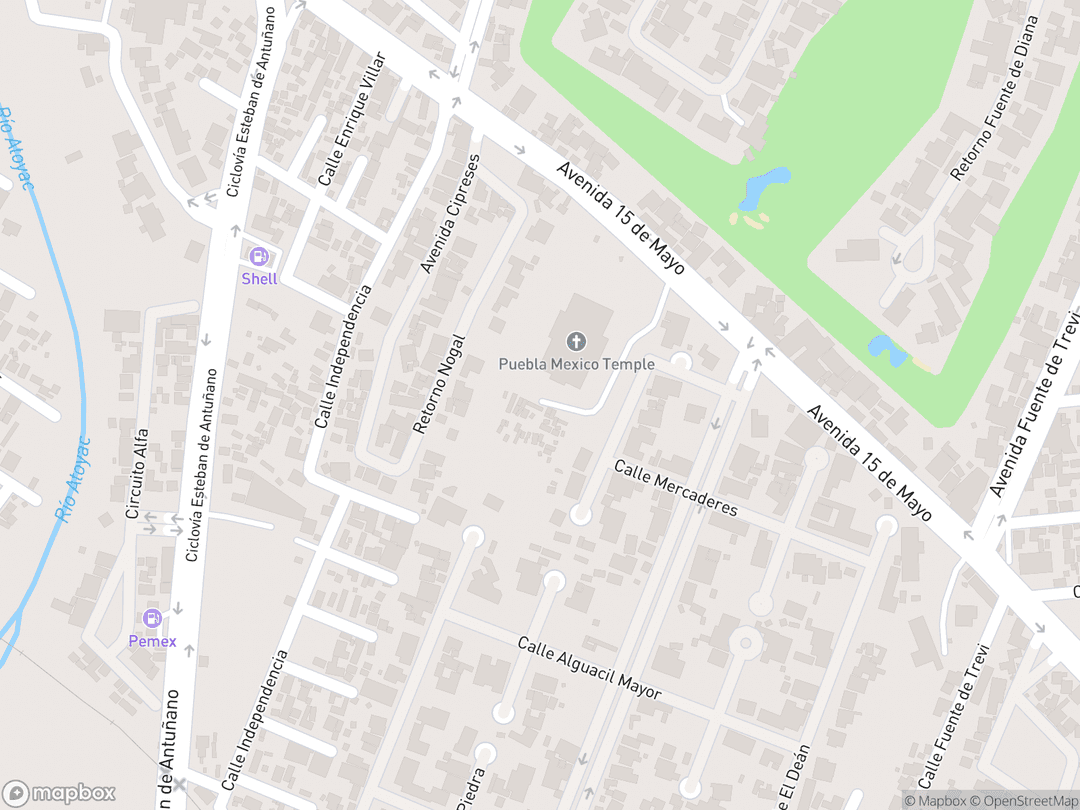
Av. 15 de Mayo # 719, Col. Los Cipreses, 72114 Puebla, Puebla, Mexico
Hours: Tuesday through Saturday: 8:00 AM – 8:00 PM; Closed Sunday and Monday
Getting There: Located at Av. 15 de Mayo # 719 in Colonia Los Cipreses, accessible by taxi or local transit from central Puebla.
Get DirectionsTips for Your Visit
Grounds Access
Visitors of all faiths are welcome to walk the exterior plaza and view the architecture during daylight hours.
Distribution Center
Check operational hours for the adjacent LDS Distribution Center if purchasing clothing or materials.
About
Standing in Puebla de los Ángeles, the Puebla Mexico Temple serves as a sacred sanctuary where Latter-day Saints engage in holy ordinances. Built upon the Judeo-Christian tradition of temple worship dating back to the Tabernacle of Moses, this house of the Lord is a consecrated refuge set apart for divine communion.
While local meetinghouses are open to all for Sabbath worship, the temple is dedicated specifically for eternal covenants, including vicarious baptisms and eternal marriage sealings. These ceremonies connect generations within the broader Abrahamic covenant and restored Christian priesthood authority.
Latter-day Saint history in Puebla spans a century, beginning with early converts who made grueling 96-hour round-trip bus journeys to Arizona for temple blessings. Dedicated in May 2024 as Mexico's 14th temple, the edifice fulfills decades of faithful devotion across central Mexico.
Interesting Facts
The temple is the 14th dedicated house of the Lord in Mexico and the first in Puebla State (Tier A).
Its interior art glass incorporates traditional Puebla Talavera tile motifs in cobalt blue and gold (Tier A).
Located at 7,002 feet above sea level, it ranks among the higher-elevation temples in Latin America (Tier B).
The surrounding grounds offer direct views of the Popocatépetl and Iztaccíhuatl twin volcanoes (Tier A).
More than 60,000 visitors toured the interior during its 22-day public open house in 2024 (Tier A).
In 1945, Puebla members endured 96-hour bus rides to Arizona to participate in temple worship (Tier B).
The structure features precast concrete exterior panels topped by a central domed cupola finial (Tier A).
An on-site distribution center provides temple garments and gospel study materials for local members (Tier A).
Common Questions
Who can enter the Puebla Mexico Temple?
The public may visit the surrounding exterior grounds, while interior admittance requires a valid temple recommend.
What architectural style is the temple?
The design features a Spanish Colonial Baroque style inspired by Puebla's historical architecture and Talavera tilework.
Does the temple have an angel Moroni statue?
Yes, a gold-leafed Angel Moroni statue sits atop the central tower cupola.
Are there public visitors' facilities on site?
The temple grounds include an LDS Distribution Center but do not feature a public visitors' center.
Featured Stories
A Pilgrimage Across Borders
1945
Long before a temple stood in Puebla, local Saints saved meager resources to travel across the international border to Mesa, Arizona. The grueling 96-hour round-trip bus journey reflected their deep sacrifice to receive sacred temple covenants. Their pioneering devotion paved the spiritual foundation for the thousands of Latter-day Saints who now worship in Puebla today.
Source: Church News Historical Records
Dedication by an Apostle
May 19, 2024
Elder Gerrit W. Gong of the Quorum of the Twelve Apostles dedicated the Puebla Mexico Temple in two sacred sessions. In his address, he highlighted the surrounding majestic volcanoes as symbols of eternal family ties established through temple sealings. The dedication represented the culmination of decades of prayer by generations of Mexican Latter-day Saints.
Source: Official Church Dedication Report
Community Welcome at the Open House
March 2024
During the 22-day public open house, over 60,000 visitors from across central Mexico walked through the sanctuary doors. Civic leaders and neighbors marveled at the integration of traditional Puebla Talavera designs into the sacred architecture. The event fostered profound goodwill and mutual understanding across the diverse religious community of Puebla.
Source: Puebla Open House Media Release
Timeline
First Branch Organized
The initial official branch of the Church is established in Puebla following early missionary efforts.
MilestoneSpanish Temple Rites Begin
Spanish-language temple ceremonies at Mesa Arizona prompt early Puebla Saints to begin multi-day pilgrimages.
EventMexico City Temple Dedicated
The dedication of Mexico's first temple reduces travel time for Puebla members to a two-hour drive.
MilestoneTemple Announced
President Russell M. Nelson announces the Puebla Mexico Temple during General Conference.
MilestoneRendering Released
The First Presidency releases the official architectural rendering of the single-story Baroque structure.
MilestoneGroundbreaking Ceremony
Elder Arnulfo Valenzuela presides over the site dedication and groundbreaking ceremony.
component.timeline.groundbreakingTemple Leadership Called
Francisco Javier Bravo Moisés and Luz María Garza Dávila de Bravo are called as inaugural president and matron.
MilestoneOpen House Dates Announced
The First Presidency publishes schedule details for media day, open house, and dedication.
MilestoneMedia Day Begins
Civic leaders, dignitaries, and journalists tour the newly completed sanctuary.
EventPublic Open House Opens
A 22-day public open house commences, welcoming over 60,000 visitors through the doors.
EventTemple Dedicated
Elder Gerrit W. Gong dedicates the Puebla Mexico Temple in two sacred sessions.
DedicationHistory by Decade
1920s–1940s — Early Converts and Border Pilgrimages
Missionary work in Puebla led to the organization of the city's first branch in 1925. Beginning in 1945, faithful members made arduous 96-hour bus journeys to Arizona to receive temple ordinances in Spanish.
1980s–2000s — Rapid Growth and Regional Temples
The dedication of the Mexico City Temple in 1983 reduced travel time for Puebla Saints to just two hours. Over subsequent decades, Church membership in Puebla grew dramatically to encompass eleven stakes and tens of thousands of members.
2010s–2020s — Announcement and Sacred Construction
President Russell M. Nelson announced the Puebla Mexico Temple in October 2018, followed by groundbreaking in November 2019. Constructed with local Baroque motifs and Talavera art glass, the building was dedicated by Elder Gerrit W. Gong in May 2024.
Architecture & Facilities
The Puebla Mexico Temple features a refined Spanish Colonial Baroque style designed to complement Puebla's rich 17th- and 18th-century architectural heritage. The single-story 35,865-square-foot structure is anchored by a central end tower capped with a domed cupola, framed in warm off-white precast concrete panels, and accented by stylized bell-curve pediments and arched art glass windows.
Building Materials
Exterior Façade
Constructed with off-white precast concrete panels and dark bronze window frames.
Interior Flooring
Finished with Crema Luna marble complemented by Rojo Alicante terracotta and Amarillo Mares stone accents.
Decorative Art Glass
Custom glass panels feature blue, gold, and white geometric scrolls inspired by 16th-century Talavera tilework.
Interior Woodwork
Richly finished hardwood doors and millwork accented with hand-painted floral borders.
Interior Features
Baptismal Font
Supported by twelve cast-stone oxen, set within a marble room framed by custom art glass.
Instruction Rooms
Four instruction rooms equipped with ornate millwork and subdued lighting for sacred instruction.
Sealing Rooms
Three sealing rooms featuring gilded mirrors and central altars where families are united eternally.
Celestial Room
A lofty space featuring soft cream tones, crystal chandeliers, and detailed architectural trim.
Temple Grounds
Situated on 6.82 acres along Avenida 15 de Mayo, the manicured grounds feature a central boulevard approach, a tiered stone fountain, black wrought-iron fencing with butterfly scrollwork, and native plantings.
Additional Facilities
Includes an on-site LDS Distribution Center providing church clothing, books, and religious materials for patrons.
Religious Significance
Within the broad Christian tradition, sacred spaces have served as places of divine encounter from ancient Israelite sanctuaries to modern houses of the Lord. Latter-day Saints view the temple as a literal sanctuary where heavenly covenants bind individuals and families to God.
To provide a holy sanctuary for sacred priesthood ordinances, eternal marriage sealings, and vicarious baptisms that unite families eternally.
Sacred Ordinances
Baptisms for the Dead
Vicarious baptisms performed by proxy on behalf of deceased ancestors, extending Christ's redeeming grace.
The Temple Endowment
A sacred series of instruction and covenants conveying spiritual power, knowledge, and divine promises.
Eternal Marriage Sealings
Priesthood ordinances that bind husbands, wives, and children together for time and all eternity.
Christian Covenant Theology
Latter-day Saints view temple covenants as the fulfillment of promises extended through Jesus Christ. Sacred ordinances performed within the Puebla temple reflect a deep devotion to biblical principles of holiness and eternal union.
Sacred Space in Puebla
In a city renowned for centuries of sacred Christian art and cathedral architecture, the Puebla Mexico Temple provides local Latter-day Saints with a dedicated center for high-covenant worship.
Similar Temples
Sources & Research
Every fact on Temples.org is backed by verified Sources & Research. Each piece of information is rated by source tier and confidence level.
View All Sources (2)
| Field | Source | Tier | Retrieved |
|---|---|---|---|
| About & Historical Background | The Church of Jesus Christ of Latter-day Saints (opens in a new tab) | A | 2026-02-15 |
| Architecture & Symbolic Elements | ChurchofJesusChristTemples.org (opens in a new tab) | C | 2026-02-15 |