Visitor Insights
Visiting Capilla del Cerrito
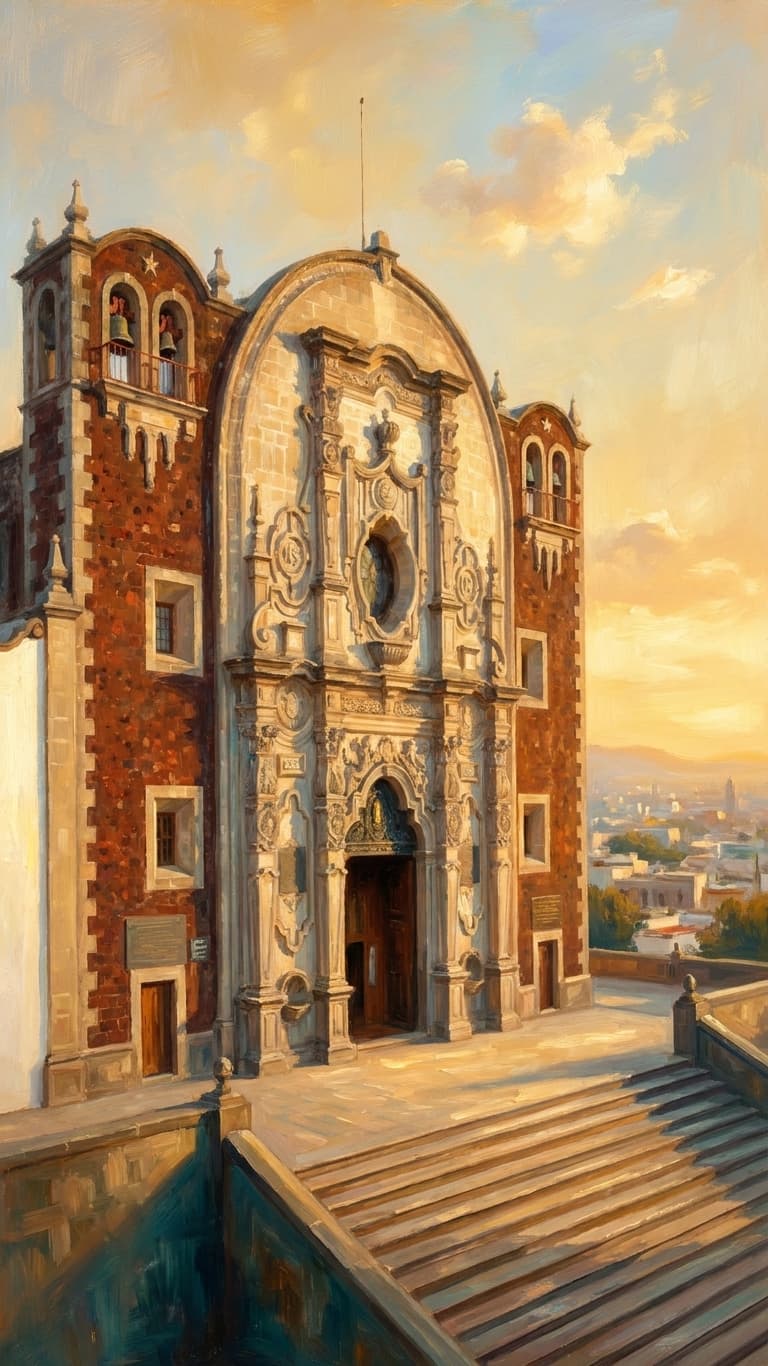
Visiting Capilla del Cerrito involves an ascending pilgrimage up Tepeyac Hill offering panoramic views over Mexico City. The site provides a contemplative atmosphere away from the bustling basilica plaza below.
Highlights
- Panoramics from the Plaza del Cerrito terrace overlooking Mexico City
- Interior fresco cycle by Fernando Leal depicting the four apparitions
- Four monumental white marble archangel statues by Ernesto Tamariz
- The 18th-century Stone Sails monument on the hillside
Things to Know
- Steep climb via the Monumental Staircase requires physical effort at high altitude
- A gentler winding ramp route is available for visitors with reduced mobility
- Strict silence and reverence are expected inside during private prayer and mass
Location
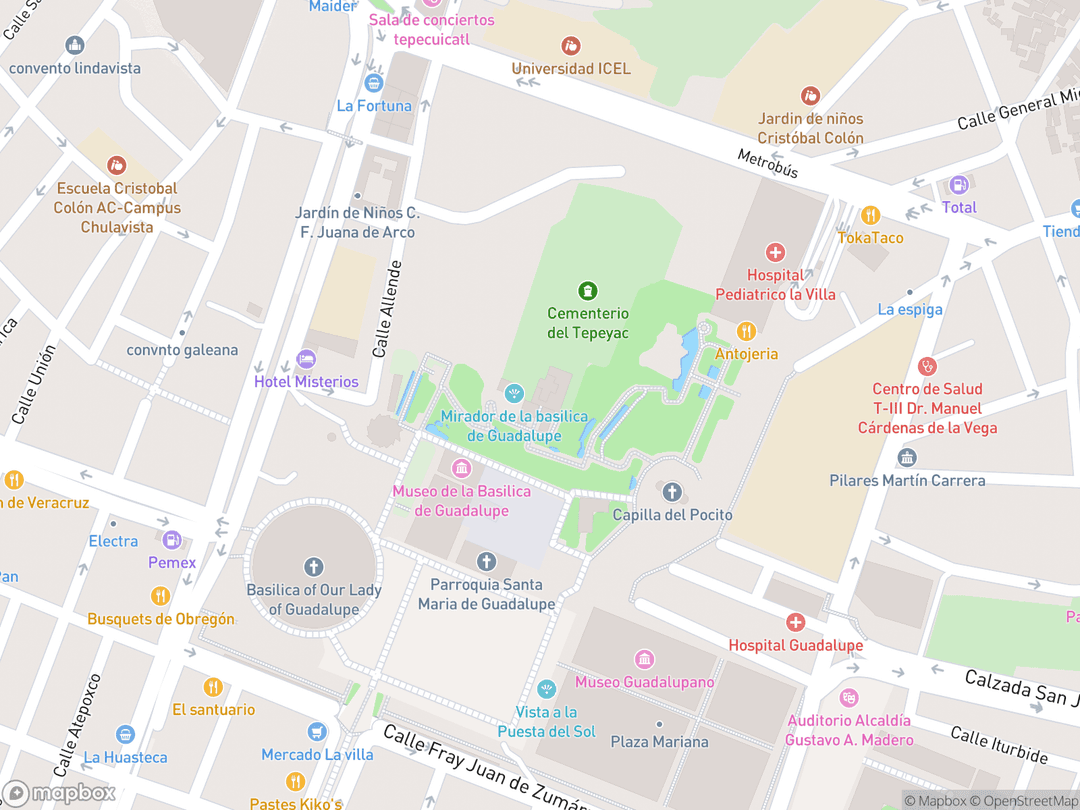
Cerro del Tepeyac, Plaza de las Américas 1, Colonia Villa de Guadalupe, Alcaldía Gustavo A. Madero, C.P. 07050, Ciudad de México, Mexico
Hours: Daily from 6:00 AM to 7:00 PM
Getting There: Accessible via Metro Line 6 or 3 to La Villa-Basílica or Deportivo 18 de Marzo, followed by a short walk to Tepeyac Hill.
Get DirectionsTips for Your Visit
Pace Your Ascent
Take resting breaks while climbing the stone staircase to adjust to Mexico City's high altitude of over 2,200 meters.
Morning Visits
Arrive early between 8:00 AM and 10:00 AM for quiet reflection and clearer morning views across the Valley of Mexico.
About
Perched atop Cerro del Tepeyac in northern Mexico City, Capilla del Cerrito marks the sacred site where Our Lady of Guadalupe appeared to Saint Juan Diego Cuauhtlatoatzin in December 1531. Within the broader Christian tradition of sacred mountains as places of divine encounter, Tepeyac stands as a monument to divine grace and cultural inculturation.
The chapel enshrines the hilltop where Juan Diego gathered miraculous Castilian roses in mid-winter as proof of the apparitions. When presented to Bishop Juan de Zumárraga, the roses fell away to reveal the miraculous image of the Virgin imprinted on Juan Diego's tilma.
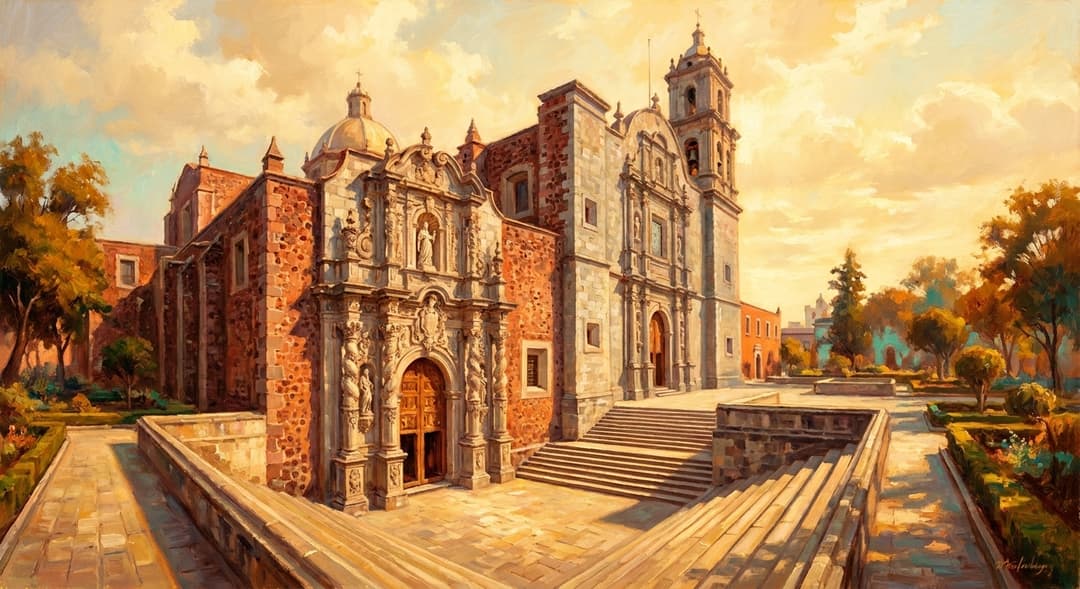
First marked by a modest cross, the location evolved through a primitive 1660 stone structure into the magnificent 1756 Mexican Colonial Baroque chapel seen today. It remains an integral pilgrimage shrine within the Insigne y Nacional Basílica de Santa María de Guadalupe complex.
Gallery
Symbolic Elements
The temple's exterior features intricate carvings, each rich with spiritual meaning:

The Castilian Roses
Miraculous winter blossoms representing divine grace and Mary's title as the Mystical Rose.

Red Tezontle Stone
Volcanic basalt walls reflecting local Mexican geology integrated into sacred colonial Catholic architecture.

Archangel Saint Michael
Marble statue representing the celestial defender under whose patronage the hilltop chapel was consecrated.

Archangel Saint Gabriel
Marble statue representing the divine messenger who announced God's purpose to humanity.

Archangel Saint Raphael
Marble statue representing divine healing and protection for travelers ascending the pilgrimage path.

Archangel Saint Uriel
Marble statue representing divine light illuminating the sacred mysteries of Tepeyac Hill.

The Stone Sails
Monumental stone ship sails built as a votive offering by grateful sailors saved from storm and shipwreck.

Apparition Murals
Vivid interior frescoes by Fernando Leal providing visual catechesis of Saint Juan Diego's encounters.
Interesting Facts
Tepeyac Hill was sacred to the Aztec mother goddess Tonantzin centuries prior to the 1531 Marian apparitions. (Tier A)
The chapel marks the exact hilltop location where Juan Diego gathered unseasonal Castilian roses in winter frost. (Tier A)
The nearby Stone Sails monument was erected by sailors fulfilling a vow after surviving a shipwreck. (Tier A)
Baroque master architect Francisco Antonio de Guerrero y Torres designed the chapel's red tezontle facade in 1756. (Tier A)
Modernist artist Fernando Leal created the chapel's interior apparition frescoes using traditional mural techniques. (Tier A)
Four distinct white marble archangel sculptures carved by Ernesto Tamariz guard the outdoor plaza terrace. (Tier A)
The terrace provides a vantage point over the ancient lakebed of Lake Texcoco across the Valley of Mexico. (Tier B)
The cemetery behind the chapel holds the burial sites of major historical Mexican figures including Santa Anna. (Tier B)
Common Questions
What is the historical significance of Capilla del Cerrito?
It marks the exact hilltop site where Saint Juan Diego gathered miraculous roses in December 1531.
How do visitors reach the hilltop chapel?
Visitors ascend via the Monumental Staircase or a gentle winding ramp from the main basilica plaza.
Who designed the current chapel structure?
Architect Francisco Antonio de Guerrero y Torres completed the Baroque facade in 1756.
Are photos permitted inside the chapel?
Photography is permitted on the outdoor terrace, but interior photography during prayer or mass is restricted.
Featured Stories
The Miracle of the Winter Roses
December 12, 1531
Seeking proof of the heavenly apparitions requested by Bishop Zumárraga, Saint Juan Diego ascended the frosty peak of Tepeyac Hill in middle December. To his wonder, he found fragrant Castilian roses blooming abundantly amidst barren rocks and winter ice. Juan Diego gathered the miraculous flowers into his tilma, bringing them to the bishop where their release revealed the iconic image of Our Lady of Guadalupe.
Source: Archdiocese of Mexico Historical Archives
The Gratitude of the Shipwrecked Sailors
1750s
During a catastrophic storm off the Mexican coast, a desperate crew prayed fervently to Our Lady of Guadalupe and vowed to erect their ship's mast on her sacred hill if spared. Surviving the ordeal, the sailors fulfilled their sacred oath by carrying the mast to Tepeyac Hill and encasing it in permanent stone. Today, the monumental Stone Sails stand near Capilla del Cerrito as an enduring testimony of maritime faith.
Source: Insigne y Nacional Basílica de Santa María de Guadalupe
Fernando Leal's Artistic Pilgrimage
1945
Mid-century master muralist Fernando Leal undertook a decade-long project to adorn the interior walls of Capilla del Cerrito with fresh apparition frescoes. Utilizing traditional mineral pigments and fresco preparation, Leal depicted the narrative of Juan Diego with vibrant indigenous dignity. His masterpiece transforms the chapel sanctuary into an immersive visual chronicle of American inculturation.
Source: Secretaría de Cultura de la Ciudad de México
Timeline
The Miracle of the Roses
Saint Juan Diego gathers miraculous Castilian roses on Tepeyac Hill to prove Our Lady of Guadalupe's apparitions.
EventEarly Pilgrimage Cross
A humble wooden cross marks the summit of Tepeyac Hill where the roses were collected.
MilestoneFirst Permanent Chapel
Cristóbal de Aguirre and Teresa Pelegrina finance the construction of the first hilltop stone chapel.
component.timeline.constructionExpansion and Cemetery
Father José de Montúfar expands the chapel structure and establishes the historic Tepeyac Cemetery.
RenovationBaroque Facade Completed
Architect Francisco Antonio de Guerrero y Torres completes the prominent Mexican Colonial Baroque facade.
DedicationTerrace Angel Sculptures
Four marble angel statues are installed on the terrace during the Guadalupan canonical coronation.
RenovationFresco Cycle Commissioned
Muralist Fernando Leal begins painting the interior fresco series depicting the four Marian apparitions.
RenovationArchangel Statues Placed
Sculptor Ernesto Tamariz crafts four large white marble archangel statues for the newly renovated plaza.
RenovationHistorical Plaque Dedicated
The site commemorates the Guadalupan Encounter Year by erecting historic plaque markers detailing chapel origins.
MilestoneCanonization of Juan Diego
Pope John Paul II canonizes Saint Juan Diego, elevating global devotion to the Tepeyac apparition site.
EventHistory by Decade
1530s — Sacred Vision on Tepeyac
In December 1531, Our Lady of Guadalupe appeared four times to indigenous peasant Juan Diego Cuauhtlatoatzin on Tepeyac Hill. The site previously held Aztec devotion to Tonantzin, establishing Tepeyac as a focal point of Christian inculturation.
1660s — The First Stone Sanctuary
Benefactors Cristóbal de Aguirre and Teresa Pelegrina financed the hilltop's first permanent stone chapel in 1660. This humble shrine marked the exact location where Juan Diego gathered the miraculous winter roses.
1750s — Colonial Baroque Masterpiece
Renowned architect Francisco Antonio de Guerrero y Torres completed the chapel's grand Baroque renovation in 1756 using red tezontle stone. He also designed the stone staircases guiding pilgrims up the steep hill.
1940s–1950s — Artistic Renewal and Restoration
Between 1945 and 1950, painter Fernando Leal created the interior apparition frescoes, while sculptor Ernesto Tamariz carved four white marble archangel statues. The plaza was broadened to accommodate increasing numbers of international pilgrims.
Architecture & Facilities
Capilla del Cerrito exemplifies Mexican Colonial Baroque architecture, featuring a striking synthesis of indigenous red volcanic tezontle stone and refined white chiluca stone, organized into a formal two-tiered facade crowned by decorative bell towers and an ornate dome.
Building Materials
Tezontle Basalt
Reddish vesicular volcanic stone mined locally to create sturdy, lightweight exterior masonry.
Chiluca Stone
Fine-grained light gray stone used for detailed window moldings, door frames, and carved niches.
White Carrara Marble
Sculpted white marble used for the four archangel statues guarding the hilltop terrace.
Glazed Talavera Tile
Colorful ceramic tile covering the chapel's small sanctuary dome.
Interior Features
Single Vaulted Nave
An intimate barrel-vaulted congregational hall lined with mid-century fresco murals.
Apparition Fresco Suite
A series of wall frescoes painted by Fernando Leal depicting Saint Juan Diego's Marian encounters.
Golden Sanctuary Retable
An ornate gilded altar piece housing a devotional image of Our Lady of Guadalupe.
Sacristy
A private preparation chamber holding historic ecclesiastical vestments and sacred vessels.
Temple Grounds
The Plaza del Cerrito features stone paving, panoramic observation railings, four monumental archangel statues, and landscaped terraced gardens leading down to the monumental staircases.
Additional Facilities
The site connects directly to the historical Tepeyac Cemetery and features nearby restroom infrastructure and pilgrim rest seating along the hillside ramp pathways.
Religious Significance
In Christian theology, mountain tops are sacred locations of divine revelation and covenant. On Tepeyac Hill, Catholic tradition recognizes a pivotal moment where divine grace interacted with indigenous American culture through the Virgin Mary.
To preserve and honor the exact site of the rose miracle and to offer pilgrims a place of prayer, repentance, and contemplation above the Valley of Mexico.
Sacred Ordinances
Eucharistic Liturgy (Mass)
Holy Mass celebrated regularly for pilgrims in an intimate sanctuary atmosphere.
Marian Intercessory Devotion
Personal prayers offered to Our Lady of Guadalupe for spiritual guidance, healing, and gratitude.
Pilgrimage Ascension
The devotional physical climb up Tepeyac Hill as an act of penance and spiritual preparation.
Inculturation of Faith
Our Lady's appearance to Juan Diego in his native Nahuatl language symbolized the profound union of indigenous Mesoamerican heritage with Catholic Christian theology.
Similar Temples
Sources & Research
Every fact on Temples.org is backed by verified Sources & Research. Each piece of information is rated by source tier and confidence level.
View All Sources (7)
| Field | Source | Tier | Retrieved |
|---|---|---|---|
| About & Historical Background | Government of Mexico City (opens in a new tab) | A | 2026-02-23 |
| Architecture & Design | The Historical Marker Database (opens in a new tab) | B | 2026-02-23 |
| Timeline & Apparitions | Historical Mexico (opens in a new tab) | B | 2026-02-23 |
| Visitor Insights & Access | Wanderlog (opens in a new tab) | D | 2026-02-23 |
| Symbolic Elements & Statues | Guadalupe Gifts (opens in a new tab) | D | 2026-02-23 |
| Historical Monuments & Stone Sails | City Visions Travel (opens in a new tab) | D | 2026-02-23 |
| Location & Geography | AroundUs Guide (opens in a new tab) | D | 2026-02-23 |