Visitor Insights
Visiting Basilica of Our Lady of Guadalupe
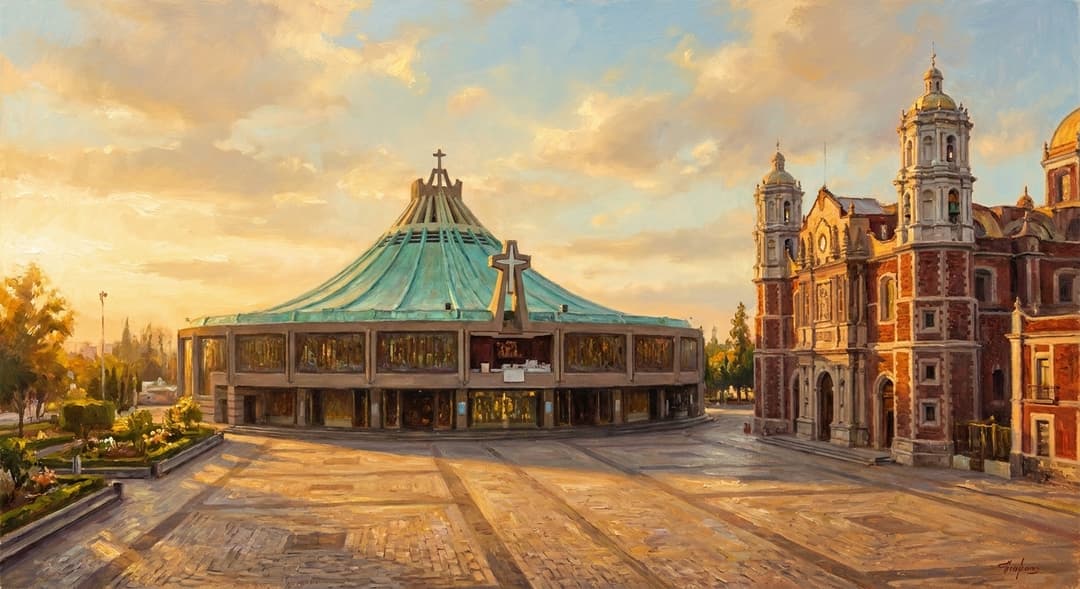
Visiting the Basilica of Our Lady of Guadalupe offers an inspiring encounter with Latin American spiritual devotion and modern sacred architecture. Visitors can observe the sacred tilma via continuous automated walkways while attending hourly Holy Mass services.
Highlights
- The original 1531 tilma of Saint Juan Diego displayed on the High Altar
- Continuous moving walkways allowing unobstructed viewing of the sacred image
- The 18th-century Old Basilica featuring historic Baroque architecture and pile stabilization
- Panoramas of the atrium and Mexico City from the Capilla del Cerrito atop Tepeyac Hill
Things to Know
- Extreme crowding during early December celebrations around the Feast of Our Lady of Guadalupe
- Respect ongoing liturgical services when entering the main column-free circular nave
- Wear comfortable footwear for walking across the sprawling Plaza de las Américas
Location
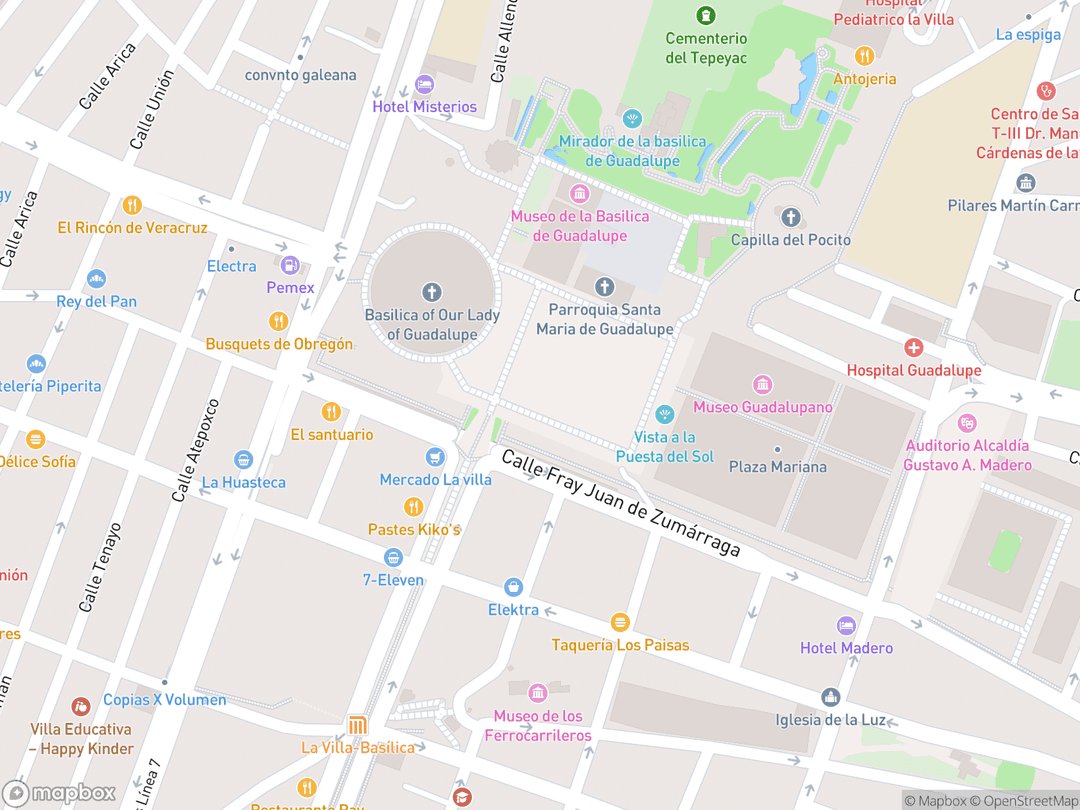
Plaza de las Américas 1, Villa de Guadalupe, Gustavo A. Madero, 07050 Mexico City, CDMX, Mexico
Hours: Daily from 6:00 AM to 9:00 PM; Masses celebrated hourly from 6:00 AM to 8:00 PM.
Getting There: Accessible via Metro Line 6 or Line 3 to La Villa-Basílica station, followed by a short five-minute walk.
Get DirectionsTips for Your Visit
Early Morning Visits
Arrive between 6:30 AM and 8:30 AM on weekdays to avoid long queues at the tilma conveyor walkway.
Moving Walkway Etiquette
Step onto the moving conveyor belts beneath the high altar for a smooth, continuous view of the tilma without stopping flow.
Explore Tepeyac Hill
Climb the terraced stairs to the Capilla del Cerrito and Tepeyac Gardens for historic chapels and views.
About
Rooted in Abrahamic and Christian theology, Catholic faith affirms the worship of the God of Israel and Jesus Christ as Savior. Within this tradition, Mary of Nazareth is revered as the God-bearer whose apparitions direct humanity toward divine grace, unity, and repentance.
Between December 9 and 12, 1531, the Virgin Mary appeared to indigenous convert Saint Juan Diego Cuauhtlatoatzin on Tepeyac Hill. She left her miraculous image imprinted upon his agave-fiber tilma, establishing a sanctuary that transformed faith in Mesoamerica.
Today, the sanctuary complex encompasses both the 18th-century Baroque Old Basilica and the 1976 High Modernist New Basilica. Welcoming over 20 million pilgrims annually, it stands as the most visited Catholic shrine in the world.
Gallery
Symbolic Elements
The temple's exterior features intricate carvings, each rich with spiritual meaning:

Tent of Meeting Roof Canopy
The hyperbolic paraboloid copper roof references the biblical Israelite Tabernacle symbolizing God dwelling among humanity.

Miraculous Maguey Tilma
Agave-fiber cloak bearing Mary as a pregnant Mestiza maiden standing before radiant solar rays.

Seven Entry Gates
Symbolizes the Seven Sacraments and Seven Gates of Jerusalem welcoming pilgrims from all nations.
Bent Bronze Crucifix
The Cristo del Atentado absorbed a 1921 dynamite bomb blast, shielding the tilma from harm.

Yellow Talavera Tile Domes
Glazed ceramic tiles on the Old Basilica represent heavenly gold and the celestial New Jerusalem.

Column-Free Circular Nave
A 100-meter span ensuring all ten thousand seated worshippers maintain a clear line of sight to the altar.
Atrium of the Americas
Recalls open-air Franciscan missionary chapels built to gather vast assemblies under the open sky.
Interesting Facts
The Basilica receives over 20 million pilgrims each year, making it the most visited Marian shrine in the world. (Tier A)
The agave-fiber tilma has naturally endured for nearly 500 years without decomposing despite standard fabric lifespans of thirty years. (Tier B)
A 1921 bomb blast destroyed marble steps and bent a solid bronze crucifix, but left the glass frame and tilma untouched. (Tier A)
High-definition optical scans reveal microscopic human reflections in the Virgin's eyes matching eyewitnesses from the 1531 apparition. (Tier B)
The star patterns on Mary's mantle correspond accurately to the celestial constellations above Mexico City on December 12, 1531. (Tier B)
Three automated conveyor belts beneath the altar move up to fifteen thousand pilgrims per hour past the sacred image. (Tier A)
The 1709 Old Basilica leaned three meters toward its west corner before 344 concrete piles stabilized its foundation. (Tier A)
Master architect Pedro Ramírez Vázquez also designed Mexico City's National Museum of Anthropology and Azteca Stadium. (Tier A)
Tepeyac Hill was anciently sacred to Tonantzin, creating a harmonious cultural bridge for early indigenous Christians. (Tier B)
The modern circular sanctuary features a 100-meter wide span with zero internal support pillars blocking sightlines. (Tier A)
Common Questions
What is the primary relic housed inside the Basilica?
The Basilica houses the original 1531 tilma (cactus-fiber cloak) of Saint Juan Diego bearing the miraculous image of Our Lady of Guadalupe.
Why was a new Basilica constructed in the 1970s?
The 1709 Old Basilica suffered severe structural damage and tilting due to sinking into the soft subsoil of ancient Lake Texcoco.
How many pilgrims visit the Basilica of Guadalupe each year?
Approximately 20 million pilgrims visit annually, with nearly 10 million arriving around the Feast of Our Lady of Guadalupe on December 12.
How are visitors able to view the tilma without stopping Mass?
Three automated moving walkways pass beneath the elevated high altar, allowing continuous viewing without interrupting ongoing services.
Featured Stories
The Miracle of Castilian Roses and the Tilma
December 12, 1531
When Bishop Zumárraga requested a sign verifying the Tepeyac apparitions, Juan Diego gathered blooming Castilian roses from the frozen hillside into his cactus-fiber cloak. As he unfolded the tilma before the bishop, the fresh flowers fell away to reveal the miraculous image of the Virgin Mary imprinted upon the fabric. This moment transformed Spanish colonial religious history and established the foundational shrine of Mexican Christianity.
Source: Primate Archdiocese of Mexico Historical Archives
The Unharmed Sacred Image in the Bombing of 1921
November 14, 1921
During the height of anticlerical political turmoil in Mexico, a bomb hidden in a floral vase exploded directly beneath the tilma on the high altar. The detonation tore apart heavy marble steps and bent a solid bronze crucifix, known today as the Cristo del Atentado. Miraculously, the delicate glass protective case remained uncracked and the agave-fiber cloth was completely unharmed, reinforcing popular belief in divine protection.
Source: Insigne y Nacional Basílica de Santa María de Guadalupe Archives
Engineering the Modern Tent of Meeting
October 12, 1976
Faced with the continuous sinking of the old colonial church into the ancient lakebed, architect Pedro Ramírez Vázquez conceptualized a circular, column-free cathedral capable of holding tens of thousands. His innovative design incorporated underlying friction piles and automated conveyor walkways so pilgrims could view the tilma without interrupting liturgical services. The consecration on October 12, 1976, successfully preserved the ancient sacred image in a state-of-the-art modern sanctuary.
Source: Architectural Records of Pedro Ramírez Vázquez
Timeline
First Apparition on Tepeyac
Saint Juan Diego experiences the first apparition of the Virgin Mary on Tepeyac Hill.
EventMiracle of the Tilma
The Virgin Mary's image is miraculously imprinted on Juan Diego's cactus-fiber tilma.
MilestoneFirst Shrine Authorized
Bishop Juan de Zumárraga orders the construction of the first adobe chapel at Tepeyac.
component.timeline.groundbreakingOld Basilica Opens
The Old Basilica opens solemnly following fourteen years of colonial Baroque construction.
DedicationPatroness Proclamation
Pope Benedict XIV proclaims Our Lady of Guadalupe the official patroness of New Spain.
EventPontifical Coronation
The sacred image undergoes a pontifical coronation inside the newly restored colonial sanctuary.
EventElevation to Minor Basilica
Pope Pius X formally elevates the sanctuary to the canonical status of Minor Basilica.
MilestoneAltar Bombing Survival
A bomb explosion damages the high altar, but leaves the tilma completely unharmed.
EventNew Basilica Consecration
The High Modernist New Basilica is consecrated and receives the tilma in procession.
DedicationBeatification of Juan Diego
Pope John Paul II beatifies Juan Diego Cuauhtlatoatzin inside the New Basilica.
MilestoneCanonization of Saint Juan Diego
Pope John Paul II canonizes Saint Juan Diego during his fifth apostolic visit to Mexico.
MilestonePapal Visit of Pope Francis
Pope Francis visits the Basilica and spends silent prayer time before the sacred image.
EventHistory by Decade
1530s — Apparition and First Shrine
Following the 1531 apparitions to Saint Juan Diego, Bishop Juan de Zumárraga authorized the immediate construction of a simple adobe chapel at the base of Tepeyac Hill. This humble sanctuary protected the sacred tilma while attracting early indigenous Christian converts.
1690s–1700s — Colonial Baroque Monument
Architect Pedro de Arrieta broke ground in 1695 on a monumental colonial cathedral-style basilica. Completed in 1709, this grand structure featured tezontle volcanic stone walls, octagonal towers, and glazed Talavera tile cupolas.
1920s — Secular Hostility and Survival
During a period of religious tension, a radical operative detonated a bomb beneath the high altar on November 14, 1921. Although the blast bent a solid bronze crucifix and shattered nearby masonry, the tilma and its glass frame remained entirely undamaged.
1970s — Modernist Sanctuary Construction
Severe subsoil sinking forced the construction of the New Basilica between 1974 and 1976. Designed by Pedro Ramírez Vázquez, the modern circular tent structure welcomed the tilma during a solemn dedication procession on October 12, 1976.
1990s–2000s — Papal Visits and Canonization
Pope John Paul II made repeated pilgrimages to the sanctuary, declaring Our Lady of Guadalupe Patroness of the Americas in 1999. In July 2002, he solemnly canonized Saint Juan Diego inside the New Basilica before millions of joyful worshippers.
Architecture & Facilities
The complex contrasts 18th-century Mexican Spanish Colonial Baroque with 20th-century Structural High Modernism. Designed by Pedro Ramírez Vázquez, the modern sanctuary features a circular, tent-like hyperbolic paraboloid roof clad in green oxidized copper, evoking the biblical Tent of Meeting.
Building Materials
Oxidized Copper Roof
Covering the hyperbolic paraboloid canopy, copper sheeting developed a green patina protecting the structural cables.
Tezontle Volcanic Stone
Dark red porous volcanic stone forms the screen façade of the 1709 colonial Baroque Old Basilica.
Chiluca Sandstone
Pale gray carved sandstone frames the portals, columns, and decorative relief work of the historical structures.
Reinforced Concrete Piles
344 deep friction control piles stabilize both basilicas into the firm clay strata beneath ancient Lake Texcoco.
Interior Features
Main Sanctuary Nave
A circular column-free auditorium seating ten thousand worshippers with direct sightlines to the elevated High Altar.
Tilma Conveyor Chamber
Subterranean viewing corridor equipped with three moving walkways passing beneath bulletproof climate-controlled glass.
Upper Perimeter Chapels
Nine elevated chapels overlooking the main floor designed for private group Masses and choir performances.
Underground Crypts
Vast subterranean burial vaults containing over fifteen thousand urn niches for deceased faithful.
Temple Grounds
The Plaza de las Américas features a vast stone atrium accommodating fifty thousand pilgrims, connected to Tepeyac Hill gardens, historic chapels, and outdoor prayer pathways.
Additional Facilities
Includes an administrative museum housing colonial religious art, a baptismal chapel, parish offices, gift shops, and visitor assistance centers.
Religious Significance
Within Catholic theology, the Basilica of Our Lady of Guadalupe represents the spiritual heart of the Americas. The Marian apparitions of 1531 affirmed the dignity of indigenous peoples and established an enduring bridge of faith across diverse cultures.
Serving as the National Shrine of Mexico, the sanctuary fosters Christian worship, Marian devotion, sacramental reconciliation, and pastoral care for millions of annual pilgrims.
Sacred Ordinances
Holy Mass (Eucharist)
Continuous hourly celebration of the divine liturgy forming the principal sacrifice and center of Catholic worship.
Sacrament of Reconciliation
Daily confession services offered in multiple languages to impart divine forgiveness and spiritual healing.
Pilgrimage and Veneration
Act of prayerful devotion before the miraculous tilma of Saint Juan Diego to request intercession.
Theological Synthesis and Conversion
The apparition of Mary as a brown-skinned maiden speaking Nahuatl created a cultural synthesis, leading to widespread Christian conversion across 16th-century Mesoamerica.
Universal Marian Patronage
Proclaimed Patroness of the Americas and Empress of Latin America, Our Lady of Guadalupe symbolizes unity and divine protection for the global Catholic Church.
Similar Temples
Sources & Research
Every fact on Temples.org is backed by verified Sources & Research. Each piece of information is rated by source tier and confidence level.
View All Sources (6)
| Field | Source | Tier | Retrieved |
|---|---|---|---|
| About & Historical Background | Insigne y Nacional Basílica de Santa María de Guadalupe (opens in a new tab) | A | 2026-02-22 |
| About & Historical Background | The Holy See (Vatican) (opens in a new tab) | A | 2026-02-22 |
| Religious Significance & Marian Apparitions | Catholic News Agency (opens in a new tab) | B | 2026-02-22 |
| Architecture & Structural Engineering | Primate Archdiocese of Mexico (opens in a new tab) | A | 2026-02-22 |
| Visitor Insights & Practical Guidance | Encyclopædia Britannica (opens in a new tab) | B | 2026-02-22 |
| Symbolic Elements & Relics | The Metropolitan Museum of Art (opens in a new tab) | B | 2026-02-22 |