Visitor Insights
Visiting Kaaba
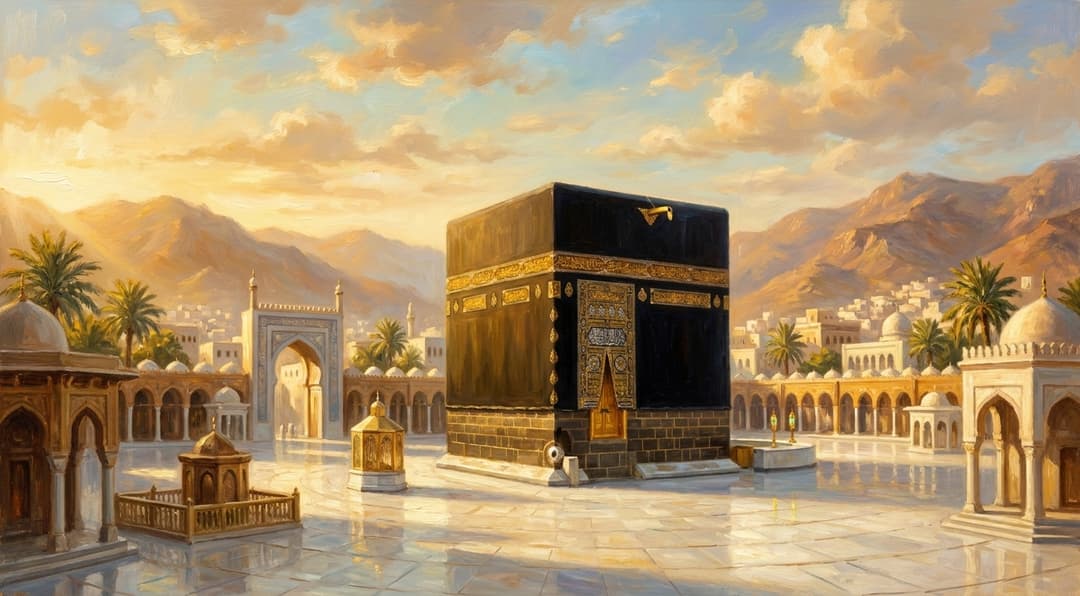
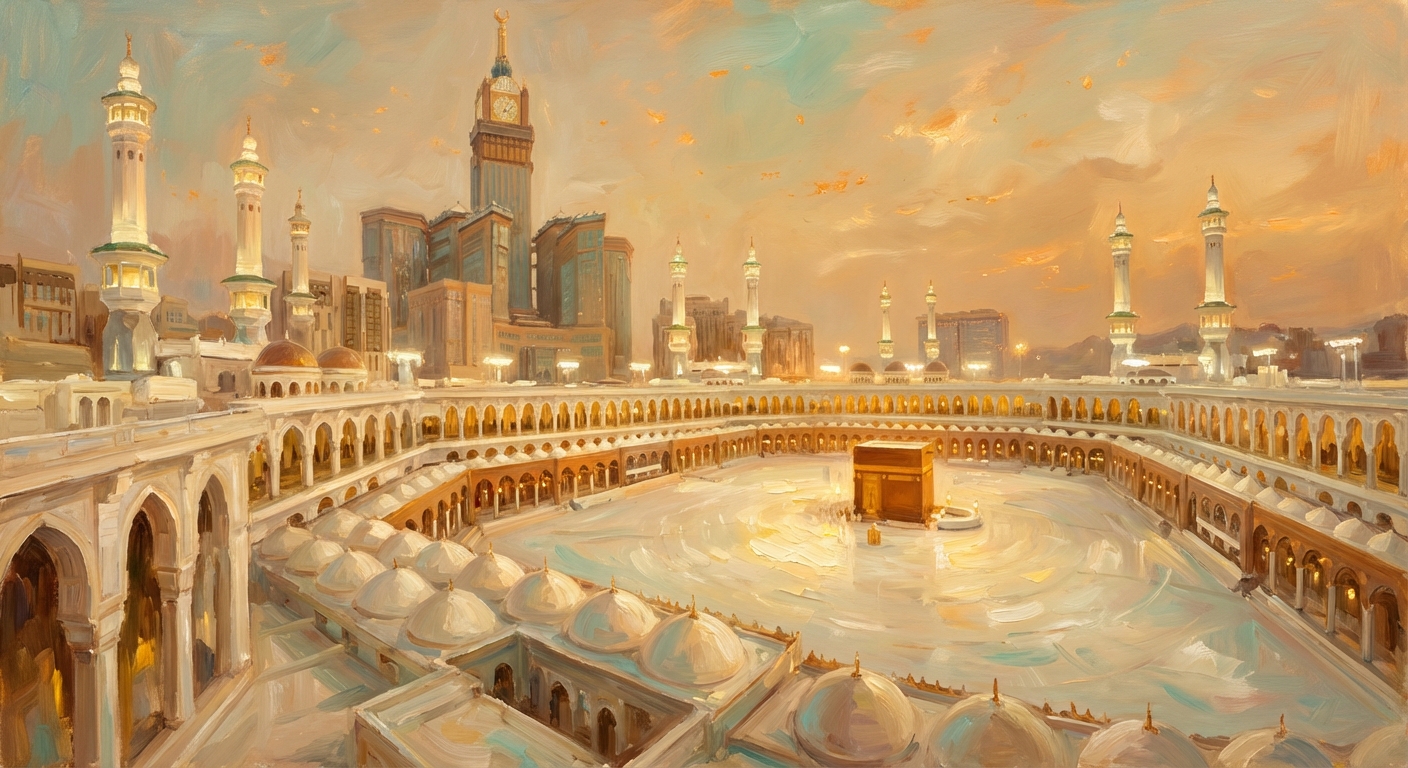
Visiting the Kaaba is a deeply spiritual experience for Muslims, representing the culmination of their faith and devotion. Located in the heart of Mecca's Masjid al-Haram, the atmosphere is one of profound reverence and unity, as millions of pilgrims gather to perform tawaf (circumambulation) and offer prayers. While direct access to the interior of the Kaaba is restricted, the opportunity to pray in its vicinity and witness its grandeur is a transformative experience.
Highlights
- Witnessing the Kaaba's imposing structure and the mesmerizing flow of pilgrims performing tawaf.
- Praying in the Masjid al-Haram, one of the holiest places in Islam.
- Experiencing the spiritual unity and camaraderie of the global Muslim community.
Things to Know
- The Kaaba and its immediate surroundings can be extremely crowded, especially during Hajj and Umrah.
- Dress modestly and respectfully, adhering to Islamic customs and traditions.
- Be prepared for security checks and restrictions on photography and videography in certain areas.
Location
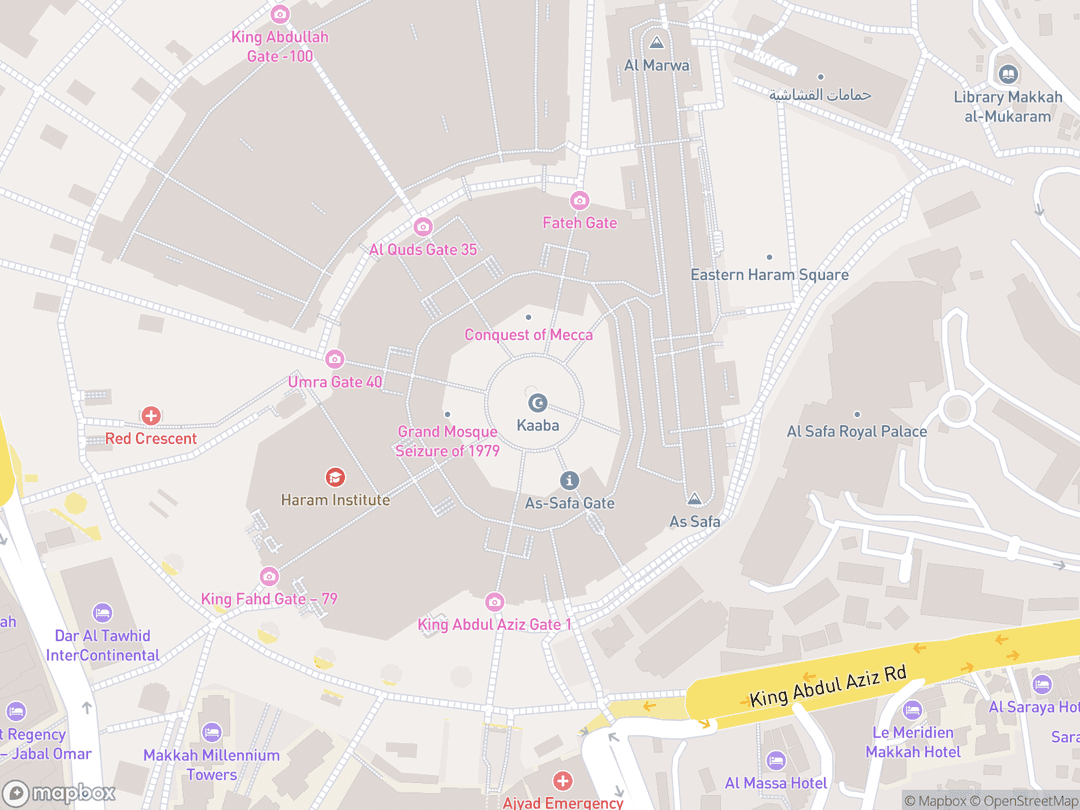
Masjid al-Haram, Mecca, Saudi Arabia
Hours: Open 24 hours for prayer and worship, though access to certain areas may be restricted during peak times.
Getting There: Mecca is accessible by air and road. Pilgrims typically arrive at King Abdulaziz International Airport in Jeddah and travel to Mecca by bus or taxi. Once in Mecca, the Masjid al-Haram is easily accessible by foot or local transportation.
Get DirectionsAbout
The Kaaba, also known as the Kaba, is a cuboid building at the center of the Masjid al-Haram (the Great Mosque) in Mecca, Saudi Arabia. It stands as the most sacred site in Islam and is revered by Muslims as the "House of God" (Baytullah). The Kaaba holds immense significance as it determines the qibla, the direction of prayer, for Muslims across the globe. As part of the Abrahamic tradition, it represents a focal point of monotheistic worship and spiritual unity.
Historically, the Kaaba predates Islam, serving as a sanctuary for various Arabian tribes. In 630 CE, the Prophet Muhammad, peace and blessings be upon him, conquered Mecca, removed the idols, and rededicated the Kaaba to the worship of Allah alone. Since then, it has been the epicenter of Islamic pilgrimage and devotion. The annual Hajj and Umrah pilgrimages see millions of Muslims circumambulating the Kaaba, fulfilling a fundamental pillar of their faith.
Architecturally, the Kaaba is a cube-shaped structure constructed primarily of granite, marble, and limestone. It is draped in the kiswa, a black cloth with gold Arabic inscriptions, which is replaced annually during the Hajj. The Black Stone (al-Hajar al-Aswad), located in the eastern corner, is believed to have been given to Adam and marks the starting point for the circumambulation (tawaf). The Kaaba's enduring presence and spiritual importance continue to inspire and unite the global Muslim community.
Gallery
Symbolic Elements
The temple's exterior features intricate carvings, each rich with spiritual meaning:

The Black Stone (al-Hajar al-Aswad)
The Black Stone is located in the eastern corner of the Kaaba and is believed to have been given to Adam upon his repentance. It symbolizes God's covenant and is revered by Muslims as a sacred relic.

The Kiswa
The kiswa is a black cloth with gold Arabic inscriptions that covers the Kaaba. It represents reverence and devotion, with the gold inscriptions signifying verses from the Quran. The kiswa is replaced annually during the Hajj.

Tawaf
Tawaf is the act of circumambulating the Kaaba seven times counterclockwise. It symbolizes the pilgrims' devotion to Allah and the unity of the Muslim community. Tawaf is a Fard rite during Hajj and Umrah.
The Door of Mercy (Bāb ar-Raḥmah)
The Door of Mercy is the entrance to the Kaaba, set 2.13 meters (7 feet) above the ground on the north-eastern wall. It serves as a symbolic gateway to divine blessings and forgiveness.

Granite Construction
The Kaaba is primarily constructed of granite, a durable and resilient stone that symbolizes strength and permanence.

The Gold Inscriptions
The gold inscriptions on the kiswa are verses from the Quran, the holy book of Islam. These inscriptions serve as a constant reminder of Allah's words and guidance, adding to the Kaaba's spiritual significance.

The Cube Shape
The Kaaba's cube shape represents stability and universality. It symbolizes the oneness of Allah and the unity of the Muslim community, serving as a focal point for their devotion and prayers.

Al-Shadrawan
The Al-Shadrawan is a light-grey marble base that encircles three sides of the Kaaba to protect the foundation. It protects the Kaaba's structure and ensures its longevity.
Interesting Facts
Muslims face the Kaaba during their five daily prayers, no matter where they are in the world.
The Kaaba has been rebuilt multiple times throughout history due to natural disasters and invasions.
The Black Stone is believed to have been originally white but turned black by absorbing the sins of pilgrims.
The Kaaba is cleaned twice a year in a special ceremony.
The original dimensions of the Kaaba included a semi-circular area known as Hijr Ismail (Hateem).
Performing one prayer in the Masjid al-Haram is considered highly rewarding.
The height of the Kaaba is approximately 43 feet (13.1 meters).
The Kiswa, the black cloth covering the Kaaba, is made of silk and gold and is replaced annually.
The Kaaba is also referred to as Baitul Ateeq, meaning 'earliest and ancient' or 'independent and liberating'.
The Kaaba's corners roughly align with the cardinal directions.
Common Questions
What is the significance of the Kaaba in Islam?
The Kaaba is the most sacred site in Islam, considered the 'House of God' (Baytullah). It serves as the qibla, the direction of prayer, for Muslims worldwide and is the central point for the annual Hajj and Umrah pilgrimages.
What is the Black Stone (al-Hajar al-Aswad)?
The Black Stone is located in the eastern corner of the Kaaba and is believed to have been given to Adam to obtain forgiveness. Muslims start their circumambulation (tawaf) from this point, revering it as a symbol of God's covenant.
What is the kiswa?
The kiswa is a black cloth with gold Arabic inscriptions that covers the Kaaba. It is replaced annually during the Hajj, symbolizing mourning and devotion to Allah.
Why do Muslims circumambulate the Kaaba?
Muslims circumambulate the Kaaba seven times counterclockwise (tawaf) as a Fard rite during Hajj and Umrah. This act symbolizes their devotion to Allah and the unity of the Muslim community.
Can anyone enter the Kaaba?
The Kaaba itself is generally not open to the public. Only authorized individuals are allowed inside on special occasions.
Featured Stories
The Rededication by Prophet Muhammad
630 CE
In 630 CE, a pivotal moment in Islamic history unfolded as Prophet Muhammad, peace and blessings be upon him, triumphantly entered Mecca. After years of facing persecution and exile, he returned to his birthplace with a growing following of believers. Upon entering the sacred city, Muhammad made his way to the Kaaba, which at the time was filled with idols representing various Arabian tribes.
With unwavering resolve, the Prophet Muhammad, accompanied by his devoted companions, proceeded to dismantle and remove all the idols from the Kaaba. This act symbolized the purification of the sacred site and the triumph of monotheism over polytheism. The Kaaba, once a place of diverse worship, was now rededicated solely to the worship of Allah, the one true God.
This rededication marked a turning point in the history of Islam, establishing the Kaaba as the spiritual center of the faith. From that day forward, Muslims around the world would turn towards the Kaaba in their daily prayers, uniting them in a shared devotion to Allah. The rededication by Prophet Muhammad solidified the Kaaba's enduring significance as the 'House of God' and the qibla for the global Muslim community.
Source: Islamic Landmarks
The Story of the Black Stone
Ancient Times
The Black Stone, or al-Hajar al-Aswad, holds a place of profound reverence in Islamic tradition. Legend has it that this sacred stone was sent down from paradise to Adam upon his repentance.
Over the centuries, the Black Stone has been venerated as a symbol of God's covenant with humanity. During the annual Hajj pilgrimage, millions of Muslims seek to touch or kiss the Black Stone, seeking to connect with its divine energy and receive blessings.
Despite its fragmented state, the Black Stone remains an integral part of the Kaaba and a powerful reminder of the connection between humanity and the divine. Its enduring presence serves as a testament to the enduring power of faith and the pursuit of spiritual enlightenment.
Source: WhyIslam.org
The Annual Changing of the Kiswa
Every Year During Hajj
One of the most visually striking traditions associated with the Kaaba is the annual changing of the kiswa, the black cloth that covers the sacred structure. This elaborate ceremony takes place on the ninth day of Dhul Hijjah, the final month of the Islamic calendar, coinciding with the Hajj pilgrimage. The old kiswa is carefully removed and replaced with a brand-new one, meticulously crafted from silk and adorned with intricate gold embroidery.
The changing of the kiswa is a symbolic act of renewal and purification, representing the cleansing of the Kaaba and the rededication of the Muslim community to Allah. The new kiswa is a testament to the artistry and craftsmanship of skilled artisans who spend months creating this magnificent covering. The gold inscriptions on the kiswa are verses from the Quran, serving as a constant reminder of Allah's words and guidance.
The annual changing of the kiswa is a spectacle witnessed by millions of pilgrims and viewers around the world, serving as a powerful symbol of Islamic unity, devotion, and the enduring significance of the Kaaba as the spiritual center of the faith.
Source: Islamic Landmarks
Timeline
Sanctuary for Arabian Tribes
The Kaaba served as a sanctuary for various Arabian tribes, housing numerous idols and attracting annual pilgrimages to Mecca.
MilestoneReconstruction Participation
Muhammad, peace and blessings be upon him, participated in the reconstruction of the Kaaba after a fire and flood, contributing to its preservation and upkeep.
EventRededication to Allah
Muhammad, peace and blessings be upon him, conquered Mecca, removed the idols from the Kaaba, and rededicated it to the worship of Allah alone, marking a pivotal moment in Islamic history.
MilestoneFinal Pilgrimage
Muhammad, peace and blessings be upon him, made his final pilgrimage (Hujjat ul-Wada'), establishing the rites of pilgrimage and solidifying the Kaaba's central role in Islamic worship.
MilestoneFire Damage
The Kaaba was damaged by fire during the siege of Mecca, necessitating repairs and restoration to preserve its sacred structure.
RenovationReconstruction
The Kaaba was rebuilt in wood and stone following Ibrahim's original dimensions, ensuring its continuity and adherence to its historical foundations.
RenovationKiswa Covering
The Kaaba was covered with the kiswa, a black cloth replaced annually during the Hajj, symbolizing reverence and devotion.
EventMosque Decoration
The mosque enclosing the Kaaba was decorated with mosaics, enhancing its aesthetic appeal and spiritual ambiance.
EventMosque Expansion
The mosque around the Kaaba was expanded and modified, accommodating increasing numbers of pilgrims and enhancing its overall functionality.
RenovationOttoman Renovation
The Kaaba underwent heavy renovation under the Ottoman sultans, reflecting their commitment to preserving and enhancing Islamic holy sites.
RenovationComplete Rebuilding
The Kaaba and surrounding mosque were entirely rebuilt after floods, ensuring their structural integrity and resilience against natural disasters.
RenovationMajor Modifications
Major modifications were carried out by the Saudi government to accommodate increasing numbers of pilgrims, improving facilities and infrastructure.
RenovationMajor Reconstruction
A major reconstruction took place, leaving only the stones as original material, preserving the Kaaba's historical essence while modernizing its structure.
RenovationReligious Significance
The Kaaba holds unparalleled religious significance in Islam, serving as the focal point of worship and spiritual unity for Muslims worldwide. As the 'House of God' (Baytullah), it represents the divine presence on Earth and the ultimate destination for pilgrims seeking closeness to Allah.
The primary purpose of the Kaaba is to serve as the qibla, the direction of prayer, for Muslims around the world. It is also the central point for the annual Hajj and Umrah pilgrimages, which are fundamental pillars of Islam. The Kaaba symbolizes unity, devotion, and the oneness of Allah.
Sacred Ordinances
Salah (Prayer)
Muslims face the Kaaba during their five daily prayers, regardless of their location. This act of facing the Kaaba unites the global Muslim community in a shared act of worship and submission to Allah.
Tawaf (Circumambulation)
Pilgrims circumambulate the Kaaba seven times counterclockwise as a Fard rite during Hajj and Umrah. This act symbolizes their devotion to Allah and the unity of the Muslim community.
Hajj and Umrah (Pilgrimage)
The Kaaba is the central point for the annual Hajj and Umrah pilgrimages, which are obligatory for Muslims who are physically and financially able. These pilgrimages involve a series of rituals and acts of worship performed in and around the Kaaba, seeking spiritual purification and closeness to Allah.
The Kaaba in the Abrahamic Tradition
The Kaaba's significance extends beyond Islam, as it is believed to have been originally built by Prophet Abraham (Ibrahim) and his son Ishmael (Ismail), peace be upon them, as a place of worship for the one true God. This connection to the Abrahamic tradition highlights the shared roots of Islam, Judaism, and Christianity, emphasizing the common belief in monotheism and the importance of submission to the divine will.
The Kaaba as a Symbol of Unity
The Kaaba serves as a powerful symbol of unity for the global Muslim community. By facing the Kaaba during their daily prayers and by participating in the annual Hajj and Umrah pilgrimages, Muslims from all walks of life are united in a shared devotion to Allah and a common sense of belonging to the ummah (global Muslim community). The Kaaba transcends cultural, linguistic, and ethnic differences, fostering a sense of brotherhood and sisterhood among Muslims worldwide.
Similar Temples
Sources & Research
Every fact on Temples.org is backed by verified Sources & Research. Each piece of information is rated by source tier and confidence level.
View All Sources (10)
| Field | Source | Tier | Retrieved |
|---|---|---|---|
| About & Historical Background | Islamic Landmarks (opens in a new tab) | A | 2024-02-27 |
| About & Historical Background | Al Muslim Quran (opens in a new tab) | A | 2024-02-27 |
| About & Historical Background | Smarthistory (opens in a new tab) | B | 2024-02-27 |
| About & Historical Background | WhyIslam.org (opens in a new tab) | A | 2024-02-27 |
| About & Historical Background | Britannica (opens in a new tab) | B | 2024-02-27 |
| About & Historical Background | Hajj Umrah Planner (opens in a new tab) | C | 2024-02-27 |
| About & Historical Background | Islamic Relief (opens in a new tab) | A | 2024-02-27 |
| About & Historical Background | Islam Explained (opens in a new tab) | A | 2024-02-27 |
| About & Historical Background | Sound Vision (opens in a new tab) | A | 2024-02-27 |
| About & Historical Background | Blogspot (opens in a new tab) | C | 2024-02-27 |