Visitor Insights
Visiting Buddha Tooth Relic Temple & Museum
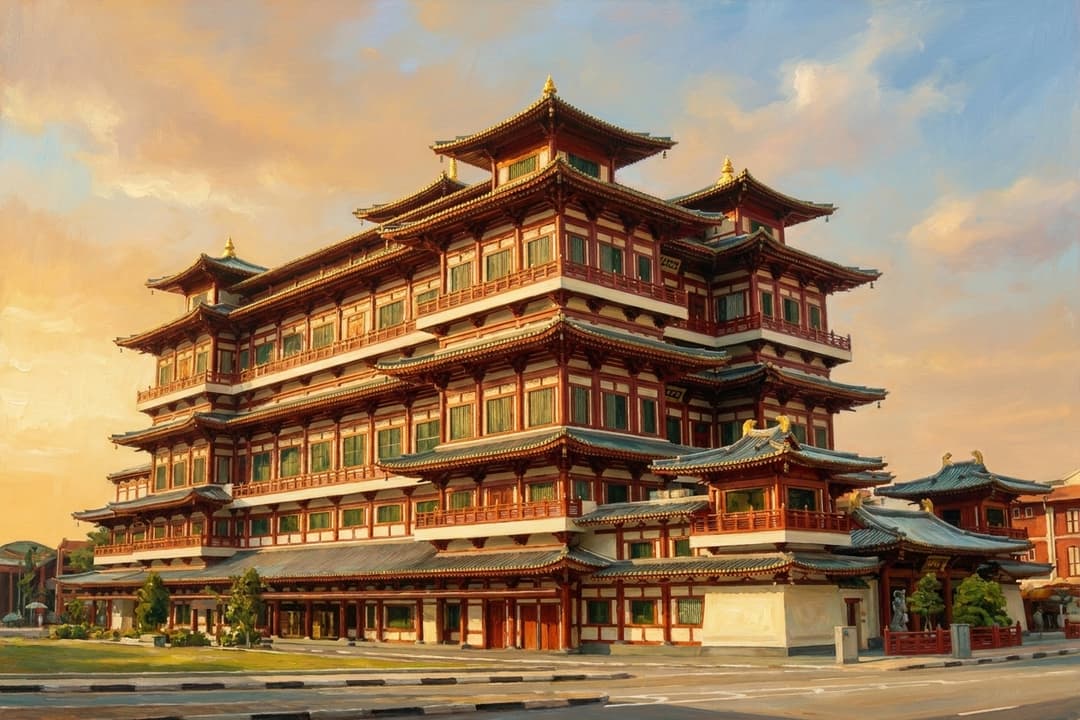
The temple offers a serene spiritual retreat amidst Chinatown's bustling street markets. Visitors can observe daily monastic chanting, explore multi-floor art museums, and view the sacred relic from the fourth-floor gallery.
Highlights
- Fourth-floor Sacred Light Hall housing the gold stupa relic chamber
- Ground-floor Hundred Dragons Hall with its 15-foot Maitreya Buddha statue
- Rooftop Ten Thousand Buddhas Pagoda and cloisonné prayer wheel
Things to Know
- Strict dress code requires covered shoulders and knees
- Photography is strictly prohibited inside the fourth-floor relic chamber
Location
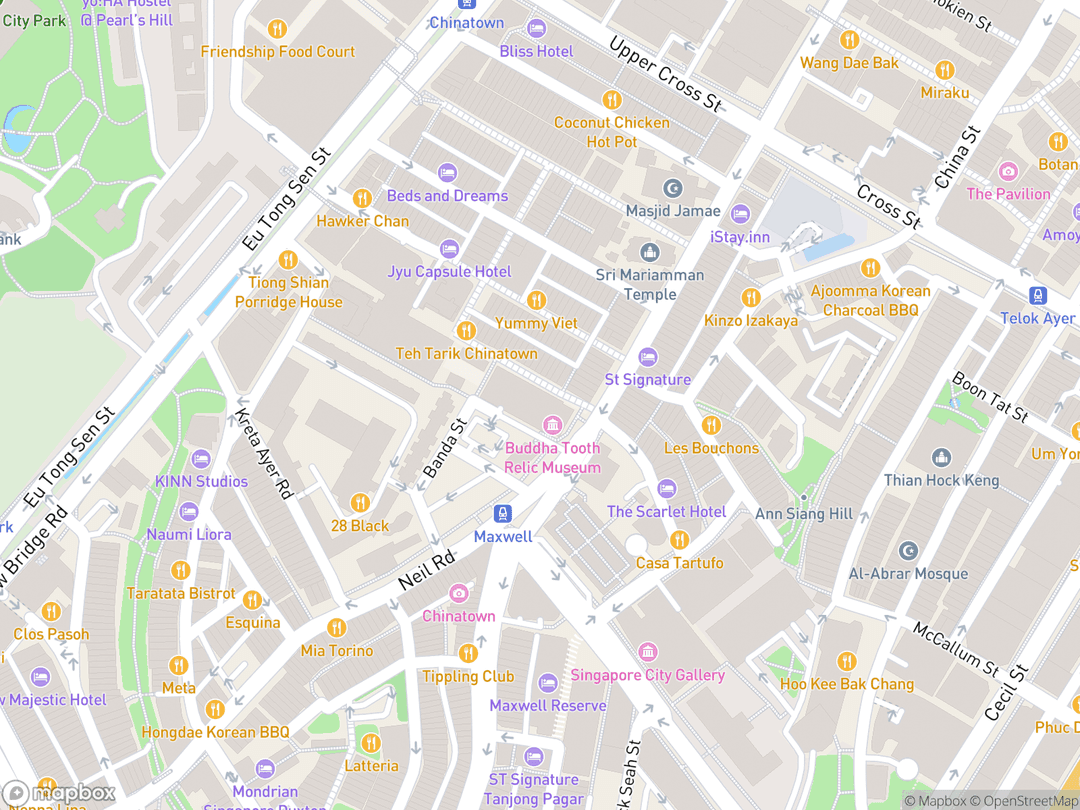
288 South Bridge Road, Chinatown, Singapore 058840
Hours: Daily: 7:00 AM – 5:00 PM; Museum galleries: 9:00 AM – 5:00 PM
Getting There: Located 1 minute from Maxwell MRT Station (TE18, Exit 3) or 5 minutes from Chinatown MRT Station (NE4/DT19, Exit A).
Get DirectionsTips for Your Visit
Relic Viewing Hours
Visit the 4th floor between 9:00 AM–12:00 PM or 3:00 PM–6:00 PM to align with daily chanting sessions.
Free Vegetarian Dining
Head to Lian Xin Restaurant in Basement 2 for daily vegetarian meals served on a voluntary donation basis.
About
The Buddha Tooth Relic Temple & Museum stands as a prominent spiritual landmark in Chinatown, Singapore, synthesizer of East Asian Mahayana traditions and Esoteric Buddhist Mandala cosmology. Rooted in the broader Dharmic tradition, where physical forms and sacred relics (sarīra) serve as conduits for spiritual realization (Dharma), the temple embodies the living presence and enlightened energy of Gautama Buddha (Dharmakaya).
Founded in 2002 by Venerable Chao Khun Shi Fazhao (BBM), the temple was designed to house what devotees venerate as the left canine tooth of Buddha Shakyamuni, recovered from his cremation pyre in Kushinagar, India, in 543 BCE. The five-story complex serves as a sacred relic sanctuary, monastic hall, and cultural museum.
Architecturally modeled after Northern Liang and Tang Dynasty timber halls—specifically Mount Wutai's Foguang Temple—the complex guides visitors along a symbolic path to liberation. Guests ascend from ground-level ethical foundations through cultural galleries to the top-floor relic chamber representing ultimate wisdom (Prajñā).
Gallery
Symbolic Elements
The temple's exterior features intricate carvings, each rich with spiritual meaning:

Sacred Tooth Relic
Venerated as the left canine tooth of Buddha Shakyamuni, symbolizing unbroken spiritual wisdom.

Solid Gold Stupa
A 3.5-tonne stupa clad in 320 kg of gold donated by over 60,000 devotees.

Mandala Architecture
A three-dimensional cosmic grid guiding visitors spiritually from mundane to enlightened realms.

Maitreya Buddha Statue
A 15-foot gilded deity representing loving-kindness and future spiritual renewal.

Vairocana Prayer Wheel
The world's largest cloisonné prayer wheel containing millions of written sutra scrolls.
11,111 Gilded Buddhas
Small statues lining the rooftop pagoda walls representing omnipresent Buddhahood.

Siddham Heart Sutra
Wall embroideries in ancient Indian Siddham script connecting Chinese Mahayana to Sanskrit roots.
Interesting Facts
The inner sanctuary floor of the 4th-floor relic hall features solid gold tiles set under glass. (Tier A)
The temple is the only building in modern Singapore finished entirely in hand-applied natural Chinese lacquer. (Tier A)
The rooftop pavilion houses the world's largest cloisonné prayer wheel, filled with millions of written mantras. (Tier B)
Over 234 kg of personal gold jewelry was donated by devotees to construct the relic stupa. (Tier A)
The rooftop garden features the registered Dendrobium Buddha Tooth orchid hybrid created for the temple. (Tier A)
Lian Xin Restaurant in the basement serves free vegetarian meals daily on a voluntary donation basis. (Tier A)
Engineers used top-down excavation to build two basement levels without destabilizing nearby 19th-century shophouses. (Tier B)
Despite being named the Ten Thousand Buddhas Pagoda, the rooftop structure actually houses 11,111 small gilded statues. (Tier B)
Wall panels inside the Universal Wisdom Hall showcase the Heart Sutra written in ancient Indian Siddham script. (Tier B)
The temple stands along South Bridge Road within yards of a historic Hindu temple and an Islamic mosque. (Tier A)
Common Questions
Is there an entrance fee to visit the temple or museum?
No, admission to all prayer halls, museum galleries, and the rooftop garden is completely free.
Can visitors view the Buddha Tooth Relic directly?
Visitors can view the gold stupa housing the relic from the 4th-floor viewing gallery during designated hours.
Is photography allowed inside the temple?
Photography is allowed throughout the general halls and rooftop, but is strictly prohibited inside the 4th-floor relic chamber.
What is the dress code for visitors?
Visitors must wear modest clothing covering their shoulders and knees, with free loaner shawls available at the entrance.
Featured Stories
The Gold Stupa Sacrifice
2005–2007
To craft the sacred stupa housing the tooth relic, over 60,000 devotees donated heirloom gold jewelry. Refined down into 234 kilograms of pure gold bullion, these gifts were melted into the 320-kilogram gold cladding protecting the relic chamber. This joint sacrifice reflects the living Buddhist principle of collective merit-making (puṇya).
Source: Buddha Tooth Relic Temple Archives
Top-Down Engineering in Historic Chinatown
2005
Constructing a two-story underground basement on a compact 2,700-square-meter footprint posed grave structural risks to neighboring 19th-century conservation shophouses. Civil engineers implemented top-down excavation, pouring the ground floor slab first to anchor surrounding soil before digging downward. This innovative solution preserved Chinatown's delicate historical facade.
Source: Urban Redevelopment Authority Singapore
Dharma Blossom Vision
2002–2003
Following the entrustment of the tooth relic in August 2002, Venerable Shi Fazhao entered a year-long silent Lotus Blossom Retreat. During this spiritual solitary period, he conceptualized the combination of Tang Dynasty aesthetics and Esoteric Mandala cosmology. His vision ensured the building functioned not merely as a museum, but as a living instrument of Dharma.
Source: Metta Welfare Association Records
Timeline
Relic Entrustment
Venerable Cakkapala of Myanmar officially entrusts the Buddha tooth relic to Venerable Shi Fazhao.
MilestoneLand Lease Signed
Land lease for the Chinatown plot is formally executed with the Singapore government.
EventGroundbreaking Ceremony
Official groundbreaking ceremony takes place at South Bridge Road.
component.timeline.groundbreakingConstruction Begins
Top-down excavation and foundation works commence on site.
EventTemple Grand Opening
The completed complex opens to the public during Vesak Day celebrations.
MilestoneOfficial Consecration
International Sangha leaders perform the sacred Abhiseka consecration ceremony.
DedicationCurriculum Launch
The Discovering Buddhism public education program is formally established.
EventGallery Expansion
Second and third floor museum exhibits undergo comprehensive curation upgrades.
RenovationEnvironmental Upgrade
Advanced eco-friendly lighting and climate preservation systems are installed.
RenovationHeritage Trail Enhancement
The temple installs updated digital multilingual guides for international pilgrims.
EventHistory by Decade
1980s–1990s — Relic Recovery & Vision
In the 1980s, Venerable Cakkapala discovered a sacred tooth relic of Buddha Shakyamuni inside a collapsed stupa on Bagan Hill in Mrauk-U, Myanmar. Preserved at Bandula Monastery, the relic required a permanent, accessible sanctuary. In 2002, Venerable Cakkapala formally entrusted the tooth to Venerable Shi Fazhao of Singapore, initiating a year-long meditation retreat to formulate the temple's vision.
2000s — Design, Construction & Consecration
After securing a 2,700-square-meter plot in Chinatown in January 2005, construction began using top-down engineering to protect surrounding historical shophouses. Final completed costs reached S$75 million, supported by private donations from over 60,000 contributors. Opening on Vesak Day 2007, the complex celebrated its grand consecration (Abhiseka) on May 17, 2008.
2010s–Present — Education & Community Service
Following consecration, the temple established public educational programs, museum galleries, and the Lian Xin community dining hall. It remains an active place of daily monastic chanting, Buddhist scholarship, and interfaith engagement along Chinatown's historic religious corridor.
Architecture & Facilities
The temple is built in the traditional Tang Dynasty (618–907 CE) architectural style, reflecting the peak era of Chinese Buddhist art. Its exterior incorporates heavy timber frame aesthetics inspired by Mount Wutai's Foguang Temple, while its interior spatial layout embodies a three-dimensional Esoteric Buddhist Mandala diagram guiding pilgrims toward enlightenment.
Building Materials
Teak Structural Framing
Assembled with traditional mortise-and-tenon bracket sets without visible metal joints.
Natural Chinese Lacquer
It is the only building in modern Singapore finished entirely in hand-applied multi-layer natural lacquer.
Glazed Roof Tiles
Durable emerald green ceramic tiles crowned with gold-leaf ornamentation.
Granite Paving
Heavy natural stone flooring providing durable acoustic dampening in main prayer halls.
Interior Features
Sacred Light Hall
Fourth-floor sanctum featuring solid gold floor tiles beneath glass and the 3.5-tonne gold stupa.
Hundred Dragons Hall
Ground-floor prayer chamber housing a 15-foot statue of Maitreya Buddha.
Universal Wisdom Hall
Rear hall showcasing a multi-armed Guanyin Bodhisattva and Siddham script embroideries.
Buddhist Culture Museum
Third-floor exhibition hall displaying sacred relics and Asian Buddhist antiquities.
Temple Grounds
The rooftop garden features an orchid pavilion displaying the Dendrobium Buddha Tooth hybrid surrounding the Ten Thousand Buddhas Pagoda.
Additional Facilities
Includes the Lian Xin Vegetarian Restaurant, a 300-seat lecture theatre, and the Eminent Sangha Museum.
Religious Significance
In Dharmic theological traditions, places of worship and sacred artifacts function as physical bridges to spiritual truth. Within Buddhism, the veneration of sacred relics (sarīra) embodies the living presence, moral purity, and enlightened wisdom (Dharmakaya) of Gautama Buddha.
To preserve and venerate the sacred tooth relic of Buddha Shakyamuni while propagating Buddhist culture, scholarship, and community welfare.
Sacred Ordinances
Sutra Recitation & Chanting
Daily monastic chanting sessions performed to generate peace and cultivate mindfulness.
Relic Veneration (*Sarīra Puja*)
Devotional circumambulation and prayer performed before the relic chamber to honor the Buddha.
Turning the Prayer Wheel
Rotating the rooftop cloisonné wheel clockwise to symbolically broadcast scripture blessings throughout the world.
Vegetarian Almsgiving
Providing free daily vegetarian meals to foster universal compassion and charity (Dāna).
Mandala Cosmology & Realization
The floor layout functions as a physical three-dimensional Mandala. Moving upward through the floors symbolizes a practitioner's gradual progression from worldly delusion (samsāra) through ethical discipline (sīla) to ultimate wisdom (prajñā).
Sources & Research
Every fact on Temples.org is backed by verified Sources & Research. Each piece of information is rated by source tier and confidence level.
View All Sources (8)
| Field | Source | Tier | Retrieved |
|---|---|---|---|
| About & Historical Background | Buddha Tooth Relic Temple & Museum (opens in a new tab) | A | 2026-02-18 |
| About & Historical Background | National Heritage Board Singapore (opens in a new tab) | A | 2026-02-18 |
| Architecture & Design | Urban Redevelopment Authority Singapore (opens in a new tab) | B | 2026-02-18 |
| Visitor Experience & Logistics | Singapore Tourism Board (opens in a new tab) | A | 2026-02-18 |
| Sacred Relics & Religious Significance | Singapore Buddhist Federation (opens in a new tab) | B | 2026-02-18 |
| Timeline & Featured Stories | The Straits Times (opens in a new tab) | B | 2026-02-18 |
| Timeline & Featured Stories | CNA (Channel NewsAsia) (opens in a new tab) | B | 2026-02-18 |
| Visitor Insights & Logistics | Tripadvisor (opens in a new tab) | D | 2026-02-18 |