Visitor Insights
Visiting Amitabha Stupa and Peace Park
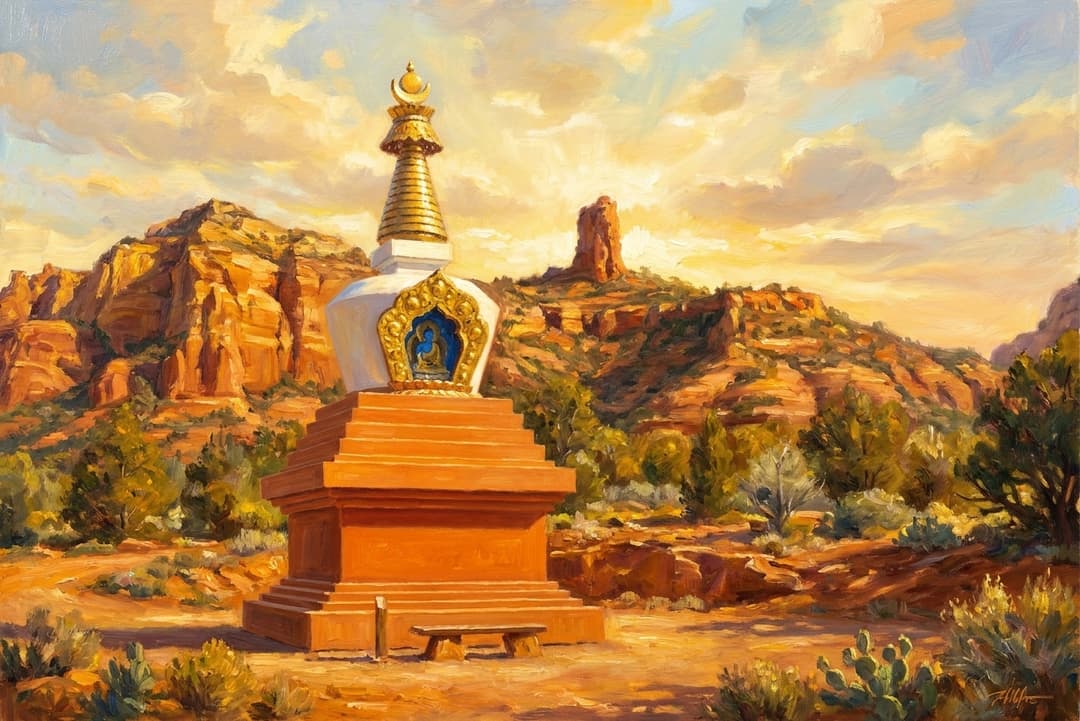
The Amitabha Stupa offers an outdoor sanctuary for silent contemplation and walking meditation amid Sedona's red rock landscape. Visitors experience a respectful, quiet environment centered around the sacred stupas and walking labyrinth. Natural trails wind through native juniper woodlands with views of Thunder Mountain.
Highlights
- Traditional clockwise circumambulation path around the 36-foot Amitabha Stupa
- The 6-foot White Tara Stupa dedicated to longevity and health
- Sheltered outdoor shrines honoring the Medicine Buddha and Shakyamuni Buddha
- Native red-sandstone walking labyrinth and medicine wheel
Things to Know
- Maintain strict silence or quiet whispers across all park paths
- Climbing or sitting on the sacred stupa bases is strictly prohibited
- No artificial lighting is provided, requiring all visitors to depart by sunset
- Bring drinking water as no commercial concessions exist on-site
Location
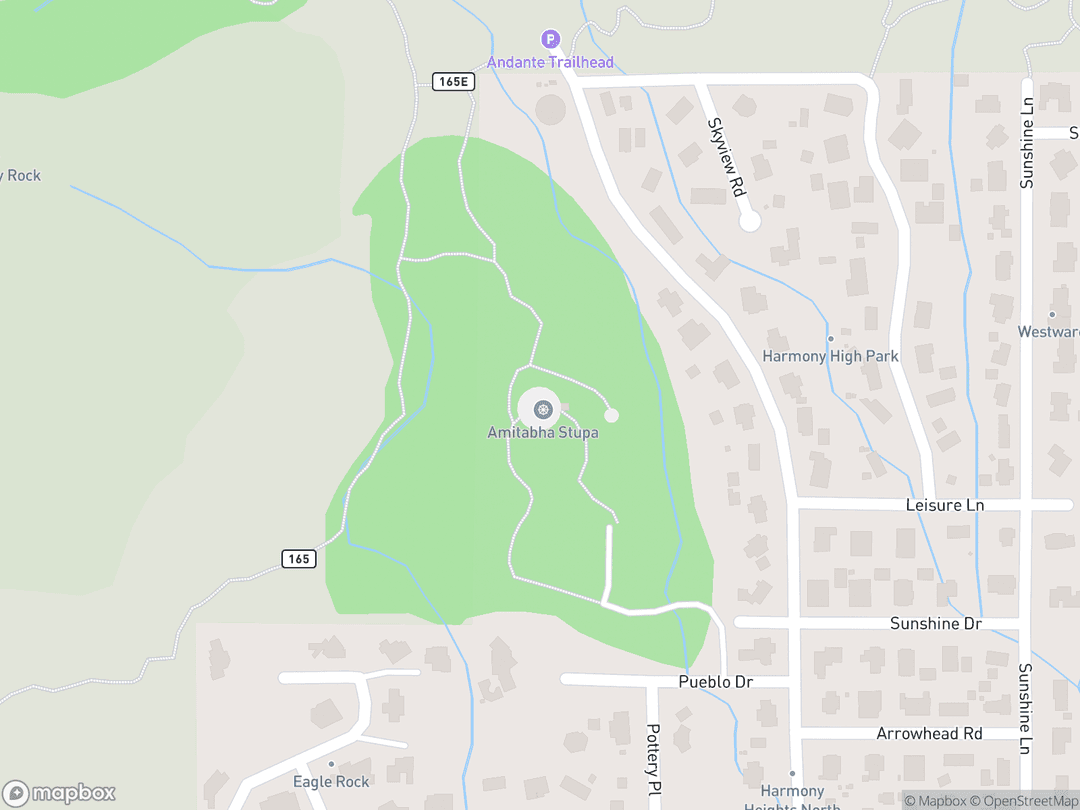
2650 Pueblo Drive, Sedona, Arizona 86336, United States
Hours: Open daily from dawn to dusk (7:00 AM to sunset)
Getting There: Turn north from State Route 89A onto Andante Drive, proceed 0.75 miles to Pueblo Drive, and turn left to the public parking area at 2650 Pueblo Drive.
Get DirectionsTips for Your Visit
Circumambulate Clockwise
Follow Dharmic tradition by keeping the stupa to your right shoulder as you walk the stone path.
Arrive for Morning Light
Visit early in the morning to enjoy cooler desert temperatures and quiet reflection as sunlight hits Thunder Mountain.
Wear Sturdy Shoes
The footpaths consist of uneven crushed stone and desert earth that require proper walking footwear.
About
The Amitabha Stupa and Peace Park is an outdoor Tibetan Buddhist sanctuary established in 2004 by Kunzang Palyul Chöling at the base of Thunder Mountain in West Sedona. Positioned within Dharmic contemplative traditions, the park provides an inclusive refuge dedicated to world peace, personal healing, and global spiritual harmony.
Rising thirty-six feet against red sandstone cliffs, the central Enlightenment Stupa conforms to classical Nyingma architectural canons. Unlike congregational temples designed for indoor assemblies, the stupa is an entirely solid reliquary vessel that embodies the awakened mind of the historical Buddha.
The surrounding fourteen-acre park preserves the native high-desert biome of piñon pine and juniper. Open daily to visitors of all theological persuasions, the sanctuary invites quiet reflection through meditative walking, prayer wheels, and shaded ramadas.
Gallery
Symbolic Elements
The temple's exterior features intricate carvings, each rich with spiritual meaning:

Lion Throne Base
The square foundation represents the Earth element and the ten spiritual virtues.

Four Stepped Tiers
The ascending steps symbolize the Four Immeasurables and the gradual stages toward liberation.

Vase Dome
The hemispherical dome represents the Water element and the womb of awakened transcendent wisdom.

Thirteen Ring Spire
The tapering spire tiers symbolize the Fire element and thirteen progressive stages of awakening.

Crescent Moon and Sun
The crown emblem unites the Air and Space elements to signify boundless compassion and radiant wisdom.

Tree of Life
The internal consecrated cedar spine mirrors the central energy channel of the human spiritual body.

Prayer Wheels
Cylindrical brass wheels containing rolled mantras spread compassionate intent when turned clockwise.

Wind Horse Prayer Flags
Five-color fabric banners carry printed invocations across the desert landscape on the mountain breeze.
Interesting Facts
The Amitabha Stupa is a solid architectural reliquary functioning in Tibetan tradition as a physical embodiment of enlightened mind (Tier A).
Its interior vaults house hundreds of millions of sacred microfilmed mantras and prayers sealed permanently inside the concrete shell (Tier A).
Foundational deposits include soil, minerals, and river stones collected across all seven continents to bless the global biosphere (Tier A).
A 21-foot aromatic cedar trunk inscribed with golden seed syllables serves as the internal Tree of Life axis (Tier A).
The smaller six-foot companion stupa was consecrated to invoke White Tara's blessings of physical longevity and compassionate protection (Tier A).
International geomancy experts and Feng Shui master Lillian Too assisted in selecting the natural energetic amphitheater below Thunder Mountain (Tier C).
The physical construction over eighteen months was executed primarily by ordained monastics and local volunteer labor (Tier A).
The sanctuary grounds preserve fourteen acres of native desert wildlife habitat rather than formal manicured gardens (Tier A).
Common Questions
Is there an admission fee to visit the Peace Park?
Admission is completely free, though donations to support grounds maintenance are welcomed.
Why must visitors walk around the stupa in a clockwise direction?
Clockwise circumambulation follows ancient Buddhist tradition to honor the sacred monument and harmonize personal energy.
Are pets permitted inside the sanctuary?
Dogs are allowed only on short, non-retractable leashes, and handlers must clean up waste immediately.
Can visitors enter the inside of the stupa?
No, traditional Buddhist stupas are completely solid reliquary monuments containing no interior rooms.
What should visitors bring when visiting?
Visitors should bring their own drinking water, sun protection, and sturdy walking footwear.
Featured Stories
Consecration by Tibetan Masters
August 1, 2004
In the summer of 2004, Master Builder Tulku Sang-ngag Rinpoche gathered with visiting Nyingma lamas to perform the sacred three-day Rabne consecration ceremony. Monastics and lay practitioners chanted traditional liturgies beneath Thunder Mountain as holy relics and mantras were formally sealed into the stupa vault. The completed rite transformed the desert monument into an active, permanently consecrated sanctuary of the Dharmakaya.
Source: Kunzang Palyul Chöling
Building Through Community Devotion
2003
Erecting the 36-foot stupa required eighteen months of rigorous labor across scorching desert summers and cold winter mornings. Monastics and community volunteers worked side by side to transport concrete, level stone terraces, and hand-fill reliquary cavities with hundreds of millions of micro-mantras. Their collective physical sacrifice established the stupa as a testament to shared spiritual devotion and unity.
Source: Kunzang Palyul Chöling
Earth Offerings from Seven Continents
2004
During the foundational engineering of the stupa, caretakers collected soil samples, sacred stones, and river sands gathered from all seven continents. Interred directly beneath the central base, these global earth offerings symbolize the Nyingma tradition's commitment to planetary healing. The rite consecrated the stupa as an open refuge embracing all living beings across the biosphere.
Source: Kunzang Palyul Chöling
Timeline
Establishment of Kunzang Palyul Chöling
Jetsunma Ahkon Lhamo establishes the Nyingma center that would sponsor the future Sedona sanctuary.
MilestoneFirst Consecrated Maryland Stupa
The organization constructs its first Enlightenment Stupa, establishing ritual procedures for American monuments.
MilestoneSpiritual Reconnaissance in Sedona
Monastic members visit northern Arizona, identifying geological similarities to eastern Tibetan hermitages.
EventSanctuary Vision Conceived
Jetsunma Ahkon Lhamo envisions an open outdoor peace park in Sedona dedicated to global reconciliation.
MilestoneLand Acquisition in West Sedona
A fourteen-acre parcel beneath Thunder Mountain is secured for permanent religious sanctuary use.
MilestoneGroundbreaking and Soil Purification
Tulku Sang-ngag Rinpoche officiates traditional earth blessing rites and foundational excavations commence.
component.timeline.groundbreakingConsecration Ceremonies Begin
Visiting lamas and monastics commence the three-day Rabne consecration rites for both stupas.
MilestoneFormal Dedication of the Peace Park
The Amitabha Stupa and White Tara Stupa are permanently sealed and opened to the public.
DedicationCircumambulation Paths Installed
Flagstone trails and traditional brass prayer wheels are integrated around the stupa base.
RenovationWildlife Refuge Designation
The park formalizes protective policies to safeguard native desert animals and fragile soils.
MilestoneContinuous Public Pilgrimage
The sanctuary maintains year-round daily access as an established Southwestern spiritual landmark.
MilestoneHistory by Decade
1980s — Institutional Foundations
During the late 1980s, Kunzang Palyul Chöling was formally organized under the leadership of Jetsunma Ahkon Lhamo and Penor Rinpoche. The community established its primary monastery in Maryland, where it erected its first consecrated Enlightenment Stupa. This early work developed the ritual protocols and engineering methods necessary to build authentic Tibetan monuments on North American soil.
1990s — Siting the Sanctuary
Throughout the 1990s, community members made regular pilgrimages into northern Arizona's high desert. The stark red sandstone buttresses and tranquil juniper valleys resonated with ancient Himalayan hermitage landscapes. Jetsunma Ahkon Lhamo guided plans to secure protected acreage near Thunder Mountain for a non-denominational outdoor peace park.
2000s — Ritual Architecture and Dedication
The early 2000s marked the construction and formal consecration of the peace park. Master Builder Tulku Sang-ngag Rinpoche directed the physical and spiritual craftsmanship over eighteen months of volunteer effort. The three-day Rabne consecration in 2004 sealed sacred relics into the Amitabha and White Tara stupas, establishing an active pilgrimage center.
2010s to Present — Conservation and Global Refuge
Following dedication, caretakers added stone pathways, prayer wheels, and shaded ramadas while strictly preserving native vegetation. The park's profile grew internationally, drawing hundreds of thousands of annual visitors seeking healing and meditation. Today, Kunzang Palyul Chöling maintains the fourteen-acre sanctuary as a protected wildlife habitat and free spiritual refuge.
Architecture & Facilities
Classical Tibetan Vajrayana sacred architecture built strictly to the proportions of the Changchub Chörten (Enlightenment Stupa) within the Nyingma tradition, translating cosmic Buddhist metaphysics into geometric forms.
Building Materials
Reinforced Concrete Shell
High-grade structural concrete engineered to resist desert thermal shifts and monsoon rainfall.
White Elastomeric Stucco
Weather-resistant reflective exterior coating formulated to prevent moisture intrusion and wind erosion.
Aromatic Cedar Spine
A 21-foot peeled cedar trunk inscribed with sacred syllables serving as the internal central axis.
Gilded Finial Crown
Cast bronze crescent moon, sun disc, and jewel finished with high-durability golden lacquer.
Interior Features
Central Axis Vault
A sealed vertical chamber housing the consecrated Tree of Life and sacred text rolls.
Upper Reliquary Treasury
A secure internal cavity containing hundreds of millions of microfilmed Buddhist mantras.
Base Offering Chamber
A subterranean structural vault holding earth deposits gathered from seven world continents.
Gau Reliquary Niche
An arched exterior-facing bronze niche enclosing a sculpted image of Buddha Amitabha in meditation.
Temple Grounds
The fourteen-acre preserve retains native piñon-juniper forest, sandstone outcrops, dry washes, stone circumambulation paths, prayer flag lines, and a meditative labyrinth.
Additional Facilities
Rustic shade ramadas, seated meditation benches, informational etiquette kiosks, and portable restrooms are provided near the trailhead parking area.
Religious Significance
Within Dharmic traditions and Vajrayana Buddhism, a consecrated stupa is not a commemorative memorial or tomb, but the living energetic presence of the Buddha's enlightened mind.
To radiate pacifying energy, purify personal karmic obstacles, and nurture universal peace and compassion for all living beings.
Sacred Ordinances
Clockwise Circumambulation (Kora)
Walking mindfully around the stupa keeping it to one's right side to align personal energy with cosmic harmony.
Mantra Accumulation and Chanting
Reciting prayers such as Om Mani Padme Hum to cultivate compassionate intention and inner stillness.
Medicine Buddha Healing Petitions
Offering prayers at the outdoor Medicine Buddha pavilion for the alleviation of physical and mental illness.
The Cosmic Mandala of the Five Elements
The five architectural tiers physically map the elements of Earth, Water, Fire, Air, and Space, transforming mundane emotional afflictions into enlightened wisdom.
Universal Compassion Across Faiths
While rooted in Tibetan Buddhist ritual lineage, the sanctuary invites people of all world religions to pray for personal healing and planetary reconciliation.
Similar Temples
Sources & Research
Every fact on Temples.org is backed by verified Sources & Research. Each piece of information is rated by source tier and confidence level.
View All Sources (6)
| Field | Source | Tier | Retrieved |
|---|---|---|---|
| About & Historical Background | Kunzang Palyul Chöling (opens in a new tab) | A | 2026-02-28 |
| Stupa Cosmology & Buddhist Philosophy | World History Encyclopedia (opens in a new tab) | B | 2026-02-28 |
| Geographical Context & Visitor Insights | Forbes (opens in a new tab) | B | 2026-02-28 |
| Architectural Overview & Dimensions | Atlas Obscura (opens in a new tab) | C | 2026-02-28 |
| Regional Pilgrimage & Sanctuary Siting | Lonely Planet (opens in a new tab) | C | 2026-02-28 |
| Vajrayana Rituals & Veneration | Patheos (opens in a new tab) | C | 2026-02-28 |