Visitor Insights
Visiting Dharma Rain Zen Center
Dharma Rain Zen Center offers a peaceful, contemplative refuge nestled within an urban ecological park. Visitors are invited to explore the public walking trails from dawn to dusk and join weekly introductory meditation services held in the main hall.
Highlights
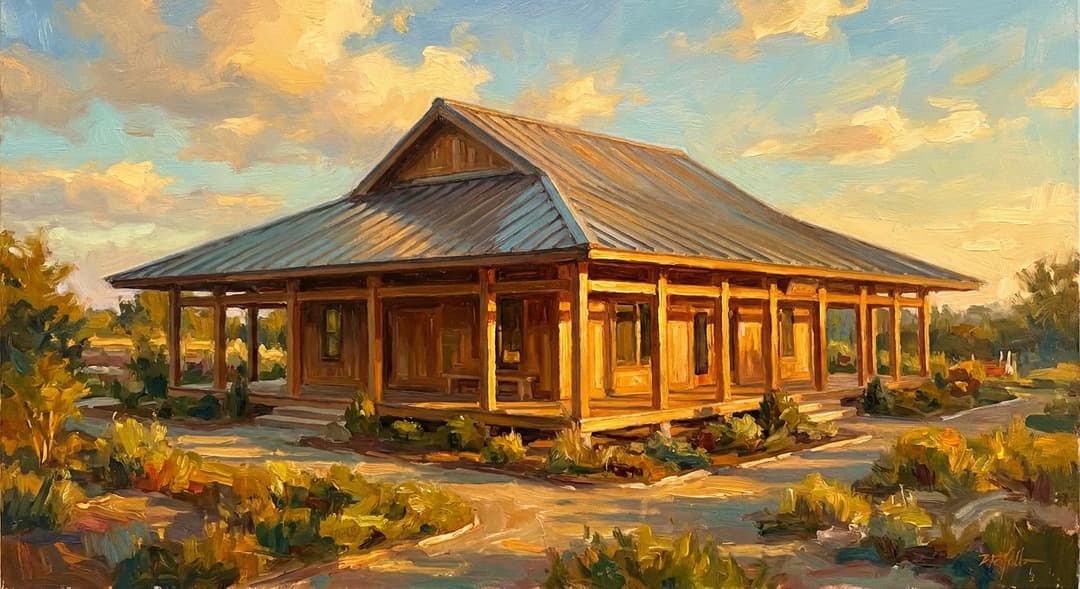
- Traditional timber Sōdō meditation hall ringed by a covered cedar veranda.
- Fourteen acres of remediated oak savanna, bioswales, and wildlife trails.
- Sunday morning public services featuring zazen, chanting, and a Dharma talk.
- Outdoor stone Jizo sculptures nestled along the nature walking paths.
Things to Know
- Remove shoes and place them on storage racks before entering the meditation hall.
- Maintain silent contemplation within the Sōdō and quiet speech on the monastic grounds.
- Dress in comfortable, modest, unpatterned clothing suitable for sitting on cushions.
- Turn off all mobile devices; photography is prohibited during formal ceremonies.
Location
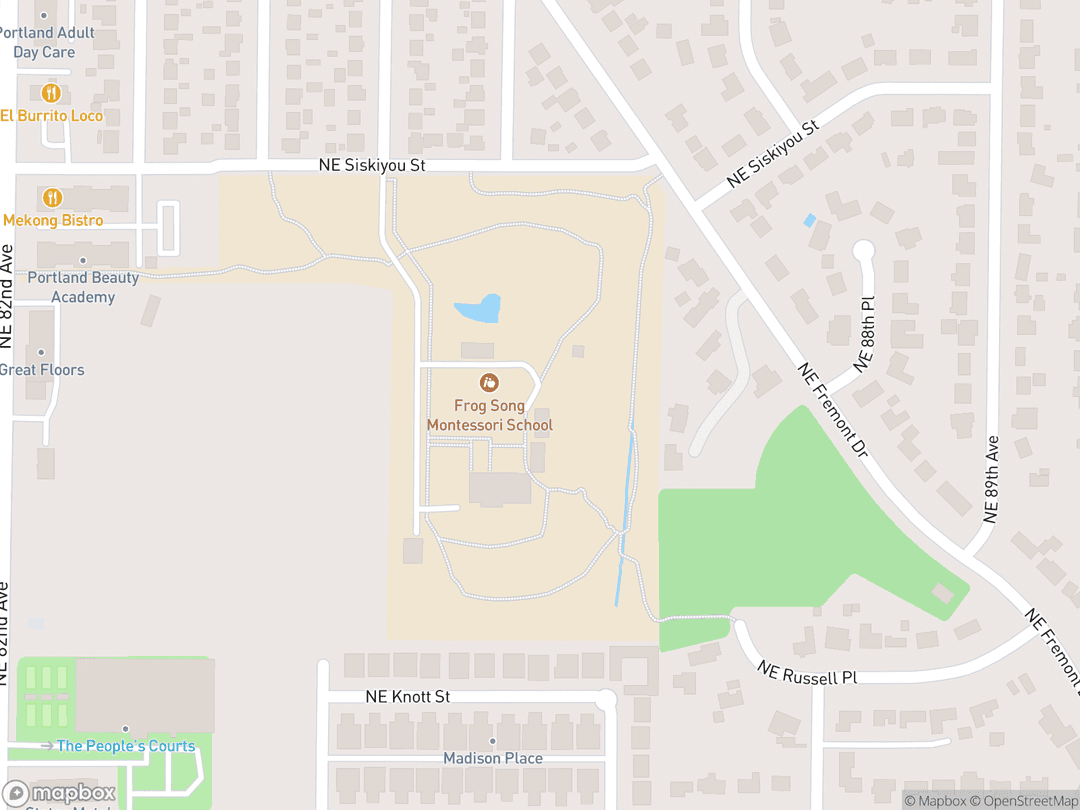
8500 NE Siskiyou Street, Portland, Oregon 97220, United States
Hours: Public trails open daily from dawn to dusk; office open Tuesday through Friday afternoons
Getting There: Located near NE 82nd Avenue, accessible via TriMet Bus Lines 72 and 77, and 1.5 miles from MAX Light Rail.
Get DirectionsTips for Your Visit
Arrive Early for Sunday Service
Arrive fifteen minutes prior to the 9:30 AM service for quiet seating and orientation.
Wear Comfortable Socks
Footwear is removed at the temple threshold; warm, clean socks ensure comfort on timber floors.
Try Kinhin Walking Meditation
Practice slow, rhythmic breathing while walking quietly along the sheltered perimeter veranda.
About
Dharma Rain Zen Center is an urban Soto Zen temple and residential training monastery situated within the Dharmic spiritual family. Tracing its lineage through Master Eihei Dogen to Shakyamuni Buddha, the community embodies the core Mahayana vision that awakening is an innate reality to be realized through ethical conduct, compassionate relationship, and upright meditation.
Established in 1986 as an independent sangha, Dharma Rain pioneered a model of North American Buddhism that bridges monastic discipline with family life. The center welcomes householders, children, and ordained monastics into a shared rhythm of daily practice, dismantling historic divides between monastic asceticism and lay engagement.
In 2012, the sangha undertook an extraordinary act of Buddhist stewardship by purchasing a 14-acre former basalt quarry and construction landfill. Through extensive bioremediation, the community transformed an industrial brownfield into a thriving sanctuary of native oak savanna, bioswales, and intentional cohousing centered around a traditional meditation hall.
Interesting Facts
The sanctuary rests upon two million cubic yards of rubble salvaged from the construction of Interstate 205. (Tier A)
The 6,900-square-foot Sōdō floats on a five-foot engineered geo-mat to avoid puncturing the landfill clay cap. (Tier B)
The polished zendo flooring was milled from heavy Douglas fir timber salvaged from retired freight railcars. (Tier D)
The temple's lineage traces to Houn Jiyu-Kennett, the first Western woman allowed to train at Daihonzan Sōjiji. (Tier A)
Founders Kyogen and Gyokuko Carlson established the center in 1986 to prove authentic Zen thrives in marriage. (Tier A)
The temple developed one of North America's oldest continuous Buddhist curricula for children. (Tier B)
Habitat restoration on campus yielded Oregon's first confirmed historical sighting of the Eastern Bluebird. (Tier B)
The Uji administrative pavilion is named after Master Dōgen's philosophical treatise on 'Being-Time'. (Tier A)
The campus creates a crucial wildlife migration corridor linking Rocky Butte with Glenhaven Park. (Tier B)
Common Questions
Do I need prior Buddhist experience to attend Sunday services?
No, Sunday morning programs are designed for practitioners of all backgrounds and levels.
Are the campus grounds open to non-Buddhists?
Yes, the 14-acre walking trail and oak savanna are free and open to the public daily.
Can visitors sit on chairs instead of floor cushions?
Yes, chairs and meditation benches are readily provided for anyone requiring upright support.
What is the purpose of the Siskiyou Cohousing village?
It provides an intentional residential community where lay families integrate practice into daily life.
Featured Stories
Upholding Lay Practice and Marriage
1986
When Shasta Abbey required all ordained priests to embrace lifelong monastic celibacy in 1986, Kyogen and Gyokuko Carlson refused to dissolve their marriage. Choosing instead to depart peacefully, they incorporated Dharma Rain Zen Center to prove that authentic Zen practice can fully flourish within family households. Their pioneering resolve transformed Northwest Buddhism by welcoming lay families into full liturgical participation.
Source: Dharma Rain Zen Center Archives
Resurrecting an Urban Wasteland
2012
In 2012, Dharma Rain acquired the abandoned LaVelle Landfill, an unpermitted basalt quarry filled with two million cubic yards of freeway rubble and industrial waste. Partnering with environmental agencies, the sangha implemented bioremediation, methane monitoring, and bioswales to restore native plant ecosystems. The project manifested the Bodhisattva vow by physically transforming an urban wound into an ecological sanctuary.
Source: Oregon Department of Environmental Quality & Metro Records
Honoring the Vision of Roshi Kyogen
September 18, 2014
Just as grading commenced on the Siskiyou campus, founding abbot Kyogen Carlson passed away suddenly from a heart attack at age 65. Heartbroken but deeply galvanized, the community rallied under Abbess Gyokuko Carlson and Vice Abbot Kakumyo Lowe-Charde to complete the master plan. The successful consecration of the Sōdō in 2016 stood as a profound testament to Kyogen's lasting spiritual vision.
Source: Northwest Dharma Association Memorial Records
Timeline
Oregon Zen Priory Roots
Roshi Jiyu-Kennett establishes Shasta Abbey and nurtures initial meditation circles in Portland.
MilestonePriestly Transmission of Kyogen Carlson
Kyogen Carlson is transmitted as a Soto Zen priest at Shasta Abbey in California.
MilestoneArrival of Founders in Portland
Priests Kyogen and Gyokuko Carlson assume spiritual leadership of the young Oregon sangha.
EventIndependence of Dharma Rain
The sangha incorporates independently to affirm married priesthood and accessible lay training.
MilestoneSoutheast Madison Street Sanctuary
Dharma Rain acquires its first permanent temple home in Portland's Hawthorne neighborhood.
MilestoneCorrectional Facility Outreach
The sangha inaugurates a weekly Buddhist meditation ministry inside Oregon state prisons.
EventAcquisition of Siskiyou Brownfield
Dharma Rain purchases a 14-acre unpermitted landfill to build an urban monastery.
MilestoneGroundbreaking and Remediation
Capital fundraising opens ground on environmental restoration alongside the EPA and DEQ.
component.timeline.groundbreakingPassing of Founding Abbot
Roshi Kyogen Carlson dies suddenly; the sangha rallies to complete his campus vision.
EventDedication of the Sōdō
The community formally consecrates the timber meditation hall and moves operations to Siskiyou.
DedicationInstallation of Abbot Kakumyo
Kakumyo Lowe-Charde is installed as primary abbot following the retirement of Gyokuko Carlson.
MilestoneFortieth Anniversary Milestone
The center marks forty years of independent practice while hosting citywide Buddhist gatherings.
MilestoneHistory by Decade
1970s — Oregon Zen Priory Origins
Following the 1971 founding of Shasta Abbey by Roshi Jiyu-Kennett, informal Soto Zen sitting groups organized across Portland. Lay practitioners gathered in private homes under the Oregon Zen Priory banner, maintaining direct liturgical ties to California. These early gatherings planted the seeds of Soto Zen transmission throughout the Pacific Northwest.
1980s — Independence and Growth
Priests Kyogen and Gyokuko Carlson arrived in Portland in 1982 to provide permanent pastoral leadership. In 1986, the community incorporated independently as Dharma Rain Zen Center to nurture householder training, purchasing a permanent building on Southeast Madison Street the following year.
1990s — Family Practice and Community Engagement
The sangha expanded into neighboring properties, establishing the Portland Dharma Center as a welcoming haven for diverse Buddhist lineages. During this decade, the center launched its children's Dharma School and founded an enduring prison meditation ministry across Oregon correctional facilities.
2000s — Emergence of the Dharma Cloud Lineage
Dharma Rain codified the Dharma Cloud lineage, conferring priestly and lay transmissions to seasoned practitioners. As membership surged past two hundred individuals, the leadership initiated a regional search for a property capable of supporting a full rural-style training monastery in the city.
2010s — The Siskiyou Campus Transformation
In 2012, the sangha acquired a 14-acre Northeast Portland brownfield, launching an ambitious environmental remediation and building campaign. Despite the sudden loss of Abbot Kyogen Carlson in 2014, the sangha dedicated the timber Sōdō in 2016 and transitioned all operations to the new sanctuary.
2020s — Ecological Maturity and Outreach
The center integrated community solar systems, expanded public savanna trails, and established hybrid broadcasting networks during the pandemic. Entering its fifth decade of independence, Dharma Rain stands as a model of North American Buddhist practice deeply entwined with urban environmental stewardship.
Architecture & Facilities
The architecture represents a synthesis of classical Japanese Soto Zen monastic design and Pacific Northwest timber craftsmanship, arranged around a central monastic courtyard that fosters quiet movement and mindfulness.
Building Materials
Western Red Cedar
Exposed, unstained timber posts and beams frame the sheltered exterior walking veranda.
Salvaged Freight Car Decking
Reclaimed Douglas fir planks from industrial railcars form the warm, polished zendo floor.
Engineered Geo-Mat
A monolithic five-foot subgrade foundation raft distributes building weight over landfill fill.
Standing-Seam Metal
Dark, durable metal roofing panels protect exterior wood framing from winter precipitation.
Interior Features
Main Zendo
A soaring vaulted meditation chamber where practitioners sit facing clean plaster walls.
Central Shumidan Altar
An elevated cedar sanctuary altar enshrining Monju Bosatsu atop a carved lotus pedestal.
Engawa Perimeter Corridor
A covered wraparound timber veranda used for slow walking meditation during wet weather.
Sōdō Entry Vestibule
A threshold entry lined with shoe shelving designed for quiet transitions before sitting.
Temple Grounds
The fourteen-acre grounds feature a restored Oregon white oak savanna, daylighted stormwater bioswales, fruit orchards, and a half-mile gravel nature trail open to neighborhood walkers.
Additional Facilities
The campus integrates the modular Uji administration pavilion, the Frog Song Montessori Preschool, monk dormitories, a workshop barn, and a thirty-two-unit cohousing village.
Religious Significance
Dharma Rain Zen Center belongs to the Dharmic spiritual family that arose in ancient India, sharing core understandings of karma, ethical conduct (sila), and meditative concentration (dhyana). Within this framework, Soto Zen Mahayana practice emphasizes that all beings inherently possess Buddha-nature.
The center provides a sanctuary where monastics and lay householders realize awakening through silent sitting meditation, ethical living, and compassionate environmental stewardship.
Sacred Ordinances
Zazen (Seated Meditation)
Upright silent meditation practiced as the direct, physical embodiment of awakened Buddha-nature.
Kinhin (Walking Meditation)
Slow, mindful walking between meditation periods maintaining calm posture and breathing.
Samu (Mindful Labor)
Physical work, grounds maintenance, and eco-restoration performed as formal spiritual practice.
Fusatsu (Renewal of Precepts)
Monthly liturgical repentance and recommitment to the Bodhisattva ethical precepts.
The Dharmic Foundation and Bodhisattva Vow
Like its sister Dharmic traditions, Buddhism seeks liberation from cyclical suffering. Mahayana Soto Zen channels this aspiration through the Bodhisattva vow, dedicating every meditation sit and daily interaction to the universal awakening of all sentient beings.
Shikantaza: Just Sitting
Pioneered by Master Eihei Dogen, shikantaza rejects meditation as a means to achieve a distant spiritual prize. In Soto Zen, the physical posture of upright presence is itself enlightenment enacted moment by moment.
Eco-Dharma as Bodhisattva Action
At Dharma Rain, healing the contaminated earth is indistinguishable from spiritual cultivation. Remediating a neglected landfill serves as living proof that sacred space is created wherever compassion meets wounded ground.
Sources & Research
Every fact on Temples.org is backed by verified Sources & Research. Each piece of information is rated by source tier and confidence level.
View All Sources (6)
| Field | Source | Tier | Retrieved |
|---|---|---|---|
| About & Historical Background | Dharma Rain Zen Center (opens in a new tab) | A | 2026-03-30 |
| Ecological Restoration & Urban Nature | Oregon Metro Regional Government (opens in a new tab) | B | 2026-03-30 |
| Regional Buddhist History & Community | Northwest Dharma Association (opens in a new tab) | B | 2026-03-30 |
| Campus Engineering & General Contracting | B&G Builders (opens in a new tab) | D | 2026-03-30 |
| Ornithological Records & Wildlife Habitat | Oregon Birding Association (opens in a new tab) | B | 2026-03-30 |
| Neighborhood Development & Brownfield Financing | Council of Development Finance Agencies (opens in a new tab) | B | 2026-03-30 |