Visitor Insights
Visiting Byodo-In Temple
Byodo-In Temple offers a tranquil retreat from urban Oʻahu, inviting visitors to experience traditional Japanese temple architecture, vibrant koi ponds, and meditative garden grounds.
Highlights
- Striking the 3-ton brass Peace Bell (Bon-sho) to cultivate internal calm before entering.
- Viewing the magnificent 18-foot gilded Amida Buddha seated inside the main sanctuary.
- Feeding thousands of colorful Japanese koi fish in the surrounding reflection pond.
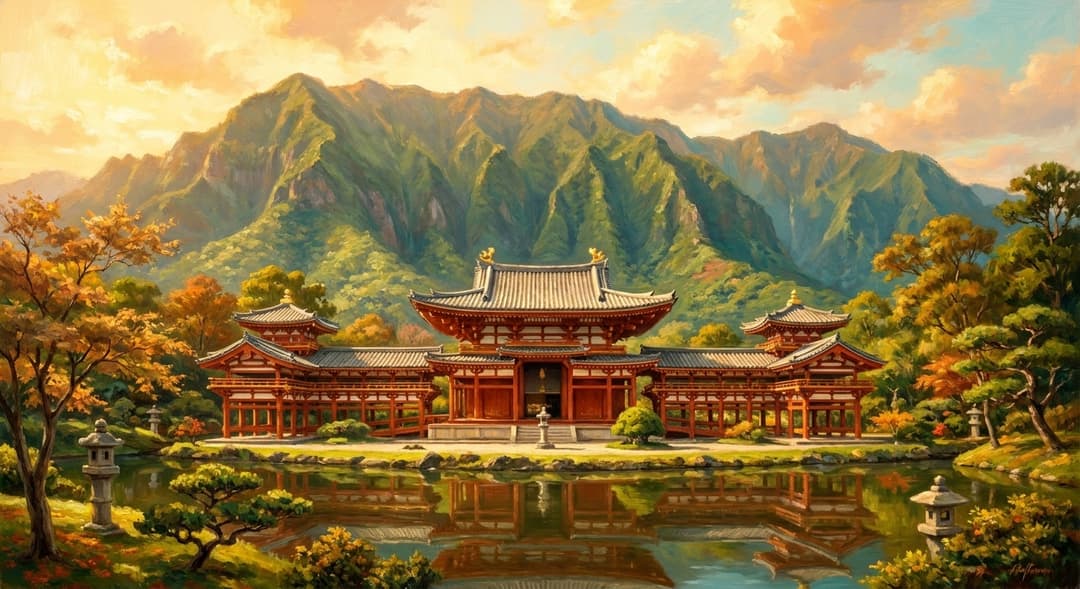
- Photographing the vivid red temple structure against the dramatic Koʻolau mountain range.
Things to Know
- Admission kiosk accepts card and contactless payments only; cash is not accepted for entry.
- Visitors must remove footwear before stepping onto the interior timber platform.
- Early morning hours offer the best light and quietest ambiance for meditation.
Location
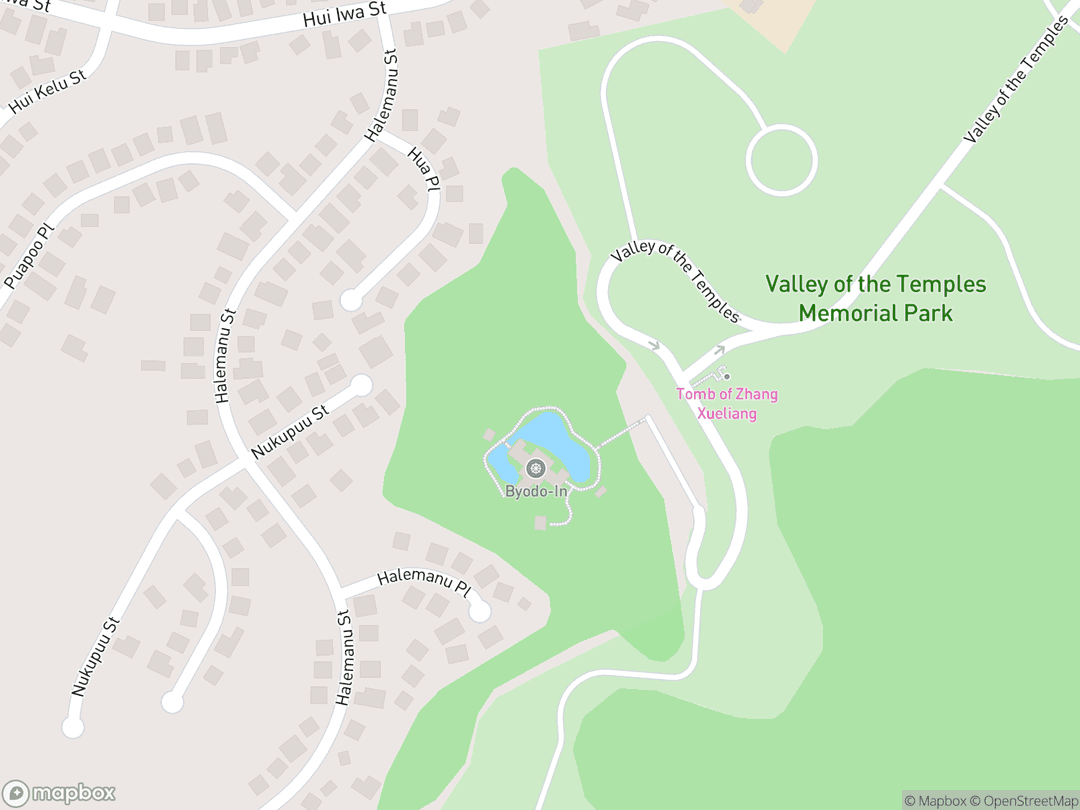
47-200 Kahekili Highway, Kaneohe, HI 96744, USA
Hours: Open daily from 8:30 AM to 4:30 PM (Last entry at 4:15 PM)
Getting There: Located off Kahekili Highway (Hwy 83) in Kaneohe, approximately 35 minutes drive from Waikiki with ample parking inside Valley of the Temples Memorial Park.
Get DirectionsTips for Your Visit
Ring the Peace Bell First
In accordance with temple custom, strike the external bell using the wooden beam before entering the main hall.
Bring Fish Food or Incense
Inexpensive koi food and stick incense are available at the temple gift shop for traditional offerings.
About
The Byodo-In Temple is a breathtaking non-denominational Buddhist temple and garden shrine situated in Kaneohe, Hawaii. Dedicated on June 7, 1968, the sanctuary was built to commemorate the 100th anniversary of the arrival of the first Japanese immigrants to Hawaii. Set against the vertical 2,000-foot green basalt cliffs of the Koʻolau Range inside Valley of the Temples Memorial Park, it serves as a peaceful refuge for visitors of all faiths.
Architecturally, Byodo-In is a half-scale concrete replica of the 1053 Phoenix Hall of Byōdō-in in Uji, Japan, a pinnacle of Heian-period Pure Land (Jōdo) temple design. Within broader Dharmic and Buddhist cosmology, temples represent sacred models of the universe (mandala) engineered to foster mindfulness and spiritual reflection. In Pure Land tradition, the layout evokes the Western Paradise (Sukhāvatī) of Amida Buddha, offering seekers a sensory taste of celestial peace and infinite light.
Rather than functioning as a traditional monastic monastery, Kaneohe's Byodo-In operates as an inclusive, open-air columbarium and interfaith cultural landmark. Here, visitors from around the world gather to light incense, strike the 3-ton brass Peace Bell (Bon-sho), reflect beside the 2-acre koi pond, and honor ancestors in an environment of quiet beauty and mutual reverence.
Gallery
Symbolic Elements
The temple's exterior features intricate carvings, each rich with spiritual meaning:

Amida Buddha Statue
An 18-foot gold-leaf sculpture representing the Buddha of Infinite Light seated in lotus posture.
Sacred Peace Bell
A 3-ton Osaka-cast brass bell struck to clear negative thoughts and spread peaceful blessings.

Golden Phoenixes
Gilded bronze roof ridge figures symbolizing divine virtue, rebirth, and celestial grace.

Aji-ike Reflection Pond
A surrounding 2-acre lake shaped like the Sanskrit letter A to represent primordial origin.
Cloud Bodhisattvas
Fifty-two wall relief carvings depicting celestial music makers and praying angels on floating clouds.

Golden Lotus Base
A carved pedestal symbolizing spiritual purity rising untainted above earthly desires.

Cinnabar Red Columns
Vermilion pillars reflecting classic Heian-era palace architecture and spiritual vitality.

Phoenix Hall Wings
Symmetrical open corridors configured to resemble the wings of a mythical phoenix taking flight.
Interesting Facts
The temple was built to commemorate the 1868 arrival of Hawaii's first 153 Japanese contract laborers. (Tier A)
Carved in Kyoto by Masuzo Inui, the central Buddha is among the largest custom wooden statues sculpted outside Japan. (Tier A)
The 3-ton brass Peace Bell has no clapper and is struck externally with a suspended six-foot wooden log. (Tier A)
Byodo-In has appeared as a location in television hits including Hawaii Five-O, Magnum P.I., and Lost. (Tier B)
The temple is constructed of poured reinforced concrete to endure Hawaii's humid windward climate and termites. (Tier A)
The surrounding 2-acre reflection pond is symbolically shaped like the Sanskrit letter A. (Tier B)
Its sister original temple in Uji, Japan, is featured on the back of the Japanese 10-yen coin. (Tier A)
Heavy tropical rains create temporary waterfalls that stream down the Koʻolau cliffs directly behind the roof. (Tier B)
Common Questions
Is Byodo-In Temple an active place of worship?
It operates as a non-denominational shrine, active columbarium, and interfaith peaceful sanctuary welcoming all backgrounds.
Do visitors need to purchase tickets in advance?
Admission tickets can be purchased at the entrance kiosk using credit, debit, or contactless payment.
Can visitors feed the koi fish in the reflection lake?
Yes, approved fish food is available for purchase inside the temple gift shop.
Why is the temple made of concrete instead of wood?
Reinforced concrete was selected during 1968 construction to resist windward Hawaii's high humidity, rain, and termites.
Featured Stories
Honoring Hawaii's First Japanese Pioneers
June 1968
In June 1968, leaders from Hawaii's Buddhist, civic, and cultural communities gathered to dedicate Byodo-In Temple on the centennial of the arrival of the Gannenmono. The sanctuary stood as a lasting testimony to the sacrifices of plantation workers who helped build modern Hawaii. By creating a physical sanctuary modeled on Kyoto's revered Phoenix Hall, community leaders provided future generations with a tangible link to their spiritual and ancestral roots.
Source: Byodo-In Temple Historical Archives
Master Craftsmanship Across the Pacific
1966–1968
Creating the temple's central sacred image required exceptional devotion across oceans. Renowned Kyoto sculptor Masuzo Inui carved the nine-foot Amida Buddha using layered blocks of natural timber, applying elaborate gold leaf and lacquer finishing touches over two years. Meanwhile, Osaka artisans cast the three-ton Peace Bell, ensuring that the visual and auditory heart of the Kaneohe temple matched Japan's finest sacred traditions.
Source: Valley of the Temples Heritage Records
The Sound of the Peace Bell
1053 Traditions in Modern Oahu
Before crossing the bridge to the main sanctuary, every guest is invited to ring the Bon-sho Peace Bell using a heavy suspended wooden log. The deep, low tone resonates across the valley, designed to cleanse the mind of worldly worries and bring inner peace. For over five decades, millions of travelers from every continent have struck this bell, creating a continuous chorus of hope and unity beneath the Koʻolau mountains.
Source: Byodo-In Visitor Documentation
Timeline
Arrival of Gannenmono
The Scioto arrives in Honolulu bringing Hawaii's first 153 Japanese contract laborers.
EventMemorial Park Acquisition
Developer Paul Trousdale acquires Kaneohe land to establish Valley of the Temples Memorial Park.
MilestoneCentennial Commission
Plans are approved to build a half-scale replica of Uji's 1053 Phoenix Hall.
component.timeline.groundbreakingStatue and Bell Casting
Sculptor Masuzo Inui carves the central Buddha in Kyoto while metalworkers cast the Peace Bell in Osaka.
EventOfficial Dedication
Byodo-In Temple is dedicated in a multi-sectarian Buddhist ceremony marking the Japanese immigration centennial.
DedicationTelevision Debut
The grounds are featured internationally in classic episodes of Hawaii Five-O.
EventLost Filming Location
The temple gains global recognition doubling as a Korean estate in the television series Lost.
EventFiftieth Anniversary Works
Preservation updates maintain structural integrity and enhance visitor access facilities.
RenovationHistory by Decade
1860s–1890s — Pioneer Era
In June 1868, the first group of Japanese contract laborers, known as the Gannenmono, arrived in Honolulu aboard the Scioto. Their labor on sugar plantations laid the foundation for Hawaii's rich Japanese-American cultural heritage.
1960s — Concept and Dedication
Real estate developer Paul Trousdale and local leaders commissioned Byodo-In Temple in 1965 to mark the upcoming immigration centennial. Designed by Robert Katsuyoshi and George Wimberly, the sanctuary was officially dedicated on June 7, 1968.
1970s–1990s — Cultural Symbolism
During these decades, Byodo-In grew into one of Oʻahu's most cherished cultural landmarks. Its scenic beauty attracted international attention through appearances in television productions such as Hawaii Five-O and Magnum, P.I.
2000s–Present — Preservation and Legacy
Featured in the television series Lost in 2004, the temple welcomed expanding global visitors. Comprehensive restoration efforts in 2018 preserved its concrete structure and gardens, ensuring its legacy as an active interfaith shrine.
Architecture & Facilities
The Byodo-In Temple is a half-scale concrete adaptation of 11th-century Japanese Pure Land (Jōdo-shiki) temple architecture, specifically replicating the 1053 Phoenix Hall of Byōdō-in in Uji, Japan. The design incorporates Shinden-zukuri palace layout elements, utilizing vibrant vermilion pillars, intricate roof rafters, and expansive open-air corridors arranged to resemble a mythical phoenix taking flight against Oʻahu's Koʻolau mountains.
Building Materials
Superstructure Concrete
Cast reinforced concrete painted in vermilion red engineered to endure Hawaii's tropical weather, high moisture, and insects.
Roof Tiling
Dark gray ceramic roof tiles interlocking without visible external metal fasteners in primary view lines.
Amida Buddha Sculpture
Layered Japanese wood coated in traditional lacquer and covered entirely in genuine gold leaf.
Sacred Peace Bell
Three tons of solid cast bronze and brass forged in Osaka, Japan.
Interior Features
Central Hall (Chū-dō)
Houses the 18-foot golden Amida Buddha statue under an elaborate coffered ceiling with brass artwork.
Cloud Relief Gallery
Framing walls sculpted with 52 detailed relief carvings of celestial Bodhisattvas on clouds.
Columbarium Niche Chamber
A solemn memorial area situated behind the main altar containing urn niches for ancestral resting.
Altar Offering Platform
A raised wooden platform where visitors leave incense, fresh flowers, and reflective prayers.
Temple Grounds
The temple grounds encompass two acres of traditional Japanese stroll gardens, centered around a 2-acre reflection pond (Aji-ike) stocked with over 10,000 koi fish, black swans, peacocks, and lush tropical foliage framed by the Koʻolau mountain range.
Additional Facilities
Includes a traditional tea house gift shop, public walkways, meditation resting benches, and cemetery memorial grounds within Valley of the Temples.
Religious Significance
Within Dharmic and Pan-Buddhist traditions, physical sanctuaries serve as earthly reflections of cosmic order and sacred spaces designed to quiet the mind.
To provide an interfaith haven of peace, promote spiritual reflection, honor ancestors, and commemorate Japanese cultural contributions to Hawaii.
Sacred Ordinances
Incense Offering (Senkō)
Lighting incense sticks at the temple entrance to purify thoughts and offer prayers for peace.
Mindful Bell Striking (Bon-sho)
Ringing the 3-ton brass Peace Bell before entry to cleanse the mind of negative distractions.
Ancestral Remembrances
Honoring departed family members through columbarium visits and floral offerings.
Pure Land Aesthetic & Cosmic Harmony
The temple's layout reflects Pure Land (Jōdo) Buddhist theology, where gardens, ponds, and golden statues evoke the Western Paradise of Amida Buddha to make spiritual peace accessible to all visitors.
Similar Temples
Sources & Research
Every fact on Temples.org is backed by verified Sources & Research. Each piece of information is rated by source tier and confidence level.
View All Sources (8)
| Field | Source | Tier | Retrieved |
|---|---|---|---|
| About & Historical Background | Byodo-In Temple Official Website (opens in a new tab) | A | 2026-01-30 |
| Architecture & Structural Replica | Valley of the Temples Memorial Park (opens in a new tab) | A | 2026-01-30 |
| Historical Immigrant Centennial | Hawaii History Project (opens in a new tab) | B | 2026-01-30 |
| Sculptural Heritage & Pure Land Art | The Metropolitan Museum of Art (opens in a new tab) | B | 2026-01-30 |
| Architectural Preservation & Design | Fung Associates Inc. (opens in a new tab) | B | 2026-01-30 |
| Cultural Impact & Television History | Hawaii Magazine (opens in a new tab) | B | 2026-01-30 |
| Buddhist Heritage in Hawaii | Honpa Hongwanji Mission of Hawaii (opens in a new tab) | B | 2026-01-30 |
| Botanical Gardens & Ecosystem | Hawaii Department of Land and Natural Resources (opens in a new tab) | B | 2026-01-30 |