Visitor Insights
Visiting Wat Thai Washington, D.C.
Wat Thai Washington, D.C. welcomes visitors of all backgrounds to explore its quiet meditation grounds, ornate shrine hall, and vibrant weekend community offerings. It operates as both an active monastic residence and a cultural sanctuary in suburban Montgomery County.
Highlights
- Exquisite elevated altar featuring a golden Bhumisparsha Mudra Buddha and Emerald Buddha replica.
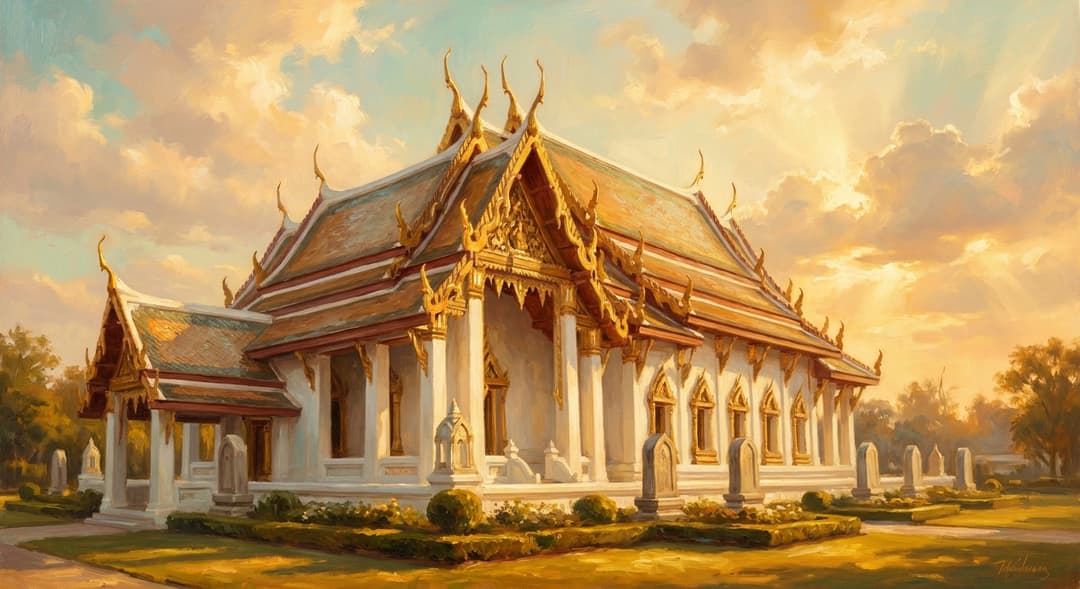
- Traditional Rattanakosin multi-tiered roofline decorated with gold-painted Chofah finials.
- Authentic Sunday morning almsgiving rites followed by community cultural food offerings.
- Peaceful outdoor memorial garden designed for quiet walking meditation and reflection.
Things to Know
- Shoes must be removed prior to stepping onto the carpeted upper Uposatha shrine hall.
- Visitors should dress modestly, ensuring shoulders and knees remain covered.
- Sit with feet tucked beside or behind you, avoiding pointing soles at the Buddha altar or monks.
- Female guests should avoid direct physical contact with monastic monks in accordance with Vinaya rules.
Location
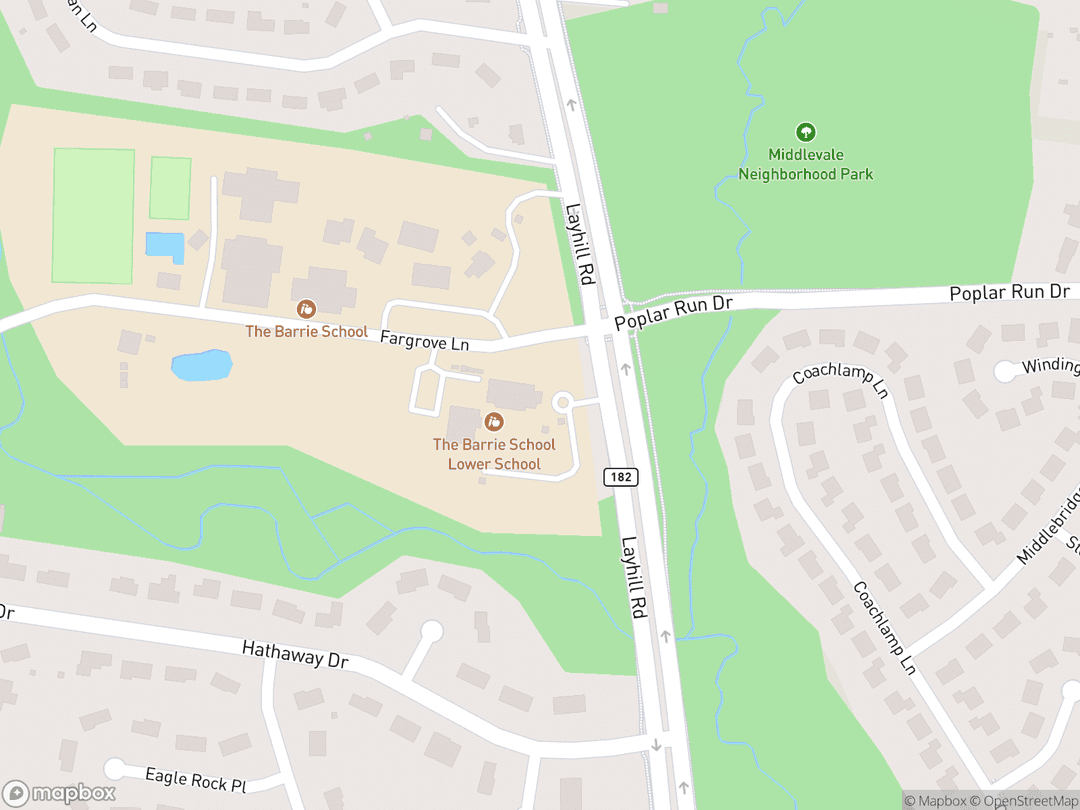
13440 Layhill Road, Silver Spring, MD 20906
Hours: Daily from 8:30 AM to 5:00 PM; Morning alms and chanting at 6:30 AM and 10:30 AM
Getting There: Located on Layhill Road (MD-182) in Silver Spring, Maryland. Easily accessible from Interstate 495 Exit 31N or MD-200. Public transit is available via the Metro Red Line to Glenmont Station, transferring to Ride On Bus Route 26 or 41 directly to the temple grounds.
Get DirectionsTips for Your Visit
Visiting on Sunday Morning
Arrive around 10:00 AM to participate in or observe the traditional Tak Bat almsgiving ceremony and enjoy home-cooked authentic Thai dishes.
Etiquette Inside the Uposatha
Keep voices low and silence mobile phones upon entering the main shrine hall to respect meditating practitioners and resident monastics.
About
Wat Thai Washington, D.C. is a premier Theravada Buddhist monastery located on a five-acre wooded sanctuary in Silver Spring, Maryland. Established in 1974 through the combined efforts of Thai diplomats, monastics, and lay practitioners, it stands as one of the oldest and most significant Thai Buddhist centers in the United States. The complex serves as both a dedicated monastic residence and an active spiritual haven for thousands of families across the Mid-Atlantic.
As part of the broad Dharmic family of traditions, Theravada Buddhism shares core concepts such as karma, samsara, and dharma, while centering its spiritual path on the Four Noble Truths and the Eightfold Path. The monastery provides a sacred, purified ground where resident monks observe monastic vows (Vinaya) and lay followers participate in meditation, chanting, and merit-making (Bun).
The physical centerpiece is the traditional Uposatha-Sala (main prayer hall), built in the classic Central Thai Rattanakosin style and canonically consecrated with Bai Sema boundary stones. Beyond its devotional functions, the temple serves as a vibrant cultural academy, offering Sunday language instruction, traditional Thai music, classical dance classes, and regional festival gatherings.
Interesting Facts
The first Thai monks arrived in D.C. on July 4, 1974, coinciding precisely with the sacred holiday of Asalha Puja. (Tier A)
Founding abbot Luangta Chi served the monastery for over four decades into his 90s, becoming the longest-tenured Thai missionary monk in North America. (Tier A)
In 1995, Somdet Phra Nyanasamvara, Supreme Patriarch of Thailand, personally traveled to Silver Spring to consecrate the Bai Sema boundary stones. (Tier A)
The main prayer hall is engineered with a specialized acoustic and thermal shell to block suburban traffic noise while preserving traditional Thai roof design. (Tier B)
The temple served as the official Mid-Atlantic host for the 2017 royal cremation memorial for King Bhumibol Adulyadej (Rama IX). (Tier A)
The Sunday school teaches youth classical Thai court dance and traditional instruments like the ranad-ek wooden xylophone. (Tier B)
The sanctuary serves an interconnected multi-ethnic community of over 37,000 residents, including Thai, Lao, Cambodian, and American practitioners. (Tier B)
The perimeter of the Uposatha hall is marked by eight carved stone pillars that define canonically autonomous spiritual land under monastic law. (Tier A)
Common Questions
May non-Buddhists visit Wat Thai Washington, D.C.?
Yes, visitors of all religious backgrounds are welcome to explore the grounds, view the shrine hall, and attend cultural events.
What is the customary etiquette when entering the main shrine hall?
Remove your shoes at the entrance, dress modestly covering shoulders and knees, and avoid pointing foot soles at altars or monks.
When are public services and food offerings held?
Public morning chanting and almsgiving occur daily around 10:30 AM, with larger community food offerings every Sunday morning.
What is the significance of the Bai Sema boundary stones?
The eight carved stones mark canonically purified monastic space required to perform valid ordination ceremonies under Vinaya rules.
Featured Stories
Arrival on American Independence Day
July 4, 1974
The first two Thai missionary monks sent from Wat Mahathat in Bangkok landed in Washington, D.C. on July 4, 1974. By a remarkable lunar alignment, American Independence Day coincided that year with Asalha Puja, the holy day marking the Buddha's first sermon. This coincidence was greeted as a deeply auspicious sign for the future of Theravada Buddhism in North America.
Source: Wat Thai Washington, D.C. Institutional Archives
Boundary Consecration by the Supreme Patriarch
1995
In 1995, His Holiness Somdet Phra Nyanasamvara, Supreme Patriarch of Thailand, traveled to Silver Spring to lead the historic Bai Sema consecration. Burying sacred stones at eight perimeter points, he canonically purified the land for formal monastic ordination rituals. The event drew thousands of pilgrims and permanently established the site as an autonomous Theravada sanctuary under monastic law.
Source: Council of Thai Bhikkhus in the U.S.A. Records
A Royal Memorial in Maryland
October 26, 2017
Following the passing of King Bhumibol Adulyadej (Rama IX), Wat Thai D.C. was selected as the official Mid-Atlantic host venue for the regional royal funeral ceremonies. Thousands of Thai-Americans and diplomats gathered in Silver Spring to present traditional sandalwood flowers in a solemn display of communal gratitude and grief. The gathering highlighted the temple's role as a vital cultural bridge connecting diaspora families to their heritage.
Source: Royal Thai Embassy Washington, D.C. Press Communiqué
Timeline
Buddhist Association Formed
Thai diplomats and local residents incorporate the Buddhist Association in Washington, D.C. to create a local spiritual home.
MilestoneMonastic Arrival
The first two official missionary monks arrive from Bangkok on American Independence Day during Asalha Puja.
EventFirst Monastery Established
Wat Thai Washington, D.C. opens its initial residential home on Wayne Avenue in D.C. under Founding Abbot Luangta Chi.
DedicationExpansion to Maryland
Growing congregation numbers prompt a move to a larger rented center in Maryland.
EventSilver Spring Property Purchase
The Association purchases five acres on Layhill Road in Silver Spring to erect a permanent monastic complex.
MilestoneGroundbreaking for Uposatha
Construction begins on the multi-million-dollar traditional Thai Uposatha hall and cultural building.
component.timeline.groundbreakingShrine Hall Completion
Physical construction of the main Rattanakosin-style prayer hall concludes.
MilestoneBai Sema Boundary Consecration
Supreme Patriarch Somdet Phra Nyanasamvara presides over the sacred boundary consecration ceremony.
DedicationAbbot 90th Birthday Honor
Abbot Luangta Chi celebrates 80 years in the monastic order as the senior missionary monk in North America.
EventRoyal Cremation Memorial
The temple hosts thousands for the Mid-Atlantic regional royal memorial honoring King Bhumibol Adulyadej.
EventGolden Jubilee Anniversary
Wat Thai D.C. marks 50 years of continuous Theravada monastic presence and service in the Washington capital area.
MilestoneHistory by Decade
1970s — Founding in the Capital
In 1971, Thai diplomats and residents in Washington, D.C. formed the Buddhist Association to establish a monastic focal point for the growing diaspora. On July 4, 1974, missionary monks arrived from Wat Mahathat in Bangkok, founding the temple on Wayne Avenue the following day. Ven. Phra Rajamongkolrangsi (Luangta Chi) was appointed founding abbot, establishing daily Theravada chants, meditation, and alms traditions.
1980s — Relocation to Silver Spring
As attendance surged beyond the capacity of the D.C. townhouse, the community relocated temporarily before securing a five-acre wooded parcel in Silver Spring, Maryland, in 1986. The property was master-planned to balance local Montgomery County suburban zoning regulations with traditional Thai monastic architecture.
1990s — Construction & Consecration
The 1990s brought the construction of the permanent multi-level Uposatha hall. In 1995, His Holiness Somdet Phra Nyanasamvara, Supreme Patriarch of Thailand, visited Maryland to consecrate the eight Bai Sema boundary stones. This canonical ceremony elevated the sanctuary to full Uposatha status, enabling valid monastic ordinations (Upasampada) on American soil.
2000s–Present — Cultural Anchor & Golden Jubilee
In the 21st century, Wat Thai D.C. expanded its educational infrastructure, hosting a thriving Sunday school for language and classical arts. The monastery hosted major historical events, including the 2017 regional memorial for King Rama IX, before celebrating its 50th Golden Jubilee in 2024 as a cornerstone of Dharmic faith in the United States.
Architecture & Facilities
Wat Thai Washington, D.C. demonstrates a refined synthesis of traditional Central Thai Rattanakosin monastic architecture and suburban American structural engineering. Designed under the spiritual guidance of the Royal Thai Sangha, the master plan features high-pitched multi-tiered gables, ornate gold finials, and white stucco exterior walls that express classical Thai religious aesthetics within a quiet Maryland forest setting.
Building Materials
Roof Tiles
Glazed ceramic roof tiles imported to recreate the vibrant color patterns of Bangkok royal temples.
Exterior Walls
Smooth white stucco cladding with sound-insulating core assemblies to isolate noise.
Gable Finials
Hand-carved gold-painted timber and composite Chofah finials mounted at roof peaks.
Main Altar Pedestal
Multi-tiered carved wooden Thammatsan altar finished in traditional gold leafing.
Interior Features
Upper Uposatha Shrine Room
Sacred consecrated upper hall featuring elevated golden Buddha statues and polished wood finishes.
Emerald Buddha Shrine
Revered replica of Thailand's palladium statue positioned beside the main Buddha altar.
Lower Assembly Hall
Spacious multipurpose community space used for cultural school classes and shared dining.
Monastic Library
Dedicated study room preserving the Pali Canon Tipitaka and modern Dhamma commentaries.
Temple Grounds
The five-acre sanctuary is enclosed by mature woodland, offering quiet walking paths, outdoor picnic pavilions for festival gatherings, a specialized open-air cooking area, and a peaceful garden shrine dedicated to universal peace and compassion (Metta).
Additional Facilities
Residential monastic quarters (Kuti), administrative office offices, Sunday Thai Language and Performing Arts classrooms, and a high-capacity commercial kitchen.
Religious Significance
As a Theravada monastic sanctuary within the broader Dharmic family of religions, Wat Thai Washington, D.C. centers its practice on the timeless teachings preserved in the Pali Canon (Tipitaka). Theravada Buddhism shares fundamental Dharmic principles—such as Karma (cause and effect) and Samsara (the cycle of existence)—while offering a structured path toward spiritual liberation through moral virtue (Sila), mental concentration (Samadhi), and wisdom (Panna).
To preserve and propagate the Buddha's Dhamma, maintain an active residence for ordained Theravada monastics, and serve as a spiritual home for lay practitioners seeking meditation, moral cultivation, and merit-making.
Sacred Ordinances
Tak Bat (Almsgiving)
Daily morning ritual where lay practitioners present food offerings to resident monks, cultivating generosity (Dana) and supporting monastic life.
Uposatha Chanting & Meditation
Regular gatherings in the consecrated shrine hall for recitations of Pali suttas and silent group meditation.
Vinaya Monastic Ordination
Formal ordination of monks (Upasampada) conducted inside the canonical space demarcated by the Bai Sema boundary stones.
Kathina Robe Offering
Annual post-rainy-season retreat festival where lay members offer new robes and requisites to the monastic Sangha.
The Interdependent Sangha
In Theravada tradition, the relationship between monastic monks (Bhikkhus) and household lay followers is one of mutual support. Monks provide spiritual guidance, Dhamma teachings, and pastoral care, while lay practitioners sustain the physical needs of the monastery through daily alms and volunteer service, building spiritual merit (Bun).
Dharmic Unity and Diaspora Support
As part of the regional Dharmic community, the monastery frequently collaborates with neighboring Asian religious centers, promoting interfaith understanding, peace practices (Metta), and cultural preservation across generations in the greater Washington metropolitan region.
Sources & Research
Every fact on Temples.org is backed by verified Sources & Research. Each piece of information is rated by source tier and confidence level.
View All Sources (8)
| Field | Source | Tier | Retrieved |
|---|---|---|---|
| About & Historical Background | Wat Thai Washington, D.C. Official Web (opens in a new tab) | A | 2026-01-30 |
| About & Historical Background | Royal Thai Embassy, Washington, D.C. (opens in a new tab) | A | 2026-01-30 |
| Timeline & History | Council of Thai Bhikkhus in the U.S.A. (opens in a new tab) | A | 2026-01-30 |
| Architecture & Symbols | The Buddhist Association in Washington, D.C. (opens in a new tab) | A | 2026-01-30 |
| Visitor Insights & Information | Montgomery County Planning Department (opens in a new tab) | B | 2026-01-30 |
| Religious Significance | The Pluralism Project at Harvard University (opens in a new tab) | B | 2026-01-30 |
| Historical Timeline | The Washington Post Historical Archive (opens in a new tab) | B | 2026-01-30 |
| Featured Stories | The Baltimore Sun Regional News (opens in a new tab) | B | 2026-01-30 |