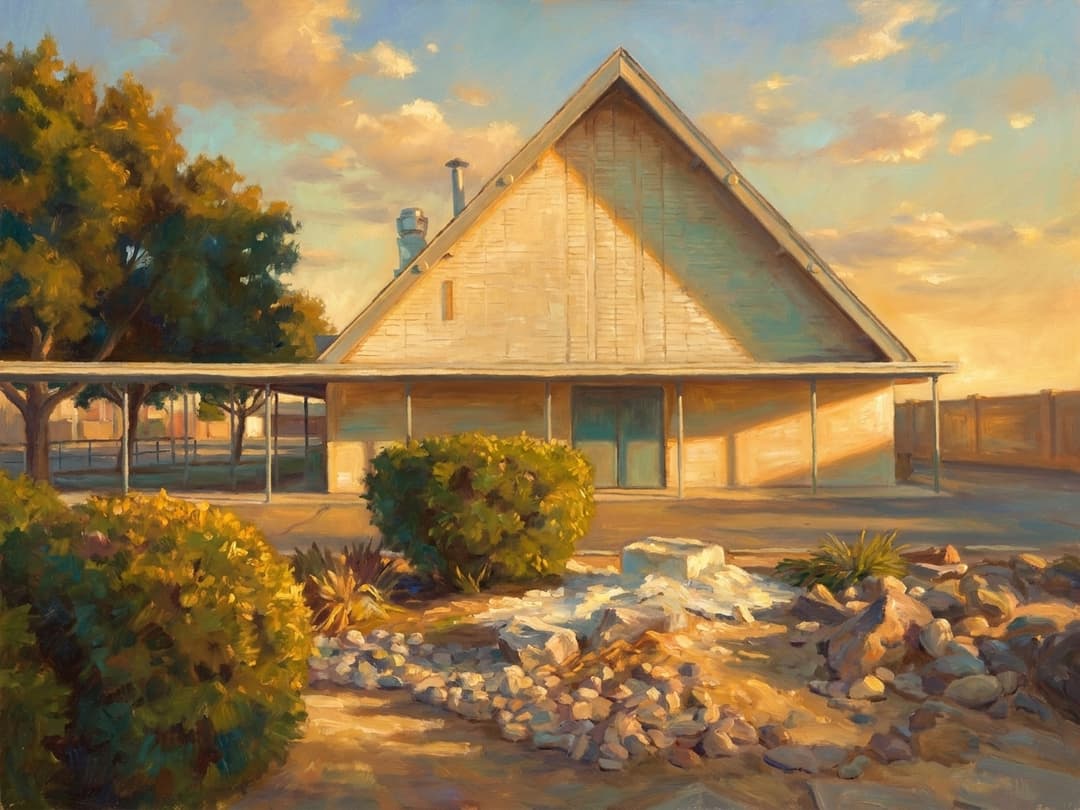
Visitor Insights
Visiting Arizona Buddhist Temple
The temple warmly welcomes people of all faith traditions to its Sunday services, community workshops, and seasonal festivals. Visitors can experience authentic Shin Buddhist services followed by fellowship and cultural exchanges.
Highlights
- Gilded central Butsudan altar enshrining a standing image of Amida Buddha.
- Congregational seating adapted to Western-style pews reflective of BCA history.
- Annual spring Obon and Hanamatsuri festivities celebrating cultural heritage.
Things to Know
- Modest attire is appreciated when entering the sacred sanctuary hall.
- Incense offering protocols can be practiced voluntarily with guidance from ushers.
- Major summer festival events often shift to May due to extreme desert temperatures.
Location
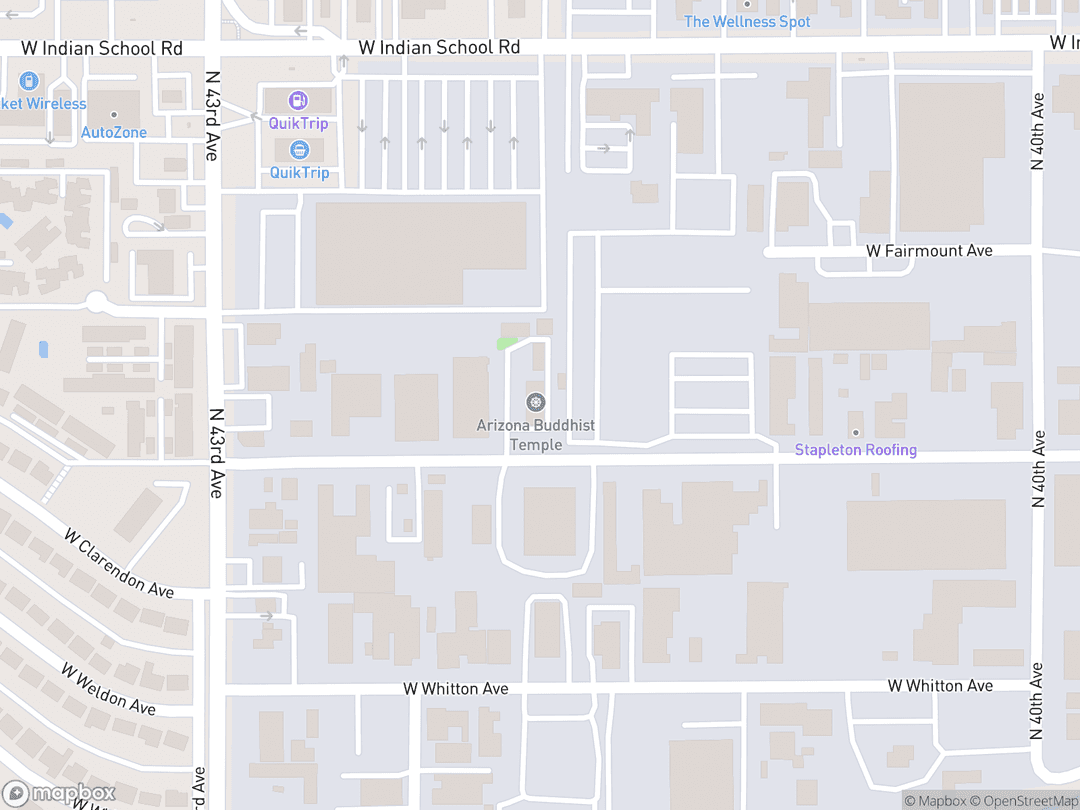
4142 West Clarendon Avenue, Phoenix, AZ 85019, United States
Hours: Sunday Dharma services at 10:00 AM; open during special festivals and classes
Getting There: Located in West Phoenix off Interstate 10, accessible via 43rd Avenue with ample on-site parking.
Get DirectionsTips for Your Visit
Sanctuary Etiquette
Visitors are invited to offer incense and bow slightly in reverent Gassho upon entering.
Sunday Service Welcome
Family Dharma gatherings welcome newcomers with bilingual program booklets and fellowship tea.
About
The Arizona Buddhist Temple stands as a historic sanctuary of the Jodo Shinshu Hongwanji-ha tradition in the heart of Phoenix. Founded in 1933 by Japanese agricultural laborers and Reverend Hozen Seki, the temple belongs to the broader Mahayana Buddhist stream within Dharmic spiritual traditions. It offers refuge rooted in universal compassion rather than rigorous asceticism.
Rising out of early agricultural hostility and the forced relocations of World War II, the congregation persevered with remarkable resilience. When fire destroyed the original 1936 wooden structure in 1957, members temporarily held services in a salvaged camp barrack before completing the current mid-century complex in 1961.
Today, the temple serves a diverse, multigenerational community while honoring its immigrant founders. Embracing the teaching of Other-Power through Amida Buddha, it fosters spiritual education, interfaith harmony, and traditional community gatherings across the desert Southwest.
Gallery
Symbolic Elements
The temple's exterior features intricate carvings, each rich with spiritual meaning:
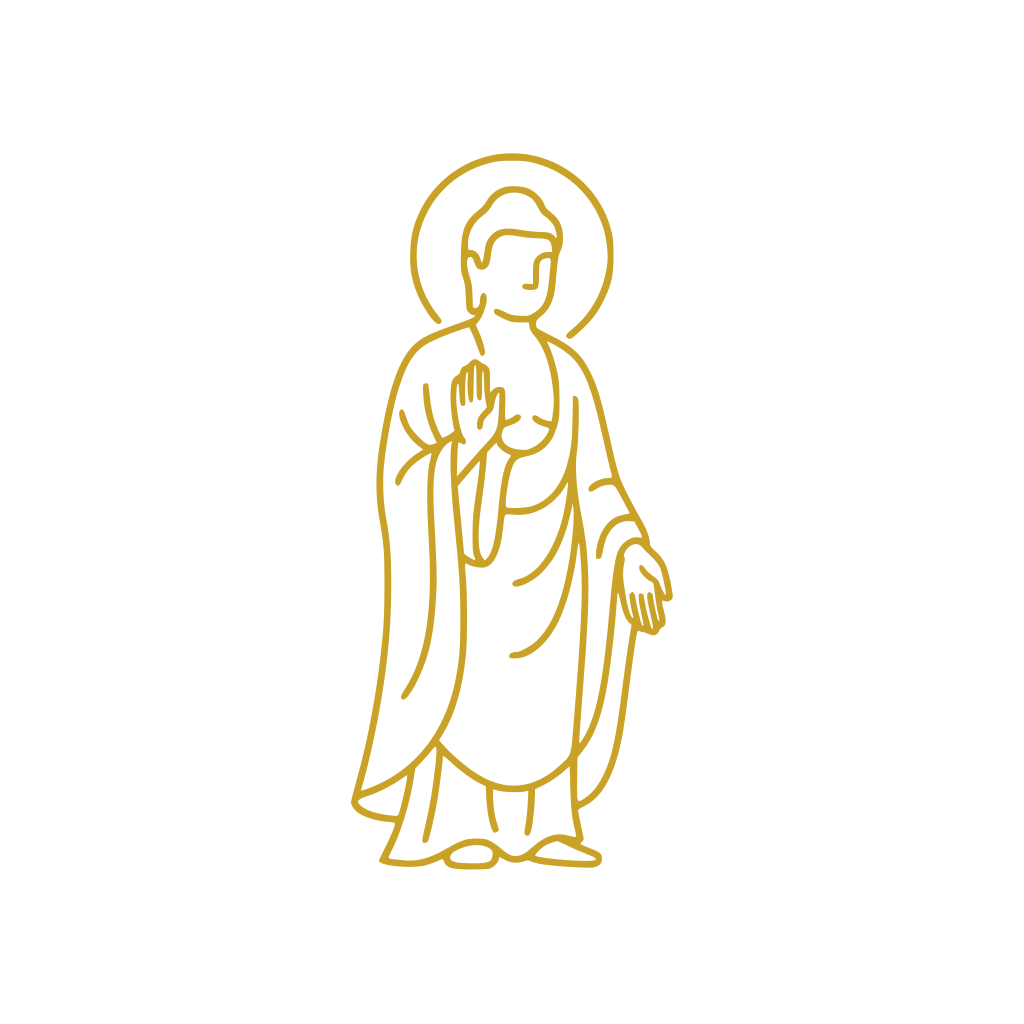
Amida Buddha Statue
The standing golden Amida Buddha leans slightly forward in the Raigo Mudra to symbolize active compassion embracing all beings.

The Nembutsu
The sacred phrase Namu Amida Butsu expresses spontaneous gratitude for universal spiritual liberation.

Nenju Juzu Beads
Encircling joined hands during prayer, these sacred beads represent the oneness and interdependence of all existence.

Golden Butsudan
The radiant chancel altar evokes the Pure Land through handcrafted woodwork and brilliant gold leaf ornamentation.

Lotus Flower (Renge)
Carved altar lotuses signify spiritual purity blossoming untainted from the muddy waters of human suffering.

Dharma Wheel (Horin)
The eight-spoked wheel honors the Noble Eightfold Path that unites all historical Buddhist schools.

Wisteria Crest (Sagari-Fuji)
The traditional Hongwanji floral crest displays gently bowing blossoms that symbolize humility and sincere gratitude.

Incense Offering (Oshoko)
Fragrant burning incense purifies the worship space while demonstrating the fleeting impermanence of all worldly phenomena.
Interesting Facts
It is the oldest continuously active Buddhist house of worship in the state of Arizona (Tier A).
The earliest congregational services met in a dusty agricultural barn with farmers seated on vegetable crates (Tier B).
Because early land laws barred immigrants from owning property, the site was purchased in the names of citizen children (Tier A).
Founding minister Reverend Hozen Seki later established the New York Buddhist Church and the American Buddhist Academy (Tier B).
Following a 1957 fire, the congregation used an authentic wooden World War II internment camp barrack as their chapel (Tier A).
The sanctuary incorporates traditional Christian-style pews, reflecting historical adaptations made across the Buddhist Churches of America (Tier B).
The community holds its annual Obon festival in May to prevent dancers and seniors from enduring dangerous summer desert heat (Tier C).
The temple served as an emergency resettlement shelter for returning Japanese Americans after World War II camps closed (Tier A).
Common Questions
Are non-Buddhists allowed to attend Sunday services?
Yes, visitors of all cultural and religious backgrounds are warmly welcomed to attend Dharma services and community events.
What is the primary spiritual practice of the temple?
The focal practice is expressing gratitude through the Nembutsu chant rather than practicing silent monastic meditation.
What should I wear when attending services?
Comfortable and modest casual or business-casual attire is customary for attending services in the main sanctuary.
Why is the facility historically called a church?
Early Japanese immigrants used church terminology to establish legal recognition and foster civic acceptance in America.
Featured Stories
Faith in the Shadow of Alien Land Laws
1935
Barred from owning real estate by discriminatory Arizona statutes, immigrant Issei families pooled their modest agricultural earnings to purchase the Clarendon Avenue site in the legal names of their American-born children. Their legal ingenuity ensured a lasting spiritual sanctuary for future generations despite institutional disenfranchisement.
Source: Asian American Historic Property Survey Records
The Sanctuary of Postwar Resettlement
1945
When families returned to the Salt River Valley from World War II confinement centers, they found their leased lands and personal belongings lost. The temple promptly opened its halls as an emergency dormitory and mutual aid center, providing warm meals and shelter while community members rebuilt their livelihoods.
Source: Buddhist Churches of America Archival History
Rising from Ashes with an Internment Barrack
1957
After an accidental blaze leveled the original wooden temple in 1957, the Sangha purchased a surplus wooden barrack from the former Gila River Incarceration Camp and hauled it to Phoenix. Reassembled by volunteers, this barrack served as a sacred house of worship that transformed a symbol of wartime exile into a monument of spiritual resolve.
Source: Arizona Historical Society Collections
Timeline
First Congregational Assemblies
Japanese immigrant farmers began gathering for Buddhist services inside a converted Glendale barn.
MilestoneCongregation Formalized
Reverend Hozen Seki formally established the congregation alongside the Fujinkai Women's Association.
MilestonePerseverance During Agricultural Riots
The young Sangha held firm together through intense regional anti-Japanese labor conflicts.
EventClarendon Avenue Land Acquisition
Families purchased permanent property under the legal names of their American-born citizen children.
MilestoneOriginal Temple Dedicated
The community consecrated a handcrafted wooden sanctuary hall and parsonage on Clarendon Avenue.
DedicationWartime Internment Closure
Federal authorities forced the congregation into wartime incarceration camps and shuttered the temple.
EventPostwar Resettlement Hub
The reopened building served as an emergency shelter for displaced families returning from camps.
MilestoneCatastrophic Temple Fire
An accidental fire completely consumed the original 1936 wooden worship hall.
EventBarracks Chapel Installed
Sangha members reassembled a salvaged internment camp barrack to serve as a temporary sanctuary.
MilestoneRebuilding Program Commences
Ground broke on a modern fire-resistant sanctuary complex to serve future generations.
component.timeline.groundbreakingCurrent Temple Consecration
Congregants formally dedicated the newly completed mid-century complex and social hall.
DedicationName Modernization
The organization adopted its contemporary temple designation alongside bilingual services.
MilestoneHistory by Decade
1930s — Pioneer Foundation and Land Struggles
Japanese immigrant agricultural laborers in the Salt River Valley gathered in barns before organizing under Reverend Hozen Seki in 1933. Facing strict Alien Land Laws, families pooled funds to acquire land legally under the names of their American-born children. A hand-built wooden temple and altar opened in 1936, providing critical solidarity against anti-immigrant hostility.
1940s — Wartime Confinement and Rebuilding
Following Executive Order 9066 in 1942, members were forcibly relocated to federal camps at Poston and Gila River, forcing the temple to close. Incarcerated families maintained devotion with makeshift barrack altars until their release in 1945. The temple reopened immediately after the war as an emergency hostel and communal kitchen for displaced returning families.
1950s — Trial by Fire and Barracks Chapel
The post-war community flourished until March 13, 1957, when a devastating accidental fire destroyed the wooden sanctuary. Refusing to disband, congregants purchased and transported a surplus barrack from the Gila River camp to serve as a temporary worship hall. This poignant structure housed services while the Sangha launched a statewide fundraising drive for a permanent home.
1960s — Modern Reconstruction and Consecration
In 1960, construction began on an expansive, fire-resistant complex designed to meet the growing needs of postwar Japanese American families. Dedicated on October 1, 1961, the new complex featured a spacious sanctuary, educational classrooms, minister quarters, and a large social hall. The site rapidly became a central civic anchor for cultural exchange and civil rights advocacy in Phoenix.
1980s–1990s — Cultural Bridge and Transition
The institution formally transitioned its public name from church to temple during this era of generational renewal. Sunday services incorporated English-language liturgies to welcome multiracial descendants, converts, and the broader community. The temple solidified its civic standing by partnering with regional Japanese American civic groups and cultural foundations.
2000s–Present — Desert Resilience and Centennial Horizon
Approaching its centennial, the Arizona Buddhist Temple stands as the state's oldest continuous Buddhist institution. Due to severe summer heat, the congregation relocated outdoor Obon dance festivals to May in partnership with the Japanese Friendship Garden of Phoenix. It remains an active beacon of Mahayana Dharma and historical remembrance across the Southwest.
Architecture & Facilities
The Arizona Buddhist Temple represents a functional Mid-Century Modern ecclesiastical design adapted to the climate of the American Southwest and the organizational norms of the Buddhist Churches of America. Built between 1960 and 1961 to replace a fire-destroyed predecessor, the building eschews ostentatious Asian pagoda motifs in favor of an understated horizontal desert profile that reflects Pure Land humility and seamless neighborhood integration.
Building Materials
Textured Slump Block
Locally produced masonry units provide durable thermal protection against desert heat.
Stucco Exterior Walls
Neutral painted stucco creates clean horizontal lines suited to mid-century Phoenix.
Natural Interior Hardwoods
Polished oak and cedar frame the elevated altar and sacred sanctuary railings.
Gold Leaf Lacquer
Hand-applied gilding embellishes the inner shrine to symbolize boundless celestial light.
Interior Features
Hondo (Main Sanctuary)
The primary worship space features carpeted aisles and wooden pews facing forward.
Onaijin (Inner Altar)
An elevated sacred platform housing the central gilded Butsudan and ancestral scrolls.
Nokotsudo (Columbarium)
A tranquil memorial chamber holding the cremated remains of early immigrant pioneers.
Kaikan (Social Hall)
A multipurpose gathering room with an industrial kitchen hosting community banquets.
Temple Grounds
The low-profile urban lot features paved on-site congregational parking, drought-tolerant desert plantings, and shaded exterior walkways.
Additional Facilities
The facility includes administrative offices, Sunday Dharma School classrooms, and on-site residential living quarters for the resident minister.
Religious Significance
The Arizona Buddhist Temple belongs to the worldwide Buddhist tree rooted in Siddhartha Gautama's enlightenment in ancient India. As part of the Mahayana branch and the Jodo Shinshu Hongwanji-ha lineage founded by Shinran Shonin, the temple teaches that universal liberation is freely available to all people through the compassionate vow of Amida Buddha.
To provide a spiritual refuge where ordinary people discover awakening and profound gratitude through the boundless wisdom and compassion of Amida Buddha.
Sacred Ordinances
Oshoko (Incense Offering)
Placing fragrant incense onto burning coals as an act of reverence and mental purification.
Nembutsu Chanting
Reciting Namu Amida Butsu in mindful appreciation of universal liberation.
Sutra Chanting
Communal vocalization of sacred Mahayana texts accompanied by the rhythmic resonance of the Kinsu bell.
Kikyo-shiki (Confirmation Ceremony)
A formal initiation ceremony in which a devotee formally takes refuge in the Three Treasures and receives a Buddhist name.
The Path of Tariki (Other-Power)
Unlike traditions requiring monastic seclusion, Jodo Shinshu emphasizes Tariki or Other-Power. Shinran taught that self-driven efforts toward spiritual perfection are unnecessary because Amida Buddha's unconditional compassion embraces all beings exactly as they are.
The Three Treasures
Temple life centers upon taking refuge in the Buddha as the awakened guide, the Dharma as the eternal truth of compassion, and the Sangha as the fellowship of all seekers walking the path together.
Sources & Research
Every fact on Temples.org is backed by verified Sources & Research. Each piece of information is rated by source tier and confidence level.
View All Sources (8)
| Field | Source | Tier | Retrieved |
|---|---|---|---|
| Historical Timeline & Congregational Origin | Buddhist Churches of America (opens in a new tab) | A | 2026-03-30 |
| About & Community Architecture | Asian & Pacific Islander Americans in Historic Preservation (opens in a new tab) | B | 2026-03-30 |
| About & Valley Agricultural History | Arizona Historical Society (opens in a new tab) | B | 2026-03-30 |
| Visitor Insights & Obon Traditions | Japanese Friendship Garden of Phoenix (opens in a new tab) | C | 2026-03-30 |
| Featured Stories & Land History | William & Mary Asian Pacific American Studies (opens in a new tab) | B | 2026-03-30 |
| Religious Significance & Lineage | Senshin Buddhist Temple BCA Archives (opens in a new tab) | A | 2026-03-30 |
| Historic Property Survey & Spatial Form | City of Phoenix Historic Preservation Office (opens in a new tab) | A | 2026-03-30 |
| Community Heritage & Cultural Preservation | Pacific Citizen National JACL (opens in a new tab) | C | 2026-03-30 |