Visitor Insights
Visiting San Francisco Zen Center
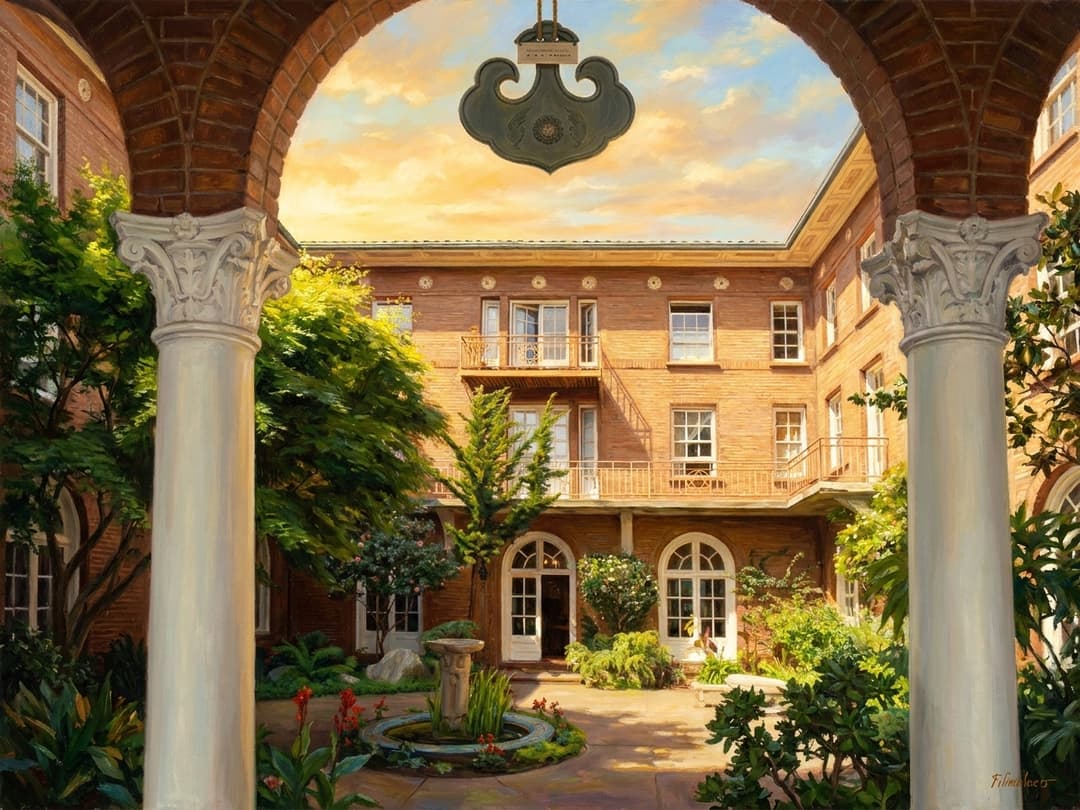
Beginner's Mind Temple welcomes public guests for daily meditation, weekend discourses, and contemplative residential stays. Visitors enter a tranquil monastic environment shielded from city traffic by Julia Morgan's brick cloisters.
Highlights
- Free Saturday morning meditation instruction followed by a public Dharma discourse.
- The serene central Buddha Hall featuring traditional Soto Zen altars and liturgical bells.
- Historic Mediterranean Revival courtyards offering quiet contemplation in Hayes Valley.
- New street-level Welcome Center showcasing the temple's history and publication archives.
Things to Know
- Shoes must be removed at entry vestibules before proceeding into practice halls.
- Wear modest, loose-fitting attire in muted or dark tones; avoid bright athletic wear.
- Arrive at least 15 minutes prior to sitting periods to settle quietly onto cushions.
- Photography and mobile device usage are strictly prohibited in the Zendo and during rites.
Location
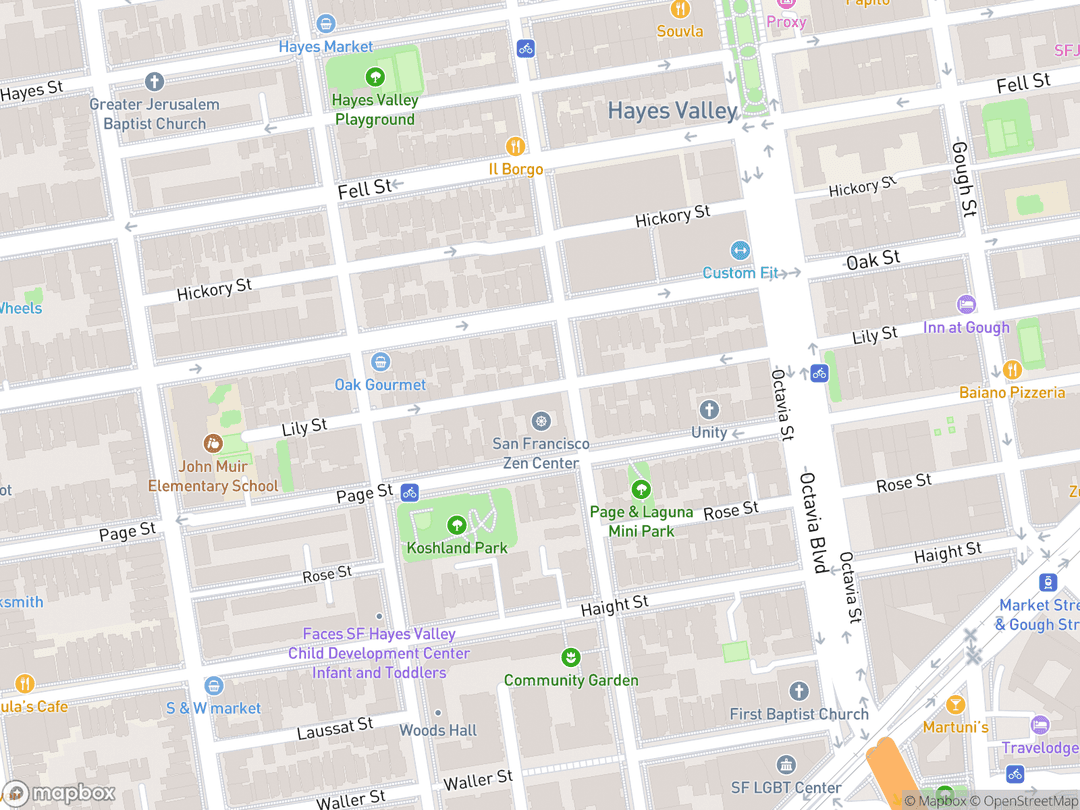
300 Page Street, San Francisco, CA 94102, United States
Hours: Daily zazen at 5:40 AM and 5:40 PM; Saturday public programs start at 8:30 AM
Getting There: Muni Metro lines J, K, L, M, N to Van Ness Station, or Muni bus lines 6, 7, and 22.
Get DirectionsTips for Your Visit
First-Time Meditation
Attend the Saturday morning orientation where senior practitioners demonstrate posture using zafus and chairs.
Mindful Hallway Etiquette
Maintain a lowered speaking volume in corridors to respect residents and retreatants engaged in silent practice.
Contemplative Overnight Stays
Book an urban guest room in advance to participate fully in early morning zazen and community breakfast.
About
Emerging from ancient Indian Dharmic roots, the San Francisco Zen Center embodies the Mahayana Bodhisattva vow to awaken all sentient beings from suffering. Established in the Soto Zen lineage of Master Eihei Dogen, the temple teaches shikantaza, or 'just sitting,' viewing daily meditation not as a tool for personal gain but as the direct manifestation of innate Buddha-nature.
Founded under the guidance of Shunryu Suzuki Roshi in 1962, the temple found its permanent home at 300 Page Street in 1969. Named Hosshin-ji, or Beginner's Mind Temple, it maintains that enlightenment is realized through radical openness, humility, and mindful presence amidst ordinary daily life.
Housed within a historic 1922 Julia Morgan landmark, the center serves as a vibrant urban monastery. It provides an active sanctuary where communal meditation, formal monastic training, and compassionate outreach converge in the heart of San Francisco.
Gallery
Symbolic Elements
The temple's exterior features intricate carvings, each rich with spiritual meaning:

Shakyamuni Buddha Altar
Seated in meditative equanimity, the central Buddha statue represents the awake mind inherent within all living beings.

Manjushri Bodhisattva
Holding the sword of discriminating wisdom, this guardian figure presides over the Zendo to cut through spiritual delusion.

The Han Wooden Board
This thick hardwood board is struck with rhythmic beats to summon monks, bearing an inscription urging wakefulness in every moment.

The Densho Bell
A bronze liturgical bell whose deep reverberations invite practitioners to dissolve conceptual thoughts and center awareness.

The Mokugyo Drum
Carved in the form of a fish that never sleeps, this wooden slit drum sets the steady rhythm of chanted Mahayana sutras.

The Enso Circle
Painted with a single fluid brushstroke, this ink circle embodies absolute emptiness, enlightenment, and infinite interconnectedness.

Zafu and Zabuton
The black round meditation cushion and mat provide the firm physical foundation upon which the practitioner embodies Buddha's posture.

The Rakusu Robe
Hand-stitched in a rice-paddy pattern by students taking precepts, this miniature vestment signifies moral humility and renunciation.
Interesting Facts
The temple building was designed in 1922 by Julia Morgan, California's first licensed female architect and master builder of Hearst Castle. (Tier B)
Before becoming a Zen temple, the building served as a Jewish community home founded by the Emanu-El Sisterhood for Personal Service. (Tier A)
SFZC established Tassajara in 1967, creating the very first Soto Zen training monastery outside of Asia. (Tier A)
The center revolutionized American vegetarian dining by founding the acclaimed Greens Restaurant at Fort Mason in 1979. (Tier A)
The spiritual classic 'Zen Mind, Beginner's Mind' was compiled entirely from tape recordings of Suzuki Roshi's talks at Sokoji and Page Street. (Tier A)
The Zen Hospice Project originated here in 1987, providing pioneer end-of-life palliative care to AIDS patients. (Tier B)
Early SFZC priest Kobun Chino Otogawa served as the spiritual mentor to Apple co-founder Steve Jobs. (Tier B)
Whole Earth Catalog founder Stewart Brand partnered with SFZC in 1978 to run educational and ecological retail ventures. (Tier C)
The building operated over a century with original infrastructure before a comprehensive 2024 seismic and accessibility overhaul. (Tier A)
Common Questions
Do I need to be a Buddhist to meditate at City Center?
No, people of all faiths and backgrounds are welcome to attend meditation and public lectures.
What is the difference between City Center, Tassajara, and Green Gulch?
City Center is the urban monastery, Green Gulch is an organic farm, and Tassajara is an isolated wilderness monastery.
What should I wear when attending zazen?
Wear loose-fitting, comfortable clothing in dark, muted colors that cover the knees and shoulders.
Can visitors stay overnight at 300 Page Street?
Yes, traditional guest rooms are available for reservation by travelers seeking a quiet, contemplative stay.
Featured Stories
The Sisterhood's Enduring Sanctuary
October 15, 1922
When the Emanu-El Sisterhood commissioned Julia Morgan in 1921, they envisioned a safe haven providing affordable shelter and vocational education for young Jewish working women and European refugees. Decades later, when the Zen sangha purchased 300 Page Street, Suzuki Roshi recognized this sacred legacy of care, declaring that the Bodhisattva spirit had already sanctified the halls long before Buddhist cushions were arranged on its floors.
Source: San Francisco Zen Center Archives
The Birth of Beginner's Mind
October 1, 1970
Shunryu Suzuki Roshi never planned to write a bestselling book, preferring intimate morning lectures with earnest American students seated on tatami mats. Student Marian Derby meticulously recorded his discourses on tape, which were subsequently transcribed and edited into 'Zen Mind, Beginner's Mind' at Page Street. The resulting volume unlocked ancient Soto meditation for the West, teaching that maintaining a beginner's humility opens boundless spiritual possibilities.
Source: Zen Mind, Beginner's Mind Historical Records
Courageous Compassion at Page Street
October 10, 1987
During the devastating height of the San Francisco AIDS crisis, SFZC practitioners Frank Ostaseski and Martha deBrunner founded the Zen Hospice Project just across the street at 273 Page Street. Drawing upon Zen meditative stillness, volunteers offered tender, non-judgmental presence to dying young men ostracized by society. This pioneering initiative established a transformative contemplative model for modern palliative care worldwide.
Source: Zen Hospice Project Institutional History
Timeline
Emanu-El Sisterhood Home Dedicated
Architect Julia Morgan completes the residential club at Page and Laguna for working women and immigrants.
MilestoneArrival of Shunryu Suzuki Roshi
Suzuki Roshi arrives in San Francisco to lead the Japanese-American congregation at Sokoji Temple on Bush Street.
MilestoneIncorporation of San Francisco Zen Center
Suzuki Roshi and American disciples legally establish the center to facilitate lay and monastic practice.
MilestoneEstablishment of Tassajara
The sangha dedicates Tassajara Zen Mountain Center as the first Soto Zen monastic training monastery in the West.
MilestoneAcquisition of 300 Page Street
SFZC purchases Julia Morgan's building and dedicates it as Hosshin-ji, or Beginner's Mind Temple.
DedicationZen Mind, Beginner's Mind Published
Suzuki Roshi's lectures are published, becoming the foundational manual for Western Buddhist practice.
EventPassing of Shunryu Suzuki Roshi
Suzuki Roshi dies of cancer at City Center after transmitting the lineage to Richard Baker.
EventGreen Gulch Farm Acquired
The center expands agricultural practice by acquiring rural land in Marin County.
MilestoneGreens Restaurant Opens
SFZC establishes Greens at Fort Mason, pioneering organic fine-dining vegetarian cuisine in America.
MilestoneZen Hospice Project Founded
The sangha launches compassionate contemplative end-of-life care during the San Francisco AIDS crisis.
EventSFZC 50th Anniversary
The center marks five decades of continuous practice, honoring its interfaith heritage with Temple Emanu-El.
EventCentennial Modernization Completed
A multi-year seismic and accessibility project concludes with the dedication of the new Page Street Welcome Center.
RenovationHistory by Decade
1920s — Emanu-El Sisterhood Residence
The building was designed to offer young women dignity, communal safety, and an uplifting domestic home.
Commissioned in 1921 by the Emanu-El Sisterhood for Personal Service, architect Julia Morgan designed a dignified residential club at Page and Laguna Streets. Opened in 1922, the four-story brick facility provided affordable housing, dining, and educational support for young Jewish women entering the urban workforce. Its domestic warmth and humanistic scale fostered an inclusive community environment for single working women.
1930s–1940s — Sanctuary and Refuge
Throughout the Great Depression and the catastrophic rise of fascism in Europe, 300 Page Street served as a critical reception center for Jewish refugees fleeing persecution. The Sisterhood mobilized social services, job training, and transitional lodging to help newly arrived immigrants rebuild their lives. The building firmly established its identity as a compassionate refuge during decades of global turmoil.
1950s–1960s — Suzuki Roshi and the Page Street Acquisition
Venerable Shunryu Suzuki arrived from Japan in 1959, leading meditation at the Sokoji temple before formally incorporating the San Francisco Zen Center in 1962. As the expanding American sangha outgrew its Bush Street quarters, SFZC purchased 300 Page Street in November 1969 for $300,000. Suzuki Roshi named the sanctuary Hosshin-ji, dedicating it as an urban monastery for continuous Soto Zen practice.
1970s — Expansion and Institutional Growth
Following Suzuki Roshi's death in December 1971, the sangha expanded under his successor Richard Baker, linking City Center with Tassajara and Green Gulch Farm. In 1979, the center opened Greens Restaurant at Fort Mason, transforming American culinary culture by pairing fine vegetarian dining with organic produce. City Center flourished as the institutional and residential hub of an expanding nationwide Buddhist network.
1980s–1990s — Reorganization and Engaged Compassion
After a governance crisis in 1983 led to the abbot's resignation, SFZC decentralized its leadership structure, establishing a democratic board and dual-abbot system. The community channeled its practice outward, co-founding the Zen Hospice Project in 1987 to provide compassionate palliative care during the AIDS epidemic. Prison correspondence programs and homeless outreach initiatives further grounded the sangha in socially engaged Buddhism.
2000s–Present — Centennial Modernization and Ongoing Practice
Marking its 50th institutional anniversary in 2012, City Center reaffirmed its historical ties with the Jewish community and Julia Morgan's architectural legacy. Between 2023 and 2025, the center executed a major centennial renovation, adding seismic reinforcement, modern accessibility elevators, and a street-level Welcome Center. Hosshin-ji continues its uninterrupted rhythm of daily meditation and open dharma teachings into its second century.
Architecture & Facilities
The building is a reinforced brick masonry residence designed in the Mediterranean Revival style with Renaissance Revival massing, characterized by warm clinker brickwork, classical symmetry, humanistic scale, and low-pitch barrel-tile hip roofs.
Building Materials
Clinker Brick Masonry
Variegated dark-red clinker bricks laid with deep horizontal mortar joints give the exterior walls rich texture and historic depth.
Terracotta Roof Tiles
Hand-cast Mediterranean barrel clay tiles cap the low-pitched rooflines and overhangs supported by decorative brackets.
Douglas Fir & White Oak
Polished native hardwood floorboards run throughout the interior zendo and corridors to support silent barefoot walking meditation.
Wrought Iron & Cast Bronze
Decorative ironwork grilles embellish courtyard portals while traditional cast bronze bells anchor ceremonial liturgical spaces.
Interior Features
The Zendo
The serene meditation hall features raised perimeter platforms where practitioners sit facing clean plastered walls in quiet mindfulness.
The Buddha Hall
The primary liturgical sanctuary houses the central Shakyamuni altar, ancestral tablets, and traditional monastic instruments.
The Welcome Center
A newly renovated street-level reception room illuminated by historic arched windows offers orientation displays and bookstore shelves.
The Tenzo Kitchen
The basement culinary workshop functions as a practice hall where preparing wholesome vegetarian meals is treated as meditation.
Temple Grounds
The urban corner site features protected interior brick courtyards screened by masonry walls, providing a tranquil contemplative buffer from bustling street traffic. Symmetrical light wells channel natural daylight into residential cells and meditation spaces.
Additional Facilities
Includes over 40 resident monk cells, public guest lodging rooms, library reading archives, a community dining hall, and seismic elevator access.
Religious Significance
San Francisco Zen Center stands as a foundational sanctuary for the transmission of Mahayana Buddhism and Soto Zen teachings to the West. Rooted in classical Dharmic philosophy, the center emphasizes that realization is not an elusive future achievement, but the natural expression of selfless, compassionate presence in each moment.
To embody and transmit Soto Zen Buddhist meditation, liturgical practice, and compassionate ethical action for the liberation of all beings.
Sacred Ordinances
Zazen (Seated Meditation)
Practitioners engage in shikantaza, sitting upright without striving for gain to manifest inherent Buddha-nature.
Kinhin (Walking Meditation)
Slow, deliberate rhythmic walking coordinated with breathing performed between long seated zazen periods.
Jukai (Taking the Precepts)
A solemn formal initiation ceremony where students take the Sixteen Bodhisattva Precepts and receive a hand-sewn rakusu.
Samu (Work Practice)
Mindful physical labor, cooking, and facility maintenance undertaken as an unbroken continuation of meditation.
The Principle of Beginner's Mind
Shunryu Suzuki Roshi taught that spiritual practice thrives not on specialized expertise, but on 'shoshin'—the humble, open mindset of a beginner. By relinquishing conceptual preconceptions, practitioners approach each breath and situation with fresh curiosity, uncovering freedom directly within the immediacy of ordinary reality.
The Tripartite Mandala
Beginner's Mind Temple does not exist in isolation, but functions as the urban gateway of a three-fold monastic mandala. Supported by the rural agrarian rhythms of Green Gulch Farm in Marin and the deep contemplative solitude of Tassajara in Big Sur, City Center integrates monastic discipline directly into urban life.
Sources & Research
Every fact on Temples.org is backed by verified Sources & Research. Each piece of information is rated by source tier and confidence level.
View All Sources (5)
| Field | Source | Tier | Retrieved |
|---|---|---|---|
| About & Historical Background | San Francisco Zen Center (opens in a new tab) | A | 2026-03-30 |
| Architectural Survey & History | San Francisco Planning Department (opens in a new tab) | B | 2026-03-30 |
| Dharmic Lineage & Buddhist Tradition | World Religions and Spirituality Project (opens in a new tab) | B | 2026-03-30 |
| Socially Engaged Buddhism & Hospice | Tricycle: The Buddhist Review (opens in a new tab) | B | 2026-03-30 |
| Monastery History & Outreach | The Carmel Pine Cone (opens in a new tab) | C | 2026-03-30 |