Visitor Insights
Visiting Templo Zu Lai
Templo Zu Lai welcomes thousands of spiritual seekers and non-Buddhist visitors every week to explore its peaceful campus and architecture. Guests can attend public Sunday services, enjoy authentic Asian vegetarian cuisine, and walk along quiet woodland pathways.
Highlights
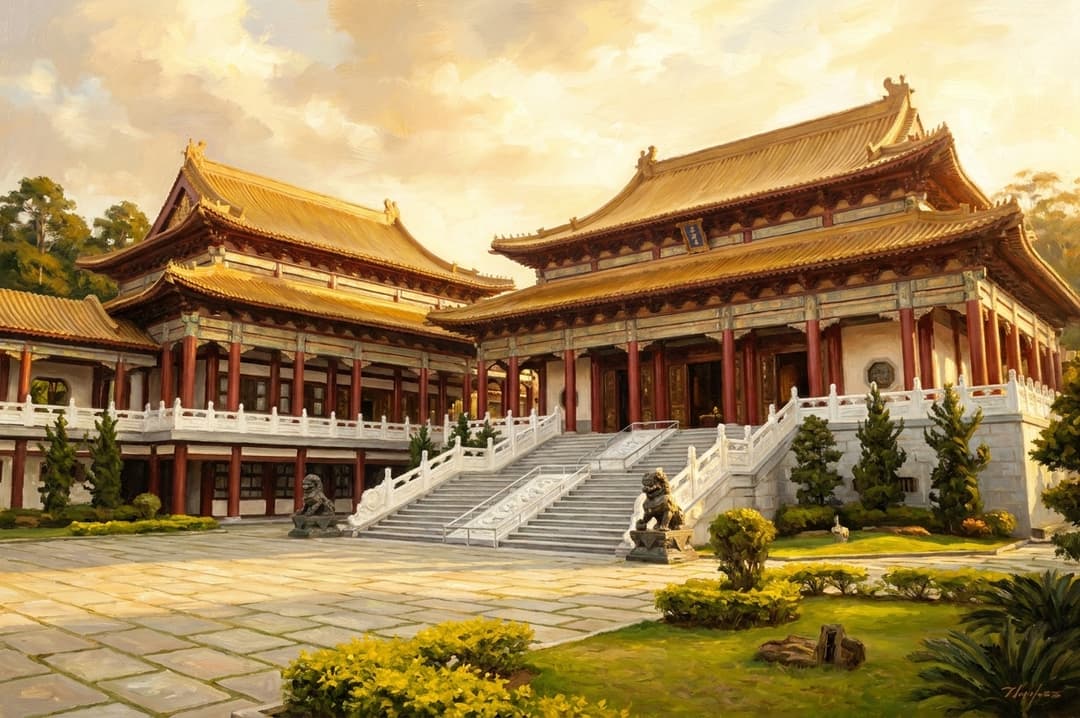
- Traditional Tang Dynasty Chinese imperial palace architecture and central flagstone courtyard
- Massive Main Shrine featuring a white jade Sakyamuni Buddha statue from Asia
- Extensive vegetarian refectory serving traditional Asian plant-based meals on weekends
- Serene Atlantic Forest nature trails, bamboo groves, and koi ponds with traditional bridges
Things to Know
- Photography is strictly prohibited inside all indoor shrines, meditation halls, and museum areas
- Visitors must wear respectful attire covering shoulders and knees; flip-flops are discouraged
- The temple is closed to all visitors on Mondays, including public holidays
- Bringing meat, seafood, or alcohol onto temple grounds is strictly prohibited
Location
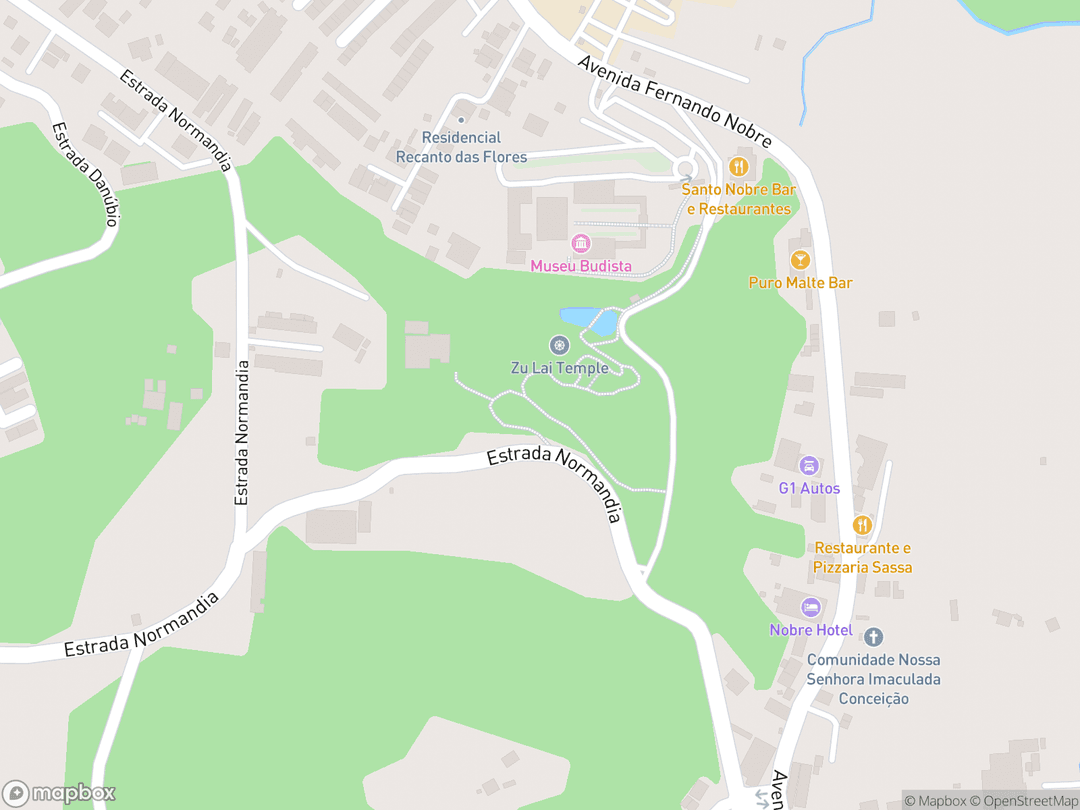
Estrada Fernando Nobre, 1461, Parque Rincão, Cotia, SP, 06705-490, Brazil
Hours: Tue-Fri: 12:00 PM - 5:00 PM; Sat-Sun & Holidays: 9:30 AM - 5:00 PM; Mon: Closed
Getting There: Accessible via Rodovia Raposo Tavares (SP-270) to Km 28.5 onto Estrada Fernando Nobre in Cotia, or via bus/rideshare from São Paulo.
Get DirectionsTips for Your Visit
Attend Sunday Services
Arrive before 10:00 AM on Sundays to participate in the public chanting service in the Main Shrine.
Explore Weekend Dining
Visit the temple refectory on Saturdays or Sundays to taste fresh Asian vegetarian cuisine and specialized teas.
Respect Sacred Conduct
Keep voices low, observe silence in meditation areas, and adhere strictly to photography restrictions indoors.
About
Templo Zu Lai in Cotia, São Paulo, is the largest Buddhist temple complex in South America and the principal monastery of the Taiwanese Fo Guang Shan order on the continent. Founded on the principles of Humanistic Buddhism, the complex translates ancient Dharmic wisdom—including the concepts of karma, compassion, and awakening—into accessible modern practice.
Spanning 15 hectares of landscaped grounds and native Atlantic Forest, the monastery features a grand 10,000-square-meter imperial palace built in the classical Tang Dynasty architectural style. Inaugurated in 2003, Templo Zu Lai functions as an active monastic residency, cultural hub, and spiritual retreat center for thousands of visitors each week.
Gallery
Symbolic Elements
The temple's exterior features intricate carvings, each rich with spiritual meaning:
White Jade Buddha
The central shrine icon represents the inherent Buddha-nature present within all sentient beings.

Tang Roof Tiles
Sweeping golden roof tiles symbolize spiritual shelter and protection from negative influences.
Lotus Flower
Carved along stone guardrails, representing spiritual purity rising unblemished from worldly mud.

Incense Censer
Placed before the central steps, burning incense symbolizes devotion to the Three Jewels.

Four Heavenly Kings
Guardian statues at the threshold representing protection of moral order and spiritual practice.
Guardian Stone Lions
Flanking entry gates, male and female lions represent cosmic energy and protective nurturing.
Budai Maitreya Buddha
A joyful figure at the entrance courtyard representing generosity, contentment, and hospitality.
Interesting Facts
Templo Zu Lai spans 10,000 square meters across a 15-hectare estate, making it South America's largest Buddhist temple. (Tier A)
To ensure historical accuracy, Master Hsing Yun sponsored Brazilian architects to visit mainland China to study Tang Dynasty imperial structures before building. (Tier A)
The name Zu Lai is the Portuguese transliteration of the Chinese Mandarin 'Rúlái', which translates the Sanskrit title 'Tathagata'. (Tier B)
Through its 'Filhos de Zu Lai' initiative, the temple offers free martial arts, language, and computer classes to underprivileged local youth. (Tier A)
The temple grounds unite classic East Asian gardens with native Brazilian Atlantic Forest ecology. (Tier B)
Construction was financed without institutional debt through small voluntary donations from devotees across South America and Taiwan. (Tier A)
Over 80 percent of weekly visitors to the sanctuary are non-Buddhists seeking peaceful nature and cultural exposure. (Tier B)
In accordance with Fo Guang Shan environmental guidelines, Templo Zu Lai prohibits burning joss paper on site. (Tier A)
The entire 15-hectare property was originally donated in 1992 as a private rural estate by Taiwanese-Brazilian businessman Chang Sheng-kai. (Tier A)
Common Questions
Is Templo Zu Lai open to non-Buddhists?
Yes, visitors of all backgrounds are welcome to explore the campus and attend public services.
Is there an entrance fee for visitors?
Admission and vehicle parking on the temple grounds are completely free of charge.
What is the dress code for visiting the temple?
Visitors must wear modest clothing covering shoulders and knees, and flip-flops should be avoided.
Is photography allowed inside the buildings?
Photography is permitted outdoors in the gardens but strictly prohibited inside all indoor shrines.
Can visitors buy food at the temple?
The temple operates a vegetarian refectory and tea house on weekends serving Asian plant-based meals.
Featured Stories
The Architectural Journey to China
1999–2000
Recognizing their unfamiliarity with ancient Far Eastern sacred architecture, local Brazilian engineers hired for Templo Zu Lai faced a unique challenge. Master Hsing Yun generously funded a research expedition to mainland China, enabling the design team to study Tang Dynasty imperial palaces in person. This firsthand immersion allowed the architects to faithfully recreate classical structural symmetry using modern Brazilian engineering techniques.
Source: Fo Guang Shan Institutional Archives
The Gift of a Rural Sanctuary
July 1992
During a brief 1992 visit to São Paulo, Master Hsing Yun consecrated a small local temple, inspiring Taiwanese-Brazilian entrepreneur Chang Sheng-kai. Deeply moved by the sermon on Humanistic Buddhism, Chang donated his private 15-hectare weekend retreat in Cotia to establish a permanent monastic presence. This generous land gift laid the physical foundation for what would become the largest Buddhist sanctuary in South America.
Source: Templo Zu Lai Official History
Filhos de Zu Lai Education Initiative
2003–Present
Following the temple's consecration in 2003, monastics established the Filhos de Zu Lai (Sons of Zu Lai) Hope Education Center to serve local Cotia youth. The program offers free computer literacy, English, martial arts, music, and dance classes to hundreds of underprivileged children. Through this initiative, the temple actively embodies Humanistic Buddhism by converting spiritual compassion into practical civic empowerment.
Source: Templo Zu Lai Social Service Division
Timeline
Initial Property Donation
Businessman Chang Sheng-kai donates his Cotia estate to Fo Guang Shan following Master Hsing Yun's visit to São Paulo.
MilestoneFirst Dharma Center Established
Monastics turn the property's farmhouse into a temporary prayer center named Templo Zu Lai.
EventExpansion Fundraising Begins
Devotees form committees across South America to raise funds for a permanent monastery complex.
EventGroundbreaking Ceremony
Construction officially commences on the grand 10,000-square-meter Tang Dynasty-style complex.
component.timeline.groundbreakingGrand Inauguration
The completed palace complex is officially consecrated as the largest Buddhist temple in South America.
DedicationLaunch of Hope Education Center
The temple launches the 'Filhos de Zu Lai' social project for underprivileged children in Cotia.
Event20th Anniversary Milestone
Templo Zu Lai marks two decades of Fo Guang Shan's presence in South America with interfaith events.
MilestoneInter-lineage Vesak Hosting
The temple expands its role by hosting joint annual Vesak celebrations across various Buddhist traditions.
EventPost-Pandemic Reopening
The sanctuary reopens to public visitation following the transition to digital programming during COVID-19.
MilestoneMaster Hsing Yun Memorial
Devotees gather for solemn memorial services honoring Fo Guang Shan's late founder, Master Hsing Yun.
EventHistory by Decade
1990s — Foundation and Initial Landing
In 1992, Venerable Master Hsing Yun visited São Paulo to consecrate a local temple, inspiring businessman Chang Sheng-kai to donate his private Cotia rural retreat to the Fo Guang Shan order. Monastics repurposed the existing farmhouse into a modest prayer house to launch community outreach. As attendance grew rapidly among converts and immigrants, South American devotees formed committees to fund a permanent monastery.
2000s — Construction and Consecration
Groundbreaking for the permanent complex occurred in May 2000 following a specialized study trip where Brazilian architects examined Tang Dynasty imperial architecture in China. Local engineers and international craftspeople built the 10,000-square-meter Chinese palace complex over three years. On October 5, 2003, the grand temple was officially consecrated, becoming the largest Buddhist sanctuary in South America.
2010s–2020s — Social Integration and Continuity
During the 2010s, the temple deepened its civic integration by expanding its Filhos de Zu Lai youth program and hosting multi-lineage Vesak celebrations. After temporarily operating through digital channels during the pandemic, the temple reopened physically in May 2022. In February 2023, thousands gathered at the complex for memorial services honoring the late Master Hsing Yun.
Architecture & Facilities
Templo Zu Lai is designed in the classical Chinese imperial palace style of the Tang Dynasty (618–907 CE), characterized by grand axial symmetry, sweeping tiled roofs, and harmonious integration with natural surroundings. Built around a central quadrangle flagstone courtyard, the complex expresses traditional East Asian sacred aesthetic balance through massive timber-like concrete pillars, bracketed eaves, and white granite stairs.
Building Materials
Roofing Tiles
Sweeping gables are covered with golden-tinted glazed ceramic tiles imported to mirror imperial Chinese palace rooftops.
Superstructure
Reinforced concrete frames engineered in Brazil support traditional East Asian timber-style beams and imperial red columns.
Granite & Masonry
Carved white granite forms the grand courtyard staircases, lotus guardrails, and inner hall pathways.
Interior Finishes
Polished stone floors and rich timber framing line the internal halls and shrines.
Interior Features
Main Shrine (Daxiong Baodian)
The primary hall houses a large white jade Sakyamuni Buddha statue set before an ornate gilded altar.
Meditation Hall (Chan Hall)
A tranquil timber-floored room equipped with traditional zafu cushions for silent meditation practice.
Museum of Buddhist Art
Exhibits historical Asian Buddhist sculptures, thangkas, calligraphy, and ceremonial artifacts.
Refectory & Tea House
Spacious community dining halls designed for serving daily vegetarian cuisine to monastics and visitors.
Temple Grounds
The 15-hectare estate merges classic East Asian garden elements—such as Zen rock gardens, lotus ponds, and zigzag wooden bridges—with native Brazilian Atlantic Forest trails.
Additional Facilities
The campus features a public library, an auditorium, classrooms, monastic quarters, a gift shop, and a vegetarian bakery.
Religious Significance
Templo Zu Lai operates within the universal Dharmic tradition, sharing core concepts with broader Eastern spiritual traditions while embodying the distinct teachings of Mahayana Buddhism and the Humanistic Buddhism movement.
The temple exists to make ancient Buddhist principles accessible to modern daily life through education, cultural exchange, social charity, and spiritual practice.
Sacred Ordinances
Dharma Chanting Services
Weekly congregational chanting of Sutras in the Main Shrine to cultivate mindfulness and mental clarity.
Chan Meditation
Silent seated meditation practice aimed at stilling the mind and discovering one's inherent Buddha-nature.
Vesak Bathing of the Buddha
An annual ceremonial pouring of scented water over a statue of baby Buddha, symbolizing inner spiritual cleansing.
Refuge and Precepts Ceremony
A formal commitment service where practitioners take refuge in the Three Jewels and commit to ethical living.
The Dharmic Foundation and Humanistic Distinctive
All Dharmic traditions share a foundational worldview centered on universal order (Dharma), cause and effect (Karma), and liberation from suffering. Templo Zu Lai expresses this heritage through Humanistic Buddhism, asserting that enlightenment is cultivated within daily human existence rather than through reclusive isolation.
Sources & Research
Every fact on Temples.org is backed by verified Sources & Research. Each piece of information is rated by source tier and confidence level.
View All Sources (8)
| Field | Source | Tier | Retrieved |
|---|---|---|---|
| About & Historical Background | Templo Zu Lai Official Site (opens in a new tab) | A | 2026-02-18 |
| About & Historical Background | Fo Guang Shan Buddhist Order Official Portal (opens in a new tab) | A | 2026-02-18 |
| Architecture & Campus Layout | Templo Zu Lai Architectural Registry (opens in a new tab) | A | 2026-02-18 |
| Timeline & Key Milestones | Templo Zu Lai Institutional Archives (opens in a new tab) | A | 2026-02-18 |
| Religious Significance & Symbolism | Fo Guang Shan University Network (opens in a new tab) | B | 2026-02-18 |
| Visitor Insights & Cultural Programs | Prefeitura Municipal de Cotia (opens in a new tab) | B | 2026-02-18 |
| Social Initiatives & Filhos de Zu Lai | Templo Zu Lai Social Service Department (opens in a new tab) | A | 2026-02-18 |
| Visitor Insights & Regional Tourism | Secretaria de Turismo do Estado de São Paulo (opens in a new tab) | B | 2026-02-18 |