
Visitor Insights
Visiting BAPS Shri Swaminarayan Mandir London
Visitors to Neasden Temple experience an oasis of tranquility amidst urban London. The complex features an intricate stone temple, a magnificent wooden Haveli courtyard, peaceful gardens, and a cultural exhibition on Hinduism.
Highlights
- Marvel at thousands of hand-carved marble pillars and soaring stone shikhars.
- Experience the peaceful morning or evening Aarti ceremony in the main hall.
- Explore the wooden Haveli carved from Burmese teak and English oak.
Things to Know
- Shoulders and knees must be covered by all visitors regardless of gender.
- Footwear must be removed and stored at the free shoe cloakroom before entering.
- Photography and filming are permitted outside but prohibited inside the temple halls.
Location
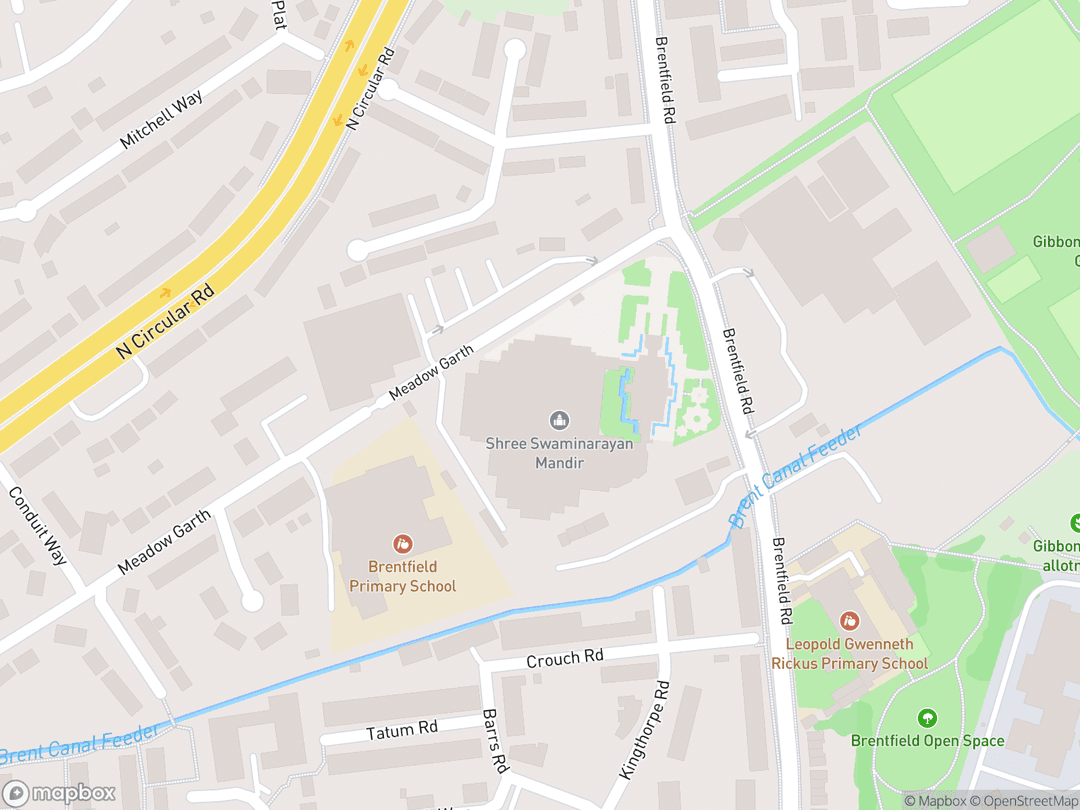
Pramukh Swami Road, Neasden, London NW10 8HW, United Kingdom
Hours: Open daily to the public from 9:00 am to 6:00 pm.
Getting There: Accessible via Neasden or Wembley Park stations (Jubilee/Metropolitan lines) followed by local bus routes 206 or 224 stopping directly on Brentfield Road.
Get DirectionsTips for Your Visit
Modest Attire Required
Wear clothing that fully covers shoulders and knees to show respect inside the sacred spaces.
Aarti Timings
Check official daily schedules online to attend the inspiring ritual of light and devotional prayer.
Shayona Restaurant
Enjoy authentic traditional Indian vegetarian cuisine at the on-site restaurant following your visit.
About
The BAPS Shri Swaminarayan Mandir in London, popularly known as the Neasden Temple, stands as a landmark of Hindu culture and architectural devotion in Europe. Opened in 1995 in North London, it is Europe's first authentic traditional stone Hindu mandir, constructed entirely according to ancient Shilpa Shastras scriptures without structural steel.
Rooted deeply in the Dharmic traditions of Hindu theology, the Mandir serves as a place of spiritual sanctuary and community connection for the Swaminarayan Sampradaya. Its central sanctum houses consecrated murtis (sacred images), offering devotees a sacred space for devotion, meditation, and selfless community service.
Built from over 26,000 hand-carved pieces of Bulgarian limestone and Italian Carrara marble, the complex combines delicate stone craftsmanship with a traditional wooden Haveli. Today, Neasden Temple welcomes hundreds of thousands of visitors annually as a beacon of peace, spiritual harmony, and cultural heritage.
Gallery
Symbolic Elements
The temple's exterior features intricate carvings, each rich with spiritual meaning:

Seven Shikhars
The seven spires symbolize sacred mountain peaks evoking high spiritual aspirations.

Garbh-gruh
The inner sanctum represents sacred caves where ancient seers meditated on the Divine.

Carved Sthambhas
The 193 stone pillars represent a divine forest fostering spiritual reflection.

Sacred Murtis
Consecrated deity figures embody the active spiritual presence of God in Swaminarayan theology.

Haveli Woodcarvings
Detailed wooden courtyard motifs depict flora and devotion in traditional Indian domestic art.

Revati Nakshatra Alignment
Architectural orientation aligns with cosmic constellations following Vedic astrological texts.

Lotus Motifs
Sculpted lotus flowers across marble domes denote purity, detachment, and spiritual rebirth.
Interesting Facts
It was recognized in the Guinness World Records as the largest stone Hindu temple outside India upon its completion.
The foundation involved the largest single concrete pour recorded in the UK, laying 4,500 tons in 24 hours.
Over 1,500 artisans in India hand-carved 26,300 stone pieces assembled in London like a giant jigsaw puzzle.
No structural steel or iron was used in building the stone mandir, adhering to ancient Vedic architectural rules.
Reader's Digest acclaimed Neasden Temple as one of the 70 Modern Wonders of the World in 1998.
The temple complex set a Guinness World Record by offering 1,247 vegetarian dishes during the Annakut Festival.
The entire construction was funded and carried out through voluntary community contributions and effort.
King Charles III and Queen Camilla visited the temple in October 2025 to commemorate its 30th anniversary.
Common Questions
Is entrance to the Neasden Temple free?
Yes, entry to the main Mandir, Haveli, and grounds is completely free for all visitors.
Can non-Hindus visit and attend prayers?
Non-Hindus are warmly welcomed to explore the complex, observe prayers, and learn about Hindu traditions.
What is the dress code for visitors?
All visitors must dress modestly with tops covering shoulders and chest, and clothing extending below the knees.
Is wheelchair access available?
The entire Mandir and Haveli complex is fully accessible with ramps, elevators, and designated facilities.
Featured Stories
The Unprecedented Foundation Pour
November 24, 1992
In November 1992, construction crews achieved the largest continuous concrete pour in UK history. Over 4,500 tons of concrete were laid within 24 hours to create a solid six-foot thick raft foundation. This massive engineering effort ensured the heavy stone structure would endure securely for over a thousand years.
Source: BAPS Swaminarayan Sanstha Archives
Transcontinental Jigsaw of Hand-Carved Stone
1992
More than 1,500 craftsmen across five Indian workshops sculpted 26,300 individual stone blocks. Each finished piece was carefully numbered, packed into containers, and shipped across oceans to London. On-site volunteers then assembled the components like a vast architectural jigsaw without using structural steel.
Source: BAPS Shri Swaminarayan Mandir Architectural Ledger
Royal Anniversary Visit by King Charles III
October 29, 2025
To celebrate the Mandir's 30th anniversary, King Charles III and Queen Camilla visited Neasden Temple in October 2025. The royal couple participated in traditional greetings, observed community volunteers, and commended the Mandir's three decades of interfaith leadership and charitable work in Britain.
Source: BAPS Official Communications
Timeline
Early London Devotees
Hindu immigrants in London begin gathering for regular spiritual fellowships in a Baker Street office.
MilestoneFirst UK Temple
Yogiji Maharaj consecrates the first UK Swaminarayan temple in a converted Islington church.
DedicationMove to Neasden Warehouse
The growing congregation relocates its primary gathering place to a former warehouse site in Neasden.
MilestoneSite Acquisition
BAPS acquires a 3.85-acre land plot in Neasden to construct a traditional stone temple.
MilestoneGroundbreaking Ceremony
Pramukh Swami Maharaj performs the sacred traditional groundbreaking rituals on the site.
component.timeline.groundbreakingRecord Foundation Pour
Crews complete a continuous 4,500-ton concrete pour to create the six-foot thick temple base.
EventFirst Stone Laid
Construction teams lay the foundational carved marble block to begin stone assembly.
MilestoneGrand Inauguration
Pramukh Swami Maharaj consecrates the murtis and officially opens Europe's first stone Hindu mandir.
DedicationWorld Record Recognition
Guinness World Records honors the mandir for its scale and historic Annakut vegetarian food offering.
MilestoneRoyal Anniversary Visit
King Charles III and Queen Camilla visit the temple to mark its 30th milestone anniversary.
EventArchitecture & Facilities
Designed in the traditional Nagara style of North Indian temple architecture, the Mandir was inspired by ancient Indian structural traditions like the Delwara Jain temples. Built under lead architect C.B. Sompura according to the Vedic principles of Shilpa Shastras, the temple utilizes pure stone joinery completely free from structural steel beams or metal reinforced frames.
Building Materials
Exterior Stone
Bulgarian light-cream Vartza limestone chosen for durability and weather resistance in climate conditions.
Interior Marble
Italian Carrara marble combined with Indian Ambaji marble for smooth internal carvings.
Haveli Timber
Burmese teakwood and English oak carved into floral panels and delicate screens.
Foundation Concrete
Massive solid concrete slab providing absolute structural stability for heavy stone vaults.
Interior Features
Maha-mandap
The grand central hall crowned by a ten-meter high cantilevered marble dome.
Garbh-gruh
The sacred inner sanctum containing the consecrated murtis of Bhagwan Swaminarayan.
Haveli Courtyard
A traditional wooden courtyard hall displaying over 17,000 square feet of hand-carved woodwork.
Understanding Hinduism Exhibition
A permanent cultural exhibit detailing Hindu philosophy, history, and scientific contributions.
Temple Grounds
The temple complex spans over three acres with immaculately manicured formal gardens, decorative fountains, paved processional walkways, and dedicated visitor facilities.
Additional Facilities
Features a pillarless assembly hall seating 3,000 people, the Shayona vegetarian restaurant, a cultural bookshop, and extensive community educational facilities.
Religious Significance
Within the Dharmic family of traditions, the BAPS Shri Swaminarayan Mandir is a sanctified place where divinity is experienced through sacred art, ritual worship, and moral living.
The temple serves as a sacred dwelling for God, providing an environment for spiritual growth, prayer, moral elevation, and selfless service to humanity.
Sacred Ordinances
Aarti
A devotional ritual where lit lamps are waved before deity murtis while singing sacred hymns.
Darshan
The reverent viewing of consecrated sacred images to receive divine grace and spiritual reflection.
Abhishek
The ceremonial bathing of the sacred image of Nilkanth Varni with consecrated water.
Thal and Mahaprasad
Ritual offering of pure vegetarian food to God followed by its distribution as sanctified nourishment.
Murti Puja & Divine Presence
Swaminarayan theology holds that through sacred consecration rituals (Pran Pratishtha), the divine presence resides in the murtis, allowing devotees to build a direct personal relationship with God.
Seva and Community Service
A central pillar of the temple's vision is 'seva' (selfless service), inspiring thousands of local volunteers to engage in educational programs, health drives, and interfaith initiatives.
Similar Temples




Sources & Research
Every fact on Temples.org is backed by verified Sources & Research. Each piece of information is rated by source tier and confidence level.
View All Sources (8)
| Field | Source | Tier | Retrieved |
|---|---|---|---|
| About & Historical Background | BAPS Swaminarayan Sanstha (opens in a new tab) | A | 2026-01-30 |
| About & Historical Background | BAPS Shri Swaminarayan Mandir London (opens in a new tab) | A | 2026-01-30 |
| Architecture & Structural Craftsmanship | BAPS Swaminarayan Sanstha (opens in a new tab) | A | 2026-01-30 |
| Timeline & Cultural Heritage | BAPS Swaminarayan Sanstha (opens in a new tab) | A | 2026-01-30 |
| Architecture & Structural Craftsmanship | Open City London (opens in a new tab) | B | 2026-01-30 |
| Religious & Spiritual Significance | The Review of Religions (opens in a new tab) | B | 2026-01-30 |
| Visitor Insights & Community Impact | Visit London (opens in a new tab) | D | 2026-01-30 |
| Visitor Insights & Community Impact | The Sane Travel (opens in a new tab) | D | 2026-01-30 |