Visitor Insights
Visiting Sri Venkateswara Temple (Malibu Hindu Temple)
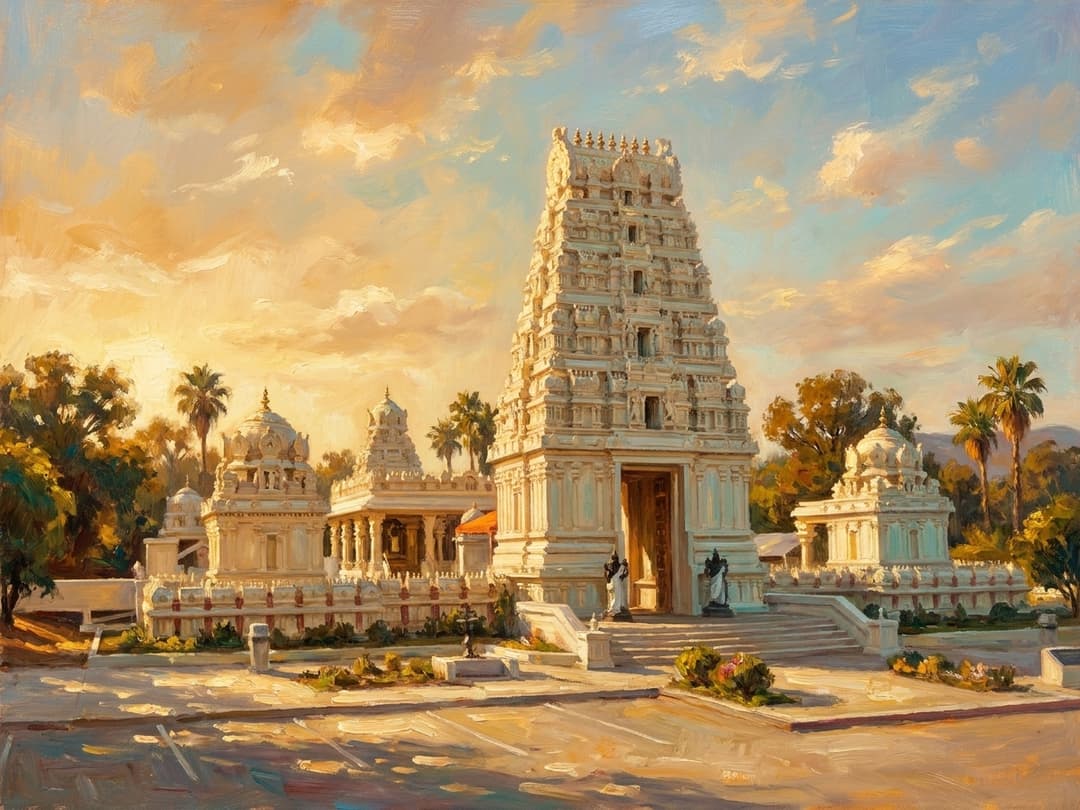
Perched in the Santa Monica Mountains near Calabasas, the temple welcomes visitors of all backgrounds to explore its pristine courtyards and shrines. Guests can observe daily Agamic rituals, admire intricate stone iconography, and sample authentic South Indian vegetarian cuisine at the weekend canteen.
Highlights
- Multi-tiered white Raja Gopuram entrance gateway carved with celestial figures
- Upper sanctum sanctorum housing the dark granite murti of Lord Venkateswara
- Terraced lower temple complex dedicated to Lord Shiva and Sri Parvati
- Weekend vegetarian canteen serving fresh dosas, idlis, and traditional prasadam
Things to Know
- Footwear must be removed and placed on exterior racks prior to entering
- Modest attire covering shoulders and knees is strictly required for all visitors
- Photography is prohibited inside inner sanctums during rituals and worship
- Expect heavy crowds and managed parking on major Hindu festival weekends
Location
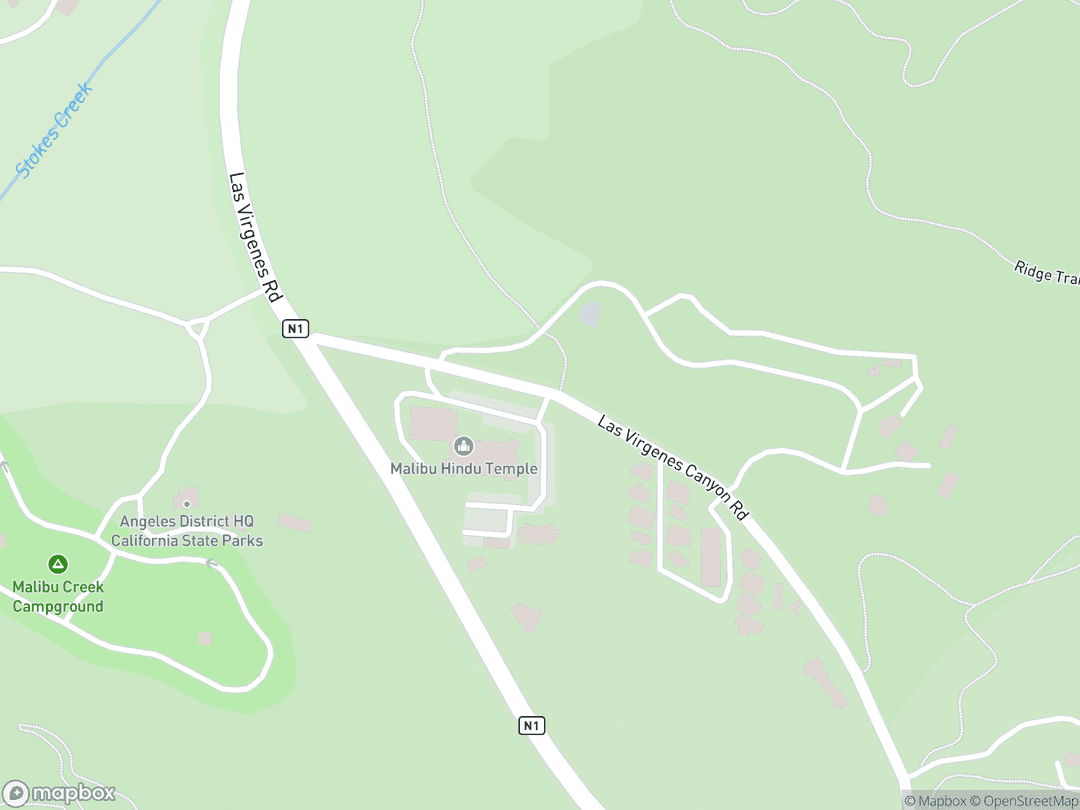
1600 Las Virgenes Canyon Road, Calabasas, CA 91302, United States
Hours: Mon-Fri: 9:00 AM - 12:30 PM & 5:00 PM - 8:00 PM; Sat-Sun: 9:00 AM - 8:00 PM
Getting There: Accessible via US-101 exiting at Las Virgenes Road, driving south 4 miles into the canyon, or north from CA-1 via Malibu Canyon Road.
Get DirectionsTips for Your Visit
Plan for Shoe Removal
Slip-on shoes are recommended, as all footwear must remain in outdoor staging areas before ascending to the shrines.
Savor the Weekend Canteen
Visit on Saturdays or Sundays between 11:00 AM and 4:00 PM to enjoy freshly prepared South Indian vegetarian delicacies.
Respect Sanctum Quiet
Maintain a calm demeanor within covered mandapas and observe posted rules against interior mobile photography.
Arrive Early on Holidays
During major festivals like Diwali and Maha Shivaratri, arrive early to secure convenient on-site parking.
About
Nestled within the rugged contours of Las Virgenes Canyon, the Malibu Hindu Temple stands as a premier spiritual sanctuary for the South Asian diaspora across Southern California. Consecrated in 1984 under the patronage of the Hindu Temple Society of Southern California, the complex reflects classic South Indian Chola architectural traditions.
The temple bridges the major liturgical streams of the Dharmic family by organizing worship across two terraced sanctums. The upper deck venerates Lord Venkateswara as a compassionate manifestation of Vishnu, while the lower sanctuary honors Lord Shiva, harmonizing Vaishnavite and Shaivite Agamic traditions within a single sacred perimeter.
Crafted by master artisans from Tamil Nadu, the complex features towering stepped gopurams and ornate plaster carvings finished in brilliant white. Designed with modern seismic reinforcement, the temple offers a contemplative haven where ancient Vedic rituals, traditional music, and sacred festivals flourish against coastal chaparral hillsides.
Gallery
Symbolic Elements
The temple's exterior features intricate carvings, each rich with spiritual meaning:

Venkateswara Murti
The six-foot polished black granite icon portrays Vishnu as the compassionate cosmic protector of humanity in the current age.

Raja Gopuram
The towering eastern entrance pyramid symbolizes the cosmic threshold separating mundane reality from sacred divine space.

Vimana and Kalashas
The sanctum tower capped with gilded urns acts as a vertical cosmic axis channeling divine energy into the shrine below.

Dhwajasthambam
The tall brass-clad flagstaff marks the boundary where devotees shed worldly pretenses before entering the presence of deity.

Shiva Lingam
The smooth cylindrical stone in the lower sanctum represents the formless, unmanifest transcendent reality of the cosmos.

Garuda Pavilion
Positioned directly facing Lord Venkateswara, the celestial bird-mount embodies steadfast vigilance and total surrender.

Yali Sculptures
Mythical lion-elephant composite creatures carved onto pillars signify sovereign mastery over raw natural and primal forces.

Lotus Medallions
Stylized stone lotus ceiling carvings embody spiritual purity blossoming immaculate from the mud of worldly existence.
Interesting Facts
Architect Ravi Varma designed a hidden steel-reinforced concrete frame inside traditional Dravidian masonry to withstand California earthquakes (Tier A).
The founders selected the Calabasas parcel because the surrounding seven canyon ridges echo the sacred Seven Hills of Tirumala in India (Tier B).
The temple received an initial construction loan from the governing board of India's Tirumala Tirupati Devasthanams that was later fully repaid (Tier B).
All 23 original sculptors completed a rigorous seven-year apprenticeship in India before arriving in California to carve the shrines (Tier A).
During the 1980s construction period, the visiting Indian artisans lived on-site in a self-contained trailer encampment in the canyon (Tier B).
Pop star Britney Spears brought her infant son to the temple in January 2006 to receive traditional Vedic blessings from Hindu priests (Tier B).
The temple served as an exotic martial arts monastery setting in the 1997 Hollywood comedy film 'Beverly Hills Ninja' (Tier B).
Director Shankar filmed portions of the iconic musical sequence 'Kannodu Kaanbadhellam' for the 1998 Tamil blockbuster 'Jeans' on the temple grounds (Tier B).
The sanctuary emerged completely unscathed from the destructive 2018 Woolsey Fire despite surrounding brush being incinerated to the property line (Tier A).
Common Questions
Is the temple located in Malibu or Calabasas?
The temple sits within the municipal boundaries of Calabasas along the Malibu Canyon corridor connecting to the coast.
Are non-Hindus allowed to enter the temple?
Yes, visitors of all backgrounds and beliefs are warmly welcomed to explore the grounds and observe rituals respectfully.
Is there an admission fee to visit the complex?
Admission to the temple grounds and sanctums is free, with voluntary donations accepted to support ongoing maintenance.
What is the appropriate dress code for visitors?
Guests must wear modest clothing that fully covers shoulders and knees, and shoes must be removed before entering courtyards.
Are meals available on the temple premises?
The basement canteen serves authentic South Indian vegetarian meals and snacks on weekends and major holiday festivals.
Featured Stories
Carving a Sanctuary in a Canyon Trailer Colony
1981
In 1981, twenty-three master stone sculptors traveled from Tamil Nadu to California, establishing a rustic trailer encampment deep within Las Virgenes Canyon. For years, these artisans cooked traditional South Indian meals over camp stoves and hand-chiseled intricate plaster filigree along concrete beams. Their devotion transformed bare California hills into a consecrated Dravidian pilgrimage site.
Source: Hinduism Today Archival Report
Pop Stardom Meets Ancient Sanskrit Mantras
January 2006
In January 2006, pop icon Britney Spears surprised the Southern California community by arriving at the Santa Monica Mountains temple with her four-month-old infant son. Resident Hindu priests chanted ancient Vedic verses, anointed their foreheads with cooling sandalwood paste, and performed traditional child-blessing rites. The spontaneous visit captured worldwide media attention, spotlighting the sanctuary's welcoming ethos.
Source: Los Angeles Times Coverage
The Unbroken Perimeter of the Woolsey Fire
November 2018
When the devastating Woolsey Fire roared through Malibu Canyon in November 2018, towering infernos incinerated over 96,000 acres and hundreds of surrounding residences. Firefighters established defensive perimeters along the temple's wide clearings as flames burned right up to the boundary walls. The sacred white gopurams emerged completely undamaged, an event hailed by the community as divine preservation.
Source: The Acorn News Reports
Timeline
Society Incorporation
The Hindu Temple Society of Southern California is incorporated by immigrant families seeking an authentic South Indian sanctuary.
MilestoneLand Acquisition
The Society acquires 4.5 rolling acres along Las Virgenes Canyon Road, chosen for topography resembling the sacred hills of Tirumala.
MilestoneGroundbreaking & Artisans Arrive
Groundbreaking commences as master sthapati S. M. Muthiah and 23 traditional silpis arrive from Tamil Nadu to carve the complex.
component.timeline.groundbreakingInaugural Consecration
An elaborate seven-day Maha Kumbhabhishekam consecrates the central upper sanctum of Lord Venkateswara for public worship.
DedicationUpper Complex Completion
Artisans complete auxiliary shrines for Rama, Krishna, Andal, and Hanuman, alongside an expansive subterranean community hall.
MilestoneLower Complex Construction
Construction begins on the lower terraced level dedicated to Lord Shiva, Goddess Parvati, Ganesha, and Murugan.
MilestoneRaja Gopuram Dedication
The monumental white Raja Gopuram entrance tower is consecrated during a formal Maha Kumbhabhishekam ceremony.
DedicationNotable Cultural Visit
Pop superstar Britney Spears visits the temple with her infant son, receiving traditional Vedic blessings from resident priests.
EventWoolsey Fire Survival
The deadly Woolsey Fire sweeps through Las Virgenes Canyon, but the temple complex survives untouched due to defensive brush clearing.
EventNavanirman Initiative
The temple launches its Navanirman master renewal project to structurally restore flagstaffs and enhance digital darshan access.
RenovationHistory by Decade
1970s — Vision and Topographical Selection
The quiet canyon hills naturally evoked the divine atmosphere of Tirumala for our diaspora community.
Southern California Hindu families recognized a growing need for a consecrated South Indian temple to anchor their cultural identity. In August 1977, they incorporated the Hindu Temple Society and subsequently acquired 4.5 rolling acres along Las Virgenes Canyon. The secluded hilly terrain was chosen intentionally for its evocative resemblance to the holy hills of Tirumala in India.
1980s — Artisan Craftsmanship and Consecration
Construction began in 1981 under the leadership of master sthapati S. M. Muthiah and licensed architect Prabhakara Ravi Varma. Twenty-three silpis from India meticulously hand-sculpted the superstructure over a seismically engineered concrete skeleton. In May 1984, the Society celebrated the Maha Kumbhabhishekam of the upper Venkateswara sanctum, followed by the addition of sub-shrines and a cultural hall.
1990s — Gopuram Dedication and Cultural Prominence
The decade brought significant architectural expansion with the development of the terraced lower complex dedicated to Lord Shiva. In May 1997, the monumental white Raja Gopuram was consecrated during a landmark celebration attended by thousands. The temple's striking white facades also gained global cinematic exposure through major American and Indian film productions.
2000s — Global Outreach and Philanthropic Growth
The temple deepened its role as a regional philanthropic anchor, organizing international relief drives following natural disasters such as the 2004 Indian Ocean tsunami. High-profile cultural visits and interfaith delegations introduced broader American audiences to Vedic traditions. The complex expanded its educational youth programs, classical dance performances, and weekly worship schedules.
2010s to Present — Wildfire Resilience and Renewal
In November 2018, the catastrophic Woolsey Fire burned surrounding canyon lands, but the temple structures survived completely undamaged. Recent years marked the launch of the Navanirman master project to renew flagstaffs and expand digital livestreaming services. The sanctuary remains an enduring pillar of Dharmic spiritual and cultural heritage in North America.
Architecture & Facilities
The complex embodies the South Indian Dravidian architectural style, specifically reviving the aesthetic traditions of the imperial Chola dynasty. It features stepped pyramidal towers, intricate bas-relief plaster storytelling, crisp axial geometry, and an all-white stucco finish designed to harmonize with the chaparral ridges of the Santa Monica Mountains.
Building Materials
Seismic Reinforced Concrete Core
Cast-in-place reinforced concrete provides structural resilience against severe California earthquakes.
Hand-Carved Plaster and Masonry
Specialized brick and mortar were hand-chiseled on-site by visiting Indian silpis to create ornamental relief work.
Krishna Shila Black Granite
Dense dark granite quarried in Tamil Nadu was sculpted into the canonical sanctum murtis according to Shilpa Shastra.
Luminous White Exterior Stucco
A brilliant monochrome white plaster finish reflects bright California sunlight against dark oak canyon backdrops.
Interior Features
Garbha Griha (Upper Sanctum)
The square inner sanctuary enshrines the six-foot dark granite murti of Lord Sri Venkateswara.
Ardha and Maha Mandapas
Pillared gathering halls guide devotees through dimming contemplative light toward the sanctum.
Lower Shaivite Sanctuary
The terraced lower level houses the consecrated Shiva Lingam alongside shrines to Parvati and Ganesha.
Subterranean Cultural Center
A 26,000-square-foot multipurpose basement accommodates community banquets, classical concerts, and a vegetarian canteen.
Temple Grounds
The 4.5-acre property features stepped outdoor terraces, paved pradakshina courtyards, native canyon vegetation, and dedicated hillside parking lots.
Additional Facilities
A commercial vegetarian kitchen, cultural assembly stage, administrative offices, and dedicated outdoor shoe staging pavilions.
Religious Significance
Within the broader Dharmic family, a consecrated Hindu temple is viewed as a living nexus where cosmic order manifests on earth through geometric design and divine hospitality.
To serve as a consecrated pilgrimage center where devotees cultivate inner peace, participate in ancient Vedic rituals, and experience communion with the Divine.
Sacred Ordinances
Prana Pratishtha
The sacred rite that infuses life force and divine presence into stone-sculpted murtis through mantras and holy water.
Archana and Abhishekam
Individual prayer chants and ritual bathing of deities using milk, yogurt, honey, sandalwood paste, and sanctified water.
Pradakshina
Devotional circumambulation around sacred sanctums in a clockwise direction to center the spiritual self upon the Divine.
Aarti and Darshan
The waving of lit camphor lamps before the deities, offering worshippers auspicious reciprocal sight of the sacred form.
The Dual-Deity Liturgical Harmony
By housing both Lord Venkateswara on the upper deck and Lord Shiva on the lower tier, the temple reconciles Vaishnavite and Shaivite traditions, emphasizing the underlying unity of divine reality.
Vastu Purusha Mandala Layout
The temple's physical footprint is mapped to the metaphysical grid of cosmic anatomy, where the inner womb-chamber mirrors the spiritual heart of human consciousness.
Major Festivals
Maha Shivaratri
February or March
All-night devotional vigils, continuous Vedic chants, and sacred milk abhishekam in honor of Lord Shiva in the lower sanctuary.
Sri Rama Navami
March or April
Celebration of the birth of Lord Rama featuring ceremonial processions, devotional bhajans, and special kalyanam rituals.
Brahmotsavam
Spring or Autumn
The grand annual festival dedicated to Lord Venkateswara marked by flag hoisting, chariot processions, and special alankaras.
Diwali (Deepavali)
October or November
The Festival of Lights drawing thousands for Lakshmi pujas, sacred lamps, cultural dance performances, and family celebrations.
Sources & Research
Every fact on Temples.org is backed by verified Sources & Research. Each piece of information is rated by source tier and confidence level.
View All Sources (8)
| Field | Source | Tier | Retrieved |
|---|---|---|---|
| About & Historical Background | Hindu Temple Society of Southern California (opens in a new tab) | A | 2026-03-31 |
| Architecture & Consecration | Hinduism Today (opens in a new tab) | B | 2026-03-31 |
| Historical Milestones & Dedication | Los Angeles Times (opens in a new tab) | B | 2026-03-31 |
| Ecumenical Traditions & Deities | The Acorn Newspapers (opens in a new tab) | B | 2026-03-31 |
| Design Specifications & Sthapati Leadership | Cooper Hewitt, Smithsonian Design Museum (opens in a new tab) | B | 2026-03-31 |
| Visitor Details & Community Programs | Atlas Obscura (opens in a new tab) | B | 2026-03-31 |
| Campus Facilities & Etiquette | California Through My Lens (opens in a new tab) | C | 2026-03-31 |
| Regional Geography & Site Profile | TravelFika (opens in a new tab) | C | 2026-03-31 |