Visitor Insights
Visiting Murugan Temple of North America
The temple offers a tranquil haven surrounded by lush Maryland woodlands, welcoming both practicing devotees and respectful visitors. Traditional Agamic rituals proceed daily, filling the pillared halls with devotional chanting, lamp offerings, and authentic South Indian temple atmosphere.
Highlights
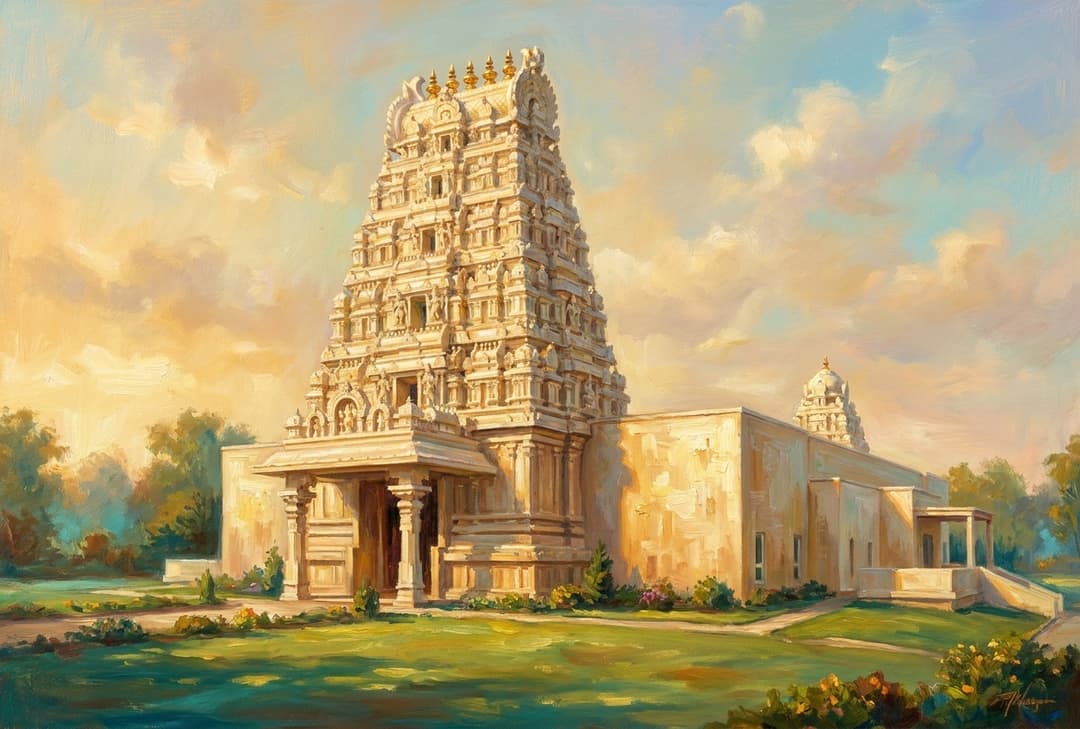
- Marvel at the soaring five-tier eastern Rajagopuram crowned with seven gilded Kalasams.
- Receive darshan at the granite sanctums dedicated to Lord Murugan, Shiva, and Ganesha.
- Walk the serene perimeter surrounded by eleven acres of preserved mid-Atlantic forest.
Things to Know
- Modest clothing covering shoulders and knees is strictly required for entry.
- Footwear must be removed at the designated pavilion prior to entering the complex.
- Photography is allowed in public halls but prohibited inside the inner sanctums.
Location
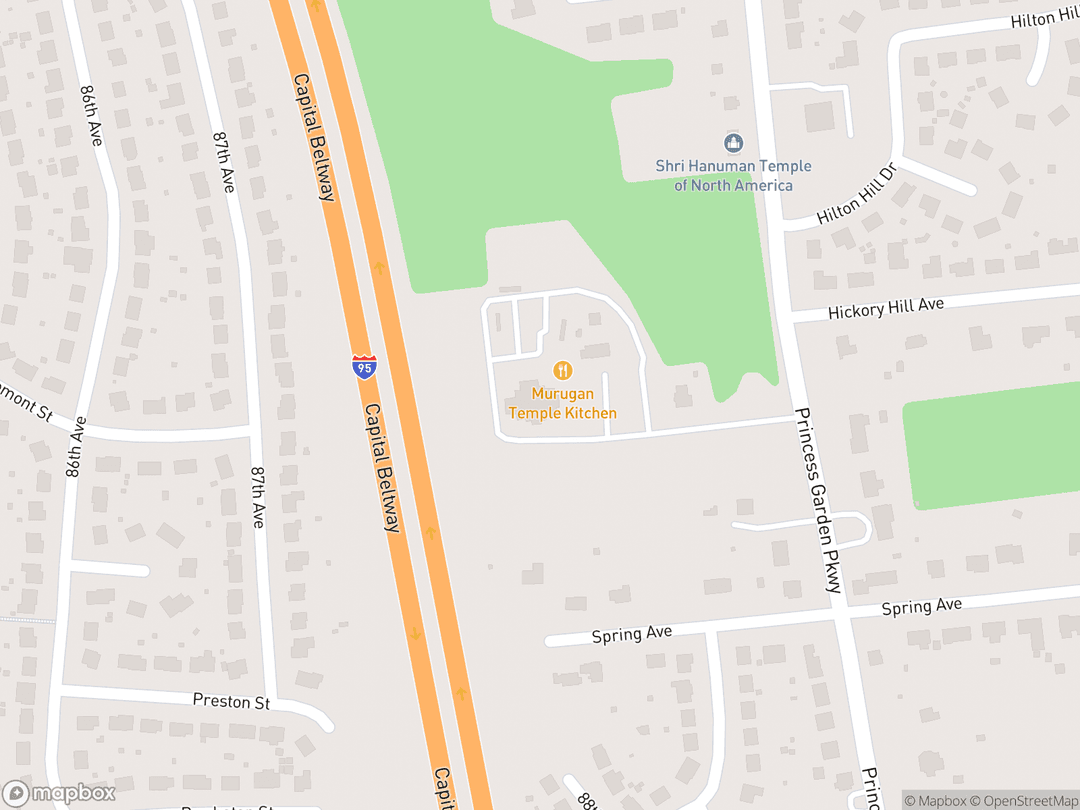
6300 Princess Garden Parkway, Lanham, MD 20706, United States
Hours: Monday through Friday: 9:00 AM – 12:00 PM, 5:00 PM – 9:00 PM; Weekends: 9:00 AM – 9:00 PM
Getting There: Located off MD-450 and Capital Beltway Exit 20A/B, three miles northeast of the New Carrollton transit station.
Get DirectionsTips for Your Visit
Pooja Timings
Visit during the morning Uchikala Pooja or evening Sayaratchai Pooja to experience vibrant ritual chanting and aarti.
Tuesday Devotions
Tuesdays are sacred to Lord Murugan, drawing numerous devotees for evening prayers and special offerings.
Temple Prasadam
Devotees may obtain traditional consecrated vegetarian offerings prepared in accordance with temple customs.
About
Within the Dharmic tradition, a temple serves as a sacred threshold connecting humanity with transcendent divinity. The Murugan Temple of North America (MTNA), consecrated in 1999 in Lanham, Maryland, holds distinction as the first temple in the United States and Canada dedicated to Lord Murugan as the presiding deity.
Rooted in Tamil Shaivism and the Kaumaram theological tradition, the temple reveres Lord Murugan as the personification of supreme wisdom, righteous valor, and boundless grace. Constructed in accordance with ancient Agama Shastra principles, the complex provides an authentic spiritual home for the Tamil diaspora while welcoming all devotees.
The complex features an ornate five-tiered Rajagopuram, multiple traditional stone sanctums, and vibrant cultural programming. Set amidst eleven wooded acres, it stands alongside neighboring institutions as a vital pillar of Hindu heritage in the American Mid-Atlantic region.
Gallery
Symbolic Elements
The temple's exterior features intricate carvings, each rich with spiritual meaning:

The Sacred Vel
The divine lance represents supreme discernment, spiritual depth, and the triumph of wisdom over cosmic ignorance.

The Peacock Mount
Murugan's divine vahana signifies sensory ego and pride subdued and converted into a vehicle of divinity.

The Rooster Standard
Adorning the heraldic temple flag, the rooster heralds the spiritual dawn and the dispelling of darkness.

Tower Kalasams
Seven consecrated gilded finial urns crown the gateway tower to direct cosmic energy into the earth.

Palani Dhandam
The wooden staff carried by Palani Aandavar reminds devotees that spiritual liberation requires internal renunciation.

Twin Consorts
Goddesses Valli and Devasena personify the balance of devotional action and celestial wisdom.

Carved Yali Figures
Mythological lion-headed sentinels carved upon pillar capitals guard sacred entry thresholds from discordant energies.
Interesting Facts
It was the first standalone temple established in North America dedicated primarily to Lord Murugan. (Tier A)
The founding project began with a consecrated granite Ganesha icon presented by Satguru Sivaya Subramuniya Swami. (Tier A)
Its five-tier Rajagopuram is crowned by seven gold-plated Kalasams filled with sacred grains according to Agamic tradition. (Tier A)
Master sthapatis and traditional silpis from Tamil Nadu resided on-site to hand-carve the intricate plaster and stone reliefs. (Tier B)
The campus houses a replica sanctum of Lord Murugan as Dhandayudhapani, evoking the famous hill temple of Palani. (Tier B)
Lanham forms a rare Hindu pilgrimage cluster, hosting both MTNA and the nearby Sri Siva Vishnu Temple. (Tier B)
The temple observes the canonical six annual Nataraja abhishegams aligned with precise astronomical cycles. (Tier A)
An annual chariot festival replicates the spiritual heritage and rituals of Sri Lanka's revered Nallur Kovil. (Tier B)
Common Questions
What is the primary spiritual significance of this temple?
It is the first standalone temple in North America dedicated to Lord Murugan as the principal presiding deity.
Are non-Hindu visitors allowed to visit the temple?
Yes, visitors of all backgrounds are welcome provided they observe temple etiquette and respectful dress codes.
What are the rules regarding dress and footwear?
Modest attire with shoulders and knees covered is required, and shoes must be removed before entering.
When are the busiest festival celebrations?
Major annual festivals include Thaipusam in early spring and the multi-day Skanda Sashti celebrations in autumn.
Featured Stories
The Kauai Ganesha Gift
1982
In 1982, founding representatives traveled to Hawaii seeking guidance from Satguru Sivaya Subramuniya Swami for their vision. The Satguru presented them with a consecrated granite Ganesha icon, advising that Lord Ganesha must be established first to clear all obstacles. This sacred gift anchored community prayers in Lanham for years before the central sanctum broke ground.
Source: Hinduism Today Archival Records
Artisanship in the Forest
1995
To ensure canonical authenticity, master stone carvers and plaster artisans journeyed from Tamil Nadu under specialized visas to live on the Lanham estate. Rather than using precast molds, these craftsmen spent months hand-carving deities and guardian yalis directly into masonry surfaces. Their meticulous devotional dedication transformed the Maryland landscape into a traditional Chola sanctuary.
Source: Pluralism Project Research Dossier
The 1999 Memorial Day Consecration
May 30, 1999
Over five thousand devotees from across North America assembled in Lanham during the Memorial Day weekend for the inaugural Maha Kumbhabhishekam. Spiritual luminaries from India and America joined together as holy sanctified waters were poured over the vimanas. The historic milestone formally dedicated the first continental temple to Lord Murugan amid resounding conch shells and sacred chants.
Source: The Washington Post Archival Report
Timeline
Gift of Sri Ganesha
Satguru Sivaya Subramuniya Swami presents founders with a consecrated granite Ganesha icon to initiate the temple mission.
MilestoneOfficial Incorporation
The organization formally incorporates in Maryland as the Murugan Temple of North America.
MilestoneWooded Land Acquisition
Trustees purchase eleven wooded acres along Princess Garden Parkway in Lanham for the sanctuary site.
MilestoneTemporary Shrine Established
The Ganesha icon is enshrined within a temporary Balalayam on-site to commence continuous Agamic prayers.
EventBhoomi Pooja Ceremony
Groundbreaking rituals are solemnized under the guidance of savant Thiru Kirupananda Variar and Swami Satchidananda.
component.timeline.groundbreakingPermanent Sanctum Construction
Master stone and plaster carvers arrive from Tamil Nadu to hand-sculpt the traditional Dravidian sanctums.
MilestoneMaha Kumbhabhishekam
Thousands gather as the inaugural consecration ceremonies culminate in the formal sanctification of the temple.
DedicationCultural School Inception
The temple establishes regular Tamil language, Carnatic music, and scripture study circles for youth.
EventSecond Maha Kumbhabhishekam
The traditional twelve-year Agamic renewal rite is conducted across all primary sanctums and vimanas.
RenovationRajagopuram Consecration
The newly completed five-tier gateway tower and its seven gilded brass Kalasams receive final consecration.
DedicationDigital Liturgical Broadcasts
Daily priest-led Agamic rituals transition seamlessly to high-definition global webcasts during public closures.
MilestoneHistory by Decade
1980s — Foundation and Ground Sanctification
Tamil immigrants in the Washington metropolitan region united to build a traditional home for Lord Murugan. After receiving a consecrated Ganesha icon from Hawaii in 1982, trustees secured eleven wooded acres in Lanham and celebrated the historic groundbreaking in 1989.
1990s — Agamic Construction and Inauguration
Master architect Muthiah Sthapathy directed traditional artisans brought from southern India to execute Chola-style stone and stucco architecture. The community achieved its crowning aspiration on May 30, 1999, with the grand inaugural Maha Kumbhabhishekam.
2000s — Cultural Education and Community Expansion
The temple institutionalized cultural wings including Tamil language classes, Carnatic vocal training, and scriptural study assemblies. Architectural planning concurrently commenced for an authentic multistoried Rajagopuram at the eastern entrance.
2010s — The Rajagopuram and Agamic Renewal
In 2011, MTNA performed its twelve-year renewal Kumbhabhishekam to re-consecrate the sanctums. Construction culminated on July 10, 2016, with the magnificent dedication of the five-tiered Rajagopuram and seven gilded Kalasams.
2020s — Digital Outreach and Heritage Stewardship
The temple preserved daily puja rhythms through high-definition digital broadcasts during unprecedented global health restrictions. Ongoing programs emphasize forest conservation, youth involvement, and traditional Agamic liturgical continuity.
Architecture & Facilities
The Murugan Temple of North America embodies classical South Indian Dravidian architecture rooted in the medieval Chola structural canon. The sanctuary strictly observes Shaiva Agama guidelines, organizing spaces along an east-west axis that transitions devotees from the vibrant external world through pillared halls into the mystical silence of the inner sanctum.
Building Materials
Black Granite
Dense Krishna Shila stone quarried in Tamil Nadu forms the primary murtis and interior sanctum foundations.
Structural Masonry
Reinforced steel framing and brick masonry provide durable climate insulation suited to Maryland weather.
Ornamental Stucco
Hand-molded lime-plaster sudhai work enables intricate mythological sculpting across the exterior towers.
Gilded Brass
Polished copper and brass alloys coated in gold leaf form the ceremonial finials along the tower ridge.
Interior Features
Moolasthanam
The primary east-facing sanctum enshrines the granite deity of Lord Murugan flanked by Valli and Devasena.
Palani Aandavar Sannidhi
A distinctive shrine sculpted to replicate the ascetic renunciate form of Murugan at the historic Palani temple.
Valamburi Vinayaka Sannidhi
An auspicious corner sanctuary honoring the right-curling Ganesha murti that inaugurated site prayers.
Maha Mandapam
A pillared interior assembly hall adorned with carved stone motifs supporting devotional gatherings and pradakshina.
Temple Grounds
Eleven acres of protected Maryland forest create an idyllic buffer zone containing walking paths, parking facilities, and an assembly pavilion.
Additional Facilities
An adjacent multipurpose auditorium hosts cultural performances, weddings, scripture classrooms, and ceremonial community meals.
Religious Significance
As part of the Dharmic traditions, the temple functions as an earthly residence of the Divine where sacred architecture channels universal cosmic order.
To provide an authentic Agamic sanctuary for worship, spiritual education, and personal transformation through devotion to Lord Murugan.
Sacred Ordinances
Abhishekam
Ritual bathing of the consecrated murtis using milk, honey, sandalwood, and holy water to invoke divine blessings.
Archana
Personalized chanting of divine names and hymns by priests on behalf of individual devotees and families.
Aarti
The waving of lit camphor lamps before the deities, illuminating the divine form while dispelling spiritual darkness.
Pradakshina
Mindful clockwise circumambulation around the sanctums to recenter the soul upon the divine foundation.
The Kaumaram Tradition
Kaumaram venerates Lord Murugan as the supreme expression of spiritual wisdom and grace. The worship integrates rigorous Agamic ritualism with heartfelt Tamil devotional poetry from the Thiruppugazh and Kanda Puranam.
Sanctum Geometry and Agama Shastra
The temple's physical proportions correspond to the cosmic person (Vastu Purusha). Devotees journey inward through successive mandapams, mirroring the soul's ascent from material absorption toward enlightened unity with Brahman.
Major Festivals
Thaipusam
January / February (Tamil month of Thai)
A major annual festival featuring milk-pot processions and kavadi penances celebrating Murugan's receipt of the holy Vel.
Skanda Sashti
October / November (Tamil month of Aippasi)
A six-day devotional fast commemorating the triumph of righteous wisdom over demonic ego and ignorance.
Panguni Uthiram
March / April (Tamil month of Panguni)
Celebration of the celestial wedding of Lord Murugan with Devasena, exemplifying divine order and virtue.
Nallur Kathirgamam Kanthan Festival
August
A traditional chariot procession that honors and mirrors the sacred festival heritage of Sri Lankan Tamil Kovils.
Sources & Research
Every fact on Temples.org is backed by verified Sources & Research. Each piece of information is rated by source tier and confidence level.
View All Sources (9)
| Field | Source | Tier | Retrieved |
|---|---|---|---|
| About & Historical Background | Murugan Temple of North America (opens in a new tab) | A | 2026-02-18 |
| Founding Story & Ganesha Enshrinement | Hinduism Today (opens in a new tab) | B | 2026-02-18 |
| Architecture & Sthapathy Lineage | The Pluralism Project at Harvard University (opens in a new tab) | B | 2026-02-18 |
| Maha Kumbhabhishekam History | The Washington Post (opens in a new tab) | B | 2026-02-18 |
| Agamic Deities & Shrines | Hindu Heritage Education Online (opens in a new tab) | B | 2026-02-18 |
| Ritual Calendar & Pujas | TemplePurohit (opens in a new tab) | C | 2026-02-18 |
| Rajagopuram Dedication Records | Astro Ulagam (opens in a new tab) | C | 2026-02-18 |
| Institutional Governance & Non-Profit Status | ProPublica Nonprofit Explorer (opens in a new tab) | B | 2026-02-18 |
| Dharmic Pilgrimage Overview | Marvel Murugan Heritage Portal (opens in a new tab) | C | 2026-02-18 |